

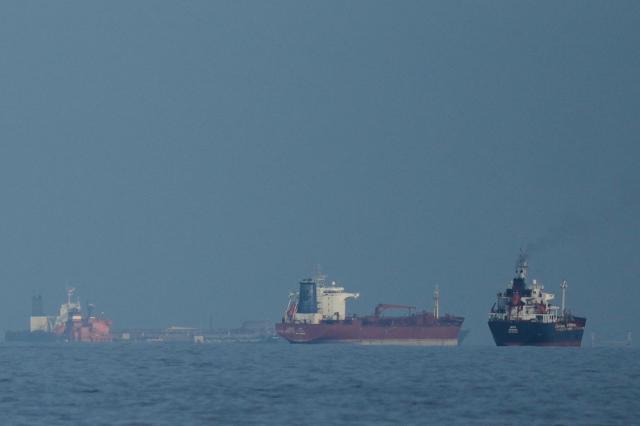
According to a report by Investing Live citing the New York Times, the U.S. Central Command coordinated the movement of approximately 70 commercial vessels in the Strait over the past three weeks, averaging about three vessels per day.
These ships reportedly turned off their Automatic Identification System (AIS) devices to evade detection by Iran, adjusting their routes closer to the coast of Oman rather than near Iranian shores.
The New York Times, referencing U.S. officials and shipping analysts, noted that approaching the Iranian coast without permission poses a significant risk of drone or missile attacks. Consequently, it appears that the vessels adjusted their paths in coordination with U.S. military communications.
The U.S. military has not characterized this operation as an official escort mission. Captain Tim Hawkins, a spokesperson for U.S. Central Command, stated, "We are communicating and coordinating to ensure that commercial vessels can transit the strait 'freely and safely.'" This indicates that U.S. naval ships are not directly escorting the vessels.
The New York Times also reported that prior to the U.S.-Israel attacks on Iran at the end of February, more than 100 vessels used this maritime route daily.
* This article has been translated by AI.

Copyright ⓒ Aju Press All rights reserved.