

Journalist

Han Young-hoon
han@ajunews.com
-
 Tesla Model Y Becomes First to Pass New ADAS Test in the U.S. Tesla's Model Y has become the first vehicle to pass the U.S. government's new Advanced Driver Assistance Systems (ADAS) test. On May 8, Reuters reported that the National Highway Traffic Safety Administration (NHTSA) announced the 2026 Model Y as the first vehicle to successfully complete the new ADAS evaluation. This assessment is part of NHTSA's New Car Assessment Program (NCAP) and was implemented for the 2026 model year. The evaluation applies to Model Y vehicles produced after November 12, 2025. It assesses four features: automatic emergency braking for pedestrians, lane-keeping assistance, blind-spot warning, and blind-spot intervention. NHTSA stated that the new criteria aim to provide consumers with essential information regarding the safety benefits of advanced driver assistance features. This initiative is a result of a legislative mandate for regulatory reform. NHTSA finalized its ADAS evaluation roadmap last November, enhancing protections for vulnerable road users, including pedestrians, in the NCAP. However, this approval does not resolve ongoing concerns regarding Tesla's autonomous driving capabilities. Reuters noted that NHTSA is separately investigating whether Tesla's Full Self-Driving (FSD) feature operates appropriately in low-visibility conditions. 2026-05-08 12:10:18
 -
 Google Allows AI Tools in Software Engineer Interviews Google is piloting a new approach in its software developer interviews that allows candidates to use artificial intelligence (AI) tools. This initiative aims to assess not only coding skills but also the ability to leverage AI for problem-solving and result verification. On May 8, Business Insider reported that Google is revising its software engineer interview process based on internal documents. The company is testing the use of AI assistance in certain coding interview stages. Initially, this will apply to junior and mid-level software engineer positions within select teams in the U.S. A key focus is the 'code comprehension' interview. Candidates will use Google's generative AI model, Gemini, to read code, identify errors, and optimize solutions. Interviewers will evaluate not only the correctness of answers but also the candidates' command of instructions and their ability to validate results. Google describes this method as a 'human-led, AI-assisted' interview, reflecting the growing use of AI in real-world development settings in the hiring process. 2026-05-08 12:09:08
 -
 CIA: Iran Can Endure Maritime Blockade for 3-4 Months U.S. intelligence agencies have assessed that Iran could endure a maritime blockade for at least three to four months. This analysis contrasts with President Donald Trump's public claims that Iran's economy and military are rapidly collapsing. According to the Washington Post, a confidential assessment delivered to the White House this week indicates that Iran could withstand U.S. sanctions for 90 to 120 days, and possibly longer. Sources familiar with the matter stated that Iran would face more severe economic pressures only after this period. This analysis notably separates the impact of the blockade from the regime's resilience. The report suggests that Iran is storing oil in tankers left idle by the blockade and adjusting production levels to maintain its oil fields. Some intelligence officials believe that if certain rail and land routes through Central Asia remain operational, Iran's buffer capacity could increase. The military assessment also diverges from Trump's statements. The Washington Post reported that Iran retains about 75% of its mobile launchers and 70% of its missile stockpiles. Many underground storage facilities have been reactivated, and there are indications that some damaged missiles have been repaired or that new missiles, nearly completed at the onset of conflict, are being assembled. Analysts have noted that the threat in the Strait of Hormuz comes more from drones than from ballistic missiles. The Washington Post cited analysts who warned that the low cost and ease of concealing drones could lead to significant disruptions in the insurance market if even one ship is struck. The report also indicated that at least 228 U.S. military facilities and equipment in the Middle East have been damaged or destroyed due to Iranian attacks. In contrast, the Trump administration has emphasized the effectiveness of the blockade. Trump recently claimed that Iran's economy is “collapsing” and stated that the White House estimates Iran is losing $500 million daily due to the sanctions. He also mentioned that the operation to support navigation in the Strait of Hormuz, dubbed 'Project Freedom,' was temporarily suspended due to progress in negotiations with Iran. 2026-05-08 11:53:35
 -
 Iran Establishes Persian Gulf Strait Authority to Regulate Shipping Iran has begun formalizing its control over the Strait of Hormuz by launching a new authority to regulate shipping. The Persian Gulf Strait Authority will oversee vessel passage approvals and collect tolls, marking a shift from temporary military measures to a permanent administrative system. On May 8, reports from AP, PBS, and CBS indicated that Iran has established the Persian Gulf Strait Authority, which is acting as the "only valid approval authority" for vessels transiting the strait, according to maritime information provider Lloyd's List. Reuters also supported this development, citing Iran's state-run Press TV, which reported that a new system for managing shipping in the Strait of Hormuz has been introduced. Commercial vessels must coordinate their passage with Iranian military forces, and a new map reflecting the controlled areas has been released. Under this system, vessels must receive prior approval via official email, detailing regulations and procedures. CBS noted that applications require information about vessel ownership, insurance, crew details, and planned routes. The shipping industry views this move as effectively instituting a "permit-based passage." AP highlighted that with Iran already exerting de facto control over the strait, the establishment of this new authority could further undermine freedom of navigation. PBS reported that the authority's role in approving passage and collecting tolls has resurfaced as a key issue amid stalled U.S.-Iran peace negotiations. Maritime Executive cited Iranian state media, stating that the authority serves as a "single window" for direct communication with shipowners, including a dedicated official email address. However, the legitimacy of toll collection in international straits remains contentious, with the U.S. potentially sanctioning entities that pay these tolls to Iran. 2026-05-08 11:47:34
 -
 U.S.-Iran Tensions Escalate Despite Ceasefire U.S. and Iranian forces clashed again in the Hormuz Strait, despite a ceasefire announced on April 7. The ongoing disputes over control of the strait and Iran's nuclear program highlight the fragile nature of the ceasefire. On May 7, U.S. Central Command (CENTCOM) reported that Iran launched missiles, drones, and small boats at three U.S. Navy destroyers transiting the strait. In response, the U.S. conducted retaliatory strikes targeting missile and drone launch sites and command facilities. The U.S. stated that there were no damages to its assets, while Iran accused the U.S. of violating the ceasefire by attacking tankers and civilian areas. This incident is not merely an accidental skirmish. According to AP, the conflict began in February with U.S. and Israeli airstrikes against Iran, and intermittent clashes have continued since the ceasefire was declared. This latest engagement underscores that as long as key issues remain unresolved, further conflicts are likely. A significant concern is the negotiation framework. Reuters reported that the U.S. has presented a proposal to officially end the war, which Iran is currently reviewing. However, this proposal suggests declaring an end to hostilities before moving to detailed negotiations. Key issues, including Iran's nuclear program and the reopening of the Hormuz Strait, remain unaddressed. Control of the Hormuz Strait is a critical factor in these negotiations. AP noted that Iran has recently established a new body to manage shipping through the strait and impose fees. While the U.S. seeks to restore normal shipping, Iran is leveraging control of the strait as a bargaining chip. This clash reflects a struggle not just for military dominance but also for maritime order and negotiation leverage. The gap in negotiations remains wide. Reuters reported that reactions within Iran suggest the U.S. proposal is seen more as an American agenda than a realistic solution. The U.S. is sending mixed signals, combining hopes for negotiations with military pressure, indicating that the current phase is more about managing tensions than reaching a substantive agreement. AP described the situation as an "unstable ceasefire," noting that direct negotiations have yet to yield a viable solution. 2026-05-08 11:39:54
 -
 Trump's 10% Global Tariff Blocked Again by Court President Donald Trump's proposed 10% global tariff has been blocked again by the courts. Following a Supreme Court ruling that halted existing tariffs, a workaround has also lost its effectiveness. However, U.S. tariff pressures are far from over, as the focus shifts to country- and item-specific measures. On May 7, the U.S. International Trade Court voted 2-1 to block the global tariff that the Trump administration implemented in February. The court found that the tariff was unlikely to have been legally imposed under Section 122 of the Trade Act of 1974. The plaintiffs who won the case include the state of Washington, toy company Basic Fun, and spice importer Burlap & Barrel. However, the court only prevented the tariff's application to these plaintiffs, not extending the ruling to other states or all importers. The central issue was whether the president could invoke Section 122 based on the U.S.'s chronic trade deficit. This section allows for temporary tariffs of up to 150 days to address international balance of payments issues. Trump announced the 10% tariff on February 20, claiming, "The U.S. is currently in a large and serious balance of payments deficit." However, the court disagreed, stating that the White House's reliance on various economic indicators was insufficient to meet the requirements for invoking Section 122. The court ruled that a significant trade deficit alone does not grant the president the authority to impose a blanket tariff globally without congressional approval. With this ruling, Trump's blanket tariff plan has faced setbacks from both the Supreme Court and the International Trade Court, which previously blocked broad tariffs based on the International Emergency Economic Powers Act. Despite this, U.S. trade pressures are not diminishing. Following the ruling, the administration did not delay in initiating a new approach. On March 11, the Office of the U.S. Trade Representative (USTR) began an investigation under Section 301 targeting structural supply excesses. The USTR identified 16 economic regions, including China, the European Union, Japan, South Korea, Vietnam, India, and Mexico, as subjects of this investigation. As blanket tariffs face legal challenges, the likelihood of the U.S. shifting to more targeted pressures increases. South Korea is also included in this investigation. The USTR's announcement linked South Korea to sectors such as electronics, automobiles and parts, machinery, steel, and shipbuilding. Industry insiders noted, "This ruling highlights the legal vulnerabilities of Trump's blanket tariffs. However, businesses should focus not on the removal of tariffs but on the changing methods of pressure." They added, "As the U.S. is likely to intensify targeted pressures through Section 301, South Korean companies must prepare accordingly."* This article has been translated by AI. 2026-05-08 08:57:00
 -
 U.S. Stocks Decline as Semiconductor Gains Fade; Dow Drops 0.63% U.S. stock indices fell across the board as profit-taking in semiconductor stocks followed recent gains, compounded by volatile oil prices and uncertainty in the Middle East. However, strength in major artificial intelligence (AI) stocks and some software companies helped limit the declines. On May 7, the Dow Jones Industrial Average closed down 313.62 points (0.63%) at 49,596.97. The S&P 500 dropped 28.01 points (0.38%) to 7,337.11, while the Nasdaq Composite fell 32.75 points (0.13%) to 25,806.20. The Russell 2000 index declined by 1.6%. After setting records the previous day, the market showed signs of consolidation, particularly in semiconductor stocks. Intel and AMD each fell about 3%, and the Philadelphia Semiconductor Index dropped 2.7%. Arm's significant decline also weighed on investor sentiment in the sector. Sector performance was notably weak in materials and energy, with nine of the 11 S&P 500 sectors declining. Materials fell 1.83%, and energy dropped 1.78%, as oil price volatility affected related industries. Conversely, some AI and software stocks mitigated losses. Nvidia and Microsoft rose around 2%, while Datadog surged 31% after raising its annual forecast. CrowdStrike and Palo Alto Networks increased by 8% and 7%, respectively. Oil prices experienced sharp fluctuations during the day, reflecting market expectations for negotiations between the U.S. and Iran, while investors awaited confirmation of any agreements. Economic indicators were mixed. Weekly initial jobless claims in the U.S. rose less than expected, suggesting a resilient labor market. However, Cleveland Federal Reserve President Loretta Mester indicated that interest rates could remain unchanged for an extended period, dampening hopes for early rate cuts. On a weekly basis, the upward trend persisted, with the S&P 500 gaining 1.5%, the Nasdaq rising 2.8%, and the Dow increasing by 0.2%. Year-to-date, the Russell 2000 is up 14.4%, the Nasdaq 11.0%, the S&P 500 7.2%, and the Dow 3.2%. The market continues to navigate oil price fluctuations, Middle Eastern uncertainties, and interest rate trajectories, showing a differentiated performance among tech stocks and those with improving earnings.* This article has been translated by AI. 2026-05-08 08:18:47
 -
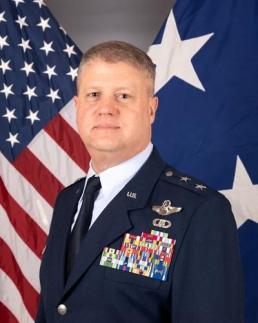 Pentagon Nominates Maj. Gen. David G. Shoemaker as USFK Deputy Commander The U.S. Defense Department has nominated Air Force Maj. Gen. David G. Shoemaker to serve as deputy commander of U.S. Forces Korea. In an announcement made May 5 local time, the Pentagon said Shoemaker would be promoted to lieutenant general and, if confirmed, would also take on the air component command roles for the U.N. Command and the South Korea-U.S. Combined Forces Command, as well as command of the 7th Air Force. Shoemaker is currently deputy commander of the 9th Air Force (Air Forces Central). According to his official Air Force biography, he oversees command and control of air operations and the development and execution of contingency plans in the U.S. Central Command area of responsibility. He has previously served in South Korea. From 2005 to 2006, Shoemaker was responsible for standardization and evaluation at the 8th Operations Group at Kunsan Air Base. From 2017 to 2018, he commanded the 8th Fighter Wing at Kunsan. The post is currently held by Lt. Gen. David R. Iverson, who concurrently serves as USFK deputy commander, air component commander for the U.N. Command and the Combined Forces Command, and commander of the 7th Air Force. The nomination has been announced, but Senate confirmation is still required.* This article has been translated by AI. 2026-05-06 11:29:19
 -
 Trump Revives Tariff Push Using Trade Act Section 301 After Supreme Court Ruling President Donald Trump has revived his tariff drive by turning to Section 301 of U.S. trade law after the Supreme Court blocked his earlier approach. With broad tariffs facing legal limits, the administration is shifting its legal basis to keep up pressure. Inside the United States, industries are split over additional duties, while abroad the European Union has mounted open opposition. The Office of the U.S. Trade Representative said on May 5 (local time) it is holding Section 301 hearings through May 8 on what it calls structural overcapacity. The review covers 16 economies, including China, the EU, South Korea, Japan, Mexico and Vietnam. The process is meant to determine whether their policies and practices burden U.S. industry and could serve as grounds for future tariffs. In February, the U.S. Supreme Court ruled illegal global tariffs Trump imposed under the International Emergency Economic Powers Act. After that, the Trump administration imposed a temporary 10% tariff on imports worldwide and moved to rely on other trade laws, including Section 301. The current hearings are widely seen as a follow-up step. U.S. industry groups have taken opposing positions. The steel industry argued that excess capacity not only in China but also in the EU and South Korea is worsening global oversupply and that additional tariffs are needed. The American Soybean Association warned new tariffs could again disrupt U.S.-China negotiations. The footwear retail industry also opposed the move, saying it could raise consumer-goods prices. The EU responded most forcefully, urging the United States to honor existing trade agreements. After the United States warned it could raise tariffs on EU-made cars and trucks back to 25%, the EU said both sides should return to the 15% level they had agreed on. French President Emmanuel Macron said the bloc should consider, if necessary, its Anti-Coercion Instrument. South Korea, rather than escalating publicly as the EU has, emphasized market principles and restructuring efforts. In the hearing, the South Korean government said “Korea’s industrial structure is based on market-economy principles” and that “voluntary restructuring and institutional support are being carried out even for items with overproduction.” On its trade surplus with the United States, it also cited the complementarity of the two countries’ industries and cooperation on strategic investment.* This article has been translated by AI. 2026-05-06 10:55:14
 -
 Trump Says Pope Is Soft on Iran Nuclear Issue; Pope Reaffirms Opposition to All Nuclear Arms U.S. President Donald Trump and Pope Leo XIV have again traded sharp words, this time over Iran’s nuclear issue. After Trump said the pope was taking a complacent approach to Iran’s pursuit of nuclear weapons, the pope pushed back, saying the Catholic Church has long opposed all nuclear arms. The pope spoke to reporters Monday aboard the papal plane as he returned to Rome from a trip to Africa. “I am only delivering the message of the Gospel and peace,” he said. He added that “the Catholic Church has opposed all nuclear weapons for years,” distancing himself from the claim. The exchange flared again after Trump’s recent remarks in an interview with conservative host Hugh Hewitt, in which Trump said the pope was being complacent about Iran’s nuclear weapons issue. The Associated Press reported, however, that the pope has not supported Iran’s nuclear armament and instead reaffirmed his longstanding opposition to all nuclear weapons. The clash is not new. On April 13, Trump attacked the pope, suggesting he was weak on crime and problematic in diplomacy. The pope responded at the time that he was not afraid and would continue criticizing the suffering caused by war. The timing has drawn attention as U.S. Secretary of State Marco Rubio is scheduled to meet the pope at the Vatican this week. U.S. officials said the visit was planned in advance, not an improvised effort to smooth things over, but Trump’s latest comments have fueled speculation that the meeting now carries added political weight.* This article has been translated by AI. 2026-05-06 10:07:24