

Journalist

Han Young-hoon
han@ajunews.com
-
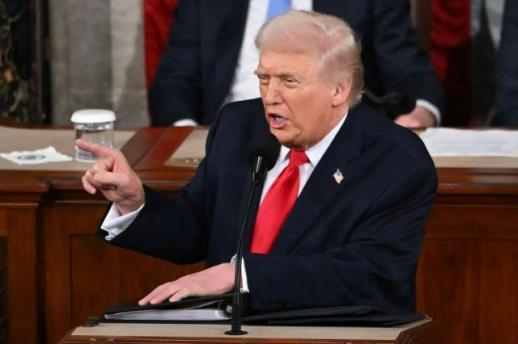 Trump Declares Cuba a 'Rogue State' Amid Increased Pressure On May 20, coinciding with Cuba's Independence Day, President Donald Trump labeled the Havana regime a "rogue state." He issued a warning against allowing hostile foreign military, intelligence, and terrorist activities just 90 miles from U.S. shores. In a message commemorating the holiday, Trump stated, "The United States will not tolerate a rogue state that allows hostile foreign military, intelligence, and terrorist operations just 90 miles from our homeland." He added, "We will not rest until the Cuban people reclaim the freedom their ancestors fought for over a century ago." Trump accused the Cuban communist regime of undermining political freedom for nearly 70 years, rejecting fair elections, and suppressing dissent. He attributed the collapse of the Cuban economy to corruption and control by the regime's elite. The U.S. has also intensified sanctions and prosecutions targeting the Cuban government. According to Reuters, on May 18, the U.S. government added 11 Cuban officials, along with the Cuban Directorate of Intelligence (DI), the Ministry of the Interior, and the National Revolutionary Police (PNR), to its sanctions list. On May 20, four individuals, including former Cuban National Assembly President Raúl Castro, were indicted in connection with the 1996 shooting down of a Cuban exile group's aircraft, facing charges of murder, conspiracy to kill Americans, and aircraft destruction. Simultaneously, the U.S. extended a conciliatory message to the Cuban people. Secretary of State Marco Rubio proposed $100 million in food and medical aid in a Spanish-language video message, emphasizing that the support should be distributed not through the Cuban government but via the Catholic Church or trusted humanitarian organizations. Cuba quickly responded, with Foreign Minister Bruno Rodríguez criticizing the White House's message as a "rude statement based on misinformation." The Cuban government has consistently argued that U.S. sanctions and pressure exacerbate its economic difficulties.* This article has been translated by AI. 2026-05-21 09:07:28
 -
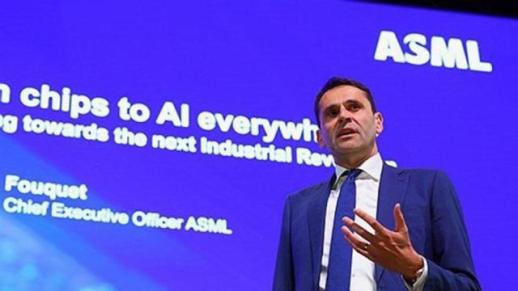 ASML CEO: Strong AI Demand Will Keep Semiconductor Supply Short A surge in demand for artificial intelligence (AI) is expected to prolong the global semiconductor supply shortage. The simultaneous growth in semiconductor needs for AI data centers, satellites, and robotics is outpacing production capabilities. On May 20, Christoph Hocke, CEO of ASML, stated at the Imec Technology Forum in Antwerp, Belgium, that "AI demand is extremely strong," and warned that the semiconductor market could remain in a state of supply shortage for a significant period. He projected that the global semiconductor market could grow to $1.5 trillion by 2030, highlighting the potential for bottlenecks throughout the supply chain. ASML is a key player in the advanced semiconductor lithography equipment market, which is essential for etching circuits onto semiconductor wafers. Major semiconductor companies, including TSMC, Samsung Electronics, SK Hynix, Micron, and Intel, utilize ASML's equipment for producing advanced logic chips and high-performance memory. Hocke also pointed to Elon Musk's plans for a large-scale AI semiconductor factory, dubbed 'TerraFab,' and the Starlink satellite project as factors that could further drive semiconductor demand. He mentioned discussions with Musk regarding these projects, stating, "Musk is very serious about these initiatives." If these large AI factories and satellite internet networks translate into actual investments, competition for semiconductor equipment and production capacity could intensify. In response to the strong demand, ASML is enhancing its equipment performance. The company is supplying next-generation high-NA EUV (extreme ultraviolet) lithography equipment capable of creating finer circuits. ASML is also developing related equipment for advanced packaging. Semiconductor products utilizing high-NA EUV technology are expected to be available within months, with companies like Intel, Samsung Electronics, and SK Hynix already in the process of adopting this equipment. The robust demand is reflected in ASML's financial outlook. Last month, the company raised its revenue forecast for 2026 to between €36 billion and €40 billion (approximately $56 billion to $62 billion) due to strong AI demand. Hocke noted, "Even then, semiconductor demand is outpacing supply," adding that clients are accelerating their production capacity expansion plans.* This article has been translated by AI. 2026-05-21 08:46:41
 -
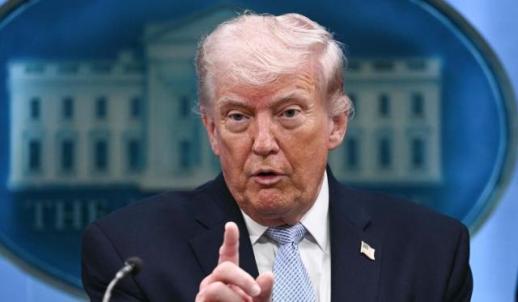 Trump Administration Considers Military Options Against Cuba The Trump administration is escalating pressure on Cuba to include military options. With the Cuban government remaining defiant despite sanctions and fuel restrictions, the U.S. is considering everything from airstrikes to ground invasions. On May 18, Politico reported that U.S. officials and sources familiar with administration discussions indicated that President Trump and his advisors are feeling limited by their current strategy against Cuba. The Cuban leadership has not accepted the economic and political reforms demanded by the U.S., prompting a more serious consideration of military action. The existing U.S. strategy has relied on economic and diplomatic pressure. Officials believed that tightening sanctions and restricting fuel supplies to Cuba would force Havana to negotiate. There was also an expectation that U.S. military successes in Venezuela and Iran would increase pressure on Cuba. However, Cuba has not acquiesced to U.S. demands. According to sources cited by Politico, the initial plan was based on the assumption that enhanced sanctions, an effective fuel blockade, and U.S. military victories in Venezuela and Iran would compel Cuba to the negotiating table. The sources noted that Cuba's resilience has made military action a more realistic option than previously considered. Military reviews are reportedly leading to actual planning efforts. The U.S. Southern Command has begun preparations for potential military actions related to Cuba in recent weeks, although no immediate actions are expected. A White House official told Politico, "It is natural for the Department of Defense to prepare to provide the president with maximum options. However, this does not mean the president has made a decision." The options being considered go beyond the arrest of specific individuals. Following reports of efforts to indict former Cuban leader Raul Castro, there has been speculation about arrest operations. However, Politico reported that military planners are examining a broader range of options, from airstrikes to ground invasions aimed at regime change. The administration is also building a rationale to support its military option considerations. Marco Rubio, Secretary of State and National Security Advisor, recently stated in a Fox News interview, "As long as these people are in power, I don’t think we can change the direction of Cuba." Reports have also surfaced that Cuba has acquired hundreds of military drones, further fueling security concerns. Cuba has strongly opposed these developments. Cuban President Miguel Díaz-Canel wrote on X (formerly Twitter) that a U.S. military attack would lead to "bloodshed with unimaginable consequences." A variable in this situation is President Trump’s political calculations. With rising oil prices and increasing pressure on his approval ratings due to the fallout from the Iran war, a military operation in Cuba could present additional risks. Experts warn that the U.S. may underestimate Cuba's resolve. Brian Latell, a former senior CIA official, cautioned, "While small-scale operations may be considered, thinking that way could lead to overestimating what they can achieve."* This article has been translated by AI. 2026-05-19 17:43:47
 -
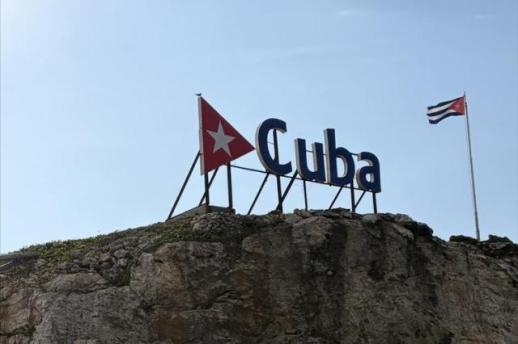 U.S. Intensifies Pressure on Cuba Amid Sanctions and Legal Actions The U.S. is ramping up its pressure on Cuba through sanctions, legal actions, and security measures. As tensions continue in the Middle East, Cuba has emerged as another target for the Trump administration. On May 18, the U.S. Department of the Treasury's Office of Foreign Assets Control (OFAC) announced the addition of the Cuban Intelligence Directorate (DI) and nine high-ranking Cuban officials to its Specially Designated Nationals (SDN) list. This group includes ministers from the communications, energy, and justice departments, as well as military and intelligence personnel. Those sanctioned will have their U.S. assets frozen and will be prohibited from engaging in transactions with U.S. individuals and businesses. This action follows an executive order signed by President Donald Trump on May 1, which allows for sanctions against foreign financial institutions and companies that engage with key Cuban state-owned enterprises, effectively putting third-country businesses at risk of sanctions as well. Legal pressure is also on the horizon. The U.S. Department of Justice is reportedly preparing to indict Raúl Castro, the former President of the National Assembly, in connection with the 1996 shootdown of a civilian aircraft belonging to the humanitarian group Brothers to the Rescue. Raúl, the brother of Fidel Castro and a symbolic figure of the current regime, is at the center of this legal scrutiny. In the security realm, concerns about Cuba's military capabilities are being highlighted. Axios reported that Cuba has acquired over 300 military drones from Russia and Iran since 2023. There are indications that Cuban military authorities have discussed drone tactics targeting U.S. military bases in Guantanamo Bay and naval vessels, as well as Key West, Florida. U.S. intelligence agencies do not believe an attack from Cuba is imminent or that any plans for an actual attack are in the execution phase. However, the U.S. is framing Cuba's drone capabilities and its ties to Russia and Iran as a security threat in the Western Hemisphere, using this rationale to support sanctions and legal actions. The U.S. strategy aims to pressure Cuba's external financial networks, reinforce the narrative of security threats, and target the regime's historical significance. This pressure coincides with Cuba's internal energy crisis, exacerbating the situation. The country is facing significant power shortages due to fuel shortages and aging power plants. The Cuban Electric Union (UNE) has projected a power deficit of 2,080 megawatts, which accounts for 65% of the total power needed. Cuba has responded strongly. President Miguel Díaz-Canel stated on X (formerly Twitter) that "Cuba poses no threat to any country." He warned that if a military attack from the U.S. materializes, it would lead to "bloodshed" and incalculable consequences for regional peace. Carlos Fernández de Cossío, Cuba's Deputy Foreign Minister, also criticized the U.S., claiming that the anti-Cuba campaign in the U.S. is making baseless accusations to justify military action.* This article has been translated by AI. 2026-05-19 16:30:46
 -
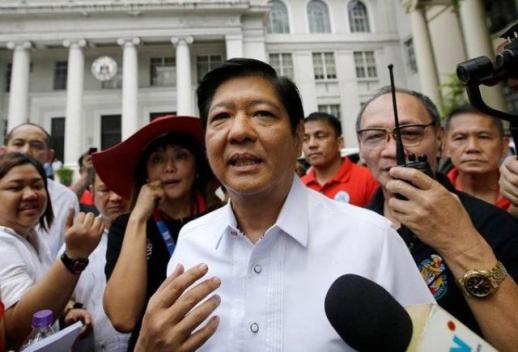 Philippine President: Taiwan Conflict Would Impact Us Ferdinand Marcos Jr., the President of the Philippines, stated that if a military conflict occurs in Taiwan, the Philippines would be unable to avoid its effects. This is due to the country's geographical proximity to Taiwan and the presence of approximately 200,000 Filipinos living there. On May 19, Bloomberg reported that President Marcos made these comments during an interview with Japanese media in Manila the previous day. He emphasized, "The Philippines has no choice," adding, "Taiwan is very close to the Philippines, and nearly 200,000 Filipinos live and work in Taiwan." He clarified that the Philippines does not wish to be drawn into a war over Taiwan. However, he noted, "If an actual conflict occurs, looking at the map, at least northern Philippines would fall within the sphere of influence or feel the repercussions." These remarks come ahead of his state visit to Japan next week, where he is expected to discuss security cooperation with Japanese Prime Minister Sanae Takaichi. Both Japan and the Philippines are experiencing maritime tensions with China in the East China Sea and the South China Sea. The Philippines is also engaging in dialogue with China. President Marcos mentioned, "The foreign ministers of the Philippines and China, along with officials from both countries, are scheduled to meet within a month." He expressed the intention to broaden dialogue channels to maintain peace amid the South China Sea disputes.* This article has been translated by AI. 2026-05-19 14:36:59
 -
 Standard Chartered to Cut Over 7,000 Jobs with AI and Automation Standard Chartered (SC) plans to reduce its back-office and support staff by more than 7,000 by 2030 through the implementation of artificial intelligence (AI) and automation. This restructuring aims to improve cost efficiency and profitability. On May 18, local time, SC announced its strategy to investors, stating it will cut more than 15% of its corporate function workforce by 2030. The 15% reduction pertains specifically to corporate functions, including human resources, risk management, compliance, and operations support, rather than the entire employee base. According to Reuters, the reduction in corporate functions will affect more than 7,000 of the bank's approximately 80,000 employees. The Financial Times reported the figure could be around 7,800. The cuts will be driven by the adoption of AI and automation, with SC aiming to reduce repetitive tasks and enhance productivity. CEO Bill Winters stated, "We will also provide retraining for some employees." This workforce adjustment aligns with SC's goal of improving profitability. The bank aims to increase its return on tangible equity (ROTE) to over 15% by 2028 and plans to raise it to approximately 18% by 2030. SC will focus on enhancing profitability in its wealth management and corporate and investment banking sectors. The bank has set a target to increase revenue per employee by about 20% by 2028, reallocating resources to more profitable areas as it reduces back-office functions.* This article has been translated by AI. 2026-05-19 14:22:00
 -
 Google and Blackstone Launch AI Cloud Company to Compete with Nvidia Google and Blackstone are establishing a new artificial intelligence (AI) cloud company. Google plans to leverage its proprietary AI chip, the Tensor Processing Unit (TPU), to challenge Nvidia's dominance in the AI infrastructure market. According to the Wall Street Journal on May 18, the two companies have agreed to create the AI cloud firm in the United States, although the name has not yet been disclosed. Blackstone will invest $5 billion in equity for this venture. The new company will provide cloud computing services based on Google's TPU. Benjamin Trainer Sloss, a long-time Google executive, will serve as the CEO of the new company. Google and Blackstone announced plans for the company to operate with a computing capacity of 500 megawatts (MW) by 2027, which is comparable to the power demand of a medium-sized city. The Wall Street Journal reported that Blackstone is expected to support investments totaling around $25 billion, including debt financing. This joint venture is seen as Google's most significant attempt to monetize its AI chips in the external market. Industry observers have been watching closely to see whether Google would use its TPU primarily for internal services or expand into the external cloud market. Recently, Google secured a major contract to provide approximately 1 million TPUs to Anthropic and has also entered into agreements with Meta Platforms. Competitors include Nvidia and CoreWeave. Currently, major AI companies rely on Nvidia chip-based cloud infrastructure to train and run advanced AI models. CoreWeave has rapidly grown by capitalizing on AI computing demand with Nvidia chips. Google's strategy aims to reduce its dependence on Nvidia by creating alternatives with its own chips. Last month, Google unveiled a new processor for AI inference, which is the computation involved in executing already trained AI models in real-world applications. As businesses increasingly adopt AI, the demand for inference is rising. Blackstone is accelerating its investments in AI infrastructure. The firm has pursued acquisitions of data center operators QTS Realty Trust and AirTrunk, and has invested in CoreWeave, Anthropic, and OpenAI. Stephen Schwarzman, Chairman and CEO of Blackstone, recently stated that the company holds over $150 billion in data center assets, including facilities under construction.* This article has been translated by AI. 2026-05-19 14:06:37
 -
 Bloomberg Analyzes Four Scenarios for Potential Samsung Strike Bloomberg has analyzed the potential for a strike at Samsung Electronics, viewing the labor dispute as a variable in the global semiconductor supply chain. As demand for artificial intelligence (AI) semiconductors rises, the largest union at Samsung Electronics warns that a strike could escalate domestic labor tensions into a global supply chain risk. According to Bloomberg on May 18, Samsung Electronics and its largest union are negotiating under government mediation to avoid a strike. The company has significantly increased profits due to rising demand for AI semiconductors, but it faces competition from SK Hynix and Micron. Bloomberg noted that this negotiation is crucial for Samsung Electronics at this time. The main issue at stake is the distribution of performance bonuses. The union demands the removal of the cap on bonuses and insists that 15% of operating profit be allocated to employee bonuses in the labor contract. The company has proposed a one-time special compensation package that would allocate 10% of operating profit for bonuses, which it argues exceeds industry standards. Bloomberg outlines four scenarios regarding the potential strike. The first scenario is a last-minute compromise. Even if the union's demands are not fully met, an increase in bonuses or some improvement in compensation conditions could help avoid a strike. In this case, the union could present the compensation improvements as a negotiation success. The second scenario involves a limited strike. Even if negotiations break down, the likelihood of a short strike leading to immediate production halts is low. Semiconductor plants are highly automated and operate around the clock. Bloomberg suggests that even if the union engages in rotating strikes, one-day strikes, or rallies to apply pressure, production disruptions may remain limited. Judicial rulings also play a role in limiting the strike's intensity. According to Bloomberg, a court ruled on May 18 that essential maintenance and security personnel must continue working during a strike. Occupying key production and operational facilities, such as semiconductor production lines, research facilities, and hazardous chemical storage sites, is also prohibited. The third scenario involves government intervention. If a strike prolongs and disrupts semiconductor production, the government could invoke emergency mediation rights. When invoked, the strike would be suspended for 30 days while the Central Labor Relations Commission prepares a mediation plan. Since 1969, emergency mediation rights have been invoked only four times in South Korea, with the last instance occurring during a 2005 strike by Korean Air pilots. The fourth scenario is a long-term stalemate. While Bloomberg considers this possibility relatively low, it warns that if key semiconductor engineers, maintenance staff, and production workers leave for an extended period, the production burden could increase. Even with automation in semiconductor plants, skilled personnel are necessary for advanced process management and equipment maintenance. If a long-term stalemate occurs, the repercussions would extend beyond Samsung Electronics. The semiconductor division accounts for over 90% of the company's profits. Clients may reassess Samsung's supply stability if labor disputes drag on, particularly during a phase of expanding production of advanced semiconductors like high-bandwidth memory (HBM) used in AI servers. The situation also poses a burden on the South Korean economy. Bloomberg reported that semiconductors accounted for 36% of South Korea's total exports in the first quarter of this year. A prolonged strike at Samsung Electronics leading to production disruptions could impact both South Korean exports and the global semiconductor market, highlighting why international media view domestic labor disputes as a global supply chain risk.* This article has been translated by AI. 2026-05-19 10:47:08
 -
 Anthropic Warns Against Unauthorized Stock Transactions Amid AI Market Growth AI startup Anthropic announced it will not recognize any transfers of its stock or stock-related rights that lack board approval. This warning comes as the over-the-counter market for unlisted AI company shares expands, raising concerns that investors purchasing indirect investment products may not secure actual shareholder rights. In a notice released on May 19, Anthropic stated that sales or transfers of its stock or related rights without board approval are invalid and will not be recorded in the company's books. Anthropic explained that investors who engage in such transactions will not be recognized as shareholders and will not possess shareholder rights. This move coincides with a growing demand for over-the-counter investments in Anthropic shares. As competition in generative AI intensifies, there is increasing interest in securing stakes in promising AI companies before they go public. Some brokerage platforms have promoted indirect investment products, citing the difficulty of directly purchasing unlisted stocks. Anthropic clarified that it does not permit transfers of both common and preferred shares without board approval. It also included indirect investments through special purpose vehicles (SPVs) in its prohibition. Proposals to offer existing investment round shares or future investment round participation rights through SPVs are also banned. Forward contracts, tokenized securities, and indirect investment funds have also been flagged as areas of concern. Anthropic indicated that structures providing general investors access to its shares through these methods may involve transactions that the company does not recognize, potentially invalidating the rights acquired by investors. Anthropic has placed companies such as Opendoor Partners, Unicorns Exchange, Pachamama, Lionheart Ventures, Hive, Foji's new offerings, Sidecar, and Upmarket on its warning list. The company stated it will not recognize any sales or transfers of Anthropic shares or related rights through these entities or products. Some of the mentioned platforms have countered these claims. Foji stated it does not facilitate transactions of unlisted company shares without explicit approval from the company and has requested that Anthropic remove it from the warning list. Hive also affirmed that it only intermediates transactions that have received issuer approval. Unicorns Exchange reported over 50 inquiries for purchasing Anthropic shares in the past three months, with total demand exceeding $1 trillion. However, it noted that no transactions have been completed without Anthropic's approval documentation. Legal issues remain unresolved. While it is not uncommon for unlisted startups to require board approval for stock transfers, the complexity of SPVs and forward contracts can make it difficult for issuers to track all transactions, potentially leading to disputes over the actual rights held by investors.* This article has been translated by AI. 2026-05-19 09:36:40
 -
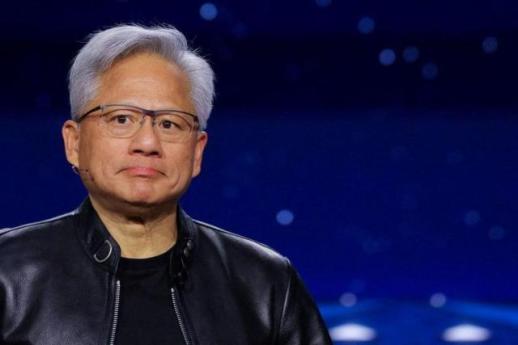 Jensen Huang Predicts China's AI Chip Market Will Eventually Open Jensen Huang, CEO of NVIDIA, expressed optimism that China's artificial intelligence (AI) semiconductor market will eventually open up. His comments came after the U.S. government partially approved the sale of NVIDIA's high-performance AI chip, the H200, to China, although actual product deliveries have yet to occur. In an interview with Bloomberg TV at a Dell-hosted event on May 18, Huang stated, "I believe the Chinese market will open up over time." He noted that while he accompanied then-President Donald Trump on a visit to China, no immediate agreement regarding the H200 sales was reached. The U.S. government previously granted purchase approvals for the H200 to about ten Chinese companies, including Alibaba, Tencent, ByteDance, and JD.com, as well as Lenovo and Foxconn. However, the export approvals have not yet translated into actual sales. According to Reuters, no deliveries of the H200 have been made despite the U.S. authorization, as approvals from Chinese authorities and purchasing decisions from companies are still pending. China's industrial policies also present a variable. The country is accelerating the development of its domestic AI semiconductor industry and views reliance on U.S. technology as a strategic vulnerability. Reuters reported that China is taking a cautious approach to purchasing high-performance AI chips from the U.S., contributing to delays in H200 transactions. For NVIDIA, reviving sales of high-performance AI chips in China is a critical challenge. The ongoing U.S.-China tech conflict and export controls have significantly restricted NVIDIA's sales of AI chips in China. Huang has emphasized that the Chinese AI semiconductor market represents an opportunity worth approximately $50 billion.* This article has been translated by AI. 2026-05-19 08:09:52