
Journalist

Han Jiyeon
hanji@ajunews.com
-
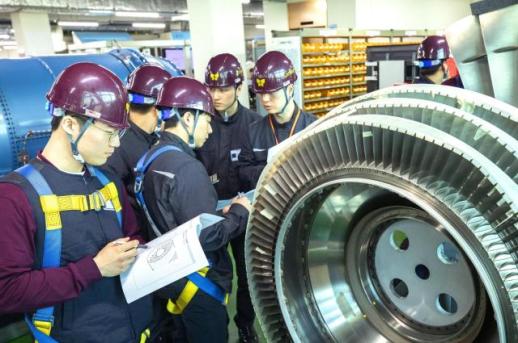 Jin Air Expands Onboarding Training for New Aircraft Mechanics Jin Air said on the 17th it has overhauled its onboarding program for newly hired aircraft mechanics to strengthen their skills. The carrier said the revamped training makes active use of Korean Air’s maintenance training infrastructure and includes joint sessions with Air Busan, focusing on raising maintenance expertise and standardizing quality ahead of integration. Since January, Jin Air has been running the strengthened program for 38 new mechanics. Starting this year, it moved part of on-the-job training into the onboarding phase, extending the training period from one month to six months. The company said the change is intended to help recruits build solid fundamentals and practical capability as hiring has expanded beyond aviation maintenance majors to include general engineering fields such as mechanical and electronic engineering. The curriculum includes aviation safety and security, maintenance work procedures, occupational safety and health training, maintenance manuals, and equipment and field practice. Jin Air added new linked training with Korean Air so recruits can learn strict maintenance processes firsthand. Trainees will study core basics such as aircraft systems and airframe structure, and improve job readiness through training using actual heavy-maintenance aircraft and digital content. The airline said it aims to reinforce basic competency and further strengthen group-level safety systems. Air Busan’s new mechanics are also participating. The two airlines’ new hires will complete the same curriculum at one location for six months, building technical ties and a sense of belonging. Jin Air said it expects the joint program to help establish a unified maintenance training system and proactively standardize maintenance quality. After completing the program, the new mechanics will be assigned to departments starting in mid-August, then receive field OJT and aircraft-type specialized training in sequence. Jin Air said it will strengthen safety competitiveness through systematic talent development and continued investment in maintenance so mechanics can reach top-tier industry capability. * This article has been translated by AI. 2026-03-17 08:57:21
 -
 BYD Rises From China’s Auto Backwater to Global EV Leader, Expands in South Korea BYD has become a symbol of China’s rapid rise in electric vehicles. The company sold about 4.55 million vehicles globally last year, taking roughly 20% of the overall EV market and ranking No. 1. China, once a minor player in autos through the late 1990s, has moved to the front of the global EV race in about three decades, controlling more than 70% of the global EV market. Dozens of EV brands launch in China each year, and more than 80% eventually disappear. BYD has survived that shakeout and, in 26 years, climbed to the top. ◆ 6.4% share in February; reaches top tier in a year According to the Korea Automobile Importers & Distributors Association on the 13th, BYD sold 957 vehicles last month, ranking seventh behind Tesla (7,868), BMW (6,313), Mercedes-Benz (5,322), Lexus (1,113), Volvo (1,095) and Audi (991). Its cumulative sales for January and February totaled 1,347, giving it a 6.43% share and placing it in the top five by market share. The result is notable for a brand that launched in March last year. BYD’s best-known model is the compact electric SUV Atto 3, credited by some with ushering in a “20 million won EV” era. It has sold 753 units this year. Other models include the compact hatchback Dolphin (81), the midsize SUV Sealion 7 (1,277) and the Seal (193). The company’s appeal is pricing relative to performance: its lineup is priced from 25 million won to 46.9 million won, excluding subsidies. Battery technology remains central to EV competitiveness. BYD uses its proprietary lithium iron phosphate (LFP) Blade Battery, which it says improves safety and charging convenience. It has also unveiled a second-generation Blade Battery and FLASH charging technology aimed at addressing charging-speed limits and cold-weather performance drops. After six years of development, the second-generation battery can charge from 10% to 70% state of charge in five minutes and to 97% in nine minutes, the company says. A Denza Z9GT equipped with the battery has a driving range of 1,036 kilometers per charge. BYD is expected to reach cumulative sales of 10,000 units in South Korea within the first quarter. That would be the fastest pace among imported-car brands entering the Korean market, the article said. BMW Korea, which entered in 1995, took seven years to reach 10,000; Mercedes-Benz took three years; Tesla took four. ◆ Learning by rebuilding cars; from an auto backwater to No. 1 BYD stands for “Build Your Dreams,” a slogan tied to the entrepreneurial story of founder and Chairman Wang Chuanfu. Wang, who worked as a nickel-cadmium battery researcher at a Chinese government-affiliated institute, argued that batteries — not engines — would define the future of cars, and that whoever led battery technology would become a key player in the EV era. He started the company in Shenzhen in 1995 with 2.5 million yuan (540 million won). The article describes his approach as buying premium products, taking them apart and reassembling them — a method applied to EVs to accelerate learning. A widely cited anecdote says he bought one of the first 10 Teslas imported into China by Elon Musk, dismantled it and rebuilt it to study EV design. The article says he continued to buy competitors’ vehicles in bulk, disassemble and reassemble them, and build design know-how that helped propel BYD to the top. The company’s success has also been attributed to vertical integration — producing batteries, semiconductors and vehicles in-house — which supports price competitiveness and faster production. Investor Charlie Munger once described Wang as someone with “Thomas Edison’s ability to invent and Jack Welch’s ability to manage.” BYD ranks third in market capitalization among global automakers, behind Tesla in the United States and Toyota in Japan. BYD’s expansion continues. Beyond battery-electric vehicles, it has built out plug-in hybrid lineups and launched premium brands including Denza, Yangwang and Fangchengbao. Yangwang, launched in 2023 and positioned around ultra-high-end hypercar concepts, has been dubbed a “Chinese Rolls-Royce,” the article said, and showcases technologies such as the U8 luxury off-road SUV and the U9 electric supercar. The U8 features amphibious technology that can float for about 30 minutes and a “tank turn” enabled by four independent electric motors controlling each wheel. The U9 is known for movements likened to jumping in place. The company is increasingly viewed as a global technology player for the EV era, and Wang’s story has become an inspiration for young Chinese entrepreneurs. Still, controversies remain, including allegations of design copying and battery patent infringement. The article says early BYD models resembled key products from Toyota and Mercedes-Benz, prompting complaints. Tesla CEO Elon Musk also mocked BYD in an interview when asked whether he saw it as a competitor, saying, “I’ve never seen their cars.” An industry official said BYD built its formula by “copying, revising and developing independently” competitors’ products hundreds of times, but added that to fulfill its “Build Your Dreams” philosophy, it now needs a success story based on originality rather than imitation. * This article has been translated by AI. 2026-03-16 18:15:26
 -
 Automakers, Defense Firms Enter ‘Super AGM Week’ With Focus on Shareholder Value and New Businesses Automakers and defense contractors are heading into the heart of annual shareholders meeting season, with companies expected to spotlight new business expansion as they navigate global uncertainty. Firms are also expected to advance measures tied to revisions to South Korea’s Commercial Act, including steps to strengthen shareholder value such as electronic voting and bigger dividends, while also shoring up defenses of management control. Industry officials said meetings will run nationwide from March 17 to 31, starting with Hyundai Mobis on March 17. Other scheduled annual general meetings include Kia (March 20), Poongsan (March 20), Hanwha Systems (March 23), Hanwha Aerospace (March 24), Hyundai Motor (March 26), Korea Aerospace Industries (March 26), Hyundai Rotem (March 27) and LIG Nex1 (March 31). At Hyundai Motor Group companies, key agenda items are expected to include reappointing inside directors, expanding into new businesses and strengthening board independence. Hyundai Mobis will vote on reappointing Hyundai Motor Group Chairman Chung Eui-sun as an inside director and appointing Sung Nak-seop, head of FTCI at Hyundai Mobis, as a new inside director. For outside directors, the company will consider reappointing James Kim, chairman of the American Chamber of Commerce in Korea, and appointing Park Hyun-joo, a former Korea representative at BNY Mellon Bank, as a new outside director. Hyundai Mobis will also put forward items including expanding directors’ duty of loyalty, renaming outside directors as independent directors, deleting a clause that excludes cumulative voting, and introducing electronic shareholders meetings. The company is also set to seek approval to pay year-end dividends of 5,000 won per common share and 5,050 won per preferred share. Hyundai Motor will propose adding a car rental business as a new line of business, aiming to expand vehicle rental operations that already include short-term rentals. Since 2019, Hyundai Motor has operated “Hyundai Genesis Selection,” a monthly subscription service for Hyundai and Genesis vehicles. If expanded, the company expects to broaden the models used for rentals and the service areas. With its certified used-car business already in place, the company expects to strengthen a vehicle life-cycle ecosystem spanning new-car sales, rentals and used-car distribution, improving customer service conditions. Hanwha Aerospace will also propose adding new business purposes. The additions include: energy resource development, production, export-import, distribution and trading for natural gas, hydrogen, ammonia and biofuels; investment, development and operation of energy distribution infrastructure and related equipment; power, district energy and zone electricity businesses, power brokerage, and related investment, construction and operations; aircraft and spacecraft launch services; mechanical facilities and gas construction; and industrial environmental facilities construction. Most of the proposed new businesses align with Hanwha Aerospace’s stated future direction, including energy development, distribution infrastructure and space-related areas. The fields have largely been led by other group affiliates such as Hanwha Energy and Hanwha Solutions, and the industry views the move as an effort to expand its future business base by leveraging group synergies. In growth areas such as defense, aviation and space, topics include shifting to cleaner energy and power infrastructure and developing reusable launch vehicles. “Across groups, this year’s shareholders meetings are seeing a push for greater governance transparency and stronger shareholder value in line with the intent of the Commercial Act revisions,” an industry official said. “At the same time, expanding into new businesses to find future growth engines is also a major trend.” * This article has been translated by AI. 2026-03-14 05:03:28
 -
 InterBattery 2026 Draws Record 77,250 Visitors as Battery Uses Expand Beyond EVs InterBattery 2026, South Korea’s largest battery exhibition, ended after setting records for both participation and attendance. The Korea Battery Industry Association said Friday that the 14th edition of the event, held at COEX in Seoul’s Gangnam district, featured 667 companies from 14 countries across 2,382 booths, the largest lineup in the show’s history. Total attendance over the three-day event reached 77,250, also a record. The exhibition highlighted battery applications beyond electric vehicles, including energy storage systems, AI data centers, robotics, drones and urban air mobility. Companies showcased next-generation technologies such as all-solid-state batteries, higher-performance and safer battery designs, strategic upgrades to lithium iron phosphate (LFP) batteries, and manufacturing innovations including dry electrode processes. Organizers said interest from abroad was strong, with visits by overseas government agencies and global companies. Joint national pavilions were organized by the U.S. Embassy in Seoul and the embassies of the Netherlands, Australia and Canada, among others. A total of 182 foreign companies set up large booths to present key mineral resources and advanced battery technologies. The show also featured discussions on cross-border cooperation in technology and supply chains, along with presentations of future technology road maps by South Korea’s three major battery makers: LG Energy Solution, Samsung SDI and SK On. At the third InterBattery Awards 2026, 12 innovations were selected, including LG Energy Solution’s “JF2 DC LINK 5.0 power-grid ESS,” Samsung SDI’s “700Wh/L high-energy prismatic battery,” and SK On’s “prismatic on-vent cell.” “InterBattery 2026 showed that battery technology is a core foundational technology for the AI era, beyond electric vehicles,” said Park Tae-seong, executive vice chairman of the Korea Battery Industry Association. He said the association will work to help InterBattery grow into a platform for next-generation battery technology, supply chain security and global business. * This article has been translated by AI. 2026-03-13 21:06:23
 -
 T’way Air, Catalonia Tourism Board Launch Barcelona Flight Promotion T’way Air said Friday it will offer limited-time promotional fares and a discount code of up to 5% for its Incheon-Barcelona route through March 29 on its website and mobile app (web). Under a first-come, first-served deal, one-way tickets start at 391,600 won, including fuel surcharges and airport taxes. The travel period runs from March 13 through Oct. 24 this year. Customers who miss the special fare can still receive up to 5% off by entering the discount code “MAR26.” The code applies to both one-way and round-trip tickets and can be used for bookings at the Smart fare level or higher. T’way Air will also provide a 60,000-won coupon, on a first-come basis, that can be used for an additional discount when paying for a round-trip ticket. The airline currently operates the Incheon-Barcelona route four times a week on Monday, Wednesday, Friday and Saturday. It is also posting travel information on its website for Catalonia destinations including Barcelona, Tarragona, Figueres, Sitges and Montserrat. Details on flight schedules and the promotion are available on T’way Air’s website and mobile app (web). A T’way Air official said the joint promotion is intended to help more customers experience the appeal of Catalonia, including Barcelona, and added that the airline will continue to prioritize safe operations while improving travel satisfaction through convenient schedules and various benefits. * This article has been translated by AI. 2026-03-13 17:06:18
 -
 Hanwha Aerospace Completes Phase 2 Expansion of Australia Plant, Begins Redback IFV Production Hanwha Aerospace said on the 13th it has completed a Phase 2 expansion of its plant in Australia. The company secured production facilities about two years after signing a contract with the Australian government in December 2023 to supply 129 Redback infantry fighting vehicles. The Phase 2 buildout includes a second production building, what it described as the Southern Hemisphere’s largest electromagnetic compatibility (EMI/EMC) test chamber, a large washing facility and a finished-goods storage building. Key facilities, including the second production building, were completed about a month and a half ahead of schedule. Since opening its Phase 1 facilities in 2024, the plant has produced the AS9 self-propelled howitzer and the AS10 ammunition resupply vehicle. The Phase 2 expansion added about 32,000 square meters (about 344,000 square feet) of space, establishing a system that allows simultaneous production of howitzers and armored vehicles. Hanwha said the site can now accommodate more than 250 office and production workers. It has two production buildings, a 1.2-kilometer (0.75-mile) driving test track with slope and deep-water test facilities, a system integration lab and painting facilities. Cumulative investment totals about 225 million Australian dollars (about 236.7 billion won), it said. The plant is expected to serve as a strategic production and maintenance, repair and overhaul hub for Australia and South Korea, as well as the Indo-Pacific region. The facility, known as H-AC, is in Geelong and was completed in August 2024 as the first overseas production base built by a South Korean defense company, Hanwha said. The site covers about 150,000 square meters and consists of 11 facilities, including a main building, production buildings, an assembly area, a driving test track and a firing range. A Hanwha Aerospace official said, “Through the Australia plant, we will contribute to the local defense ecosystem and develop it into a key production hub for land defense in the Indo-Pacific region.” * This article has been translated by AI. 2026-03-13 15:18:19
 -
 KGM Deepens Vietnam KD Partnership, Eyes Wider Southeast Asia Exports KG Mobility, or KGM, said Friday it met with Kim Long Motors, a unit of Vietnam’s FUTA Group and its KD partner, to inspect the production site and discuss detailed cooperation plans as it prepares to enter the Vietnamese market. The meeting was held March 11 (local time) at FUTA Group’s headquarters in Da Nang, in central Vietnam. Attendees included KGM Chairman Kwak Jae-sun; Kwon Kyo-won, head of KGM’s business division; FUTA Group Chairman Nguyen Huu Luan; Mai Tien Phat, president of FUTA Group’s vehicle dealership company; and Ho Cong Hai, head of KLMH, along with other officials. Ahead of the talks, Kwak on March 10 visited KLMH (Kim Long Motors Hue), a KGM-dedicated KD plant in the Hue Industrial Park that is in the final stage of construction, to check readiness by process and review support needs, KGM said. Kim Long Motors plans to begin full-scale KD production of key KGM models, including the Rexton and Musso, in the second half of this year after the plant is completed. “The Vietnam plant is expected to supply high-quality vehicles to the market by providing not only KD but also KGM’s full set of production equipment, reflecting KGM’s manufacturing know-how,” Kwak said. “The two companies will cooperate to produce vehicles of the highest quality.” Kwak said Vietnam is “a high-potential market” where vehicle purchases are expected to rise sharply and a strategic hub for expanding exports across Southeast Asia. He added that KGM will continue to increase global sales by developing new markets beyond existing ones such as Europe and by expanding overseas launches of new models, including the Musso. FUTA Group is a Vietnamese company that operates auto sales and passenger transportation businesses. Kim Long Motors is its automotive subsidiary. The two companies formed a partnership in 2023 by signing a licensing agreement for local assembly production in Vietnam. KGM said it is accelerating expansion of its KD business to increase export volumes. Outside Vietnam, it signed an HOA (heads of agreement) in May last year to supply KD kits to Indonesia, and plans to expand KD operations this year to Bangladesh and Sri Lanka as well. * This article has been translated by AI. 2026-03-13 10:18:23
 -
 Mercedes-Benz Korea Launches Collaboration Program With Chef Sohn Jong-won Mercedes-Benz Korea said Friday it will work with fine-dining chef Sohn Jong-won on a brand collaboration program called “Mercedes-Benz Mate.” The company described “Mercedes-Benz Mate” as a project designed to present its brand values in a more approachable way through collaborations with people who show their own philosophy and lifestyle in their fields. Sohn oversees a French dining restaurant and a Korean restaurant, and both have earned one Michelin star. Mercedes-Benz Korea said Sohn will take part in a range of brand activities, including producing digital content and appearing at major events, where he is expected to meet customers. Lee Sang-kuk, executive vice president and head of digital, marketing and communications at Mercedes-Benz Korea, said the collaboration was planned because Sohn’s drive for perfection and his continued efforts to deliver the best customer experience align with the company’s brand philosophy. He said he hopes the partnership will help broaden Mercedes-Benz’s brand philosophy and create opportunities for mutual inspiration. * This article has been translated by AI. 2026-03-13 09:48:16
 -
 Hanwha Aerospace, Krafton to Co-Develop Physical AI, Explore Joint Venture Hanwha Aerospace said it will work with Krafton, the maker of “PUBG: Battlegrounds,” to jointly develop physical AI, a field focused on AI that operates in real-world environments. Hanwha Aerospace said Friday it signed a memorandum of understanding with Krafton covering joint development of AI technology and plans to explore establishing a joint venture. The companies said they will proceed in stages, including joint R&D on core physical AI technologies, reviews of demonstration and deployment scenarios, and building technical and operational systems. They said a future joint venture would be used to commercialize results and set up a mid- to long-term cooperation framework. The partnership combines Hanwha Aerospace’s defense and manufacturing infrastructure and unmanned systems technology with Krafton’s AI research capabilities and software development expertise, the companies said. Hanwha Aerospace said it will use its weapons-system operating experience to improve the maturity of physical AI that functions in real settings and to verify field applicability through step-by-step demonstrations. The companies said Krafton’s experience managing data and its simulation technology built on virtual environments are expected to play an important role in training and validating physical AI. They said they plan to expand cooperation over the long term to the space and aviation sectors. They also said they will participate as investors in a $1 billion fund formed by Hanwha Asset Management, which focuses on AI, robotics and the defense industry. The companies said they aim to expand the physical AI ecosystem and strengthen competitiveness by investing in promising technologies and companies, and to identify partners with high growth potential across the value chain and link them to joint development and commercialization. Krafton CEO Kim Chang-han said, “We will accelerate development of technology that operates in real environments by combining Krafton’s AI capabilities and software operations expertise with Hanwha’s field-based strengths.” He added, “We will later establish a JV with Hanwha to connect joint development results to commercialization and grow the JV into a global defense technology company like Anduril.” Hanwha Aerospace CEO Son Jae-il said, “AI technology is rapidly growing into physical AI used in the defense sector beyond industry,” and added, “Through cooperation with Krafton, we will present a new technology paradigm for the future defense sector.” * This article has been translated by AI. 2026-03-13 09:42:24
 -
 Air Premia Launches Networkwide Spring Fare Sale, U.S. Round Trips From 605,600 Won Air Premia said Thursday it will run a networkwide spring travel promotion, offering discounted fares on all routes. The sale runs from March 16 to 29 and covers Wide Premium and economy-class tickets, starting from promotional base fares. For U.S. routes, round-trip totals including fuel surcharges and airport taxes start at 2,998,200 won for Wide Premium to Washington, D.C.; 1,698,200 won to New York; 1,463,200 won to Los Angeles; 1,363,200 won to San Francisco; and 1,295,600 won to Honolulu. Economy fares start at 1,243,200 won to Washington, D.C.; 898,200 won to New York; 843,200 won to Los Angeles; 703,200 won to San Francisco; and 605,600 won to Honolulu. Travel on U.S. routes is valid from March 16 through Nov. 30. The Washington, D.C., route will be available from April 24 in line with its new service schedule. For Asia routes, Wide Premium round trips start at 285,600 won to Narita; 474,900 won to Bangkok; 475,800 won to Da Nang; and 320,700 won to Hong Kong. Economy fares start at 205,600 won to Narita; 244,900 won to Bangkok; 235,800 won to Da Nang; and 260,700 won to Hong Kong. Travel on Asia routes is valid from March 16 through Oct. 24. For customers who miss the promotional fares, the airline is also offering an economy-class discount code, “HIBOM20,” for 20% off the airfare portion when entered at booking. Air Premia said it also provides an eSIM service for ticketed customers, with discounts of up to 30% when purchased through the Air Premia app. Promotional tickets are available through the airline’s official website and mobile app. An Air Premia official said the promotion was designed to help customers plan overseas trips at “reasonable prices” during the spring travel season, adding the airline will continue to expand benefits to improve customer convenience.* This article has been translated by AI. 2026-03-13 08:39:18