


Latest by
-
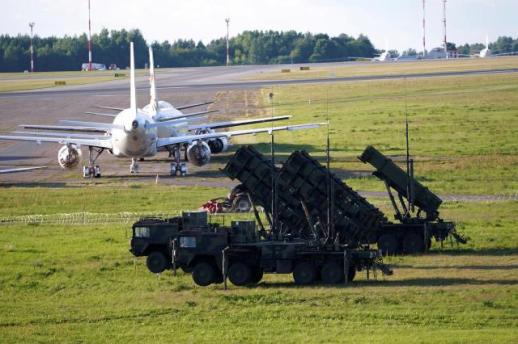 Switzerland Negotiates Air Defense System with Three Countries Amid Delays in Patriot Delivery Switzerland's government has begun negotiations with companies from three countries, including South Korea, for an alternative air defense system due to prolonged delays in the delivery of U.S.-made Patriot systems. According to AFP on June 24, the Swiss Defense Ministry stated, "We are starting contract negotiations with companies from France, Israel, and South Korea," adding that introducing a complementary air defense system would reduce reliance on specific suppliers. The Swiss government ordered five Patriot systems from the United States in 2022, with plans for phased delivery from this year until 2028. However, the ongoing war in Ukraine and conflicts in the Middle East have delayed the delivery schedule. Switzerland has reported that the delivery of the Patriots could be delayed by up to seven years, with costs continuing to rise, prompting a review of the order's cancellation. Instead, the government has shifted its focus to acquiring alternative air defense systems and has received proposals from at least five companies. Among these, the German company Diehl Defense has been eliminated from consideration, leaving candidates from France, Israel, and South Korea. However, the Swiss government has not disclosed which companies are currently under negotiation. As a neutral country, Switzerland is accelerating its air defense expansion in response to the rapidly changing security environment in Europe since the outbreak of the Ukraine war in 2022. Current analyses suggest that only 8% of its airspace can be defended by existing air defense systems. Swiss Defense Minister Martin Pfister remarked that with the ongoing conflict between the U.S., Israel, and Iran, which began in late February, "Even if our country is not directly involved in the war, missiles could fall on us at any time," emphasizing that air defense is a crucial element in protecting the nation and its economy.* This article has been translated by AI. 2026-06-25 18:04:00
 -
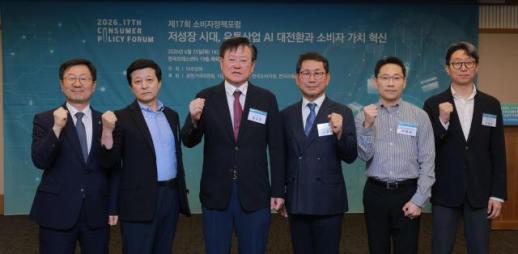 AI Transforming Retail: Beyond Efficiency to Consumer Trust As the competitive landscape of the retail industry shifts from physical stores and products to artificial intelligence (AI) and data, experts emphasize the need to connect innovation with consumer value. Aju Economy held the 17th Consumer Policy Forum on June 25 at the Korea Press Center in Jung-gu, Seoul, under the theme "AI Transformation in the Retail Industry and Innovation of Consumer Value in an Era of Low Growth." The forum provided an in-depth look at the current state and future directions of the retail industry, which is undergoing a paradigm shift due to prolonged domestic economic stagnation. Kim In-ho, Chairman of the Korea Retail Forum, predicted that the next generation of retail competitiveness will shift from location and store expansion to understanding customers and leveraging data assets. He noted that agentic commerce, where consumers delegate purchasing decisions to AI agents, will become more prevalent. He highlighted the importance of enhancing information delivery and recommendation functions as essential for the survival of retail businesses. Kim also observed that consumer spending is expanding from basic needs to areas of self-expression, such as hobbies, relaxation, and experiences. Consequently, he urged retailers to move away from growth through store expansion and instead focus on personalized product offerings that enhance customer lifetime value and frequency of use. The forum also shared examples of AI innovations and strategies in the retail sector. Lee Tae-hee, Head of Operations Strategy at Kurly, presented AI as a solution to rising costs, stating, "The direction of innovation is not merely cost reduction but creating new customer value that was previously unattainable through AI." Kurly is applying AI not only for product descriptions, search, and recommendations but also for order management, agricultural product sorting, and logistics center operations. This approach aims to reduce stockouts and waste while also increasing logistics productivity through the use of autonomous robots. Lee Seung-jun, Team Leader at Shinsegae I&C AX Center, emphasized that the competitive landscape will shift from "where customers visit" to "what AI recommends." He stressed the urgent need to establish a trustworthy infrastructure that ensures algorithm transparency and data reliability. Shinsegae I&C is using AI to detect product mis-scans at self-checkout counters and to analyze sales, inventory, and waste history to suggest optimal discount rates for fresh products. Legislative and administrative challenges for translating technological advancements into tangible consumer benefits were also discussed. Lee Joo-hee, a member of the Democratic Party, promised to establish a regulatory framework to protect consumer rights, stating, "Innovation can only be sustainable when algorithm transparency, data reliability, and consumer choice are guaranteed." Yoon Soo-hyun, Director of the Korea Consumer Agency, emphasized that the ultimate goal of the AI transformation should be consumer happiness and the safety of everyday life for all. He pledged efforts to ensure that the benefits of increased productivity translate into tangible advantages for consumers. 2026-06-25 18:04:00
 -
 National Growth Fund Allocates $370 Million for Wind Power, Undersea Cables, and Semiconductors The Financial Services Commission announced it will provide an additional 370 billion won (approximately $370 million) through the National Growth Fund to enhance power infrastructure for advanced industries and expand the semiconductor supply chain. On June 25, the commission approved investment and low-interest loan proposals for the wind power project in Yeongyang, North Gyeongsang Province, as well as for LS Cable & System and Simtek during a meeting of the National Growth Fund Management Committee. This funding aims to address the increasing power demand driven by the expansion of AI data centers, improve energy infrastructure, and strengthen the competitiveness of semiconductor materials, components, and equipment. The largest allocation is for the wind power project in Yeongyang, where GS E&R and Naver plan to construct a 72 MW wind farm. The generated power will supply Naver's data centers, including 'Gak Sejong' and 'Gak Chuncheon.' Of the total project cost of 270 billion won, 60 billion won will be supported by the Advanced Strategic Industry Fund through a long-term loan over 19 years. LS Cable & System will receive 80 billion won to expand its production facilities and testing grounds for high-voltage undersea cables in Donghae, Gangwon Province. This investment is in response to the growing demand for undersea cables due to the expansion of offshore wind power and transmission networks. Simtek, a semiconductor packaging substrate company based in Cheongju, North Chungcheong Province, will receive 20 billion won in low-interest loans to fund the expansion of its production facilities. The Financial Services Commission believes this will enhance the competitiveness of the core component supply chain in line with the growing memory semiconductor market. Including these three projects and the 720 billion won from the National Participation Growth Fund, the National Growth Fund has now completed approvals and formations for a total of 19 projects, amounting to 13.6 trillion won.* This article has been translated by AI. 2026-06-25 17:48:00
 -
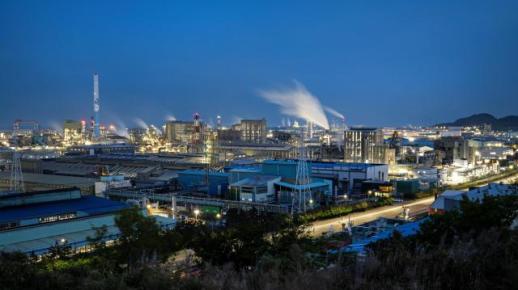 Conflict Over Audit Committee Nominees Between Korea Zinc and Youngpoong Youngpoong and MBK Partners are once again at odds with Korea Zinc over the nomination process for candidates to the audit committee. After Youngpoong and MBK completed and announced their own public recommendation process for independent audit committee nominees, Korea Zinc countered that this was merely a private activity by individual shareholders. On June 25, Youngpoong and MBK announced that they had received nominations for more than ten candidates for independent audit committee members. These nominees are experts in various fields, including corporate management, accounting and finance, legal compliance, ESG (environmental, social, and governance), industrial technology, and risk management, with participation from Korea Zinc shareholders and organizations related to corporate governance. Youngpoong and MBK stated that an independent candidate review committee, composed of three external experts, will later finalize the list of candidates for the extraordinary general meeting. They emphasized that the public recommendation process aims to identify independent audit committee candidates free from influence by specific shareholders or current management. A representative from Youngpoong and MBK said, "We will conduct a fair review led by external experts to restore the independence and oversight function of the audit committee." In response, Korea Zinc quickly refuted their claims. Korea Zinc stated, "The candidate recommendations made by MBK and Youngpoong are merely private activities of individual shareholders and do not constitute the official nomination process for the company's audit committee. We are concerned that their press release may mislead others into thinking that the company's official process has concluded." Korea Zinc added, "The official nomination process for audit committee candidates will proceed normally until the 30th. MBK and Youngpoong can also recommend candidates as one of many shareholders, and the company plans to review their recommendations based on the same criteria as those of other shareholders." The company also explained its criteria for candidate nominations, stating, "These are minimal requirements to prevent an overflow of candidates and the abuse of nomination rights while ensuring professionalism and accountability. The selection of audit committee candidates should be based on expertise, independence, and verifiability through the company's official process, rather than the number of nominations." The two sides have also revealed differing views on the fairness and independence of the candidate nomination process. Youngpoong and MBK argue that a more open public recommendation method helps secure independence. In contrast, Korea Zinc contends that indiscriminate nominations in the context of hostile mergers and acquisitions could undermine the purpose of the system, insisting that candidates should be vetted through official procedures in accordance with laws and regulations. This public recommendation process stems from the vacancies of four outside directors. Previously, four outside directors of Korea Zinc were appointed at an extraordinary general meeting early last year, but a court ruled that there were procedural defects in that meeting, leading to their suspension from duty and subsequent resignations.* This article has been translated by AI. 2026-06-25 17:44:00
 -
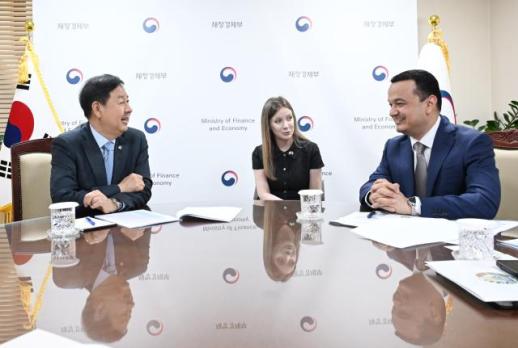 South Korea, Uzbekistan seek deeper cooperation SEOUL, June 25 (AJP) - South Korea's Deputy Prime Minister and Minister of Finance and Economy Koo Yun-cheol met with his Uzbek counterpart in Seoul to discuss ways to expand bilateral economic cooperation, the ministry said on Thursday. During their meeting the previous day, Koo and Uzbekistan's Minister of Investment, Industry, and Trade Laziz Kudratov agreed to expand cooperation in strategic fields including artificial intelligence, energy and critical mineral supply chains, and large-scale infrastructure projects. Kudratov is in Seoul ahead of the inaugural Korea–Central Asia Summit, scheduled to be held in South Korea in September, which will bring together the five Central Asian countries of Kazakhstan, Kyrgyzstan, Tajikistan, Turkmenistan and Uzbekistan for a comprehensive multilateral partnership. The two sides also discussed practical projects that could deliver tangible results at the upcoming gathering including building a smart bio cluster and a new Tashkent airport, as well as expanding cooperation in the bio and medical sectors. To address rising demand for critical minerals in advanced industries and uncertainty in global supply chains, the two sides agreed to strengthen cooperation by leveraging Uzbekistan's abundant mineral resources. Koo stressed the growing importance of economic cooperation between South Korea and Central Asia, urging Uzbekistan to ease the business environment to help more South Korean companies make inroads there. 2026-06-25 17:42:10
 -
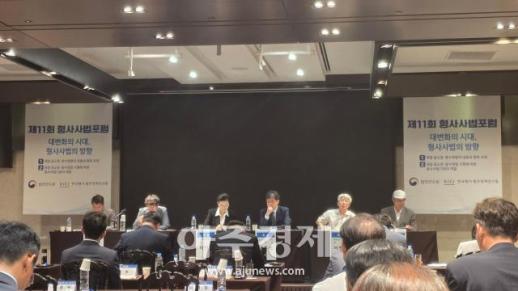 Calls to Retain Supplementary Investigation Authority Amid Prosecutorial Reforms As South Korea approaches the establishment of the Prosecutorial Office and Serious Crimes Investigation Office in about 100 days, legal experts are advocating for the retention of supplementary investigation authority during the revision of criminal procedure laws. At the same time, Prime Minister Kim Min-seok stated during a briefing at the Government Seoul Complex that the fundamental principle of prosecutorial reform is the separation of investigation and prosecution, emphasizing the need to abolish supplementary investigation authority. The Legal Training Institute and the Criminal Justice Policy Institute convened the 11th Criminal Justice Forum on June 25 at the L Tower in Yangjae-dong, Seoul, to discuss the contents and challenges of the proposed Prosecutorial Office and Serious Crimes Investigation Office legislation. During the forum, legal panelists highlighted the issues with the proposed legislation while insisting that supplementary investigation authority should be maintained. This authority allows prosecutors to return cases to the police for further investigation if necessary. Jang Jun-ho, chief prosecutor at the Gangneung branch of the Chuncheon District Prosecutors' Office, stated, "We need to clarify the truth by uncovering the true perpetrator, accomplices, or additional crimes that the police may have missed, and to promptly clear wrongly charged suspects. This requires clear regulations on evidence collection. Prosecutors should be allowed to conduct supplementary investigations directly." Cha Jin-ah, a professor at Korea University Law School, described supplementary investigation authority as a minimal safety measure. He warned that if this authority is ultimately not recognized, the Prosecutorial Office would have no choice but to mechanically prosecute cases investigated by the police, which could lead to a significant increase in conviction rates in criminal trials. Lee Chang-hyun, a professor at Hankuk University of Foreign Studies, noted that the Constitution grants only prosecutors the right to request warrants, and that the Constitution recognizes prosecutors' authority to exercise investigative powers directly or through oversight. He argued that it is unacceptable to deny prosecutors supplementary investigation authority, pointing out that Article 4 of the Prosecutorial Office Act states that "prosecutors perform duties necessary for deciding whether to initiate and maintain prosecutions," which includes supplementary investigations. Han Sang-hee, a professor at Konkuk University Law School, emphasized the need to provide prosecutors with opportunities for evidence collection and fact-finding to bridge the gap in proving "the suspicion of a crime and the possibility of a guilty verdict beyond a reasonable doubt." He added that without supplementary investigation authority, the victims would primarily be ordinary citizens affected by crimes such as extortion, fraud, and voice phishing. Meanwhile, Prime Minister Kim reiterated during the briefing that the fundamental principle of the prosecutorial reform being pursued by the Lee government is the separation of investigation and prosecution. He explained that the government's basic stance is that supplementary investigation authority should be abolished to more rationally redefine prosecutorial powers and better protect citizens' fundamental rights.* This article has been translated by AI. 2026-06-25 17:40:00
 -
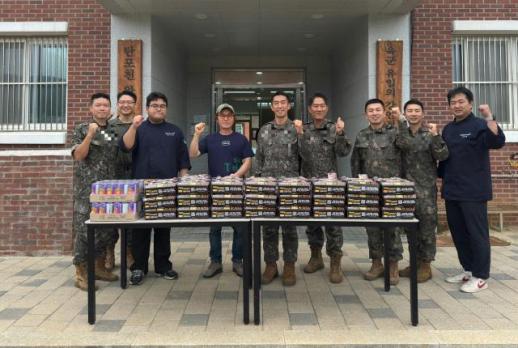 Food and Restaurant Industry Shows Appreciation for Military Personnel and Veterans In honor of the Month of National Defense, the food and restaurant industry has been actively expressing gratitude to military personnel and veterans through various charitable activities. According to industry sources on June 25, Genesis BBQ visited the Baekma Unit in Paju, Gyeonggi Province, on June 24, delivering chicken sets to 50 exemplary soldiers. This initiative was inspired by a request from unit officials who wanted to encourage soldiers stationed at the front lines. BBQ provided chicken sets consisting of golden olive chicken legs, cheese balls, and boneless chicken through its signature social contribution program, "Chicken Relay." The family of the Paju Heyri franchise also participated in the preparation and delivery, adding significance to the event. A BBQ representative stated, "It is meaningful to convey a small token of support and gratitude to the soldiers who quietly carry out their duties for the safety of the nation. We will continue to implement various social contribution activities to spread warmth throughout our society." Lotte Wellfood has also stepped up to support the welfare of soldiers at the front lines. On June 23, the company delivered 2,585 boxes of care packages valued at 200 million won, consisting of popular snacks like Castard, Margaret, and Gillian, to the Army's 17th Infantry Division, with which it has a partnership since 2018. In commemoration of the 76th anniversary of the Korean War, Lotte Wellfood, in collaboration with the Korean Dental Association, conducted the "Doctor Xylitol Bus Campaign" at the Marine Corps 2nd Division's Judunso Post in Ganghwa County, Incheon. On June 24 and 25, medical personnel provided oral examinations and dental services to soldiers, while Lotte Wellfood offered snack packages featuring xylitol as mementos. A Lotte Wellfood representative remarked, "We will continue to provide ongoing support and attention to ensure that military personnel dedicated to national security can serve in good health." On June 24, Domino's Pizza visited the Wonju Veterans Care Home in Gangwon Province, serving freshly baked pizzas to approximately 100 veterans of the Korean War. Using a mobile pizza truck called "Party Car," they prepared and delivered pizzas on-site to express gratitude for the sacrifices and dedication of these veterans. A Domino's Pizza representative stated, "We will continue to remember the heroes of our society and engage in various social contribution activities that demonstrate love for our neighbors."* This article has been translated by AI. 2026-06-25 17:40:00
 -
 South Korea's Hopes for World Cup Knockout Stage Hang by a Thread South Korea's national soccer team, led by coach Hong Myung-bo, suffered a shocking defeat in their final group match of the 2026 FIFA World Cup, eliminating their chances of advancing on their own merit. Dropping to third place in their group, South Korea's progression to the knockout stage now depends on the outcomes of matches in other groups. On June 25, at 10 a.m. KST, South Korea faced South Africa in their final Group A match at the Monterrey Stadium in Mexico, losing 1-0. With this defeat, South Korea finished the group stage with a record of one win and two losses, earning three points. Meanwhile, Mexico secured first place in the group with a decisive 3-0 victory over the Czech Republic, finishing with nine points. South Africa's win allowed them to claim second place with four points (one win, one draw, one loss). As a result, South Korea's hopes of advancing on their own terms were dashed. However, they avoided direct elimination from the tournament thanks to Mexico's victory over the Czech Republic. Now, South Korea's chances of reaching the knockout stage are uncertain. In this tournament, which features 48 teams, the top two teams from each group, along with the eight best third-placed teams, will advance to the Round of 32. South Korea must now watch the results of other groups to see if they can qualify. If two or more third-placed teams finish with the same points, rankings will be determined by goal difference, goals scored, fair play points, and FIFA ranking. Currently, South Korea has three points, a goal difference of -1, and two goals scored. The outlook is not promising. Prior to the match against South Africa, six other third-placed teams had already secured three or more points. Bosnia and Herzegovina, in Group B, confirmed their advancement with four points. Paraguay from Group D (goal difference -2, two goals scored), Sweden from Group F (goal difference 0, six goals scored), Algeria from Group J (goal difference -2, two goals scored), and Croatia from Group L (goal difference -1, three goals scored) all have three points. Scotland, in Group C, also has three points but a goal difference of -3, placing them below South Korea. For South Korea to advance, at least three other third-placed teams from groups D to L must perform worse than them. This means that either their points must be below three, or if they have three points, their goal difference must be less than -1, or if the goal difference is the same, they must have scored fewer than two goals. Particularly concerning is that South Korea has only scored two goals in three group matches, putting them at a disadvantage in the goals scored tiebreaker. Teams like Cape Verde from Group H, currently with two points and a goal difference of 0, and Belgium from Group G, with one point and a goal difference of 0, could surpass South Korea if they draw their final matches. South Korea will be hoping for losses from other strong third-placed teams in their final matches. The remaining matches that will determine South Korea's fate will take place from June 26 to June 28. On June 26, Japan will face Sweden (Group F) at 8 a.m. and Paraguay will play Australia (Group D) at 11 a.m. On June 27, Cape Verde will take on Saudi Arabia (Group H) at 9 a.m., followed by New Zealand against Belgium (Group G) at noon. Finally, on June 28, Croatia will face Ghana (Group L) at 6 a.m., and Algeria will play Austria (Group J) at 11 a.m. If South Korea manages to qualify for the Round of 32 based on the results of other matches, they are likely to face the first-placed team from Group E or Group G. Germany has already secured first place in Group E, while the top team in Group G (either Belgium, Egypt, or Iran) will be determined on June 27. 2026-06-25 17:40:00
 -
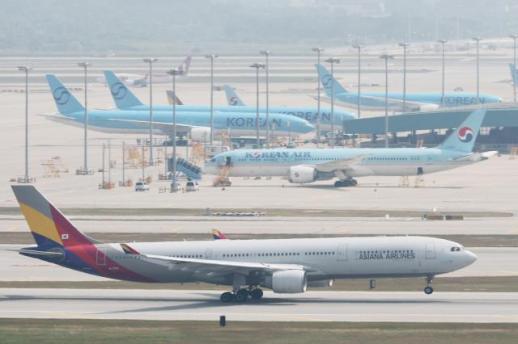 Korean Air to absorb Asiana, launch new carrier Dec. 17 SEOUL, June 25 (AJP) - South Korea’s transport ministry has conditionally approved the merger of Korean Air and Asiana Airlines, clearing the way for the country’s two largest full-service carriers to launch an integrated airline on Dec. 17. The Ministry of Land, Infrastructure and Transport said Thursday it had completed its review of Korean Air’s application to merge with its subsidiary Asiana under the Aviation Business Act. The two airlines signed a merger agreement on May 14 and subsequently applied for government approval. The ministry said it conducted a review comparable to that required for issuing a new airline license, drawing on advice from specialists in aviation, consumer protection, employment, law and accounting, as well as assessments by research institutes and accounting firms. It concluded that the merger met the relevant legal requirements and granted approval following a final licensing advisory meeting. The approval, however, came with conditions aimed at safeguarding aviation safety and passenger convenience. The ministry said it would regularly monitor whether Korean Air carries out the plans submitted during the review process. The integration process began in November 2020, when state-run Korea Development Bank decided to sell Asiana to Korean Air. By December 2024, the deal had received approval from competition authorities in 13 jurisdictions, including the United States, the European Union and Japan, as well as South Korea’s Fair Trade Commission. Korean Air plans to complete the legal merger and formally launch the integrated carrier on Dec. 17. “The merger of the country’s two largest full-service carriers will have a significant impact on the broader aviation market,” said Lee So-young, director general for aviation policy at the ministry. Lee also urged Korean Air to fulfill its social responsibilities as South Korea’s leading flag carrier, beyond merely complying with government regulation and oversight. 2026-06-25 17:38:07
 -
 Parkrosh Seoul One: A New High-End Rental Housing Option High-end private rental housing that does not count toward housing limits is emerging as a new residential option. Parkrosh Seoul One, located in Nowon-gu, Seoul, combines hotel-style living services with medical and wellness programs while being offered through a private rental model, reducing the burden of home ownership. On June 25, IPARK Hyundai Industrial Development unveiled a model home for Parkrosh Seoul One. The model home, situated within the Seoul One site, the largest mixed-use development project in northeastern Seoul, has an ambiance more akin to a gallery than a typical apartment model house. The most notable feature is its private rental structure. Parkrosh Seoul One is offered as a private rental type that is excluded from housing count calculations. This allows residents to move in without selling their existing homes, attracting interest from asset holders amid stricter regulations on multiple home ownership. A sales representative stated, "For homeowners in Gangnam who wish to move to a new building, the price burden often makes it difficult. We believe there will be sufficient demand from those who want to enjoy hotel-style services while retaining their existing homes." Seoul One is a mixed-use development project on approximately 47,000 pyeong of idle land that was formerly the site of Korail's Gwangwoon University Station rail vehicle base and logistics facilities. This project, the largest in northeastern Seoul, will include residential, commercial, hotel, and cultural facilities, along with a pedestrian bridge connecting to Gwangwoon University Station. Its proximity to the planned GTX-C line at Gwangwoon University Station is also seen as a transportation advantage. Parkrosh Seoul One aims to be a high-end wellness private rental housing option without age restrictions. While it emphasizes medical services and may be perceived as senior housing, anyone aged 19 and older can move in. The development will feature apartments, officetels, and commercial facilities like IPARK Mall, promoting a "multigenerational" living model. "Buying Services Rather Than a Home"... Combining Hotel-Style Living and Medical Services The model home showcases 73㎡ and 80㎡ units designed for convenience, accommodating not only the elderly but also those with mobility challenges or wheelchair users. The entrance includes a bench for sitting while putting on shoes, and the hallways, bathrooms, and laundry rooms feature barrier-free designs. The living room and bedroom can be used as one open space or separated by sliding doors. Essential appliances, including a refrigerator, kimchi refrigerator, air conditioning system, induction stove, oven, and dishwasher, are provided as standard. Hotel-style living services are also included. Residents will receive housekeeping services twice a week, and an AI home assistant named "Wonder" will allow control of lighting and appliances, elevator calls, and vehicle location tracking. A sales representative noted, "This is not about selling a home but providing services," adding that the wellness expertise from the Parkrosh Jeongseon Resort has been integrated into the residential offering in Seoul. Healthcare, Shopping, and Living Combined... The Vision for 'Seoul One' A key differentiator is the integration of medical and wellness services. The complex will include a health screening center and outpatient clinic from Asan Medical Center, covering over 1,300 pyeong. Residents will have access to health data analysis and personalized health consultations through services linked to Asan Medical Center and Nowon Eulji University Hospital. Non-contact sensors and a smart home system will connect to a 24-hour operations center to detect unusual signs such as falls. If AI detects no response from a resident after a certain period or if a distress signal is received, staff will enter the unit to respond to emergencies, provided prior consent has been obtained. However, on-site personnel will include nurses, nutritionists, psychologists, and fitness trainers, with actual medical care coordinated through hospitals. Community facilities also stand out from typical apartments. Amenities will include a swimming pool, fitness center, sauna, golf practice range, yoga room, rooftop terrace, and cafeteria. The cafeteria will offer meals prepared by a five-star hotel chef, available for up to 30 meals per month, with additional costs for extra meals. Parkrosh Seoul One will consist of two buildings with 768 units, ranging from 70 to 80㎡, spanning three basement levels to 49 stories. The deposit varies by unit type but is around 1 billion won, with monthly fees estimated at 3 million to 4 million won for two residents, covering meals and living services. An IPARK Hyundai Industrial Development representative stated, "Seoul One aims to create a city where healthcare, shopping, culture, and leisure can all be addressed within a 1-kilometer radius. We are focused not just on providing housing but on developing and operating a city." Applications for Parkrosh Seoul One will be accepted from June 29 to 30. Anyone aged 19 and older can apply without a subscription account or deposit. Last month, a sale of an 84㎡ unit in the Seoul One IPARK project traded for 181.16 million won, about 40 million won above the initial selling price. * This article has been translated by AI. 2026-06-25 17:36:00