


Latest by
-
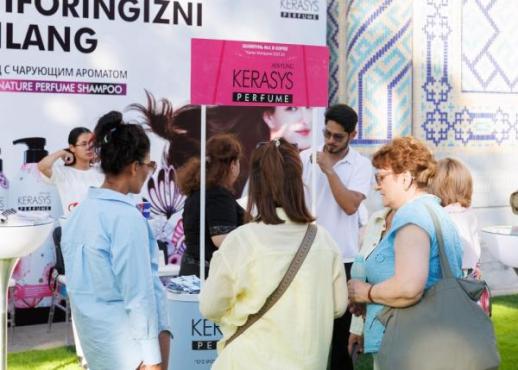 Aekyung Industry Launches Kerasis Brand in Central Asia with K-Pop Events Aekyung Industry announced on June 25 that its hair care brand, Kerasis, held K-Pop events in Kazakhstan and Uzbekistan to enhance brand awareness. The company organized these events to expand consumer engagement based on local interest in K-Culture. On June 13, Kerasis hosted the "Kerasis K-Pop Random Play Dance Challenge" in Tashkent's Magic City, attracting around 1,000 attendees. The contest allowed participants to dance freely to K-Pop music. In Kazakhstan, Aekyung served as the main sponsor for the "K-Pop Star Kazakhstan" event held on June 6-7 at Almaty Mega Almaty, which drew approximately 7,000 visitors. At both events, Kerasis showcased its Proactive Man 2-in-1 shampoo and Classic Perfume line, providing opportunities for product sampling. Kerasis has been experiencing steady growth in the CIS (Commonwealth of Independent States) region, with an average annual sales growth rate of 18.4% from 2020 to 2025. As of May this year, cumulative sales increased by 37% compared to the same period last year. Aekyung's Daily Care Division Executive Director An Jung-tae stated, "We will continue to expand our engagement with global consumers through various cultural marketing activities and strengthen Kerasis's competitiveness." Additionally, Aekyung completed the absorption of its subsidiary, One Thing, on June 16 to enhance its cosmetics brand competitiveness and expand its global business.* This article has been translated by AI. 2026-06-25 17:04:00
 -
 Samsung Electronics Leads Global DRAM Market, SK Hynix Dominates HBM Sector Samsung Electronics solidified its position as the leader in the global DRAM market in the first quarter of this year, widening its market share gap over SK Hynix and demonstrating its competitiveness in the general memory sector.In contrast, SK Hynix maintained its dominance in high-bandwidth memory (HBM), a key component for artificial intelligence (AI) semiconductors, holding over half of the market share.According to Counterpoint Research on June 25, Samsung Electronics captured 38% of the global DRAM market share by revenue in the first quarter, followed by SK Hynix at 29% and Micron at 22%. Since reclaiming the top spot in the fourth quarter of last year, Samsung has maintained its lead, increasing the gap with SK Hynix to 9 percentage points.The competitive landscape between the two companies has become more pronounced compared to last year. In the first and second quarters of last year, SK Hynix held the top position, but after a tie at 33% in the third quarter, Samsung regained its advantage in the fourth quarter.Notably, China's Changxin Memory Technologies (CXMT) has increased its market share from 3% last year to 8% this year, intensifying the competition.The overall DRAM market has experienced rapid growth, driven by increased investments in AI servers. The market size in the first quarter surged by 80% compared to the previous quarter and by 260% year-over-year.In the HBM market, SK Hynix continued its strong performance, holding a 58% share by revenue in the first quarter. Both Samsung Electronics and Micron shared the second position with 21% each. Although SK Hynix's share decreased from 69% in the first quarter of last year, it still maintained a significant lead.Looking ahead, there are expectations for a potential counterattack from Samsung Electronics. The company is set to supply the next-generation HBM4 to NVIDIA for the first time, which is anticipated to boost its market share in the HBM sector starting in the second half of the year.Counterpoint Research stated, "While Samsung ranks third, it is expected to increase its share by being the first to supply HBM4 to NVIDIA. Most of the HBM revenue comes from HBM3E, and deliveries of HBM4 are expected to materialize in the second half of the year."In the NAND flash market, Samsung Electronics led with a 29% share, followed by SK Hynix at 18%, Kioxia at 14%, and Micron, SanDisk, and Yangtze Memory Technologies (YMTC) each holding 13%. Notably, YMTC has expanded its market share from 8% last year to 13% this year, bolstered by a shortage in memory supply and rising prices.* This article has been translated by AI. 2026-06-25 17:04:00
 -
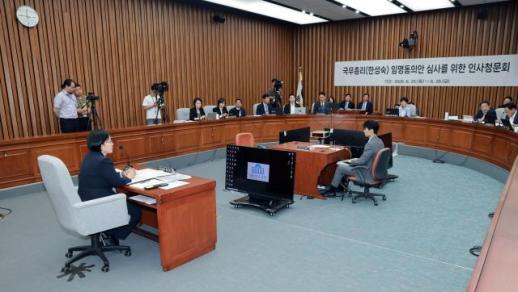 Controversy Erupts Over Witness Selection and Document Submission in Han Seong-sook's Confirmation Hearing On the first day of the confirmation hearing for Prime Minister nominee Han Seong-sook, the People Power Party criticized the lack of proper witness selection and document submission. In response, the Democratic Party accused the opposition of attempting to politicize the issue by using witnesses and submitted materials for political gain. Kang Seung-kyu, the People Power Party's representative on the special committee for Han's confirmation, stated, "We strongly demanded the selection of witnesses, including former Naver CEO Kim Sang-hwan, to clarify allegations of bribery related to Seongnam FC, but this was blocked by the Democratic Party." He added, "Without witnesses, we must rely on transparent document submissions to uncover the truth, but this has also been rejected, effectively nullifying the National Assembly's verification authority." In response, Democratic Party representative Kim Han-kyu remarked, "We can accept most witnesses, excluding those related to Seongnam FC who would politicize the issue by involving President Lee Jae-myung. The People Power Party insisted that both witnesses and appraisers must be accepted for the process to be meaningful, which hindered negotiations." He explained that many of the document requests were unrelated to the candidate's verification. On this day, the People Power Party focused its criticisms on Han's multiple property holdings, violations of agricultural land laws, and personal data leaks related to the Ministry of SMEs and Startups' 'Everyone's Startup' project. The Democratic Party defended Han by refuting the allegations and highlighting her qualifications. Looking ahead, both parties plan to continue the confirmation hearing for Han until June 26, followed by discussions on whether to adopt the report on the confirmation process around June 29. If a majority of the 300 members present at the National Assembly vote in favor, Han's confirmation process will be completed.* This article has been translated by AI. 2026-06-25 17:04:00
 -
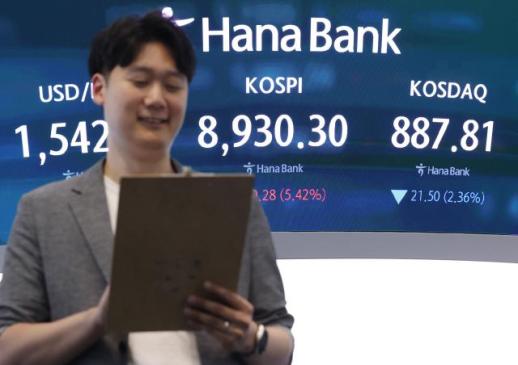 KOSPI, Nikkei 225 refueled by revived chip fever SEOUL, June 25 (AJP) — The KOSPI moved to the brink of reclaiming the 9,000-point milestone amid a tense market rivalry between the country's two chip heavyweights, while the junior KOSDAQ sank further as bets narrowed on chip infrastructure. The benchmark KOSPI closed up 5.42 percent at 8,930.30 after briefly climbing above the 9,000-point threshold during afternoon trading. Trading was volatile throughout the session. A buy-side sidecar was triggered shortly after the open amid a rush into chip stocks after overnight results from Micron Technology reinforced expectations that the AI boom would last well through next year. Samsung Electronics climbed 5.29 percent to close at 358,500 won, while SK hynix surged 13.06 percent to 2,917,000 won to reclaim the No. 1 market capitalization title after losing it for just one day. Shares tied to the two chipmakers also rallied sharply, with SK Square rising 5.56 percent to 1,899,000 won, Samsung C&T gaining 7.79 percent to 519,000 won, Samsung Life Insurance adding 3.23 percent to 447,000 won and Samsung Electronics preferred shares surging 10.07 percent to 235,000 won. Samsung Electro-Mechanics also gained 1.68 percent to 1,997,000 won. Samsung Biologics ended little changed, edging up 0.07 percent to 1,386,000 won, while Kia rose 0.43 percent to 139,500 won. Much of the non-semiconductor blue chips remained subdued. Hyundai Motor fell 1.18 percent to 503,000 won, LG Energy Solution dropped 3.69 percent to 352,000 won, HD Hyundai Heavy Industries slipped 0.85 percent to 582,000 won and Hanwha Aerospace declined 2.29 percent to 1,069,000 won. Institutional investors remained the dominant buyers, purchasing a net 4.24 trillion won ($2.75 billion) worth of KOSPI shares. Retail investors sold a net 3.45 trillion won, while foreign investors offloaded a net 773.6 billion won. The semiconductor-led surge came at the expense of the secondary market, where the tech-heavy KOSDAQ fell 2.46 percent to 887.81, slipping back below the 900-point mark. Among KOSDAQ heavyweights, Alteogen edged up 0.94 percent to close at 375,000 won, while battery materials makers EcoPro BM and EcoPro tumbled 5.57 percent to 144,000 won and 5.29 percent to 102,000 won, respectively. Among semiconductor equipment makers, Jusung Engineering plunged 8.50 percent to 166,900 won, although Wonik IPS and Reno Industrial gained 2.72 percent to 154,700 won and 4.11 percent to 88,700 won, respectively. The Korean won weakened slightly against the U.S. dollar, trading at 1,544.7 won per dollar, down 2 won from the previous session. The session underscored the market's growing divide, with semiconductor winners continuing to outpace the broader market. Japan's Nikkei 225 jumped 4.61 percent to 72,366.34, extending gains alongside the global chip rally. China's Shanghai Composite rose 0.23 percent to 4,120.28, while Hong Kong's Hang Seng Index declined 1.61 percent to 23,035.63. 2026-06-25 17:01:18
 -
 Strike looms at Hyundai Motor after mediation fails SEOUL, June 25 (AJP) -The labor union of South Korea's largest automaker, Hyundai Motor Co., secured the legal right to strike on Thursday after labor authorities suspended mediation in the company's wage negotiations, raising another labor risk at a major industrial workplace following Samsung Electronics. According to Hyundai Motor and its union, the National Labor Relations Commission decided to suspend mediation in the dispute, concluding that the gap between labor and management remained too wide to reach an agreement through conciliation. The ruling came a day after union members voted in favor of strike action in a ballot. With both the strike authorization vote and the mediation suspension completed, the union is now legally permitted to stage a strike under South Korean labor law. The union plans to launch a central strike committee on June 30 to discuss possible industrial action and its negotiating strategy. Labor and management have held 11 rounds of talks this year. The union declared negotiations broken down on June 12 and began strike preparations, saying the company had failed to present a wage proposal. The union is demanding a monthly base wage increase of 149,600 won ($97), excluding seniority-based pay raises, a performance bonus equivalent to 30 percent of the company's net profit from last year, an increase in bonuses from 750 percent to 800 percent of monthly pay, and an extension of the retirement age. With the union now holding legal strike rights, industry observers expect Hyundai Motor to present its first wage proposal in the near future in an effort to avoid a work stoppage. Last year, the company and union reached a wage agreement after workers staged three partial strikes. "The company does not have an official message regarding the union's acquisition of the right to strike. We will make every effort to reach an amicable agreement with the union," an employee from Hyundai Motor's media relations team told AJP by phone. Meanwhile, shares of Hyundai Motor closed at 504,000 won ($326.8) on the KOSPI, down 0.98 percent on the day. 2026-06-25 17:00:11
 -
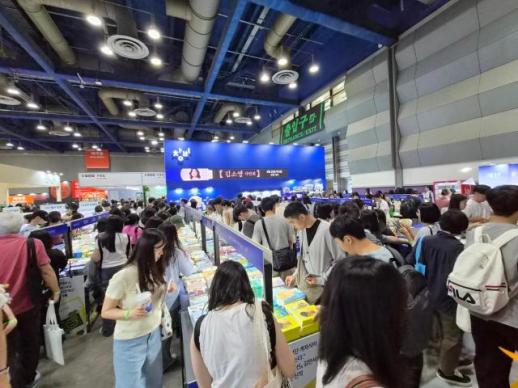 Bustling Seoul International Book Fair Challenges 'Books Are Quiet' Stereotype The 2026 Seoul International Book Fair, which opened on June 24, drew large crowds despite being a weekday. Long lines formed at the entrance for tickets, and inside, the exhibition hall was bustling with visitors exploring publisher booths and purchasing merchandise. Attendees moved energetically between booths, engaging with books, participating in activities, and enjoying the atmosphere. The largest book festival in South Korea will run until June 28 at COEX in Samsung-dong, Seoul. A total of 538 companies from 18 countries are participating, including 361 domestic and 177 international publishers, showcasing 416 programs that include books, exhibitions, author talks, and interactive events. “I came to get an autograph from author Cheon Seon-ran,” said 23-year-old Lim Chae-rin. “The fair's biggest appeal is being able to explore not only well-known large publishers but also small publishers and local bookstores all in one place.” She added, “I also plan to check out the beautiful booths and participate in various activities.” Exhibitors designed their booths with unique concepts to attract visitors. Minumsa set up a capsule toy zone to showcase merchandise, while Munhaksoochup featured a pop-up book exhibition and a fate lottery event. Kimyoungsa offered a handwritten weight zone for transcription experiences, and Borim Publishing presented a book recommendation service with staff dressed as chefs. An engaging booth by Ansan Publishing featured phrases like “What’s wrong with books being fashion?” and “What’s wrong with decorating books?” to encourage young visitors to linger. Major bookstores like Kyobo Bookstore, Yes24, and Millie's Library also highlighted interactive content. Yes24's reading and learning campaign, “Reading Run Base Camp,” attracted about 1,700 participants on the opening day alone. A representative from Yes24 noted, “This number includes participants in the Reading Run audio reading, and the actual number of booth visitors is much higher.” The busiest spot was the Minumsa booth, where the lines for payment and visitor flow became tangled. Staff waved flags reading “Payment Line” and called out, “Please come this way if you are ready to pay,” as they worked to manage the crowd. This year’s book fair centers around the theme of “Human Declaration (Homo Duduri),” focusing on the question, “What does it mean to be human in the age of artificial intelligence (AI)?” At a book talk titled “Limited Edition Human Declaration,” novelist Kang Hwa-gil, music critic and author Bae Soon-tak, and poet Lee Je-ni shared their thoughts on humanity in the AI era. Bae remarked, “Humans often feel fear when something new emerges that has never existed before. It seems our anxiety about AI is amplified as we realize that trust and promises among humans are collapsing globally.” A surprise book talk featuring former President Moon Jae-in, author Yoo Si-min, and former Blue House protocol secretary Tak Hyun-min drew a large crowd at the “Dolbegae-Pyeongsan Bookstore” booth. Attendees filled the area around the booth more than 30 minutes before the event started, and cheers erupted when Moon appeared. French novelist Bernard Werber also participated in a book talk themed “Imagination and Translation: Connecting Stories Across Cultures.” The book fair will continue at COEX Halls A and B1 until June 29. * This article has been translated by AI. 2026-06-25 17:00:00
 -
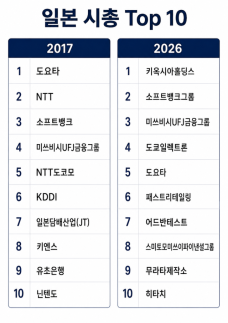 Kioxia Surpasses Toyota as Japan's Top Market Capitalization Amid AI Semiconductor Boom Kioxia Holdings, a Japanese semiconductor company, has seen its stock price soar by 3,566% over the past year, with an increase of over 800% since the beginning of the year. This surge in demand for memory semiconductors, driven by investments in artificial intelligence (AI) data centers, has propelled Kioxia to surpass Toyota, a symbol of Japanese manufacturing, to become the top company by market capitalization on the Tokyo Stock Exchange. This remarkable achievement comes just a year and a half after Kioxia's initial public offering. As of June 25, data from Companies Market Cap shows that the top ten companies by market capitalization in Japan are dominated by firms in the semiconductor, AI, and IT value chains. Kioxia leads with a market cap of $337.2 billion, followed by SoftBank Group at $236.5 billion, Mitsubishi UFJ Financial Group at $223.4 billion, and Tokyo Electron at $212.2 billion. Toyota, traditionally a leader in the manufacturing sector, is now in fifth place with a market cap of $198.6 billion. In the sixth to tenth positions are Fast Retailing at $159.9 billion, Advantest at $156.0 billion, Sumitomo Mitsui Financial Group at $150.1 billion, Murata Manufacturing at $131.2 billion, and Hitachi at $127.4 billion. Excluding financial firms Mitsubishi UFJ and Sumitomo Mitsui, as well as Fast Retailing and Toyota, six of the ten companies benefit directly or indirectly from the semiconductor and AI value chains. The landscape of Japan's stock market has changed significantly over the past decade. In 2017, the top companies were primarily in traditional sectors, with four telecommunications firms and two financial firms dominating the rankings. At that time, Toyota held the top position with a market cap of approximately $200 billion, followed by NTT, SoftBank, Mitsubishi UFJ, and NTT Docomo. The sixth to tenth positions included KDDI, Japan Tobacco, Keyence, Yucho Bank, and Nintendo. In the last ten years, Japan's stock market has rapidly restructured around AI and semiconductor companies. Firms like Kioxia, Tokyo Electron, Advantest, and Murata Manufacturing have entered the top ten by market capitalization. Additionally, SoftBank Group, benefiting from investments in OpenAI, and Hitachi, recognized for its role in industrial digitalization, have contributed to this shift, leading to the emergence of the term 'Japan's Magnificent Seven' to describe these key players. Recent analysis by the Nihon Keizai Shimbun identified Kioxia, SoftBank Group, Tokyo Electron, Murata Manufacturing, Advantest, Hitachi, and Shin-Etsu Chemical as the driving forces behind Japan's stock market this year. Meanwhile, the prominence of automotive stocks, which once led the market, has diminished significantly compared to a decade ago. As of March this year, the price-to-book ratios (PBR) for Japan's three major automakers—Toyota, Honda, and Nissan—were all below one, with Toyota at 0.88, Honda at 0.46, and Nissan at 0.22. Although Toyota remains a representative company in Japan, its stock price has stagnated, causing its market cap to fall to fifth place behind SoftBank Group, Mitsubishi UFJ, and Tokyo Electron. Furthermore, forecasts indicate that Toyota's net profit will decline for the third consecutive year. Experts predict that the semiconductor rally in Japan will extend to AI-related materials and components, as well as automation and infrastructure across the semiconductor value chain. Choi Bo-won, a researcher at Korea Investment & Securities, stated, "The diverse semiconductor-related stocks in Japan are becoming a key driver for improving the fundamentals of Japanese companies." He added that the Takaiichi Cabinet plans to invest ¥68 trillion in AI semiconductors, ¥23.1 trillion in vertical AI, and ¥10.5 trillion in physical AI, emphasizing the need to pay attention to companies linked to the semiconductor and AI industries, including those involved in industrial automation, digitalization, and security.* This article has been translated by AI. 2026-06-25 16:56:00
 -
 AI Will Revolutionize Product Recommendations, Says Korean Retail Forum Head "In the future, artificial intelligence (AI) will suggest and recommend the optimal products to consumers," said Kim In-ho, chairman of the Korea Retail Forum, during the first keynote speech at the 17th Consumer Policy Forum held at the Korea Press Center in Jung-gu, Seoul, on June 25. Kim addressed the themes of expanding consumer value, the era of hyper-personalization, and the paradigm shift in retail driven by AI.Despite concerns about consumer contraction due to low growth, high inflation, and demographic changes, Kim noted that the recovery in the semiconductor market, strong exports, rising stock prices, and an increase in foreign visitors to South Korea have led to unexpectedly robust performance in some retail channels, such as department stores. He stated, "Since the second half of last year, we have seen trends that differ from expectations. The recovery in the semiconductor market, strong exports, rising stock prices, increased luxury consumption, and a rise in foreign visitors have quickly improved market sentiment." He added that this shift is also reflected in the recent rise in department store stock prices.Kim explained that while the growth factors for department stores in 2011 included asset effects, growth of large manufacturing companies, and enhanced promotions, this year, key variables include rising stock prices, semiconductor and export performance, and demand from foreign tourists.However, he diagnosed that the retail industry has entered a phase of polarization. Kim remarked, "Economically, we are experiencing a mix of low growth, high inflation, and a semiconductor boom, while socially, we are facing declining populations, aging, an increase in single-person households, and deepening polarization." He continued, "Politically and institutionally, income redistribution, retail regulations, and labor-related legislation are influencing the sector, while technologically, AI, agentic commerce, and AX (AI transformation) management technologies are reshaping the retail landscape."Kim also highlighted the changing nature of consumer value. He noted that while past consumption focused on 'ownership' related to basic needs, it has expanded to include experiences and activities such as hobbies, relaxation, and knowledge during periods of growth. He emphasized, "Retail must go beyond merely selling products to enhance its capabilities in information delivery, recommendations, and suggestions. Consumers express their tastes and identities through shopping, making emotional value and self-expression key drivers of consumption."Looking ahead, Kim predicted that AI will alter the competitive dynamics of the retail industry. He explained, "AI 1.0 automated and optimized existing tasks like demand forecasting, inventory placement, and delivery efficiency. AI 2.0 will involve consumers delegating purchasing decisions to AI agents without direct exploration. AI 3.0 could lead to on-demand retail, where production begins immediately upon order placement."Kim stressed that the focus of next-generation retail competitiveness will shift from location and store openings to understanding customers and data asset management. He stated, "While traditional retail relied on good locations and product inventory, future success will depend on understanding individual customers, personalized product suggestions, demand forecasting, and flexible delivery based on living areas. The retail industry must transition to enhance customer lifetime value and increase loyalty and usage frequency."* This article has been translated by AI. 2026-06-25 16:56:00
 -
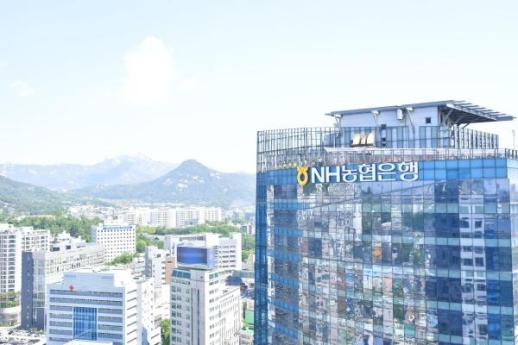 NH Nonghyup Bank and Technology Guarantee Fund Collaborate to Expand Green Financing NH Nonghyup Bank is partnering with the Technology Guarantee Fund to provide financial support aimed at fostering green businesses and reducing greenhouse gas emissions.On June 25, NH Nonghyup Bank announced the signing of a memorandum of understanding for a subsidized financing agreement to support the development and backing of green enterprises.Green businesses are defined as companies or facilities that significantly contribute to environmental improvement through practices such as reducing pollutants, conserving energy, and producing eco-friendly products.The agreement focuses on alleviating the financial burden of verifying carbon reduction amounts during the installation of carbon reduction facilities and enhancing access to financial resources for small and mid-sized enterprises (SMEs) facing challenges in utilizing policy financing.Under the agreement, NH Nonghyup Bank will receive guarantees and greenhouse gas reduction evaluation reports based on the 'Carbon Value Assessment and Korean Green Classification System (K-Taxonomy)' from the Technology Guarantee Fund. The bank plans to use these reports to support loans under the subsidized financing agreement for green policy financing.The support will target SMEs and mid-sized companies engaged in greenhouse gas reduction projects. Selected companies will receive favorable financing for facility funds aimed at implementing carbon reduction equipment.Eom Eul-yong, Vice President of NH Nonghyup Bank, stated, "We expect this agreement will enable companies contributing to green growth and achieving carbon neutrality to receive financial support more smoothly. We will also develop various financial products and services to support the growth of SMEs and expand ESG (Environmental, Social, and Governance) management."* This article has been translated by AI. 2026-06-25 16:52:00
 -
 Korean Retail Executive Discusses AI's Role in Enhancing Efficiency and Customer Value "AI is a crucial tool for overcoming traditional trade-offs," said Lee Tae-hee, head of operations strategy at Kurly, during a presentation at the 17th Consumer Policy Forum hosted by Ajou Economic Daily at the Korea Press Center on June 25. He emphasized that in an increasingly cost-burdened retail environment, AI will be essential for enhancing both customer value and operational efficiency.Since launching Market Kurly, South Korea's first early-morning delivery-based online grocery service in 2015, Kurly has led the online transformation of the domestic food market. The company has expanded its delivery services beyond the Seoul metropolitan area to key regions including Chungcheong, Daegu, Busan, and Gwangju. Lee noted that last year, Kurly's transaction volume reached 3.5 trillion won, a 13.5% increase from the previous year, and the company recorded its first annual operating profit of 13.1 billion won.He attributed this turnaround to diversification of services, expansion of the customer base, and improvements in logistics efficiency. New ventures, such as the beauty platform Beauty Kurly and Kurly N Mart, have also become significant growth drivers.However, Lee acknowledged that new challenges have emerged. He pointed out that labor costs, logistics expenses, and product costs continue to rise, while consumer price sensitivity is leading to a shift towards value-oriented channels. He added that the need for new operational processes and infrastructure across different business segments is increasing investment burdens.As a solution to these issues, Lee proposed the use of AI. He explained that AI can create a structure where costs do not increase linearly, even as the number of managed items grows. He highlighted that Kurly's accumulated data on customers, products, demand, and logistics over more than a decade is a competitive asset that rivals would find difficult to replicate in a short time.Lee emphasized that Kurly is already applying AI across its operations. In the customer acquisition and product exploration stages, creative AI is used to generate detailed product descriptions, while AI search solutions enhance search quality and shopping cart conversion rates. In the product receiving and order processing stages, AI-driven ordering and inventory management, AI sorting machines, and autonomous robots have been implemented."By suggesting optimal orders based on sales, receiving, and inventory data, we are reducing stockouts and waste," Lee said. He also noted that deep learning-based sorting solutions and camera sensor scanning are improving the efficiency of fresh produce inspections. Autonomous robots are currently being tested in logistics centers, with expectations of a 30% improvement in productivity.Lee concluded, "The direction of AI operational innovation is to enable tasks that were previously impossible and to create new customer value. It is important to focus on where we should concentrate our efforts and to maintain sustainable growth through better perspectives."* This article has been translated by AI. 2026-06-25 16:52:00