
Journalist

Lee Hugh
innis@ajupress.com
-
 Google DeepMind chief meets South Korean business leaders to expand AI cooperation SEOUL, April 28 (AJP) - Demis Hassabis, CEO and co-founder of Google DeepMind, held a series of meetings in Seoul on Tuesday with the heads of major South Korean conglomerates including Hyundai Motor and LG Group, according to industry sources. Hassabis reportedly met with Hyundai Motor Chairman Chung Eui-sun earlier in the day and later met with LG Group Chairman Koo Kwang-mo to discuss cooperation aimed at expanding partnerships in artificial intelligence (AI)-related areas. Hassabis, who arrived in Seoul the previous day, met with President Lee Jae Myung at Cheong Wa Dae. He also signed a memorandum of understanding (MOU) with the Ministry of Science and ICT to expand cooperation including plans to open Google DeepMind's first AI center in the country later this year for joint research and collaboration with local researchers and startups. His visit this week came for the first time in about a decade since his trip in 2016 for the best-of-five match between the U.K.-based lab's AI program AlphaGo and baduk or go champion Lee Se-dol. Managing a single win in the five-match series, Lee conceded victory to a then two-year-old AI system, contrary to hopes among many that he would decisively prove the superiority of 3,000 years of human ingenuity over a mere machine. Hassabis is set to meet the world champion again at a forum in the capital scheduled for Wednesday. 2026-04-28 16:11:51
 -
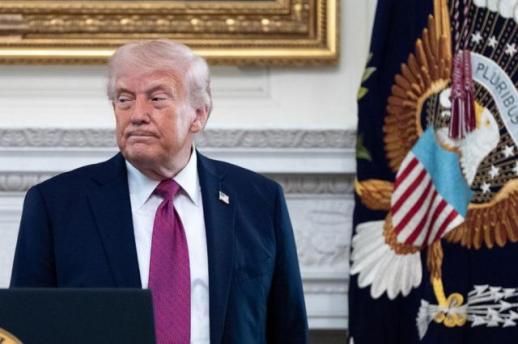 Fresh uncertainty arises as Trump extends ceasefire with Iran indefinitely SEOUL, April 22 (AJP) - U.S. President Donald Trump on Tuesday extended a ceasefire with Iran indefinitely until Tehran submits a "unified proposal" to end the conflict in the Middle East, reversing a statement he made only hours earlier that there would be no extension. "We have been asked to hold our Attack on the Country of Iran until such time as their leaders and representatives can come up with a unified proposal," Trump wrote on his own platform Truth Social. "I have therefore directed our Military to continue the Blockade and, in all other respects, remain ready and able, and will therefore extend the Ceasefire until such time as their proposal is submitted, and discussions are concluded, one way or the other," he added. The extension came at the last minute, as the two-week ceasefire was set to expire on Wednesday, just ahead of a planned trip by Vice President JD Vance to Islamabad, Pakistan, for another round of talks that was put on hold after Iranian negotiators said they would not attend. Uncertainty now further surrounds whether and when a new round of talks between Washington and Tehran will resume, though Trump who may want to quickly pull out of the conflict while saving face, remained optimistic that Washington would "end up with a great deal" with Iran. "I think they have no choice. We've taken out their navy, we've taken out their air force, we’ve taken out their leaders, frankly, which does complicate things in one way. But these leaders are much more rational," he said. 2026-04-22 09:40:45
 -
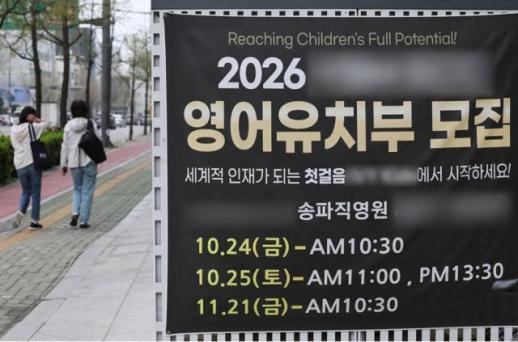 South Korea moves to rein in early private tutoring for toddlers SEOUL, April 1 (AJP) - A set of tightened rules will be implemented for kindergartens, nurseries, and private crammers to curb excessive courses for infants and preschoolers, the Ministry of Education said on Wednesday. According to the ministry, crammers would be barred from offering rote-style intensive classes for children under 36 months as early as the second half of next year, while lesson times for preschoolers would also be capped. The move comes amid growing criticism that the boom in early private tutoring, driven by South Korean parents' obsessive zeal to give their kids a head start, is actually hindering their cognitive development. Under its proposal, crammers would be prohibited from giving toddlers solely teacher-led instruction, often involving repetitive drills that require them to memorize rather than understand. For preschoolers aged three and older, similar classes would be limited to a maximum of three hours per day and 15 hours per week. Play-based classes that include practical activities and hands-on experiences will be allowed. As it may be difficult to clearly distinguish one class from another based on their format, the ministry said it will come up with detailed guidelines later. Separately, revisions to relevant laws banning level tests for infants are also being pursued, aiming to prevent crammers from conducting written or oral exams to assess children's levels for class placement or admission screenings. The ministry will also step up monitoring of illegal practices, offering rewards of up to 2 million won to those who report violations. "The early years of a child's life are crucial for building a strong foundation for their future. We will focus on protecting children's development and supporting their healthy growth," said Education Minister Choi Kyo-jin, adding that public education will be strengthened by expanding a wider range of after-school programs to reduce parents' reliance on private tutoring. 2026-04-01 16:52:41
 -
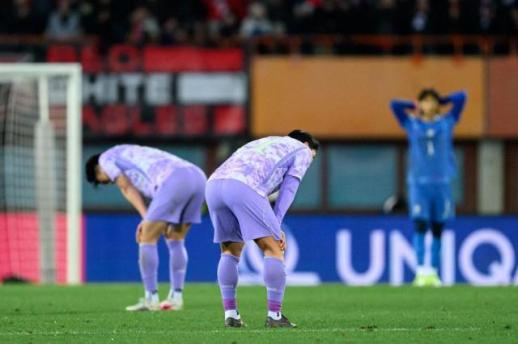 Another goalless defeat in friendly dims South Korea's World Cup hopes SEOUL, April 1 (AJP) - With the FIFA World Cup just three months away, South Korea suffered a 1-0 defeat to Austria in a friendly match held in Vienna on Tuesday, raising concerns ahead of the quadrennial global extravaganza. It was its second straight goalless defeat after a 4-0 loss to Ivory Coast in London last Saturday. Despite having 11 shooting attempts, well ahead of Austria's five, South Korea with a full lineup of star players like Son Heung-min of Los Angeles FC, Lee Kang-in of Paris Saint-Germain, and Lee Jae-sung of Bundesliga club Mainz 05 was unable to find the net, failing to convert its chances into a goal. The only goal came from Austrian midfielder Marcel Sabitzer in the 48th minute. Meanwhile, this year's World Cup, which kicks off in June, will be the first to feature 48 teams and three host countries - Canada, Mexico, and the U.S. Already grouped with Mexico and South Africa after last December's draw, South Korea will face the Czech Republic in its opening group-stage match, as the European side secured the final spot in the group by defeating Denmark in a playoff the same day. With two defeats in its last two friendlies just ahead of the football tournament, slated for June 11 to July 19, South Korea has been struggling to find form, leaving its hopes of advancing beyond the round of 32 in doubt. 2026-04-01 09:35:30
 -
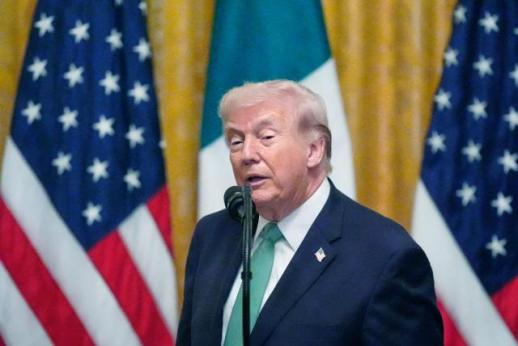 Trump ramps up pressure on 'non-responsive' allies to reopen Strait of Hormuz SEOUL, March 19 (AJP) - U.S. President Donald Trump on Wednesday proposed shifting responsibility for keeping the Strait of Hormuz open and safe to other countries, instead of relying on allies he described as "non-responsive." "I wonder what would happen if we 'finished off' what's left of the Iranian Terror State, and let the Countries that use it, we don't, be responsible for the so called 'Strait?'" Trump wrote on his own social media platform Truth Social. "That would get some of our non-responsive 'Allies' in gear, and fast!!!" The proposal came just a day after Trump said the U.S. no longer needs support from NATO member countries as well as Australia, Japan, and South Korea amid growing frustration with allies who have been slow to respond to his calls for help. It appears to be an apparent attempt to pressure allies, as many Asian and European countries including China, Japan, and South Korea heavily rely on oil passing through the strait, while the U.S. imports just a small fraction from the region. The critical chokepoint, which handles roughly one-fifth of the world's oil supply, has remained largely closed shortly after U.S.-led airstrikes on Iran late last month. 2026-03-19 09:13:05
 -
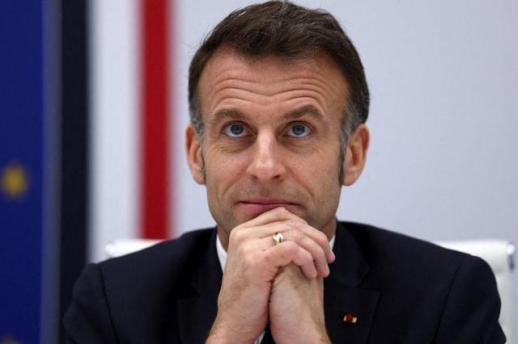 French president to visit Seoul for summit next month SEOUL, March 13 (AJP) - French President Emmanuel Macron will visit Seoul next month, Cheong Wa Dae said on Friday. In a written press briefing, presidential spokesperson Kang Yoo-jung said Macron will arrive in Seoul on April 2 for a summit with President Lee Jae Myung. The visit will mark his first trip to South Korea since his inauguration in 2017 as the youngest president in French history and also the first by a French president in about 11 years. After a formal welcoming ceremony at Cheong Wa Dae, the two leaders are scheduled to hold a summit the next day, followed by a state luncheon and other events. Their talks are expected to cover a broad range of areas including cooperation in trade and investment, as well as in advanced industries such as artificial intelligence (AI), quantum technology, space, and nuclear energy. Global issues including the ongoing conflict in the Middle East that began with U.S.-led airstrikes on Iran, are also expected to be on the agenda. As South Korea's third-largest trading partner in Europe, France also draws more than 800,000 South Korean tourists each year. Kang said Macron's visit, which coincides with the 140th anniversary of diplomatic relations between the two countries, would serve as an "important milestone" in building bilateral trust, and expressed hope that it would strengthen joint efforts toward sustainable global growth. Meanwhile, Indonesian President Prabowo Subianto will also make a state visit to South Korea later this month. Subianto is scheduled to arrive in Seoul on March 31 and hold a summit with Lee the following day. It will be their second meeting since last November, when the two met on the sidelines of the Asia-Pacific Economic Cooperation (APEC) summit in the southeastern city of Gyeongju. 2026-03-13 11:21:43
 -
 South Korea to face Dominican Republic in WBC quarterfinals in Miami SEOUL, March 12 (AJP) - South Korea will face the Dominican Republic in the quarterfinals of the World Baseball Classic (WBC) in Miami later this week. The formidable Dominican Republic wrapped up the quadrennial tournament's regional matchups by defeating Venezuela 7‑5 at loanDepot park in Miami on Wednesday, extending its undefeated run to advance to the quarterfinals as the top finisher in its group. With the win, the Dominican Republic is now set to face South Korea at the same ballpark, the home of the Miami Marlins on Friday. Led by manager Ryu Ji-hyun, South Korea, which advanced to the quarterfinals with a dramatic victory over Austria earlier this week, will face a tough challenge against the Caribbean country's star-studded lineup, which includes Fernando Tatís Jr., Juan Soto, Manny Machado and Vladimir Guerrero Jr., all in Major League Baseball (MLB). This year's WBC, featuring 20 teams split into four groups with regional rounds held in Houston, Miami, Puerto Rico, and Tokyo, runs until March 17. The top two teams from each group advanced to the quarterfinals, with games to be played in Houston and Miami, while the semifinals and finals will be held in Miami. 2026-03-12 15:40:40
 -
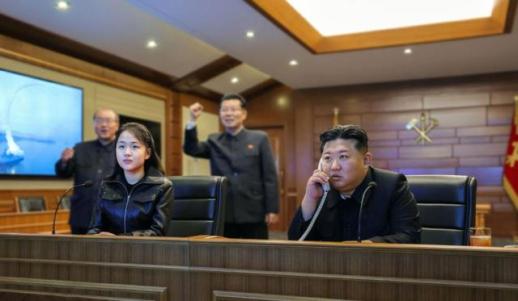 North Korea conducts another missile test from new destroyer SEOUL, March 11 (AJP) - North Korea has conducted another test‑firing of strategic cruise missiles from its new destroyer, state media reported on Wednesday. According to the state-run Korean Central News Agency (KCNA), leader Kim Jong‑un observed the test through a monitor the previous day, accompanied by his daughter Ju‑ae. The test comes less than a week after a similar test conducted at a shipyard in Nampo and also coincides with the annual joint military exercises between South Korea and the U.S., which are currently underway. KCNA said the missiles from the multipurpose destroyer Choe Hyun flew along the West Sea for roughly 10,000 seconds before hitting their designated targets, with Kim expressing "his great satisfaction over the verified reliability of the national integrated control system of strategic weapons and the superiority of the destroyer's integrated combat system." Kim was quoted as saying, "The components of our war deterrent are now being included in the very sophisticated operational system in an effective and accelerated manner continuously and the country's nuclear forces have made a switch to the phase of multifaceted operation." He also vowed to enhance the country's naval capabilities with more warships in the future. In April last year, North Korea unveiled the Choe Hyon, named after a comrade of its regime founder Kim Il‑sung during his days as a partisan fighter. The 5,000-ton destroyer is believed to be capable of carrying nuclear weapons. North Korea is also building another destroyer, which is expected to be completed by early October, in time for the 81st anniversary of the founding of the country's key ruling organ, the Workers' Party of Korea. 2026-03-11 10:56:29
 -
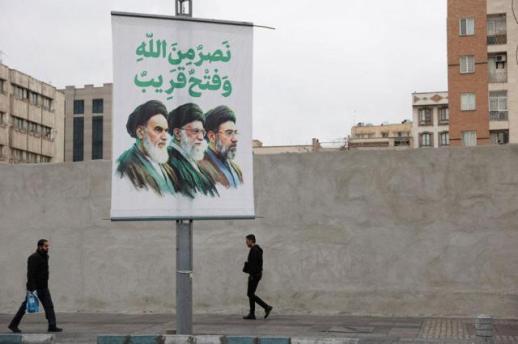 North Korea says it 'respects' Iran's choice of new leader SEOUL, March 11 (AJP) - North Korea said on Wednesday it "respects" the election of Iran's new leader Mojtaba Khamenei, who was named to succeed after his father was killed in U.S.-Israeli airstrikes early this month. According to the state-run Korean Central News Agency (KCNA), the country's Foreign Ministry said in a question-and-answer session the previous day that it "respects the rights and choice of the Iranian people to elect their supreme leader." Mojtaba, widely regarded as a hard‑liner, is the second-eldest son of late former leader Ali Khamenei, who ruled Iran with an iron fist for decades. Iranian clerics chose him despite prior warnings from the U.S. and Israel, a decision widely seen as a message that Iran will not yield to external pressure. "We express serious concern over and strongly denounce the acts of aggression by the U.S. and Israel that are destroying the regional peace and security foundations and escalating instability worldwide by mounting illegal military attack on Iran," the ministry fumed. "U.S. and its vassal forces are getting undisguised in their intervention into the internal affairs of Iran over the recent election of its new leader of the Islamic Revolution," it added, though it did not directly denounce U.S. President Donald Trump. Since establishing diplomatic ties in 1973, North Korea and Iran are believed to have begun cooperating on missiles and other weapons technology in the 1980s, when Iran turned to Pyongyang for help developing its missile capabilities during its war with Iraq. 2026-03-11 09:38:21
 -
 60s movie star Kim Ji-mee dies in US SEOUL, December 10 (AJP) - Veteran actress Kim Ji-mee, one of the biggest stars of South Korean cinema in the 1960s and 1970s, died of age-related complications in the U.S., film industry sources said Wednesday. She was 85. Born in 1940 in South Chungcheong Province, the prolific actress appeared in around 700 films since making her screen debut in director Kim Ki-young's 1957 film "Twilight Train," with her career spanning from the 1950s through the 1990s. Her personal life was as dramatic as her on-screen roles, with multiple high-profile marriages and divorces to prominent figures and top stars that often drew comparisons to Hollywood star Elizabeth Taylor. At the age of 18 in 1958, she married film director Hong Seong-gi, who was 16 years her senior, but the couple divorced in 1962. Later that year, she made headlines when she was arrested on adultery charges involving actor Choi Mu-ryong. She remarried him the following year, but their scandalous marriage also ended in 1969. She later lived with then-popular singer Na Hoon-a from 1976 to 1982, before marrying a doctor in 1991 in her fourth and final marriage, which also ended some 11 years later. After retiring from acting in the late 2000s, Kim moved to the U.S., settling near Los Angeles, California. Details about her funeral service have not been disclosed, but the Federation of Korean Filmmakers here said it will hold a memorial service in Seoul, honoring her legacy and cinematic achievements in South Korean film history. 2025-12-10 11:31:06