

Journalist

Hwang Jin-hyun
jinhyun97@ajunews.com
-
 Iran Blames U.S. and Israel for Middle East Instability in Call with South Korea's Foreign Minister Iran's Foreign Ministry announced that Foreign Minister Abbas Araghchi discussed bilateral relations and regional stability with South Korean Foreign Minister Cho Hyun during a phone call. In a statement released on May 17 via its official Telegram channel, the ministry noted, "Minister Araghchi emphasized the importance of a forward-looking perspective for the development of relations between the two countries, referencing their historical ties." Araghchi also described the current situation in the Persian Gulf and the Strait of Hormuz, asserting that the imposed instability and its global ramifications stem from aggressive actions by the United States and the Zionist regime against Iran. He stressed that these entities must be held accountable for their violations and crimes before the international community. Additionally, the Iranian Foreign Ministry reported that Minister Cho highlighted South Korea's position on ensuring security and safety for maritime navigation in the region and worldwide, expressing hope for a swift resolution through diplomatic channels. However, the Iranian Foreign Ministry's announcement did not address the recent incident involving the South Korean vessel HMM Namoo in the Strait of Hormuz. The South Korean Foreign Ministry stated that during the May 17 call, Minister Cho informed Araghchi that the South Korean government is conducting further investigations into the incident and has requested Iran's stance on the facts surrounding it.* This article has been translated by AI. 2026-05-18 20:50:19
 -
 Anthropic Shares AI-Detected Cyber Vulnerabilities with Global Financial Authorities U.S. artificial intelligence company Anthropic has decided to share cyber defense vulnerabilities identified by its latest AI model with major financial authorities and central banks worldwide. The Financial Times reported, citing two sources familiar with the matter, that Anthropic plans to brief member countries of the Financial Stability Board (FSB) on the capabilities of its latest AI model, Claude Mythos Preview. This briefing is reportedly in response to a request from Andrew Bailey, the Governor of the Bank of England and FSB Chair. The FSB is a global financial oversight body that includes finance officials, central bank representatives, and securities regulators from the Group of 20 (G20) nations. In South Korea, the Bank of Korea and the Financial Services Commission are active members of the FSB, raising the possibility that the country will assess the performance of Mythos during this opportunity. Last week, Michael S. Cellioto, Anthropic's Global Policy Lead, visited South Korea to discuss issues related to Mythos with domestic authorities. Many FSB member countries are concerned that Mythos and AI models from other U.S. tech firms may expose vulnerabilities in the cyber defenses of lending institutions, potentially creating new risks for the global financial system. Last month, Anthropic reported that Mythos had identified thousands of high-risk vulnerabilities across all major operating systems and web browsers, warning that exploitation of these vulnerabilities could have severe implications for the economy, public safety, and national security. Due to the risk of misuse, Mythos has primarily been disclosed only to select institutions within the United States. This has raised concerns among companies and regulators outside the U.S. about varying levels of cyber defense across regions, according to the Financial Times. In response, the FSB is preparing a report outlining 'sound practices' necessary for the integration of AI into the financial system. The FSB plans to release this report next month and seek public feedback. However, it remains uncertain whether international cooperation on AI threats will be effectively achieved amid geopolitical tensions. Earlier this month, the International Monetary Fund (IMF) urged policymakers to strengthen international collaboration to address the cybersecurity vulnerabilities revealed by the latest AI models. The IMF warned that new AI models could elevate cyber risks to potential macroeconomic shocks, emphasizing that cyber threats do not respect borders and that emerging and developing countries with limited resources may be more exposed to attackers targeting vulnerable regions.* This article has been translated by AI. 2026-05-18 20:18:00
 -
 EU Moves to Diversify Supply Chains Beyond China, Potentially Benefiting South Korea The European Union (EU) is moving to reduce its dependence on China by mandating the diversification of supply chains for critical components. This shift could present opportunities for South Korean companies in the European market. The Financial Times reported on May 17 that the EU is developing a plan requiring European companies to source critical components from at least three different suppliers. According to EU officials familiar with the matter, the new regulations are being considered for key sectors such as chemicals and industrial machinery. The proposed legislation is expected to include limits on the percentage of components that can be purchased from a single supplier. The limit is projected to be set between 30% and 40%. The remaining components must be sourced from at least three different suppliers, and these suppliers cannot all be from the same country. This initiative is seen as a move to disrupt the China-centric supply chain structure. The EU's push for supply chain diversification follows China's export controls on key components like rare earth magnets last year, which halted some European automotive production lines. Valdis Dombrovskis, the EU's Executive Vice President for Trade, has emphasized the need to address the EU's external trade deficit, which amounts to about 1 billion euros (approximately $1.07 billion) daily, and to respond to China's 'trade weaponization.' Dombrovskis is also reportedly advocating for punitive tariffs to counter the surge in imports of Chinese chemicals and industrial machinery that have harmed European manufacturers. An EU official stated, "In various sectors, we are increasingly dependent on exports from China. This dependence comes with costs, so we must intensify our diversification efforts." However, the EU's supply chain diversification plan is not solely focused on China. Another EU official pointed out that there is excessive reliance on a few countries for certain raw materials and chemical inputs. For instance, helium supplies are concentrated in the U.S. and Qatar, while cobalt comes mainly from the Democratic Republic of Congo and Indonesia. In addition to diversifying supply chains, the EU is also strengthening trade defense measures. Previously, the EU proposed raising steel tariffs to 50% and halving the quota for low-tariff imports to protect its steel industry, which has been severely affected. EU officials are considering allocating more steel quotas to reliable partner countries while significantly reducing quotas for others, aiming to further restrict the influx of Chinese steel. Potential Benefits for South Korean Companies If these measures are implemented, South Korean companies could see increased opportunities. As the EU seeks to expand its sources for critical components beyond China and reduce reliance on single suppliers, demand for alternative supply chains in sectors like chemicals, industrial machinery, and steel may rise. The EU plans to leverage its network of free trade agreements with over 70 countries to establish new investments and supply chains. This could lead to increased collaboration with major manufacturing nations, including South Korea, as European companies look for suppliers outside of China. However, it remains uncertain whether South Korean companies will benefit immediately. EU officials have indicated that the plan is still in its early stages. The proposal is set to be discussed at an EU Commission meeting addressing China on May 29, and if approved by the commissioners, specific recommendations could be ratified at the EU summit at the end of June.* This article has been translated by AI. 2026-05-18 18:28:06
 -
 Trump Warns of Strong Action Against Iran Without Better Deal Donald Trump has warned of potential military action against Iran unless the country presents a better negotiating proposal. Despite a recent summit with Chinese President Xi Jinping, Trump has not been able to reach a clear resolution regarding Iran, leading to a review of military options as tensions in the Middle East escalate. On May 17, Trump stated on the social media platform Truth Social, "Iran doesn’t have much time," urging the country to act quickly or face severe consequences. In a phone interview with Axios, he reiterated that Iran's regime would face much stronger attacks if it fails to offer a more favorable agreement. "We want a deal. But they are not at the level we want them to be," Trump said. "They need to reach that level, or they will be hit hard, and they don’t want that." These comments reflect the U.S. administration's dual approach of seeking diplomatic solutions while simultaneously increasing military pressure. Axios reported that Trump plans to convene the National Security team in the White House Situation Room on May 19 to discuss military options against Iran. Previously, on May 16, Trump met with Vice President JD Vance, Secretary of State Marco Rubio, CIA Director John Ratcliffe, and Special Envoy Steve Witkoff at his golf course near Washington, D.C., to discuss strategies for responding to Iran. Cooperation with Israel has also been noted. Israeli media, including the Times of Israel, reported that Trump and Israeli Prime Minister Benjamin Netanyahu discussed the possibility of resuming attacks on Iran during a phone call. The New York Times also reported that the Pentagon is preparing for the potential resumption of military operations against Iran, which were halted last month following a ceasefire declaration. Two officials in the Middle East indicated that the U.S. and Israel are enhancing their readiness for possible renewed attacks. Diplomatic mediation efforts continue, however. The Pakistani Interior Minister visited Tehran over the weekend to discuss a ceasefire agreement with Iranian officials. Pakistan serves as an official mediator between the U.S. and Iran, while Qatar is also maintaining contact with both sides to facilitate negotiations. Nevertheless, negotiations have stalled as Iran has not made sufficient concessions regarding its nuclear program and sanctions relief. U.S. officials believe that while Trump still seeks an agreement to end the conflict, military options have resurfaced due to Iran's refusal to comply. Renewed Armed Conflict in the Middle East The situation in the Middle East has become increasingly unstable following a drone attack on facilities near the Barakah nuclear power plant in the United Arab Emirates (UAE). The UAE Ministry of Defense reported that one drone damaged a generator outside the plant's internal boundary, while two others were intercepted. Although the UAE did not directly blame Iran, Anwar Gargash, a senior UAE diplomatic advisor, criticized the attack as a dangerous escalation, whether executed directly or through proxy forces. This attack has raised security concerns across the Gulf region. Following the incident, UAE Foreign Minister Sheikh Abdullah bin Zayed Al Nahyan spoke with his counterparts from Saudi Arabia, Kuwait, Qatar, Morocco, Egypt, and Bahrain to share information about the situation. According to AFP, the Saudi Foreign Ministry issued a statement declaring that the drone attack poses a threat to regional security and stability, expressing support for all measures to protect the UAE's sovereignty and security. On the same day, the Saudi Defense Ministry announced the interception and destruction of three unmanned drones that entered its airspace from Iraq, heightening concerns about drone threats in the Gulf region.* This article has been translated by AI. 2026-05-18 16:52:00
 -
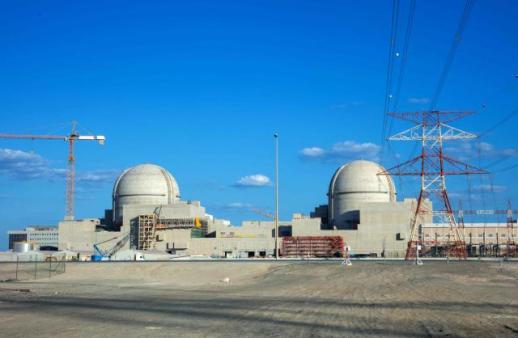 Tensions Rise in Gulf Following Drone Attack on UAE Nuclear Plant The United Arab Emirates (UAE) has pointed to Iran or Iranian-backed groups as the likely perpetrators behind a recent drone attack near the Barakah Nuclear Power Plant, escalating tensions in the region. On May 17, Anwar Gargash, a senior diplomatic advisor to the UAE president, stated on X (formerly Twitter) that whether the attack was executed directly by the main culprit or through proxies, it signifies a dangerous escalation of tensions targeting the Barakah clean nuclear power plant. Gargash condemned the attack as a "dark scene" that violates all international laws and norms, criticizing those responsible for disregarding civilian lives. While the UAE Ministry of Defense has announced an investigation to identify the attackers, there is a prevailing sentiment in UAE political circles that Iran or its affiliates are behind the assault. UAE Deputy Prime Minister and Foreign Minister Sheikh Abdullah bin Zayed Al Nahyan has been in contact with foreign ministers from Saudi Arabia, Kuwait, Qatar, Morocco, Egypt, and Bahrain to discuss the situation. The UAE Foreign Ministry stated on X that the foreign ministers strongly condemned the unjustified terrorist attack and reaffirmed the UAE's complete and legitimate right to respond in a manner that ensures their sovereignty and national security in accordance with international law. Saudi Arabia also condemned the attack and expressed solidarity with the UAE. According to AFP, the Saudi Foreign Ministry issued a statement declaring that the drone attack poses a threat to regional security and stability, supporting all measures to protect the UAE's sovereignty, security, and territorial integrity. In light of this attack, concerns about drone threats are rising across the Gulf region. The Saudi Ministry of Defense announced that it intercepted and destroyed three unmanned drones that had entered its airspace from the direction of Iraq. Iran has heightened its warnings, claiming that Gulf nations are cooperating militarily with the United States. Mohammad Mohaver, a senior advisor to Iran's Supreme Leader, criticized Gulf states on X, stating that while Iran has regarded them as friends and brothers for years, they have compromised their independence and entrusted their territory and homeland to enemies of Palestine and Iran. As U.S.-Iran ceasefire negotiations remain stalled and the U.S. reviews military options, tensions across the Middle East are again on the rise. On the same day, President Donald Trump warned on social media platform Truth Social that Iran has little time left, advising them to act quickly or risk losing everything. Trump also reportedly discussed the possibility of renewed Iranian attacks during a phone call with Israeli Prime Minister Benjamin Netanyahu, as reported by Israeli media citing Iranian state television.* This article has been translated by AI. 2026-05-18 15:21:21
 -
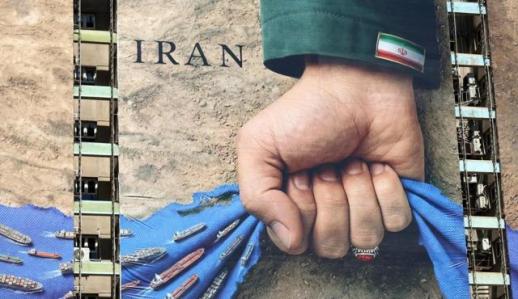 Iran Threatens to Charge Fees for Undersea Cables in Hormuz Strait Concerns are growing that Iran may target undersea communication networks in addition to energy transport routes in the Strait of Hormuz. On May 17, CNN reported that Brigadier General Ebrahim Zolfaqari, spokesperson for Iran's Central Military Command, stated on X (formerly Twitter) last week, "We will impose fees on internet cables in the Strait of Hormuz." Media outlets linked to the Islamic Revolutionary Guard Corps (IRGC) reported that the Iranian government is pursuing ways to generate revenue from undersea cables in the Strait of Hormuz and plans to demand compliance from major U.S. tech companies such as Google, Microsoft, Meta, and Amazon. Iranian media indicated that undersea cable companies would need to pay permit fees for passage through the Strait of Hormuz, and future rights for cable repairs and maintenance would be exclusively granted to Iranian firms. CNN also noted that the Iranian parliament discussed plans to impose fees on undersea cable usage last week. There are concerns that Iran could use small submarines and underwater drones to damage these cables. The seabed of the Strait of Hormuz is home to major intercontinental undersea cables that connect Europe, Asia, and the Persian Gulf, transmitting significant internet traffic. If Iran were to attack undersea cables, the repercussions could extend beyond mere internet speed reductions, potentially impacting critical digital infrastructure, including banking systems, military communications, and artificial intelligence (AI) cloud infrastructure. Mustafa Ahmed, a senior researcher at the Hamptur Institute based in the United Arab Emirates, told CNN, "Any attack on undersea cables could trigger a cascading 'digital disaster' across multiple continents." The damage could escalate if Iranian-backed proxy forces launch additional attacks on cables in the Red Sea. According to Hong Kong-based HGC Global Communications, three undersea cables were severed following an attack by Iranian-linked Houthi rebels in Yemen in 2024, disrupting about 25% of internet traffic in the region at that time. However, it remains uncertain whether Iran's strategy will serve as a significant leverage point in negotiations with the United States. Some of these major U.S. tech companies have reportedly invested in undersea cable projects that pass through the Strait of Hormuz and the Persian Gulf, but it is unclear whether these cables actually traverse Iranian territorial waters. Moreover, international telecommunications operators have historically avoided laying cables through Iranian waters due to security concerns, leading to a concentration of Gulf region undersea communication infrastructure in Omani waters. According to telecommunications market research firm TeleGeography, only two undersea cables pass through Iranian waters: Falcon and Gulf Bridge International (GBI). Additionally, as of last year, cables traversing the Strait of Hormuz accounted for less than 1% of global international bandwidth. Dina Espandiar, head of the Middle East team at Bloomberg Economics, stated, "Iran's threats are part of a strategy to showcase leverage over the Strait of Hormuz and ensure regime survival, aiming to impose significant costs on the global economy to deter any future attacks on Iran."* This article has been translated by AI. 2026-05-18 13:28:01
 -
 Japan's 10-Year Bond Yield Hits 30-Year High Amid Inflation and Fiscal Concerns Japan's long-term interest rates have surged to their highest level in 30 years, driven by rising oil prices amid instability in the Middle East and concerns over additional government spending. According to the Nikkei newspaper on May 18, the yield on newly issued 10-year government bonds briefly reached 2.8%, the highest level since October 1996. An increase in bond yields typically indicates a decline in bond prices. The 10-year bond yield rose by 0.1 percentage points from the end of the previous week. The Nikkei reported that ongoing inflationary pressures from rising oil prices and worries about increased fiscal spending have led to a continued sell-off in bonds. As turmoil in the Middle East persists, oil prices remain elevated, heightening inflation concerns both domestically and internationally. This has led to a noticeable trend of investors shying away from purchasing bonds. Rising inflation fears increase the likelihood of higher interest rates, which negatively impacts bond prices that move inversely to interest rates. The Nikkei noted that significant increases in long-term interest rates in European and U.S. markets at the end of the previous week influenced the Tokyo market early in the week. U.S. long-term interest rates rose to nearly 4.5%, marking their highest level in about a year, which exerted upward pressure on Japanese rates. Domestically, there are growing expectations that the government will prepare a supplementary budget for the fiscal year 2026, raising concerns about expansive fiscal policy. The anticipation of increased government spending could lead to a rise in bond issuance and fears of fiscal deterioration, contributing to the bond sell-off. Notably, the sell-off has been particularly pronounced in ultra-long-term bonds, which are more sensitive to fiscal concerns. The yield on 30-year bonds also briefly reached 4.17%, setting a new record high.* This article has been translated by AI. 2026-05-18 13:21:43
 -
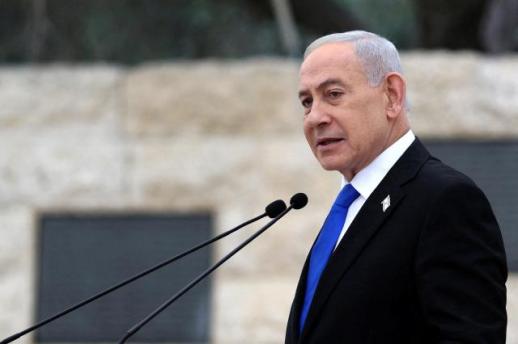 Former U.S. Defense Secretary Gates: Netanyahu Underestimates Iran's Resilience Former U.S. Defense Secretary Robert Gates criticized Israeli Prime Minister Benjamin Netanyahu for his overly optimistic view that Iran's regime could be toppled solely through military strikes. In an interview aired on CBS's "Face the Nation" on May 17, Gates recalled a meeting with Netanyahu in 2009, during which he noted that Netanyahu underestimated Iran's resolve and ability to maintain its regime. Gates stated, "Netanyahu believed that if Israel attacked Iran's nuclear facilities, the Iranian people would rise up and overthrow the regime, and that Iran would not retaliate against U.S. targets or regional oil facilities." He added, "I told him at the time that he was completely wrong," emphasizing that Netanyahu had misjudged the resilience of the Iranian people. Gates assessed that Netanyahu's unrealistic judgment was influenced by Israel's past experiences with minimal retaliation following attacks on Iraq's Osirak reactor and Syria's reactor. He reiterated, "Netanyahu claimed that the Iranian regime was weak and would collapse under the first attack, and that Iran would not have time to respond with other actions. I told him then that he was wrong." U.S. Faces Challenges in Addressing Iran Militarily While Gates acknowledged that the Iranian regime has weakened, he believes the likelihood of a popular uprising in the short term is low. He remarked, "The chances of a short-term uprising are very low. Iran's internal control still appears intact, and there are hardly any public protests." He added, "People are intimidated and fearful, and they are currently focused on how to make a living in the present situation." Gates predicted that any potential instability within the Iranian regime would manifest more as internal fractures after a conflict rather than immediate public uprisings during wartime. He explained, "What we typically see in such regimes is not a change of government in the streets but rather the regime itself beginning to fracture, with factions emerging that seek different paths and internal disputes over control." Regarding the Iranian nuclear issue, Gates emphasized that military action alone would not provide a fundamental solution. He stated, "The only way to remove enriched uranium from Iran and end its nuclear ambitions is through negotiations. Applying pressure to bring them to the negotiating table is the only path that offers any chance of success." However, he asserted that President Donald Trump cannot disengage from the Iran issue. Gates remarked, "The U.S. president cannot step back, and Israel cannot resolve this issue alone. Israel is strong, but it does not possess the type of power that the U.S. has." He also assessed that it is difficult to declare that the war is over from either the U.S. or Israeli perspective at this point.* This article has been translated by AI. 2026-05-18 12:34:35
 -
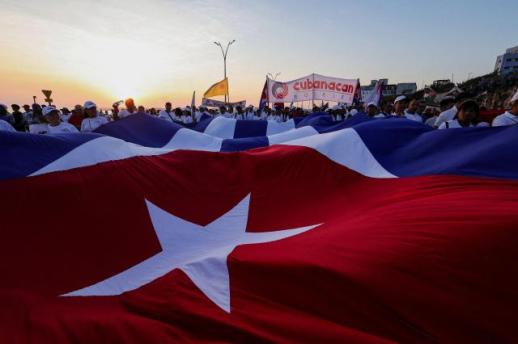 Cuba Acquires Over 300 Drones from Iran and Russia, Discusses Attacks on U.S. Bases Cuba has reportedly acquired over 300 drones from Iran and Russia and is discussing plans to use them to attack U.S. military bases. Axios reported on May 17, citing confidential information, that the Cuban military has begun planning attacks on the Guantanamo Bay U.S. military base, U.S. naval vessels, and Key West, Florida, using these drones. According to the report, since 2023, Cuba has been deploying various types of attack drones from Russia and Iran to strategic locations within the country. In the past month, Cuba has also requested additional drones and military equipment from Russia. U.S. intelligence agencies do not believe that an attack from Cuba is imminent or that Cuba is actively pursuing plans to target the United States. However, they are monitoring the situation closely, noting that the Cuban military is refining its drone tactics amid deteriorating relations with the U.S., which could lead to armed conflict. The expansion of Cuba's drone capabilities and the presence of Iranian military advisors in the country have raised significant concerns within the Trump administration. Axios reported that this information could serve as a justification for future U.S. military actions. A senior U.S. official stated, "It is concerning that a range of rogue actors, from terrorist organizations to drug cartels, Iran, and Russia, are utilizing such technology so close to home. This represents an escalating threat." In response, the Cuban embassy stated on X (formerly Twitter) that, like any nation, Cuba has the right to defend itself against external aggression. This right to self-defense is protected under international law and the U.N. Charter. The embassy further claimed, "Individuals in the U.S. who seek to subjugate and effectively destroy the Cuban nation through military aggression and war are not wasting a moment in fabricating excuses, spreading falsehoods, and distorting the necessary logical preparations for potential aggression as if it were something special." Recently, the U.S. has intensified its diplomatic and security pressure on Cuba. According to Axios, CIA Director John Ratcliffe visited Cuba on May 14, warning local officials against engaging in hostile actions. A CIA official noted that Ratcliffe conveyed that Cuba should not become a platform for hostile agendas from adversarial forces in the Western Hemisphere.* This article has been translated by AI. 2026-05-18 11:58:04
 -
 International Oil Prices Rise Amid Iran Conflict Stalemate International oil prices opened higher this week as tensions surrounding the Iran conflict and the Strait of Hormuz continue. According to MarketWatch, as of 8:38 a.m. Korean time on May 18, West Texas Intermediate (WTI) crude oil futures for June rose nearly 1.75%, surpassing $107 per barrel. At the same time, July Brent crude futures also increased by 1.14%, exceeding $110. This rise follows the conclusion of President Donald Trump's visit to China over the weekend, which ended without significant breakthroughs, and the ongoing stalemate in negotiations to end the war with Iran. Previously, on May 15, WTI futures had crossed the $105 mark, while July Brent futures closed the week up 8%, finishing above $109 per barrel. Amid the persistent Middle East crisis, U.S. stock index futures are showing a downward trend. Currently, Dow Jones Industrial Average futures are down 112 points (0.23%) at 49,505.00, S&P 500 futures are down 10.25 points (0.14%) at 7,422.00, and Nasdaq 100 futures are down 37.75 points (0.13%) at 29,194.00. As a fragile ceasefire between the U.S. and Iran holds, tensions surrounding the Strait of Hormuz persist. The Associated Press reported that Israel is coordinating with the U.S. regarding the potential resumption of airstrikes against Iran. On the same day, President Trump used social media platform Truth Social to pressure Iran to agree to a peace deal. He stated, "Iran doesn't have much time," warning that they should act quickly or risk losing everything. Additionally, reports of a fire near the Barakah nuclear power plant in the United Arab Emirates, suspected to be caused by a drone attack linked to Iran, have heightened market anxiety. The UAE authorities confirmed that there was no impact on the reactor and that the plant is operating normally. The Barakah plant is also notable as the first commercial nuclear power plant in the Middle East, built by Korea Electric Power Corporation. MarketWatch highlighted that the ongoing conflict is driving up global oil and gas prices, raising inflation concerns. According to the American Automobile Association (AAA), the average price of gasoline in the U.S. is currently $4.51 per gallon. The consumer price index (CPI) for April also rose to 3.8%, marking the highest increase since May 2023. Meanwhile, investors are closely watching the upcoming earnings reports from major U.S. retailers such as Walmart, Target, Home Depot, and Lowe's this week. The impact of high fuel prices and inflation on consumer sentiment could be reflected in these results. Walmart executives previously warned that retail sales could be affected if gasoline prices reach between $4.50 and $5 per gallon. Additionally, investors are keeping an eye on Nvidia's quarterly earnings report scheduled for May 20. As the rally in artificial intelligence (AI) stocks continues, Nvidia's performance is seen as a key indicator for investor sentiment in the tech sector. 2026-05-18 08:56:10