

Journalist

Hwang Jin-hyun
jinhyun97@ajunews.com
-
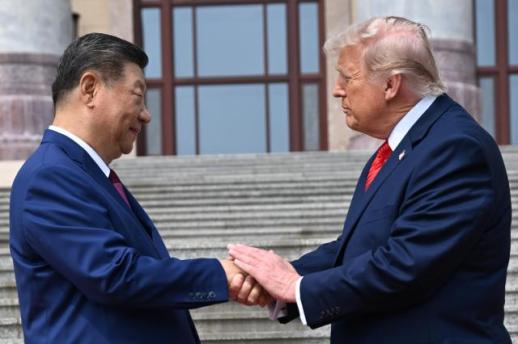 Trump and Xi Agree on Maintaining Hormuz Strait Access and Iran Nuclear Deal Donald Trump, the President of the United States, and Xi Jinping, the President of China, agreed on the importance of maintaining access to the Strait of Hormuz and the principle that Iran should not possess nuclear weapons, the White House announced on May 14. According to reports from Bloomberg and NBC, a White House official stated that Trump had a "good meeting" with Xi during their summit. The two leaders exchanged views on the situation in the Middle East. The White House official noted that both Trump and Xi concurred on the necessity of keeping the Strait of Hormuz open. Additionally, the U.S. side reported that Xi made it clear that China opposes the militarization of the Strait of Hormuz. On the issue of Iran's nuclear program, both sides agreed that Iran must never acquire nuclear weapons. The leaders also discussed economic matters, including plans for China to increase its purchases of U.S. agricultural products. Xi expressed interest in buying additional U.S. crude oil. Furthermore, the two leaders acknowledged the need to prevent the influx of fentanyl precursors into the United States, according to the official. The summit lasted over two hours, starting at 10:15 a.m. and concluding at 12:30 p.m. This duration was notably longer than the approximately 100 minutes of the previous U.S.-China summit held in Busan last October.* This article has been translated by AI. 2026-05-15 02:39:03
 -
 Iran Displays 'Five Key Conditions for Ending War' in Tehran, Excluding Nuclear Issues A large sign outlining Iran's key conditions for ending the war has appeared in the capital city of Tehran. According to local media, including Eghtesad News, the sign, installed on major roads and overpasses in Tehran, lists the "Five Key Conditions for Ending the War" under its title. The conditions proposed by Iran include: 1) Lifting all sanctions, 2) Payment of war reparations by adversaries, 3) Establishing Iran's control over the Strait of Hormuz, 4) Release of frozen funds, and 5) Ending conflicts on all fronts. These demands align with the consistent assertions made by Iranian leadership in negotiations with the United States regarding ending the war. The public display of these conditions on a large sign can be seen as a confirmation of Iran's commitment to uphold these demands in negotiations with the U.S. Notably, the five key demands do not include any references to Iran's nuclear program. Previously, Iran suggested prioritizing immediately actionable issues, such as the reopening of the Strait of Hormuz and a ceasefire in Lebanon, while postponing the more complex negotiations regarding its nuclear program until after the war is concluded. In contrast, the United States views the nuclear issue as a central point in the negotiations. U.S. Vice President JD Vance stated at a White House press briefing that while he believes progress is being made in negotiations with Iran, the fundamental question remains whether sufficient advancements can be made to satisfy the red lines set by President Donald Trump.* This article has been translated by AI. 2026-05-14 20:32:54
 -
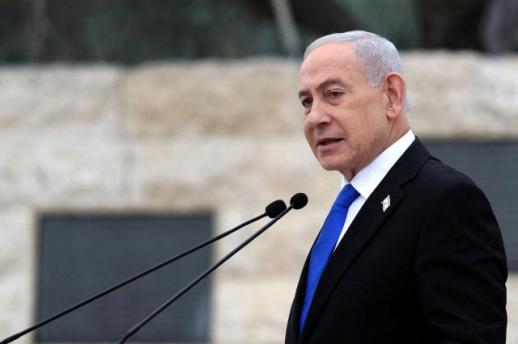 UAE and Israel Strengthen Ties Amid Iran Conflict, Netanyahu's Secret Visit Reported The United Arab Emirates (UAE) and Israel are deepening their ties amid the ongoing conflict with Iran. Reports have emerged that Israeli Prime Minister Benjamin Netanyahu made a secret visit to the UAE during the war, signaling a new phase in the relationship between the two nations. On May 14, the Israeli Prime Minister's Office announced via social media platform X (formerly Twitter) that "Prime Minister Netanyahu secretly visited the UAE during Operation Lion's Roar and met with UAE President Sheikh Mohammed bin Zayed Al Nahyan." The office described the visit as a historic breakthrough in relations between Israel and the UAE. A source familiar with the discussions told Reuters that Netanyahu and President Sheikh Mohammed met on March 26 in the oasis city of Al Ain, near the Oman border, and that the talks lasted several hours. The source also revealed that David Barnea, head of Israel's Mossad intelligence agency, visited the UAE at least twice during the conflict to coordinate military operations. However, the UAE has denied the claims regarding Netanyahu's visit. The UAE Ministry of Foreign Affairs issued a statement refuting reports that Netanyahu visited the country or met with an Israeli military delegation. The UAE recognized Israel and established diplomatic relations in 2020 as part of the so-called Abraham Accords, alongside Bahrain. Since then, the two countries have expanded cooperation across various sectors, including economy, technology, and security. The ongoing conflict with Iran has reportedly enhanced security cooperation between the UAE and Israel. The pan-Arab media outlet New Arab noted that the war has brought the two nations closer than ever. During the conflict, the UAE faced concentrated attacks from Iran and felt it did not receive adequate support from neighboring Gulf states and traditional Arab allies, while openly welcoming Israeli assistance. Following the outbreak of war, Israel deployed Iron Dome missile defense systems and personnel to the UAE, marking the first time the Iron Dome has been stationed abroad. New Arab reported that Israel also contributed new laser defense systems and drone detection capabilities to bolster the UAE's air defense. Alex Almeida, a security analyst at Horizon Engage, stated that the war has significantly accelerated defense relations between the two countries. He emphasized that there is a strong perception that Israel stepped up when traditional Arab allies of the UAE failed to do so, proving its value to the UAE. However, experts caution that the close ties may not easily evolve into a public military alliance against Iran. Kyle Orton, a Middle East analyst, told New Arab that the question of whether the UAE-Israel alliance is aimed at Iran is complicated by the ongoing relationship between the UAE and Iran, particularly in the financial sector. Nicholas Heras, a senior director at the New Lines Institute, noted that the relationship with Israel is constrained by popular Arab issues, especially the Palestinian question. UAE May Become a Target for Iran Despite this, there are growing concerns that the UAE could become a primary target for Iran in the future. The Guardian recently reported that the UAE secretly struck Iran in early April, suggesting that if a ceasefire breaks down and tensions between the U.S. and Iran escalate, the UAE could be at risk. Earlier, the Times of Israel cited Bloomberg, stating that the UAE conducted several military strikes against Iran in early April, targeting facilities on Iran's Lavan Island, some of which were coordinated with Israel. Tensions in the region are also spreading to other Gulf nations. Iran has threatened retaliation against Kuwait for detaining members of its Islamic Revolutionary Guard Corps (IRGC), escalating tensions between the two countries. Iranian Foreign Minister Abbas Araghchi claimed on X that Kuwait had illegally attacked Iranian vessels and detained four of its citizens with the apparent intent to incite discord. He warned that Iran has the right to respond, stating, "This illegal act occurred near an island used by the U.S. to launch attacks against Iran."* This article has been translated by AI. 2026-05-14 18:34:14
 -
 Trump and Xi Affirm Commitment to Strengthening US-China Relations U.S. President Donald Trump and Chinese President Xi Jinping held a summit in Beijing, confirming their commitment to stabilizing U.S.-China relations and expanding economic and trade cooperation. However, Xi emphasized that the Taiwan issue remains a critical concern in U.S.-China relations, urging the U.S. to respond cautiously. On May 14, the Chinese Foreign Ministry released details of the summit held at the Great Hall of the People. Xi highlighted the need for both nations to overcome the so-called "Thucydides Trap," which refers to the potential conflict between established and rising powers. He expressed a desire to steer the "great ship of U.S.-China relations" toward making 2026 a historic and symbolic year that builds on the past while opening up the future. Xi stated, "President Trump and I have agreed to establish a 'constructive strategic stable relationship' as a new direction for U.S.-China relations." He added that this would provide strategic guidance for the next three years and beyond, which he believes will be welcomed by both nations' citizens and the international community. He further explained that constructive strategic stability should focus on active cooperation, moderated competition, and manageable differences, emphasizing that it should not just be a slogan but a commitment to action. Regarding economic and trade relations, Xi described the essence of U.S.-China ties as mutually beneficial and win-win, asserting that equal negotiations are the only correct choice when faced with disagreements and friction. He noted that the economic and trade teams from both countries had achieved balanced and positive results, calling it good news for both nations and the world. He affirmed that China's doors to openness would continue to widen and welcomed U.S. companies' deep participation in China's reform and opening-up efforts. Xi Issues Warning on Taiwan Issue However, Xi issued a strong warning regarding Taiwan, stating, "The Taiwan issue is the most important issue in U.S.-China relations. If handled well, it can maintain overall stability in bilateral relations, but if mishandled, it could lead to conflict or even disputes." He emphasized that "Taiwan independence" and peace in the Taiwan Strait cannot coexist, urging the U.S. to handle the Taiwan issue with utmost caution. During the summit, Trump expressed his honor in visiting China, stating, "U.S.-China relations are very good. I have built the longest and best relationship between U.S. and Chinese leaders in history, maintaining friendly communication and resolving many important issues." He praised Xi as a great leader and acknowledged China as a great nation, expressing deep respect for Xi and the Chinese people. Trump described the meeting as significant, stating, "I want to strengthen communication and cooperation with President Xi and properly resolve differences to open the best U.S.-China relationship in history and pave the way for a more beautiful future for both countries." He also mentioned the presence of prominent American business representatives accompanying him, stating, "All of them respect and value China greatly, and I encourage them to actively expand cooperation with China." The Chinese Foreign Ministry reported that the two leaders exchanged views on major international and regional issues, including the situation in the Middle East, the Ukraine crisis, and the Korean Peninsula. They agreed to support each other for the successful hosting of the upcoming Asia-Pacific Economic Cooperation (APEC) summit and the G20 summit.* This article has been translated by AI. 2026-05-14 16:55:46
 -
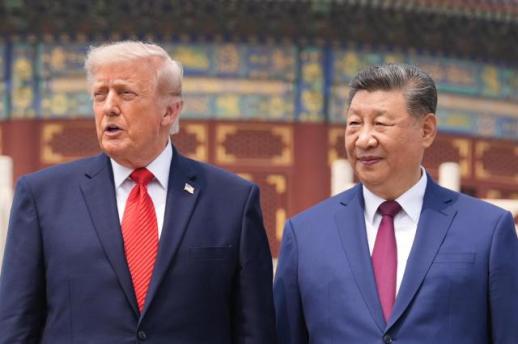 Trump Calls Meeting with Xi 'Good,' Remains Silent on Taiwan Issues Donald Trump positively assessed his meeting with Chinese President Xi Jinping but refrained from discussing specific topics, including Taiwan. On May 14, Trump visited Tian Tan Park in Beijing and responded to reporters' questions about the meeting, saying, "It was good." He added, "It's a wonderful place. Amazing. China is beautiful." According to the Associated Press, Trump's comments about the meeting were limited to his positive remark. When asked whether Taiwan was discussed, he did not provide an answer. In contrast to Trump's silence, Xi directly addressed the Taiwan issue during their meeting, issuing a warning. According to China's state-run Xinhua News Agency, Xi stated, "The Taiwan issue is the most important issue in US-China relations." He emphasized that if handled well, the relationship could maintain overall stability, but mishandling it could lead to confrontation or even conflict, pushing the US-China relationship into a very dangerous situation. Xi also strongly mentioned the issue of Taiwan independence, stating, "'Taiwan independence' and 'peace in the Taiwan Strait' cannot coexist like water and fire," and asserted that maintaining peace and stability in the Taiwan Strait is in the common interest of both countries. Earlier, the two leaders held their summit from 10:15 a.m. to 12:30 p.m., lasting over two hours. This is notably longer than the approximately 100 minutes of the US-China summit held in Busan last October.* This article has been translated by AI. 2026-05-14 16:03:00
 -
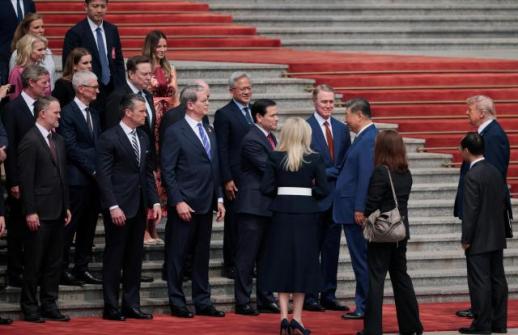 CEOs Respond Positively to US-China Summit During Trump's Visit CEOs of major U.S. companies accompanying President Donald Trump on his visit to China expressed positive reactions regarding the U.S.-China summit. According to the Wall Street Journal, business leaders who traveled with Trump attended a welcome ceremony and summit held at the Great Hall of the People in Beijing on May 14. Jensen Huang, CEO of NVIDIA, commented to reporters as he exited the Great Hall, saying, "President Xi and President Trump were fantastic." Elon Musk, CEO of Tesla, also noted the summit's outcomes, stating, "There were many good things." Along with Musk and Huang, other prominent business figures, including Apple CEO Tim Cook, were part of the delegation. They also attended the welcome ceremony for Trump at the Great Hall of the People. The presence of top executives from major U.S. technology companies highlights the focus on advanced technology, supply chains, and the business environment in China during this summit. NVIDIA is at the center of discussions regarding AI semiconductor export regulations and market access in China, while both Apple and Tesla have significant production and sales operations in the country. High-ranking officials from the Trump administration, including Secretary of State Marco Rubio, Treasury Secretary Scott Vessen, and Defense Secretary Pete Hegseth, also participated in the welcome ceremony. Earlier, President Xi emphasized cooperation in his opening remarks at the summit, stating, "The common interests of the U.S. and China are greater than our differences," and added that the success of both countries presents opportunities for each other, with a stable U.S.-China relationship benefiting the world.* This article has been translated by AI. 2026-05-14 15:46:25
 -
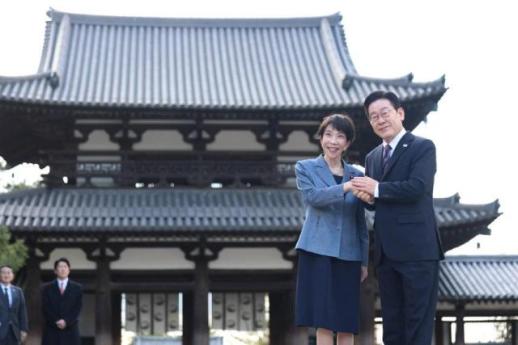 Japanese Prime Minister Takaiichi to Visit South Korea for Summit with President Lee Japanese Prime Minister Sanae Takaiichi is scheduled to visit South Korea on May 19-20 for a summit with President Lee Jae-myung, the Japanese government reported to its parliament on May 14. According to Japanese media, including TBS News, Chief Cabinet Secretary Masanao Ozaki conveyed the details of Takaiichi's visit during a meeting of the House of Representatives' Committee on Rules and Administration. The upcoming summit is part of a "shuttle diplomacy" initiative, where the leaders of both countries visit each other's nations. President Lee and Prime Minister Takaiichi first met in person during the Asia-Pacific Economic Cooperation (APEC) summit in Gyeongju last October, where they agreed to actively pursue shuttle diplomacy. Following this, the two governments have discussed holding the next meeting in Andong, President Lee's hometown, after he visited Takaiichi's hometown in Nara Prefecture, Japan, for a summit on January 13-14. TBS News reported that the agenda for the upcoming meeting is expected to include discussions on stable energy supply in light of the situation in Iran and the geopolitical dynamics in Northeast Asia, including North Korea.* This article has been translated by AI. 2026-05-14 14:30:39
 -
 AI Technology Dominates Agenda Ahead of Trump-Xi Meeting in Beijing Donald Trump and Xi Jinping are set to meet in Beijing, where the issue of artificial intelligence (AI) technology dominance has emerged as a key agenda item. As tensions rise over advanced semiconductor exports and the use of AI models, attention is focused on whether the two nations can establish communication channels regarding AI. Bloomberg reported on May 13 that while the AI agenda was relatively minor during last year’s U.S.-China summit in Busan, it is expected to be more prominently discussed in this Beijing meeting. The last-minute inclusion of Jensen Huang, CEO of NVIDIA, in Trump’s delegation underscores this trend. NVIDIA is a leading producer of advanced semiconductors central to the AI boom and is at the heart of the U.S.-China tech rivalry. Huang is recognized as a representative figure of U.S. semiconductor technology and has maintained regular contact with Chinese officials. Bloomberg noted that following Huang's addition to the delegation, Chinese AI-related stocks rose, reflecting investor optimism about increased access to advanced AI semiconductors in China. The Trump administration has been pushing for expanded sales of U.S. technology companies to China. In December, Trump authorized the export of NVIDIA's next-generation AI chip, the H200, to China, but reports indicate that the Chinese government has yet to allow related purchases. However, the U.S. remains cautious about Chinese AI companies leveraging American technological advancements. Companies like OpenAI, Anthropic, and Google have expressed concerns that their AI models could be unfairly utilized in the development of products by Chinese competitors such as DeepSeek, Moonshot, and Minimax. Michael Kratsios, the White House Chief Technology Officer, is also part of the delegation. A former AI company executive, he is known for drafting a memo in April warning about the risks of China developing cheaper and faster technologies using U.S.-made AI models. Bloomberg cited policy experts suggesting that Kratsios may convey similar messages in Beijing. U.S. officials have stated that AI issues will be raised during the summit, although specific agenda items have not been disclosed. Prospects for Communication Mechanism Agreements Over Major Deals Bloomberg forecasts that significant agreements, such as easing U.S. export controls or expanding semiconductor sales, are unlikely to materialize. However, there is potential for the establishment of a new communication mechanism between the U.S. and China to discuss AI issues more regularly. The cybersecurity risks posed by AI could also be a topic of discussion. The U.S. views rapidly advancing AI technology as a factor that could exacerbate cross-border threats, including cyberattacks, misinformation, and military miscalculations. Additionally, the Chinese government’s recent order to reverse Meta Platforms' acquisition of the Chinese AI startup Manus is seen as another source of conflict, with analysts interpreting it as a measure to prevent the outflow of technology and talent to the U.S. Other sensitive issues, including critical minerals, the Iran conflict, Taiwan, and trade, are also expected to be broadly discussed during the summit. However, the wide range of topics may hinder the likelihood of reaching substantial agreements. Despite this, AI governance is cited as an area where limited cooperation between the U.S. and China could occur. Sun Chenghao, a researcher at Tsinghua University’s Center for International Security and Strategy, recently suggested that both sides could focus on the cross-border risks posed by AI and explore ways to promote risk classification and assessment systems that more countries can adopt, while also jointly seeking possible responses.* This article has been translated by AI. 2026-05-14 12:53:37
 -
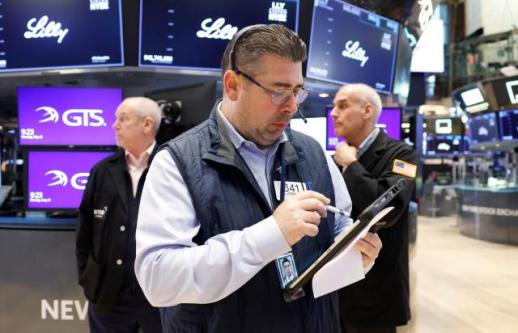 U.S. Semiconductor Stocks Reach Highest Overbought Levels Since Dot-Com Bubble U.S. semiconductor stocks are signaling the highest levels of overheating since the dot-com bubble. While expectations for increased investment in artificial intelligence (AI) infrastructure have driven a rally in semiconductor stocks, concerns are rising that the sector's growing weight could pose risks to the broader U.S. stock market. According to Reuters on May 13, the Philadelphia Semiconductor Index (SOX) surged 64% since late March. In comparison, the S&P 500 index rose about 17% during the same period. Notably, Micron and AMD saw their shares jump by 138% and 129%, respectively, while Intel's stock skyrocketed nearly 193%. Reuters noted that large capital expenditures for AI infrastructure have boosted semiconductor demand, resulting in an investment frenzy that has spread beyond Nvidia, which initially led the charge. Steve Edwards, a senior investment strategist at Morgan Stanley Wealth Management, described the situation as a "perfect combination," stating, "There is a solid fundamental story, and the technical momentum is quite strong." He added, "These two factors have created a very enthusiastic and optimistic investor base, driving momentum forward." However, even optimistic investors in semiconductor stocks are preparing for a potential cooling of the rally. Reuters reported that the recent surge in semiconductor stocks is being compared to the dot-com bubble of 1999-2000. Peter Tuz, president of Chase Investment Counsel, remarked, "Whenever you see something rising parabolically, you have to ask yourself, 'Is the mood getting too euphoric?'" He indicated that he has sold some Qualcomm shares in response. Technical indicators are also flashing warning signs. On May 8, the SOX's weekly Relative Strength Index (RSI) reached 85.5. The RSI is a technical indicator that shows overbought or oversold levels of an asset, and this figure marks the highest overbought level since the peak of the dot-com bubble in March 2000. Investor Michael Burry, known for his role in the film "The Big Short," has maintained his put option bets on the iShares Semiconductor ETF (SOXX). Put options give the holder the right to sell an asset at a predetermined price, typically used to bet on price declines. The overheating of semiconductor stocks is also seen as a burden on the broader U.S. stock market. Currently, semiconductor and semiconductor equipment stocks account for 18% of the S&P 500 index. According to institutional brokerage Johnstreead, 70% of the $5.1 trillion increase in market capitalization for the S&P 500 this year has come from gains in semiconductor and memory stocks. Michael O'Rourke, chief market strategist at Johnstreead, warned, "Now that they occupy such a large share of the S&P 500, any correction or disappointment could pose risks to the broader market." Continued Optimism Despite these concerns, optimism about the semiconductor sector remains strong. Market research firm Gartner forecasts that global semiconductor revenue will increase by 64% this year, reaching $1.3 trillion. Earnings for semiconductor and semiconductor equipment companies within the S&P 500 are also expected to rise by about 95%, significantly exceeding the initial forecast of 62% growth at the beginning of the year. King Lip, chief strategist at Baker Avenue Wealth Management, stated, "There is demand for AI infrastructure and computing and networking, which represents a multi-year capital expenditure cycle, and we see this as a very interesting trend for semiconductors." Ayako Yoshinaka, senior investment strategist at Wells Enhancement, added, "Considering the fundamentals driving many of these companies, I believe there is still room for growth."* This article has been translated by AI. 2026-05-14 12:00:54
 -
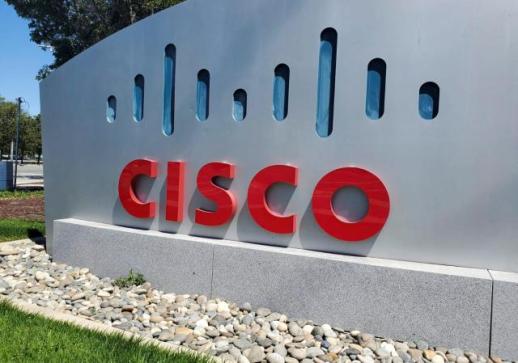 Cisco to Cut 4,000 Jobs as It Shifts Focus to AI Investments Networking equipment manufacturer Cisco announced plans to reduce its workforce by fewer than 4,000 employees, representing less than 5% of its total staff, as part of a strategy to increase investments in artificial intelligence (AI). Following the announcement, Cisco's stock surged nearly 20% in after-hours trading. On May 13, during its quarterly earnings report, Cisco revealed its intention to cut the workforce in the fourth quarter of fiscal year 2026 (May to July). This decision aligns with the company's efforts to reallocate resources toward AI-related growth areas. Chuck Robbins, Cisco's CEO, stated on the company’s website, "The companies that will win in the AI era will be those that have the discipline to continuously shift their investments toward areas of focus, urgency, demand, and long-term value creation." Cisco explained that it is making strategic investments across various sectors, including silicon, optics, security, and employee AI utilization. The layoffs are seen as a restructuring effort to facilitate this shift in investment. The company reported third-quarter revenue of $15.8 billion, slightly above the market expectation of $15.6 billion, according to LSEG data. The demand for AI infrastructure has also contributed to this positive outlook. Cisco noted that it has secured $5.3 billion in AI infrastructure orders from hyperscalers, which are companies operating large-scale AI data centers. As a result, Cisco has significantly raised its overall AI infrastructure order forecast for the fiscal year from $5 billion to $9 billion. The revenue forecast has also been adjusted upward, with Cisco now expecting fiscal year 2026 revenue to be between $62.8 billion and $63 billion, higher than the previous estimate of $61.2 billion to $61.7 billion. Following the earnings announcement, Cisco's stock showed a notable increase in after-hours trading, reaching $122.00, up $20.13 (19.76%) from the previous trading day, as of 9:59 AM KST on May 13.* This article has been translated by AI. 2026-05-14 11:13:33