

Journalist

Hwang Jin-hyun
jinhyun97@ajunews.com
-
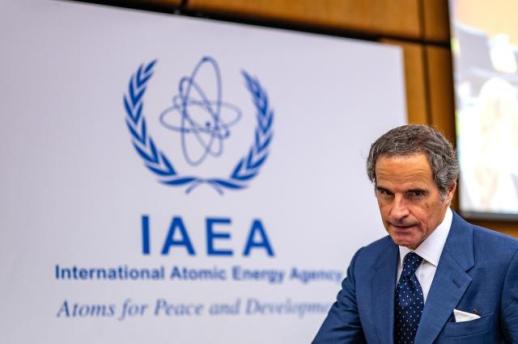 IAEA Reports Drone Attack on Chernobyl Spent Fuel Storage Facility The International Atomic Energy Agency (IAEA) expressed strong concern over a drone attack on the central spent fuel storage facility in the Chernobyl exclusion zone in Ukraine. On June 7, the IAEA reported via social media platform X (formerly Twitter) that it received information from Ukrainian authorities about the early morning drone strike on the facility. According to the IAEA, the attack caused significant damage to the building housing the fuel, with its exterior walls, windows, and doors destroyed. Nearby structures were also affected by the blast's shockwave. However, Ukrainian officials informed the IAEA that radiation levels at the facility remained within established safety limits. An IAEA team stationed at Chernobyl is expected to visit the affected facility soon to assess the extent of the damage. Rafael Grossi, IAEA Director General, stated, "It is very concerning that a building located just a few meters from a storage facility containing a large amount of nuclear material was attacked." He added, "Attacks on nuclear facilities are absolutely unacceptable and constitute a direct violation of the core principles of nuclear safety and security, including the seven essential principles that must be upheld during armed conflict."* This article has been translated by AI. 2026-06-07 18:00:00
 -
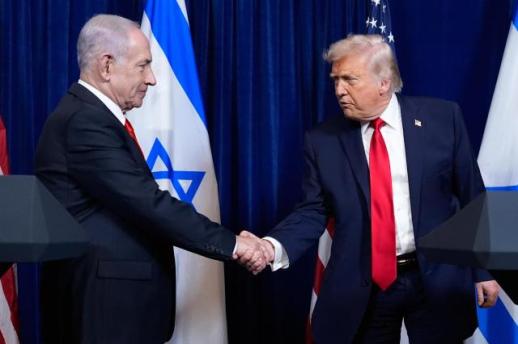 U.S. Raises Counterintelligence Threat Level Regarding Israel The U.S. Department of Defense has reportedly elevated the counterintelligence threat level regarding Israel to its highest status. On June 6, The New York Times cited multiple current and former U.S. officials, stating that the Defense Intelligence Agency (DIA) and other military intelligence agencies have prepared a report raising Israel's counterintelligence threat level from "high" to "serious." According to the report, U.S. officials, including Steve Witkoff, a special envoy for Iran negotiations under President Donald Trump, as well as Elbridge Colby, Deputy Assistant Secretary of Defense for Policy, and Michael Dimino, who oversees Middle East policy at the Pentagon, are believed to be among those targeted by Israel's surveillance efforts. NBC News also reported on the same day, citing two U.S. officials and one former official, that the DIA has communicated internally that the counterintelligence threat level regarding Israel has been raised to "serious." NBC explained that this action comes amid rising tensions between the U.S. and Israel regarding future responses to the Iran conflict. U.S. officials expressed growing concerns within the Pentagon that Israel may be monitoring U.S. officials to gain insights into internal discussions and decision-making processes related to Middle Eastern conflicts during the Trump administration. The assessment of the counterintelligence threat posed by Israel is reportedly higher than that of some adversaries, as well as certain allied nations. According to The New York Times, the only country that comes close to Israel's threat level is South Korea, under specific circumstances. The DIA's report was prompted by discoveries made by U.S. military personnel stationed in Israel, who found spyware secretly installed on their mobile phones. The report indicates that Israel's counterintelligence activities began to increase in late 2024, following pressure from the Biden administration for Israel to exercise restraint in its attacks on Gaza, and have continued to rise since the Trump administration considered military action against Iran last year. Last year, Israeli intelligence agency Shin Bet was caught attempting to install surveillance devices on vehicles belonging to the U.S. Secret Service. A senior official expressed concerns that since the start of Trump's second term, Israeli intelligence operations targeting U.S. officials have become "out of control." Israel has strongly denied the allegations. A spokesperson for the Israeli embassy in Washington stated in a message to NBC that claims of Israeli espionage against the U.S. are "completely false." The spokesperson added, "Israel does not collect information on U.S. agencies, and even less so on U.S. government officials. Israel's intelligence efforts are aimed at adversaries, not allies."* This article has been translated by AI. 2026-06-07 16:18:00
 -
 U.S. Defense Secretary Calls for Europe to Lead Conventional Defense Amid Security Concerns Amid pressure from the Trump administration for European allies to increase defense spending and take on greater responsibility for conventional defense, there is a growing movement in Europe to reconsider or pursue membership in the European Union (EU). On June 6, during a visit to France for the 82nd anniversary of the D-Day landings, U.S. Secretary of Defense Pete Hegseth met with French Defense Minister Catherine Colonna. Hegseth emphasized that NATO allies should bear primary responsibility for conventional defense on the European continent. According to Pentagon spokesman Sean Parnell, both sides discussed the urgent need for NATO allies to increase defense spending to 5% of their GDP, expand their defense industrial base, and deploy reliable forces capable of actual combat to take on the main responsibility for conventional defense in Europe. They also agreed that NATO should transition from being an alliance of dependent nations to one of substantive partners, referred to as 'NATO 3.0.' In a speech at the Normandy American Cemetery, Hegseth reiterated the need for allies to expand their defense responsibilities. He stated, "As we face an increasingly complex threat environment, we are applying the lessons learned on this beach 82 years ago. A strong alliance that fully fulfills its respective roles wins wars." He added, "Peace is secured only through strength, and that strength must be present on both sides of the Atlantic, reinforced by readiness, shared military capabilities, and unwavering political will." Hegseth emphasized that while the U.S. will continue to lead Western security, capable allies must also step up alongside the U.S. in critical moments. This message suggests that European nations should no longer rely solely on the U.S. and must take a more prominent role in conventional defense. It also reflects frustrations from the Trump administration regarding European allies' passive stance during the conflict with Iran. At the Shangri-La Dialogue in Singapore last month, Hegseth warned that "allies who refuse to actively contribute to our collective defense will face a clear change in how we operate." The Trump administration has recently indicated plans to reduce U.S. troop levels and key conventional forces stationed in Europe, raising the possibility of NATO withdrawal due to European allies' reluctance to support military action against Iran. Europe Considers EU Membership Amid Security Concerns As concerns grow that the U.S. security umbrella may be weakening, there is an increasing movement in Europe to reconsider or pursue EU membership. Currently, nine countries are formal candidates for EU membership: Ukraine, Moldova, Montenegro, Albania, Bosnia and Herzegovina, North Macedonia, Serbia, Georgia, and Turkey. Additionally, Nordic countries, which previously felt less urgency to join the EU due to their higher economic levels and fishing rights issues, are showing signs of change. Iceland, which froze its EU membership negotiations in 2013, plans to hold a referendum on August 29 to ask citizens whether to resume those talks. Norway, which rejected EU membership in referendums in 1972 and 1994, is also revisiting the discussion. Ine Eriksen Søreide, leader of Norway's Conservative Party, stated in a March interview with Politico that, given the geopolitical situation with threats from Russia and conflicts in the Middle East, "becoming a full member of the EU is the most beneficial for Norway." Recently, voices within the ruling party have also begun to emphasize the need for EU membership. In the UK, which voted to leave the EU in a 2016 referendum, discussions about rejoining have resurfaced. Growing public sentiment reflects the economic losses and diminished international influence experienced since Brexit. In the wake of the Labour Party's defeat in local elections, former Health Secretary Wes Streeting expressed his intention to run for party leader, advocating that the Labour Party should pledge to rejoin the EU in the next general election. He described Brexit as a "catastrophic mistake," arguing that it has left the UK "weaker and poorer than it has been since the Industrial Revolution" and has resulted in a loss of control. However, the current Labour government has drawn a line against rejoining the EU or returning to the single market and customs union, opting instead to pursue a closer cooperative relationship with the EU to redefine post-Brexit ties.* This article has been translated by AI. 2026-06-07 15:18:00
 -
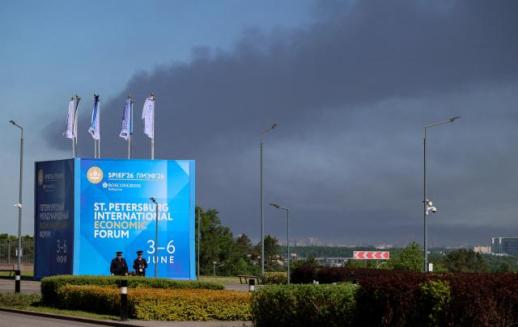 Ukraine Launches Large-Scale Drone Attack on St. Petersburg Amid Economic Forum Ukrainian forces launched a large-scale drone attack targeting St. Petersburg, Russia's second-largest city, and nearby military facilities. According to reports from the Wall Street Journal and others, the attack occurred on the morning of June 6, local time, focusing on Russian military installations in the St. Petersburg area. Ukrainian President Volodymyr Zelensky announced via X (formerly Twitter) that the strikes hit the Kronstadt Naval Base west of St. Petersburg, an armory, and an oil depot in the Krasnodar region. "It is time to end the war, but the Russian leader wants to continue fighting," Zelensky stated, urging an end to life-threatening attacks. Smoke was seen rising near St. Petersburg, where an economic forum was taking place. Russian authorities reported damage to infrastructure and injuries from the attack, but no fatalities. Alexander Beglov, the mayor of St. Petersburg, issued an indoor evacuation order for citizens, the first since Russia's invasion of Ukraine in 2022. Russia claimed to have shot down 376 Ukrainian drones overnight. In contrast, Ukraine reported that Russia launched 272 long-range attack drones, of which 249 were intercepted. Earlier, President Zelensky sent an open letter to Russian President Vladimir Putin, proposing a face-to-face meeting to negotiate an end to the war. However, during the St. Petersburg forum, Putin effectively rejected this proposal, indicating that military operations would continue. He emphasized that the war would end only when Russia's objectives were achieved. In response, Zelensky criticized Putin, stating, "Russia has once again chosen war," and asserted that the Russian leader does not wish for peace.* This article has been translated by AI. 2026-06-07 14:06:00
 -
 Pakistan to Deliver Letter to Iran's Supreme Leader Amid Peace Talks Amid a stalemate in U.S.-Iran peace negotiations, efforts by mediating countries are underway to revive dialogue. According to reports from Iranian state news agency IRNA and DPA, Pakistan's Interior Minister Mohsin Naqvi arrived in Tehran on the evening of June 6. Iran's semi-official ISNA news agency reported that Naqvi is expected to deliver a letter from Pakistan Army Chief Asim Munir to Iran's Supreme Leader Ayatollah Seyyed Mojtaba Khamenei. Munir has been a key figure in facilitating the U.S.-Iran peace talks held in Islamabad and is known to have direct communication with U.S. President Donald Trump. As Naqvi is considered close to Munir, there are expectations that he will convey messages aimed at promoting dialogue between Iran and the U.S. Naqvi first met with Iran's Interior Minister Eskandar Momeni. He is also scheduled to meet with high-ranking Iranian officials, including President Masoud Pezeshkian and Foreign Minister Abbas Araghchi. In related developments, Lebanese Army Commander Rudolf Haikal is also reported to be heading to Pakistan. Reuters noted that while the Lebanese side did not disclose specific reasons for the visit, it appears to be at the invitation of Pakistan. Iran has set a ceasefire between Israel and the Lebanese militant group Hezbollah as a precondition for peace negotiations with the U.S. Conversely, Lebanon has stated that the ceasefire issue should be addressed separately from U.S.-Iran negotiations, raising the possibility of Pakistan mediating on this matter. However, Iran and the U.S. continue to exchange limited attacks while maintaining an official ceasefire. On June 6, the Islamic Revolutionary Guard Corps (IRGC) announced that it fired upon four oil tankers attempting to pass through the Strait of Hormuz without permission. In retaliation, the U.S. shot down a suicide drone launched by Iran targeting the tankers and struck Iranian coastal bases.* This article has been translated by AI. 2026-06-07 13:42:00
 -
 U.S. Military Shoots Down Two Iranian Drones in Hormuz Strait The U.S. military has shot down two Iranian suicide drones in the Hormuz Strait. The U.S. Central Command announced on June 6 that it intercepted the drones, which were threatening international maritime traffic in the region. The command stated, "We are maintaining a defensive posture in response to Iran's aggressive actions." Earlier that day, Central Command reported the downing of four Iranian suicide drones launched toward the Hormuz Strait. Hours later, Iran reportedly fired seven ballistic missiles at U.S. bases in Kuwait and Bahrain, leading to further localized clashes between the two sides.* This article has been translated by AI. 2026-06-07 11:15:00
 -
 Shooting at Ohio Festival Leaves at Least 12 Injured A shooting near a local festival in Toledo, Ohio, has left at least 12 people injured. According to the Associated Press and other reports, the incident occurred around 5:30 p.m. near the Old West End Festival. Toledo Police Deputy Chief Joe Heffernan stated that two of the injured individuals are in critical condition. He noted that there appeared to be at least two shooters involved, suggesting they were likely firing at each other. Authorities are investigating the circumstances surrounding the shooting and are actively pursuing suspects. Witness Kevin Berry told the AP that he heard multiple gunshots while listening to a performance with friends in the festival's arboretum, prompting attendees to drop to the ground. Berry reported that officers stationed at the festival responded immediately, and when he looked up, he saw someone throwing a gun to the ground. He later recounted seeing at least five people with gunshot wounds, stating, "The injured were scattered throughout the arboretum area." The Old West End Festival is a two-day event held in Toledo's historic district, featuring live music, food vendors, house tours, and shopping activities.* This article has been translated by AI. 2026-06-07 11:06:00
 -
 U.S. Considers Using Iranian Assets for Gulf Nations' Recovery The United States is reportedly exploring the possibility of using Iranian assets to aid in the recovery and reconstruction of damage suffered by Gulf allies. According to a source familiar with the matter, U.S. Treasury Secretary Scott Vance has instructed a team to assess the extent of the damage inflicted by Iran on its Gulf allies. The source indicated that the U.S. is considering utilizing Iranian assets not only for the reconstruction costs of potential future damage from Iranian attacks but also for the recovery of damages that have already occurred. However, the Treasury Department did not specify which types of assets are under consideration. Reuters reported that the discussions do not appear to be limited to frozen Iranian assets. This initiative is noteworthy as it arises amid Iran's demands for the release of its frozen assets. Instead of accommodating Iran's request, the U.S. is contemplating using those assets to fund the recovery efforts of Gulf allies. Earlier, Mohsen Rezai, a senior advisor to Iran's Supreme Leader, stated in an interview with CNN, "If President Trump wants to reach an agreement with Iran, $24 billion is a test of trust. This is a test that the U.S. must pass, and then the way will be opened." He emphasized, "This money is not America's money; it is our money." Given the challenges the U.S. faces in fully accommodating Iran's asset release demands, this proposal may also be seen as a new leverage point in negotiations. The U.S. is concerned that releasing frozen funds without achieving significant progress on Iran's nuclear program could weaken its negotiating position. President Trump has criticized the Obama administration for providing cash to Iran as part of the nuclear agreement, making a large-scale release of frozen funds politically sensitive. Reuters analyzed that if the U.S. moves forward with utilizing Iranian assets for the recovery of Gulf nations, it could introduce new sources of conflict in the already unstable ceasefire between the U.S. and Iran. Indeed, military tensions between the two countries continued over the weekend. U.S. forces shot down a drone launched by Iran and subsequently struck coastal radar bases near the Strait of Hormuz. The Iranian Islamic Revolutionary Guard Corps (IRGC) claimed to have launched ballistic missile attacks against U.S. military bases in Kuwait and Bahrain.* This article has been translated by AI. 2026-06-07 10:54:00
 -
 U.S.-China Tensions Rise on 37th Anniversary of Tiananmen Square On the 37th anniversary of the Tiananmen Square incident, tensions between the United States and China have escalated. U.S. Secretary of State Marco Rubio criticized the Chinese Communist Party for attempting to erase the truth of the past through censorship, while China accused the U.S. of distorting historical facts and interfering in its internal affairs. According to reports from Reuters on June 3, Rubio issued a statement titled "37th Anniversary of the Tiananmen Square Massacre," reminding the world that it has been 37 years since the Chinese Communist Party ordered the military to attack thousands of peaceful protesters in and around Tiananmen Square on June 4. He stated, "The students, workers, and citizens who lost their lives gathered to exercise their inherent rights and demand democratic reforms and accountability for corruption. We remember their lives and honor their legacy." He emphasized that no amount of censorship can erase the past, asserting that the legitimacy of those who sacrificed to defend the inalienable rights of free expression and peaceful assembly will eventually be proven. AFP noted that Rubio's statement came less than three weeks after President Donald Trump met with Chinese President Xi Jinping in Beijing, where they agreed on an unstable trade truce, amid a slight easing of tensions compared to the previous year. China responded swiftly. Foreign Ministry spokesperson Mao Ning stated during a regular briefing on June 4 that, "The U.S. has distorted historical facts, slandered China's political system and development path, and interfered in China's internal affairs. China expresses strong dissatisfaction and resolute opposition." Mao claimed that the Chinese government has long reached a clear conclusion regarding the political turmoil of the late 1980s, asserting that the path of socialism with Chinese characteristics is a choice made by history and the people, receiving heartfelt support from the entire Chinese populace and sufficient recognition from the international community. He urged the U.S. to fulfill its promise to respect China and its people through concrete actions and to stop promoting ideological confrontation, as well as to cease interfering in China's internal affairs under the pretext of so-called "democracy and human rights." China Blocks Tiananmen Memorials Memorials and controls surrounding the Tiananmen incident continue. According to ABC News, Chinese police informed the families of Tiananmen victims that they would not be allowed to visit a cemetery in Beijing on the anniversary. Amnesty International noted that families have been reading commemorative statements at the cemetery under police surveillance for over 30 years on this date. In Hong Kong, memorial events have virtually disappeared. ABC News reported that on June 4, Hong Kong police heightened security in and around the park where large candlelight vigils were previously held, detaining performance artists attempting symbolic actions the day before the anniversary. Since 2020, Hong Kong authorities have banned candlelight vigils citing COVID-19, and large memorial events have not occurred since the implementation of the national security law, which led to the prosecution of organizers. In mainland China, any mention of the June 4 Tiananmen incident is strictly taboo. The largest memorial events, once held in Hong Kong, have been suppressed by authorities, leading to commemorations primarily taking place in cities abroad, including London, New York, Berlin, and Taipei. Meanwhile, amid the 37th anniversary of the Tiananmen incident, tensions between China and the West have extended to security and Taiwan issues. The Five Eyes intelligence alliance warned that Chinese military intelligence is attempting to recruit current and former officials, military personnel, and journalists through online job platforms to extract confidential information. China dismissed this as "entirely fabricated malicious slander." Conflicts also arose over Taiwan. China recently imposed a one-year ban on entry to mainland China, Hong Kong, and Macau for four New Zealand lawmakers who visited Taiwan, claiming they violated the "One China" principle and warning that crossing the red line on Taiwan issues would have consequences. In response, New Zealand and Taiwan asserted that parliamentary exchanges are a normal part of diplomatic relations.* This article has been translated by AI. 2026-06-04 17:39:00
 -
 US Judge Warns Trump Tariff Refund Appeal Could Disrupt Online Claims System A U.S. International Trade Court judge has warned that an appeal regarding tariff refunds from the Trump administration could disrupt the existing online claims system. On June 3, Richard Eaton, a judge at the International Trade Court, stated in a letter released that if the Justice Department's request for immediate intervention by the appeals court is granted, it could impact the online claims system that has processed at least $85 billion in refunds. The Justice Department contends that this online claims system was established under the government's own authority, not at the direction of Judge Eaton. In response, Eaton acknowledged the government's efforts to disburse refunds but cautioned that any intervention in the ongoing litigation could hinder progress toward resolving the cases. Eaton also submitted a 30-page document demonstrating that U.S. government agencies created the online claims system in response to his rulings, countering the government's assertion that it was built 'voluntarily.' It is rare for a judge to directly rebut an appellant challenging their ruling. However, Bloomberg noted that the tariff refund litigation has been conducted in an unusually manner overall. Previously, Eaton has overseen thousands of lawsuits filed by importers seeking tariff refunds. Most of these cases were on hold until the Supreme Court ruled in February that the so-called 'reciprocal tariff' was illegal. The Liberty Justice Center, which represents small businesses, stated that the progress made in the illegal International Emergency Economic Powers Act (IEEPA) tariff refund process was due to the court's order for the government to take action. The Customs and Border Protection (CBP) agency reported that there are currently $85 billion worth of tariff refund claims being processed or in the process of being paid to importers.* This article has been translated by AI. 2026-06-04 17:00:00