

Journalist

Hwang Jin-hyun
jinhyun97@ajunews.com
-
 SpaceX Aims for $1.75 Trillion Valuation in Upcoming IPO with Fixed Price of $135 American aerospace company SpaceX is reportedly targeting a valuation of approximately $1.75 trillion in its upcoming initial public offering (IPO). According to the Wall Street Journal on June 2, SpaceX plans to submit an amended filing to regulators soon, detailing the expected price range for its IPO scheduled for next week. Earlier this year, after acquiring Elon Musk's artificial intelligence company xAI, SpaceX was valued at about $1.25 trillion. The valuation target for this IPO is $500 billion higher. Reuters reports that SpaceX has set a fixed offering price of $135 per share and plans to sell 555.6 million shares, representing less than 5% of its total equity, to raise $75 billion. While the percentage of shares being sold is small compared to typical IPOs, the amount raised would be unprecedented. Reuters noted that fixing the offering price ahead of investor presentations and demand forecasts is highly unusual. Typically, companies propose a price range first and then finalize the offering price based on investor demand, which can lead to a price at the upper end or above the proposed range if demand is strong. This IPO is expected to be conducted entirely through new share issuance, meaning all funds raised will go directly to the company, with no existing shareholders selling their shares. The funds are anticipated to be used for expanding AI computing resources and satellite network growth. SpaceX plans to hold a corporate presentation for institutional investors in New York later this week to kick off its investor recruitment. It is also reported that preliminary interest checks, known as "testing the waters," have already been conducted with some investors. Goldman Sachs and Morgan Stanley are leading the underwriting for the IPO. Goldman Sachs will oversee the allocation of shares and the collection of funds, while Morgan Stanley will serve as the stabilization agent to support the stock price on the first day of trading. Bank of America, Citigroup, and JP Morgan are also participating as co-managers. SpaceX is expected to finalize the offering price on June 11 and begin trading on the Nasdaq under the ticker symbol "SPCX" on June 12.* This article has been translated by AI. 2026-06-03 16:06:00
 -
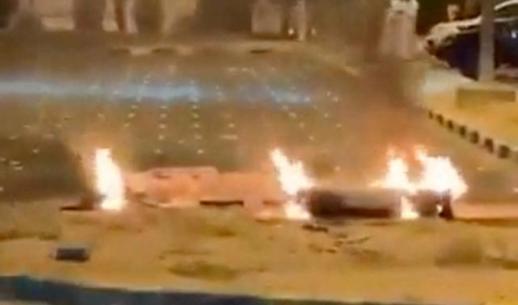 Iran Launches Missile and Drone Attack on Kuwait International Airport, Operations Halted Kuwait International Airport's Terminal 1 has been severely damaged due to a missile and drone attack from Iran, leading to a complete suspension of airport operations. According to reports from the Kuwait Times and Reuters on June 3, the Kuwait Directorate General of Civil Aviation (DGCA) confirmed that the attack resulted in significant damage to multiple airport facilities and casualties. In response to the attack, the DGCA activated its emergency response plan. Abdullah Al-Azzi, a spokesperson for the DGCA, stated that authorities are ensuring the safety of passengers, airport staff, and infrastructure in accordance with approved emergency procedures and response plans. Al-Azzi announced that all flight operations would be suspended until necessary security and technical measures are completed and the airport is ready to resume operations. Consequently, flights to and from Kuwait International Airport will be redirected to alternative airports until further notice. He added that a specialized technical team has begun a comprehensive inspection and assessment to determine the extent of damage and stability of airport facilities and operational systems before repair and recovery efforts commence.* This article has been translated by AI. 2026-06-03 15:30:00
 -
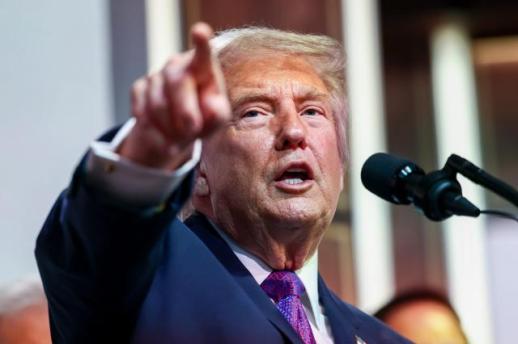 Trump Says Talks with Iran Continue Amid Ongoing Military Tensions President Donald Trump has dismissed rumors of a halt in negotiations with Iran, stating that discussions are ongoing. However, the U.S. has reaffirmed that any easing of sanctions is contingent upon Iran's abandonment of its nuclear ambitions, while military clashes between the two nations continue, leaving the prospects for a resolution uncertain. On June 2, Trump took to social media platform Truth Social to refute claims that talks between the U.S. and Iran had ceased. He stated, "The fake news report that Iran and the U.S. stopped talking a few days ago is false and wrong." He added, "Our conversations have continued for four days, three days, two days, yesterday, and today. No one knows how these discussions will end, but as I told the Iranians, it is time for you to reach an agreement in some form." Earlier, the Iranian news agency Tasnim reported that Iran's negotiation team had suspended communication regarding a peace agreement with the U.S. in protest of Israel's attacks in Lebanon. While the U.S. maintains that talks are still active, it has made it clear that sanctions relief is not linked to the reopening of the Strait of Hormuz but rather to Iran's commitment to nuclear disarmament. According to reports from the Associated Press, U.S. Secretary of State Marco Rubio stated during a Senate Foreign Relations Committee hearing that "Iran has been sanctioned for possessing highly enriched uranium and engaging in nuclear activities. If they agree to abandon these, sanctions relief will be tied to their promises and compliance." When asked if sanctions relief was being offered in exchange for reopening the Strait of Hormuz, Rubio responded, "That has not been discussed or proposed." He expressed strong concerns about the potential for Iran to acquire nuclear weapons, noting that the country's decision-making structure is a theocratic regime. He warned that if Iran obtains nuclear capabilities, they would effectively gain impunity, limiting the options available to counter them and allowing them to hold the world hostage. Rubio also indicated that without preemptive strikes from the U.S. and Israel, Iran would likely soon possess nuclear weapons, which he described as making Iran a "worse" threat than North Korea due to its greater financial resources. Military Clashes Continue Amid Negotiations Military confrontations persist even as negotiations unfold. According to reports from Reuters and AFP, Iran's Islamic Revolutionary Guard Corps (IRGC) announced through state media that it had targeted the U.S. Navy's Fifth Fleet base in Bahrain and a U.S. Air Force base in Kuwait with missiles and drones. In response, the U.S. Central Command (CENTCOM), which oversees military operations in the Middle East, immediately refuted Iran's claims. CENTCOM stated on social media platform X (formerly Twitter) that "the assertion that Iran struck the U.S. Fifth Fleet headquarters in Bahrain and the U.S. Air Force base in the region is false," adding that "all Iranian attacks on U.S. forces have failed." CENTCOM also reported that it intercepted three attack drones launched by Iran targeting civilian vessels legitimately transiting the regional waters and conducted airstrikes on an Iranian military ground control facility on Qeshm Island. Maritime blockades continue as well. CENTCOM announced via X that it had implemented a blockade on the Botswana-flagged tanker 'M/T Lexi' as it was passing through international waters en route to Iran's Kharg Island. Economic pressure on Iran remains in effect. The U.S. Treasury Department's Office of Foreign Assets Control (OFAC) has designated Iran's largest cryptocurrency exchange, Nobitex, and major trading platforms as targets for sanctions, also sanctioning four individuals, including Nobitex's co-founder and former and current CEOs. 2026-06-03 15:18:00
 -
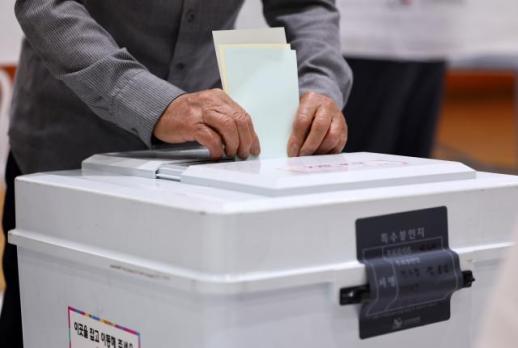 South Korea's Local Elections Seen as Midterm Assessment for President Lee Jae-myung Major foreign media outlets have characterized South Korea's nationwide local elections on June 3 as a midterm evaluation of President Lee Jae-myung's first year in office and a pivotal moment for the future direction of his administration. Reuters reported on June 2 that this election is the first nationwide vote since President Lee's early victory in last year's presidential election, serving as an assessment of his first year in power. While the Democratic Party is expected to perform well, the key factor will be the margin of victory, with the outcomes in Seoul and Busan seen as critical indicators of success. The Associated Press also described the local elections as a gauge of support for President Lee's administration, marking its first anniversary. The AP noted that the People Power Party is still grappling with confusion following the emergency measures implemented by former President Yoon Suk-yeol, which may work to the advantage of the Democratic Party. Bloomberg referred to this election as the first major test for President Lee after one year in office. A clear victory for the Democratic Party could reflect the president's strong popularity, while a strong showing by the opposition could reveal limitations in his support base. The New York Times viewed the local elections as a referendum on President Lee's popularity and a test for the conservative opposition. The NYT noted that the People Power Party, which won the local elections four years ago, has weakened since the emergency measures taken by former President Yoon. The Nihon Keizai Shimbun (Nikkei) regarded this election as a significant turning point that could impact the market beyond just a political event. The Nikkei highlighted that the South Korean stock market, which is operating at record highs, faces a major variable with the local elections, marking the first opportunity to gauge public sentiment regarding President Lee's 'growth-oriented' economic policies. Kyodo News reported that the local elections are the first nationwide vote under the Lee Jae-myung administration and will serve as a midterm evaluation, with the results expected to influence the president's future governance. In this election, voters will select 16 metropolitan mayors, 16 education superintendents, 227 heads of local governments, 933 regional council members, and 3,035 local council members. Additionally, by-elections for the National Assembly will be held in 14 districts nationwide, including Pyeongtaek in Gyeonggi Province and Buk-gap in Busan.* This article has been translated by AI. 2026-06-03 14:48:00
 -
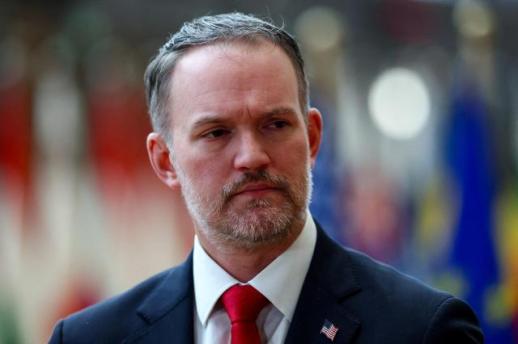 U.S. Trade Representative Proposes Up to 12.5% Tariffs on Goods from 60 Economies Over Forced Labor The U.S. Trade Representative (USTR) is moving to impose additional tariffs of up to 12.5% on goods from 60 economies, including South Korea, due to insufficient measures to block imports produced with forced labor. According to Bloomberg on June 2, the USTR concluded an investigation under Section 301 of the Trade Act of 1974, finding that the systems and enforcement related to imports of forced labor products in these economies are unreasonable and impose burdens on U.S. commerce. As a result, the USTR proposed a tiered tariff system based on the introduction of forced labor import bans and compliance commitments, suggesting rates of 10% and 12.5% for different economies. Bloomberg reported that products imported from Canada, Mexico, the European Union, Taiwan, and the United Kingdom would face a 10% tariff, while major economies such as China, India, Japan, South Korea, Brazil, and Switzerland would incur a 12.5% tariff. The investigation was initiated by the USTR on March 12. Following this, the agency conducted public consultations and hearings, receiving approximately 60 testimonies and 500 comments and rebuttals. Jamieson Greer, the USTR, stated, "It is unacceptable that our most important trading partners have failed to address the issue of imports made with forced labor. This creates a structure that forces American workers to compete in an unfair environment globally." He added, "We will no longer tolerate this imbalance. Some trading partners have taken initial steps to block imports of forced labor products through commitments under the U.S.-Mexico-Canada Agreement (USMCA) and other trade agreements. Each trading partner must take further actions to ensure that trade does not unjustly promote and entrench forced labor globally." However, the new tariff system includes some exceptions. Certain clothing and textile imports from specific countries may enter the U.S. at a lower Section 301 tariff rate, with quotas determined by the volume of textile exports from those countries to the U.S. Some food items, including beef, tomatoes, bananas, coffee, and orange juice, are excluded from the tariffs. Metals and certain fuel and chemical products, which already face other tariffs, are also exempt. The final tariff rates and specific exceptions have yet to be confirmed. The USTR is accepting applications to attend public hearings until June 22 and will accept written comments until July 6. The hearings are scheduled for July 7. This move comes as the Biden administration seeks to re-establish extensive tariff barriers that were invalidated by a Supreme Court ruling during the Trump administration. Bloomberg noted that Section 301 tariffs are considered legally more robust and flexible than other measures reviewed by Trump, though their implementation may take longer. Trump had also enacted a temporary 10% global tariff under Section 122 of the Trade Act, which is set to expire in July and is currently subject to legal challenges. 2026-06-03 14:00:00
 -
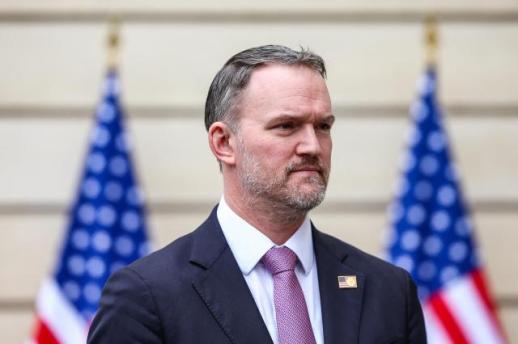 USTR Chief: South Korea Became Steel Power Without Coal or Iron Ore Jamison Grier, the U.S. Trade Representative, emphasized the justification of the tariff policies promoted by the Trump administration, arguing that South Korea's rise as a global steel producer despite its lack of resources is due to government intervention. In a commentary titled "Trade Theory Must Catch Up with Tariffs, Industrial Policy, and the Costs of Globalization" published in the June issue of the International Monetary Fund's (IMF) Finance & Development magazine, Grier noted that for nearly 30 years, tariffs and import regulations have been excluded from policy options due to economic models and elite consensus, and that President Trump is changing this. "The return of tariffs and import regulations presents an opportunity to update outdated assumptions and models with evidence from real-world data and experience," he stated, pointing out that existing free trade theories fail to adequately reflect the real costs of labor market shocks, supply chain vulnerabilities, and the decline of manufacturing bases. Grier explained that even those who designed the post-World War II international economic system recognized the risks of unrestricted trade. He emphasized that the General Agreement on Tariffs and Trade (GATT) was designed to allow the use of tariffs for essential security guarantees, preventing domestic industry harm, responding to unfair competition, promoting economic development, and addressing balance of payments issues. He criticized policymakers, economists, and business leaders since the 1990s for forgetting this pragmatism and embracing hyper-globalization. As a result, multinational corporations relocated production bases in search of subsidies and lax labor and environmental regulations, leading to the loss of quality manufacturing jobs and factories in the U.S. Grier argued that modern economics must reflect structural trade imbalances that cannot be explained solely by comparative advantage. He questioned, "How can the U.S., with the richest farmland in the world, run a trade deficit in agriculture? How could South Korea, with limited energy resources and no coal or iron ore, become a steel powerhouse?" He pointed out that economic interventions by various countries have distorted the global economy, placing some nations in chronic trade deficits while others enjoy surpluses, stating, "This is unhealthy for both sides." Grier criticized the IMF for warning about the U.S. current account deficit while only proposing large tax increases, austerity measures, and cooperation with trading partners as solutions. He argued, "The imbalances that have grown over the past decade show that politely requesting structural economic changes is ineffective." He also emphasized that tariffs are a key tool for encouraging domestic production and altering trade patterns. Citing the Reagan administration's restrictions on Japanese auto imports and the safeguard tariffs on washing machines during Trump's first term, he explained that tariffs have led to increased investment and job creation in the U.S. Grier stated, "Tariffs that directly target the main sources of deficits are a simpler and more flexible solution," adding that the U.S. is encouraging productive investment through tariffs and reciprocal trade agreements, increasing domestic production incentives, and opening U.S. export markets. Meanwhile, following the Supreme Court's ruling on the invalidation of reciprocal tariffs in February, the Trump administration has imposed a 10% 'global tariff' on all trading partners based on Section 122 of the Trade Act. The deadline for imposing tariffs under this provision is up to 150 days, with new tariffs expected to be introduced based on the findings of Section 301 investigations by late July. In a CNBC interview, Grier announced that the results of the Section 301 investigation, which includes South Korea and dozens of other countries, will be released in the coming weeks.* This article has been translated by AI. 2026-06-03 11:06:00
 -
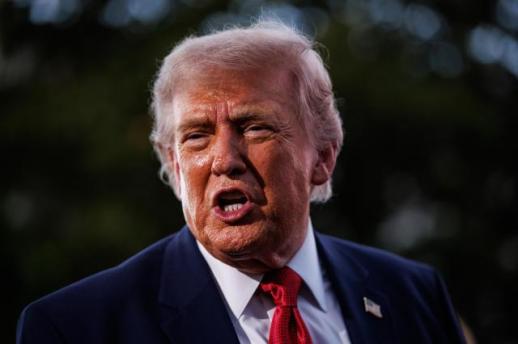 Trump Denies Reports of Halt in US-Iran Negotiations Donald Trump, the President of the United States, dismissed reports on June 2 that negotiations regarding a peace agreement with Iran had ceased, calling them fake news and asserting that discussions between the two nations are ongoing. In a post on the social media platform Truth Social, Trump stated, "The reports claiming that Iran and the U.S. stopped talking a few days ago are false and incorrect." He added, "Our conversations have continued for four days, three days, two days, yesterday, and today. No one knows how these talks will conclude, but as I told the Iranians, it is time for you to reach an agreement in some form." Seemingly addressing Iran's hostile policies toward the U.S. and Israel, he remarked, "You (Iran) have been doing this for 47 years, and we can no longer allow it to continue." Earlier, the Iranian news agency Tasnim reported on June 1 that Iran's negotiating team had halted exchanges of messages regarding a peace agreement with the U.S. in protest of Israel's attacks in Lebanon. An Iranian official also told The Washington Post that negotiations with the U.S. had stopped due to escalating Israeli attacks in Lebanon. However, in a phone interview with ABC News the previous day, Trump indicated that he expected discussions about a memorandum of understanding (MOU) to take place within the next week.* This article has been translated by AI. 2026-06-03 10:36:00
 -
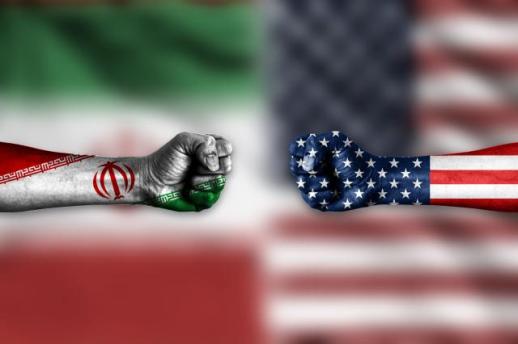 Iran Claims Attack on U.S. Bases in Bahrain and Kuwait; U.S. Denies Success Iran's Islamic Revolutionary Guard Corps (IRGC) has claimed responsibility for attacks on key U.S. military bases in Bahrain and Kuwait. In response, U.S. Central Command (CENTCOM), which oversees American operations in the Middle East, immediately refuted the claims, stating that the Iranian attacks were unsuccessful. On June 2, local time, the IRGC announced through state media that it had targeted the U.S. Navy's Fifth Fleet base in Bahrain and a U.S. Air Force base in Kuwait using missiles and drones. However, CENTCOM quickly countered on social media platform X (formerly Twitter), asserting, "Claims that Iran struck the U.S. Fifth Fleet headquarters in Bahrain and the nearby U.S. Air Force base are false," and emphasized, "All Iranian attacks against U.S. forces have failed." CENTCOM further stated, "U.S. forces remain vigilant and are prepared to defend against unjust Iranian aggression." The U.S. also reported that it intercepted three missiles launched by Iran in coordination with Bahrain. The Iranian missiles aimed at Kuwait reportedly either fell short of their target or disintegrated mid-air, according to CENTCOM. Additionally, CENTCOM announced the interception of three attack drones launched by Iran that were targeting civilian vessels legitimately navigating regional waters. In retaliation for the Iranian attacks, the U.S. conducted airstrikes on Qeshm Island in Iran. CENTCOM stated that these strikes targeted an "Iranian ground control facility" and confirmed that there were no American casualties. Qeshm Island is Iran's largest island, located in the Strait of Hormuz, a critical route for oil and gas transportation in the Gulf region.* This article has been translated by AI. 2026-06-03 10:21:00
 -
 Labor Minister Orders Investigation into Hanwha Aerospace Explosion Labor Minister directs thorough investigation at Hanwha Aerospace site Kim Young-hoon, the Minister of Employment and Labor, visited the Hanwha Aerospace facility in Daejeon on June 1, where an explosion occurred, to hold an emergency situation assessment meeting. According to the Ministry of Labor, Minister Kim instructed the head of the Industrial Safety and Health Agency and the director of the Industrial Safety and Health Division, who were dispatched to the scene, to thoroughly investigate the cause of the accident and determine accountability. He emphasized the need to swiftly and rigorously clarify the cause of the incident during a joint investigation scheduled for June 2. He also urged participants in the investigation to prioritize their safety. Additionally, he called for collaboration with local governments to establish a robust support system for the families of the victims and the injured. He instructed that trauma counseling support for witnesses and fellow workers be carefully monitored. Hanwha Group mobilizes resources for accident response and support In response to the explosion at the Hanwha Aerospace facility, Hanwha Group, under the direction of Chairman Kim Seung-yeon, has formed a special response task force to focus on accident recovery, support for victims' families, and treatment for the injured. On June 1, Hanwha Group issued a statement expressing condolences for the tragic accident that claimed the lives of five employees. The statement read, "We deeply apologize to the families of the deceased, the injured employees, and the local community." Chairman Kim expressed his sorrow over the loss of employees who were dedicated to their work, stating, "I extend my deepest condolences and support to the families of the deceased." He further urged that the company provide the utmost respect to the deceased and act swiftly and sincerely in supporting the families and treating the injured. Safety issues impact election campaigns With the upcoming local elections and parliamentary by-elections, both ruling and opposition parties have scaled back their campaign activities in light of recent major safety incidents. On June 1, following the explosion at Hanwha Aerospace and a toxic gas leak at SK Hynix in Cheongju, the leadership of the Democratic Party and the People Power Party announced the suspension of public campaign events. Individual candidate camps have also shifted their strategies, opting to meet voters in a more subdued manner, avoiding campaign songs and speeches. Both parties are aware that inappropriate responses to safety incidents just days before the election could negatively impact voter sentiment. Lee Jae-myung's government relies heavily on Bank of Korea loans In the first year of the Lee Jae-myung administration, the Bank of Korea's temporary loan amount exceeded 120 trillion won, marking the highest level among past administrations. Despite expectations of improved tax revenue from a semiconductor supercycle, concerns are growing over the government's repeated reliance on temporary loans that do not appear in national debt statistics. According to Aju Economy's investigation on June 1, from June of last year to May of this year, the government borrowed a total of 122 trillion won in temporary loans from the Bank of Korea, with 58 borrowing instances. This is the largest amount recorded in the first year of any administration since statistics began in 2011. The Bank of Korea's temporary loan system is designed to fill short-term funding gaps that arise from timing differences between revenue and expenditure. The government borrows funds from the Bank of Korea as needed and repays them, effectively acting as a fiscal overdraft. The government has relied heavily on these temporary loans since its inception. Starting with 17.9 trillion won in June last year, it borrowed 25.3 trillion won in July, 31.6 trillion won in August, and an additional 14 trillion won in September and 5 trillion won in December. This year, it borrowed 17 trillion won in March and 11.2 trillion won in April, with no additional borrowing in May. This trend is notable compared to previous administrations. The Yoon Suk-yeol administration, which recorded the highest borrowing among prior governments, borrowed a total of 87.9 trillion won from May 2022 to April 2023, with 41 instances. The Park Geun-hye administration borrowed 86.8 trillion won in its first year, with 32 instances. In contrast, the Moon Jae-in administration borrowed only 1.5 trillion won during the same period, with just three instances.* This article has been translated by AI. 2026-06-01 21:24:00
 -
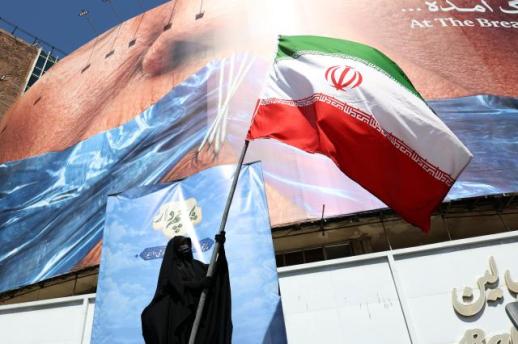 Iran: Lebanon Ceasefire is Essential for Peace Negotiations Amid stalled negotiations between the United States and Iran following President Donald Trump's failure to finalize a ceasefire memorandum of understanding (MOU), Iran has reiterated that a ceasefire on the Lebanon front is a fundamental condition for any peace agreement. Iranian Foreign Minister Abbas Araghchi stated on social media platform X (formerly Twitter) on June 1, "A ceasefire between Iran and the U.S. clearly includes a ceasefire on all fronts, including Lebanon. Any violation of the ceasefire on one front constitutes a violation on all fronts. The responsibility for any violations lies with the U.S. and Israel." Mohammad Bagher Ghalibaf, the head of Iran's negotiating team and Speaker of Parliament, also commented on X, asserting, "The U.S. maritime blockade and the war crimes committed by the Zionist regime (Israel) in Lebanon are clear evidence of U.S. violations of the ceasefire." Esmaeil Baghaei, spokesperson for the Iranian Foreign Ministry, emphasized during a regular briefing that the U.S. is behind all current events in Lebanon, stating, "The ceasefire in Lebanon is a fundamental condition for all negotiations aimed at ending the conflict." The call for a ceasefire in Lebanon has been a longstanding demand from Iran in the context of peace negotiations. However, the renewed emphasis from key Iranian figures appears to be an attempt to pressure the U.S. and Israel amid the current stalemate in talks. This renewed focus comes in response to Israel's recent escalation of bombings and occupation in Lebanon. It may also relate to the revised ceasefire MOU reportedly communicated to Iran by the U.S. The New York Times reported on May 30, citing three officials, that Trump had not approved the preliminary ceasefire agreement and had instead imposed stricter conditions, sending a revised document to Iran. Specific details of the changes have not been disclosed. Meanwhile, Baghaei noted that the U.S. and Iran continue to exchange messages regarding negotiations. He remarked, "We began negotiations amid serious distrust and skepticism, and message exchanges continue in this atmosphere." He added, "It is important to remember that diplomacy cannot replace power. Negotiations and diplomacy do not inherently signify trust between the parties involved, and these should be viewed separately." Baghaei criticized the U.S. for frequently changing its position and introducing contradictory demands, claiming that this has prolonged the negotiations. He stated, "The situation in Lebanon is a violation of the ceasefire not only by the Zionist regime (Israel) but also, broadly speaking, by the U.S. We will take all necessary measures to defend our national security."* This article has been translated by AI. 2026-06-01 21:18:00