

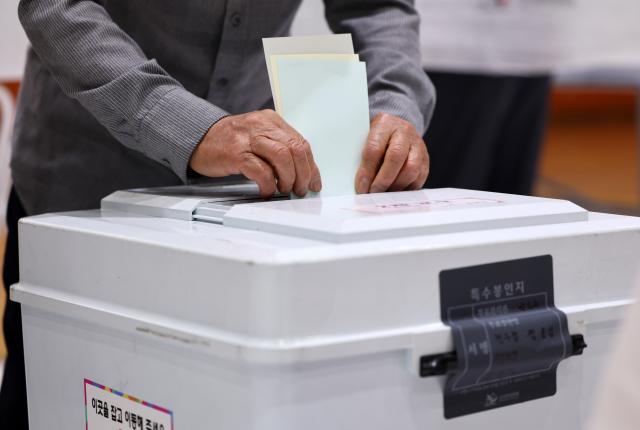
Reuters reported on June 2 that this election is the first nationwide vote since President Lee's early victory in last year's presidential election, serving as an assessment of his first year in power. While the Democratic Party is expected to perform well, the key factor will be the margin of victory, with the outcomes in Seoul and Busan seen as critical indicators of success.
The Associated Press also described the local elections as a gauge of support for President Lee's administration, marking its first anniversary. The AP noted that the People Power Party is still grappling with confusion following the emergency measures implemented by former President Yoon Suk-yeol, which may work to the advantage of the Democratic Party.
Bloomberg referred to this election as the first major test for President Lee after one year in office. A clear victory for the Democratic Party could reflect the president's strong popularity, while a strong showing by the opposition could reveal limitations in his support base.
The New York Times viewed the local elections as a referendum on President Lee's popularity and a test for the conservative opposition. The NYT noted that the People Power Party, which won the local elections four years ago, has weakened since the emergency measures taken by former President Yoon.
The Nihon Keizai Shimbun (Nikkei) regarded this election as a significant turning point that could impact the market beyond just a political event. The Nikkei highlighted that the South Korean stock market, which is operating at record highs, faces a major variable with the local elections, marking the first opportunity to gauge public sentiment regarding President Lee's 'growth-oriented' economic policies.
Kyodo News reported that the local elections are the first nationwide vote under the Lee Jae-myung administration and will serve as a midterm evaluation, with the results expected to influence the president's future governance.
In this election, voters will select 16 metropolitan mayors, 16 education superintendents, 227 heads of local governments, 933 regional council members, and 3,035 local council members. Additionally, by-elections for the National Assembly will be held in 14 districts nationwide, including Pyeongtaek in Gyeonggi Province and Buk-gap in Busan.
* This article has been translated by AI.

Copyright ⓒ Aju Press All rights reserved.