

Journalist

Joonha Yoo
joonhayoo94@ajupres.com
-
 Nike teams up with BTS for customization, tour merchandise collection SEOUL, May 29 (AJP) - Nike has partnered with K-pop legend BTS to launch a Nike By You customization experience and tour merchandise tied to the group's BTS WORLD TOUR "ARIRANG," Nike said Friday. The project combines customized Nike products with tour merchandise, giving BTS fans a way to personalize apparel and accessories connected to the group's upcoming world tour. The Nike By You experience features 10 custom graphics created specifically for BTS. The designs can be used to personalize select Nike apparel and tote bags. Nike said the graphics use bold shapes, fluid movement and custom typography to reflect the group's musical evolution and its connection with fans around the world. The collaboration also includes Nike x BTS tour merchandise, including T-shirts, a hoodie and a Korea-only cap. The items will be sold in select cities on the "ARIRANG" world tour and online in China. The collection references BTS' Korean heritage alongside themes of legacy and creativity. Some Nike By You designs highlight the number seven, representing the seven members of BTS, while others reference musical bars and measures. The Nike By You customization experience will begin June 1 at select Nike stores in Seoul, Busan, Tokyo and Osaka. It will later expand to cities across Asia, Europe and North America through February 2027. Nike x BTS tour merchandise will launch June 12 in Seoul, Busan and Tokyo, followed by releases in major U.S. cities, including Chicago, Boston, San Francisco, Los Angeles, New York City and Las Vegas, on July 5 and in London on July 6. Additional merchandise drops are scheduled for China, Singapore, Taguig, Bangkok, Kuala Lumpur, Jakarta, Toronto, Melbourne and Sydney through February 2027. 2026-05-29 15:48:43
 -
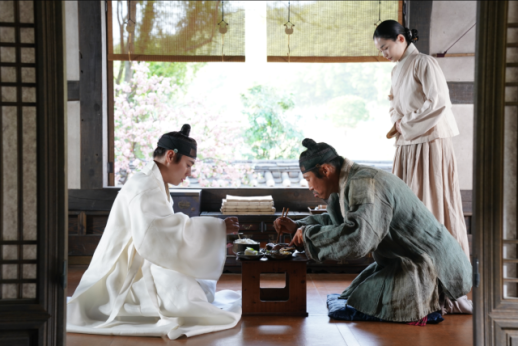 Korean box-office hit, indie drama Invited to Shanghai film festival SEOUL, May 29 (AJP) - Jang Hang-jun's box-office hit "The King's Warden" and Yoon Ga-eun's drama "The World of Love" have been invited to this year's Shanghai International Film Festival. The two films will be screened in the Asian Collection section of the festival's 28th edition, which opens June 12, according to the festival lineup. The Shanghai International Film Festival is one of China's major international film events, along with the Beijing International Film Festival. The Asian Collection section presents films from across the region. "The King's Warden" follows the exiled life of King Danjong, born Yi Hong-wi and played by Park Ji-hoon, the sixth king of the Joseon Dynasty. The historical drama has drawn 16.88 million admissions in South Korea so far, making it the second-most-watched film in the country's box-office history. It trails "Roaring Currents," which drew 17.61 million admissions, and stands ahead of "Extreme Job," which attracted 16.26 million viewers. The festival introduced "The King's Warden" on its official WeChat account as the top Korean box-office film of the year. "The World of Love" follows Ju-in, an 18-year-old high school student who faces conflict after refusing to join a petition opposing the release of a sex offender. The film, directed by Yoon, has also been selected for major international festival programs, including Toronto's Platform section. 2026-05-29 12:45:39
 -
 i-dle enters Forbes 30 under 30 Asia list ahead of July comeback SEOUL, May 29 (AJP) - K-pop girl group i-dle has been named to Forbes' 2026 30 Under 30 Asia list in the entertainment and sports category, the group's agency Cube Entertainment said Friday. The annual list recognizes young figures and teams across industries in Asia and the Pacific region. The recognition places i-dle among a select group of K-pop acts to have appeared on the list. The five-member group — Miyeon, Minnie, Soyeon, Yuqi and Shuhua — was included among this year's honorees ahead of its planned comeback in July. The group released the digital single "Mono (Feat. skaiwater)" in January and has since carried out a series of U.S. promotions, appearing on NBC's "Today" show, "The Kelly Clarkson Show" and "iHeart KPOP with JoJo." i-dle was also recently featured on the digital cover of U.S. magazine PAPER, which highlighted the group's creative identity and musical direction. The group is currently on its fourth world tour, "2026 i-dle WORLD TOUR ," and is scheduled to release a new album in July. It is also set to perform at Lollapalooza, one of the largest music festivals in the United States. 2026-05-29 12:44:31
 -
 LIGHTSUM's Yujeong set to make acting debut in YouTube rom-com SEOUL, May 29 (AJP) - Yujeong of K-pop girl group LIGHTSUM is set to make her acting debut in the web-based drama series "Subscription Love," her agency Cube Entertainment said on Friday. "Subscription Love," scheduled for release later in the day on the YouTube channel Rocodi, is a romance comedy set in a world where an artificial intelligence (AI)-powered dating subscription service matches a young man and woman, who grow closer while carrying out missions assigned in each episode. Yujeong plays a young woman who keeps failing at relationships and begins to experience changes through the subscription service. "I am thrilled that the series is finally being released," Yujeong said. "Since it was my first time acting in a drama, everything felt new to me, and I learned a lot while filming it." Expectations are high among fans to see Yujeong reveal a new side of herself through her acting debut, beyond her activities as a member of LIGHTSUM. Since debuting in 2021, the six members of LIGHTSUM, known for their bright songs, sharp choreography and youthful performances, have remained active through television appearances, festival performances and unit projects 2026-05-29 10:54:23
 -
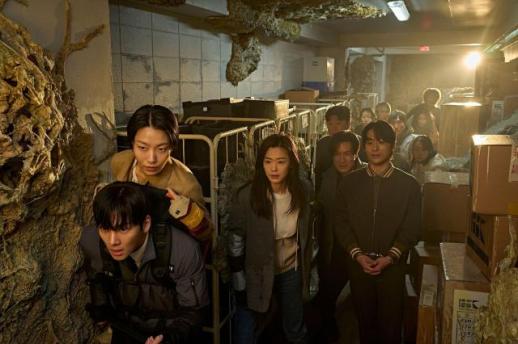 Korean Zombie Film 'Gunch' Redefines Horror Genre Amid Early Summer Release SEOUL, May 28 (AJP) - This year, the horror season has arrived earlier than usual, coinciding with the onset of summer. When thinking of K-horror, zombies have become synonymous over time. South Korea's unique interpretation of the Asian zombie, which began with the traditional Jiangshi, has evolved once again this year. This time, the zombies are equipped with the ability to 'think,' fitting for the AI era. Director Yeon Sang-ho's new zombie thriller 'Gunch' has surpassed 2.1 million viewers just six days after its release, making it a strong early summer box office hit. This pace is one day faster than the record set by the highest-grossing Korean film of 2025, 'Zombie Daughter,' which also crossed the 2 million mark. 'Gunch' is currently showing on 1,858 screens nationwide and has a reservation rate of 39.9%. Comparisons to 'Train to Busan,' which attracted 11.5 million viewers in 2016 and left a significant mark on the global zombie film market, are naturally emerging. However, Director Yeon describes 'Gunch' not as a continuation of 'Train to Busan,' but as a work that fundamentally changes the way we view the zombie genre. During a press conference at CGV Yongsan I-Park Mall, Yeon stated, "'Seoul Station,' 'Train to Busan,' and 'Peninsula' started from placing classic zombies in new settings. 'Gunch' is a film about zombies themselves. In a sense, it can be seen as my first film featuring a zombie protagonist." This shift in perspective leads to a change in the film's premise. In 'Gunch,' the infected mutate rapidly and act as a collective rather than individually. Yeon explained, "It's a confrontation between zombies with collective intelligence and humans. The zombies evolve quickly from a primitive state, while humans regress from civilization to barbarism. What remains at the end of that regression could be the essence of humanity." While 'Train to Busan' established the 'speed' of Korean zombies, 'Gunch' shifts the horror into the realms of 'connection' and 'collective intelligence.' Zombies are no longer just mindless flesh-eaters; they form a network. From Vengeful Spirits to Systemic Collapse Korean horror films have long been rooted in themes of vengeful spirits and the emotion of Han (grief). Unresolved resentment, unjust deaths, white-clad female ghosts, and settings like closed schools and broken family spaces have been central to Korean horror. Although director Kang Bum-gu's 'The Evil Dead' is often cited as Korea's first zombie film from the early 1980s, the zombie genre remained peripheral for a long time. The crises and anxieties experienced by Korean society have since become fertile ground for zombie narratives. Following the 1997 financial crisis, rising unemployment and distrust in institutions shifted public fears in popular culture from individual grievances to collective collapse and systemic failure. Recently, Korean horror has increasingly focused on themes of infection, isolation, social panic, and the disintegration of communities rather than supernatural revenge. 'Gunch' aligns with this trend. Set in a confined building beset by a mysterious infection, the film depicts survivors confronting infected individuals who evolve in unpredictable ways. The title 'Gunch' evokes a biological concept, suggesting a group of individual organisms functioning as a single unit. The provocative aspect of the film lies in the fact that these infected individuals are not 'thoughtless monsters.' “Zombies Resembling AI” — Audience Reactions Aaron Kim, a 20-year-old university student from Edinburgh visiting Seoul, initially had no plans to watch a Korean zombie film but was persuaded by a Korean friend to go to the theater. Kim remarked, "In most zombie films I've seen, zombies are thoughtless beings that indiscriminately kill people. In 'Gunch,' the zombies have intelligence. I felt how unsettling and frightening that could be." He found the film fresher compared to overseas zombie movies. Kim noted, "Overseas zombie films generally follow similar patterns. Korean zombies are new. They run fast and are not simple. I would rate the film 8 out of 10." He particularly connected the film's core concept to artificial intelligence. He explained, "As people use AI more, more data enters a single system, and that system becomes increasingly powerful. The zombies in 'Gunch' felt like part of a larger circuit that continuously learns." Jiyoon Lee, a 20-year-old university student living in New York, also evaluated 'Gunch' as taking a different direction from 'Train to Busan' and 'Kingdom.' Lee said, "In previous works, people became zombies due to a virus and charged aggressively, but they didn't appear to be thinking beings. The zombies in 'Gunch' seem to have a clear purpose to spread the virus. Their ability to create collective intelligence and move together through their own communication network is chilling." What Sets Korean Zombies Apart? The reactions from both audience members resonate with the image that Korean zombie films have built since 'Train to Busan': fast, intense, and physically overwhelming zombies. However, speed alone cannot explain the allure of Korean zombie films. Korean zombie narratives typically embed infection within densely populated social spaces. Settings like trains, schools, apartment complexes, and closed buildings serve as the main stages, reflecting the high density of life in Korean society. The fear of having nowhere to escape arises not just from the closed spaces themselves but from the social relationships and institutions that trap individuals even in crises. In this regard, Korean zombie films pose different questions than those shaped by George A. Romero's tradition in Western zombie films. While Western zombie narratives ask, 'What remains after civilization collapses?' Korean zombie films inquire, 'How quickly can society collapse while everyone is still trapped within the system?' Film critic Lee Ji-hye believes the strength of Korean zombie narratives comes from the 'relationships' that infection disrupts rather than the infection itself. Lee stated, "Korean zombie films often center around the premise that a beloved family member or friend has become a monster. The existing relationships are intricately woven into the narrative, significantly enhancing audience immersion." He explained that sadness and guilt often accompany the narrative of infection in Korean zombie films. Lee noted, "The fact that someone has become a zombie tends to bring about collective guilt or mourning. The two films show that Korean zombie cinema is no longer confined to a single genre." This sentiment is evident in many key works of Korean zombie cinema. 'Train to Busan' intertwined themes of family sacrifice and class conflict, while 'Kingdom' placed infection against the backdrop of royal politics, famine, and systemic failure. 'All of Us Are Dead' transformed schools into theaters of bullying and survival, and 'Happiness' dissected fear, hierarchy, and selfishness through a quarantined apartment complex. 'Zombie Daughter' embraced the zombie theme within a family comedy, opening a new spectrum for K-zombies. Lee also pointed out that the collapse of institutions is a core element of Korean zombie narratives. He remarked, "Korean zombie films do not merely tell stories of zombies chasing people; they also address how social systems collapse in crises, how ineffectively governments and bureaucracies operate, and how human selfishness manifests." While the hopping corpses of 1980s Hong Kong films combined Taoist folklore, Korean zombies are closer to modern disaster forms born from infection, institutions, and urban overcrowding. 'Gunch' pushes this genre a step further. Now, fear lies not only in the speed of the dead but also in the existence that learns, connects, and evolves collectively, targeting the vulnerabilities of human society.* This article has been translated by AI. 2026-05-29 08:02:00
 -
 Korean authorities step in to contain lodging prices ahead of BTS Busan concerts SEOUL, May 28 (AJP) -South Korean authorities moved quickly to respond to BTS' call for restraint in overcharging the group's beloved global fans traveling to the southern port city of Busan for the next stop on their worldwide tour. The government has secured more than 1,300 alternative accommodation options ahead of the concerts next month, after the group publicly criticized sharp price hikes around the event. The measures were announced Thursday at a task force meeting jointly led by the Ministry of Economy and Finance and the Ministry of Culture, Sports and Tourism to address price gouging around major events. BTS is scheduled to hold its "ARIRANG" world tour concerts on June 12 and 13 at Busan Asiad Main Stadium. The shows have triggered complaints from fans after some hotels and other accommodation providers in Busan reportedly raised room rates sharply around the concert dates—with some rooms said to have jumped from under 100,000 won to several million won per night. During a Weverse Live broadcast on Tuesday, BTS members addressed the controversy while speaking with fans. "There have been too many news reports about lodging businesses ahead of the Busan concerts. I hope businesses do not do that," RM said. "I understand there are peak-season rates, but I hope they keep it reasonable." RM also said he had heard some fans were considering staying overnight without lodging or using jjimjilbang — Korean public bathhouses with rest areas — because of the high accommodation costs. "That is not right," he said. "Shouldn't people think long term?" Jimin also expressed concern, saying he wanted fans to have a good experience in Busan. "I feel bad because I hope fans can have a good time in Busan," Jimin said. "They should keep it reasonable. How can they raise prices several times over?" Jungkook, who is from Busan, added in Busan dialect, "Goma haera" — meaning "Enough already." The controversy prompted President Lee Jae Myung to comment Wednesday that Busan's image had been hurt by complaints over what he called lodging price gouging linked to the BTS concerts, and that improvements were needed, underscoring the weight of the Kpop superstar who recently swept three awards—including their second-ever Artist of the Year trophy—at last week's American Music Awards with their new album ARIRANG just released two months ago. In response, the government said universities, religious facilities, public-sector training centers and youth training facilities in nearby areas including Busan, Yangsan and Changwon, will provide paid or free lodging for domestic and foreign visitors. Information on available facilities and reservation methods will be posted on the Visit Busan and Visit Korea websites. Authorities will also conduct special joint inspections of lodging businesses near the concert venue on Friday and again on June 8 and 9. The inspections will focus on hygiene conditions and possible price-fixing among accommodation providers. Businesses found to have violated regulations could face immediate administrative measures, including correction orders or business suspensions. Complaints filed through the 120 local call center or the 1330 tourist complaint center will be referred to local governments and subsequently to the National Tax Service for possible investigation into tax evasion. Accommodation providers confirmed to have engaged in excessive pricing will also face tougher penalties in hotel rating evaluations, with the maximum deduction raised to 30 points from the current 10. The government also plans to revise rules on reward payments for reports of unfair practices, including collusion. Under the planned changes, the current payment cap would be removed, and whistleblowers could receive up to 10 percent of the fines imposed. 2026-05-28 17:41:52
 -
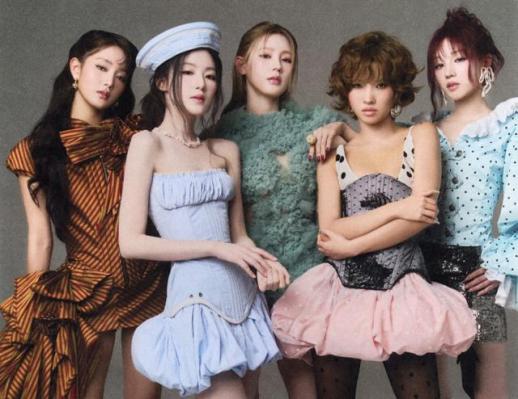 i-dle lands digital cover of U.S. magazine 'PAPER' ahead of July comeback SEOUL, May 28 (AJP) - K-pop girl group i-dle has been featured on the digital cover of U.S. magazine PAPER as the group prepares for a July comeback. PAPER released the cover shoot and interview with the five-member group — Miyeon, Minnie, Soyeon, Yuqi and Shuhua — on Tuesday. The feature comes as i-dle continues to expand its presence in North America through media appearances, festival stages and overseas promotions. In the cover images, the members reinterpret a 1990s-inspired angelic mood through vivid colors, ornate styling and romantic details, creating a softer but still highly stylized image for the group. PAPER described i-dle as a group that has grown more certain of its instincts and musical direction over time. The magazine said the group’s desire to strip away the unnecessary and move closer to the essential has come to define its music. The magazine also highlighted the group’s ability to build one of K-pop’s most distinctive creative worlds, balancing theatricality with emotional directness. The feature also looked at i-dle’s recent digital single “Mono (Feat. skaiwater),” released in January, describing it as a softer shift that still carries the confidence of artists no longer trying to prove themselves through noise. PAPER also drew attention to “Crow,” a new song first performed during the group’s 2026 world tour “Syncopation.” The magazine noted that the song reworks the image of the crow — often associated with death, disaster or bad omens — into a symbol of survival and endurance. The coverage adds momentum to i-dle’s upcoming activities in the United States. The group has recently appeared on NBC’s “Today” show, “The Kelly Clarkson Show” and “iHeart KPOP with JoJo” as part of its North American promotions. i-dle is also scheduled to perform at Lollapalooza in July, marking another major U.S. festival appearance for the group. In the feature, PAPER framed i-dle not simply as a K-pop act preparing another release, but as a group that has returned with a clearer sense of identity each time it has faced adversity. 2026-05-28 17:27:25
 -
 K-pop quartet's new album draws attention after their hit song 'Supernova' SEOUL, May 28 (AJP) - K-pop girl group aespa returned on Thursday with a new full-length album "LEMONADE," unveiling what the quartet described as a more mature musical identity and a new phase in the expanding universe that has defined their rise as one of K-pop's leading global acts. The 10-track album was released at 1 p.m. through major music-streaming platforms, marking aespa's first studio album since "Armageddon" in May 2024. The release arrives after a breakthrough period for the group. "Supernova," one of the double title tracks from "Armageddon," dominated South Korea's music charts in 2024, topping Melon's chart for 15 consecutive weeks and helping aespa win "Group of the Year" at Billboard Women in Music 2025. "We felt a lot of pressure because the first full-length album received so much love, but we prepared with excitement," leader Karina told reporters. "We consulted a lot with the company and worked hard to show a more grown version of ourselves." Since debuting under SM Entertainment in November 2020, aespa — consisting of Giselle, Karina, Ningning and Winter — have become one of the defining K-pop acts, combining a futuristic virtual-world concept with aggressive genre experimentation. "LEMONADE" features double title tracks "WDA (Whole Different Animal)" featuring rapper G-Dragon and "LEMONADE," alongside songs spanning dance, rock, hyperpop, R&B and pop-rock. The album also includes a collaborated song with American rapper Ty Dolla $ign. According to their agency, the album centers on "Complaexity," a concept describing intertwined parallel universes within aespa's ongoing fictional storyline. In the group's narrative, cracks formed between overlapping worlds become a metaphor for transforming disruption into opportunity. "I hope people feel like a new door has been opened when they listen to this album," Winter said. The two title tracks present sharply contrasting styles. "WDA" leans into darker industrial hip-hop with heavy synth bass and restrained vocals, while "LEMONADE" adopts a brighter electronic dance sound driven by acid-techno synth riffs, hardstyle beats and chant-like hooks. The performances also emphasize the contrast. "WDA" focuses on hip-hop-based choreography and controlled movement, while "LEMONADE" incorporates playful gestures, including a signature move mimicking the squeezing of a lemon. "WDA has a dark and overwhelming feeling, while LEMONADE is kitschy and playful," said Giselle. "The mood of the two songs is completely different." Winter described "LEMONADE" as the track that best captures aespa's personality and confidence. "No matter how dangerous or chaotic things get, we'll grind it all up and drink it our way," she said. Other tracks on the album include "Bite," "Camouflage," "Can't Help Myself," "My Plan," "Roll," "SHAKIN," "Switchblade" featuring Ty Dolla $ign, and "Til We Die." The group's debut "Black Mamba" set YouTube records for a K-pop debut music video at the time. The quartet later expanded their fictional "KWANGYA" universe through hits including "Drama," "Next Level," "Savage," "Spicy," and "Supernova." While the four girls initially drew attention for their AI-avatar concept and digital mythology, aespa's commercial rise has increasingly been driven by their musical evolution and global reach. "Supernova" became their biggest international hit, charting on Billboard's Global 200 and earning multiple "Song of the Year" awards in South Korea. To promote the new album, aespa will hold "aespa WEEK - MAKE IT LEMONADE" from May 29 to June 7, with events planned at Banpo Hangang Park, Yeouido Hangang Park and IFC Mall in Seoul. Pop-up events are also scheduled in Los Angeles, New York and Shenzhen, followed by additional promotions in Bangkok, Taipei, and Tokyo ahead of the group's upcoming "SYNK: COMPLaeXITY" world tour beginning in August. "More than anything, I hope people find energy in our music," Karina said. 2026-05-28 17:07:28
 -
 Retail money floods leveraged chip ETFs as Korea's chip rally finds new outlet SEOUL, May 28 (AJP) - South Korea's red-hot semiconductor rally spilled into the exchange-traded fund market Wednesday, as the country's first single-stock leveraged ETFs tied to Samsung Electronics and SK hynix drew explosive trading on their debut, giving retail investors a leveraged route into an already crowded chip trade. Sixteen leveraged and inverse ETFs linked to Samsung Electronics and SK hynix were listed simultaneously, generating a combined trading value of about 10.4 trillion won on their first trading day, according to Yonhap Infomax data. Their combined market capitalization reached nearly 5 trillion won. The strongest demand centered on products linked to SK hynix, the memory-chip maker that has become one of the biggest beneficiaries of global artificial intelligence investment. Samsung Asset Management's KODEX SK hynix Single Stock Leverage ETF posted the largest trading value among all domestic ETFs at 4.39 trillion won, rising 18.44 percent. Mirae Asset Global Investments' TIGER SK hynix Single Stock Leverage ETF followed with 2.07 trillion won in trading and a gain of 18.56 percent. Leveraged ETFs tied to Samsung Electronics also attracted heavy demand. Samsung Asset Management's KODEX Samsung Electronics Single Stock Leverage ETF logged 1.95 trillion won in trading, while Mirae Asset's competing TIGER product recorded 1.02 trillion won. The debut highlights a broader shift in Korea's equity market. Semiconductor heavyweights have already driven the benchmark KOSPI to record highs, leaving many investors wary of entering the trade directly after sharp gains and widening intraday swings. The new ETFs effectively opened another channel for investors seeking amplified exposure to the same stocks, allowing them to ride the chip rally through listed products rather than direct share purchases alone. The launch came as the KOSPI extended its record-breaking rally. The benchmark closed up 2.25 percent at 8,228.70 on Wednesday after briefly touching an intraday record of 8,450.26. Market participants said demand for the new leveraged products appeared to intensify the already heavy concentration of retail money in leading semiconductor shares. "Samsung Electronics and SK hynix, the underlying assets for the single-stock leveraged products, have recently shown daily price swings of around plus or minus 5 to 6 percent," Han Ji-young, an analyst at Kiwoom Securities, was quoted as saying. "As they are both market leaders and stocks with concentrated retail flows, the launch could amplify short-term money concentration." The new products drew immediate demand from retail investors who had watched from the sidelines as chip stocks surged, with some market participants pointing to fear-of-missing-out demand as one factor behind the rush into leveraged ETFs. The surge also pushed Korea's ETF industry past a major milestone. The combined market capitalization of locally listed ETFs exceeded 500 trillion won for the first time since ETFs were introduced in Korea in 2002, reaching 506.1 trillion won as of late Wednesday morning, according to the Korea Exchange. But the boom has also raised questions about whether speculative money is building too quickly around a narrow group of semiconductor-linked assets. On the same day, allegations surfaced that some liquidity providers may have engaged in wash trading to boost trading volume in the newly listed products. Securities firms and the broader financial investment industry denied the claims, while the Korea Exchange said trading volume alone was insufficient to determine whether wash trading had occurred. An exchange official said the credibility of the allegations was low based solely on execution volume, adding that account-level trading data from liquidity providers is recorded in the exchange database and monitored by its market surveillance division. SK Securities said wash trading was structurally impossible under its system because such orders are automatically blocked. Yuanta Securities also said it had merely carried out normal liquidity provision duties by narrowing bid-ask spreads and supporting investor protection during the listing process. The Korea Financial Investment Association said liquidity providers typically hedge opposite positions to manage losses that can arise while supplying liquidity. It also said incentives for liquidity providers were not large enough to create a strong motive for artificial trading. The intense ETF demand comes as investors are simultaneously parking record amounts of money in money market funds, suggesting that optimism over further stock gains is being matched by caution over extreme volatility. According to the Korea Financial Investment Association, MMF assets stood at 258.65 trillion won as of May 21, after hitting a record 262.01 trillion won on May 19. Corporate money accounted for more than 90 percent of the total. MMFs, which invest in short-term instruments such as Treasury bills, commercial paper and certificates of deposit, are widely used as cash parking vehicles because they allow flexible withdrawals and generate interest even over short holding periods. In a highly volatile market, they often function as waiting rooms for capital that has not yet committed to risk assets. That pattern is now visible in ETF form as well. Over the past month, money market ETFs collectively drew more than 430 billion won in net inflows, led by ACE Money Market Active and KODEX Money Market Active. The broader appetite for retail investment products was also visible in a separate government-backed fund. The National Growth Fund, which offers tax benefits and carries a government backstop covering up to 20 percent of sub-fund losses, had sold roughly 99.5 percent of its 600 billion won offering by Wednesday afternoon, according to the Financial Services Commission. Together, the flows show the unusual psychology of Korea's market. Investors are chasing upside through leveraged semiconductor ETFs, parking record amounts of money in cash-like funds and rushing into state-supported investment products at the same time. The pattern suggests that expectations for further gains, including fear-of-missing-out demand, are coexisting with deep caution over extreme volatility. Volatility remains elevated. The KOSPI recently saw an intraday swing of 675 points on May 15 and surged by 606 points in a single day on May 21. The VKOSPI, Korea's equivalent of the VIX and a widely watched measure of expected market volatility, remained at historically high levels, falling below 70 only after eight consecutive sessions above that threshold. A reading above 50 is generally regarded by market participants as a panic-level signal. Still, several brokerages have raised their KOSPI targets, with some projecting the index could reach 10,000 or higher this year. Nomura recently lifted its target range to 10,000–11,000, citing improving earnings and return on equity. Hyundai Motor Securities, KB Securities and Hana Securities have also presented bullish scenarios above the 10,000 level. Wednesday's debut made one thing clear: Korea's chip trade is no longer confined to the stock market. The same rally that has driven the KOSPI to record highs is now reshaping the country's ETF industry, cash management flows and retail investment behavior — drawing in investors who had stayed on the sidelines, even as large pools of short-term money remain on standby amid extreme volatility. 2026-05-28 09:30:05
 -
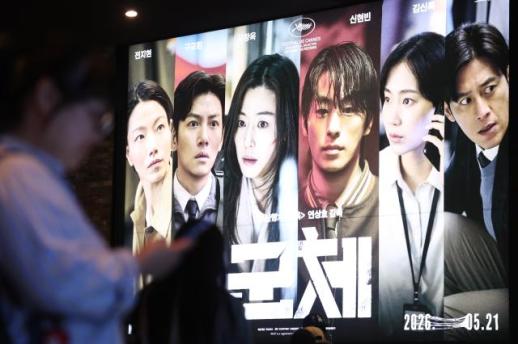 K-zombies are fast, vivid — and in "Colony," finally thinking SEOUL, May 27 (AJP) - Summer heat in Korea brings horror season, and this year's bar-raiser is "Colony," Yeon Sang-ho's latest zombie thriller, which drew more than 2.1 million admissions in its first six days. The film claimed 39.9 percent of advance reservations across 1,858 screens nationwide, prompting inevitable comparisons to Yeon's 2016 breakout "Train to Busan," which sold 11.5 million tickets and pushed Korean zombie cinema onto the global stage. Yeon, however, frames "Colony" as a rupture rather than a sequel in spirit. At a press conference at CGV Yongsan IPark Mall, the director said the film breaks from "Train to Busan," "Seoul Station" and "Peninsula" by training its lens on the zombies themselves. "In 'Seoul Station,' 'Train to Busan' and 'Peninsula,' the stories came from putting classic zombies into new spaces," he said. "'Colony' is about the zombies. In a sense, it's the first film I've made where they are the protagonists." The shift is more than perspectival. In "Colony," the infected mutate quickly, moving and communicating as a coordinated collective. "It's a confrontation between zombies with collective intelligence and humans," Yeon said. "The zombies begin in a primitive state and evolve rapidly, while humans devolve from civilization into savagery. What remains after that devolution — that, I thought, might be the core of humanity. That was the image I wanted to draw." If "Train to Busan" made Korean zombies famous for their speed, "Colony" makes them frightening for their coordination. The zombie is no longer simply an infected body. It is a network. For decades, Korean horror lived in the register of ghosts — resentment, unresolved grief, the vengeful woman in white, haunted school corridors, broken family homes. Gang Beom-gu's "A Monstrous Corpse," often cited as Korea's first zombie film, surfaced in the early 1980s, but the genre remained marginal for years. Its later ascent tracked the country's anxieties: the 1997 Asian financial crisis brought mass unemployment and a deep distrust of institutions, and popular culture began imagining collapse in collective rather than spectral terms. The pivot has only sharpened in recent years, with Korean horror trading supernatural vengeance for infection, social breakdown and mass panic. Set inside a sealed building during a mysterious outbreak, "Colony" follows survivors as they face infected beings whose behavior evolves unpredictably. The title nods to biology — a colony being a group of organisms functioning as a single unit. The film's quiet provocation is that the infected are not mindless. Aaron Kim, a 20-year-old university student from Edinburgh visiting Seoul, said he hadn't planned to see a Korean zombie film on his trip, but a Korean friend persuaded him. "In most zombie films I've seen, zombies have no mind. They just kill indiscriminately," Kim said. "In 'Colony,' they have intelligence. I realized how unsettling that could be." He found the film fresher than the genre fare he was used to abroad. "Zombie films overseas tend to follow a similar pattern," he said. "Korean zombies feel new. They run fast, and they're not simple." Kim gave the film an eight out of 10 and likened its central conceit to artificial intelligence. "The more people use AI, the more data feeds into one system, and the more powerful it gets," he said. "The zombies in 'Colony' felt like that. Each one seemed to be part of a larger circuit that kept learning." Jiyoon Lee, a 20-year-old student based in New York, said the film parts ways with predecessors like "Train to Busan" and "Kingdom." "In those, people turn into zombies because of a virus, and they attack aggressively but without thought," Lee said. "In 'Colony,' the zombies seem to have a clear purpose — to spread the virus. They build a kind of collective intelligence through their own communication network and move together. That was chilling." Both reactions point to one of the defining traits of Korean zombie cinema: speed. Since "Train to Busan," K-zombies have been fast, violent and physically overwhelming. But speed alone doesn't account for their pull. Korean zombie stories tend to plant contagion in dense, socially loaded spaces — trains, schools, apartment complexes, sealed buildings — amplifying the dread that there is nowhere to run because there is nowhere outside. That separates K-zombies from much of the Western tradition shaped by George A. Romero, which often asks what remains after civilization falls. Korean zombie stories ask the inverse: how quickly can a society unravel while everyone is still trapped inside it. Film critic Lee Ji-hye said K-zombie narratives draw much of their force from the emotional ties they implicate. "Korean zombie stories often hinge on the idea that a beloved family member or friend has become a monster," Lee said. "Existing bonds are woven into the narrative, which makes the story far more immersive." Grief and guilt, she said, are routinely fused to infection. "There's a tendency to attach collective guilt or sorrow to the fact that someone has become a zombie," Lee said. "The story makes room for mourning." That emotional undertow runs through the canon: "Train to Busan" wove family sacrifice into class friction; "Kingdom" set infection against royal politics, famine and state failure; "All of Us Are Dead" turned a high school into a theater of bullying and survival; "Happiness" used a quarantined apartment complex to dissect fear and hierarchy. Institutional collapse, Lee added, is rarely background scenery. "Korean zombie works tend to weigh the breakdown of social systems, the incompetence of government in a crisis, bureaucracy and human selfishness — not just zombies chasing people," she said. Unlike the jiangshi — the hopping corpse of 1980s Hong Kong cinema, rooted in Taoist folklore — Korean zombies are modern disaster figures, shaped by infection, institutions and the pressures of crowded urban life. With "Colony," the genre takes another step. The fear is no longer just the speed of the dead. It is an enemy that learns, coordinates and, in doing so, holds up a mirror to the society it consumes. 2026-05-27 17:50:29