
Journalist

Joonha Yoo
joonhayoo94@ajupress.com
-
 KOSPI extends rally, hitting new milestone SEOUL, April 28 (AJP) - South Korea's benchmark KOSPI closed Tuesday at a new high after testing a new milestone as the sole winner in Asia. The main bourse added 0.4 percent to finish at 6,641.02 points after climbing as high as 6,712.73, extending its winning streak to a seventh consecutive session. Institutional investors purchased 351.1 billion Korean won (US$270 million) worth of shares, while foreign and retail investors sold 184.5 billion won and 130.3 billion won, respectively, indicating that the rally was increasingly driven by domestic institutional flows as other investors took profits. The rally has been underpinned by sustained global inflows into artificial intelligence (AI)-linked semiconductor stocks, with the country's market capitalization surging more than 45 percent this year to around $4.04 trillion, overtaking the United Kingdom and highlighting its growing prominence in the global AI investment cycle. The gains reflect South Korea's outsized exposure to AI-linked sectors, amplifying its outperformance relative to regional peers. Among major stocks, SK hynix rose 0.6 percent to 1,300,000 won, while Hyundai Motor jumped 5.9 percent to 555,000 won, reflecting a broadening of the AI-driven rally beyond semiconductors as investor interest extended to automakers amid growing expectations for partnerships in autonomous driving and robotics. Samsung Electronics, however, fell 1.1 percent to 222,000 won, signaling profit-taking in index heavyweights following recent gains. In contrast, the junior KOSDAQ fell 0.9 percent to close at 1,215.6, reversing earlier strength as foreign and institutional investors offloaded a combined 786.8 billion won worth of shares. Retail investors bought a net 796.0 billion won, helping to limit losses. The divergence between the two major indexes highlights a shift toward large-cap, AI-linked stocks at the expense of higher-risk stocks. Biotech and high-growth stocks led declines, reflecting continued pressure on high-valuation segments, even as some battery-related shares showed resilience. The South Korean won edged down to 1,474.0 per dollar amid lingering global uncertainty. Elsewhere in Asia, Japan's Nikkei 225 fell 1.1 percent to 59,917.5 after the Bank of Japan held its policy rate at 0.75 percent while signaling the possibility of further tightening. China's Shanghai Composite slipped 0.2 percent and Hong Kong's Hang Seng Index dropped 0.9 percent, as elevated energy prices and geopolitical risks weighed on regional sentiment. Meanwhile, oil prices extended gains, with Brent crude hovering above $110 per barrel amid prolonged disruptions in the Strait of Hormuz. 2026-04-28 17:52:56
 -
 Netflix wins tax battle in Seoul to pay little despite massive revenue in Korea SEOUL, April 28 (AJP) - A South Korean court ruled in favor of Netflix, ordering tax authorities to refund most of the roughly 80 billion won ($58 million) it had imposed on the global streaming giant, in a decision that underscores the limits of taxing cross-border digital services. The Seoul Administrative Court sided with Netflix Services Korea in a lawsuit filed in November 2023 seeking to cancel 76.2 billion won of the total tax assessment following a probe into its income. At issue was whether payments made by the Korean unit to its Netherlands-based affiliate, Netflix International B.V., should be treated as royalty income — subject to domestic taxation — or business income, which is exempt under the South Korea–Netherlands tax treaty if the foreign entity lacks a permanent establishment in Korea. Tax authorities argued the payments were royalties tied to the use of intellectual property. Netflix maintained they were business income derived from services provided overseas. The court ruled that the payments were not compensation for copyrights but service fees related to streaming services, noting that key functions such as content storage and transmission were performed by the overseas entity. It found that the Korean unit mainly handled platform operations, marketing and user management, while operating under a structure in which it retained a fixed margin and remitted the bulk of revenue to its parent — a model consistent with a service arrangement rather than intellectual property licensing. The ruling comes as Netflix continues to expand its presence in Korea’s over-the-top (OTT) market. According to its disclosure last week, Netflix Services Korea posted revenue of 1.05 trillion won last year, up 17 percent from a year earlier, marking its highest level since launching in the country in 2016. Operating profit rose to 20.3 billion won. Netflix’s monthly active users reached 15.6 million in December, up 20 percent on year and nearly double that of second-ranked Coupang Play. Despite strong top-line growth, profitability remains limited. The company’s operating margin has hovered around 2 percent for several years, as more than 80 percent of its local revenue is paid to its headquarters under “membership purchase” costs. Last year, about 8.5 trillion won — roughly 81 percent of domestic revenue — was remitted overseas. As a result, Netflix paid 6.6 billion won in corporate tax in Korea, equivalent to 0.6 percent of revenue, below the 1.1 percent average for foreign firms, according to CEO Score. The tax authority has not yet indicated whether it will appeal the ruling. However, Netflix Korea said "Netflix complies with tax laws and regulations in all countries where it operates and will continue to invest in Korean content and its broader ecosystem while cooperating with local authorities, regardless of the court’s decision." 2026-04-28 16:39:12
 -
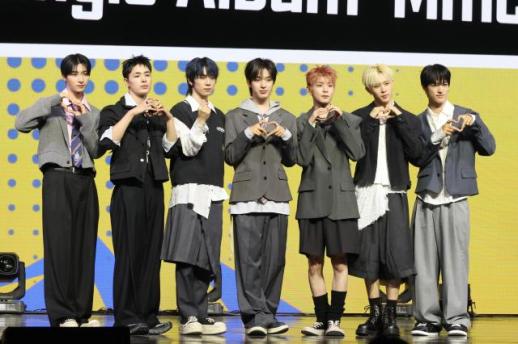 NEXZ returns with 'Mmchk' as JYP sharpens global group strategy SEOUL, April 27 (AJP) — Rookie boy group NEXZ is back with its second single “Mmchk,” underscoring JYP Entertainment’s evolving strategy to globalize the K-pop model through multinational lineups. The seven-member group held a showcase in Seoul on Sunday to mark the release of the single album at Blue Square Woori Bank Hall in Yongsan District. Formed through “Nizi Project Season 2,” a joint audition program between JYP and Sony Music Japan, NEXZ embodies a growing industry trend: exporting Korea’s idol training system while localizing talent. The group consists of six Japanese members—Tomoya, Yu, Haru, Hyui, Yuki and Seita—and one Korean member, So Geon. The survival-style program evaluated roughly 20 contestants on vocals, dance, stage presence and character, with only those meeting all criteria advancing. Unlike NiziU, which debuted primarily in Japan, NEXZ first launched in South Korea before expanding outward—signaling a more integrated, reverse-entry approach to global markets. The members underwent training periods ranging from two to over four years. Tomoya and Hyui joined JYP as early as 2019, while others entered through the structured audition pipeline. NEXZ debuted in May 2024 with “Ride the Vibe” and returns about six months after its previous release, the mini album “Beatboxer” in October 2025. The group has since gained early traction, winning Best New Artist at ASEA 2025 and being named among the “Best 5 New Artists” at the Japan Gold Disc Awards. The title track “Mmchk,” a bass-house dance number, features lyrical contributions from members Yuki, Hyui and Tomoya—part of an effort to shape the group’s own musical identity. “We can’t believe it’s already been two years since our debut—it still feels like yesterday,” Yu said during the showcase. “With the experience we’ve gained, we hope to reach more people through this comeback.” “It’s our first release in about six months, and we know fans have been waiting,” he added. “We’ll do our best to show growth both musically and on stage.” Reflecting on the group’s evolution, Tomoya said, “I remember how nervous I was before our debut. Now we’ve gained confidence and a clearer identity as NEXZ.” Members who participated in writing the lyrics said the track conveys a message of mutual inspiration. “We wanted to express that ‘because you shine, we can shine too,’” they said, noting the challenge of writing in Korean. On performance, the group emphasized flexibility over categorization. “Rather than defining ourselves within a specific genre, we want to present our own style and deliver performances that audiences keep coming back for.” Addressing the coined term “Mmchk,” So Geon described it as a symbolic keyword representing the group’s desire for recognition. “We hope it becomes something people naturally associate with NEXZ,” he said. Despite a crowded comeback season, the group struck an optimistic tone. “There is some pressure, but more than that, we feel excited,” he added. “It’s an opportunity to show everything we’ve prepared.” Seita said the group aims to earn its first music show win, while Hyui added that a special performance is planned if that goal is achieved. NEXZ will continue its global push with a showcase tour starting in Taipei next month, followed by Hong Kong and Bangkok. The single “Mmchk” will be released on major music platforms at 6 p.m. Monday, marking the start of full promotional activities. 2026-04-27 18:12:00
 -
 KOSPI, Nikkei close at all-time highs on chip rally, strong institutional buying SEOUL, April 27 (AJP) - South Korea's benchmark KOSPI closed at a fresh record high on Monday, while Japan's Nikkei 225 also finished at an all-time high, as semiconductor-driven gains and strong institutional inflows outweighed concerns over rising oil prices amid the prolonged conflict in the Middle East. The KOSPI rose 2.2 percent to close at 6,615.03 points, after swinging between a low of 6,529.20 and a record intraday high of 6,657.22. Institutions bought 1.10 trillion won (US$747 million) worth of shares, while foreign investors added 888.5 billion Korean won. Retail investors, meanwhile, sold 1.97 trillion won, indicating a rally driven by institutional and offshore flows as risk appetite improved. Large-cap semiconductor stocks led the rally, buoyed by gains in U.S. tech equities and a sharp rise in the Philadelphia Semiconductor Index. Samsung Electronics climbed 2.3 percent to 224,500 won, while SK Hynix jumped 5.7 percent to 1,292,000 won, after hitting an intraday high of 1,317,000 won as investors bet on a sustained memory upcycle and accelerating AI-driven demand. Auto-related stocks also stayed firm, with Hyundai Motor rising 2.1 percent to 524,000 won on improving margin expectations, while others showed mixed trends. Doosan Enerbility gained 1.4 percent and HD Hyundai Heavy Industries edged up 0.3 percent, whereas Hanwha Aerospace slipped 0.6 percent amid profit-taking after recent gains. Battery makers underperformed, with LG Energy Solution falling 3.5 percent to 464,000 won and Samsung Biologics declining 1.2 percent to 1,509,000 won, as investors rotated into semiconductor and cyclical names. Among notable movers, Hyosung Heavy Industries jumped 11.8 percent to 3,971,000 won after brokerages raised target prices on strong North American order momentum, while Korea Zinc ended flat at 1,642,000 won despite progress in its U.S. smelter project. The junior KOSDAQ rose 1.9 percent to close at 1,226.20, after trading between 1,209.30 and 1,229.40. Institutional investors bought 79.9 billion won and retail investors added 139.9 billion won, while foreign investors sold 180.0 billion won. Gains on the junior bourse were led by biotech and robotics shares, reflecting continued retail driven momentum in high growth sectors. Alteogen rose 3 percent to 380,000 won, Rainbow Robotics jumped 9.8 percent to 672,000 won and Samchundang Pharm gained 8.6 percent to 447,000 won, while Ecopro edged up 0.1 percent. Japan's Nikkei 225 also closed at a record high, rising 1.4 percent to 60,537.4, supported by technology gains, ahead of the Bank of Japan's policy decision. Investors widely expect rates to remain unchanged but are watching for any signals on potential tightening as inflation pressures persist. Elsewhere in Asia, China's Shanghai Composite Index rose 0.2 percent to 4,086.34, while Hong Kong's Hang Seng Index slipped 0.2 percent to 25,922.6, reflecting cautious sentiment as investors balanced strong tech momentum against rising oil prices and geopolitical uncertainty. Earlier, U.S. markets closed mixed last Friday, with the Dow Jones Industrial Average falling 0.2 percent, while the S&P 500 rose 0.8 percent and the Nasdaq Composite gained 1.6 percent. The Philadelphia Semiconductor Index jumped 4.3 percent, boosting optimism around the global chip cycle and supporting gains in Asian semiconductor shares. Attention is now turning to a packed global calendar including earnings from major U.S. technology firms and a policy decision from the Bank of Japan, which is expected to provide signals on the future path of monetary policy. Meanwhile, oil prices extended gains as supply concerns intensified. Brent crude held above US$107 per barrel, up 2.5 percent, while WTI rose 2.2 percent to around $96.5, as stalled U.S.-Iran negotiations and continued disruption in the Strait of Hormuz fueled fears of a prolonged supply shock, raising concerns over inflation and global growth. The Korean won strengthened against the dollar, with the currency closing at 1,472.1 won, up 0.4 percent from the previous session, supported by renewed foreign inflows into local equities. 2026-04-27 17:16:16
 -
 KOSDAQ hits 25-year high as Asia trades mixed on oil, Middle East tensions SEOUL, April 24 (AJP) - Korea’s junior index KOSDAQ emerged as the winner on Friday as it hit a 25-year high, while broader Asian markets stayed mostly sidelined under pressure from rising oil prices and escalating Middle East tensions. The KOSDAQ rose 2.5 percent to close at 1,203.84, swinging between 1,172.32 and its intraday high. Foreign investors bought a net 729.3 billion won ($491 million) worth of shares, while institutions followed with 187.7 billion won. Retail investors sold 901.6 billion won. Biotech and growth stocks led the rally, as funds rotated out of large-cap technology shares following recent gains. Among major KOSDAQ stocks, Ecopro fell 0.4 percent to 156,600 won, while Alteogen rose 1.2 percent to 369,000 won and Rainbow Robotics gained 2.0 percent to 612,000 won. Samchundang Pharm surged 8.3 percent to 411,500 won, and Peptron jumped 10.1 percent to 278,500 won. The benchmark KOSPI finished little changed, up 0.03 percent to 6,475.6, taking a breather after its record run before seizing the 6,500 mark. Retail investors bought a net 1.18 trillion won, while institutions added 805.3 billion won. Foreign investors sold 1.95 trillion won, weighing on the index. Among large-cap stocks, Samsung Electronics fell 2.2 percent to 219,500 won and SK hynix slipped 0.2 percent to 1,222,000 won, as investors locked in profits following a recent rally. Hyundai Motor dropped 3.6 percent to 513,000 won, and Kia fell 3.2 percent to 153,400 won after reporting weaker earnings. In contrast, HD Hyundai Heavy Industries rose 4.7 percent to 671,000 won, while Hanwha Aerospace gained 2.7 percent to 1,463,000 won. Doosan Enerbility climbed 3.7 percent to 127,100 won, supported by expectations of increased demand for nuclear and power infrastructure amid heightened geopolitical risks. Japan’s Nikkei 225 rose 1.0 percent to close at 59,716.18, supported by semiconductor gains. Data showed Japan’s core consumer inflation rose 1.8 percent on year in March, remaining below the central bank’s 2 percent target and reinforcing expectations of gradual policy normalization. China’s Shanghai Composite Index fell 0.3 percent to 4,079.9, while Hong Kong’s Hang Seng Index gained 0.24 percent to 25,976.4. Corporate earnings highlighted mounting cost pressures. Kia reported a 26.7 percent drop in first-quarter operating profit despite record sales, citing higher U.S. tariff costs and logistics disruptions. Hyundai Steel returned to profit with operating profit of 15.7 billion won, while revenue rose 3.2 percent on year to 5.74 trillion won, though margins remained under pressure from higher raw material costs. Meanwhile, Hyundai Mobis reported operating profit of 802.6 billion won, up 3.3 percent from a year earlier, supported by strong demand for electrification components and aftermarket parts. The Korean won weakened slightly to 1,483.6 per dollar, while Brent crude held above $105 a barrel, extending gains amid concerns over supply disruptions linked to Middle East tensions. 2026-04-24 17:37:20
 -
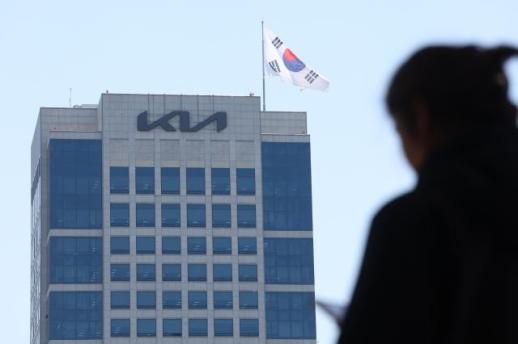 Kia Q1 profit fall near 30% on higher U.S. tariffs and Gulf shipping costs SEOUL, April 24 (AJP) — South Korean carmaker Kia, like its sister company Hyundai Motor, suffered a double-digit decline in earnings in the first quarter despite record sales, as higher tariff costs on U.S. shipments and shipping disruptions linked to Gulf tensions weighed on profitability. Operating profit fell 26.7 percent on year to 2.2 trillion won ($1.52 billion), reflecting an estimated 755 billion won increase in U.S.-related tariff costs compared to a year earlier, the company said Friday. Sales nevertheless rose 5.3 percent on year to a record 29.5 trillion won on strong demand for SUVs and electrified vehicles, even as overall industry conditions softened. Global wholesale volumes edged up just 0.9 percent to around 780,000 units, pointing to limited volume growth behind the top-line expansion. Operating margin fell to 7.5 percent from 10.7 percent a year earlier, as increased production and shipping costs eroded profitability. The cost of sales ratio rose to 80.3 percent from 78.3 percent, while selling and administrative expenses jumped 17.1 percent, underscoring mounting cost pressure. The decline was largely cost-driven, with tariff impacts, rising raw material prices and increased incentives — particularly in Europe — weighing on profitability, alongside a weaker regional mix and higher warranty-related expenses. Regional performance remained mixed. While India and Latin America posted strong growth of 11.6 percent and 34.6 percent, respectively, North America saw volumes decline 2.1 percent and the Middle East plunged 31.2 percent, reflecting the impact of the war. Despite an overall 5.5 percent fall in car demand in the U.S., Kia’s sales rose 4.1 percent and its market share climbed to 5.6 percent, helped by hybrid and EV sales surging 73.5 percent and accounting for 19.3 percent of total sales. Kia shares closed Friday at 153,400 won down 3.2 percent. 2026-04-24 15:55:24
 -
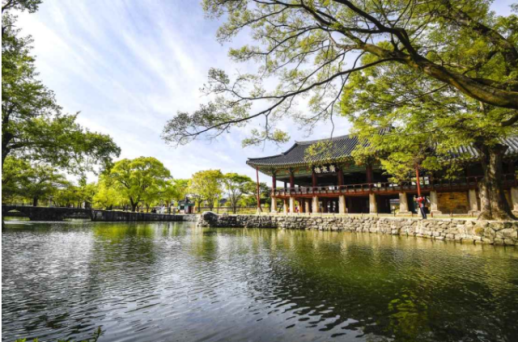 Gwanghallu Pavilion, setting of Korea's Romeo and Juliet tale, eyes national treasure status SEOUL, April 24 (AJP) — Gwanghallu Pavilion in Namwon, a southwestern city immortalized as the backdrop to Korea’s Romeo-and-Juliet-like love story, has been preliminarily designated as a national treasure, the Korea Heritage Service said Friday. The move marks an upgrade from its designation as a state treasure in 1963, reflecting its elevated historical, architectural and cultural significance. Widely regarded as the finest pavilion in the Honam region, Gwanghallu is among the largest government-built wooden structures from the late Joseon Dynasty. The pavilion was first established in 1419 by Hwang Hui during his exile in Namwon. It later evolved into a broader cultural complex as officials, including Jeong Cheol, reshaped the surrounding landscape by adding a pond, three symbolic islands and the Ojak Bridge. The original structure was destroyed during the Japanese invasions of Korea (1592–1598) and rebuilt in 1626, preserving much of its original form for nearly four centuries. Beyond its architectural value, Gwanghallu is widely celebrated as the setting of The Tale of Chunhyang, one of Korea’s most beloved classical novels, where the lovers Chunhyang and Lee Mong-ryong are said to have first met. Final designation will follow a 30-day public review period and deliberation by the Cultural Heritage Committee. 2026-04-24 10:45:34
 -
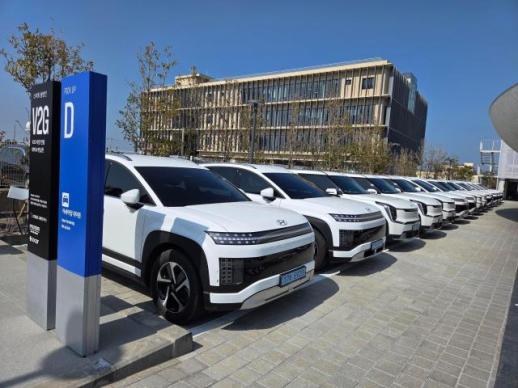 Tariffs and rising costs bite Hyundai despite record quarterly revenue SEOUL, April 23 (AJP) - Despite posting record revenue, Hyundai Motor saw its profitability come under intense pressure as tariffs and rising costs eroded margins. Revenue rose 3.4 percent year on year to 45.9 trillion won, marking the highest first-quarter figure on record. The increase was supported by strong sales of high-margin SUVs and hybrid vehicles, even as global industry demand contracted 7.2 percent. Hybrid vehicles accounted for 17.8 percent of total sales, with the U.S. market reaching a record 24.8 percent. This helped the company expand global market share despite weakening demand. Operating profit, however, fell 30.8 percent to 2.51 trillion won, with the operating margin narrowing to 5.5 percent from 8.2 percent a year earlier. The result came in at the lower end of market expectations, with estimates compiled by FnGuide pointing to operating profit in the range of 2.4 trillion to 2.6 trillion won. A breakdown of earnings drivers showed that tariff-related costs were the single largest drag on profitability, reducing operating profit by 860 billion won. Lower volumes cut earnings by 247 billion won, while a weaker product mix — driven by higher incentive spending — reduced profit by a further 337 billion won. The earnings pressure came despite relatively resilient sales. Wholesale volumes declined to 976,000 units from 1.0 million a year earlier, reflecting weaker industry demand and temporary disruptions, including supply chain issues and geopolitical uncertainty. Cost pressures were also evident in the company's structure, with the cost of sales rising to 82.5 percent of revenue, up 2.7 percentage points from a year earlier, driven largely by higher raw material prices. The automaker said raw material costs - including nickel, lithium and precious metals — added more than 200 billion won in additional expenses in the first quarter and are expected to remain elevated into the second quarter, even as some prices begin to stabilize. It also acknowledged production disruptions following a fire at a key engine valve supplier, though it expects to normalize output from April and recover lost production in the second half through global production adjustments. Regional dynamics also weighed on profitability. Incentive spending remained elevated in Europe amid tightening emissions regulations, while India emerged as a rare bright spot, with record sales and minimal incentive burden. Despite pressure in its core automotive business, Hyundai's financial arm delivered stable earnings growth supported by asset expansion, partially offsetting the decline in vehicle operations. Looking ahead, the company said it is accelerating autonomous driving development through collaboration with Nvidia to secure data and enhance competitiveness. It is also shifting its China strategy toward export-driven growth, with exports already accounting for around 40 percent of local sales. Shares of Hyundai Motor closed at 532,000 won, down 1.7 percent on the day. 2026-04-23 17:38:43
 -
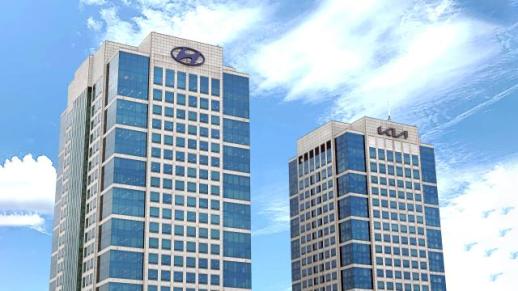 Hyundai Motor profit falls sharply on cost surge, misses expectation SEOUL, April 23 (AJP) - Hyundai Motor, South Korea's largest automaker, posted a sharp drop in first-quarter earnings amid rising cost pressures from U.S. tariff barriers and Gulf-related shocks. Operating profit for the first quarter of 2026 came in at 2.51 trillion won, down 30.8 percent on year and in line with the market consensus of 2.4 trillion to 2.6 trillion won compiled by FnGuide. The underperformance reflects multiple headwinds for carmakers – sharp rise in oil prices, slumped consumer sentiment, and supply-chain disruptions from the outbreak of a war in the Middle East on top of tariff risks and volatile exchange rate. The Korean won's weakening to crisis-period levels drove a sharp increase in warranty-related costs, while tariff burdens and higher raw material prices further squeezed margins. Revenue totaled 46 trillion won, up 3.4 percent from a year earlier and down 1.9 percent from the previous quarter. 2026-04-23 14:45:38
 -
 KOSPI extends record rally past 6,500, driven by semiconductor momentum SEOUL, April 23 (AJP) - Seoul benchmark KOSPI set new milestone Thursday, decoupled from the broad sidelined sentiment across Asia amid Gulf uncertainties, as stronger-than-expected first-quarter GDP and SK hynix earnings underscored the depth of South Korea's chip power. The main index rose 2.1 percent to a new intraday high of 6,551.3 in morning trade after opening at 6,488.83, with advances led by large-cap chipmakers following robust earnings from SK hynix. The undeterred rally this week prompted retail investors to take profits, while foreign investors turned active buyers. Foreign buying totaled 495 billion won, backed by institutional purchases of 289 billion won, while retail investors sold a net 725 billion won. The gains were underpinned by strong momentum in semiconductor shares. Samsung Electronics jumped 5.2 percent to 228,750 won, approaching its previous intraday high, while SK hynix rose 2.3 percent to 1,251,000 won. Earlier in the day, SK hynix reported record-breaking first-quarter earnings, posting an operating profit of 37.6 trillion won, reinforcing expectations that demand for AI-driven memory products remains robust. Other large-cap stocks showed mixed performance. SK Square rose 4.7 percent and Doosan Enerbility gained 5.4 percent, while LG Energy Solution fell 3 percent. HD Hyundai Heavy Industries and Samsung Biologics also traded lower. The tech-heavy KOSDAQ underperformed, falling 0.5 percent to 1,175.7, as foreign and institutional investors offloaded shares, while retail investors stepped in as heavy buyers. Asian markets were mixed, with regional sentiment supported by a temporary reprieve in geopolitical tensions after the United States signaled an indefinite extension of a truce with Iran. Overnight on Wall Street, major indexes closed higher, with the Dow Jones Industrial Average rising 0.7 percent, the S&P 500 gaining 1.1 percent and the Nasdaq Composite advancing 1.6 percent to fresh record highs. Japan’s Nikkei 225 was 0.06 percent off at 59,549.56, while the Shanghai Composite was up 0.11 percent at 4,110.79. The Hang Seng Index fell 0.5 percent to 26,034.12 at the open. Global indicators pointed to relatively stable risk conditions. The VIX volatility index fell 2.97 percent to 18.9, while the Philadelphia Semiconductor Index rose 2.7 percent. Oil prices edged higher, with West Texas Intermediate crude trading near $93 per barrel and Brent crude around $102. The Korean won strengthened slightly, with the exchange rate falling 0.1 percent to 1,477 per dollar. 2026-04-23 11:24:47