
Journalist

Yoon Ju-hye
jujusun@ajunews.com
-
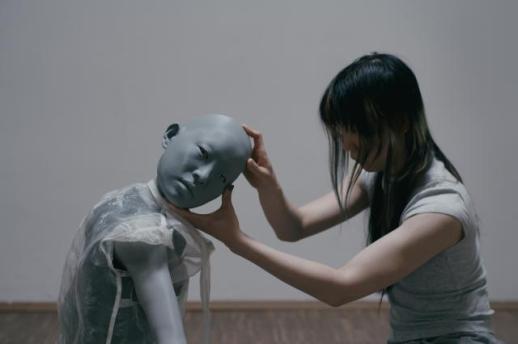 Korean Performance Captivates Audience at Venice Biennale Taiwan Pavilion "Bravo!" During the opening of the Taiwan Pavilion at the Venice Biennale on May 7, the performance titled "She seemed devastated, when I was weeping with joy" captivated the audience, drawing enthusiastic applause. The performance featured South Korean artist Hong Eun-joo and performer Kim Yi-soo, who presented a 30-minute act as part of the exhibition "Screen Melancholy: Li Yi-Pan," curated by Raphael Fonseca. The event attracted over 200 attendees, exceeding the pavilion's capacity of 170, indicating significant interest. Two additional performances are scheduled. The performers engaged in a dynamic interplay, intertwining their movements. They approached each other, engaged in physical tussles, and alternated between gentle gestures and striking actions. The doll, crafted to resemble the artist, evoked a peculiar tension, oscillating between the realms of life and inanimate existence. In an interview, Hong Eun-joo shared, "In 2024, I encountered traditional puppet theater during my residency in Taipei, Taiwan. I learned that Korea's traditional puppet theater form has largely disappeared due to the Japanese colonial period." She added, "This intrigued me, leading to the creation of a performance utilizing puppets." The doll was created using a 3D scan of the artist's own face and body. "The doll sat in my home for months. My face was rolling around. I saw my face while passing by. It was a strange experience, almost like an out-of-body feeling," she explained. Hong has been collaborating with Li Yi-Pan since 2024, believing their works resonate at the point of 'melancholy.' Their connection led to an invitation from the Taiwan Pavilion curator to perform at the Venice Biennale. Through her work, Hong aims to pose the question, "What makes us human?" She remarked, "The doll represents a suffering body, discarded on the floor. Although it is plastic, I hope the audience feels compassion when they see it." "Even if it is not a real body, if we can feel compassion for a being that is dragged on the floor, suffering and wounded, that seems to be one of the conditions that make us human. If we can witness war or the suffering of others without feeling anything, that is inhumane," she added. The doll could symbolize a human body devoid of all fluids. Hong recalled how her grandfather shed sticky tears before passing away. "Before dying, a person expels all liquids. Both feces and tears are released. In contrast, the plastic doll is a body entirely unrelated to any fluids." Currently based in Germany, Hong frequently visits the Venice Biennale, often thinking, "Someday, I will be here." Now that her dream has come true, she expresses a desire to one day have a formal solo exhibition. "I never imagined I would present my work here so quickly. The weight of the Biennale's name was significant. However, I felt surprisingly calm today," she said. The live performances will take place at the Palazzo delle Prigioni near St. Mark's Square in Venice on May 8 and 9 at 5 PM. 2026-05-08 11:31:28
 -
 Venice Biennale Highlights: Whitewashing, Adult Themes, Dolls, and Insects The Venice Biennale showcased a range of contrasting scenes, from protests against Russia's participation to long lines for nude performances. "The Venice Biennale is whitewashing Russia's war crimes," said Simon Duda, a Polish activist with the group 'Death in Venice,' which gathered in front of the Russian Pavilion on May 6. The group called for an end to Russia's participation in the event. Duda expressed his views, stating, "This is a quasi-artistic, quasi-political act." When he learned a reporter was Korean, he smiled and remarked, "We really like Korea. We are buying a lot of Korean tanks to respond to Russia." Across from the Russian Pavilion, the Denmark Pavilion featured adult content, with a notice at the entrance warning that it included nudity and sexually suggestive material. It advised that only adult audiences should enter. The pavilion showcased videos filmed with porn actors from a Danish sperm bank, based on research suggesting that viewing VR pornography can enhance sperm motility. The exhibit reflects a broader commentary on declining birth rates and the emptiness of modern life. The Austrian Pavilion attracted large crowds for a nude performance where performers rang a giant bell. Choreographer Florentina Holzinger used the performance to issue a warning about impending climate disasters and floods. The Japan Pavilion resembled a shared nursery, filled with 200 baby dolls. Visitors embraced the dolls while viewing the exhibition. The installation by queer artist Ei Arakawa-Nash, who welcomed twins with his partner in 2024, humorously and warmly addresses the weight of nurturing life, encouraging shared courage, responsibility, and love. In a piece titled "Dates I Want to Hand to My Twins," the artist presented significant historical dates as the birthdays of the dolls, including dates related to violence during World War II in Japan. The walls of the German Pavilion were infested with insects. Sung Tieu's work, "Human Dignity Shall Be Inviolable," recreates a socialist housing complex from East Berlin, where the artist once lived. While German law declares that "human dignity is inviolable," the installation highlights exclusion, expulsion, and racist violence faced by migrant communities. The piece includes 800 ladybug sculptures, creating an unsettling impression of swarming insects. The U.S. Pavilion, emphasizing "American values" and the country's exceptionalism, featured works by sculptor Alma Allen. One American visitor remarked, "It's boring." 2026-05-07 07:27:20
 -
 Korea, Japan Collaborate at Venice Biennale, Crossing a Hedge Between Pavilions “I’ve long hoped that someday we could do something together.” Mizuki Takahashi, a co-curator of the Japan Pavilion, said that through tears after a joint performance by the Korea and Japan pavilions on May 6 (local time) at the Venice Biennale. Takahashi recalled that about 10 years ago, a candidate for Japan Pavilion curator suggested working together. She said she proposed a plan to build an exhibition with the Korea Pavilion, but it was not selected. “Still, I kept thinking that someday it would be good if we could do something together,” she said. In the Giardini, where the Biennale’s permanent national pavilions stand, the Korea and Japan pavilions sit side by side. Between them is a long hedge that functions like a border. It is unclear when it was planted. The Japan Pavilion does not want it, but it cannot be removed. Choi Bitna, the Korea Pavilion’s artistic director, said organizers tried to relocate the trees but Biennale park authorities refused. Instead of removing the boundary, the two sides chose to cross it. During the Korea Pavilion’s official opening event, the joint performance showed how easily the hedge could be crossed. Japan Pavilion co-curators Lisa Horikawa and Takahashi, along with participating artist Ei Arakawa Nash, stepped over the hedge into the Korea Pavilion. The Korea Pavilion director and participating artists welcomed them with open arms. Officials raised glasses and shouted “Kanpai,” then exchanged “Omedeto” and “Congratulations” and embraced. The artworks also crossed the hedge. Choi Go-eun’s Korea Pavilion work, “Merdiang,” ran through the hedge and reached the Japan Pavilion. The piece is a joint Korea-Japan project, with financial support from the Japan Pavilion. The Japan Pavilion’s baby dolls were also invited into the Korea Pavilion. The dolls, described as born on March 1 and May 18, hold their arms high in a celebratory gesture. Choi Bitna said the collaboration aimed to show a forward-looking relationship. “In 1995, Japan issued its first official apology (over its past),” she said. “I’m not saying it denies that, but it can seem as if it is trying to forget. Still, the Japan Pavilion team acknowledged that past and commemorated specific days in Korea, and I think that shows how solidarity can be built.” Japan Pavilion staff also promoted the Korea Pavilion. A Korea Pavilion poster was placed at the Japan Pavilion exit. The Japan Pavilion temporarily closed from 2 p.m. to 4:15 p.m., and staff told visitors, “Go see the Korea Pavilion,” and said a joint performance would begin at 4:30 p.m. Lee Beom-heon, chair of the Arts Council Korea, said he would work to keep the cooperation going. “This performance is truly meaningful,” Lee said, adding that the council agreed to maintain “progressive collaboration” with the Japan Foundation, the Japan Pavilion’s commissioner. He said the two sides promised to expand cooperation like this performance, including Seoul and Tokyo inviting each other. 2026-05-07 05:09:19
 -
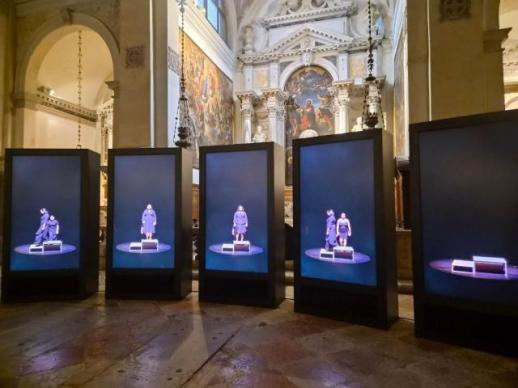 ‘Elegy’ Opens in Venice Church After South Africa Cancels Biennale Pavilion Plan On May 5 (local time), a 7th-century church in Venice, Chiesa di Sant’Antonin, filled with the sound of women’s voices—again and again. South African artist Gabrielle Goliath’s “Elegy” is presented on eight large video screens, with performers holding long, aching tones for about an hour. The sound is sobbing and wailing, and also song. Like a medley, one voice is taken up by another behind it. As the mourning continues, the final screen shows only a lit platform, underscoring absence. The church is less than a five-minute walk from the Arsenale, where the Venice Biennale’s main international exhibition is held. “Elegy” was originally set to be shown at South Africa’s national pavilion in the nearby Giardini. But after it became known the work included a tribute to Palestinian poet Hiba Abu Nada, 32, who died with her child in an Israeli airstrike in Gaza in October 2023, the South African government canceled the pavilion’s participation in January, citing concerns it could cause division. With outside support, Goliath mounted “Elegy” as an independent exhibition at the church, which occasionally hosts contemporary art shows. “Elegy,” a ritual of mourning for women killed by violence, began in 2014 as a tribute to a teenage schoolgirl, Ipeleng Christine Moholane, who was sexually assaulted and murdered in South Africa. In performing “Elegy” in her honor, Goliath read a letter written by Moholane’s father: “That child was my first child and my pride, and the greatest strength in my life. With her, a part of me also died.” Over the past decade, Goliath has used the performance to call to mind and mourn women who died from sexual and racial violence. Those remembered include two Nama women who were forcibly displaced and killed during the Herero and Nama genocide carried out by German colonial forces in the early 20th century, as well as Palestinian women, children and civilians who were forcibly displaced and killed in mass violence. Met near the exhibition space, Goliath was cautious, saying she could not comment beyond the May 4 preview and official interview on the South African government’s decision or on issues of freedom of expression. The dispute reflects broader tensions at this year’s Venice Biennale, where art and politics have repeatedly collided. Controversy has spread as Russia, which skipped the past two biennales after its invasion of Ukraine, and Israel, accused of genocide over the Gaza conflict, are participating this year. In an unprecedented move, the entire jury resigned, and the Golden Lion winner is expected to be decided only in November. The European Union has decided to withdraw about 2 million euros in funding it had provided to the Venice Biennale, citing Russia’s participation. As a result, the Russian pavilion will be open to the public only during the preview period and will close after the official opening on May 9. Political disputes also continued at major national pavilions including Australia and the United States. Still, like the unbroken sound of “Elegy,” art continues. Belarus Free Theatre (BFT), made up of exiled artists from Belarus who faced repression of free expression under an authoritarian system, is presenting the exhibition “Official. Unofficial. Belarus” during the Venice Biennale. The exhibition argues that even when pushed outside a state system, art does not disappear. 2026-05-05 23:30:14
 -
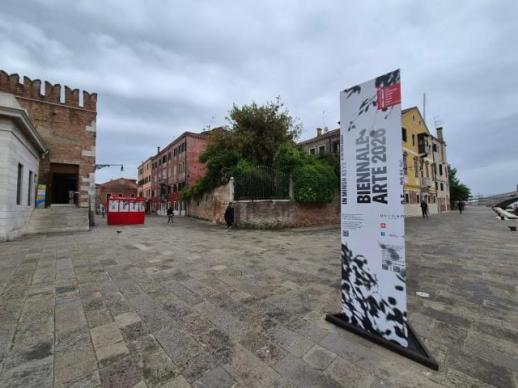 2026 Venice Biennale Opens With Koyo Kouoh’s ‘In Minor Keys’ ‘Art world Olympics’ set to open The Venice Biennale, often called the “Olympics of the art world,” will run from May 9 through Nov. 22, with preview days May 6-8. The world’s oldest art biennale is held every two years. Events span the Giardini and Arsenale, as well as venues across Venice and nearby islands. The international exhibition curated by the late Koyo Kouoh will feature 111 artists and teams. Yo-E Ryou is the only invited Korean artist; Korean diaspora artists including Michael Joo and Gala Porras-Kim are also on the list. The Biennale consists of the international exhibition, titled “In Minor Keys,” and national pavilion shows. More than 100 national pavilions will operate, including 30 permanent pavilions in the Giardini. Qatar, newly added to the permanent pavilions, will exhibit in a tent-like structure on its future building site because construction is not yet complete. Dozens of nonpermanent pavilions — including those of China, India, Argentina, Mexico, Saudi Arabia and Turkey — will be spread across the city. The main exhibition will be staged simultaneously at the Giardini and the Arsenale. Seven countries — Guinea, Equatorial Guinea, Nauru, Qatar, Sierra Leone, Somalia and Vietnam — are participating for the first time. El Salvador is also making its debut with its own venue. Who was the curator? The artistic director of the 61st Venice Biennale was Koyo Kouoh (1967-2025). Born in Cameroon and raised in Zurich, she was appointed in late 2024 as the first African-born woman to lead the Biennale. She served as executive director and chief curator of Zeitz Museum of Contemporary Art Africa (Zeitz MOCAA) from 2019. She died suddenly in May 2025 at age 57, shortly before the opening. Organizers said it was the first time in Biennale history that an artistic director died before the exhibition opened, and decided to proceed as planned. A five-member curatorial team she assembled is carrying out her vision. In Minor Keys The theme, “In Minor Keys,” draws on the musical concept of the minor key. Kouoh urged audiences to “listen to the frequency of the minor key,” writing that amid “uneasy noise and confusion” sweeping the world, music continues — “songs of those who make beauty in tragedy, melodies of those who rise again from ruins, and harmonies of those trying to heal wounds and the world.” The framing signals a shift away from spectacle toward slower, deeper looking, presenting art as a space for reflection, recovery and connection. The main exhibition will avoid rigid sections, linking more than 110 participating artists through loose relationships shaped by different places and contexts, expanding what it calls a “relational geography.” It will unfold around overlapping motifs including Shrines, Procession, Schools, Rest and Performances. Women and performance Women artists are especially prominent. Britain’s pavilion features Lubaina Himid, a Black woman who won the Turner Prize in 2017, while France’s pavilion includes Yto Barrada. Women artists also stand out in pavilions including Austria, Estonia, Finland, Germany, Ireland, Iceland, Cyprus and Denmark. Performance is emphasized in several national presentations, including those of South Korea, Austria, Belgium and the Netherlands. Awards likely moved to November after jury resigns The Biennale’s prizes include the Golden Lion awards (for national pavilions, best artist and lifetime achievement), as well as the Silver Lion and special mentions. The awards ceremony is typically held at the opening. This year, however, all jurors resigned as a group, making it likely the ceremony will be held at the November closing. Reports said the selection process may also shift from a jury decision to a visitor vote. Five jurors, including Solange Oliveira Farkas, were reported to have clashed with organizers over Russia’s and Israel’s participation. The jurors had previously said that, to defend human rights, they would exclude from judging any national pavilion from a country led by a leader indicted by the International Criminal Court for crimes against humanity. Russian President Vladimir Putin is the subject of an ICC arrest warrant over alleged war crimes related to the invasion of Ukraine. For Israeli Prime Minister Benjamin Netanyahu, the ICC prosecutor has sought an arrest warrant over allegations related to Gaza; reports said that because it remained at the request stage, whether Israel would be excluded could depend on the jurors’ judgment. War-related disputes spread across pavilions Russia did not participate in the 2022 and 2024 Venice Biennale after its invasion of Ukraine, but will return in 2026. Russia opened a permanent pavilion in the Giardini in 1914. It is expected to open only during the preview and then close afterward amid opposition from the European Union. During the 2024 preview, Israel’s pavilion was voluntarily closed by artist Ruth Patir and curators, citing the situation in Gaza. Afterward, Israel’s government was reported to have added a contract condition in the artist selection process stating the pavilion cannot be closed. This year, with its Giardini pavilion closed for renovations, Israel will exhibit at the Arsenale. Iran notified organizers it will not attend. South Africa’s pavilion will be empty for the first time in 15 years. The government canceled its participation in January, saying Gabrielle Goliath’s work “Elegy” could “cause division.” The piece mourns victims including Palestinian poet Hiba Abu Nada, who died in an Israeli airstrike in October 2023. The work will be shown at Chiesa di Sant’Antonin, a church built in the 7th century in Venice’s Castello district. Australia’s pavilion drew controversy over Lebanese Australian artist Khaled Sabsabi’s 2007 work “You,” which includes footage of a Hezbollah leader’s speech. Participation by Sabsabi and curator Michael Dagostino was canceled, then later reinstated after backlash from the art community. The United States faced fallout after the Trump administration changed Biennale support conditions, dropping equity-related standards and emphasizing “promoting American values” and the “ability to demonstrate American exceptionalism.” Some selected artists refused to participate. Alma Allen will ultimately lead the U.S. pavilion. Korea Pavilion and Korean artists The Korea Pavilion theme is “Liberation Space: Fortress and Nest.” It revisits the “liberation space” period from 1945 to 1948 — the transition after Japanese colonial rule as a new state was sought — and extends it as an ongoing question, re-sensing and carrying it forward in aesthetic terms. Curator Choi Bitna said at a March news conference that she focused on 1995, when the Korea Pavilion was established. “That was when the Gwangju Biennale first opened and the Korea National University of Arts was founded. Demolition of the former Japanese Government-General building also began. It led into the start of a civilian government. It was a moment of transition,” she said. Artists Choi Go-eun and Cho Hyeri will present a sculptural installation and a durational practice titled “Meridian” and “Bearing,” respectively. Fellows will include creators and activists from cultural and social fields, including novelist Han Kang. The Korea Pavilion is also pursuing a collaboration with the Japan Pavilion, the first such cooperation between the two. Korean artist Yo-E Ryou was invited to the main exhibition. Gala Porras-Kim will carry out a joint project with the Victoria and Albert Museum. Artist Choi Jeong-hwa will participate as a collaborator in the Japan Pavilion, and artist Cho Kuk-hyun was invited to the Tanzania Pavilion. Artist Hong Eunju will take part in the Taiwan Pavilion opening performance. Exhibitions involving Lee Ufan, Yoon Song-yi, Shim Moon-seup and Lotus Kang are also planned. 2026-05-05 18:09:51
 -
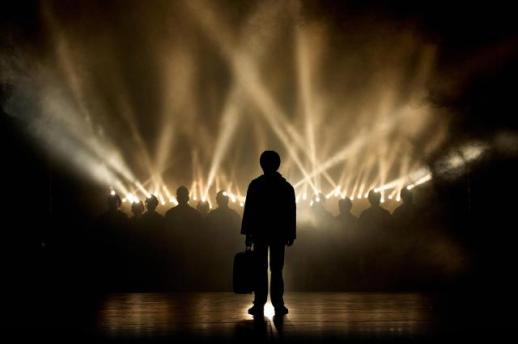 Why the Musical 'Billy Elliot' Still Resonates: Dreams, Love and Sacrifice “Rather than an optimistic message that ‘dreams come true,’ it’s a story about the process a person must go through to live as themselves.” (Lee Ji-young, domestic associate director) The musical “Billy Elliot” has remained popular 21 years after its premiere, drawing a cumulative global audience of 12 million. In South Korea, it returns for its fourth season, meeting audiences again after five years. What keeps the show enduring? Lee said at a press call on April 29 at Blue Square in Seoul’s Yongsan district that the work is “a struggle and determination to find myself against oppression,” adding that “most of the characters, not only Billy, show that.” The message is echoed by Mrs. Wilkinson, who teaches Billy ballet, and by Billy’s mother’s final words: It matters to know who you are, and to protect yourself. The number “Solidarity,” which crosscuts the miners’ strike with Billy learning ballet, makes that point most clearly. Lee called “Solidarity” — often cited as one of musical theater’s greatest 12 minutes — a scene that suggests the workers’ fight and Billy’s artistic drive share the same roots. Lee also said the child actors who play Billy trained “with blood, sweat and tears” for a year and a half, adding that their effort matches the character and gives the production a “documentary-like authenticity.” The journey toward finding oneself, the production argues, is sustained by love and sacrifice. The adults’ devotion to Billy heightens the emotional impact. Oh Min-young, domestic associate music director, said there is a saying that it takes a whole village to raise a child, and that the show carries a similar idea. As a child moves toward the future with a dream, Oh said, the adults “sacrifice themselves and send the child off with love,” and that spirit brings deep emotion. The process of staging “Billy Elliot,” the production team said, mirrors that theme: Completing the show requires growth and care from everyone involved. Actor Choi Jung-won, who plays Mrs. Wilkinson, said the children who play Billy can only take the stage at that age, making it a role that cannot simply be promised again. She said the adult cast, including herself, grows alongside the child actors during rehearsals and performances. Choi said she performs each show as if it were closing night. “Because of the Billys, I came to feel, ‘There’s a show today, but today could be the last,’” she said. As the cast shares that growth, Choi said, affection follows naturally. Saying she is “always falling in love” with the Billys, she added that she puts that feeling into the final line, “Never come back — start again there.” Choi said she hopes the children — who could become ballet dancers, actors or musicians — will find happiness on stage through the role, just as she does. “This stage is full of love,” she said. “Everyone is making this show with love, and at the center of that love are the child actors playing Billy.” The production runs at Blue Square’s Woori Bank Hall through July 26. * This article has been translated by AI. 2026-05-04 09:06:25
 -
 Korean Soban Tables Reimagined in 17 Works at Milan Design Week Exhibit “I couldn’t believe how much history and meaning could be held in one small table. I was instantly drawn in." Italian designer and artist Marco Oggian said he was captivated by the Korean traditional object known as a “soban,” a small, portable dining table. Seeing it for the first time, he said, he thought of it as “a very human object.” “It’s simple, intimate and deeply connected to everyday life,” he said. “At the same time, it carries a strong cultural identity.” Korea’s traditional soban is being presented in 17 new forms at Milan Design Week, one of the world’s largest design events. The Seoul Design Foundation is staging the exhibition “SEOUL LIFE 2026 MILAN: Heritage Reimagined, Soban” at the ADI Design Museum in Italy. The show aims to introduce the beauty and identity of K-design through the soban. Seventeen designers and teams from Korea and abroad have reinterpreted the soban in their own visual languages, combining traditional Korean craft techniques with contemporary tools such as 3D printing and artificial intelligence-based design. Visitors can view the works’ varied shapes and colors in one place. Oggian’s work, “PRIVATE UNIVERSE,” expands the soban into a motif of a face, the universe and the world. “The face represents identity, the universe scale and mystery, and the world the space we share,” he said. “By expressing the face geometrically, I wanted to talk about individuality. At the same time, I wanted to show how a small everyday object can connect us to something universal.” Some visitors said they saw a contemporary sensibility in the pieces. A botanical designer from London, in her 40s, said the modern treatment of the soban and its harmony with hanji, traditional Korean paper, stood out. An Italian industrial designer, also in her 40s, said the soban goes beyond a simple small table, naturally combining balance, function and portability into a refined design object. Technology amplifies tradition’s identity: “Emotional and of the present” Oggian, unfamiliar with Korea’s solo dining-table culture, said he tried to understand the spirit behind the object rather than copy tradition as-is. “The biggest challenge was finding a form that respects the original function and symbolism, while expressing it in my own visual language,” he said. He said he wanted viewers to recognize the work as a soban while accepting it as a contemporary object. “I hoped it would feel rooted in tradition, but also open, bold and alive,” he said, adding that it was important to expand into new design territory without losing the soban’s cultural essence. “What was most interesting was confirming that technology doesn’t replace an object’s identity — it can amplify it,” he said. Known for strong visual elements such as geometric forms, Oggian said he newly discovered the value of restraint and discipline in Korean aesthetics. Through that process, he said he learned that “tradition isn’t fixed or far away — it can be playful, emotional and of the present.” He described Korean aesthetics as “precise and meaningful, without unnecessary decoration,” calling it a source of inspiration. He added that working with lacquer and mother-of-pearl inlay showed him traditional materials can be realized in a contemporary way when handled with care and imagination. Discovering lacquer and mother-of-pearl inlay: outstanding craftsmanship Italian designer Anna Gili, known for collaborations with Cassina and Alessi, presented a soban titled “MIAWO” that evokes a cat. She interpreted the soban as “a kind companion that shares everyday life.” Linking the familiar traditional table to a pet cat, she said, brought a sense of vitality to the object and condensed warmth associated with family and friendship into a small table. “In ancient Egypt, cats were mysterious animals and protectors of the home — specifically Egyptian temples,” she said. “In Western culture, which has origins in Southwest Asia, cats also became companion animals and guardians of the home. Cats have a protective instinct toward people.” Gili said she was deeply impressed by the beauty of Korean lacquer and mother-of-pearl inlay. “The finished result felt like magic,” she said. “The quality of the materials, and the craftsmanship, are outstanding. It’s breathtaking. It made me want to explore the techniques and materials more deeply.” Gili said she plans to present more works using lacquer and mother-of-pearl inlay, and to expand her experience and knowledge by trying different materials and combinations. Referring to mother-of-pearl techniques in the Brianza area near Milan, she said she hopes the meeting of Korean and Italian cultures will continue. Citing what she called “Korean artisan crafts with 2,000 years of history,” she said she hopes the two countries can explore new possibilities by combining cultures, techniques and material production methods through design. She added that collaborating with highly skilled artisans who work with traditional techniques is always a special experience that adds a distinctive sensibility to a piece. She also argued that projects combining tradition and technology, like this exhibition, should expand to help preserve humanism. “We have to maintain humanism in architecture and design,” she said. “Today, as much research is done online and in virtual environments, people often choose interests based on algorithmic data aimed at financial efficiency or maximizing sales. Before the internet, information was limited, but choices were made based on deep experience accumulated in real life. It was a different kind of experience than scanning Excel spreadsheets or online materials.” She said technology’s value is ultimately realized when it meets human touch and care. “Traditional objects can be renewed by combining with constantly evolving technology and diverse ways of thinking,” she said. “By doing so, tradition will continue to grow and develop for thousands of years.” The exhibition is hosted and organized by the Seoul Metropolitan Government and the Seoul Design Foundation, with cooperation from the ADI Design Museum. It runs through May 10 at the ADI Design Museum in Italy. * This article has been translated by AI. 2026-05-04 00:06:00
 -
 Korea’s National Museums Roll Out Family Programs for May Holiday Break May, widely marked in South Korea as Family Month, is bringing a slate of programs at major museums nationwide, with hands-on activities, performances and education designed to make cultural heritage easier and more engaging for visitors. The National Museum of Korea said Thursday it will host a family-focused event, “Gukjungbak Outing,” from May 2-5 across its outdoor plaza, Mirror Pond Square and the permanent exhibition halls. Outdoor photo zones will feature character-themed installations tied to Kakao Friends, including “Bangara Chunsang” and a “white porcelain spring jar” display near the Mirror Pond. The large sculptures reimagine the famed pensive bodhisattva statue and a white porcelain moon jar as the characters Ryan and Chun-sik, respectively. Performances are scheduled in the outdoor plaza, including a fusion Korean traditional music show by Akdan Gwangchil at 3 p.m. on May 2. On May 6, the museum plans balloon art and a bubble magic show by a stilt-walking clown, a Miracle Boyz ensemble performance, and a K-pop dance stage by YouTuber Sumail. Visitors can also join participatory programs such as “My Own National Museum Treasure Exhibit” and “Make a National Museum Treasure Postcard.” In the permanent galleries, events include a “QR stamp tour” and a Children’s Day mission to find treasure stickers. Around the Mirror Pond, 13 independent bookstores will run children’s book sales booths, and Pulmuone Food & Culture will operate food trucks. Regional national museums are also preparing family programs. The National Museum of Cheongju will offer a children’s musical, “The Sun and the Moon,” along with a magic and laser show, fusion Korean traditional music performances and a family sports day. The National Museum of Gongju will run a free children’s concert, “Kongkong Classic,” and a participatory play, “The Giant’s Desk.” The National Museum of Buyeo will hold an interactive education program, “Today I’m an Oaksa,” and the 41st cultural heritage drawing contest. The National Museum of Iksan will stage participatory events around the Mireuksaji site, combining traditional folk games, craft activities, a treasure hunt, a magic show and photo zones. Some museums will highlight local themes. The National Museum of Jeonju will host a children’s pottery festival, while the National Museum of Naju will offer mask-making. The National Museum of Gyeongju will stage a percussion performance near the bell pavilion of the Divine Bell of King Seongdeok, one of the museum’s signature cultural assets, allowing visitors to experience the heritage site alongside live music. Each national museum operates its own website. A museum official said most Family Month events will be free, but some programs require advance reservations, and visitors should check each museum’s site for schedules and participation details.* This article has been translated by AI. 2026-05-02 09:03:18
 -
 Culture Minister Choi Hwi-young Defends Contested Arts Appointments, Says They Have Reasons Culture, Sports and Tourism Minister Choi Hwi-young said April 30 that recent controversy over the Lee Jae-myung government’s arts and culture appointments had caused concern, but he defended the decisions as justified. “As the appointing authority, I feel sorry for causing worry,” Choi said at the second meeting of the Culture and Arts Policy Advisory Committee’s basic arts subcommittee (classical music, Korean traditional music and dance), held at the National Museum of Modern and Contemporary Art in Seoul. “But there are reasons. There are no appointments without reasons.” Choi said expectations for what he called a “people-sovereignty government” were high, and that some people appeared disappointed and asking, “Why are you doing it this way?” Committee member Won Il, representing the Korean traditional music field, urged the ministry to appoint “professional people” as heads of institutions, noting that leadership posts remain to be filled, including at the National Theater of Korea. He asked that the selections be reviewed carefully so that working artists would welcome the appointees. Choi replied that personnel decisions can look different depending on one’s perspective. “Differences in perspective clearly exist,” he said, adding that he believed the government should accept criticism, disappointment and scolding over appointment outcomes. At the same time, he said criticism should not turn into questioning an individual’s basic qualifications. “We can speak openly, but an approach that targets the person and treats it as a matter of competence should be viewed differently,” he said. He added that he was disappointed to see such attacks from artists who value respect for people. Choi also said the government does not “hide behind the scenes,” and that it can talk about and explain its decisions. While acknowledging that outcomes can prompt differing views and concern, he said he believed the appointees would perform their roles well and that they were not appointed without cause. Committee member Choi Woo-jung said he agreed that personal attacks should be avoided, but asked that when appointments are made it should become clear what vision and direction an organization will take under the new leader. Choi said controversy can push both him and appointees to work in line with the purpose of the appointments. He said the ministry must ensure “meaningful results” and progress toward a clear direction. He pledged to proceed transparently and asked for oversight. “Monitor and check us,” he said, adding that he hoped the committee would help ensure the ministry works properly and reliably. The remarks followed a news conference held April 21 in front of the Cheong Wa Dae fountain, where Culture Action and other arts groups condemned the Lee Jae-myung government’s appointment policy for heads of public arts and culture institutions. They cited Jang Dong-jik, chair of the National Jeongdong Theater; Park Hye-jin, head of the Korean National Opera; Seo Seung-man, CEO of the National Jeongdong Theater; and Hwang Gyo-ik, president of the Korea Culture and Tourism Institute. The groups said appointments to national arts institutions and state-funded research bodies with strong public missions were being made without clear standards and procedures, and that public popularity, political interests and personal ties were playing an outsized role. 2026-04-30 16:20:53
 -
 Kim Gyeong-bae Named President of Korea Craft and Design Foundation Culture, Sports and Tourism Minister Choi Hwi-young appointed Kim Gyeong-bae, a professor at Kyonggi University’s Graduate School of Hallyu Culture, as president of the Korea Craft · Design Culture Promotion Agency, effective April 30, and presented him with a letter of appointment. Kim’s term is three years. Kim earned a master’s degree in industrial design from the Royal College of Art in the United Kingdom and has built more than 30 years of experience in the convergence of design and cultural content, the ministry said. He previously led Design Icon and served as executive vice president overseeing design at Inno Design Co., developing his own design philosophy while building practical expertise and management experience in industry. He is currently a professor at Kyonggi University, working to expand the cultural content industry and train talent for K-culture convergence. Choi called Kim “an expert in the convergence of design and cultural content,” and said he expects Kim to drive innovation to expand the use and industrialization of crafts, traditional culture and public design — and to help them enter global markets — based on his experience leading projects spanning design, technology and culture. * This article has been translated by AI. 2026-04-30 15:28:20