
Journalist

Ryu Yuna
julia37@ajupress.com
-
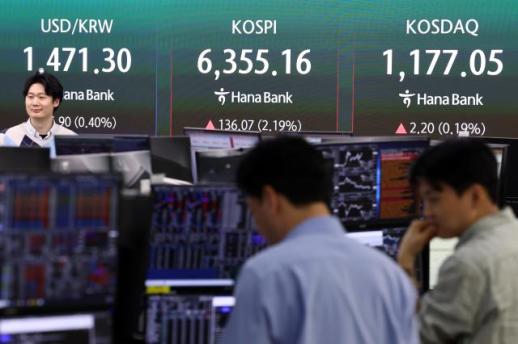 KOSPI sets fresh record, powered by chip stocks SEOUL, April 21 (AJP) - South Korea’s benchmark KOSPI touched new heights in early Tuesday session with its new bullish momentum undisturbed by the uncertainties in the Middle East ahead of the expiration of truce between the U.S. and Iran as it prices in record first-quarter reports from SK hynix scheduled for Thursday. As of 9:50 a.m., the main index stood at 6,341.94, up 1.94 percent, after topping 6,350 earlier in the session on heavy foreign buying from the open. The level marks the highest since a 6,307.27 close on Feb. 26, before the Gulf war erupted. The KOSDAQ slipped 0.11 percent to 1,173.55. Gains were led by semiconductor stocks. SK hynix jumped 4.7 percent to 1,221,000 won, while Samsung Electronics rose 1.98 percent to 218,750 won, as brokerages rushed to raise target prices on expectations that second-quarter earnings will outpace their already strong first-quarter performance. Automakers also edged higher ahead of earnings this week. Hyundai Motor gained 1.71 percent to 536,000 won, while Kia added 0.57 percent to 158,300 won. Battery and energy shares rallied, with LG Energy Solution surging 9.09 percent to 468,000 won, Doosan Enerbility climbing 3.24 percent to 114,600 won and SK Square rising 3 percent to 722,000 won. In industrials, HD Hyundai Heavy Industries advanced 2.67 percent to 538,000 won after signing a memorandum of understanding in India for a joint-venture shipyard project. Samsung Biologics fell 0.62 percent to 1,595,000 won, while Hanwha Aerospace slipped 0.21 percent to 1,422,000 won. The U.S. dollar gained 0.90 won from overnight to 1,473.20 won amid a renewed rise in oil prices. 2026-04-21 10:06:03
 -
 In Korean classrooms, caffeine is the new nicotine SEOUL, April 20 (AJP) - South Korea’s notoriously competitive school system is nothing new. What is more unsettling is this: for many teenagers, caffeine may now pose a greater risk than nicotine. High school senior Yoo Seung-ho drinks two cans of Monster Energy a day — which he considers moderate. “Some of my classmates drink up to five,” he said. Among Korean teenagers, energy drinks have become almost synonymous with studying. “My nephew drinks one or two energy drinks a day,” said Kim S.Y., in her 50s, as she waited outside a library on a rainy afternoon. “These days, kids seem to consume more energy drinks than coffee. They say they’re stronger.” The surge is also visible in the market. Energy drinks generated roughly $2 billion in sales last year — approaching one-third the size of South Korea’s carbonated soft drink market, estimated at $5 billion to $5.5 billion. Yet caffeine dependence may be only the visible layer of a deeper problem. Experts warn that reliance on high-caffeine drinks is increasingly overlapping with the non-medical use of prescription drugs — particularly attention-deficit/hyperactivity disorder (ADHD) medication — to boost concentration. “Strengthening insurance coverage rules or restricting prescriptions can be effective,” said Han Euna, a professor of health economics and pharmaceutical health services research at Yonsei University. She compared the situation to phentermine, an appetite-suppressant drug, where misuse declined significantly after tighter guidelines were introduced. Data suggest the scale of caffeine consumption is already widespread. A 2026 report by the National Youth Policy Institute found that 61.2 percent of teenagers consume high-caffeine beverages at least once a month, with more than half citing the need to stay awake while studying. The pattern becomes more concerning among frequent users. According to the Korea Disease Control and Prevention Agency’s 2025 Youth Health Behavior Survey, 21.9 percent of male students and 21.2 percent of female students reported consuming such drinks at least three times a week. Health authorities recommend a maximum daily caffeine intake of 2.5 milligrams per kilogram of body weight for adolescents — roughly 150 milligrams for a 60-kilogram individual. A single can of an energy drink typically contains 60 to 100 milligrams, meaning that multiple cans can quickly exceed safe limits. “Caffeine can provide a temporary boost in alertness, but over time the body builds tolerance, requiring higher doses to achieve the same effect,” said Yu Yun-mi, a professor in the Department of Pharmacy at Yonsei University. “It disrupts REM sleep and lowers overall sleep quality.” Excessive intake may also trigger gastrointestinal issues such as gastritis and acid reflux at an early age, raising the risk of ulcers later in life. In more severe cases, it can lead to anxiety and cardiac arrhythmias. The concern deepens when looking beyond caffeine. An National Youth Policy Institute survey of 3,384 middle and high school students found that 5.2 percent had used substances — including ADHD medication, appetite suppressants, sleeping pills and anti-anxiety drugs — for non-medical purposes. That exceeds the 4.2 percent who reported ever smoking. Among those, 24.4 percent said they had used ADHD medication in the past six months, followed by appetite suppressants (20 percent) and both sleeping pills and anti-anxiety drugs (13.3 percent each). For some, use is not occasional. Among students who had taken ADHD medication in the past six months, 23.1 percent reported using it more than 20 times a month. A commonly prescribed ADHD drug, Methylphenidate, stimulates the central nervous system but can cause side effects including insomnia, irritability, appetite loss and abdominal pain. As perceptions spread that such drugs enhance concentration, usage appears to be shifting from experimentation to deliberate academic performance enhancement — a trend experts link directly to the pressures of South Korea’s college entrance system. Yu warned that using ADHD medication without proper diagnosis is particularly dangerous. “Such drugs are intended for patients with clinically diagnosed conditions and carry significant side effects,” she said. “When used by individuals without ADHD, the risks are even greater.” Prolonged use may suppress growth and increase blood pressure and heart rate. Combined with high caffeine intake, the risks can intensify further. Amid rising concerns, the Ministry of Food and Drug Safety said in May 2025 that it would expand a system requiring doctors to check a patient’s prescription history before prescribing certain medications. The measure was extended to include methylphenidate from June 27, 2025. 2026-04-20 18:04:23
 -
 Asian markets open the week on positive note despite Hormuz uncertainties SEOUL, April 20 (AJP) - Most Asian markets opened the week higher Monday despite conflicting developments in the Middle East ahead of the Tuesday expiration of the truce between the United States and Iran. Hopes had risen last week that the conflict might ease and that the Strait of Hormuz would reopen, but Iran said over the weekend that the strait remained closed. Reports that two Indian-flagged vessels were forced to turn back added to concerns over the security of shipping through the critical waterway. U.S. President Donald Trump said on Truth Social that Iran’s actions in the strait amounted to a “total violation” of the ceasefire and warned that Washington could take further action if Tehran rejected what he described as a “fair and reasonable deal.” A new round of negotiations is expected this week in Pakistan, led by Vice President JD Vance, in a renewed push to end the conflict. However, significant gaps remain, and Iran has signaled it may not attend the talks, calling U.S. demands excessive. Pakistan previously brokered the two-week ceasefire, which is set to expire Tuesday. Despite the geopolitical overhang, regional equities advanced. Japan’s Nikkei 225 rose 1 percent to 59,075.49, holding above the 59,000 level after reaching a record high last week. China’s Shanghai Composite Index edged up 0.45 percent to 4,052.13, while Hong Kong’s Hang Seng Index gained 0.34 percent to 26,228.18. China kept its benchmark lending rates unchanged for an 11th straight month, as policymakers weighed the economic impact of the Middle East conflict against resilient domestic growth and easing deflationary pressures. The People’s Bank of China held the one-year loan prime rate at 3.0 percent and the five-year rate at 3.5 percent. South Korean equities also traded higher, with the KOSPI rising 1.21 percent to 6,266.65 and the KOSDAQ gaining 0.86 percent. Among gainers, Doosan Enerbility climbed more than 5 percent, supported by expectations that heightened geopolitical risks could accelerate nuclear energy projects, particularly in the United States. Chipmakers were also firm. Samsung Electronics reversed early losses to rise 0.69 percent, while SK hynix gained 3.06 percent. Battery stocks rallied, with LG Energy Solution advancing 3.95 percent, while SK Square climbed 3.96 percent to a record high, supported by improving earnings expectations for SK hynix. In contrast, automakers were under pressure, with Hyundai Motor falling 0.74 percent and Kia edging down 0.03 percent. Financial stocks were largely steady, with KB Financial Group rising slightly, while Samsung Life Insurance slipped marginally. On the secondary board, battery materials and biotech shares led gains. EcoPro and EcoPro BM moved higher, while Alteogen and HLB also advanced. In the currency market, the Korean won strengthened modestly, with the dollar trading at 1,474.30 won, compared with the previous close of 1,483.5 won. 2026-04-20 11:32:11
 -
 AI 'hunter' sparks alarm in Korea amid regulatory vacuum SEOUL, April 17 (AJP) — Claude Mythos, an artificial intelligence model developed by Anthropic to autonomously detect and potentially exploit critical software vulnerabilities, is another new import challenging South Korea’s lagging regulatory response to rapid technology advances. Experts in Korea are already raising concerns over the lack of legal and ethical accountability. “If such technology is misused, the developer must bear responsibility,” said Kwon Hun-yeong, a professor at the School of Cybersecurity at Korea University, warning that the exploitation of software vulnerabilities could carry serious legal consequences. South Korea’s Ministry of Science and ICT convened a meeting with major cybersecurity firms on Wednesday morning to assess the impact of global AI-driven security projects and explore ways to safeguard local industry. On Tuesday, the government separately held an emergency review with the country’s three major telecom operators and leading platform companies, including Naver and Kakao. Mythos is a tightly controlled preview system, available only to a limited number of partners through Anthropic’s “Project Glasswing” program, which provides early access to advanced AI models for cybersecurity research. It is reported to autonomously detect software weaknesses at an advanced level, a capability that can also be misused for malicious attacks and potentially pose risks to the global financial system. In just two days, using around $20,000 in computing power, it uncovered a previously unknown flaw in OpenBSD, a highly secure open-source operating system, that had gone undetected for 27 years. Park Choon-sik, a professor of information security at Ajou University, said such tools could help identify and fix weaknesses but could also provide attackers with a clearer map of system vulnerabilities. “If these capabilities fall into the wrong hands, hacking could become faster, easier and far cheaper,” he said. “This kind of capability should not be allowed to evolve into a weapon.” Beyond detecting vulnerabilities, Mythos is believed to map attack paths and minimize traces after execution, compressing tasks that once took years into hours. Such speed makes it difficult for traditional security systems to keep up. South Korea’s ICT sector is stepping up its defenses. Following Tuesday’s emergency meeting, companies scrambled to strengthen internal security protocols and expand AI-based threat monitoring. Naver is closely tracking global security developments linked to Mythos, stepping up real-time monitoring and analyzing AI-driven attack patterns while deepening cooperation with government authorities. Kakao is also reinforcing its security posture, reviewing internal information protection systems and expanding monitoring to prepare for potential risks. Toss is strengthening core security practices, including asset management, vulnerability scanning and access control, while enhancing intrusion detection, log management and backup systems. The telecom sector is tightening defenses, with SK Telecom, KT and LG Uplus expanding vulnerability analysis and continuous monitoring, strengthening anomaly detection and upgrading AI-based threat response capabilities. Park noted that organizations are already capable of identifying vulnerabilities with precision, but the core issue lies in how quickly they respond. “Organizations will need to eliminate weaknesses through patches before they are exploited,” he said. “In many cases, the problem is not detection but the failure to respond once weaknesses are identified.” Despite stepped-up defenses, some experts point to the need for broader governance. Kwon said the focus should not be limited to restricting the technology, but also on how it can be used to strengthen defenses, noting that developers could build systems to counter the very threats their models create. “Rather than treating all uses as inherently illegal, there needs to be a framework that allows responsible use while preventing abuse,” he said, warning that the issue could have significant legal and societal repercussions if left unaddressed. In the cybersecurity industry, such risks have traditionally been managed through coordinated vulnerability disclosure, where vulnerabilities are reported privately and disclosed publicly only after patches are developed. The speed and scale of AI-driven discovery, however, are outpacing existing frameworks, compressing the window between discovery and exploitation. Kwon stressed that rather than imposing legal prohibitions on the exchange of vulnerability information, “we need to focus on how it can be used constructively,” emphasizing that the discussion must be translated into action quickly. 2026-04-17 18:03:44
 -
 Asian shares edge lower ahead of U.S.-Iran talks; Samsung Electro-Mechanics hits record SEOUL, April 17 (AJP) - Asian markets traded lower Friday as recent rally momentum faded, with investors weighing mixed signals from the Gulf over whether the conflict may begin to wind down through renewed U.S.-Iran talks and separate negotiations between Israel and Lebanon. Japan’s Nikkei 225 fell 0.98 percent to 58,937.04, Hong Kong’s Hang Seng Index lost 0.81 percent to 26,180.23 and China’s Shanghai Composite slipped 0.18 percent to 4,048.38. South Korea’s benchmark KOSPI opened higher and moved in a narrow range around the 6,200 level in early trading before turning lower, shedding 0.42 percent to 6,199.97. Despite the broader weakness, Samsung Electro-Mechanics climbed to a fresh record high. As of 10:30 a.m., the stock had surged 6.26 percent from the previous session to 679,000 won, extending gains for an eighth straight session since April 8. The rally reflected growing expectations of an industry upturn, with improving earnings prospects in multilayer ceramic capacitors (MLCCs) and flip-chip ball grid array (FC-BGA) products underpinning investor sentiment. The company’s market capitalization rose to 50.79 trillion won, lifting it to 12th on the KOSPI from 21st at the start of the month. Among chipmakers, Samsung Electronics slipped 0.23 percent to 217,000 won, while SK hynix fell 0.95 percent to 1,144,000 won. Samsung Biologics also declined 0.80 percent to 1,603,000 won. In the industrial sector, Hanwha Aerospace dropped 5.27 percent to 1,439,000 won, while Doosan Enerbility lost 1.90 percent to 108,700 won. Automakers were mixed. Hyundai Motor traded flat at 534,000 won, while Kia edged down 0.25 percent to 157,500 won. Financial stocks posted limited gains, with KB Financial Group rising 0.25 percent to 162,700 won. Elsewhere, LG Energy Solution added 0.36 percent to 417,500 won, while SK Square rose 0.14 percent to 691,000 won. The KOSDAQ swung between gains and losses before edging up 0.05 percent to 1,163.56 as of 10:59 a.m. Among biotech names, Alteogen fell 0.54 percent to 367,500 won, Samchundang Pharm dropped 3.66 percent to 486,500 won, HLB declined 3.61 percent to 61,400 won and LigaChem Biosciences slid 2.42 percent to 193,200 won. Among gainers, Ecopro rose 1.94 percent to 152,100 won, Ecopro BM gained 1.46 percent to 208,000 won and Koh Young Technology advanced 2.12 percent to 111,000 won. The Korean won also weakened slightly against the dollar, with the greenback trading at 1,478.30 won, compared with the previous close of 1,474.60 won. Overnight on Wall Street, major indexes ended higher on expectations for a potential second round of U.S.-Iran ceasefire talks this weekend, along with news that Israel and Lebanon had agreed to a 10-day truce, lifting investor sentiment. The S&P 500 and the Nasdaq Composite rose 0.26 percent and 0.36 percent, respectively, both extending record highs for a second straight session. The Dow Jones Industrial Average also added 0.24 percent. The Nasdaq has now risen for 12 consecutive sessions, marking its longest winning streak since 2009. 2026-04-17 11:34:09
 -
 A village, a baby — and the limits of Korea's birth incentives SEOUL, April 17 (AJP) - It takes a village to raise a child — and in Mungok-ri, a mountain-ringed hamlet in northeastern South Korea, it took a village just to welcome one. For the first time in 20 years, the community of barely 100 residents heard the cry of a newborn. Banners lined the narrow roads to celebrate Seo-yoon, the second child of Kim Hyun-dong and Chang Yoo-jin. Gifts poured in from neighbors and local groups. Even the provincial governor sent his congratulations. In a country confronting demographic decline, the birth felt less like a private milestone than a communal event — a rare interruption in a long silence. It was not entirely by chance. Jeongseon County, where Mungok-ri is located, provides monthly subsidies of 100,000 won ($74) for up to two children in their first year, with payments extended to age 12 from the third child onward. Across South Korea, local governments are deploying increasingly aggressive incentives to slow population decline and revive shrinking communities. Some are pushing further. South Jeolla Province offers a monthly child allowance of 200,000 won starting a year after birth. The province recorded a fertility rate of around 1.1 — the highest in the country — even as the national rate remains well below one. In Incheon, combined central and local government support can exceed 100 million won per child born since 2024, including transport subsidies, childcare allowances and other benefits. Housing has become another lever. Jeonnam’s “10,000-won housing” program offers subsidized rental units for young couples at a fraction of market rates. The competition is intensifying — and becoming more expensive. Yet the results remain uneven. South Korea’s total fertility rate rose slightly to 0.80 in 2025 from 0.75 a year earlier, with births increasing 6.8 percent to 254,457. It marked the first uptick in nearly a decade, but the country still holds the lowest fertility rate in the OECD. The longer-term trend is stark. Annual births have collapsed from over 1 million in 1970 to around 250,000 today, while fertility has fallen from 4.53 to below one. Since 2006, more than 380 trillion won has been spent on pro-natal policies. The return, so far, has been marginal. Recent regional data offers some optimism. Several provinces — including Jeonnam, Sejong and Gangwon — have recorded fertility rates above the national average. But much of the increase reflects delayed marriages rebounding after the pandemic and the temporary demographic boost from the “echo boom” generation entering peak childbearing years, while the underlying trajectory remains unchanged. Japan offers a useful, if cautionary, comparison. Tokyo has rolled out a far more comprehensive policy mix: higher childbirth grants, expanded child allowances, stronger parental leave benefits and workplace reforms aimed at improving work-life balance. It has also moved to reduce the cost of childbirth and expand housing and education support for families. Despite this, Japan’s fertility rate remains stuck around 1.1 to 1.2, with births continuing to decline. The lesson is clear: policy alone has limits. In South Korea, the growing reliance on local incentives raises additional concerns. While subsidies may lift birth rates in specific regions, they risk shifting population rather than increasing it. “Local governments may see higher births, but often because women move into those areas or delay leaving,” said Yang Jae-jin, a professor at Yonsei University. “At the national level, the impact is limited.” Financial support, experts say, addresses only part of the problem. “To increase births, parents need better pay during parental leave, more flexible working hours and reliable childcare,” Yang said. At a deeper level, the issue is structural. “For many young people, avoiding marriage and childbirth has become a rational choice,” said Yee Jae-yeol, a sociology professor at Seoul National University. Employment insecurity, high housing costs and intense competition have reshaped life decisions. In Seoul, marriage itself has become a financial burden. “For younger generations, marriage is no longer a step toward stability, but a decision that may lower their quality of life,” Yee said. The labor market offers little relief. Compared with countries such as the Netherlands or Denmark, where flexible and part-time work is more common, Korea’s rigid employment structure makes it harder to balance work and family. Geography compounds the challenge. Jobs remain heavily concentrated in the capital region, which houses more than half the population on just 12 percent of the land. Young people continue to migrate to Seoul, intensifying competition, driving up housing costs and raising barriers to both marriage and parenthood. A Bank of Korea study found between 2015 and 2021, youth inflows accounted for 78.5 percent of population growth in and around Seoul, while youth outflows made up 75.3 percent, 87.8 percent and 77.2 percent of population decline in the southeast, southwest and Daegu–Gyeongbuk regions, respectively. The trend is even more pronounced among the highly educated, who are disproportionately drawn to the capital. Across all regions, the share of college graduates is higher among those leaving than in the overall youth population. The capital region stands out as the only area where the proportion is higher among inbound migrants, reflecting a stronger tendency for highly educated individuals to remain in or move to Seoul. Rural incentives alone are unlikely to reverse the broader decline. “Providing financial support without addressing the broader context misses the point,” Yee said. Back in Mungok-ri, the village is celebrating — and holding on to a rare moment of hope. But one baby, however cherished, does not change the math. 2026-04-17 11:33:53
 -
 Asian markets rise on hopes for upcoming US–Iran talks as KOSPI stays above 6,000 SEOUL, April 16 (AJP) - Asian markets opened broadly upbeat on Thursday as hopes for a possible end to the conflict in the Middle East started to rise ahead of another round of talks between the U.S. and Iran in Pakistan this month. Japan's Nikkei 225 rose 1.73 percent to 59,139.58. Hong Kong's Hang Seng Index rose 0.73 percent to 26,137.49, and China's Shanghai Composite Index rose 0.17 percent to 4,033.92. South Korea's benchmark KOSPI also extended its gains, rising 1.71 percent to 6,195.54, while the junior KOSDAQ gained 1.11 percent to 1,165.20 shortly after the day's trading began. Large-cap stocks mostly traded higher. Among chipmakers, Samsung Electronics rose 1.66 percent to 214,500 won, and SK hynix gained 0.79 percent to 1,145,000 won. Auto stocks were also broadly higher, led by Hyundai Motor, which jumped 5.71 percent to 537,000 won, on growing expectations for the commercialization of autonomous driving technologies. The automaker has laid out its roadmap through the adoption of NVIDIA's Hyperion platform and a collaboration with Google DeepMind on vision-language-action (VLA) models. The gains were further supported by comments from president José Muñoz, highlighting a broader push into future mobility technologies. He stressed plans to expand autonomous driving capabilities and integrate robotics into manufacturing including the deployment of Boston Dynamics' Atlas humanoid robots on assembly lines. Its affiliates including Kia, Hyundai Mobis and Hyundai Glovis, also rose 4.09 percent, 3.13 percent and 2.72 percent, respectively. Among other major companies, SK Square rose 2.26 percent to 680,000 won, and Hanwha Aerospace added 1.59 percent to 1,533,000 won. Doosan Enerbility surged 5.95 percent to 110,400 won, while HD Hyundai Heavy Industries climbed 4.21 percent to 494,500 won. Financials sectors were also higher, with KB Financial Group up 2.59 percent at 162,300 won and Samsung Life Insurance gaining 1.36 percent to 261,500 won. In particular, communications and broadcasting equipment maker Innox Instruments was the top gainer across both the KOSPI and the KOSDAQ since Feb. 27, surging more than tenfold, or 1,042.11 percent, over the period. It was trading at 4,450 won in morning trade, up 2.53 percent from the previous close. The rally also extended across the broader optical communications value chain. Wooriro jumped 882.70 percent, followed by Kwang Electronics at 773.71 percent, Gigalein at 480.28 percent, Bit & Electronics at 468.00 percent, and Taihan Fiberoptics at 383.52 percent. Momentum accelerated after Nvidia's CEO Jensen Huang highlighted photonics as a key future technology at its annual tech conference GTC in San Jose last month, drawing investor attention to companies involved in optical semiconductors, fiber optics and cable infrastructure. The trend is driven by long-term demand. As global tech companies invest more in data centers and artificial intelligence (AI)-related infrastructure, demand for faster data transmission is expected to grow, supporting further gains in the sector. Meanwhile, Samchundang Pharm, which had been previously flagged for not properly reporting earnings forecasts on March 31, fell in early trading after the Korea Exchange referred the company to its KOSDAQ disclosure review committee. The stock was trading at 532,000 won as of around 10 a.m., down 4.14 percent. Among other stocks on the KOSDAQ, performance was mixed across sectors. Battery materials stocks saw modest gains, with EcoPro rising 0.95 percent to 149,300 won and EcoPro BM adding 1.23 percent to 205,000 won. Pharmaceutical and biotech stocks showed mixed moves. Alteogen edged down 0.40 percent to 371,500 won, while Celltrion Pharm gained 1.47 percent to 620,000 won. ABL Bio rose 1.77 percent to 166,700 won, and Kolon TissueGene jumped 3.44 percent to 108,400 won. HLB declined 3.37 percent to 65,900 won. The Korean won was slightly weaker against the dollar, trading at 1,475.10 won, compared with the previous close of 1,474.20. Earlier, the S&P 500 on Wall Street rose 0.80 percent to close at 7,022.95 overnight, setting a record high. The Nasdaq Composite gained 1.59 percent to 24,016.02 while the Dow Jones Industrial Average edged down 0.15 percent to 48,463.72. 2026-04-16 11:18:42
 -
 KOSPI recovers above 6,000 for first time since Trump's war in Iran SEOUL, April 15 (AJP) - South Korea's benchmark KOSPI closed at 6,091.39 on Wednesday, up 2.07 percent from a day earlier, regaining the 6,000 mark for the first time in about 30 trading sessions. The index had last closed above that threshold on Feb. 27, when it was at 6,244.13, just a day before the U.S. and Israel launched joint airstrikes on Iran, throwing the already volatile Middle East region into deeper conflict. The gain was driven by foreign investors, who bought about 550 billion won ($370 million), while the junior KOSDAQ also ended higher, rising 2.72 percent to 1,152.43. Large-cap stocks mostly closed higher. Among chip-related stocks, Samsung Electronics rose 2.18 percent to close at 211,000 won, and SK hynix gained 2.99 percent to 1,136,000 won. The two accounted for about 40.9 percent of the KOSPI's total market capitalization, up from 39.9 percent at the previous peak, with their combined market value surging by about 227 trillion won since April 7, just before the U.S. and Iran agreed to a two-week ceasefire. Their dominance is expected to intensify further, supported by a semiconductor supercycle. Both Samsung Electronics and SK hynix are on track to post record-high operating profits this year, with some forecasts suggesting they could rank among the world's top three in operating profit next year. A similar trend is seen globally, with Taiwan's TSMC accounting for over 40 percent of the country's stock market. Other sectors also posted solid gains. In the auto sector, Hyundai Motor climbed 3.36 percent to 508,000 won, while Kia added 1.54 percent to 151,500 won. Battery and energy shares were largely higher, with LG Energy Solution up 2.00 percent at 408,000 won and SK Inc. rising 3.91 percent to 665,000 won, while Hanwha Aerospace slipped 0.92 percent to 1,509,000 won. Among biopharmaceutical stocks, Samsung Biologics gained 4.30 percent to 1,602,000 won and Doosan Enerbility rose 4.51 percent to 104,200 won. Financial sectors also closed higher, with KB Financial Group up 1.48 percent at 158,200 won, Samsung Life Insurance rising 4.88 percent to 258,000 won, and Shinhan Financial Group gaining 1.53 percent to 99,800 won. Major KOSDAQ stocks also ended broadly higher. Among biopharmaceutical and healthcare shares, Alteogen surged 5.67 percent to close at 373,000 won, and Samchundang Pharm jumped 6.73 percent to 555,000 won. ABL Bio rose 5.07 percent to 163,800 won, HLB climbed 8.77 percent to 68,200 won, and LigaChem Biosciences advanced 6.63 percent to 193,000 won. In other sectors, Ecopro gained 2.57 percent to 147,900 won, and Ecopro BM added 2.38 percent to 202,500 won. Rainbow Robotics edged up 1.33 percent to 611,000 won, while Koh Young Technology rose 9.74 percent to 104,800 won and Rino Industrial increased 1.08 percent to 112,800 won. The dollar initially retreated on foreign stock buying, trading at 1,471.80 won in the morning trading, before paring losses to 1,474.20 won in the afternoon, compared with the previous close of 1,481.20. Elsewhere, Japan's Nikkei 225 rose 0.44 percent to 58,134.24, Hong Kong's Hang Seng Index advanced 0.37 percent to 25,967.30, China's Shanghai Composite Index edged up 0.015 percent to 4,027.21. 2026-04-15 18:03:08
 -
 AI enters Korean legislature, but humans remain in charge SEOUL, April 15 (AJP) - The National Assembly of South Korea said Tuesday it has launched an AI-powered legislative support platform in collaboration with Samsung SDS, an ICT company affiliated with Samsung Group. The system — a generative AI tailored for legislative use — integrates internal legislative records with external public and academic data to support document search, analysis, and drafting. About 5,000 users, including lawmakers and their aides, are expected to use the platform. The first phase of the project has been completed, with subsequent phases set to expand data coverage, enhance AI functions, and eventually open the platform to the public. While the move is expected to improve efficiency in legislative work, experts caution that AI should remain a support tool, emphasizing that decision-making must ultimately remain a human responsibility, as AI cannot fully account for real-world context. “You cannot explain every context to AI,” said Kang Chang-mook, a professor of electrical engineering at Hanyang University. “Decisions still need to be made by humans.” The platform offers three main functions. It answers policy-related questions, drafts documents, and summarizes meeting records. It also allows users to search across internal and external sources using natural language. In addition, it analyzes existing laws and provisions to suggest similar legislation. The system has been developed in phases, with only the first stage completed so far. The project’s first phase focused on building the National Assembly’s big data infrastructure, according to an official at Samsung SDS. This included converting previously scattered data into AI-readable formats, introducing a legislature-specific language model, establishing data governance, and developing AI-powered search tools. “The next phase will focus on improving the platform by adding more data, enhancing the usefulness of AI services for legislative work, and strengthening data management and maintenance,” he said. In the third phase, he said, the project may expand to include a dedicated AI platform for public use, along with more advanced data structuring and upgraded generative AI capabilities, including agentic AI — a type of AI focused on autonomous systems that can make decisions and perform tasks without human intervention. Despite rapid adoption, structural challenges remain. According to the Korea-based Software Policy & Research Institute, as of 2024, 85.9 percent of central government agencies, all local governments, and 85.5 percent of quasi-governmental institutions in Korea had adopted AI. However, 91.1 percent of administrative staff still use document formats such as HWP and PDF, which are difficult for AI to process. Most public data also remain unstructured, limiting their use for AI training. Data preprocessing alone can account for up to 70 percent of AI adoption costs. Samsung SDS said the platform generates responses based on verified sources such as meeting records and reports to ensure reliability. It added that the system operates on the National Assembly’s internal servers rather than external cloud systems, strengthening data security. South Korea is not alone in adopting AI for legislative work. In the United States, the Senate has approved expanded use of tools including ChatGPT Enterprise, Google Workspace with Gemini, and Copilot Chat. In Brussels, the European Parliament uses AI for translation, summarization, and speech-to-text services, reflecting its multilingual environment. Japan is also expanding adoption, with its Digital Agency planning a pilot program for around 180,000 government officials. However, experts say institutional safeguards will be crucial as AI becomes more embedded in legislative processes, particularly regarding data bias and accountability. They also point to practical limitations, noting that AI may struggle to fully interpret complex legal language and policy context. Concerns have also been raised over data quality, the risk of errors in AI-generated outputs, and unclear lines of responsibility when such outputs are used in policymaking. 2026-04-15 17:33:46
 -
 KOSPI tops 6,100; Asian markets rise on renewed U.S.-Iran talks hopes SEOUL, April 15 (AJP) - South Korea’s KOSPI climbed above the 6,100 level on Wednesday, as the benchmark index rode easing war concerns to resume its record-breaking rally that had been disrupted by U.S. and Israeli strikes on Iran in late February. The main index rose 2.96 percent to 6,144.26, while the KOSDAQ gained 1.93 percent to 1,143.49 as of 10:29 a.m. Japan’s Nikkei 225 rose 1.15 percent to 58,542.14. Hong Kong’s Hang Seng Index gained 1.00 percent to 26,131.14, and China’s Shanghai Composite Index added 0.33 percent to 4,039.85. Samsung SDS surged more than 10 percent in early trading after announcing plans to issue 1.22 trillion won worth of convertible bonds. The stock opened 9.70 percent higher at 166,200 won and extended gains, rising 19.08 percent to 180,400 won as of 10:00 a.m., up 28,900 won from the previous session. Bellwether Samsung Electronics gained 3.63 percent to 214,000 won, while SK hynix rose 5.53 percent to 1,164,000 won ahead of its earnings release next week. In the auto sector, Hyundai Motor climbed 4.37 percent to 513,000 won, and Kia added 2.61 percent to 153,100 won. Battery and energy shares were also in positive territory, with LG Energy Solution up 1.75 percent at 407,000 won and SK Inc. gaining 4.84 percent to 671,000 won. Hanwha Aerospace edged up 0.26 percent to 1,527,000 won. Biopharmaceutical stocks saw moderate gains, as Samsung Biologics rose 2.15 percent to 1,569,000 won and Doosan Enerbility advanced 4.61 percent to 104,300 won. Financials also moved higher across the board, with KB Financial Group up 2.05 percent at 159,100 won, Samsung Life Insurance rising 5.49 percent to 259,500 won, and Shinhan Financial Group gaining 1.32 percent to 99,600 won. All major KOSDAQ stocks also traded higher. Among biopharmaceutical and healthcare shares, Alteogen rose 3.97 percent to 367,000 won, Samchundang Pharm gained 3.08 percent to 536,000 won, and ABL Bio climbed 3.91 percent to 162,000 won. HLB and LigaChem Biosciences also advanced 1.12 percent and 5.30 percent to 63,400 won and 190,600 won, respectively. In other sectors, Ecopro and Ecopro BM rose 3.81 percent and 3.39 percent to 149,700 won and 204,500 won, respectively, while Rainbow Robotics gained 1.16 percent to 610,000 won. Koh Young Technology jumped 9.32 percent to 104,400 won, and Rino Industrial edged up 0.54 percent to 112,200 won. The dollar retreated on foreign stock buying, trading at 1,471.80 won, compared with the previous close of 1,481.20. Overnight on Wall Street, U.S. tech stocks rallied on hopes for renewed U.S.-Iran talks. Nvidia rose 3.8 percent, while Micron Technology surged 9.17 percent, extending gains in the Philadelphia Semiconductor Index, which climbed 2.04 percent for a 10th consecutive session. Buying sentiment was supported by softer U.S. producer price data, easing inflation concerns. The U.S. Labor Department said the Producer Price Index (PPI) rose 0.5 percent in March, well below the Dow Jones consensus estimate of a 1.1 percent increase. Meanwhile, oil prices pulled back sharply. West Texas Intermediate fell 7.9 percent to $91.28, while Brent crude dropped 4.6 percent to $94.79 a barrel. 2026-04-15 10:57:02