
Journalist

AJU PRESS Visuals Team
jungu141298@ajupress.com
-
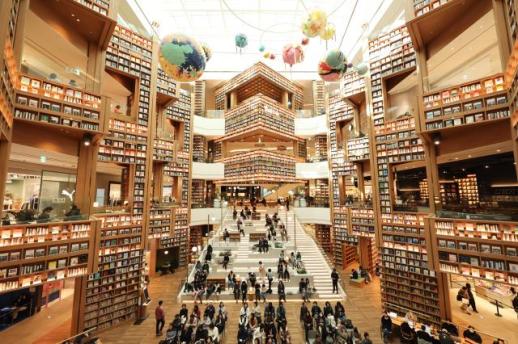 Towers of books: Heaven or hell? SEOUL, February 25 (AJP) -Inside Starfield Suwon, a soaring cathedral of books rises through four floors, blurring the boundary between retail space and reading room. Opened as the second Starfield Library after the flagship at COEX Mall, the Suwon branch features bookshelves stretching nearly 22 meters high, spanning from the fourth to the seventh floors. From almost any angle, visitors can look up into towering rows of spines — or gaze down into a layered landscape of light, steel, and paper. A Library Without Walls Unlike traditional libraries confined to a single level, Starfield’s design dissolves vertical boundaries. Escalators, open balconies, and glass railings connect each floor visually, allowing the space to be experienced as one continuous volume. Whether standing on the upper decks or passing through lower corridors, visitors remain part of the same architectural conversation — one shaped by height, openness, and quiet spectacle. Reading Meets Retail Each floor integrates cafés and lounge-style seating, encouraging visitors to linger rather than simply pass through. Coffee cups and novels coexist. Shoppers pause mid-errand to read. Students settle into armchairs beneath shelves that seem to vanish into the ceiling. The result is a hybrid space: part library, part living room, part social hub. A Cultural Stage Beyond books, the library hosts regular performances, talks, and lectures, positioning itself as a cultural venue as much as a reading space. Weekly and monthly programs bring authors, musicians, and speakers into the atrium, transforming the quiet tower into a communal forum. To some, the vertical library feels like a modern sanctuary — a rare place where reading is celebrated at monumental scale. To others, its location inside a shopping mall raises questions about whether books have become another aesthetic backdrop for consumption. Yet perhaps its appeal lies precisely in that tension. By embedding literature into everyday commercial life, Starfield Library does not isolate reading from modern routines. Instead, it inserts it — boldly and visibly — into them. In Suwon, books no longer whisper from hidden shelves. They rise, unmistakably, toward the sky. 2026-02-25 17:46:01
 -
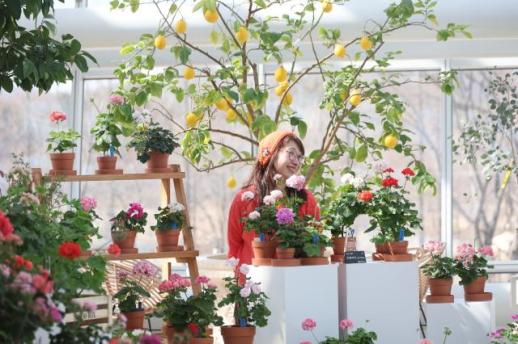 Flowers greet early spring in Suwon SEOUL, February 25 (AJP) - Suwon City, south of Seoul, is holding a special exhibition themed around geraniums titled "We, Spring Starts Now" at Ilwol Arboretum from Feb. 3 to March 15. The exhibition takes place at the Ilwol Arboretum greenhouse and visitor center. It features geraniums, a representative companion plant that allows visitors to enjoy flowers and leaves year-round. The exhibition greenhouse showcases approximately 300 varieties of geraniums, including rare species such as K-geraniums, Russian geraniums, and European geraniums. Explanations of each variety's characteristics and care methods are provided to help visitors understand. The exhibition also displays award-winning entries from the Geranium Love Contest, allowing visitors to appreciate various geraniums cultivated by citizens. 2026-02-25 17:38:28
 -
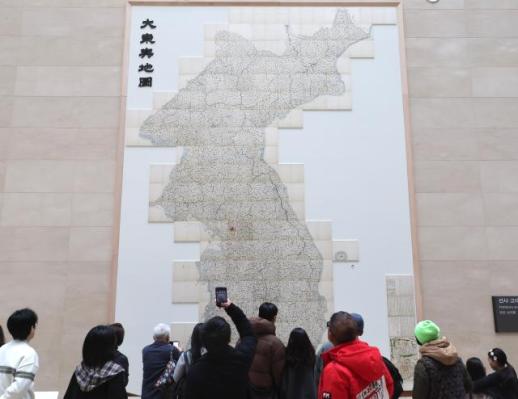 The Great Map of the East unfolds SEOUL, February 24 (AJP) - On the first floor of the National Museum of Korea, there is a "History Path." On one wall hangs a massive map—the Daedong Yeojido (Great Map of the East) by Gosan Kim Jeong-ho. The exhibition "Unfolding Daedong Yeojido" has been on display since Feb. 12. Originally, the Daedong Yeojido was a folding map divided into 22 volumes for portability. However, to commemorate the 160th anniversary of Gosan's death, the museum connected and mounted all 22 volumes printed on traditional Korean paper to recreate the map in its complete form on the wall, measuring approximately 6.7 meters in height and 3.8 meters in width, equivalent to a three-story apartment building. Kim Jeong-ho, who created the Daedong Yeojido in 1861, was a geographer who dedicated his life to mapmaking. To create the map, he traveled around the country's eight provinces three times over 30 years and climbed Mt. Baekdu eight times. The name "Daedong Yeojido" means "Map of the Great Eastern Country," reflecting an independent consciousness free from Chinese influence. 2026-02-24 17:01:49
 -
 Spring waits indoors at Gwangmyeong flower complex SEOUL, February 23 (AJP) -Cold mornings and sharp winds still signal the tail end of winter. Frost lingers on sidewalks, and heavy coats remain necessary outdoors. Inside the garden shops at the Gwangmyeong flower complex, however, the season looks different. Rows of flowers are already in full bloom under controlled temperatures and lighting. Brightly colored blossoms line shelves and tables, while potted plants are arranged neatly along narrow aisles. Wholesale owners are preparing early for the spring shopping season. Each day, they water plants, adjust humidity and temperature, and inspect leaves and roots. Many begin work before sunrise to manage new shipments and organize displays. The complex supplies more than seasonal flowers. It also handles a wide range of succulents, small fruit trees, herbs and ornamental plants. Gardening tools and decorative items are stacked nearby, ready for customers planning home and balcony gardens. Most visitors have yet to arrive in large numbers. For now, shop owners focus on cultivation and maintenance, anticipating increased demand as temperatures rise. While winter remains outside, these indoor gardens are already set for spring. By the time warmer days arrive, the flowers will be ready — grown, arranged and waiting for shoppers seeking an early taste of the new season. 2026-02-23 15:38:05
 -
 Taegeukgi in full bloom ahead of March 1 Independence Movement Da SEOUL, February 23 (AJP) -A line of Taegeukgi stretches quietly through the trees at Hyochang Park, marking the 107th anniversary of the March 1 Independence Movement. From Hyochang Park Station to the park’s main entrance, a 510-meter walkway has been transformed into a corridor of national symbols. More than 300 Korean flags are attached to tree trunks and branches, creating a continuous display that follows the natural curve of the path. Installed from Feb. 21 to March 8, the project is designed to bring remembrance into everyday spaces. Rather than gathering people in a single square, it places history along a route used daily by commuters, joggers and nearby residents. As pedestrians pass beneath the flags, the scene invites a brief pause. Some slow their steps. Others lift their phones. Many simply look up, momentarily drawn out of routine. The white fabric, marked by red, blue and black, stands out against bare winter branches. From a distance, the rows resemble blossoms, suggesting both renewal and continuity. Up close, each flag recalls the collective spirit of 1919, when ordinary citizens filled the streets to demand independence. The installation honors independence activists while encouraging reflection in ordinary moments — on the way to work, during an afternoon walk, or while heading home. In this corridor of trees and symbols, remembrance does not rely on speeches or ceremonies. It unfolds quietly, one step at a time, reminding visitors that history remains present in daily life. 2026-02-23 15:30:53
 -
 New firefighters ready to serve communities in Incheon SEOUL, February 20 (AJP) - Some 116 new firefighters graduated from the Incheon Fire Academy in Ganghwa, Incheon on Friday. The new graduates, the academy's 27th class, pledged to protect the lives and property of citizens. Over 24 weeks since enrolling in September last year, the graduates completed rigorous training as part of the academy's mission to nurture elite firefighting personnel ready for the field. They will be assigned to about a dozen fire stations across Incheon, taking on firefighting, rescue and emergency duties for citizens' safety. 2026-02-20 16:11:53
 -
 BTS Comeback D-29: Why Gwanghwamun is the ideal stage SEOUL, February 20 (AJP) -Snow has melted on Mount Bugak, revealing dark rocks and early greenery above the skyline. Below, the statue of King Sejong the Great stands at the mouth of Gwanghwamun Gate, gazing over an avenue quietly preparing for a moment it was never designed to imagine — the return of BTS. The historic corridor, where royal processions once passed and modern protests later gathered, is being transformed into an open-air stage. As spring settles over central Seoul, Gwanghwamun Square is readying itself to host a global spectacle — one that connects centuries of memory with a new chapter in Korean pop history. Stretching roughly 550 meters from Gwanghwamun Gate at Gyeongbokgung Palace toward City Hall, Gwanghwamun Square forms Seoul’s historic spine. “Gwanghwamun” means Gate of Enlightenment. First built in 1395, it once marked the threshold between royal authority and civic life. Behind it stood kings and scholars. In front of it unfolded the life of the capital. The modern square is young — completed in 2009 and redesigned in 2021 — yet its purpose remains ancient: to connect power, people and place. Today, it functions as both an urban plaza and a national mirror, reflecting how Seoul sees itself at any given moment. At the northern end of the square stands King Sejong the Great, creator of Hangul and architect of Korea’s intellectual foundation. He faces south, watching over a city built on the alphabet he gave his people. Further down stands Yi Sun-sin, the naval commander who became a symbol of survival during the Imjin War. His statue does not look outward. It looks forward — toward uncertainty. Together, they form a silent dialogue: knowledge and courage, language and defense, culture and endurance. Between them flows everyday Seoul — office workers at lunch, tourists with cameras, families with strollers. History here is not sealed behind glass. It is walked past, leaned against, lived with. For generations, Gwanghwamun has been Korea’s open-air theater. Royal processions once passed through its gates. Independence activists gathered nearby. Democracy movements filled its streets. Candlelight vigils reshaped politics here. In recent years, it has hosted festivals, parades, marathons and global pop culture events. A “Squid Game” parade. Family runs. Liberation commemorations. Public celebrations. Now, it prepares for BTS. The group’s logo and comeback date have appeared on the steps of the nearby Sejong Center for the Performing Arts — a signal that this space is once again shifting roles. From civic forum to concert hall. BTS returns with ARIRANG, their first new album in nearly four years since Proof in 2022. The title invokes Korea’s best-known folk song — a melody of separation, longing and return. Performing it here is not accidental. Gwanghwamun represents continuity. It holds together dynasties and democracies, textbooks and smartphones, palace roofs and LED screens. It embodies the idea that modern Korea moves forward by carrying its past with it. For BTS, now a global institution, this matters. What began in small studios and music shows now unfolds before royal gates. What traveled the world returns to its cultural axis. The message is clear: global success does not require cultural erasure. It can deepen it. Where the past and future meet On an ordinary day, Gwanghwamun Square feels like Seoul’s living room. People pass through. Sit down. Argue. Rest. Take pictures. Move on. Soon, millions will watch it become something else — a temporary convergence of history, fandom and sound. Behind the stage will stand a palace gate older than most nations. Nearby, statues of kings and admirals will remain unmoved. Above, drones and cameras will broadcast the moment worldwide. And in between, BTS will sing. Not in a stadium. Not in an arena. But at the crossroads of Korean time. 2026-02-20 15:01:13
 -
 Semiconductor-themed expo underway in southern Seoul with nearly 2,500 booths SEOUL, February 12 (AJP) - Nearly 2,500 booths are displaying various semiconductor materials and related equipment at an expo which kicked off at COEX in southern Seoul earlier this week. Organized by the Semiconductor Equipment and Materials International (SEMI), the three-day expo, dubbed SEMICON Korea runs until Friday, providing an opportunity to share the latest technologies and market trends. This year's expo is the largest ever, bringing about 550 domestic and global companies including Samsung Electronics, SK hynix, NVIDIA, and Intel. 2026-02-12 17:48:15
 -
 My Friend Seoul gallery opens at City Hall SEOUL, February 12 (AJP) - Seoul's City Hall underground space, which underwent renovation last year, has completed its full transformation and reopened as a space showcasing Seoul's charm and identity to the world. Seoul city opened the Seoul Gallery, a complex cultural space where visitors can explore the city's competitiveness, future vision, and major policies, on Feb. 5.The Seoul Gallery features a city promotion exhibition hall utilizing cutting-edge media technology (My Friend Seoul Halls 1 & 2) and spaces where visitors can experience major city policies and relax. My Friend Seoul Hall 1 was designed to embody Seoul's urban space philosophy, allowing visitors to see and experience the changing future of Seoul and its core projects firsthand. It offers various attractions including Play Hangang, an interactive media installation that responds to visitors' movements, the Multimedia Future Seoul Show screening different themes every 15 minutes, and city models. Hall 2 features a large 2-meter spherical media display in the shape of Earth, presenting diverse information about today's planet and global landscapes. 2026-02-12 17:42:08
 -
 On a bread ride in Daejeon SEOUL, February 03 (AJP) - At exactly 1 p.m., a gray sedan rolled up in front of Exit 4 of Tanbang Station, Daejeon city of South Korea. Out stepped driver An Seong-woo — with two bread-shaped plushies tucked under his arms and a smile warm enough to melt butter. That’s how our “Bread Vatican pilgrimage,” officially known as the Daejeon Bread Taxi Tour, began. He had arrived early that morning to scout parking spots for customers who drove in. A small detail, maybe. But on this tour, small details are everything. Inside the taxi, bread plushies and Sungsimdang character dolls were everywhere. On the back of the passenger seat hung a laminated guide explaining Daejeon's "bread capital" reputation — complete with tips on reheating pastries at home. Air fryer? Microwave? Defrost first? Ahn had answers to all of it. Before the engine even started, it was clear: this wasn't just a ride. It was a carefully curated bread experience. As we pulled away, An explained how the route works. He personally tastes every bread. Checks prices. Inspects interiors. Verifies hygiene. Studies customer reviews. Only then does a bakery make the cut. Routes change depending on who books and what they want. Today's lineup included Mimi Dessert, famous for Dubai-style chewy cookies; Sungsimdang, Daejeon's bread legend; Mongsim, winner of the Daejeon Bread Festival; Jeongdong Munhwasa; and one "secret" bakery he refused to name. Our job was simple: pick up the bread he had already reserved and listen. At each shop, An turned into a walking encyclopedia — explaining signature menus, owners' stories, ingredient choices, and even which pastries travel best. At Mimi Dessert, people recognized him instantly. Customers waved. Some asked for business cards. A group of students squealed when they spotted him. He wasn't just a driver. He was the bread guy. In-car dining, bakery edition Then came the highlight: in-car dining. Behind the front seats were fold-down tables — just like airplane trays. Pull one out, and suddenly cup holders appeared, side panels extended, and extra space opened up for napkins and wipes. An said he tested eight different products before choosing this one. Once the bread arrived, he laid out knives, forks, spoons, water and drinks. Then came the extras: balsamic oil, butter and cream cheese — matched carefully to each pastry. "This one goes best with butter." "That one needs cream cheese." "This one, try plain first." We ate fresh bread right there in the taxi. When crumbs fell, Ahn pulled out a cordless vacuum. "Please drop as many crumbs as possible," he joked. Everything was ready. Nothing was accidental. It felt like a moving bakery café. No waiting, no stress — just cake Next stop: Sungsimdang inside Lotte Department Store. We were there for Strawberry Siru cakes — famous for requiring hours of waiting. But An had already reserved them. Instead of lining up for half a day, we walked straight to checkout. Five minutes later, cake in hand. For travelers, that alone felt like winning the lottery. The final stop was the "secret" bakery. No signboard. No big crowds. Just a quiet alley filled with the smell of roasting coffee and fresh bread. We bought whole wheat campagne and sipped omija tea made with house-made syrup. Sweet. Tart. Refreshing. Perfect with bread. It felt like a hidden ending scene — the kind you only reach if you take the long way. Two hours later, the tour wrapped up. An handed us a Bread Tour Certificate. It read, like an award: "Certified to have participated in the bread tour, eaten deliciously and abundantly, and completed it excellently." We laughed. We took photos. We carefully packed our bread. Then An drove us back to our parked car. We said goodbye with arms full of pastries and bags heavy with memories. A warm, sweet ride For two hours, Daejeon became a moving bakery. And a taxi became a tiny, rolling café. We left full. We left smiling. We left smelling faintly of butter and coffee. And honestly? We'd do it again in a heartbeat. 2026-02-09 19:09:27