
Journalist

AJU PRESS Visuals Team
jungu141298@ajupress.com
-
 2026 F/W Seoul Fashion Week underway at DDP SEOUL, February 06 (AJP) - The 2026 F/W Seoul Fashion Week opened at Dongdaemun Design Plaza (DDP) in Jung-gu, Seoul, on Feb. 3. Running through Feb. 8, the fashion week features fashion shows by 15 brands, a trade show with 92 brands, the Seoul Fashion Forum, and citizen participation programs centered at DDP. Models and the general public freely showcase their fashion around DDP during the fashion week period. Many photographers from across the country also visit DDP to capture fashion during this time. 2026-02-06 17:44:09
 -
 Songs and poems told by hands SEOUL, February 04 (AJP) - Poetries were read and choir songs sung, but not aloud at Modu Art Theater in Seodaemun, western Seoul on Feb. 3. At 2 p.m., the 6th Korean Sign Language Day commemorative ceremony, hosted by the Ministry of Culture, Sports and Tourism, began not with applause, but with raised hands, flowing gestures and attentive silence. Each movement carried rhythm. Each pause held meaning. Here, language was not spoken — it was performed. Korean Sign Language Day, observed annually on Feb. 3, is a statutory anniversary designated to promote Korean Sign Language as the unique language of the deaf, with equal status to spoken Korean. Beyond recognition, the day serves as a reminder that communication takes many forms — and that all deserve respect. This year’s ceremony, held at Modu Art Theater in Seoul, was themed: “Today connected by language, tomorrow continued by culture!” The message resonated through every performance. On stage, performers translated emotions into space. Love, longing, humor and hope traveled through fingertips and wrists. Poems were not read, but shaped in the air. Songs were not sung, but drawn with palms and arms. The audience followed each story with their eyes, learning to listen without sound. For many participants, Korean Sign Language is more than a tool — it is a mother tongue, a bridge to identity, and a living archive of shared memory. Organizers emphasized that it is also a cultural asset belonging to society as a whole, not only to the deaf community. Between performances, moments of stillness lingered. A raised hand. A gentle nod. A collective breath. In those pauses, the essence of the day became clear. Language does not always arrive through ears. Sometimes, it reaches the heart through hands. 2026-02-04 14:28:04
 -
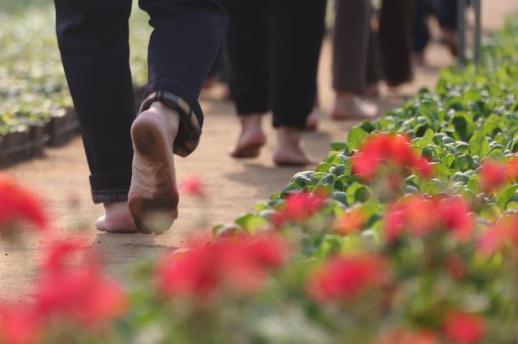 Barefoot, in spite of the cold SEOUL, February 02 (AJP) -In the depth of winter, Anyang has offered residents an unexpected refuge: a barefoot walking path inside a working greenhouse. Opened last month inside a former flower nursery, the 160-meter trail lets visitors shed their shoes and feel the ground underfoot while outside temperatures dip below freezing. Inside, the greenhouse holds steady at around 10 degrees Celsius, creating a mild, earthy contrast to the cold beyond the glass. The path is equipped with practical touches — foot-washing stations, shoe storage and rest areas — underscoring its appeal as both a wellness experiment and a seasonal curiosity. The barefoot greenhouse is open daily from 10 a.m. to 4 p.m. through Feb. 25, inviting winter walkers to slow down, reconnect with their senses and briefly forget the chill outside. 2026-02-02 17:56:48
 -
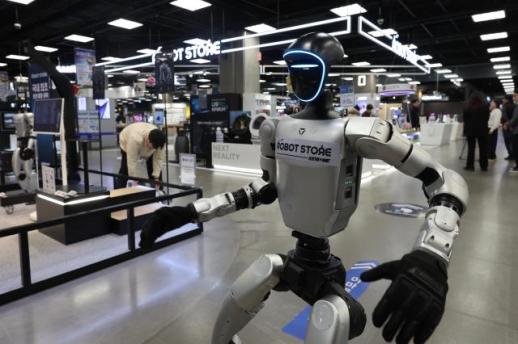 From aisle to android: robots go on sale at E-mart in Korea SEOUL, February 02 (AJP) -Shopping carts aren’t the only things rolling through E-mart anymore. South Korea’s largest retailer has become the first in the country to sell humanoid robots as off-the-shelf products, signaling a moment when robots move from showroom curiosities to items consumers can actually take home. At Electromart Yeongdeungpo in western Seoul, E-mart has opened a robot demonstration zone showcasing 14 different robot models, all available for purchase. The star attraction is a humanoid robot priced at 31 million won(about 21,300 dollars), designed to mimic human movement with striking precision. It can walk, sit, stand, turn from side to side, and move its arms and legs independently — less science fiction prop than early-stage household companion. Nearby, a smaller but livelier quadruped robot, priced at 4.76 million won(about 3,280 dollars), draws crowds with its repertoire of tricks. The robot can jump, stretch, sit, and even offer a mechanical handshake. Equipped with environmental sensors, it recognizes obstacles, navigates its surroundings and responds to voice commands, blurring the line between gadget and pet. By placing robots on the retail floor — complete with price tags — E-mart is testing how ready Korean consumers are to accept machines not just as tools or toys, but as everyday products. What was once confined to labs and tech expos has arrived under fluorescent lights, waiting quietly for its first owner to swipe a card. In Yeongdeungpo, the future isn’t behind glass. It’s on sale. 2026-02-02 17:18:29
 -
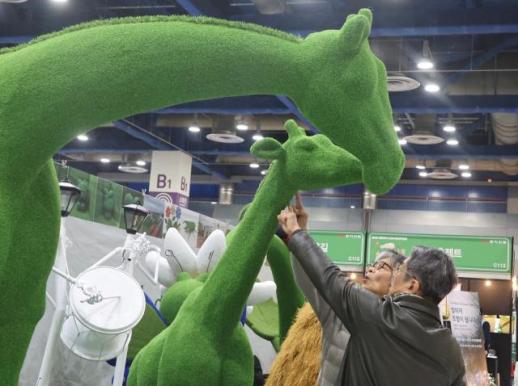 Expo in southern Seoul showcases latest gardening trends SEOUL, January 30 (AJP) -A gardening expo is underway in southern Seoul this week, giving visitors a chance to explore the latest trends in landscaping and gardening. The four-day expo, which runs until Feb. 1, features exhibitions related to landscaping and gardening along with various programs including special lectures, forums, and expert consultation booths in an effort to revitalize relevant industries. 2026-01-30 17:47:59
 -
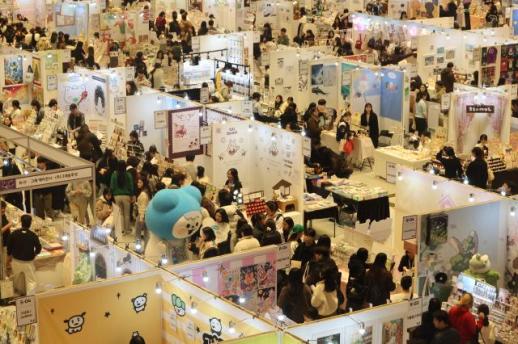 K-goods at Illustration Fair Seoul 2026 SEOUL, January 30 (AJP) - K-illustration Fair Seoul 2026 is taking place at COEX Hall D in Gangnam, Seoul. The fair opened on the 29th and runs through Feb. 1 for four days. Approximately 600 booths are showcasing a variety of domestic and international illustrations, independent publications, and merchandise. The event operates from 11 a.m. to 6 p.m. daily. The fair is scheduled to be held at BEXCO in Busan in July and at COEX Magok in August. 2026-01-30 17:40:07
 -
 Seoul metropolitan dance theater's 'One Dance' wins Bessie award in New York SEOUL, January 29 (AJP) - The Seoul Metropolitan Dance Theater's "One Dance" won the Outstanding Choreographer/Creator award at the New York Dance & Performance Awards, known as the Bessie Awards, in New York on Jan. 20 (local time). This marks the first time a Korean public arts organization has received a Bessie Award. The Bessie Awards selection committee described "One Dance" as "a visually captivating contemporary reinterpretation of Korean traditional ritual dance" that "demonstrates a perfect harmony of stillness and movement while reaching its climax with explosive and dynamic choreography." "One Dance" is a contemporary reinterpretation of ritual dance from "Jongmyo Jeryeak," a National Intangible Cultural Heritage and UNESCO Masterpiece of the Oral and Intangible Heritage of Humanity. The work premiered in 2022 and drew attention when it sold out all performances at New York's Lincoln Center in 2023. 2026-01-29 17:23:28
 -
 Bling One CN holds photo shoot in World K-pop center SEOUL, January 29 (AJP) - Bling One CN held a photo shoot and interview at the World K-pop Center in Jung-gu, Seoul, on the 28th. Bling One CN is a five-member group consisting of leader Cassie, Katrina, Ranee, Allie, and Chloe, selected from China as part of the Click the Star project spanning 32 countries worldwide. The group continues its idol activities in Korea and China with a focus on K-pop. 2026-01-29 17:23:07
 -
 South Korean athletes in final tune-up for next month's Winter Olympics in Italy SEOUL, January 27 (AJP) - With this year's Winter Olympics in Cortina d'Ampezzo and Milan just weeks away, South Korean athletes are gearing up for the quadrennial sporting event on ice and snow with final preparations. South Korea will field 71 athletes in snowboarding, bobsleigh, speed skating, short-track skating, and figure skating. The upcoming Olympics will kick off on Feb. 6 and run until Feb. 22, bringing together around 3,500 athletes from over 90 countries to compete for 116 medals across 16 disciplines. 2026-01-27 16:00:17
 -
 Lunar New Year's preparation slightly eases from last year SEOUL, January 26 (AJP) - The cost of preparing an ancestral table at traditional markets ahead of the Lunar New Year holiday has been surveyed at 296,500 won(about 205 dollars), slightly lower than last year. According to a survey conducted by Korea Price Information (KPI), a specialized price research agency, on Jan. 25, the cost for a four-person family declined 1.98% year-on-year at traditional markets. Large discount stores also saw a 0.64% drop to 406,880 won(about 282 dollars) compared to the previous year. Prices for fruits and vegetables including pears, jujubes, radishes, and cabbage decreased. This year's Seollal falls on Feb. 17, marking the first day of the first lunar month and the beginning of the new year. It is one of Korea's major holidays, during which families typically perform ancestral rites. 2026-01-26 17:22:12