
Journalist

AJU PRESS Visuals Team
jungu141298@ajupress.com
-
 Hongcheon ice fishing festival ends with a splash SEOUL, January 26 (AJP) -The arctic cold snap did not spoil the fun at the 2026 Hongcheon Kkongkkong Ice Fishing Festival, which drew about 270,000 visitors to the Hongcheon River area and injected fresh vitality into the local economy. Despite the severe weather, food stalls and sales of local agricultural products reached record highs. The festival earned positive reviews for enhancing its quality as Hongcheon’s signature winter tourism attraction by combining a wide range of experiential programs centered on the locally renowned “Hongcheon Ginseng Trout.” Highlights included ice fishing, pontoon fishing, indoor fishing and bare-hand ginseng trout catching. 2026-01-26 16:11:52
 -
 BLACKPINK's Jennie opens first solo photo exhibition SEOUL, January 23 (AJP) - BLACKPINK member Jennie is holding her first solo photo exhibition to commemorate her birthday. The exhibition "JENNIE PHOTO EXHIBITION J2NNI5" is running from the 16th to the 29th at YOUTHQUAKE in Jongno-gu, Seoul. The exhibition is particularly significant as Jennie directly participated in the project, capturing her own perspective and sensibility. Rather than showcasing her glamorous on-stage image, the exhibition highlights candid moments of Jennie in unguarded instances. Numerous unreleased photos taken by Korea's top photographers are being revealed, allowing fans to encounter the natural everyday life of 25-year-old Jennie. A photo book released alongside the exhibition comprises 692 pages featuring over 50 different concepts. It includes works not displayed in the exhibition, boasting high collectible value. Fifteen varieties of merchandise have also been prepared to provide fans with a special experience along with the photo book. 2026-01-23 16:07:11
 -
 ROK army special forces conduct winter survival training SEOUL, January 23 (AJP) - The ROK Army Special Warfare Command announced on Jan. 22 that it has been conducting winter survival training at training grounds in the Hwangbyeongsan area of Daegwallyeong, Gangwon Province, from January through February. The training runs for 11 nights and 12 days for each unit. 2026-01-23 16:06:02
 -
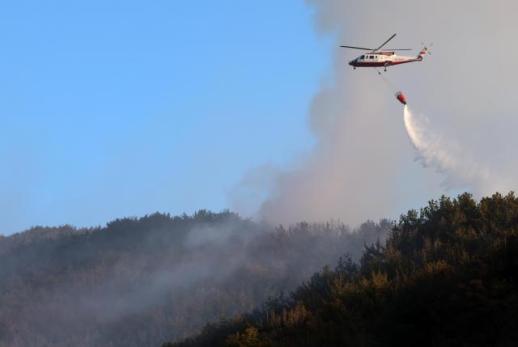 Gwangyang wildfire fully contained after 13-hour operation SEOUL, January 22 (AJP) - Authorities have contained a major wildfire in Gwangyang, South Jeollanam Province, that triggered Level 1 emergency response measures due to rapid spread driven by strong winds. The blaze, which broke out at 3:31 PM on the 21st in the hills of Mukbaek-ri, Okgok-myeon, Gwangyang, reached 100 percent containment as of 10:00 AM today, 13 hours and 37 minutes after ignition. Forest authorities activated nighttime firefighting operations at sunset, deploying Surion helicopters and thermal imaging-equipped drones for fire line monitoring to develop suppression strategies. Specialized wildfire units and high-performance fire trucks were mobilized throughout the night to prevent further spread. The overnight operation involved 997 firefighting personnel and 108 fire trucks. The affected area is estimated to span 49 hectares. The wildfire originated from sparks that spread from a nearby factory fire and rapidly expanded in the strong wind conditions. 2026-01-22 17:32:30
 -
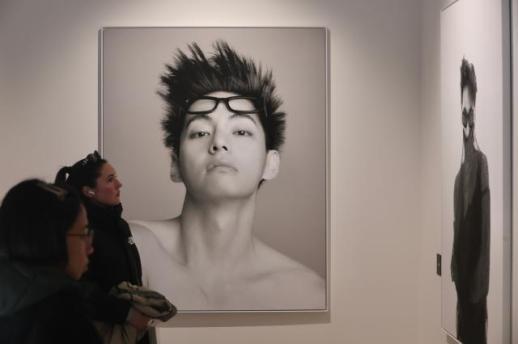 BTS's V holds photo book exhibition SEOUL, January 22 (AJP) - BTS member V is holding an exhibition to commemorate the release of his photo book from Jan. 20 to Feb. 1 at Frieze Seoul in Jung-gu, Seoul. The exhibition, titled "V TYPE 非: ON-SITE IN SEOUL," features three-dimensional displays of photos from the book along with previously unreleased photos and videos available only at the venue. Meanwhile, V and BTS are set to make a comeback on March 20 with their fifth full-length album "ARIRANG." The album marks the group's first new release in three years and nine months since their anthology album "Proof" in June 2022. It will contain a total of 14 tracks. According to their agency, BTS has captured the group's identity as a Korean act along with themes of longing and deep love in this album. The title "ARIRANG" represents Korea's signature folk song and symbolically embodies the emotions the members wish to express. Additionally, BTS is planning a comeback stage at Gwanghwamun in central Seoul in late March. 2026-01-22 17:32:08
 -
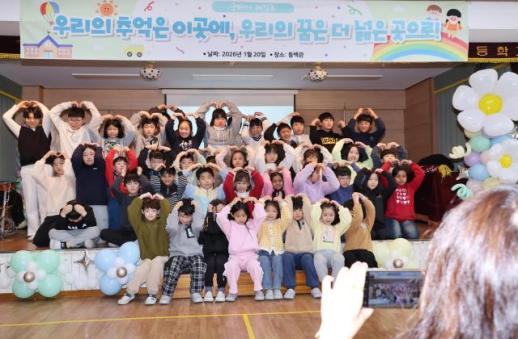 Busan's Gwabeop elementary school holds graduation event SEOUL, January 21 (AJP) - Gwabeop Elementary School in Sasang-gu, Busan, held its 44th and final graduation ceremony on Jan. 20. The event included a graduation for eight last graduates followed by a farewell ceremony, marking the end of the school's long history. According to the Busan Metropolitan Office of Education, Gwabeop Elementary opened on March 5, 1982, with 28 classes and 1,261 students. Student enrollment declined sharply in recent years—6 new students in 2022, 12 in 2023, 6 in 2024, and 9 in 2025—leaving the school with just 52 total students. The consolidation with nearby Gamjeon Elementary was finalized last August. Gwabeop Elementary is one of three elementary schools in Busan closing this year due to declining school-age population. 2026-01-21 15:38:54
 -
 Bupyeong fire station conducts winter water rescue training 2026-01-21 15:36:59
 -
 'Dancing, Dreaming, Enlightening' showcases Korean fashion art SEOUL, January 20 (AJP) The Seoul Museum of Craft Art is holding a special donation exhibition, "Dancing, Dreaming, Enlightening," showcasing the artistic world of Geum Key-sook, a pioneer of Korean fashion art, through March 15. The exhibition traces the creative journey of artist Geum Key-sook, who has built a unique domain of "fashion art" over 40 years by crossing boundaries between fashion and fine art, tradition and contemporary practice. Geum is recognized as a figure who established the concept of fashion art in Korea and spread it internationally by reinterpreting the concept of "art clothing" in a Korean context in the early 1990s. Geum also served as costume director for the 2018 PyeongChang Winter Olympics, garnering attention for designing the "snow fairy" costumes worn by placcard bearers during the opening ceremony. The artist has built a distinctive body of work utilizing unconventional materials such as wire, beads, nobang (ramie fabric), sequins, and recycled materials. She is particularly credited with expanding the horizons of fashion art by extending clothing into both "Art to Wear" and sculptural art that composes space. The exhibited works present themes of artistic expansion, coexistence, and enlightenment in various formats, ranging from individual garments to large-scale spatial installations. Through this exhibition, artist Geum Key-sook has donated a total of 55 items (56 pieces) worth approximately 1.31 billion won(about 887,413 dollars) to the Seoul Museum of Craft Art. The donation includes early fashion art experimental works, signature wire dresses and hanbok sculptural pieces, recent upcycling projects, and archival materials. 2026-01-20 16:57:19
 -
 Snow sledding available along Seoul's Han River SEOUL, January 19 (AJP) - Kids and other visitors have been enjoying snow sledding at parks along the Han River, as the Seoul Metropolitan Government offers seasonal programs for winter sports fun. Facilities for the programs, open from 10 a.m. to 5 p.m., are available at three location - Ttukseom, Jamwon, and Yeouido - for 6,000 Korean won (about US$4) and will remain open until mid-February. Visitors can enjoy sledding on slopes of varying heights as well as a low-level play area. 2026-01-19 18:12:13
 -
 Thousands brave winter swim at Haeundae beach SEOUL, January 19 (AJP) - About 2,000 people braved chilly winter weather to plunge into the icy waters of Haeundae Beach in Busan on Sunday for the southern port city's annual swimming festival. Under this year's "colorful" theme for the Haeundae Polar Bear Festival (HPBF), the beach was filled with swimmers in vibrant colors. Before plunging into the water, participants painted themselves with colorful powder symbolizing hope, love, and happiness. They splashed and played like children, completely absorbed in the moment. Fortunately, the temperature at the beach was around 10 degrees Celsius, making it feel bearable, almost like early spring. Now in its 39th year, the festival has remained popular, bringing together swimming enthusiasts, local residents, and tourists. 2026-01-19 16:18:36