
Journalist

Han Jun-gu
jungu141298@ajupress.com
-
 Semiconductor-themed expo underway in southern Seoul with nearly 2,500 booths SEOUL, February 12 (AJP) - Nearly 2,500 booths are displaying various semiconductor materials and related equipment at an expo which kicked off at COEX in southern Seoul earlier this week. Organized by the Semiconductor Equipment and Materials International (SEMI), the three-day expo, dubbed SEMICON Korea runs until Friday, providing an opportunity to share the latest technologies and market trends. This year's expo is the largest ever, bringing about 550 domestic and global companies including Samsung Electronics, SK hynix, NVIDIA, and Intel. 2026-02-12 17:48:15
 -
 My Friend Seoul gallery opens at City Hall SEOUL, February 12 (AJP) - Seoul's City Hall underground space, which underwent renovation last year, has completed its full transformation and reopened as a space showcasing Seoul's charm and identity to the world. Seoul city opened the Seoul Gallery, a complex cultural space where visitors can explore the city's competitiveness, future vision, and major policies, on Feb. 5.The Seoul Gallery features a city promotion exhibition hall utilizing cutting-edge media technology (My Friend Seoul Halls 1 & 2) and spaces where visitors can experience major city policies and relax. My Friend Seoul Hall 1 was designed to embody Seoul's urban space philosophy, allowing visitors to see and experience the changing future of Seoul and its core projects firsthand. It offers various attractions including Play Hangang, an interactive media installation that responds to visitors' movements, the Multimedia Future Seoul Show screening different themes every 15 minutes, and city models. Hall 2 features a large 2-meter spherical media display in the shape of Earth, presenting diverse information about today's planet and global landscapes. 2026-02-12 17:42:08
 -
 On a bread ride in Daejeon SEOUL, February 03 (AJP) - At exactly 1 p.m., a gray sedan rolled up in front of Exit 4 of Tanbang Station, Daejeon city of South Korea. Out stepped driver An Seong-woo — with two bread-shaped plushies tucked under his arms and a smile warm enough to melt butter. That’s how our “Bread Vatican pilgrimage,” officially known as the Daejeon Bread Taxi Tour, began. He had arrived early that morning to scout parking spots for customers who drove in. A small detail, maybe. But on this tour, small details are everything. Inside the taxi, bread plushies and Sungsimdang character dolls were everywhere. On the back of the passenger seat hung a laminated guide explaining Daejeon's "bread capital" reputation — complete with tips on reheating pastries at home. Air fryer? Microwave? Defrost first? Ahn had answers to all of it. Before the engine even started, it was clear: this wasn't just a ride. It was a carefully curated bread experience. As we pulled away, An explained how the route works. He personally tastes every bread. Checks prices. Inspects interiors. Verifies hygiene. Studies customer reviews. Only then does a bakery make the cut. Routes change depending on who books and what they want. Today's lineup included Mimi Dessert, famous for Dubai-style chewy cookies; Sungsimdang, Daejeon's bread legend; Mongsim, winner of the Daejeon Bread Festival; Jeongdong Munhwasa; and one "secret" bakery he refused to name. Our job was simple: pick up the bread he had already reserved and listen. At each shop, An turned into a walking encyclopedia — explaining signature menus, owners' stories, ingredient choices, and even which pastries travel best. At Mimi Dessert, people recognized him instantly. Customers waved. Some asked for business cards. A group of students squealed when they spotted him. He wasn't just a driver. He was the bread guy. In-car dining, bakery edition Then came the highlight: in-car dining. Behind the front seats were fold-down tables — just like airplane trays. Pull one out, and suddenly cup holders appeared, side panels extended, and extra space opened up for napkins and wipes. An said he tested eight different products before choosing this one. Once the bread arrived, he laid out knives, forks, spoons, water and drinks. Then came the extras: balsamic oil, butter and cream cheese — matched carefully to each pastry. "This one goes best with butter." "That one needs cream cheese." "This one, try plain first." We ate fresh bread right there in the taxi. When crumbs fell, Ahn pulled out a cordless vacuum. "Please drop as many crumbs as possible," he joked. Everything was ready. Nothing was accidental. It felt like a moving bakery café. No waiting, no stress — just cake Next stop: Sungsimdang inside Lotte Department Store. We were there for Strawberry Siru cakes — famous for requiring hours of waiting. But An had already reserved them. Instead of lining up for half a day, we walked straight to checkout. Five minutes later, cake in hand. For travelers, that alone felt like winning the lottery. The final stop was the "secret" bakery. No signboard. No big crowds. Just a quiet alley filled with the smell of roasting coffee and fresh bread. We bought whole wheat campagne and sipped omija tea made with house-made syrup. Sweet. Tart. Refreshing. Perfect with bread. It felt like a hidden ending scene — the kind you only reach if you take the long way. Two hours later, the tour wrapped up. An handed us a Bread Tour Certificate. It read, like an award: "Certified to have participated in the bread tour, eaten deliciously and abundantly, and completed it excellently." We laughed. We took photos. We carefully packed our bread. Then An drove us back to our parked car. We said goodbye with arms full of pastries and bags heavy with memories. A warm, sweet ride For two hours, Daejeon became a moving bakery. And a taxi became a tiny, rolling café. We left full. We left smiling. We left smelling faintly of butter and coffee. And honestly? We'd do it again in a heartbeat. 2026-02-09 19:09:27
 -
 2026 F/W Seoul Fashion Week underway at DDP SEOUL, February 06 (AJP) - The 2026 F/W Seoul Fashion Week opened at Dongdaemun Design Plaza (DDP) in Jung-gu, Seoul, on Feb. 3. Running through Feb. 8, the fashion week features fashion shows by 15 brands, a trade show with 92 brands, the Seoul Fashion Forum, and citizen participation programs centered at DDP. Models and the general public freely showcase their fashion around DDP during the fashion week period. Many photographers from across the country also visit DDP to capture fashion during this time. 2026-02-06 17:44:09
 -
 Songs and poems told by hands SEOUL, February 04 (AJP) - Poetries were read and choir songs sung, but not aloud at Modu Art Theater in Seodaemun, western Seoul on Feb. 3. At 2 p.m., the 6th Korean Sign Language Day commemorative ceremony, hosted by the Ministry of Culture, Sports and Tourism, began not with applause, but with raised hands, flowing gestures and attentive silence. Each movement carried rhythm. Each pause held meaning. Here, language was not spoken — it was performed. Korean Sign Language Day, observed annually on Feb. 3, is a statutory anniversary designated to promote Korean Sign Language as the unique language of the deaf, with equal status to spoken Korean. Beyond recognition, the day serves as a reminder that communication takes many forms — and that all deserve respect. This year’s ceremony, held at Modu Art Theater in Seoul, was themed: “Today connected by language, tomorrow continued by culture!” The message resonated through every performance. On stage, performers translated emotions into space. Love, longing, humor and hope traveled through fingertips and wrists. Poems were not read, but shaped in the air. Songs were not sung, but drawn with palms and arms. The audience followed each story with their eyes, learning to listen without sound. For many participants, Korean Sign Language is more than a tool — it is a mother tongue, a bridge to identity, and a living archive of shared memory. Organizers emphasized that it is also a cultural asset belonging to society as a whole, not only to the deaf community. Between performances, moments of stillness lingered. A raised hand. A gentle nod. A collective breath. In those pauses, the essence of the day became clear. Language does not always arrive through ears. Sometimes, it reaches the heart through hands. 2026-02-04 14:28:04
 -
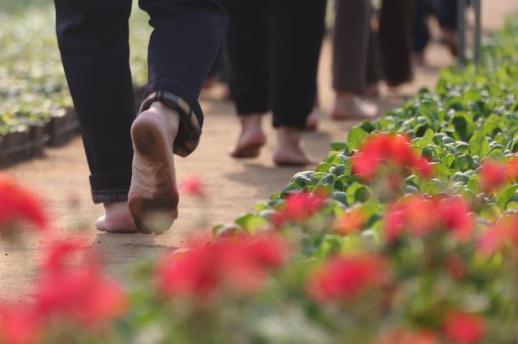 Barefoot, in spite of the cold SEOUL, February 02 (AJP) -In the depth of winter, Anyang has offered residents an unexpected refuge: a barefoot walking path inside a working greenhouse. Opened last month inside a former flower nursery, the 160-meter trail lets visitors shed their shoes and feel the ground underfoot while outside temperatures dip below freezing. Inside, the greenhouse holds steady at around 10 degrees Celsius, creating a mild, earthy contrast to the cold beyond the glass. The path is equipped with practical touches — foot-washing stations, shoe storage and rest areas — underscoring its appeal as both a wellness experiment and a seasonal curiosity. The barefoot greenhouse is open daily from 10 a.m. to 4 p.m. through Feb. 25, inviting winter walkers to slow down, reconnect with their senses and briefly forget the chill outside. 2026-02-02 17:56:48
 -
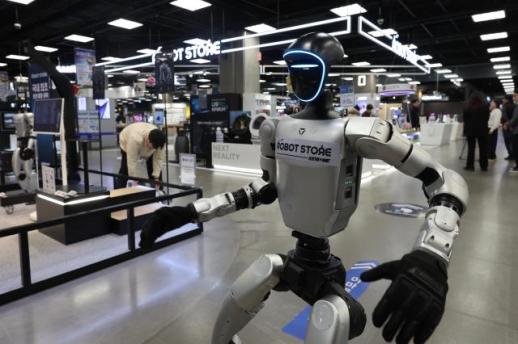 From aisle to android: robots go on sale at E-mart in Korea SEOUL, February 02 (AJP) -Shopping carts aren’t the only things rolling through E-mart anymore. South Korea’s largest retailer has become the first in the country to sell humanoid robots as off-the-shelf products, signaling a moment when robots move from showroom curiosities to items consumers can actually take home. At Electromart Yeongdeungpo in western Seoul, E-mart has opened a robot demonstration zone showcasing 14 different robot models, all available for purchase. The star attraction is a humanoid robot priced at 31 million won(about 21,300 dollars), designed to mimic human movement with striking precision. It can walk, sit, stand, turn from side to side, and move its arms and legs independently — less science fiction prop than early-stage household companion. Nearby, a smaller but livelier quadruped robot, priced at 4.76 million won(about 3,280 dollars), draws crowds with its repertoire of tricks. The robot can jump, stretch, sit, and even offer a mechanical handshake. Equipped with environmental sensors, it recognizes obstacles, navigates its surroundings and responds to voice commands, blurring the line between gadget and pet. By placing robots on the retail floor — complete with price tags — E-mart is testing how ready Korean consumers are to accept machines not just as tools or toys, but as everyday products. What was once confined to labs and tech expos has arrived under fluorescent lights, waiting quietly for its first owner to swipe a card. In Yeongdeungpo, the future isn’t behind glass. It’s on sale. 2026-02-02 17:18:29
 -
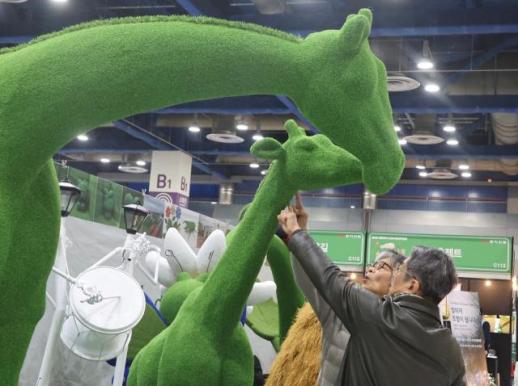 Expo in southern Seoul showcases latest gardening trends SEOUL, January 30 (AJP) -A gardening expo is underway in southern Seoul this week, giving visitors a chance to explore the latest trends in landscaping and gardening. The four-day expo, which runs until Feb. 1, features exhibitions related to landscaping and gardening along with various programs including special lectures, forums, and expert consultation booths in an effort to revitalize relevant industries. 2026-01-30 17:47:59
 -
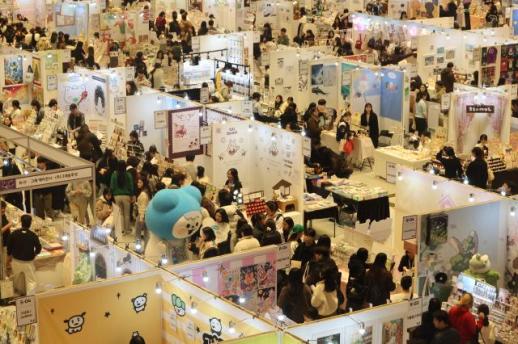 K-goods at Illustration Fair Seoul 2026 SEOUL, January 30 (AJP) - K-illustration Fair Seoul 2026 is taking place at COEX Hall D in Gangnam, Seoul. The fair opened on the 29th and runs through Feb. 1 for four days. Approximately 600 booths are showcasing a variety of domestic and international illustrations, independent publications, and merchandise. The event operates from 11 a.m. to 6 p.m. daily. The fair is scheduled to be held at BEXCO in Busan in July and at COEX Magok in August. 2026-01-30 17:40:07
 -
 Seoul metropolitan dance theater's 'One Dance' wins Bessie award in New York SEOUL, January 29 (AJP) - The Seoul Metropolitan Dance Theater's "One Dance" won the Outstanding Choreographer/Creator award at the New York Dance & Performance Awards, known as the Bessie Awards, in New York on Jan. 20 (local time). This marks the first time a Korean public arts organization has received a Bessie Award. The Bessie Awards selection committee described "One Dance" as "a visually captivating contemporary reinterpretation of Korean traditional ritual dance" that "demonstrates a perfect harmony of stillness and movement while reaching its climax with explosive and dynamic choreography." "One Dance" is a contemporary reinterpretation of ritual dance from "Jongmyo Jeryeak," a National Intangible Cultural Heritage and UNESCO Masterpiece of the Oral and Intangible Heritage of Humanity. The work premiered in 2022 and drew attention when it sold out all performances at New York's Lincoln Center in 2023. 2026-01-29 17:23:28