

Journalist

Han Jun-gu and Yoo Na-hyun
jungu141298@ajupress.com
-
 Seoul's triathlon festival lets participants go at their own pace SEOUL, June 06 (AJP) - Seoul’s “My Pace Hangang Triathlon Festival” kicked off its third edition on June 5 at Ttukseom and Jamsil Han River Parks, running through June 7. The sports festival challenges participants to complete swimming, cycling and running courses at their own pace, with no rankings or time pressure. This year's edition expanded its offerings with the addition of a new intermediate course alongside the existing beginner and advanced options. A 1km swimming course for foreign participants was also newly introduced. The beginner course consists of a 200–300m swim, 10km cycle, and 5km run, while the advanced course covers a 1km open-water swim across the Han River, a 20km cycle, and a 10km run. Registration costs 30,000 won, with morning (9–11 a.m.) and afternoon (1–5 p.m.) slots available. A highlight of this year's festival was "Hachi Island," a large floating structure shaped like Hachi, Seoul's official mascot, anchored on the Han River. Visitors could enjoy the aquatic playground built around it. On opening day, additional events included a drone light show, a non-alcoholic beer and chicken party, and a riverside concert by the Seoul Philharmonic Orchestra. The festival is also the flagship event of Seoul's year-round festival brand "Fun Seoul." Last year's edition drew 30,000 race participants and 660,000 total visitors. 2026-06-06 15:16:15
 -
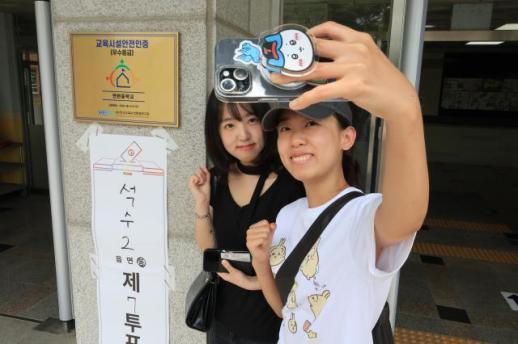 New voting culture takes shape among younger voters SEOUL, June 4 (AJP) - Voters turned out in record numbers for Wednesday's local elections, with final turnout reaching 61 percent, up 9.8 percentage points from 50.9 percent in the 2022 local elections. Early voting also hit a record high at 23.51 percent, up 2.89 percentage points from the previous local elections. But that tells only part of the story. At polling stations across the country, people did not just show up alone, as friends, couples, and families came together. After voting, many held up their ink-stamped fingers for photos. Throughout the day, social media filled with such images showing proof of voting. For younger voters, this shift has been building for years. What started as a simple fun among a generation who had largely ignored politics gradually turned into real engagement. By election day, that engagement had become more personal, with voters bringing their own values into the voting booth. The local elections, held every four years to choose city mayors, provincial governors, education superintendents, and other local officials, are now over. But for many voters, the habit of showing up may be taking root in a new form. 2026-06-04 18:56:04
 -
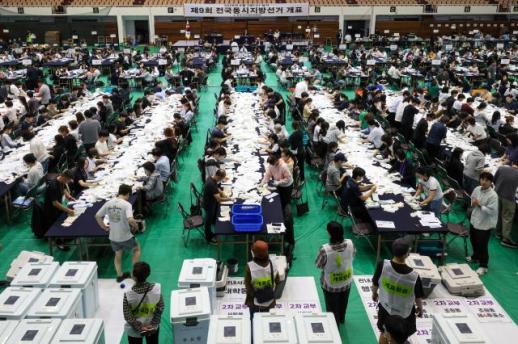 Counting begins as South Korea's local elections draw to a close SEOUL, June 03 (AJP) - Vote counting for the 9th National Simultaneous Local Elections got underway at approximately 7:10 p.m. on Wednesday at polling centers across the country, including the Gwanak-gu Election Commission counting station set up at Seoul National University gymnasium in Gwanak-gu, Seoul. The final voter turnout stood at 60.9 percent, based on figures tallied as of 6 p.m. Exit polls conducted jointly by KBS, MBC, and SBS projected the Democratic Party winning 11 of 16 mayoral and gubernatorial races, with People Power taking one and four too close to call. In Seoul, Democratic Party candidate Jeong Won-o was projected to lead with 51.4 percent against incumbent Oh Se-hoon of People Power at 46.0 percent. The results split the mood across party war rooms. Cheers broke out at the Democratic Party headquarters, while a heavy silence settled over People Power. Counting is expected to continue through the night. 2026-06-03 23:00:21
 -
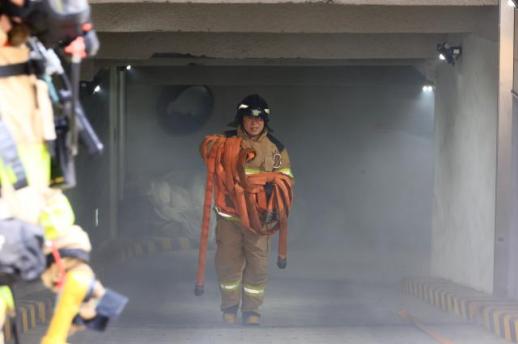 Voting continues despite fire in polling station building SEOUL, June 03 (AJP) - A fire broke out in the underground parking garage of the Sangdo 4-dong Community Complex in southwestern Seoul, at around 3:30 p.m. (0630 GMT) on Wednesday, election day. The blaze was extinguished in approximately five minutes and no injuries were reported. According to police, a citizen attempted to fight the fire using an extinguisher kept in his vehicle. Despite the noisy fire alarm, voting at the polling station on the third floor continued without interruption. Fire authorities said that they believe the fire originated in a pile of rubbish in the underground garage collection area. The cause of fire will be investigated, the rescuers said. 2026-06-03 18:36:48
 -
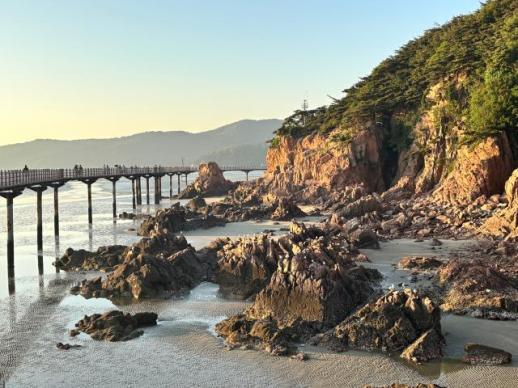 Incheon's Hanagae Beach opens for summer season SEOUL, June 1 (AJP) - At the far end of Muuido Island, a beach appears framed by rock formations. Where the tide has pulled back, vast tidal flats stretch out and barefoot visitors walk slowly across them. The official opening is June 20 — but Hanagae Beach has already ushered in summer. This summer's heat arrived earlier than usual. Incheon plans to open three beaches — Eurwangni, Wangsan, and Hanagae — simultaneously on June 20. Yet on June 1, Hanagae was already full, with families, couples, and solo travelers wading in. Some stood ankle-deep; others soaked their clothes to beat the heat. West Sea beaches are nothing like the East Coast. Here, the tidal flats come before the waves. The cool, yielding sensation underfoot is entirely different from the sandy shores of Gangwon. Children hunt for crabs; adults simply walk. The West Sea flats rank among the five greatest tidal systems in the world, and at Hanagae, that scale is felt through the feet. Visitors walk along boardwalk at Hanagae Beach in Incheon on June 1, 2026. AJP Han Jun-gu Running alongside the beach is a 550-meter marine boardwalk. On one side, rock formations including the Lion Rock; on the other, the open Yellow Sea. At high tide, waves crash against the cliffs; at low tide, rocks emerge from the mudflat. The landscape composes itself. Hanagae officially opens June 20. From Seoul Station: ninety minutes by car, two hours by transit. It will fill up fast. A little planning goes a long way. The sea is already here. It is only the opening date that is waiting. 2026-06-01 18:05:08
 -
 In South Korea, campaigns move indoors SEOUL, May 29 (AJP) -The streets used to shake. Candidate trucks blaring jingles, jackets every color of the rainbow, rallies spilling across every intersection. Growing up, elections were the noisiest thing Korea did. You knew one was coming before you checked the calendar — you could hear it. That was then. Now, with 4,227 seats on the line — governors, mayors, district chiefs, council seats, education offices — and a clutch of by-elections for lawmakers alongside the June 3 local vote, the campaign is louder than ever. You just can't hear it on the street. Seongsu-dong, a neighborhood of converted factories turned coffee shops, on a Thursday morning: a single row of candidate posters lines a brick wall between a specialty roaster and a nail salon. Nobody stops. Two women walk past without a glance. In the old playbook, this wall would have been fought over. The real war is happening in vertical video. Candidates produce Reels and Shorts the way they once printed leaflets — daily, disposable, precisely targeted. Ko Geum-ran runs a YouTube live channel. Lee Jae-jeong drops Shorts. Oh Se-hoon has a channel. Yong Hye-in has a dance challenge. Candidates who once measured success by how many hands they shook now track watch-time and comment sentiment. Young voters don't read the platform documents first. They watch the Shorts. Then they read the comments. A single slip in a debate becomes a clip in four hours. TV Hongka Cola — Hong Joon-pyo's long-running YouTube channel — pioneered the long-form political format that turned a politician's off-script moments into recurring content. The lesson was not lost on rivals. Every candidate now has someone in the room whose only job is to watch for the moment that will live forever as a screencap. This is what politics looks like when it crosses into entertainment. Park Seong-min and Kim Jae-seop — one from the Democratic Party, one from People Power — appeared together on Wavve's reality show Ideology Verification Zone: The Community. A few years ago that would have been unthinkable. Now it's a primary campaign channel. They talked about their daily lives, shared personal anecdotes, and let their guard down in ordinary conversation. For the first time, ordinary viewers could easily encounter the human side of their politicians. Proximity has become the whole strategy. Voters — especially younger ones — aren't just evaluating policy. They're asking: what kind of person is this? Political identity has stopped being an opinion and become a personality trait. Break from your candidate and you risk the group chat. Watching this election from the ground, what strikes me is how closely it resembles a K-pop fandom cycle. Candidate merchandise is collected. Support compilations are uploaded. Opposing fandoms clash in comment sections with the ferocity of stans. The algorithm, not the party machine, decides who goes viral. And yet. Anyang, Gyeonggi Province, a Thursday afternoon. A candidate's team is working a shopping-district corner with the old toolkit — jackets, handheld signs, a small speaker. Three women in their sixties stop and take a flyer. A man in his seventies photographs the banner with his phone. The crowd is almost entirely over fifty. For voters who cannot navigate kiosks or mobile authentication — and in a country where digital literacy drops sharply past seventy — the shift to online campaigning is not democratization. It is exclusion wearing a new brand identity. Banpo, southern Seoul, the morning of May 29. A man in his mid-forties stands outside a convenience store, thumbs working. He is searching for early-voting locations for the June 3 election. He doesn't look up. He finds what he needs. He puts the phone away and walks on. That's the election, right there. Quiet, individual, invisible to everyone around him. More young Koreans talk about politics than they did a decade ago. Whether they understand more is a harder question. What's certain is that the candidate who wins next week will have been decided, in large part, by an algorithm none of the voters can see and none of the candidates fully control. The trucks still drive the streets. The songs still play. But nobody's window is open. 2026-05-29 17:26:44
 -
 K-pop girl band aespa showcase new album SEOUL, May 28 (AJP) - K-pop girl band aespa showcased a new album at a hotel in southern Seoul on Thursday. Their second full-length album, "LEMONADE," which comes about two years after their first full-length album in May 2024, contains 10 songs including pre-released tracks such as "SHAKIN" and "WDA (Whole Different Animal)" featuring G-Dragon. The album's title track of the same name is an electronic dance tune driven by bold, trendy synth-bass sounds. Other tracks span a wide range of genres including "Switchblade" featuring American rapper Ty Dolla $ign. Upon the album's release, their songs are available on major music-streaming sites as of 1 p.m. 2026-05-28 15:21:05
 -
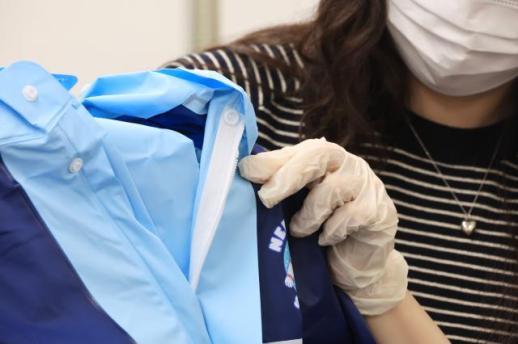 Be aware of hazardous substances in children's products sold online SEOUL, May 28 (AJP) - A slew of children's products purchased online from overseas websites have been found to pose safety concerns, according to a recent inspection. The Seoul Metropolitan Government inspected some 32 children's products including umbrellas, raincoats, clothing, and toys purchased from overseas online platforms such as AliExpress, Temu, and Shein, and found that 10 of them failed to meet safety guidelines set by the Ministry of Trade, Industry and Resources. Many were found to contain hazardous substances including lead, phthalate plasticizers, and nonylphenol, with some exceeding permitted limits by as much as 5.8 times. Safety hazards such as sharp edges and loosely attached umbrella ribs were also identified, prompting the city government to request that the platforms suspend sales of the affected products. The city government plans to conduct another round of inspections next month, along with follow-up measures. 2026-05-28 14:00:03
 -
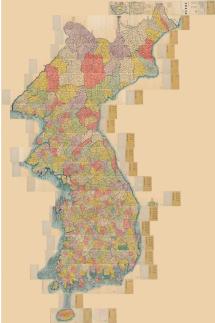 Historic map featuring Dokdo islets to be auctioned next week SEOUL, May 22 (AJP) - Daedongyeojido, a map of the Korean Peninsula, that includes South Korea's easternmost islets of Dokdo as part of its territory, is slated to go on auction in Seoul next week. According to Seoul Auction in southern Seoul, the hand-colored copy of the map created by famed geographer Kim Jeong-ho will be put up for auction next Thursday, along with about 145 works spanning modern and traditional Korean art, with a combined estimated value of about 10.3 billion won. Divided into 22 foldable sections for portability, the map, known for its detailed depiction of geography, measures roughly 3.9 meters in width and 6.85 meters in length when fully unfolded. "The map has scholarly significance because it includes the islets," said a Seoul Auction staffer, adding that it is historically valuable amid Japan's repeated claims of sovereignty over Dokdo. 2026-05-22 17:45:38
 -
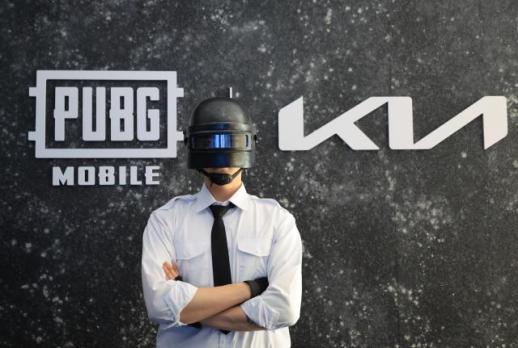 Blue zones and EVs: PUBG takes over Seongsu SEOUL, May 22 (AJP) -Seoul’s hip Seongsu district has turned into a real-world battleground — minus the gunfire, but with plenty of blue zones, laser combat and electric vehicles. To mark the eighth anniversary of PUBG Mobile, South Korean game publisher Krafton and Kia launched “Area 8,” an immersive pop-up event stretching across “PUBG Seongsu” and “Kia Unplugged Ground” through May 25. The collaboration transforms parts of Seongsu into a playable extension of the game world, blending PUBG’s survival mechanics with Kia’s EV lineup. At PUBG Seongsu, visitors are greeted by a giant blue-zone air dome modeled after the shrinking combat field familiar to PUBG players. Inside, blue ball pits, obstacle challenges and themed photo zones recreate the tension and chaos of surviving late into a match. Scattered throughout the venue are PUBG props and displays featuring the Kia EV4, turning the electric vehicle into part of the game environment rather than a showroom centerpiece. Nearby at Kia Unplugged Ground, the experience follows the rhythm of a PUBG round itself — landing, looting and combat. Visitors race EV4 RC cars through miniature courses and participate in team laser battles inspired by the game’s firefights, while staff dressed as PUBG’s iconic “Helmet Guy” guide players through missions and activities. The event also turns Seongsu itself into part of the gameplay. A stamp tour linking PUBG Seongsu and Kia Unplugged Ground encourages visitors to move between venues, effectively expanding “Area 8” beyond the walls of the installations and into the neighborhood’s streets and cafes. Rather than presenting cars as static products, Kia’s Kia EV3 and EV4 appear as interactive objects embedded inside PUBG’s universe — part marketing showcase, part urban game map. Staff dressed as PUBG’s iconic “Helmet Guy” character guide visitors through the venues, while Kia EV3 and EV4 models are presented as in-game style objects rather than traditional showroom displays. Visitors can also participate in a stamp tour linking PUBG Seongsu and Kia Unplugged Ground, turning the wider Seongsu area into an extension of the “Area 8” game world. 2026-05-22 16:49:16