

Journalist

Kim Hee-su
khs@ajpress.com
-
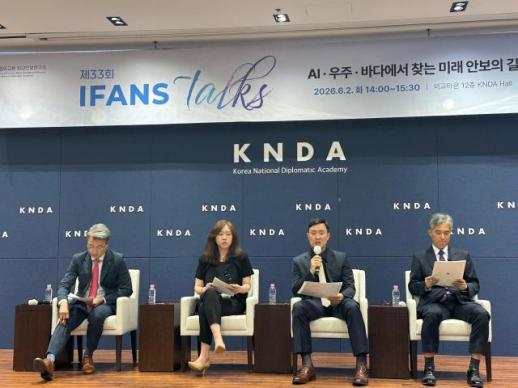 Future warfare makes diplomacy harder, but more vital, experts say SEOUL, June 02 (AJP) - As artificial intelligence, space assets, and maritime competition reshape the nature of warfare, diplomacy is not becoming obsolete but is becoming more important in preventing conflicts from escalating and setting rules for emerging military technologies, security experts said Tuesday. The remarks came during the 33rd Institute of Foreign Affairs and National Security (IFANS) Talks, a public lecture hosted by IFANS under the Korea National Diplomatic Academy, at the Korea National Diplomatic Academy, at the (KNDA) Hall in southern Seoul. Held under the theme “Finding the path to future security through AI, space and the sea,” the event brought together Sohn Han-byeol, a professor at Korea National Defense University, Um Jung-sik, a professor at the Korea Air Force Academy, and Ban Kil-joo, a professor at IFANS. During a Q&A session, the speakers addressed whether the rapid development of military technologies could weaken the role of diplomacy. Sohn said diplomacy will become more difficult, and more important, as advanced technologies lower the threshold for the use of force. “The role of diplomacy is not shrinking. It is becoming more difficult, and because it is becoming more difficult, it is becoming more important,” Sohn said. He said military technologies may allow states to strike faster and more precisely, but they cannot resolve the political causes of conflict. “Military victory and political termination are different,” he said. “Diplomacy is what fills that gap.” Sohn also said diplomacy in the AI era should focus on creating norms for new technologies, including autonomous weapons, AI-assisted targeting and drone attacks. “The empty space of norms is not the realm of the military or technology, but of diplomacy,” he said. He said South Korea could contribute to space cooperation with the United States by strengthening space domain awareness in Northeast Asia, where ground-based monitoring assets remain limited. “The United States is a global space power, but compared with other regions, ground-based space systems in Northeast Asia are relatively insufficient,” Um said. “South Korea can play a sufficient role in the alliance in ground-based space domain awareness.” Um also stressed that South Korea needs to recognize space as an independent operational domain. “Public satellites and commercial satellites floating in space are assets that our military must protect,” he said. “Who protects our commercial satellites?” Ban said maritime security is increasingly linked to energy security, food security, gray-zone competition and the rules-based order. He said South Korea must distinguish between China’s gray-zone activities and North Korea’s military threats when shaping maritime security responses. “China’s and North Korea’s threats are not on the same line,” Ban said. “Their nature and categories must be separated.” Ban said gray-zone threats at sea are not only a bilateral security issue but also a challenge to the rules-based maritime order. “Gray-zone threats weaken the rules-based order and the maritime rules-based order,” he said. “They need to be expanded to and handled by the international community.” Turning to the broader question of diplomacy, Ban said modern warfare does not signal the end of diplomacy. “I see this not as an era of the end of diplomacy, but as an era in which diplomacy must work harder,” Ban said, adding that defense capabilities and diplomacy should reinforce each other. “Diplomacy and deterrence have mutual synergy,” he said. “A virtuous cycle is possible.” Ban stressed that diplomacy is needed both during war and in peacetime. “Diplomacy is conducted even during war,” he said. “In the end, the end of a fight is diplomacy.” The discussion underscored a shared view among the speakers: as war expands into AI, space and the sea, diplomacy is not losing relevance. Instead, it is moving into more complex domains where rules remain unsettled, escalation risks are higher and national security depends on norms, partnerships and public awareness as much as on military power. 2026-06-02 17:56:45
 -
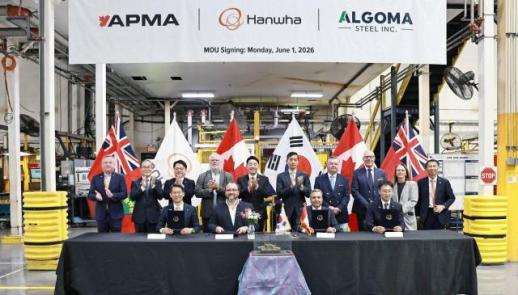 South Korea makes final all-out push for Canada's submarine bid SEOUL, June 2 (AJP) - South Korea is stepping up efforts to win Canada's next-generation submarine procurement project, as Ottawa is expected to select its preferred bidder by the end of June for a deal estimated to be worth US$40 billion. The final race for the Canadian Patrol Submarine Project, or CPSP, has increasingly narrowed into a competition between South Korea's "One Team" bid led by Hanwha Ocean and HD Hyundai Heavy Industries, and Germany's Thyssenkrupp Marine Systems, or TKMS, a long-established player in the diesel-electric submarine market. South Korea's push gained momentum this week as presidential chief of staff Kang Hoon-sik attended a business roundtable in Toronto, where companies from the two countries signed three memorandums of understanding in satellite communications, launch sites and defense vehicles. The business event came as Germany and Norway moved to counter Hanwha Ocean's key selling point — faster delivery — by offering to delay some of their own submarine deliveries to make room for Canada. German Defense Minister Boris Pistorius said TKMS could deliver four submarines to Canada by 2036 if it wins the bid, according to an interview with Canada's CBC News on the sidelines of CANSEC 2026, Canada's largest defense exhibition held in Ottawa last week. "They say they can, and I have only had good experiences with them, so I trust them," Pistorius told CBC News. "They promise only what they can actually achieve." TKMS has proposed its Type 212CD submarine, a model jointly developed by Germany and Norway. But the submarine remains in the design stage and has yet to enter operational service, raising questions over whether the German side could meet Canada's urgent delivery timeline. Hanwha Ocean, by contrast, has emphasized from the early stages of the competition that it can deliver four KSS-III submarines to Canada by 2035. That date is crucial for Ottawa, as the Royal Canadian Navy aims to retire all four of its aging Victoria-class submarines by 2035. Only one of the four is currently believed to be available for operations, making replacement an urgent priority. Pistorius said Germany and Norway, both existing customers of the Type 212CD, had agreed to delay one submarine each from their own orders to allow Canada to receive earlier deliveries. The remaining two vessels, he said, could be produced at an accelerated pace by TKMS. Marte Gerhardsen, state secretary at Norway's Ministry of Defense, also said bringing Canada into the program would strengthen the overall submarine fleet, even if Norway has to wait longer for one of its submarines. "We do not think of the submarine fleet as a Norwegian fleet, a German fleet and a Canadian fleet," Gerhardsen told CBC News. "We think of it as a common fleet." Germany has also offered a broader economic package tied to the submarine bid, including investments in military and non-military projects in Canada, according to CBC News. The proposals reportedly cover carbon capture, LNG exports, torpedo production and hypersonic missile development. South Korea has also pledged similar industrial cooperation if it wins the contract, but Germany is seeking to differentiate its proposal by stressing that many of its projects could begin within two years. Canadian Prime Minister Mark Carney and Defense Procurement Minister Stephen Fuhr have said both Germany's Type 212CD and Korea's KSS-III meet the Royal Canadian Navy's requirements, with a decision expected by the end of June. Carney said last week that the decision goes beyond military requirements. "It is certainly about economic impact, the broader economic benefits," Carney told reporters. Hanwha is seeking to frame its submarine bid as part of a wider defense and industrial partnership with Canada. Representatives from Algoma Steel, Hanwha and Ontario-based auto parts makers recently signed an agreement at a Martinrea International facility near Toronto. Under the plan, Algoma would supply steel to a Canadian consortium if Hanwha wins the submarine contract. Algoma joins Hanwha and the Automotive Parts Manufacturers' Association, which agreed recently to jointly develop and manufacture fighting vehicles for the Canadian Armed Forces and allies. In a separate pact, Hanwha has also agreed to invest in Algoma. The proposed Canadian joint venture would be 51 percent Canadian-owned and use domestic steel and workers, with Hanwha providing expertise, technology and experience, as well as investment. "They are not just interested in supplying submarines to Canada," Martinrea chairman Rob Wildeboer said. "They want to do much more in working with industry in Ontario and Canada to develop defense capabilities." Korea also used CANSEC 2026 as a final opportunity to promote its submarine bid. Hanwha Ocean put its proposed KSS-III Batch-II model at the center of its campaign, stressing that Korea already operates a proven submarine platform. The Korean Navy's 3,000-ton Dosan Ahn Chang-ho submarine has also played a supporting role. After completing a 14,000-kilometer voyage across the Pacific, the submarine arrived at the Esquimalt naval base in Victoria, British Columbia on May 23. The strategy has drawn attention in Canada, with local media quoting one Canadian naval official as comparing the experience of boarding the Korean submarine to switching from a 1999 Honda Civic to a new Tesla. With the final decision approaching, the competition is increasingly becoming not only a submarine procurement race, but also a test of which country can offer Canada a broader strategic and industrial partnership. 2026-06-02 17:26:28
 -
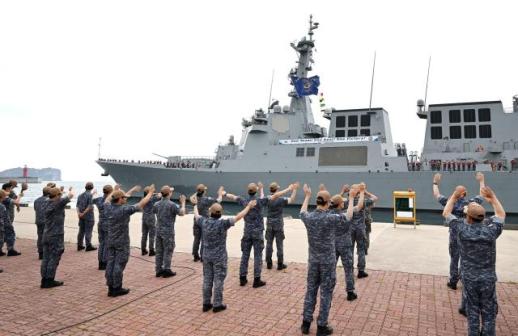 Korean Navy to join RIMPAC, take first command role in multinational maritime exercise SEOUL, June 02 (AJP) - South Korea’s Navy said Monday its Aegis destroyer Jeongjo the Great will depart for the Rim of the Pacific exercise (RIMPAC), marking the first time the service will assume a major command role in the U.S.-led multinational maritime drill. The 8,200-ton destroyer left Jeju Naval Base on Monday and will join the exercise, which will take place in waters off Hawaii from late June through July, according to the Navy. It will be the first RIMPAC participation for the Jeongjo the Great, which was commissioned in December 2024. The 3,000-ton submarine Dosan Ahn Chang-ho and the P-8A maritime patrol aircraft will also take part in the exercise for the first time. The Dosan Ahn Chang-ho, along with the frigate Daejeon, will move to Hawaii after completing a combined cooperation exercise with Canada. The landing ship Cheonjabong is also set to head to Hawaii after conducting a search and rescue exercise, or SAREX, with Japan’s Aegis destroyer Kongo in international waters southeast of Jeju on June 7. RIMPAC is a biennial multinational naval exercise hosted by the U.S. 3rd Fleet to enhance participating countries’ ability to protect sea lines of communication, respond jointly to maritime threats and improve interoperability and operational capabilities among allied and partner forces. This year marks the 30th edition of the exercise. South Korea first joined RIMPAC in 1990 and will be participating for the 19th time this year. During this year’s exercise, the South Korean military will serve for the first time as the Combined Force Maritime Component Commander, or CFMCC. South Korea will become the fourth country to take on the role and the first Asian country to do so. The Navy said the exercise is expected to provide an opportunity to strengthen South Korea’s military capabilities ahead of the planned transfer of wartime operational control from Washington to Seoul. Rear Adm. Kim In-ho, commander of the Republic of Korea Navy’s Maritime Task Flotilla and the officer who will serve as the CFMCC, said the assignment marks a shift in South Korea’s role from a participating country to a command nation. “Taking on the command role for the first time means we have moved beyond being a participating country and have advanced to the position of a command nation,” Kim said. 2026-06-02 10:48:20
 -
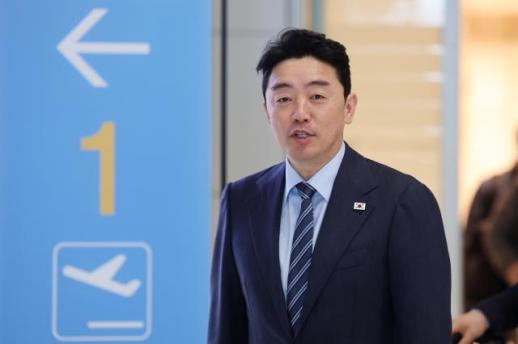 Korea, Canada deepen advanced industry ties with MOUs in defense, space sectors SEOUL, June 02 (AJP) - South Korea and Canada discussed ways to expand cooperation in advanced industries, with companies from the two countries signing three memorandums of understanding in the defense and space sectors, Seoul's industry ministry said Monday. The Korea-Canada Advanced Industry Cooperation Business Roundtable was held at the Park Hyatt Toronto hotel, organized by the Korea Trade-Investment Promotion Agency, or KOTRA, according to the Ministry of Trade, Industry and Resource. The event brought together about 50 government officials and business leaders from both countries in key sectors such as defense, space and hydrogen. Attendees included Presidential Chief of Staff Kang Hoon-sik, Vice Industry Minister Moon Shin-hak, Defense Acquisition Program Administration Minister Lee Yong-cheol and Stephen Lecce, Ontario's minister of energy and mines. The roundtable was designed to discuss concrete cooperation projects between Korean and Canadian companies in promising future industries, including defense, space and hydrogen, while exploring possible government support measures. During the event, Hanwha presented ways to expand cooperation between the two countries in the defense and space sectors, while Hyundai Motor introduced potential cooperation in the hydrogen sector, including hydrogen projects in Canada. “If Canada’s abundant resources and advanced technologies are combined with Korea’s world-class manufacturing capabilities, the two countries will be able to lead the global market in advanced industries,” Kang said. He also stressed that industrial cooperation between the two countries should go beyond simple purchasing and supply arrangements and develop into an ecosystem that connects technology, security and talent. As part of the visit, the special delegation for strategic economic cooperation also visited Martinrea, one of the key parties involved in an MOU signed in April between Hanwha and Canada’s Automotive Parts Manufacturers’ Association. The ministry said the event led to three MOUs between Korean and Canadian companies in satellite communications, launch sites and defense vehicles. Kang left for Canada on Sunday as President Lee Jae Myung’s special envoy for strategic economic cooperation, accompanied by officials from the industry and foreign ministries, as well as companies and organizations in energy, resources, supply chains and advanced industries. During the trip, Kang and other officials are also expected to support Korean companies seeking to win Canada’s submarine procurement project. 2026-06-02 10:03:14
 -
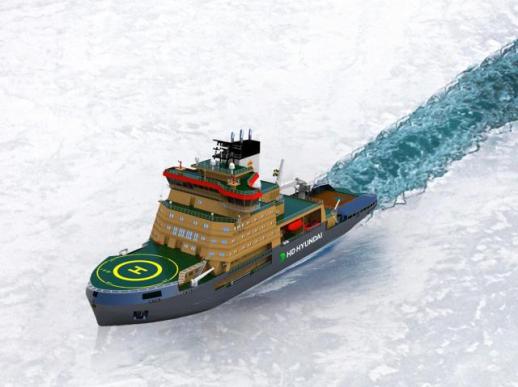 HD Hyundai Heavy Industries begins Sweden icebreaker project SEOUL, May 29 (AJP) - HD Hyundai Heavy Industries has begun work on an icebreaker project it won from Sweden, marking the first overseas icebreaker contract secured by a South Korean shipyard. The company said Thursday that eight officials from Sweden, including Erik Eklund, director general of the Swedish Maritime Administration, and Johannes Andreasson, deputy head of mission at the Swedish Embassy in Seoul, visited its shipyard in Ulsan on Wednesday for a kickoff meeting on the project. HD Hyundai Heavy Industries earlier won a $348.9 million contract from the Swedish Maritime Administration to build one icebreaker. The vessel is scheduled to be delivered in 2029. During the visit, the Swedish delegation toured the company’s large commercial vessel yard as well as its naval and mid-sized vessel construction facilities. They also inspected its smart shipbuilding facilities, including automated equipment and advanced production systems. The two sides then held a kickoff meeting to discuss the project schedule, design and quality control plans, and cooperation framework for the construction of the icebreaker. The vessel will be designed to operate safely in the extreme conditions of the Baltic Sea in Northern Europe. HD Hyundai Heavy Industries said it plans to apply the latest eco-friendly and high-efficiency technologies to build an advanced icebreaker that meets the Swedish Maritime Administration’s operational requirements. The company said it plans to use the project as a springboard to expand its presence in the global icebreaker market. It also aims to respond to possible additional orders from the Swedish Maritime Administration and growing demand for icebreakers from countries such as the United States and Canada. “We will do our best to successfully build the icebreaker through cooperation with the Swedish government and the Swedish Maritime Administration,” said Joo Won-ho, head of naval and special ship business at HD Hyundai Heavy Industries. “We hope this project will further strengthen shipbuilding and maritime cooperation between South Korea and Sweden.” 2026-05-29 16:54:30
 -
 US House bill broadens guardrails against USFK troop cuts amid China rivalry SEOUL, May 29 (AJP) - A new U.S. House defense bill seeks to strengthen congressional guardrails against any reduction of American troops in South Korea, at a time when the role of U.S. Forces Korea is increasingly being discussed in the broader context of Washington’s Indo-Pacific strategy and rivalry with China. The chairman’s mark of the fiscal 2027 National Defense Authorization Act, or NDAA, would amend a provision in the fiscal 2026 defense law that restricts the use of funds to reduce the number of U.S. troops stationed in or deployed to South Korea below 28,500. Under the 2026 NDAA, funds authorized by that law cannot be used to cut the U.S. military presence in South Korea below the current level or to complete a transfer of wartime operational control of the South Korea-U.S. Combined Forces Command in a way that deviates from a bilaterally agreed plan, unless the defense secretary submits required certifications and assessments to Congress. The 2027 House draft goes a step further by broadening the funding restriction. Instead of applying only to amounts authorized under the NDAA itself, the draft would prohibit the use of funds “authorized to be appropriated by this Act or otherwise made available for fiscal years 2026 or 2027” for such purposes. The change appears aimed at closing a potential loophole that could allow the administration to use other defense funds to carry out troop reductions, even if NDAA-authorized funds were restricted. If enacted, the provision would make it harder for the executive branch to move forward with a unilateral or rapid reduction in U.S. Forces Korea without first going through congressional oversight procedures. The provision comes amid lingering concerns in Seoul that the Trump administration could push for a reshaping of U.S. overseas military posture as part of its broader pressure campaign on allies to shoulder more defense costs and take on larger regional security roles. “The U.S. will not be able to act entirely on its own,” said Koh Yu-hwan, a professor of North Korean studies at Dongguk University. “Given its strategic competition with China, it would be difficult for Washington to reduce U.S. Forces Korea significantly. It may be able to scale back some ground troops, but there is little reason to move them to Japan or Guam, especially when Camp Humphreys in Pyeongtaek is such an advanced and well-established base.” Koh said Washington may still pressure Seoul over defense cost-sharing or other alliance issues, but the strategic value of the U.S. military presence in South Korea remains too important to abandon. “For South Korea, even the symbolic presence of U.S. troops serves as a deterrent,” he said. “For the United States, there are few locations as strategically useful as South Korea when it comes to keeping China — and even Russia — in check.” During Trump’s first term, the possibility of reducing U.S. troops in South Korea repeatedly surfaced alongside contentious defense cost-sharing negotiations. Congress responded at the time by inserting troop-level safeguards into annual defense policy bills. Similar concerns have resurfaced since Trump returned to office, particularly as his administration has reviewed U.S. force posture in Europe and other regions. The House draft does not itself order the United States to maintain troops in South Korea permanently, nor does it eliminate the possibility of a reduction. But it would require the defense secretary, in consultation with senior military, diplomatic and intelligence officials, to certify that any reduction below 28,500 is in the national security interest of the United States and follows consultations with allies, including South Korea and Japan. The required assessment would also have to analyze the impact of such a reduction on U.S., South Korean and Japanese security, U.S. deterrence, the defense posture of U.S. Indo-Pacific Command and the ability of American forces to carry out contingency plans, including operations beyond the Korean Peninsula. That last point is drawing renewed attention after Gen. Xavier Brunson, commander of U.S. Forces Korea, recently described South Korea as a “dagger” in the heart of Asia from China’s strategic perspective. His remarks underscored Washington’s growing view of the Korean Peninsula not only as a frontline against North Korea but also as a key strategic location in the wider Indo-Pacific theater. Brunson has also previously emphasized the need for closer operational links among South Korea, Japan and the Philippines, reflecting the U.S. military’s push to build a more networked regional deterrence posture. For Seoul, the developments point to a two-sided challenge. On one hand, the House NDAA language could reassure South Korea by making abrupt U.S. troop cuts more difficult. On the other hand, the growing emphasis on the peninsula’s strategic value in a potential China-related contingency could fuel debate over how far South Korea should align with U.S. regional operations beyond deterring North Korea. The Chinese Embassy in Seoul has strongly criticized Brunson's remarks, portraying South Korea and USFK as a forward base aimed at China, warning that he had “clearly crossed the line.” The bill remains a draft and must still go through committee deliberations, House passage and negotiations with the Senate before becoming law. But the language offers an early signal that Congress is seeking to preserve oversight over U.S. force posture in South Korea as the Trump administration weighs broader changes to America’s global military footprint. 2026-05-29 16:01:38
 -
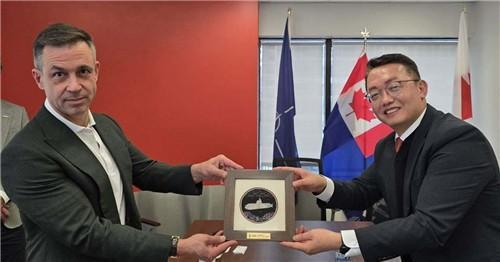 HD Hyundai Heavy strengthens Davie ties in push for Canada submarine deal SEOUL, May 29 (AJP) - HD Hyundai Heavy Industries is stepping up its campaign to win Canada’s submarine procurement project by strengthening ties with Davie Shipbuilding, Canada’s largest shipyard. The company said Thursday that its executives met with senior officials from Davie Shipbuilding at the Canadian shipbuilder’s Ottawa office on May 26 to discuss ways to strengthen strategic cooperation across shipbuilding and naval vessel projects. The meeting was attended by Park Yong-yeol, head of HD Hyundai Heavy Industries’ naval ship business division, and James Davies, chief executive officer of Davie Shipbuilding. During the meeting, HD Hyundai Heavy Industries highlighted its shipbuilding technologies as the world’s largest shipbuilder and promoted the strengths of South Korea’s K-submarine platform. The two sides also exchanged views on possible cooperation to contribute to the development of Canada’s shipbuilding industry. Davie Shipbuilding, based in Quebec, is Canada’s largest shipyard and has a long history dating back to the early 19th century. It has experience building a wide range of vessels, including icebreakers, offshore plants and naval support ships. As Davie also owns Helsinki Shipyard in Finland, cooperation between the two companies is expected to develop into a long-term strategic partnership combining HD Hyundai Heavy Industries’ technology with Davie’s local infrastructure, potentially extending into the Arctic market. HD Hyundai Heavy Industries executives, including HD Hyundai Heavy Industries President Joo Won-ho, also attended a welcoming ceremony for the ROKS Dosan Ahn Chang-ho at Esquimalt naval base in Victoria, British Columbia, on May 23, as well as a reception hosted by South Korea’s ambassador to Canada. At the events, the company promoted the strengths of South Korea’s submarine technology to key local figures, adding momentum to its final push for the contract. “Together with Canada’s leading shipyards, including Davie Shipbuilding and Irving Shipbuilding, we are working to share capabilities and expand business areas in shipbuilding and naval vessel projects,” Joo said. “We will do our utmost to help South Korean companies work together to win Canada’s submarine project by taking the lead in shipbuilding cooperation with Canada.” In January, HD Hyundai proposed a multitrillion-won cooperation package for Canada’s submarine project, including plans for HD Hyundai Oilbank to import Canadian crude oil and for the group to share shipbuilding know-how with local shipyards while offering consulting on submarine operation and maintenance. 2026-05-29 13:39:19
 -
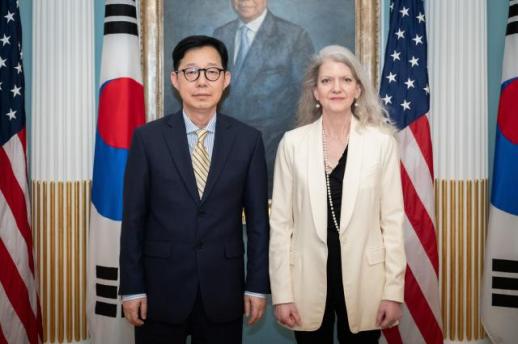 Korea, US to open talks on nuclear submarine, uranium enrichment rights SEOUL, May 29 (AJP) - South Korea and the U.S. will hold talks in Seoul next week on implementing agreements reached by their leaders, including Seoul’s plan to build a nuclear-powered submarine, the Foreign Ministry said Friday. The meeting is scheduled to take place in Seoul from June 2 to 3 to discuss follow-up measures in the security field under the Joint Fact Sheet issued last November after the Korea-U.S. summit, according to the ministry. South Korea’s delegation will be led by First Vice Foreign Minister Park Yoon-joo and include officials from key security, energy, science, industry and nuclear safety agencies. The U.S. delegation will be led by Allison Hooker, under secretary of state for political affairs, and include officials from the NSC, State Department, Energy Department and Department of War. The State Department also said Hooker will visit South Korea from June 1 to 3, leading an interagency delegation to advance nuclear cooperation initiatives reached during U.S. President Donald Trump’s visit to South Korea last October. The meeting is expected to cover key security-related agenda items agreed upon by the two leaders, including the construction of nuclear-powered submarines, Seoul’s push to secure uranium enrichment and spent fuel reprocessing rights, and shipbuilding cooperation. The South Korean government believes a separate agreement with the U.S. is needed for Washington to supply military nuclear fuel for the planned nuclear-powered submarine. For uranium enrichment and spent fuel reprocessing for civilian nuclear power generation, Seoul would need to revise the existing Korea-U.S. agreement on the peaceful use of nuclear energy. The government has reportedly been preparing closely with the U.S. at the working level so the launch meeting can produce substantive progress rather than remain a courtesy meeting. Seoul is seeking to advance the security agreements as much as possible during Trump’s term, as nonproliferation concerns remain strong in Washington. The meeting had initially been expected to take place earlier this year, but was delayed as Washington raised issues related to South Korea’s investment in the U.S. and Coupang, while also focusing on the Iran war and the U.S.-China summit. Hooker is also expected to discuss other pending issues during her visit. The State Department said Hooker will discuss a range of bilateral and global issues with South Korean officials to strengthen the alliance, including cooperation in security and economic affairs. “The U.S.-ROK Alliance remains the linchpin of peace and security on the Korean Peninsula and across the Indo-Pacific region,” it said. 2026-05-29 09:55:23
 -
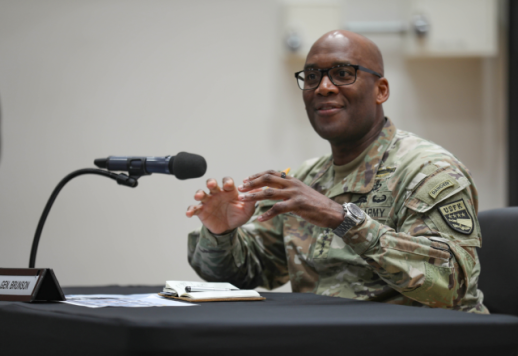 Chinese Embassy says USFK chief 'crossed the line' with 'dagger' remarks on Korea SEOUL, May 28 (AJP) - The Chinese Embassy in Seoul has strongly criticized Gen. Xavier Brunson, commander of U.S. Forces Korea, after he described South Korea as a “dagger” in Asia from China’s strategic perspective. In a written response to reporters Thursday, the embassy said Brunson’s recent remarks portrayed South Korea and USFK as a forward base aimed at China, warning that he had “clearly crossed the line.” Brunson said in a U.S. Army War College podcast released on May 22 that “when they look out from the east coast of China, what they see is Korea, the dagger in the heart of Asia,” emphasizing South Korea’s geographic importance and the role of U.S. troops on the peninsula in countering China. Last year, he also described South Korea as “an island or a stationary aircraft carrier” between China and Japan. “Is describing USFK as an aircraft carrier or a dagger an act of belligerence, or is it intended to take other countries hostage?” a spokesperson for the Chinese Embassy said. Referring to a recent summit between the U.S. and Chinese leaders, where the two sides agreed to build a constructive and strategically stable relationship, the spokesperson also questioned whether Brunson’s remarks had been approved by Washington. “Were your hostile and aggressive remarks toward China approved by Washington, or are they intended to undermine the agreement reached at the U.S.-China summit?” the spokesperson said. The embassy also noted that some South Korean media outlets had criticized Brunson’s remarks, urging the USFK commander to show greater respect for countries in the region. “We hope the commander of U.S. Forces Korea will make greater efforts to respect regional countries and promote regional peace and stability,” the spokesperson said. The embassy’s response appears to reflect Beijing’s growing concern that Washington is seeking to draw South Korea further into efforts to contain China, as the U.S. pushes to expand the strategic flexibility of USFK beyond deterring North Korea to potential regional contingencies, including in the Taiwan Strait. 2026-05-28 17:41:00
 -
 Weak Iranian missiles — not ship armor — explain limited damage to HMM Namu: experts SEOUL, May 28 (AJP) - South Korea's conclusion that the cargo ship HMM Namu—damaged near the Strait of Hormuz on May 4—was likely hit by Iranian missiles has raised a simple question: how did a commercial vessel survive two direct strikes with only minor damage? Defense experts say the answer lies not in the ship's structural strength, but in the missiles' limited performance. The question arose after Seoul announced Wednesday that the two unidentified projectiles that struck the South Korean vessel were likely Noor-class anti-ship missiles, developed and produced by Iran. Investigators said the warhead found at the scene matched the section marked in red in a manufacturer’s catalog image of an anti-ship missile, while other debris appeared to be engine components. “For now, multiple pieces of evidence point toward Iran,” First Vice Foreign Minister Park Yoon-joo said at a briefing. The Noor is a mainstay of Iran’s anti-ship arsenal, developed in the early 2000s by reverse-engineering the Chinese-made C-802 cruise missile. The weapon uses “sea-skimming” technology, flying just 5 to 15 meters above the water’s surface to evade radar detection. Investigators said this low-altitude flight profile aligns with the damage sustained by the HMM Namu, which was reportedly struck near the waterline on the lower section of its hull. Experts cautioned, however, against interpreting the absence of casualties and the relatively limited damage as evidence that the Chinese-built container ship possessed exceptional defensive capability. Jeong Kyung-woon, a researcher at the Korea Military Affairs Institute, said standard anti-ship cruise missiles are designed to sink warships with compartmentalized structures and typically carry warheads containing around 450 kilograms of explosives. “If an ordinary commercial vessel were hit by two such missiles, it would be torn apart,” Jeong said. He said the scale of damage to the Namu suggests the missiles may have carried warheads with only a fraction of the typical explosive power. “The level of damage seen on the Namu appears normal, considering that the warhead of the Iranian anti-ship missile is estimated to have had about one-tenth the power of a standard anti-ship cruise missile,” he said. Jeong added that merchant ships are generally designed for cargo transport and safe navigation, not to withstand missile strikes. The Noor missile has repeatedly drawn attention from military analysts and foreign media because of its past use by Iran-backed groups. It is often cited in connection with the 2006 attack on the Israeli Navy corvette INS Hanit off the coast of Lebanon, when Hezbollah reportedly used an Iranian-supplied anti-ship missile to strike the vessel. The British military journal Wavell Room has also described the Noor as part of what it called the “Houthi model” of proxy warfare, pointing to Iran’s long-running transfer of missiles and components to members of its so-called “Axis of Resistance,” including groups in Syria, Hezbollah in Lebanon and Houthi rebels in Yemen. Kim Houng-yu, a member of the Korea Defense Industry Association, offered a similar assessment, saying the limited damage was more likely due to shortcomings in the missile system than the ship’s strength. “One of the two missiles did not explode,” Kim said, noting that a warhead must detonate properly through its fuse to achieve its intended destructive effect. “Since Iran faces severe restrictions on importing military hardware or securing proper supply chains, it is highly probable they are relying on crude, locally produced alternatives manufactured in makeshift facilities,” Kim explained. “In my view, it was not that the ship was strong enough to withstand the strike, but that the missile’s performance was fundamentally deficient.” Following the announcement, Park summoned Iranian Ambassador to South Korea Saeed Koozechi to the Foreign Ministry in Seoul later Wednesday. However, Park also acknowledged the difficulty of determining whether the attack was intentional, saying it would be “extremely difficult” to establish intent unless Iran itself acknowledges it. Koozechi expressed regret over the damage to the Korean vessel but denied any Iranian involvement. “I would like to express regret over the damage suffered by the Korean vessel,” he told reporters. But when asked whether Iran would apologize, he said Tehran “denies everything” related to the incident and had “absolutely no involvement.” During Thursday’s press briefing, Foreign Ministry spokesperson Park Il again stopped short of identifying the specific actor responsible, saying it remains “very difficult” to determine who inside Iran carried out the attack. The remarks suggested that Seoul is not yet able to specify whether the strike was conducted by Iran’s regular military, the Islamic Revolutionary Guard Corps, Houthi rebels or other Iran-backed militia groups. The ministry also stressed that the government’s response would take into account the safety of Korean vessels and crew members still operating near the Strait of Hormuz, the protection of Korean nationals and companies in the Middle East, energy supply chain stability and broader South Korea-Iran relations. “At the time of the incident, military tensions around the Strait of Hormuz were extremely high, and vessels from other countries, including China and France, were also attacked around the same time,” Park said. “The government will respond while taking those circumstances into account.” The case comes as South Korea continues diplomatic efforts to ensure the safe passage of Korean-linked vessels near the Strait of Hormuz, a key maritime route for global energy shipments. 2026-05-28 17:17:12