
Journalist

AJP
khs@ajunews.com
-
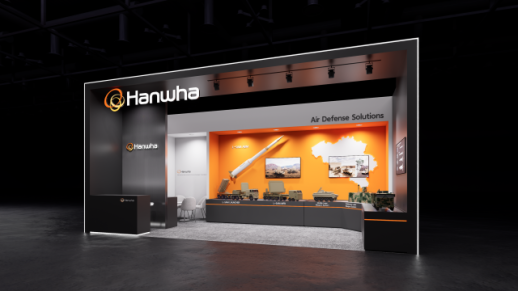 Hanwha showcases 'Korean THAAD' L-SAM at Belgium defense expo SEOUL, March 11 (AJP) - Hanwha is set to showcase its long-range surface-to-air missile interceptor, known as the “Korean THAAD,” at the BEDEX defense exhibition in Belgium as it seeks to expand its presence in the European defense market. Hanwha Aerospace and Hanwha Systems said Tuesday they are participating in BEDEX, a defense exhibition taking place in Brussels from March 12 to 14, marking the first time a South Korean company has taken part in the event. The exhibition, being held in Belgium for the first time, brings together major global defense companies including Rheinmetall, KNDS and Raytheon, alongside other European and international defense firms. Hanwha said its early participation in the exhibition — held in a country that hosts the headquarters of NATO — is part of a broader strategy to accelerate its push into the Western European defense market. Belgium is currently prioritizing the development of a multilayered air defense system as a key national defense objective. In response, Hanwha Aerospace is displaying its long-range surface-to-air missile (L-SAM) interceptor and launcher, while Hanwha Systems is presenting its multifunction radar (MFR), the laser-based air defense weapon system Cheongwang, and a laser-equipped armored vehicle currently under development. The L-SAM, often referred to as the Korean version of the Terminal High Altitude Area Defense (THAAD) system, is designed to intercept ballistic missiles at altitudes above 40 kilometers using a hit-to-kill method. The system completed development in 2024 and entered mass production last year. Because it can intercept fast-falling medium-range ballistic missiles from high altitudes, the system enables rapid responses to incoming threats. Hanwha also plans to emphasize that it can support swift deployment tailored to European requirements, as countries across the region accelerate efforts to strengthen their air defense networks. “Belgium is a key hub for European security, hosting NATO headquarters and major institutions of the European Union,” a Hanwha official said. “Building on our status as a strategic partner to NATO established through exports such as the K9 self-propelled howitzer, we aim to promote Hanwha’s air defense and ground firepower capabilities in the European market and explore cooperation opportunities to help strengthen the defense capabilities of NATO member states.” 2026-03-11 16:24:16
 -
 USFK diverts air-defense assets to Middle East as Freedom Shield scales back SEOUL, March 10 (AJP) - The United States has redeployed portions of its air-defense architecture from South Korea to the Middle East as tensions with Iran escalate, coinciding with this year's scaled-back Freedom Shield (FS) joint exercise. According to reports from the Washington Post and real-time flight tracking data, the Pentagon has shifted elements of the Terminal High Altitude Area Defense (THAAD) system out of South Korea while also drawing Patriot interceptor units from the Indo-Pacific theater to counter rising threats of Iranian drone and ballistic missile attacks. Between late February and March 10, 11 C-17 Globemaster III transport aircraft and two C-5 Galaxy heavy airlifters were tracked departing Osan Air Base, a key U.S. Air Force logistics hub south of Seoul. The C-5 — the largest transport aircraft in the U.S. inventory — is capable of carrying an entire Patriot PAC-3 missile battery in a single lift, suggesting that air-defense equipment may have been among the cargo moved out of the peninsula. U.S. officials have described the redeployments as precautionary steps designed to reinforce defenses in the Gulf region should Iran retaliate against U.S. and allied forces following recent strikes. South Korean officials have effectively acknowledged the movement of assets while stressing that such decisions ultimately rest with Washington. President Lee Jae Myung said Tuesday that while Seoul expects U.S. Forces Korea (USFK) to remain committed to maintaining stability on the peninsula, it cannot fully dictate how U.S. military assets are employed globally. “Given that USFK contributes to peace and stability on the Korean Peninsula, we naturally hope its capabilities remain focused here,” Lee said. “However, it is also a reality that we cannot completely prevent the United States from relocating certain defensive systems according to its military needs.” Lee sought to ease concerns about potential gaps in air defense at a time when North Korea continues to advance its missile and nuclear programs. “Considering our defense spending, the development of our defense industry and our international military standing, there is no reason for concern about national security,” he said. The redeployment coincides with the launch of Freedom Shield 2026, the annual combined command-post and field exercise between the U.S. and South Korea, which runs through March 19 and involves roughly 18,000 personnel. This year’s drills place particular emphasis on verifying conditions required for the transfer of wartime operational control (OPCON) from Washington to Seoul — a process the allies are expected to target for completion by 2028, potentially aligning with the current terms of Presidents Lee and Donald Trump. The allies are currently conducting the Full Operational Capability (FOC) assessment, the second stage of a three-step transition process. If the FOC evaluation is approved, the alliance will move to the final Full Mission Capability (FMC) phase in 2027 before the formal transfer of operational control. At the same time, the Lee administration has shifted the structure of Freedom Shield exercises. Rather than concentrating on large-scale Field Training Exercises (FTX), the military has moved toward a more dispersed, year-round training model. This year’s FTX component has been reduced to 22 drills, down sharply from 51 last year, a change that analysts say could help ease tensions on the peninsula ahead of renewed diplomatic engagement between Washington and Pyongyang. President Trump is scheduled to visit China from March 31 to April 2, a trip that could reopen discussions on North Korea. Some military analysts say the redeployment of U.S. defensive systems is unlikely to significantly weaken deterrence against North Korea. Jung Kyeong-woon, a research fellow at the Korea Association of Military Studies, said the assets moved out of the peninsula likely involve reserve equipment and munitions rather than operational frontline units. Similarly, Koh Yu-hwan, former president of the Korea Institute for National Unification, said Pyongyang currently appears focused on signaling rather than escalation. “The fact that Kim Yo-jong issued a statement protesting the exercises suggests the North is reacting to U.S. military pressure rather than preparing offensive action,” Koh said. “Even if minor logistical gaps arise, the core deterrent remains the ROK-U.S. alliance.” North Korea has nonetheless responded sharply to the drills. Kim Yo-jong, the powerful sister of leader Kim Jong-un, warned that the “provocative and aggressive war simulations” conducted by the allies could lead to “unimaginably terrible consequences.” Both USFK and the South Korean military declined to confirm specific details of asset movements, citing operational security. They stressed that the alliance maintains what they described as an “ironclad combined defense posture” to ensure there are no security gaps on the peninsula. 2026-03-10 16:38:03
 -
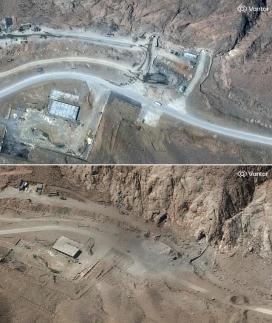 Travel time suggests USFK assets may join Iran nuclear raid SEOUL, March 09 (AJP) - As Tehran remains defiant with the war entering its second week, intelligence signals suggest the United States and Israel are preparing for a potential special forces raid on Iranian nuclear facilities — an operation that could involve key air defense assets stationed in South Korea. Defense authorities in Seoul and Washington stressed Monday that the combined defense posture on the Korean Peninsula remains “ironclad,” regardless of any tactical redeployment. Major international outlets including Bloomberg and Axios reported Monday that the U.S. Department of Defense and the Israeli military are finalizing plans for the latter phase of “Operation Epic Fury.” The objective would be to secure or destroy roughly 450 kilograms of uranium enriched to 60 percent believed to be hidden inside underground tunnels in Isfahan, Iran. Uranium enriched to 60 percent — considered near weapons-grade — can be further refined to weapons-grade levels of 90 percent within weeks. Experts estimate the amount in question could be sufficient to produce as many as 11 nuclear bombs. Most of Iran’s highly enriched uranium is believed to remain in underground facilities within the Isfahan nuclear complex, which was heavily damaged during U.S.-Israeli strikes last year. Intelligence assessments suggest portions of the stockpile may have been dispersed to the Fordow and Natanz nuclear facilities. The strategic shift toward possible ground operations reflects growing military assessments that airstrikes alone may not be sufficient to eliminate nuclear material buried deep underground. U.S. President Donald Trump hinted at such a possibility during a recent briefing. “We haven’t talked about it. At some point maybe we will. It would be a great thing. Right now we’re just decimating them,” Trump said when asked about the possibility of deploying ground troops into Iran, leaving open the prospect that the air campaign could eventually expand into a limited ground operation. Strategic airlift activity detected in Korea Signs of potential preparation for such an operation have been detected as far away as the Korean Peninsula. Six C-17 Globemaster transport aircraft and two C-5 Galaxy strategic airlifters departed Osan Air Base between Feb. 28 and March 7, according to flight tracking data. While the aircraft’s final destinations were not disclosed, flight times exceeding 14 hours suggest they were bound either for the U.S. mainland or staging areas in the Middle East. The movements have drawn particular attention because the C-5 Galaxy is the only aircraft capable of transporting an entire Patriot PAC-3 missile defense battery in a single lift. Flight tracking data indicates the aircraft likely traveled through Anchorage, Alaska, with potential onward staging points including Ramstein Air Base in Germany or Diego Garcia in the Indian Ocean — both key hubs used for Middle East operations. Military experts say such redeployments could indicate that U.S. Forces Korea (USFK) air defense units — widely regarded as among the most experienced in the world — are being repositioned to help shield allied special forces from potential Iranian ballistic missile retaliation during any ground raid. Defense experts urge caution Analysts cautioned that the movements should not immediately be interpreted as a weakening of defenses on the Korean Peninsula. “Of the eight Patriot batteries operated by USFK, only those positioned at core strategic sites are actively deployed, while others remain in reserve storage,” said Jung Kyeong-woon, a research fellow at the Korea Association of Military Studies. “If the assets moved were drawn from these reserve units, it would be difficult to conclude that current interception readiness has been reduced,” Jung said. He added that the U.S. Central Command continuously monitors Iranian missile inventories and the consumption rates of allied interceptors to determine where global air defense assets are most urgently required. “Such decisions are typically made after assessing that redeployment will not compromise deterrence levels in other regions, including the Korean Peninsula,” he said. Both USFK and South Korea’s Ministry of National Defense declined to comment on specific operational movements. “For reasons of operational security, we do not comment on the movement or relocation of specific assets,” a USFK spokesperson said. The spokesperson added that USFK “remains focused on maintaining a robust and ready combat posture on the Korean Peninsula” and reiterated that the U.S. commitment to the defense of South Korea “remains ironclad.” A Ministry of National Defense official similarly said it would be inappropriate for Seoul to comment on the internal force operations of USFK. “South Korea and the U.S. will continue close communication and coordination to maintain a combined defense posture that contributes to peace and stability in the region,” the official said. 2026-03-09 16:16:13
 -
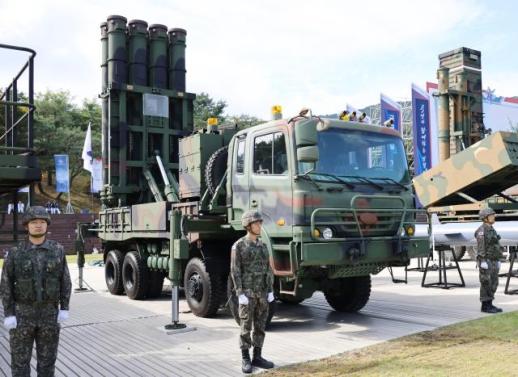 UAE airlifts Korean MSAM II interceptors as Gulf tensions rise SEOUL, March 09 (AJP) - South Korea has delivered more than 30 interceptor missiles for its Cheongung-II (M-SAM II) medium-range surface-to-air missile system to the United Arab Emirates ahead of schedule, as the Gulf state seeks to bolster its air defenses amid rising tensions with Iran. According to government sources, the UAE had requested early delivery of additional Cheongung-II batteries. Seoul reportedly found the request difficult to meet due to existing supply commitments to other buyers such as Saudi Arabia and Iraq, as well as logistical challenges in transporting military equipment to an active conflict zone. The UAE instead asked South Korea to accelerate shipments of interceptor missiles as its stockpiles were being depleted. Abdulkhaleq Abdulla, a prominent Emirati political scientist widely regarded as an unofficial adviser to the UAE president, wrote on X on Monday that Seoul had swiftly supplied the interceptors to help reinforce the country’s missile defense capabilities. “Thank you, South Korea, for urgently sending 30 M-SAM2 interceptor missiles to strengthen our missile defense system against Iranian aggression,” Abdulla said. He added that the missiles were transported in two batches using C-17 military transport aircraft. “South Korea quickly transported the interceptors twice using C-17 aircraft. The Korean missile defense system is already operational in the UAE,” Abdulla wrote, adding that “a friend in need is a friend indeed.” South Korea’s Cheongung-II, also known as M-SAM II, is a domestically developed medium-range air defense system designed to intercept incoming ballistic missiles and aircraft. A single Cheongung-II battery can fire up to 32 interceptor missiles. The additional interceptors supplied to the UAE are expected to be deployed immediately to replenish stocks amid ongoing missile exchanges involving Iran, according to reports. The UAE signed a $3.5 billion deal in January 2022 to acquire the Cheongung-II system from South Korea. Of the 10 batteries contracted, two have already been deployed and are operational in the country. Those batteries reportedly achieved an interception success rate of about 96 percent during recent missile and drone attacks linked to Iran targeting U.S. and Israeli interests in the region. The system has been used to intercept ballistic missiles and drones as the conflict involving Iran, the U.S. and Israel spreads across the Middle East, demonstrating its combat effectiveness. Each Cheongung-II battery costs more than 400 billion won ($268 million), while a single interceptor missile is estimated to cost around 1.5 billion won, roughly one-third the price of a U.S. Patriot interceptor. A Hanwha Aerospace official declined to comment, saying, “We cannot confirm details at this time.” Analysts say that if the Middle East conflict continues to escalate, demand for air defense systems and munitions could surge, potentially boosting global interest in Korean weapons systems that have demonstrated operational performance. 2026-03-09 15:48:05
 -
 Over 130 IAF aircraft gather to demonstrate full-spectrum combat readiness in Pokhran POKHRAN, INDIA, March 01 (AJP) - The Indian Air Force (IAF) successfully conducted its massive triennial firepower demonstration, 'Exercise Vayushakti-24', at the Pokhran Field Firing Range near Jaisalmer, Rajasthan. The exercise underscored the IAF's seamless combat readiness and its ability to deliver lethal strikes with surgical precision. The event was graced by the Supreme Commander of the Armed Forces, Hon'ble President Droupadi Murmu, along with senior military leadership and civil dignitaries. The exercise operated under the IAF's core doctrine: "Achook, Abhedya aur Sateek" (Infallible, Invincible, and Precise). This year’s Vayushakti stood out by moving beyond a simple display of ordnance. For the first time, the exercise was conducted with a defined operational storyline, simulating a live combat theatre. This allowed for a more realistic demonstration of how air power is integrated into modern, high-intensity warfare. The exercise featured a formidable fleet of over 130 aircraft, including frontline fighters such as the Rafale, Su-30 MKI, Mirage-2000, MiG-29, Jaguar, and Hawk. Support assets like the C-17, C-130J, and C-295 transport aircraft, along with Apache and Chinook helicopters, played vital roles. The simultaneous precision strikes by the French-made Rafale and the Russian-origin Su-30 MKI highlighted the IAF's diverse and versatile aerial capabilities. The IAF demonstrated its long-range strike capabilities using advanced air-to-ground precision-guided munitions. A key highlight was the integrated air defence showcase, featuring the Akash and Spyder surface-to-air missile systems, working in tandem with Indian Army air defence assets to neutralize simulated aerial threats. The exercise also emphasized jointmanship and special operations. Garud Commandos and Para SF teams performed high-stakes insertions and simulated urban interventions. Rapid response missions, including assault landings at Advanced Landing Grounds (ALGs) and casualty evacuations (CASEVAC), were executed with clinical efficiency. Spanning both day and night, Vayushakti-24 proved the IAF’s ability to maintain 24/7 dominance over the battlespace. As darkness fell, aircraft equipped with advanced night-vision and targeting systems struck targets with pinpoint accuracy, illuminating the desert sky and demonstrating all-weather operational superiority. An IAF official stated, "Vayushakti-24 is a reaffirmation of our sovereign deterrence and our commitment to national security. By combining jointmanship with cutting-edge technology, we are fully prepared for the challenges of future warfare." Local analysts noted that the exercise not only validated the operational effectiveness of indigenous weapon systems under the 'Atmanirbhar Bharat' (Self-Reliant India) initiative but also sent a strong strategic signal of regional stability and deterrence. 2026-03-01 09:46:27
 -
 Korea's top-shelf defense export K9 anchors India's frontline firepower in evolving form POKHRAN, INDIA, February 26 (AJP) - The desert does not forgive hesitation. At the Pokhran Field Firing Ranges, under the abrasive winds of the Thar Desert, the K9 Vajra-T halted only long enough to compute its fire solution. Turret rotating independently of the hull, target data fed digitally, the first round was out within 30 seconds. On the move, the gun delivered in under a minute. Moments later, the battery displaced — engines growling, tracks carving arcs through sand — before counter-battery response could materialize. This was the tempo of “Exercise Agni Varsha,” conducted by the Indian Army’s Southern Command and observed by defense journalists from 25 countries. Tanks, mechanized infantry, legacy artillery, rocket platforms, Apache attack helicopters, indigenous ALH gunships and drones operated in concert. But the rhythm of the maneuver hinged on one platform: the K9. From Korean flagship to Indian backbone The Vajra-T is derived from South Korea’s K9 Thunder, widely regarded as Korea’s flagship land weapon system and one of its most successful high-value defense exports. Manufactured in India through a partnership between Hanwha Aerospace and Larsen & Toubro, the program reflects both technology transfer and industrial localization. More than 50 percent of components are now produced at L&T’s Hazira facility. The first 100 units were delivered ahead of schedule, prompting a repeat order for another 100, with localization set to exceed 60 percent. The platform’s battlefield credentials explain why it has become both Korea’s top-shelf artillery export and the backbone of India’s integrated firepower. Why K9 sits at the top tier of Korean defense exports The K9’s status is not symbolic. It commands roughly half of the global tracked 155mm self-propelled howitzer export market, operates in 11 countries and exceeds 1,700 units worldwide. Its competitive edge rests on several defining features: range, speed and survivability delivered as a complete ecosystem rather than a standalone gun. The 155mm/52-caliber platform projects precision fire beyond 40 kilometers, unleashes six to eight rounds per minute in burst mode, and delivers its first shot within 30 seconds when halted — or under a minute on the move — while a 1,000-horsepower engine drives it across deserts, mountains and high-altitude sectors with equal reliability. Its fully rotating 360-degree turret allows engagement without hull repositioning, compressing exposure time in counter-battery environments, and when paired with the K10 resupply vehicle and integrated digital fire-control architecture, the system sustains high-tempo “shoot-and-scoot” operations that modern warfare demands. That fusion of firepower, mobility, rapid deployment timelines and export-ready industrial partnership is what has elevated the K9 beyond a successful artillery piece into Korea’s top-shelf land defense export — and why it now anchors India’s evolving frontline firepower doctrine. The K9 is rarely sold alone. The K10 Ammunition Resupply Vehicle — carrying 104 rounds and transferring ammunition at 12 rounds per minute — sustains high-tempo operations. Packages typically include maintenance, training and technology transfer. This ecosystem model — rather than a standalone hardware sale — has driven repeat procurement in Europe, Asia and the Middle East. Competitiveness in Europe In European competitions, including Norway’s procurement process, the K9 outperformed Germany’s PzH 2000. The determining factors were structural: faster delivery cycles (18–24 months versus 3–5 years), balanced price-to-performance ratio, proven operation across desert, arctic and mountainous environments, and willingness to localize production and transfer technology – as well proven in the track record in India. Essential along India’s Pakistan frontier Along India’s western border with Pakistan, artillery is not a secondary arm — it shapes deterrence posture. In desert sectors and open plains, where concealment is limited, mobility and rapid displacement determine survivability. The K9’s range allows engagement of deep targets while maintaining operational depth. Its rapid response time and shoot-and-scoot capability reduce exposure to counter-battery fire. The powerful engine sustains maneuver across sand under extreme temperatures. Indian officials have noted the system’s operational deployment and its positioning along sensitive border sectors. Within India’s doctrine, the K9 forms a forward mobile strike layer, complementing legacy systems positioned further rearward. As the final salvos faded over Pokhran, the K9 units shifted positions with practiced discipline. Within minutes, their tracks were erased by wind. The exercise underscored why the K9 is widely regarded as Korea’s top-tier land defense export: speed, adaptability and integration into modern maneuver warfare. In India’s evolving artillery doctrine — particularly along sensitive borderlines — the K9 Vajra-T is no longer a procurement success. It is operational infrastructure. 2026-02-26 09:33:21
 -
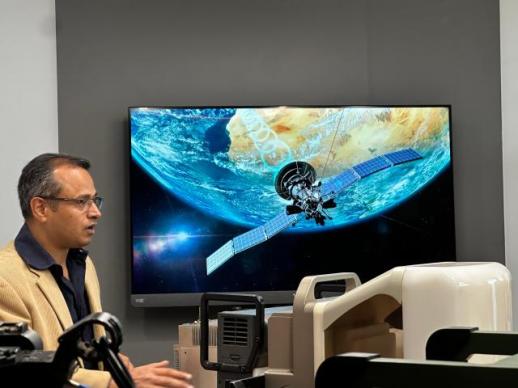 Indian satellite startup invites Korean tech names to develop military solutions BENGALURU, INDIA, February 26 (AJP) - Astrome Technologies, an Indian defense technology startup specializing in high-frequency satellite and wireless systems, is seeking strategic partnerships with South Korean companies to jointly develop next-generation military satellite solutions, its president said in an exclusive interview with AJP. “We would be very happy to work with the satellite and telecom businesses of Korean companies such as SK Telecom, Samsung Electronics and LG Electronics,” said Venkatesh Kumaran, president of Astrome Technologies, at the company’s headquarters in Bengaluru. “With geopolitical tensions rising, every country now wants sovereign technological capabilities, especially in satellite communications. We believe we can help Korean companies build and supply these systems to their military,” he said. Astrome is actively seeking what it calls a “reputable South Korean partner” — an intermediary capable of translating advanced technology into operational engagement with South Korea’s military and major defense contractors. Such a partner, Kumaran said, would play a central role in joint research and development, regulatory coordination and market entry. “Our technology is highly specialized. To deploy it effectively in Korea’s defense ecosystem, we need a partner that understands both the engineering and the institutional landscape,” he said. Suited for mobile and naval platforms The biggest challenge for high-speed communication at sea or on the move is stability. Traditional antennas are often bulky, mechanical devices that must physically rotate to track a moving ship or satellite. In harsh military environments, these moving parts are highly prone to wear and tear, leading to frequent maintenance issues and mechanical fatigue. Astrome’s core systems eliminate these vulnerabilities by using electronically steerable beams. Instead of moving the dish itself, the technology compensates for platform movement and environmental vibrations entirely through electronic signals, requiring zero mechanical components. The design is particularly suited for naval vessels and mobile ground platforms — sectors in which South Korea’s defense industry has established global competitiveness. “We are a small company, but we have cracked a technology that no one else in the world has,” Kumaran said. “Building products together with a Korean partner could create immense synergy in R&D and deployment.” Leadership in E-band phased arrays While South Korea is a global leader in 5G, the industry has faced challenges in deploying higher-frequency millimeter-wave networks due to technical hurdles and high costs. As the world shifts its focus toward 6G and the E-band spectrum (around 80 GHz)—a frequency range critical for high-capacity, low-latency communications—Astrome’s technology offers a ready-made solution that South Korea is currently striving to master. Its GigaMesh system drastically reduces deployment time. While traditional systems require hours of manual alignment by specialists, GigaMesh can be operational within 30 minutes, with subsequent control managed remotely through software. The system also supports multi-point transmission, enabling a single transmitter to serve multiple receivers simultaneously. According to the company, this reduces capital expenditure by up to 50 percent compared with conventional equipment. “Even major players like Ericsson and Nokia have not been able to do this,” Kumaran said. “We are the only ones who have cracked it and secured patents. Even if someone starts today, it would take three years to catch up.” From ground networks to space systems Building on its terrestrial wireless expertise, Astrome has expanded into a full satellite communications ecosystem. Its portfolio includes GigaSat, a flat-panel satellite ground terminal for maritime and land-mobile platforms, and SpaceNet, a software-defined E-band payload capable of delivering more than 180 gigabits per second per satellite. The company’s defense credentials were recently reinforced when India’s Ministry of Defence awarded Astrome for its Anti-ECM Tactical LAN Radio, a system designed to resist jamming and interception. The equipment successfully completed trials in environments ranging from desert heat to high-altitude cold, underscoring its operational resilience. Astrome’s engagement with South Korea predates its current partnership push and is rooted in early-stage investment. The company has received funding from South Korean venture capital firms, including Impact Collective and The Ventures, which supported its transition from a startup to a deep-tech defense supplier. “We received Korean investment at a very early stage,” said Brighu Bhattrahalli, head of global commercial business at Astrome. “That support was critical during our formative period.” Korean investors participated in a $3.4 million bridge funding round in September 2021, which was used to expand Astrome’s presence in the U.S. market and conduct international operator trials. To date, Astrome has raised more than $14 million in total funding. Company executives say Korean capital has played an important role in technology refinement and international credibility. That support enabled Astrome to finalize its patented digital beamforming phased array architecture — the core platform behind its GigaMesh and GigaSat products. The technology is designed to deliver high-speed, cost-effective connectivity in remote and underserved regions, while also meeting military-grade reliability standards. “With the right Korean partner, we believe our systems can be scaled for both civilian and defense applications,” Kumaran said. “The opportunity is strategic, not just commercial.” 2026-02-26 08:09:01
 -
 Aboard India's Indigenous Aircraft Carrier INS Vikrant VISAKHAPATNAM, INDIA, February 22 (AJP) - About 10 miles off Vizag Port, our small vessel — packed with around 80 local and international journalists — cuts through the swells for 30 to 40 minutes. Then, without warning, it appears. A vast steel wall, rising slowly over the horizon. INS Vikrant. India's first indigenous aircraft carrier. It takes several more minutes to pull alongside her and for the boarding bridge to be secured. Nobody speaks much. We are all just staring. The first stop is not the flight deck. It is somewhere far more unexpected — the hangar bay. Descend below deck and the scale hits you immediately. Roughly the size of two football fields, the hangar bay is the carrier's garage at sea — a cavernous steel chamber where up to 20 aircraft can be parked, serviced, and armed between sorties. Jets are chained to the floor with heavy-duty fittings, barely shifting even as the 45,000-ton ship rolls through open water. Technicians maneuver them into position on hydraulic turntables with practiced efficiency. Two 30-ton elevators on the starboard side stand ready to lift aircraft up through armored doors to the flight deck above — doors that stay sealed whenever the carrier is underway. We ride one of those elevators up. Slowly, the hangar bay disappears beneath us, replaced by open sky and a rush of sea wind. The first thing that strikes you is not the fighter jets parked nearby. It is the deck itself. The flight deck stretches 262.5 meters in length and more than 60 meters across — roughly two and a half football fields — hosting around thirty aircraft, including MiG-29K fighters. Look down and you will notice the lines painted across the steel: bright yellow and red, sharp and deliberate. The yellow line is a landing alignment guide, helping pilots center their aircraft on approach. The red Safety Line marks zones that are absolutely off-limits during flight operations — a boundary between routine and catastrophe, protecting crew from the lethal force of jet blast. "Crossing beyond that line can mean risking your life," one officer says grimly, his eyes fixed on the runway ahead of us. We stay well behind it. At the bow, the deck curves sharply upward into a 14-degree ski-jump ramp. There are no catapults here — aircraft launch on engine thrust alone, hurled skyward by the ramp's angle and their own power. Landing, however, is another matter entirely. "Landing is the real challenge," one pilot tells us. "You're coming in at hundreds of kilometers per hour, and your tailhook has to catch one of just three wires stretched across the deck. The system adjusts the tension in a split second — based on your speed and weight — and that's what brings you to a dead stop in such a short distance." If the hook fails to catch, the pilot immediately powers back up, circles around, and comes in for another attempt. He says it calmly. The physics of it are anything but. After the deck tour, we are escorted into a sealed briefing room deep inside the ship. Mobile signals vanish instantly. No Wi-Fi, no reception — just steel walls and the hum of machinery. Moments ago, we stood under open sky. Now, there is nothing but metal in every direction. On a carrier, silence is security. Beneath the flight deck lies a world of its own — more than 2,200 compartments housing around 1,700 crew members, who cycle between long deployments at sea and intensive maintenance periods in port. Vikrant generates enough electricity to power thousands of homes. Her onboard hospital has an ICU and a CT scanner. Three automated galleys produce nearly 5,000 meals a day. "The naan from the baking room is actually really delicious," one crew member says with a grin. Even here, morale is part of the mission. Under India's SAGAR doctrine — Security and Growth for All in the Region — Vikrant is both deterrent and lifeline. In 2025, her helicopters evacuated an injured sailor from the Arabian Sea, proof that this ship's purpose reaches far beyond combat. Back at the edge of the deck, steel meets open water. The horizon stretches without end. The carrier holds steady. And standing here, at the edge of a floating city in the middle of the Indian Ocean, that feels like the most remarkable thing of all. 2026-02-22 10:59:23
 -
 Gang Gam-chan sails with global fleet as Korea rises on Indo-Pacific Seas VISAKHAPATNAM, INDIA, February 20 (AJP) - From the deck line to the distant horizon, the waters off Visakhapatnam shimmered with steel, color and motion on Wednesday as one of the world’s largest multinational naval formations assembled for the 2026 International Fleet Review. Flying the South Korean flag Taegeukgi high against a stiff Bay of Bengal wind, the 4,400-ton destroyer ROKS Gang Gam-chan cruised in tight formation alongside 18 other flag-bearing warships, cutting a steady line through rolling swells. From the press boat trailing the formation, her angular silhouette and brownish-gray hull stood out sharply under the tropical sun — a visible symbol of Seoul’s growing blue-water ambitions. For several hours, the Bay of Bengal became a moving stage of maritime power. Warships advanced in sequence, their signal flags fluttering, flight decks cleared and crews standing at attention along the rails. At the heart of the spectacle was the host, the Indian Navy, showcasing the rapid transformation of its fleet — from coastal defense to full-spectrum ocean-going force. The review was the third such event hosted by India, following earlier editions in 2001 and 2016. A “Blue Water” Presence Among the multinational lineup, Gang Gam-chan — the fifth vessel of South Korea’s Chungmugong Yi Sun-sin-class destroyers — stood out. Built by Daewoo Shipbuilding & Marine Engineering and commissioned in 2007, the KDX-II-class vessel represents the backbone of the Republic of Korea Navy’s long-range surface fleet. Designed for anti-submarine, anti-air and surface warfare, she has participated in distant deployment missions, including anti-piracy patrols in the Gulf of Aden. During the live broadcast by Doordarshan, commentators singled out the Korean destroyer as a core “blue-water asset,” highlighting its record in international maritime security operations. From the bridge wing, Korean sailors in white dress uniforms saluted as the formation passed the reviewing stand, where President Droupadi Murmu observed the parade. The event’s theme — “United Through Oceans” — was echoed in her address, in which she stressed collective responsibility and cooperative action among like-minded maritime partners. From Ancient Trade Routes to Modern Fleets The setting carried historical weight. These same waters once carried merchant vessels linking the Indus Valley, Southeast Asia and East Africa, and later the naval expeditions of the Chola Empire in the 11th century. On Wednesday, they hosted satellite-linked destroyers, stealth frigates and an aircraft carrier — a vivid illustration of how India’s maritime legacy has evolved into modern sea power. Leading the host nation’s formation was India’s first domestically built aircraft carrier, INS Vikrant, followed by the Project 15B destroyer INS Visakhapatnam and the stealth frigate INS Nilgiri — centerpieces of New Delhi’s “Atmanirbhar Bharat” self-reliance strategy. Behind them sailed vessels from key Indo-Pacific partners, including Australia and Japan, reinforcing the review’s message of collective security. Korea’s Expanding Maritime Footprint For South Korea, Gang Gam-chan’s appearance was more than ceremonial. She departed Jeju Naval Base on Jan. 30 to join the fleet review before taking part in the ensuing seven-days MILAN naval exercise until Feb. 25 — meaning 'meeting' in Hindi — symbolizing Seoul’s growing operational reach across the Indian Ocean. In parallel with the sea review, the Republic of Korea Navy delegation, led by Rear Adm. Kim Kyung-cheol, attended the plenary session of the Indian Ocean Naval Symposium for the first time as an observer. The delegation held bilateral meetings and promoted Korea’s “total solution” approach to naval logistics and defense exports. Officials said the outreach reflects Seoul’s broader effort to link operational deployments with defense-industry diplomacy. A Floating Showcase of Strategy From the press vantage point, the choreography was precise. Each ship maintained exact intervals. Helicopters hovered briefly overhead. Signal flags snapped in unison. Even in moderate swells, the column remained steady — a moving demonstration of interoperability. Industry and defense analysts watching from shore said the review underscored how maritime security in the Indo-Pacific is increasingly shaped by networks rather than individual navies. While large aircraft and maritime patrol planes roared faintly beyond the horizon, Gang Gam-chan continued her measured advance, radar masts scanning and wake trailing cleanly behind her stern. On waters once ruled by sail and monsoon winds, South Korea’s gray-hulled destroyer now sailed as part of a multinational security web — a quiet but unmistakable statement of its place in a changing maritime order. As the formation dispersed toward sunset, the Korean vessel turned eastward, her navigation lights blinking on one by one — carrying with her the message that in today’s Indo-Pacific, presence itself has become policy. 2026-02-20 10:27:12
 -
 U.S. maritime plan allows initial ship construction in Korea SEOUL, February 14 (AJP) - The White House on Friday unveiled the “America’s Maritime Action Plan” (MAP), a sweeping strategy to revive the U.S. shipbuilding industry that explicitly signals cooperation with South Korea and Japan. It is widely seen as laying out the blueprint for the so-called MASGA (Make American Shipbuilding Great Again) initiative discussed during Korea-U.S. tariff negotiations. The U.S. government states in the report published on the White House website that "it will consult with China on shipbuilding capacity issues and continue its historic cooperation with the Republic of Korea and Japan on revitalizing U.S. shipbuilding." The document makes clear that Washington aims to pursue two goals simultaneously: counter China’s dominance in maritime industries and restore U.S. domestic shipbuilding capabilities, positioning allied cooperation as a strategic pillar in that effort. ‘Bridge Strategy’ allows initial construction abroad A key component of the plan is a so-called “Bridge Strategy,” under which early vessels in a multi-ship contract may be built at a foreign partner’s shipyard, while concurrent capital investments are made in a U.S. shipyard to eventually onshore construction. The MAP describes the concept as a “multi-ship buy wherein the first ships in the contract are built in a foreign shipbuilder’s home shipyard while concurrent direct capital investments are made in a U.S. shipyard … to eventually onshore construction.” Given that the United States currently builds less than one percent of global commercial ships and has limited large-vessel construction capacity, the strategy effectively allows allies such as South Korea and Japan to build initial orders while investing in U.S. facilities, with production gradually shifting to American soil. For Korean shipbuilders, this could open an exceptional pathway to construct early vessels domestically while securing financial incentives tied to U.S. shipyard investment. $150 billion secured for shipbuilding The MAP states that President Donald Trump has secured “at least $150 billion of dedicated investment for America’s shipbuilding industry,” adding that the Department of Commerce “is working to mobilize these funds to achieve the greatest investment in U.S. shipbuilding history.” The $150 billion figure is widely interpreted as corresponding to the shipbuilding-focused package under the MASGA framework, part of the broader $350 billion investment commitments discussed in last year’s Korea-U.S. trade agreement. While the plan opens potential avenues for Korean shipbuilders to participate in early-stage production and U.S. yard investment, it also signals a longer-term shift toward onshoring ship construction and strengthening U.S.-flagged shipping capacity. Industry analysts say the practical impact will depend on how aggressively Washington implements port fees, cargo preference rules and onshore investment requirements in the coming years. Foreign-built vessels face new fees under MAP The MAP also includes measures that could significantly raise costs for foreign-built vessels calling at U.S. ports, potentially affecting Korean shipping and export firms. Under the proposal, Washington would “establish a universal infrastructure or security fee on all foreign-built commercial vessels calling at U.S. ports,” calculated based on the weight of imported cargo. According to the report, a fee of 1 cent per kilogram could generate approximately $66 billion over a decade, while a 25-cent levy could raise as much as $1.5 trillion. The revenue would be directed toward a newly proposed Maritime Security Trust Fund to support U.S. shipbuilding and port infrastructure. The administration also plans to impose a 0.125 percent Land Port Maintenance Tax on goods entering through land borders, effectively applying the levy to exports routed via Canada or Mexico, in line with the Harbor Maintenance Tax on maritime imports. The plan further calls for expanding cargo preference requirements through a new United States Maritime Preference Requirement (USMPR), which would gradually increase the share of U.S.-bound cargo transported on qualifying U.S.-flagged vessels. Taken together, the measures are designed to reduce reliance on foreign-built and foreign-flagged ships while bolstering domestic maritime capacity. However, industry observers warn that the new framework could pressure Korean shipping lines and raise logistics costs for exporters, particularly given that a large share of vessels serving U.S. routes are built in South Korea, Japan and China. 2026-02-14 18:02:33