


Latest by
-
 Semiconductor Boom Expands to Regional Investments and Advanced Industry Transformation Samsung Electronics is preparing its largest regional investment plan to date, aiming to leverage the semiconductor boom for national balanced development and the cultivation of future industries. If SK Group also engages in large-scale investments, projections suggest that total investments could reach 2,000 trillion won over the next decade. According to Yonhap News Agency, both the government and industry analysts view Samsung's investment as a strategy to maintain leadership in the global semiconductor competition while expanding the semiconductor value chain and advancing manufacturing capabilities. The semiconductor cluster being developed in the Honam region is expected to match the scale of the semiconductor cluster in Yongin, which includes up to 10 semiconductor fabrication plants (fabs) featuring both front-end and back-end processes. This cluster is anticipated to foster a large industrial ecosystem with concentrated design, equipment, and materials companies, along with an influx of research and development (R&D) personnel and specialized talent. Industry experts believe that if the semiconductor boom continues until 2030, this investment foundation will be crucial for maintaining South Korea's global semiconductor leadership. In addition to semiconductors, Samsung plans to expand investments in advanced materials and components. In the Chungcheong region, Samsung Display, Samsung SDI, and Samsung Electro-Mechanics are producing semiconductor substrates, displays, and batteries, with increased production capacity expected to strengthen the supply chain for advanced industries such as physical AI and next-generation mobility. The expansion of multi-layer ceramic capacitor (MLCC) production at Samsung Electro-Mechanics in Busan and the enhancement of production facilities at Samsung Biologics are also expected to boost competitiveness in the electronics and biopharmaceutical sectors, respectively. Samsung Group is projected to invest approximately 1,000 trillion won in the semiconductor and materials and components sectors over the next decade. If SK Group also plans a similar scale of investment, the combined total from both conglomerates could reach 2,000 trillion won. Kim Yong-beom, head of the Presidential Policy Office, recently remarked that the figures associated with this investment are likely to be unprecedented. The government aims to decentralize advanced industry hubs to alleviate concentration in the capital region and promote balanced regional development. Plans are underway to establish Honam as a semiconductor production hub, Chungcheong as a center for semiconductor packaging and advanced materials and components, Yeongnam as a base for AI-driven manufacturing, and Incheon as a core hub for the biopharmaceutical industry. Additionally, there are expectations that if SK Group considers developing a semiconductor cluster in Honam and an AI data center in Yeongnam, along with Hyundai Motor Group and LG Group expanding investments in physical AI and AI data centers, a nationwide advanced industry ecosystem could be established.* This article has been translated by AI. 2026-06-28 20:44:00
 -
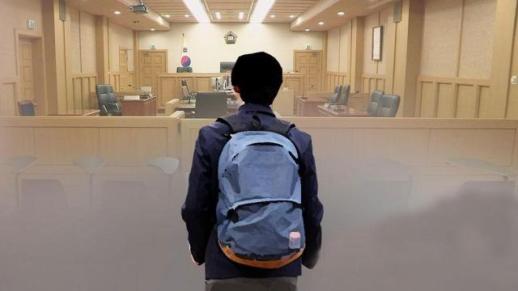 South Korea to Lower Age of Criminal Responsibility for Serious Offenses The South Korean government has decided to lower the age of criminal responsibility for serious and habitual offenders from 14 to 13 years old. According to Yonhap News, the Ministry of Gender Equality and Family and the Ministry of Justice have reached a consensus to adjust the age threshold for criminal minors to 13 years only for severe crimes such as murder, robbery, and sexual offenses.Initially, a social dialogue committee aimed at discussing the age of criminal responsibility recommended maintaining the current age range of 10 to 14 years after public consultations in March and April. However, growing concerns over serious juvenile crimes and public calls for a lower age limit prompted the government to propose a compromise.A survey conducted by Gallup Korea in March found that 81% of respondents aged 18 and older supported lowering the age of criminal responsibility. While experts generally advocated for keeping the current age limit during the public discussions, many ordinary citizens and youth participating in online forums expressed support for a reduction.The government plans to present the revised recommendation to the Cabinet meeting as early as June 30. However, some details may be adjusted based on the meeting's outcomes.The specific definition of serious crimes has yet to be finalized. The Ministry of Justice intends to refer to a proposed amendment to the criminal law introduced in the 21st National Assembly to establish detailed criteria. This bill includes serious offenses such as murder, robbery, sexual crimes including rape and sexual assault, and group violence, and stipulates that individuals sent to juvenile detention centers three times or more would not be exempt from criminal responsibility.Lawmakers from both parties who proposed the amendment stated, "The current age limit for criminal minors was established when the criminal law was enacted in 1953. Today, adolescents are more physically and mentally mature, and there has been an increase in serious juvenile crimes, particularly sexual offenses."* This article has been translated by AI. 2026-06-28 20:28:00
 -
 South Korean Foreign Minister Discusses Security Cooperation with Japan's Defense Minister South Korean Foreign Minister Choo Hyun met with Japan's Defense Minister Shinjiro Koizumi on June 28 to discuss expanding practical cooperation and enhancing security collaboration between the two countries.According to the Ministry of Foreign Affairs, Minister Choo assessed that shuttle diplomacy between the leaders of both nations has been driving cooperation across various sectors, including active exchanges in defense.In light of rapidly changing international circumstances, Choo emphasized the need for South Korea and Japan to strengthen their cooperation as "close neighbors."He particularly noted that "Korea-Japan security cooperation is related to the sentiments of our people," stressing the importance of expanding tangible cooperation that citizens can feel.Minister Koizumi also mentioned in his opening remarks that he believes understanding among the Korean public is essential for the development of Korea-Japan defense cooperation, referencing a 'Youth Security Dialogue' held that afternoon at the Korea Institute for Defense Analysis (KIDA) in Dongdaemun, Seoul.He added, "It is important for both countries to continue exchanges in various fields as partners responding to diverse issues in the international community."The two sides exchanged views on the recent security situation in the Middle East, as well as regional and global security matters, agreeing to continue their cooperation with the international community.* This article has been translated by AI. 2026-06-28 19:52:00
 -
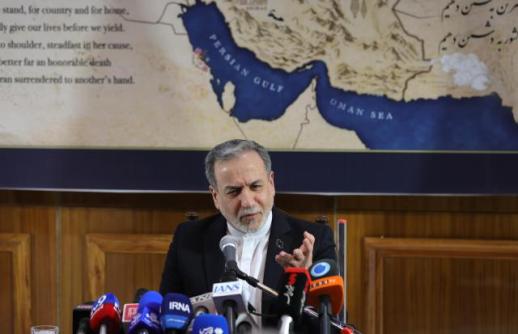 Iran's Foreign Minister Emphasizes Need to Adhere to MOU in Iraq As the United States and Iran engage in military confrontations, casting doubt on a ceasefire memorandum of understanding (MOU), Iranian Foreign Minister Abbas Araghchi visited Iraq to reiterate the importance of adhering to the MOU. According to Yonhap News Agency, during a joint press conference following talks with Iraqi Foreign Minister Fuad Hussein in Baghdad on June 28, Araghchi stated, "The events in the Strait of Hormuz over the past two days have heightened tensions and conflicts." He urged all parties to refrain from interfering with Iran's measures to reopen the Strait of Hormuz and to comply with the signed MOU, emphasizing the need to stay true to its intent. Araghchi noted that under the MOU, Iran must secure control over the strait and remove obstacles to restore it to a state of "war-free status" within 30 days. He stressed that, according to Article 1 of the MOU, hostilities must cease on all fronts, including Lebanon. He also proposed that all countries in the Persian Gulf region reassess their security and establish a new framework for participation without the intervention or interference of external nations. Regarding the military clashes between Israel and the southern Lebanese militant group Hezbollah, he claimed, "The U.S. government has the responsibility to halt the attacks by the Zionist (Israeli) regime and withdraw from the occupied territories, as promised in the MOU."* This article has been translated by AI. 2026-06-28 19:40:00
 -
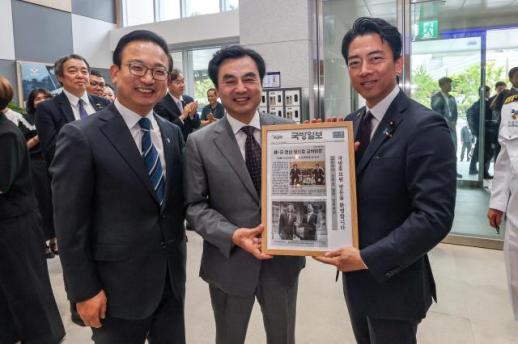 South Korea and Japan Defense Ministers Agree to Expand Cooperation South Korea's Defense Minister An Gyu-baek and Japan's Defense Minister Shinjiro Koizumi met in Seoul on June 28 to discuss expanding cooperation in the Air Force Special Flight Teams and Navy search and rescue training, as well as enhancing collaboration in advanced scientific and technological fields, including artificial intelligence (AI).According to the Ministry of National Defense, the two ministers reached this agreement during their meeting at the Defense Ministry headquarters in Yongsan, Seoul, and issued a joint press release outlining their commitments.They plan to continue expanding exchanges between South Korea's Black Eagles and Japan's Blue Impulse, both of which are Air Force special flight teams, and to further develop Navy search and rescue training (SAREX) in preparation for various maritime accidents. Additionally, they agreed to discuss cooperation in advanced scientific and technological areas, including AI.The ministers also committed to strengthening communication and collaboration to foster stable and future-oriented defense exchanges between South Korea and Japan, based on mutual understanding and trust.This agreement follows the Black Eagles' first-ever stop at Japan's Air Self-Defense Force base in Naha while en route to participate in an international airshow in January. However, the Ministry clarified that the Black Eagles' stopover and refueling support in Japan are not yet formalized.The two nations expressed their intent to continue expanding naval cooperation, particularly following the resumption of joint Navy search and rescue training earlier this month, the first such exercises in nine years since 2017.In light of the serious regional security environment, the ministers agreed to maintain cooperation to ensure peace and stability, reaffirming their commitment to the complete denuclearization of the Korean Peninsula and the establishment of lasting peace, while continuing trilateral cooperation among South Korea, Japan, and the United States.However, the issue of the Korea-Japan Mutual Logistics Support Agreement (ACSA) was not included in the official agenda of this meeting.* This article has been translated by AI. 2026-06-28 19:32:00
 -
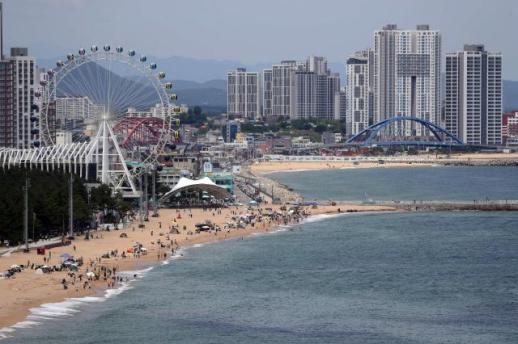 Weather Forecast: Afternoon Showers Expected Nationwide with Continued Heat On Monday, June 29, scattered showers are expected across the country, but the heat will persist with daytime temperatures exceeding 30 degrees Celsius.According to the Korea Meteorological Administration, showers of 5 to 10 millimeters are likely from noon to evening in areas including the inland regions of Seoul and Gyeonggi, the mountainous areas of Gangwon, the inland regions of Chungcheong, Jeolla, and western Gyeongnam.Morning low temperatures are forecasted to range from 15 to 21 degrees Celsius, while daytime highs will be between 24 and 33 degrees Celsius. For the time being, daytime temperatures are expected to remain above 30 degrees Celsius in many inland areas.Wave heights are predicted to be 0.5 to 1.0 meters in the East and South Seas, and about 0.5 meters in the West Sea. Offshore wave heights are expected to be 0.5 to 1.0 meters in all three seas.Regionally, Seoul will see temperatures between 21 and 32 degrees Celsius with afternoon showers, while Incheon is expected to be 20 to 29 degrees and Suwon 20 to 30 degrees, both experiencing mostly cloudy weather. In Gangwon, Chuncheon will have temperatures of 20 to 31 degrees with afternoon showers anticipated, while Gangneung will remain mostly cloudy with temperatures between 19 and 27 degrees. In Chungcheong, Cheongju (20 to 32 degrees), Daejeon (20 to 32 degrees), and Sejong (19 to 32 degrees) are all expected to have afternoon showers. In Honam, Jeonju and Gwangju will both see temperatures of 20 to 31 degrees with afternoon showers forecasted. In Yeongnam, Daegu will be clear with temperatures ranging from 19 to 32 degrees, while Busan (19 to 27 degrees), Ulsan (17 to 27 degrees), and Changwon (18 to 28 degrees) will also experience mostly clear weather. Jeju is expected to be 20 to 26 degrees, starting clear in the morning but becoming cloudy in the afternoon.* This article has been translated by AI. 2026-06-28 19:24:00
 -
 Korea's Fair Trade Commission Increases Scrutiny, Heightening Corporate Risks The Fair Trade Commission (FTC), often referred to as the "economic prosecutor," is expanding its oversight, increasing the burden on businesses. While the rationale of establishing fair economic practices and protecting consumers and small enterprises is clear, the aggressive nature of its investigations, fines, and the disclosure of review reports is raising concerns about corporate risks. Experts are calling for improvements in the FTC's strict law enforcement to enhance corporate rights, procedural transparency, and predictability. They argue that strong penalties alone cannot ensure a fair economy; precise actions and clear standards are essential to mitigate corporate risks. This article examines the dual nature of the FTC's role in a five-part series. <Editor’s Note> The FTC's investigations and penalties are emerging as a new source of uncertainty for corporate management. Amid economic slowdowns, global supply chain adjustments, and intensified competition in artificial intelligence (AI), businesses are under pressure to make swift decisions and bold investments, with FTC risks adding significant burdens to overall management. Since the current administration took office, there has been a noticeable strengthening of fair economic policies, leading to an expansion of the FTC's role and authority. The agency has ramped up its investigations and increased the number of fines imposed, and it has recently begun disclosing the fact that review reports for major cases are being sent out. These reports, which contain the opinions of FTC examiners, are not final judgments, but they expose companies to reputational risks from the investigation's outset. Fines Surge Despite Fewer Cases According to the FTC's "2025 Statistical Yearbook" released on June 28, the number of cases received by the agency last year was 2,205, a 6.8% decrease from the previous year (2,365 cases). This marks a second consecutive year of decline. The number of reported cases fell by 8.2% to 1,133, while ex officio cases decreased by 5.2% to 1,072. However, the trend in fines is quite the opposite. Last year, fines were imposed in 194 cases, a 56.5% increase from the previous year's 124 cases. Although the number of cases received has decreased, the fines imposed have reached their highest level in a decade. This shift indicates a change in the FTC's approach to case management. The decline in case filings suggests a reduction in new disputes or reports in the market. Yet, the surge in fines indicates that the FTC is making more proactive sanction decisions during the processing of cases. The total amount of fines was 340.173 billion won, down 19.5% from the previous year (422.661 billion won). However, this decrease in total fines does not necessarily mean a reduction in corporate burdens. The structure has shifted from concentrating large fines on a few major cases to imposing fines across a broader range of cases. For businesses, the increased likelihood of being subject to sanctions is a greater concern than the size of fines per case. Previously, the main risks were associated with large collusion or conglomerate cases, but now even relatively smaller cases could attract fines. The FTC's sanctions appear to be expanding from focusing on specific large cases to encompassing a wider range of corporate activities. The proportion of ex officio investigations remains high. Last year, ex officio cases accounted for 48.6% of all cases, with 1,072 investigations initiated without any reports. This means that nearly half of the cases can be investigated at the FTC's discretion, creating uncertainty for businesses that must make management decisions while being aware they could be investigated at any time. This year, the FTC is pursuing reforms to its fine assessment system, increasing penalties for repeat violations, strengthening sanctions against refusal to cooperate with investigations, and expediting case processing. The challenge is that while these measures may enhance the efficiency of case handling, they could also increase the burden on businesses to defend themselves. If the threshold for initiating investigations and imposing fines is lowered, the FTC risk could evolve from a mere legal issue to a significant factor affecting investment, transactions, and overall management strategies. However, not all FTC cases lead to final sanctions. Among the 2,404 cases processed last year, 969 cases, or 40.3%, were resolved without sanctions, including findings of no wrongdoing, termination of review procedures, or cessation of investigations. When voluntary corrections are included, more than seven out of ten cases concluded without separate sanctions. The fact that many cases end without findings of wrongdoing or sanctions indicates that FTC investigations do not always confirm illegal activities. Nonetheless, companies bear substantial costs from the investigation stage, including document submission, legal reviews, employee responses, and explanations to business partners. Even without sanctions, the investigation itself incurs costs. Thus, despite a numerical decline in cases, it is difficult to argue that the FTC risk felt by businesses has decreased. Costs Remain Even After Winning Cases The recent disclosure of review reports for major cases by the FTC is also seen as a factor increasing the burden on businesses. Review reports contain the results of investigations and the opinions of examiners, representing a stage prior to final decisions. However, if the fact that a review report has been sent and the details of the allegations become public, consumers, investors, and business partners may perceive the company as one under suspicion of wrongdoing. In fact, there have been numerous instances where the FTC's judgments have been overturned by the courts. For example, in 2020, the FTC imposed a fine of 64.7 billion won on SPC Group affiliates for unfair support to SPC Samlip, but the Supreme Court canceled the fine. Similarly, in the case of price collusion among ramen manufacturers, the FTC imposed a large fine, but the Supreme Court ruled that collusion was difficult to establish. In the case of Hyundai Mobis's dealer pressure incident, the FTC's fines, corrective orders, and criminal complaints were all ultimately overturned. Legal disputes regarding fines in the cases of Kakao Mobility's call allocation and Hyundai Steel's scrap collusion are also ongoing. The issue is that even if a company ultimately wins in court, it is challenging to recover costs already incurred. The expenses from years of litigation, along with reputational damage, reduced transactions, and delayed investments, cannot be easily restored by a final court ruling. The rate of lawsuits filed against FTC cases was 13.8% last year, the lowest level since 2013 (12.0%). However, most cases that are litigated tend to lead to prolonged legal disputes, making it difficult to conclude that the burden felt by companies has decreased. Strict law enforcement against collusion, unfair support, and unfair trade practices is essential for maintaining market order. However, there is a growing call for ensuring that corporate predictability and rights to defense are also protected as administrative investigations and sanctions expand. Even if FTC decisions are overturned in court years later, the reputational damage and operational disruptions that occurred during the process are not easily reversible. Balancing the establishment of fair competition and the stability of corporate activities is a challenge that the FTC must address. 2026-06-28 19:20:00
 -
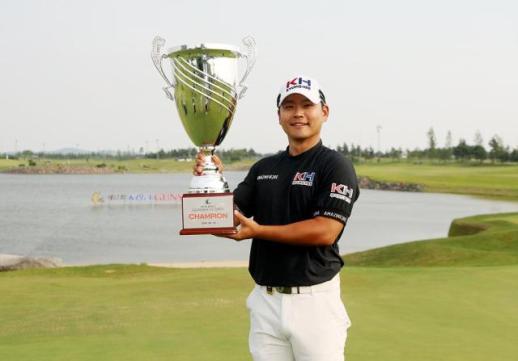 Jeong Han-mil Wins First KPGA Tour Title at Gunsan CC Open Jeong Han-mil celebrated his first victory on the Korean Professional Golf Association (KPGA) Tour at the Gunsan CC Open, where he lifted the trophy after 10 years of competing on the regular tour.On June 28, Jeong shot a final round of 3-under-par 69 at the tournament course in Gunsan, Jeollabuk-do, which included one eagle, four birdies, and three bogeys.With a total score of 17-under-par 271, Jeong finished four strokes ahead of second-place Kim Sung-hyun, who recorded a total of 13-under-par 275. Jeong's victory earned him a prize of 222,818,000 won.Since debuting on the KPGA Tour in 2017, Jeong had not secured a win until this tournament. He had struggled this season, failing to finish in the top 10 in any event prior to this. However, at his 164th tournament, he finally broke his long winless streak.This victory also helped Jeong erase the disappointment from two years ago when he led the Gunsan CC Open until the 15th hole but ultimately lost to Jang Yu-bin by two strokes after failing to score on the final three holes.Kim Sung-hyun, who returned to the domestic circuit after competing on the PGA Tour, achieved his best result of the season with this runner-up finish.Kim Tae-hoon finished third with a total score of 11-under-par 277, while amateur Yoo Min-hyuk, who received an invitation to compete, placed fourth with a score of 9-under-par 279.Meanwhile, Jang Yu-bin, who was aiming for a historic third consecutive win, struggled on the final day, losing three strokes and finishing tied for 14th with a total score of 6-under-par 282.Following this tournament, the KPGA Tour has completed its first-half schedule and will enter a three-week break before resuming with the Dong-A Membership Group Open on August 20, kicking off the second half of the season.* This article has been translated by AI. 2026-06-28 19:00:00
 -
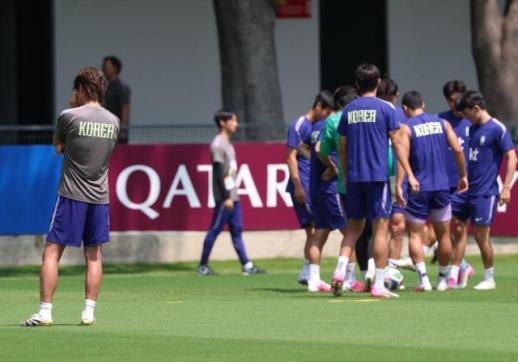 South Korean footballers to return home quietly after early World Cup exit SEOUL, June 28 (AJP) - South Korea's national football squad will return home later this week after being eliminated from this year's World Cup, having spent the past few days waiting in vain as the country's slim hopes of advancing to the next round faded. According to the Korea Football Association, head coach Hong Myung-bo is set to arrive at Incheon International Airport on Tuesday with several players and coaching staff, including striker Lee Kang-in of Paris Saint-Germain and defender Kim Min-jae of Bundesliga club Bayern Munich. Other players including captain Son Heung-min of Los Angeles FC, are traveling separately and will arrive a few days later. The early exit means no ceremony or press events are planned for them, amid huge disappointment among fans here. After a 1–0 defeat to South Africa in its final group-stage match in Monterrey, northeastern Mexico, last week, South Korea had remained in contention only through a narrow set of scenarios for a place among the eight best third-placed teams. But its hopes were eventually dashed after DR Congo secured an impressive 3–1 win over Uzbekistan, sealing its place in the round of 32 for the first time in about 52 years, since its humiliating exit in 1974 as Zaire, when it conceded many goals in heavy defeats. President Lee Jae Myung also expressed disappointment over the South Korean team's "unexpected" results at the quadrennial football event despite high expectations. He then called for sweeping reforms across the sport's governing bodies, attributing South Korea's failure to reach the knockout stage to deeper structural and organizational problems. His remarks appeared to refer to the appointment of Hong in July 2025, when he took the helm amid controversy over the lack of a transparent selection process. Hong replaced German coach Jürgen Klinsmann, who was sacked after a string of poor results and amid criticism that he spent too much time overseas and managed the team remotely. Lee also instructed the Ministry of Culture, Sports and Tourism to push for urgent reforms in sports governance overall by conducting a comprehensive review of sports administration including resource allocation and personnel management to prevent similar failures in the future. 2026-06-28 18:53:40
 -
 Kim Min-sol Wins KLPGA McCall-Mona Open, First to Reach Three Victories This Season Kim Min-sol, dubbed a "super rookie," has become the first player this season to achieve three victories on the KLPGA Tour. On June 28, at the Birch Hill Country Club in Pyeongchang, Gangwon Province, Kim shot a 2-under-par 70 in the final round of the KLPGA McCall-Mona Yongpyong Open, which had a total prize purse of 1 billion won. She recorded five birdies and three bogeys during the round. Finishing with a total score of 12-under 204, Kim entered a playoff after tying with Choi Ye-rim. The decisive moment came on the 18th hole during the second playoff hole. Both players made par on the first playoff hole, but in the second, Choi missed a 5.6-meter birdie putt and made par, while Kim successfully sank a 3.6-meter birdie putt to secure the win. Competing as a rookie this year, Kim previously won the iM Financial Open in April with a wire-to-wire performance. She followed that victory with a win at the 40th Korean Women's Open on June 14, marking her third win of the season and her fifth career title. With this victory, Kim earned 180 million won in prize money and solidified her position at the top of several categories, including total earnings (963.09 million won), wins (three), and rookie points (1,434). She also climbed to first place in the Player of the Year points standings with 313 points. After the match, Kim expressed her thoughts through the KLPGA, stating, "At the beginning, I thought I was playing far from winning. But I was able to finish strong and win. I am truly grateful for this day." She added, "I received a lot of expectations ahead of this season. Personally, I feel like I am doing well. To be the top winner, I think I need to achieve around six victories. So my goal for this season is six wins." On the other hand, Choi Ye-rim, who was seeking her first victory in her 231st regular tour event, once again fell short at the brink of victory. After losing in a playoff to Park Hyun-kyung at this event in 2024, Choi faced another playoff defeat, marking her ninth runner-up finish in her career (one in 2018, one in 2019, two in 2022, one in 2023, three in 2024, and one in 2026). Yoo Seo-yeon finished in third place with a total score of 11-under 205. Noh Seung-hee, who maintained the solo lead after the first two rounds, lost two strokes on the final day, finishing tied for fourth with a total score of 10-under 206.* This article has been translated by AI. 2026-06-28 18:44:00