
Journalist

Park ki rock
kirock@ajunews.com
-
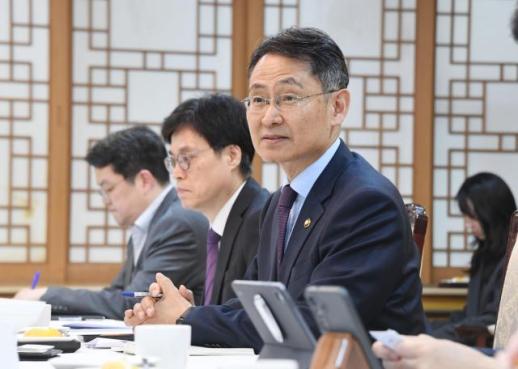 South Korea Accelerates Inclusion in MSCI Developed Markets Index The South Korean government is accelerating reforms in the foreign exchange and capital markets to facilitate its inclusion in the MSCI (Morgan Stanley Capital International) developed markets index. The plan aims to implement over 70% of the overall roadmap by the end of the first half of the year, enhancing market accessibility and trading convenience for foreign investors. On May 21, the Ministry of Finance held a meeting of the "Foreign Exchange Stability Council and MSCI Developed Markets Index Inclusion Task Force," chaired by Deputy Minister Heo Chang, to review the progress of the "Comprehensive Roadmap for Foreign Exchange and Capital Markets" announced in January. Out of the eight key areas and 39 tasks outlined in the MSCI roadmap, 25 tasks (64%) have been completed so far. The government plans to push forward with three additional tasks by June, bringing the total to 28 (over 70%) by the end of the first half. Since February, relevant agencies have been working on institutional improvements focusing on account and payment systems, investor identification systems, English disclosures, and enhanced access to derivatives. The reform of the Korea Securities Depository system now allows for settlement processing based on nominal accounts for each fund, and the issuance of Legal Entity Identifier (LEI) confirmation letters for foreign corporate account openings has been recognized as valid identification, reducing translation and notarization burdens. Additionally, the removal of trading hour restrictions for KOSPI futures on Eurex and FTSE has improved access to Korean derivatives for foreign investors. The government is also working on restructuring the foreign exchange market. The domestic foreign exchange market is set to begin 24-hour trading from July 6, following a pilot trading session on June 29. The establishment of an offshore won payment network is also in progress, with IT testing scheduled for June, pilot operations in September, and full operations targeted for January 2027. During the meeting, the government finalized plans to reform the overseas foreign exchange business institution (RFI) system. To encourage greater participation of global financial institutions in the domestic foreign exchange market, the government will reduce registration and reporting burdens and expand the use of operational won accounts. Specifically, for global financial institutions utilizing a centralized booking model (CBM), the responsibility structure will be simplified, focusing on the headquarters as the booking entity, significantly streamlining the registration process for branches and trading entities. The reporting deadline for sanctions-related issues will also be extended from the previous seven days to 30 business days. The government plans to enhance the utilization of operational won accounts by allowing them to be used like integrated accounts for investment, enabling the management of customer funds separately, securities settlement fund transfers, and temporary won borrowing (OD). Deputy Minister Heo stated, "Most of the roadmap tasks are being implemented as planned, and we are confirming positive responses from foreign investors. Since foreign investors are particularly concerned about the smooth operation of actual trading and settlement processes, we will closely monitor the detailed operational situation." Meanwhile, the government discussed plans to reform the monitoring system for cross-border virtual asset transfers, a task outlined in the roadmap. Following the recent passage of the revised Foreign Exchange Transactions Act, registration of virtual asset service providers and mandatory reporting of transfer histories will be enforced, with plans to share related information with the National Tax Service, Customs Service, Financial Supervisory Service, and Financial Intelligence Unit.* This article has been translated by AI. 2026-05-21 13:45:30
 -
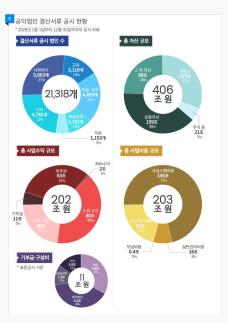 Public Interest Corporations Hold 406 Trillion Won in Assets, 78% from High-Asset Entities Last year, the total assets of public interest corporations in South Korea reached 406 trillion won, with entities holding over 100 billion won accounting for 78% of the total assets. Donations were also concentrated among a few large public interest corporations, highlighting a significant asset and donation concentration trend. The National Tax Service announced on May 21 that it has published its first "2026 Annual Report on Public Interest Corporations," which provides a comprehensive analysis of the operational status and accounting information of these entities. The report was based on the financial statement disclosure data of public interest corporations. According to the report, a total of 21,318 public interest corporations disclosed their financial statements last year. By region, Seoul had the highest number with 7,084 (33%), followed by Gyeonggi Province with 2,778 (13%) and Incheon with 578 (3%), indicating that nearly half (49%) of all public interest corporations are concentrated in the metropolitan area. The total business revenue of all public interest corporations was recorded at 202 trillion won, with donation revenue amounting to 11 trillion won, representing about 5% of the total business revenue. Donation revenue was heavily concentrated among a few large public interest corporations. The top 15 public interest corporations accounted for 4 trillion won in donation revenue, which is 38% of the total donations received by all public interest corporations. Notably, the Korea Community Chest received 847.7 billion won, making up approximately 8% of total donations. The report also highlighted a significant concentration of assets. There were 473 public interest corporations with assets exceeding 100 billion won, representing only 2% of the total, yet they held 317 trillion won, or 78% of the total assets of all public interest corporations. Among high-asset public interest corporations, those related to education made up the largest share, with 202 entities (43%) engaged in educational activities. There were 113 public interest corporations with more than 1,000 employees, most of which were large medical institutions and educational foundations. For instance, Seoul National University reported that real estate constituted 4.6 trillion won, or 86% of its total assets. The total donation revenue for high-asset public interest corporations was 5 trillion won, with an average donation per corporation of 13.7 billion won, approximately 17 times higher than the overall average of 800 million won for all public interest corporations. The report also included information on public interest corporations affiliated with corporate groups. A total of 231 public interest corporations were operated by 72 corporate groups with total assets exceeding 5 trillion won. While most corporate groups managed one or two public interest corporations, SK Group operated 25, Samsung Group 13, and HD Hyundai Group 11. In terms of public interest activities, corporations focused on "academic and scholarship" accounted for the largest share, with 82 entities. The Samsung Cultural Foundation held the largest stock value at 1.7 trillion won, followed by the Hyundai Motor Chung Mong-koo Foundation at 464.5 billion won and the LG Yeonam Foundation at 310.5 billion won. All of these holdings were classified as related-party stocks. The distribution costs paid directly to beneficiaries were highest for Doosan Group at 187.8 billion won, while Chung-Ang University reported spending 118.3 billion won on scholarships and other educational support. The National Tax Service plans to publish the annual report every year to enhance transparency among public interest corporations and promote a culture of donations. The aim is to improve accounting transparency, creating an environment where the public can donate with confidence.* This article has been translated by AI. 2026-05-21 13:43:00
 -
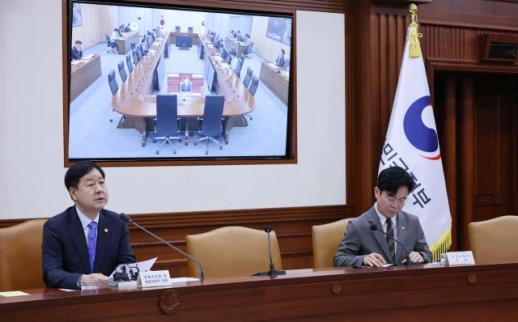 Korea to Announce Sixth Oil Price Cap Amid Inflation Concerns Deputy Prime Minister and Minister of Economy and Finance Koo Yun-cheol announced that the government will reveal the sixth oil price cap at 7 p.m. on May 21, in response to inflation concerns stemming from the prolonged conflict in the Middle East. He also stated that the government will immediately begin revising the enforcement decree of the Price Stabilization Act. During the ninth meeting of the Special Task Force on Price Management held at the Government Seoul Building, Koo noted, "As uncertainties from the Middle East conflict persist, producer prices continue to rise, and there is increasing upward pressure on consumer prices. The government will do its utmost to stabilize prices and minimize the burden on the public." The sixth oil price cap, which will take effect at midnight on May 22, will be announced based on a comprehensive assessment of international oil price trends and the economic burden on the public. Koo explained, "We will consider various factors, including international oil prices and the burden on households and the government." Additionally, the government will extend the fuel tax reduction measure, originally set to expire at the end of this month, until the end of July. This extension aims to alleviate the financial burden on consumers amid increased volatility in international oil prices due to the ongoing conflict. The meeting also addressed measures to enhance the effectiveness of price stabilization initiatives. The government plans to strengthen penalties and recovery systems for violations of the Price Stabilization Act, including prohibiting hoarding and price collusion. Koo emphasized, "We will revise the Price Stabilization Act to ensure that items facing supply concerns are distributed more swiftly and that illegal profits are thoroughly recovered." The government intends to implement measures that will impose orders and fines on those found violating price stabilization regulations, and in cases requiring urgent supply, confiscated goods may be sold immediately. Furthermore, a new system for imposing fines exceeding unjust profits and a reward system for reporting violations will be established to enhance private monitoring. Koo reiterated, "We will promptly begin revising the enforcement decree of the Price Stabilization Act and push for legislative changes as quickly as possible." The meeting also revealed the results of an investigation into price collusion among seven flour mills. The Fair Trade Commission plans to impose a record fine of 671 billion won for collusion on flour prices. The government will closely monitor any price increases that may exploit the rising costs due to the Middle East conflict.* This article has been translated by AI. 2026-05-21 08:57:00
 -
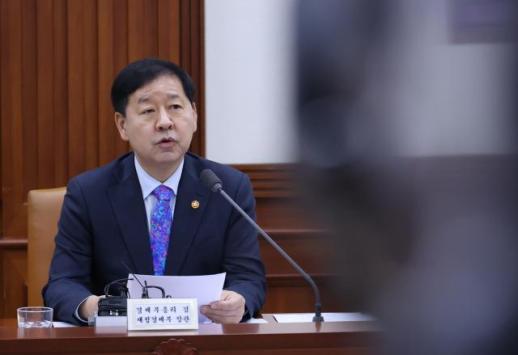 Korea to Provide $60 Million Financial Aid to Middle Eastern Countries Amid Ongoing Conflict Deputy Prime Minister and Minister of Economy and Finance Koo Yun-cheol announced plans to provide a total of $60 million in financial aid to Middle Eastern countries facing liquidity challenges due to the prolonged conflict in the region. He stated that the government will respond calmly and consistently to the U.S. Section 301 investigation into trade practices. During the 268th Foreign Economic Ministers' Meeting held at the Government Seoul Building on May 21, Koo noted, "The uncertainty surrounding our economy remains significant due to tensions in the Middle East and changes in the global trade environment. The government will focus its efforts on responses that the market and businesses can feel." The government plans to offer $30 million each through the Export-Import Bank and the Korea Trade Insurance Corporation to major contractors in the Middle East experiencing temporary liquidity crises due to the ongoing war. Koo explained, "As the saying goes, 'A friend in need is a friend indeed,' we are pursuing financial support for countries that have had close ties with the development of the Korean economy." The government also discussed measures to strengthen supply chain responses amid the resurgence of risks in the Middle East. Plans include supporting domestic production linked to production incentive tax systems and subsidies, as well as establishing new stockpiles of essential goods for industry and daily life. For items that cannot be produced domestically, the government will secure overseas production bases and diversify import sources. The goal is to reduce dependence on specific countries for economic security items to below 50% by 2030. Koo emphasized, "It is now time to move beyond a simple efficiency-centered structure and strategically invest in enhancing supply chain resilience." He added that the government will actively consult with the European Union to minimize industry damage following the EU's recent decision to reduce steel import quotas and strengthen tariffs on excess quantities. Regarding the U.S. Section 301 investigation, Koo stated that the government aims to ensure that the existing balance of interests between South Korea and the U.S. is not disrupted. Previously, the government has articulated its position through written comments and public hearings related to investigations into forced labor and overproduction by the U.S. Koo affirmed, "We will calmly respond by actively explaining our position in upcoming bilateral consultations with the U.S. government to ensure that the previously agreed-upon balance of interests is maintained." Additionally, the meeting reviewed the progress of the Comprehensive Economic Partnership Agreement (CEPA) with Serbia. The government plans to accelerate negotiations with China, India, and ASEAN countries while swiftly concluding the agreement with Serbia to strengthen its foothold in Europe.* This article has been translated by AI. 2026-05-21 08:53:06
 -
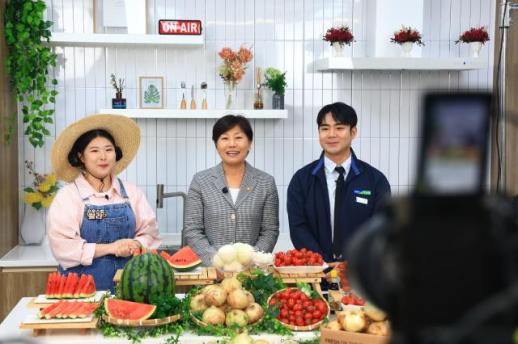 The Importance of Authenticity in Public Officials Recently, a controversial statement by Kim Yong-beom, the head of the Presidential Office's Policy Office, regarding a potential 'national dividend' sparked significant debate. As discussions about possible excess tax revenue emerged, his comments hinted at a possible refund to citizens, prompting immediate market reactions. The Presidential Office quickly clarified that no decisions had been made. It is true that the country's finances are being bolstered faster than expected due to a semiconductor boom, soaring stock prices, and a recovery in corporate taxes. However, an increase in tax revenue does not automatically translate into a 'national dividend.' Words from public officials carry weight; they can influence markets, shape expectations, and sometimes create confusion. For this reason, public officials must choose their words carefully. Unverified policies require caution, and issues directly affecting citizens' lives demand even greater restraint. Coincidentally, around the same time, a different approach was taken by Minister of Agriculture, Food and Rural Affairs, Song Mi-ryeong, who appeared as a 'daily host' in an online studio in Iksan, North Jeolla Province. To assist farmers struggling with oversupply and falling onion prices, she participated in a live commerce broadcast to encourage consumption. Beyond simply conveying messages, she explained the benefits and storage methods of onions while promoting sales. Realistically, the minister's role as a host will not dramatically boost onion prices. Agricultural pricing is a complex issue intertwined with supply, demand, and distribution structures. Oversupply cannot be resolved through a few live commerce sessions. However, citizens do not evaluate policies solely based on efficiency. For farmers facing livelihood challenges due to price drops, the mere presence of the relevant minister in the field signals meaningful support. Messages such as “the government is aware,” “not ignoring us,” and “we are in this together” serve as critical foundations for trust, as important as the policies themselves. Conversely, policies that rely solely on numbers and political rhetoric, detached from the realities on the ground, can quickly become hollow. While authenticity is a subjective concept, citizens are often more perceptive than expected in reading the attitudes of public officials. The recent controversies surrounding policies could have been mitigated if policymakers had better understood and engaged with the realities of the field. The same applies to real estate policies. The government emphasizes 'protecting actual users,' but what matters to low-income individuals without homes is whether housing prices are genuinely stabilizing and whether they feel an increase in supply. No matter how many figures and plans are announced, if citizens do not perceive changes in their lives, trust will inevitably wane. The situation with prices is similar. The government has introduced various measures, including price caps, fuel tax reductions, and discount support, in response to shocks from the Middle East. However, citizens judge the effectiveness of these policies based on the prices at their local gas stations and grocery stores, rather than the numbers in briefing materials. The authenticity of public officials is revealed not through grand slogans but through their understanding of the field and their awareness of the frustrations faced by citizens. More concerning than policy failures is the cynicism that arises from the belief that “these people do not understand our lives.” Especially now, as polarization and asset gaps widen, the attitudes of public officials are as crucial as the policies themselves. Citizens pay more attention to who is trying to understand their realities than to who is making the right statements. The same policy can be received very differently depending on the attitude with which it is explained. Ultimately, the authenticity of public officials does not stem from grand sacrifices or performances. Citizens desire a government that seeks to understand their lives more than a perfect policy. This sincerity is often more clearly demonstrated through small actions in the field than through statements in briefings or on social media. This is why those in high positions should speak less and engage more closely with the community. 2026-05-21 05:03:58
 -
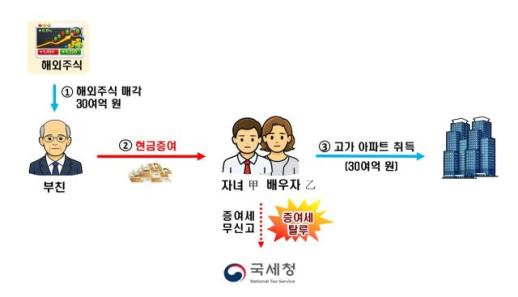 127 Individuals Under Investigation for Real Estate Tax Evasion in South Korea The National Tax Service (NTS) has launched an investigation into 127 individuals suspected of real estate tax evasion, including those who purchased high-priced apartments with cash to circumvent loan regulations or utilized parental funds in what is referred to as "parental advantage" transactions. The scope of the investigation has expanded beyond the Gangnam area to include regions in Gyeonggi Province that have recently experienced significant price increases, aiming to curb disruptions in the real estate market. On May 19, the NTS announced that it has identified a total of 127 individuals as targets for investigation, including cash-rich buyers outside loan regulations, multiple homeowners seeking capital gains, and purchasers of ultra-high-priced apartments. The categories of those under investigation include: cash-rich individuals unaffected by loan regulations, excessive private debt holders, multiple homeowners aiming for capital gains, and buyers of properties valued at over 3 billion won (approximately $2.3 million). The total value of the properties acquired by the individuals under investigation is estimated at around 360 billion won (approximately $270 million), with the estimated tax evasion amount reaching about 170 billion won (approximately $128 million). The NTS noted that as loan regulations have tightened recently, there has been an increase in cases where individuals purchase high-priced apartments using funds from parents or relatives instead of bank loans. One case under investigation involves a child who purchased an apartment in a desirable school district for over 3 billion won entirely in cash, using funds from a father who sold overseas stocks. The NTS is examining the potential for disguised gifts in such transactions. Instances of "disguised borrowing" using promissory notes are also under scrutiny. One case involved a young professional in their early 30s who borrowed over 1 billion won from their father to buy an apartment in a new city in Gangnam, with a promissory note stipulating repayment of the principal and interest upon the father's death. The NTS suspects this may be an attempt to disguise a gift as a loan. The NTS is also intensifying its scrutiny of multiple homeowners. It plans to investigate not only the sources of funds used for acquiring additional high-priced apartments but also the overall flow of funds among family members and the process of wealth accumulation. Transactions in non-Gangnam areas, such as Seongbuk-gu and Gangseo-gu, as well as Gyeonggi Province's Gwangmyeong and Guri, which have recently seen notable price increases, will also be closely monitored. The NTS is analyzing suspected tax evasion based on funding plans shared in real-time by the Ministry of Land, Infrastructure and Transport. Particularly, properties valued at over 3 billion won will undergo comprehensive verification. Following an initial investigation in October of last year, the NTS is continuing its tax audits, focusing on the sources of acquisition funds and the overall process of wealth formation. The NTS will also examine the potential misuse of business loans. After a self-correction period in the first half of the year, the NTS plans to conduct a thorough verification of cases involving the use of business loans to acquire high-priced apartments starting in the second half of the year, expanding the scope of investigation to include potential tax evasion across entire businesses. An NTS official stated, "Tax evasion in real estate transactions undermines tax justice, distorts market order, and creates social deprivation. We will respond strongly until the perception that tax evasion will inevitably be detected becomes established."* This article has been translated by AI. 2026-05-19 12:55:43
 -
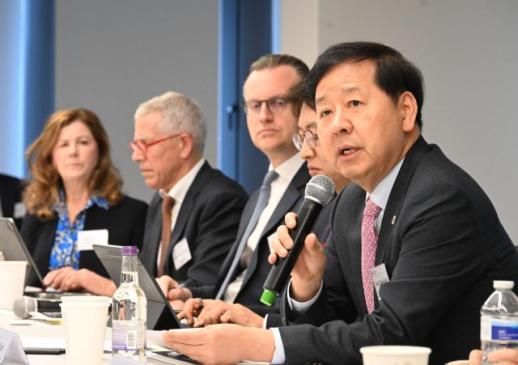 Korea's Investment Opportunities Highlighted at London Economic Briefing Deputy Prime Minister and Minister of Finance and Economy Koo Yun-cheol held a Korean Economic Investment Briefing in London, urging global investors to consider opportunities in South Korea, stating that the term "Korea Discount" is now outdated. The Ministry of Finance and Economy announced on May 19 that the briefing took place at the South Korean Embassy in London on May 18, targeting major global investment institutions. Attendees included representatives from leading asset management firms such as BlackRock, PIMCO, JP Morgan Asset Management, Fidelity, and UBS, as well as European investment banks like BNP Paribas, Barclays, and Standard Chartered. During the briefing, Koo emphasized that South Korea possesses world-class manufacturing capabilities in key supply chain areas such as memory semiconductors, high-bandwidth memory (HBM), power semiconductors, and sensors, particularly in the era of AI transformation. He noted that the country is rapidly transitioning to enhance productivity across all industries by integrating AI. He also highlighted ongoing reforms aimed at improving corporate governance, protecting shareholder interests, and introducing tax incentives for investors, which are part of broader capital market reforms. Koo pointed out that since the new government took office, the KOSPI index has risen by over 170%, elevating South Korea's stock market capitalization ranking from 13th to 7th globally. He mentioned that approximately $10.9 billion in new funds have flowed into South Korean bonds since their inclusion in the World Government Bond Index (WGBI). "The Korea Discount is a thing of the past, and the Korea Premium is becoming a new reality," Koo stated, adding, "Now is the golden time for investment in South Korea." The government plans to strengthen its growth strategy centered on AI and advanced industries, focusing on seven key physical AI sectors, including robotics, automotive, and shipping, as well as 15 ultra-innovative economic projects involving graphene, superconductors, and small modular reactors (SMRs). Reforms in the foreign exchange and capital markets will continue, with plans to enhance foreign investors' access to the market through measures such as 24-hour foreign exchange market operations, the establishment of an offshore won payment system, and the simplification of account opening and payment procedures. Attendees described South Korea's economic growth narrative as a "compelling story," noting that the country's status in the global market and capital markets has significantly improved.* This article has been translated by AI. 2026-05-19 11:11:06
 -
 Government Signals Shift to 'Primary Residence' Focus in Real Estate Taxation The government is preparing a comprehensive redesign of the asset taxation system, focusing on real estate taxation ahead of next year's tax reform announcement. The core of this initiative is a shift from simple tax rate adjustments to a framework centered on 'primary residence and investment income taxation,' which is expected to have significant repercussions across the real estate and financial markets. According to the Ministry of Finance and Economy, the government plans to unveil the tax reform proposal by the end of July. At the heart of this reform is the real estate tax system. Following the expiration of the temporary exemption on capital gains tax for multiple homeowners on May 9, the government is seriously considering shifting the long-term holding special deduction from a holding period focus to a primary residence focus. This change aims to move away from a structure that previously rewarded mere ownership to one that adjusts tax burdens based on actual residency. Additionally, the government is reviewing the reduction of tax benefits for rental business operators. The exemption from capital gains tax for rental business operators in designated adjustment areas has faced ongoing market distortion controversies, prompting the government to formalize its intention to reassess this policy. Strengthening residency requirements while reducing tax support for investment holdings could lead to market structural changes, including an increase in available properties. Deputy Prime Minister and Minister of Finance and Economy Ku Yun-cheol stated during a press briefing on May 11, "Real estate should no longer be viewed as an asset for profit but approached with a focus on housing stability," clearly indicating a policy direction to redefine real estate as a 'housing asset' rather than an 'investment asset.' The potential revision of property taxes is also a key variable. Within the government, there is a cautious sentiment regarding the immediate reinforcement of property taxes. Concerns have arisen that raising property taxes could exacerbate instability in the housing market, particularly as signs of price volatility emerge in the Gangnam area of Seoul. However, as the principle of residency-based taxation is strengthened, the need to adjust burdens for multiple homeowners and non-residential property holders is likely to remain a topic of discussion. Consequently, rather than uniformly increasing property taxes, proposals to differentiate tax rates based on residency status and ownership purpose are gaining traction. The burden on primary homeowners would be maintained, while tax equity would be enhanced for high-value, non-residential, and investment properties. Observers suggest that if the revisions to the long-term holding special deduction and the reduction of rental business operator benefits are realized, the property tax system may also be readjusted in the same direction over the long term. The introduction of a financial investment income tax is likely to be postponed for the time being. On May 12, Deputy Prime Minister Ku indicated during a cabinet meeting that it would be a matter to be considered once market conditions are sufficiently established, suggesting that the timing is not yet right. However, this could raise issues of equity with regard to cryptocurrency taxation. The government is preparing to apply a 22% tax rate on capital gains from cryptocurrency transactions starting next year. If taxation on cryptocurrency is implemented before capital gains tax on stocks, it could lead to inevitable debates over tax equity among different asset classes. In addition, a comprehensive review of tax expenditures is underway. The government plans to reassess the temporary relief measures expanded during the COVID-19 response and eliminate ineffective tax supports. However, in the National Assembly, bills demanding the extension of sunset provisions have been introduced, indicating a growing struggle over policy direction. Adjustments to the taxable income standards for comprehensive income tax are also of interest. The current tax base system has been in effect since the 2023 tax year. To address the fixed structure of tax brackets amid rising prices, there are calls in the political arena for the introduction of an 'income tax inflation linkage system' that would automatically adjust thresholds based on inflation rates.* This article has been translated by AI. 2026-05-18 06:03:00
 -
 Nobel Laureate Peter Howitt: Education, Finance, and Welfare Must Adapt to AI Era Peter Howitt, a Nobel laureate in economics and professor at Brown University, emphasized that the rise of artificial intelligence (AI) will fundamentally transform not only industries but also education, social safety nets, and financial systems. He urged South Korea to undertake a comprehensive redesign of its economic framework. The Korea Development Institute (KDI) and the Economic and Social Research Institute hosted a conference on May 15 at the Westin Chosun Hotel in Seoul, where Howitt delivered a keynote address on innovative growth strategies for the South Korean economy in the AI era. Howitt diagnosed that the South Korean economy faces multiple challenges, including the spread of AI, rising protectionism, demographic changes, and the transition from follower to leading growth. He defined AI as a “General Purpose Technology,” akin to electricity, electric vehicles, and personal computers, indicating that it is a technology that can reshape the entire economic structure rather than being confined to specific industries. “General Purpose Technologies tend to go through initial disruption and prolonged adjustment periods before their productivity-enhancing effects spread across industries,” Howitt said. “To reap future benefits, all countries need to actively embrace this technology.” He stressed the necessity for a comprehensive institutional redesign that encompasses education systems, social safety nets, and the stability of financial systems to respond to the spread of AI. He also highlighted the importance of collaborative industrial policies among government, businesses, and academia. Howitt underscored the need to maintain an open economic system despite the rise of protectionism. “International trade enhances competitive pressure and provides access to global markets and learning opportunities, which fosters innovation,” he said, suggesting that South Korea should seek new trade alliances while also strengthening its domestic market in response to declining demand from existing trading partners. Regarding the issue of population decline, he cautioned against excessive pessimism. “Population decline is not necessarily a constraint on growth, as some may fear,” he noted, adding that expanding selective immigration policies to attract talented individuals from abroad is a desirable direction. Howitt proposed establishing a “leading growth system” as a key objective for South Korea's economic strategy. He stated that for the economy to transition to leading growth, a more innovative corporate ecosystem is needed, emphasizing the importance of strengthening support for small and medium-sized enterprises, expanding antitrust policies, and creating a technology-friendly financial system. Concerns about the structural slowdown in the South Korean economy were prominently raised during the conference. Kim Se-jik, head of KDI, remarked, “It is time for a new growth strategy focused on ‘real growth’ rather than short-term economic responses,” referring to the trend of the economy experiencing a decline of 1 percentage point in growth rates every five years over the past three decades. Deputy Prime Minister and Minister of Economy and Finance Ku Yun-cheol also emphasized in his congratulatory remarks the need for a shift from a follower-type economy to an innovation-driven transformation based on “creative destruction” to address external uncertainties such as the Middle East conflict and the structural issue of declining potential growth. 2026-05-15 14:05:29
 -
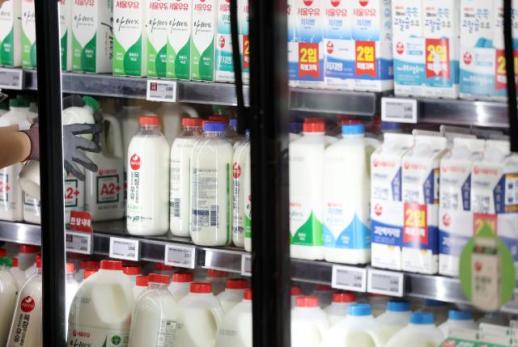 Milk Production Costs Decrease 0.4% Last Year, Price Freeze Likely This Year As negotiations for raw milk prices approach, the likelihood of a price freeze is increasing. This is due to a decrease in production costs, which has reduced the pressure for price hikes compared to previous years. According to the National Data Agency's "2025 Livestock Production Cost Survey Results" released on May 15, the production cost of milk last year was 1,014 won per liter, a decrease of 0.4% (4 won) from the previous year. This reduction is attributed to a decline in the cost of dairy feed, which fell from 629 won to 615 won per kilogram, a drop of 2.2% (-14 won). Raw milk prices are determined through negotiations between the Dairy Promotion Association, which includes both the dairy industry and dairy farmers, based on the previous year's production cost fluctuations. Under the current raw milk price linkage system, negotiations can occur if the production cost fluctuation exceeds ±4% from the previous year, with price adjustments made within a maximum range of 70% of the cost change. This year, the fluctuation in production costs did not reach the ±4% threshold, and the government's strong focus on price stability further increases the likelihood of a price freeze. However, since raw milk prices have been frozen for two consecutive years, and due to rising labor costs and exchange rates, there remains a possibility for price increases. The Dairy Promotion Association may still conduct separate negotiations based on the supply and demand situation for raw milk and market conditions, even if the previous year's production cost fluctuation does not meet the criteria. Meanwhile, the profitability of livestock farms varied by type last year.For beef cattle, the net loss per animal was 999,000 won, a reduction of 615,000 won (38.1%) from the previous year, indicating some improvement in losses. However, this marks the fourth consecutive year of deficits since 2022. While rising beef prices have somewhat restored profitability, the increase in calf prices has continued to burden production costs. In fact, the production cost for beef cattle rose to 1,289,000 won, an increase of 13,000 won (1.0%) from the previous year. For other cattle, the net loss was 1,493,000 won, down 315,000 won (17.4%) from the previous year. This reduction is attributed to lower feed costs and higher market prices. In contrast, the profitability of dairy cows and pigs and chickens improved. Dairy cows saw a net profit of 2,235,000 won per animal, an increase of 85,000 won (3.9%) from the previous year, driven by higher raw milk selling prices and calf prices. Finishing pig farmers reported a net profit of 81,000 won per animal, a significant increase of 50,000 won (157.6%) from the previous year due to rising pork prices. Layer hens experienced a net profit of 12,561 won per animal, up 4,519 won (56.2%) due to rising egg prices, while broiler chickens saw a net profit of 213 won per animal, an increase of 85 won (66.0%) due to lower rearing costs. 2026-05-15 12:04:14