


Latest by
-
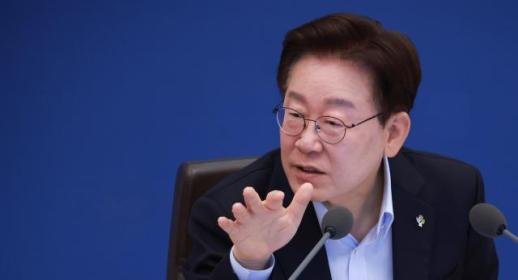 President Lee's Approval Rating Falls Below 50% for First Time President Lee Jae-myung's approval rating has been on a downward trend since the June 3 local elections.A poll released on June 24 revealed that negative evaluations of the president's performance have surpassed positive ones, marking a 'dead cross' in approval ratings.The Korea Social Opinion Institute (KSOI) conducted a survey from June 22 to 23, polling 1,005 adults aged 18 and older via 100% automated response (ARS) method. The results showed that 47.7% of respondents approved of President Lee's governance, while 48.2% disapproved, with 4.1% unsure.This is the first instance of a dead cross phenomenon appearing in KSOI's survey, following a similar finding by Gallup Korea.President Lee's approval rating dropped by 2.7 percentage points from the previous survey conducted on June 8-9, while disapproval ratings increased by 2.5 percentage points.KSOI analysts attributed the sharp decline in approval ratings post-election to a combination of factors, including the impact of the election results, accountability for the Central Election Management Commission's ballot shortage, and ongoing controversies surrounding the prosecution's supplementary investigation rights.In party support, the Democratic Party saw a 1 percentage point increase to 39.6%, while the People Power Party fell by 0.8 percentage points to 37.3%. The gap between the two parties stands at 2.3 percentage points.Following these parties, the Reform Party received 2.7%, the Progressive Party 1.9%, and the Justice Party 1.6%. Additionally, 14.0% of respondents indicated they had no party affiliation.Amid escalating conflicts within the ruling party over the retention of supplementary investigation rights, 47.7% of respondents supported granting these rights to prosecutors in the new Public Prosecution Office, which will be established after the abolition of the current prosecution system. Meanwhile, 31.3% believed that supplementary investigation rights should be abolished for judicial reform, and 21.0% were unsure.The survey utilized wireless virtual numbers provided by the three major telecommunications companies and had a margin of error of ±3.1 percentage points at a 95% confidence level, with a response rate of 5.6%. For more details, please refer to the Central Election Survey Deliberation Commission's website.* This article has been translated by AI. 2026-06-24 11:56:00
 -
 National Growth Fund Surpasses 110 Billion Won in Initial Investments The National Growth Fund, established by the pension fund, has exceeded 110 billion won in cumulative investments just seven days after its launch. According to the Ministry of Strategy and Finance on June 24, the "National Growth Fund No. 1" was initiated on June 9 with an initial investment from the National Sports Promotion Fund. An additional investment of approximately 80 billion won from the Trade Insurance Fund was confirmed on June 16, bringing the total investment to over 100 billion won. The government is establishing the National Growth Fund with a target size of 150 trillion won over five years to foster strategic advanced industries. The pension fund's surplus capital is expected to participate as a private investor in general policy funds. The fund was designed and launched in collaboration between Samsung Asset Management, the fund's primary manager, and Korea Growth Investment Corp. It will be managed to diversify investments across various growth sectors, including its own sub-funds. Last year, the "LP First Step Fund" was created as an investment product within the pension fund's investment pool focused on innovative growth sectors. Additionally, smaller funds can participate by jointly managing funds within the pension fund's investment pool, allowing for an expansion of the fundraising scale. Earlier this year, the Ministry established the "Basic Direction for Fund Asset Management" and "Guidelines for Fund Management Evaluation" to ensure that pension fund resources are directed toward innovative growth sectors. The basic direction aims to contribute to discovering future growth engines for the country through investments in innovative growth areas. The guidelines also increased the investment score for innovative growth sector investments from one point to two points and included the National Growth Fund in the evaluation criteria for "efforts to secure public interest." On May 29, a financial seminar was held for pension fund and public institution asset management officials to introduce the "National Growth Fund No. 1." The seminar reached a consensus on the need to expand investments in innovative growth sectors and the role of public funds in fostering productive outcomes. A Ministry official stated, "As we approach a 100 trillion won era in pension fund management, we will collaborate with fund managers to ensure that public funds play a catalytic role in innovative growth, beyond merely enhancing returns. Based on this, we will continuously identify innovative growth investment products suitable for pension funds and public institutions."* This article has been translated by AI. 2026-06-24 11:32:00
 -
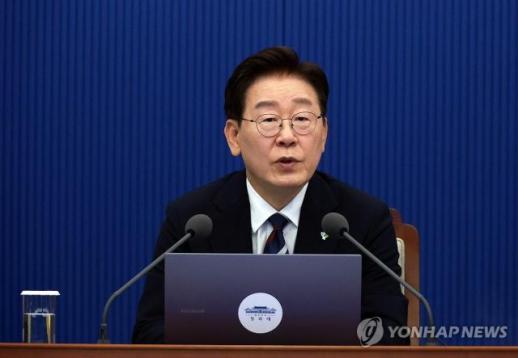 President Lee Jae-myung Addresses Youth Discontent in South Korea President Lee Jae-myung emphasized the need for the government to take the feelings of alienation among the youth seriously during a Cabinet meeting and emergency economic assessment on June 23. While discussing impressive macroeconomic achievements such as the semiconductor boom and soaring KOSPI index, he highlighted the deepening asset polarization that lies beneath these successes. He stated, "The youth's sense of alienation, feeling that record bonuses and the KOSPI index are stories from another world, must be painfully acknowledged by the government." This statement reflects the current administration's awareness of the harsh realities faced by young people in South Korea, who are grappling with a dual crisis of employment challenges and widening asset gaps, despite the country's economic indicators appearing robust.The reality confronting today's youth is not just serious; it is desperate. The barriers to employment are rising daily, making it exceedingly difficult to secure stable income sources. The skyrocketing housing costs have made it challenging even to find decent rental accommodations, let alone purchase a home. With a weak foundation in stable jobs and housing, many young people are increasingly opting out of dating, marriage, and childbirth, leading to a cycle of despair known as the 'N-po generation.' For young people deprived of opportunities to build assets, the macroeconomic boom only exacerbates their feelings of relative deprivation and alienation. They express frustration at being pushed back from the starting line within a rigid social structure established by older generations. This sense of alienation is not merely an emotional issue; it should be recognized as a structural ailment threatening the sustainability of the South Korean community.The deep distrust and dissatisfaction among the youth were starkly evident following the recent June 3 local elections. A shortage of ballots heightened the youth's distrust in the government, underscoring the urgency for policies that reflect their voices. Politicians often shower young voters with promises during election seasons, only to see their concerns sidelined once the elections conclude. This pattern has led many young people to close themselves off from politics and government. Beneath their political apathy and cynicism lies a profound distrust born from repeated cycles of hope and disappointment. For the Lee Jae-myung administration to genuinely win back the hearts of the youth and inspire them to dream of a better future, it must abandon the approach of teaching or offering temporary handouts. What young people truly need is not just a simple apology but a demonstrated commitment from the government to restore social trust and provide a functioning safety net.However, the government is not entirely inactive. Following a surge in applications for the 'Youth Future Savings' program aimed at assisting young people in asset formation, the government directed that "additional budgets should be allocated to accept all qualifying youth." This immediate response is encouraging. The government's intention to match funds for young people who have struggled to build assets is a step in the right direction to enhance the effectiveness of its policies. Yet, this should not be the end of their efforts. As the economy shifts toward high-tech industries, reducing job creation effects, the government must boldly transform its budgetary approach to significantly increase support for youth entrepreneurship and new industry initiatives. It is essential to create a robust entrepreneurial ecosystem and ensure housing stability, rather than relying on temporary, low-quality jobs. All available government resources, including surplus tax revenues, should be redirected to invest in the future of the youth.There is no magical solution to alleviate the suffering of the youth. As President Lee noted, the only path forward is to carefully and consistently restore the ladder of opportunity across all policies. The government must swiftly implement comprehensive measures that encompass housing, employment, and asset formation, allowing young people to feel the impact of these policy changes and prepare for their futures step by step. When the government genuinely responds to the despair of the youth and proves its commitment through action, the political distrust among young people will gradually diminish. Creating a nation that does not leave its youth feeling abandoned is the most urgent and fundamental challenge facing the Lee Jae-myung administration.* This article has been translated by AI. 2026-06-24 11:28:00
 -
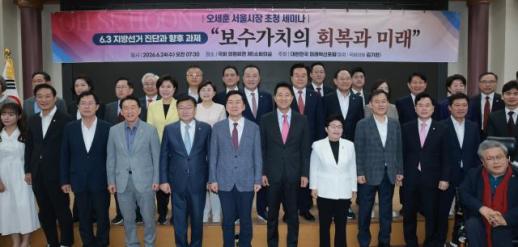 People Power Party Analyzes Local Election Results and Future Direction People Power Party held a seminar on June 24, inviting Seoul Mayor Oh Se-hoon to analyze the results of the June 3 local elections and discuss the party's future direction. The presence of independent lawmaker Han Dong-hoon and Mayor Oh at the event highlighted the influence of prominent conservative figures within the party.The Future Innovation Forum, a research group within the People Power Party, conducted the seminar at the National Assembly, focusing on the theme "Analysis of the June 3 Local Elections and Future Tasks - Recovery of Conservative Values and the Future." The event was attended by over 20 current lawmakers, including floor leader Jung Jeong-sik and forum president Kim Ki-hyun.Jung described the June 3 local elections as a victory for the wise citizens, stating, "The public clearly sent a warning to the ruling party about the arrogance and authoritarianism of the government in its first year. This election provided our opposition party with a small foundation to rise again." He emphasized that the election results demanded deep reflection and reform across the political spectrum.He added, "We must take the people's will seriously and start again with humility. We do not have time to argue about who did better in the past. We must unite and focus on the future, committing to necessary reforms."In his speech, Mayor Oh advocated for a "legislative-centered party," cautioning against the influence of party leadership. He remarked, "I believe South Korea has become an overly politicized society. The party leader's involvement in every social issue leads to ideological conflicts and unnecessary tensions. If we cannot realistically abolish the central party, we must shift to a legislative-centered organization."Regarding internal conflicts, including the future of party leader Jang Dong-hyuk, he stated, "Nothing can be rushed. Hastily pushing for change often leads to adverse effects, which is not what our party members desire. There is no need to bleed over this issue. It is essential to resolve these matters within the legislature, as the consensus among lawmakers is beginning to take shape, and senior members must take on their responsibilities."* This article has been translated by AI. 2026-06-24 11:28:00
 -
 HD Construction Machinery Launches DEVELON Excavator in India HD Construction Machinery is expanding its market share in key global export markets, including the Middle East and Africa. According to industry sources, the company recently conducted a launch event for its 20-ton DEVELON excavator aimed at major dealers from Middle Eastern countries such as Saudi Arabia, the United Arab Emirates, Qatar, and Oman at its production facility in Pune, India. The newly launched product is the largest segment of excavators supplied to emerging markets. By utilizing an efficient and systematic production line at its Indian factory, the company has reduced the purchase costs of key components and features, enhancing its price competitiveness. Additionally, the technology and quality have been optimized for local working conditions, improving the functionality and durability of the existing equipment. HD Construction Machinery plans to respond to cost-effective products supplied by major global construction equipment manufacturers targeting emerging markets with this 20-ton model. In response to the rising demand in emerging markets, the Indian factory has recently expanded its annual production capacity to approximately 9,000 units. A representative from HD Construction Machinery stated, "In addition to producing existing Hyundai brand products, we will also manufacture DEVELON equipment, aiming to establish a production system capable of 12,000 units annually by 2030." The representative added, "The 20-ton DEVELON excavator will compete with low-cost equipment by offering core performance optimized for working environments, robust quality, and differentiated service, providing 'value beyond price.' We will leverage our Indian factory, which has become a global export hub, to expand our market presence in the competitive emerging markets." Meanwhile, HD Construction Machinery is accelerating its efforts to increase its global export market share, having recently signed a large-scale bulldozer supply contract with the Polish military on June 4.* This article has been translated by AI. 2026-06-24 11:28:00
 -
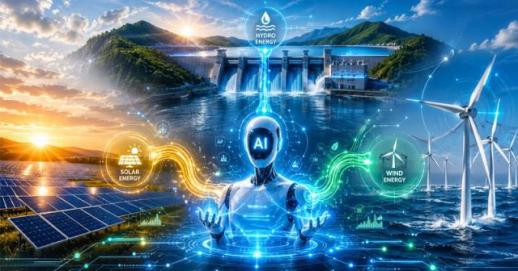 Renewables ride the AI power boom, but the grid can't keep up SEOUL, June 24 (AJP) - Renewables are being fully employed to feed the world's hungry AI data centers as farming Mother Nature is cheap and quick to build. Yet a widening gap between green ambition and grid reality — from Beijing to Naju — is exposing the limits of an energy transition running at full tilt. Global electricity demand from data centers is set to roughly double to about 945 terawatt-hours by 2030 and reach around 1,200 TWh by 2035, the International Energy Agency said in its Energy and AI report. Half of that growth is expected to come from renewables. The appeal of solar and wind is easy to prove through numbers. Onshore wind and solar are now the cheapest sources of new electricity on the planet, costing about $34 and $43 per megawatt-hour, respectively, compared with more than $100 for new gas generation. A solar farm can be switched on within months, while a nuclear reactor can take a decade to build. But the traits that make renewables fast also make them fickle. Solar output vanishes at night, wind dies when the air goes still, and for a data center that must run flat out around the clock, that intermittency is a structural mismatch. And it is beginning to bite. Nowhere is the strain clearer than in China. Power demand from Chinese data centers is projected to surge by 300 billion to 500 billion kilowatt-hours between 2026 and 2030, accounting for about 18 percent of the country's total electricity demand growth, according to Pei Shanpeng, a director at State Power Investment. Beijing wants renewables to cover 80 percent of that load by 2030, up from just 11 percent in 2023. The catch is that AI facilities are a poor match for green supply because their power needs are nearly impossible to forecast. "From what we understand, they cannot really adjust power consumption load much. GPUs are very expensive, so once they are purchased, operators want to use them as quickly and as intensively as possible," Pei said at an industry conference in Beijing, according to Reuters. The United States, by contrast, is reaching for firmer power, leaning on nuclear energy to backstop the surge. On Wednesday, the Energy Department unveiled $17.5 billion in loans to bulk-buy long-lead reactor components and shave up to three years off construction timelines. Elsewhere in Asia, the strain is landing hardest where demand is rising fastest. In Japan, data centers are expected to account for more than half of all electricity demand growth through 2030, and with renewables projected to supply only about 17 percent of power, Tokyo is accelerating the restart of idled nuclear reactors. Singapore and Malaysia's Johor have lured hyperscalers with cheap land and electricity, but the tropics exact a penalty: cooling alone can consume up to a third of a facility's energy use, while coal still underpins much of the power supply. India faces a similar dilemma. South Korea sits in the same bind, but from the opposite direction. Here, the renewables exist; the market does not let them flow. On Tuesday, four solar and wind industry groups rallied outside the Korea Power Exchange in Naju to demand a sweeping overhaul of market rules they say continue to favor coal and gas. In the renewables-rich southwestern Jeolla and Jeju regions, the grid is so frequently oversupplied on sunny afternoons that the exchange orders generators to shut down, leaving operators with electricity they cannot sell. Under its 11th Basic Plan, Seoul aims to quadruple renewable capacity to about 122 gigawatts by 2038 from 30 GW in 2023. Yet the market rules meant to carry that power have not kept pace. "As long as renewables have no seat at the table where the rules are written, we cannot build a power system centered on renewables," the groups said in a joint statement. That is the paradox of the AI energy boom. The world is no longer constrained by how quickly it can build renewable power. It is constrained by how slowly it can move it. The cheapest and fastest electricity on Earth is arriving faster than grids can absorb it. Unless transmission networks, storage systems and market rules are rebuilt alongside AI infrastructure, a growing share of clean energy will continue to be generated only to be switched off. The race, in other words, is no longer about adding more solar panels or wind turbines. It is about building grids smart enough to carry them. In the AI era, electricity is becoming digital infrastructure — and the bottleneck is no longer generation, but the wire itself. 2026-06-24 11:25:54
 -
 AI K-pop group SweeTeez to releases new single 'Line & View' SEOUL, June 24 (AJP) - AI-generated K-pop girl group SweeTeez will roll out its new single "Line & View" on major streaming platforms Wednesday at noon. The single contains two tracks: the title track "Line & View" and "Where You Went, Cloud." Built around synth-pop and future bass, the title track explores repeated encounters and separations between people kept apart by distance and time. The second song deals with remembrance and the cycle of life. A music video released June 17 shows the group's five virtual members performing choreography, with AI used to render their facial expressions, lip movements and dance sequences. SweeTeez is presented as a five-member multinational group formed through "PRODUCE9," an AI audition project involving 99 virtual trainees. Its members are Yena from South Korea, Chinese American member Sophie, Aileen from Malaysia and Japanese members Riri and Yuzuki. The group recently appeared in the SBS documentary special "Life of AI," which examined how virtual idols are created and how AI could shape the future of South Korea's music industry. 2026-06-24 11:24:18
 -
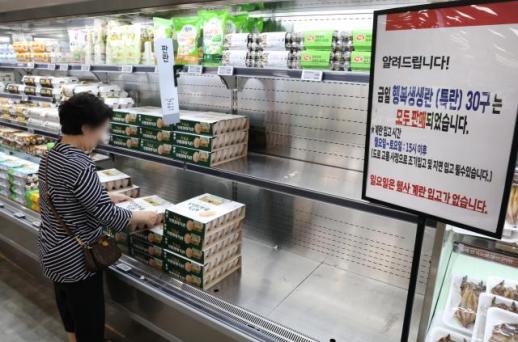 Rising Egg Prices Highlight Need for Balanced Price Policies Recent surges in egg prices are increasing the financial burden on consumers. Eggs are a staple food item for many households, and rising prices affect not just this single commodity but also the overall cost of living that citizens experience. Moreover, eggs are essential raw materials in various industries, including baking, dining, and processed foods, raising concerns that price hikes could trigger a chain reaction of increases across the food sector. Inflation impacts consumers most directly at the dinner table. In the current climate of high prices and economic slowdown, many people find it increasingly difficult to purchase even basic ingredients for their meals. This reality underscores why the government must prioritize price stability as a key policy objective. The reasons behind the rising egg prices are multifaceted. Concerns over supply disruptions due to avian influenza (AI), rising feed costs, increased labor and logistics expenses, and decreased productivity from extreme weather conditions all contribute to the issue. These structural factors cannot be easily explained by problems in the distribution phase or the pricing decisions of individual businesses. Therefore, the government needs a comprehensive approach that goes beyond short-term fixes and examines the entire supply chain. First and foremost, efforts must focus on stabilizing egg supply. This includes enhancing biosecurity support for producing farms and considering measures to alleviate feed cost burdens. Expanding import volumes or adjusting tariffs for a certain period could also help address supply shortages. Additionally, a thorough review of the distribution process is necessary to ensure there are no unreasonable price distortions, thereby increasing market transparency. However, it is crucial to recognize that artificial price controls that contradict market principles are not a viable solution. Simply suppressing price increases from food companies due to rising costs does not address the root of the problem. Pressuring businesses to refrain from raising prices amid rising raw material, labor, and logistics costs ignores the realities they face. In fact, many food companies have restrained price increases in recent years despite significant cost burdens, considering the impact on consumers. If cost increases persist over time, it could lead to declining profitability for companies, reduced investment, and job cuts. Ultimately, weakened corporate competitiveness will harm both consumers and the national economy. Historically, there have been numerous instances where the government has publicly pressured companies to refrain from raising prices under the guise of price stability. While such measures may temporarily delay price increases, their long-term effectiveness in stabilizing prices is limited. Critics argue that this approach only exacerbates the burden on businesses and distorts the market. Price stability should be achieved through supply expansion, cost reduction, and improved market efficiency, not through administrative directives. Therefore, the government should not view consumers and businesses as opposing forces. Reducing household burdens and creating a sustainable business environment are not conflicting goals but rather objectives that should be pursued together. A balanced policy is needed that provides stable production conditions for farmers, expands institutional support to alleviate cost burdens for the food industry, and ensures that consumers benefit from price stability. Ensuring price stability is one of the government's fundamental responsibilities. If the government cannot stabilize the price of a dozen eggs, public trust in economic policies will inevitably wane. The sharp rise in egg prices should not be dismissed as a temporary phenomenon but recognized as a warning sign for the economy of ordinary citizens. The government must implement effective measures to expand supply, improve distribution structures, and alleviate production costs to quell inflationary pressures promptly. A sustainable price policy that benefits both consumers and businesses is essential for protecting the livelihoods of everyday people and revitalizing the economy.* This article has been translated by AI. 2026-06-24 11:24:00
 -
 North Korea deploys new destroyer amid push for naval buildup SEOUL, June 24 (AJP) - North Korea has deployed a new 5,000-ton destroyer ready for combat, state media reported on Wednesday. According to the state-run Korean Central News Agency, the reclusive country's leader Kim Jong-un attended a commissioning ceremony for the Choe Hyon held in Nampo the previous day, expressing expectations that his country's naval capabilities would be strengthened to what he described as "admirable beyond imagination." The Choe Hyon, named after a comrade of regime founder Kim Il Sung during his days as a partisan fighter, went through several tests in recent months after the "new-type multi-mission" destroyer, which is believed to be capable of carrying nuclear weapons, was first unveiled in April last year. KCNA quoted Kim as saying that the tests with "satisfying results" confirmed the destroyer's combat capabilities as the "most perfect." Kim urged the country to push ahead with plans to build at least two warships of the Choe Hyon class or higher each year over the next five years, along with frigates and special-purpose vessels armed with underwater weapons. He also stressed that building modern naval bases had become an "urgent and essential task." "The Choe Hyon appears to be an offensive destroyer heavily armed with various missiles, rather than an Aegis ship capable of defending against layered attacks," said Yang Moo-jin, a professor at the University of North Korean Studies. But he added that further analysis is needed to determine how well it could withstand modern warfare involving precision strikes and drone attacks. 2026-06-24 11:20:46
 -
 U.S. Official: Anthropic's Mythos Detects Government System Vulnerabilities in Hours Anthropic's advanced artificial intelligence (AI) model has reportedly identified security vulnerabilities in sensitive U.S. government networks. On June 23, an anonymous U.S. official told the Associated Press that Anthropic's AI model, Mythos, detected vulnerabilities in high-security U.S. government computer systems during testing. The official explained that Anthropic conducted tests using the Mythos model in collaboration with U.S. intelligence agencies, and the model identified some vulnerabilities within hours. However, they clarified that this does not imply that Mythos could exploit those vulnerabilities in the same timeframe. This testing was part of Anthropic's 'Project Glasswing,' aimed at protecting critical software from risks to public safety, national security, and the economy, with participation from major tech companies and related entities. Earlier, Senator Mark Warner, a Democrat, mentioned the related tests during a Senate Banking, Housing, and Urban Affairs Committee hearing on June 11. Warner stated, "This tool breached nearly all classified systems. It did so in hours, not weeks." This report comes amid ongoing tensions between Anthropic and the Trump administration. Earlier this month, the Trump administration issued guidelines preventing foreign nationals from accessing Anthropic's latest AI models, 'Fable5' and 'Mythos5,' leading the company to suspend access for all customers to those models. However, Anthropic maintains that potential security concerns raised by the company do not justify the government's actions. There has also been pushback from the cybersecurity industry. Over 100 experts and executives from companies like Adobe and NVIDIA sent a letter to the government, arguing that while Mythos excels at detecting software flaws and vulnerabilities, it is not unique in this capability and called for the withdrawal of the guidelines. They pointed out that restricting strong defensive measures in light of rapidly advancing cyber capabilities from U.S. adversaries poses significant risks.* This article has been translated by AI. 2026-06-24 11:20:00