
Journalist

Lee Dong Geon
ldg920210@ajunews.com
-
 Actor Jin Tae-hyun to Leave JTBC’s ‘Divorce Consideration Camp’ After Reports Surface Early Actor Jin Tae-hyun is leaving JTBC’s “Divorce Consideration Camp.” Cast changes are common in entertainment programming, but the lingering question in this case has been less about why he is departing than about how the exit was handled. Jin said on social media on the 28th that he had planned to say goodbye after his final episode, but wrote earlier because an official article about his departure was published while he still has many episodes left to air. He said he learned of the production team’s explanation and decision through his manager, and that he left the show after his last recording in early April. His message was restrained, without public criticism of the production team. He thanked the program and viewers, saying that in his 25-year career he worked harder and approached the show with more sincerity than any other shoot. Still, his wording — including that he heard the news “through my manager” — suggested disappointment with the process. Receiving such news through a manager is not unusual in the TV industry, where schedules, contracts and casting decisions are often communicated through management. Producers may also see that route as a way to follow formal procedure and avoid misunderstandings, especially during a broader retooling that can involve departures and replacement discussions at the same time. But a process that is procedurally acceptable may still feel insufficient on a personal level. Jin was not a one-time guest; he had been a regular presence on the program as an investigator representing the husband’s side, making him part of the show’s core lineup. For long-running cast members, the way an exit is wrapped up can matter as much as the decision itself. The timing of the reporting also sharpened the reaction. Jin said he was disappointed that news of his departure came out first while he still appears in upcoming episodes. In effect, he remained on screen as a member of the program while being treated off screen as someone who had already left, losing the chance to choose when and how to deliver his own farewell. Producers have the authority to revamp a program, and rotating cast can be part of a show’s strategy. Jin said the decision was explained as being for the program’s changes, a rationale that can be understood. The unease, the article argues, lies in the gap between “official procedure” and the feeling of not being directly informed — a gap that can invite misunderstanding. Jin maintained a polite tone to the end, raising a broader question: When a long-running relationship ends, is following procedure enough, or does the manner of the goodbye also matter?* This article has been translated by AI. 2026-04-29 10:28:25
 -
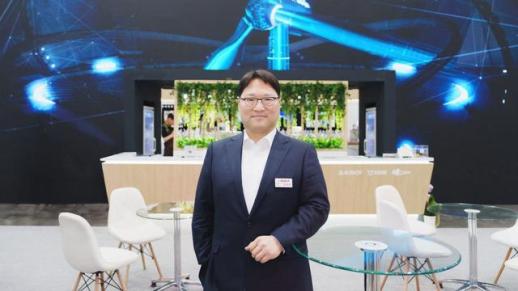 KORLOY Marks 60th Anniversary at SIMTOS 2026, Calls Itself a 'Trusted Partner' Cutting-tool maker KORLOY, led by CEO Lim Jeong-hyeon, held events at SIMTOS 2026 to mark its 60th anniversary. KORLOY took part in SIMTOS 2026, held April 13-17 at KINTEX in Ilsan, and set up an exhibition booth themed around its 60th anniversary ahead of its June 11 founding anniversary. The booth featured a 60th-anniversary emblem installation and graffiti-style design elements. Inside, the company also created a history zone highlighting key milestones by year, presenting its growth as a cutting-tool specialist and its brand identity to visitors. On the second day of the exhibition, KORLOY held a product seminar for overseas customers. It presented its latest cutting-tool technologies and application cases, and shared industry-specific machining solutions and strategies for responding to global markets. On-site consultations were also run with a practical focus. R&D staff joined booth meetings to answer technical questions based on customers’ machining environments and to explain how products could be applied. The company said it strengthened expert consultations so customers could obtain more detailed technical information. After the second day ended, KORLOY hosted a dinner for overseas customers. The program included a performance by a traditional Korean music band and a screening of a 60th-anniversary video, introducing Korean culture alongside the company’s history. Lim said it was meaningful to mark the 60th anniversary with long-standing partners and customers, calling the event a chance to reflect on shared time and trust. He said the company would further strengthen quality and technological capabilities in the cutting-tool industry and maintain stable supply amid changing conditions. He added that KORLOY would continue innovation and product improvements to raise customers’ productivity and value, and remain a trusted partner.* This article has been translated by AI. 2026-04-29 09:23:42
 -
 GenosisAI Healthcare, Personal AI to Build AI Precision Medicine Platform GenosisAI Healthcare is partnering with Personal AI in a strategic technology collaboration to build an AI-based precision medicine platform. GenosisAI Healthcare Co., led by CEO Lee Hee-won, said it signed the partnership agreement with Personal AI on the 23rd. The deal centers on combining Genosis’ third-generation Human Digital Twin (HDT)-based medical data and platform technology with Personal AI’s on-device AI, federated learning and its personal data-sovereignty platform, my:D. The companies said they will jointly develop a platform that lets patients manage their own medical data while using AI-driven precision medicine services. Genosis said it holds clinical data on 200,000 people, including data related to NK cells, stem cells, genomes and cancer immunotherapy. It is developing disease prediction and personalized health management services by applying HDT technology that analyzes individual genomic information and multi-omics data. Personal AI said its on-device AI stores personal data on users’ devices rather than a central server, and its federated learning trains AI models without directly transferring data outside. It has also developed my:D, designed to let individuals control and use their own data. The companies said the collaboration aims to secure both data security and usability. They said they plan to build a platform that can respond to global privacy and medical data regulations, including GDPR and HIPAA, by combining Genosis’ medical and clinical data with Personal AI’s data-protection technology. As a first step, they plan to build an integrated architecture linking Personal AI’s my:D with Genosis’ Genosis OS. Under the approach, original medical data would not be directly moved off users’ devices; instead, encrypted queries and results would be used. Genosis said it plans to apply its “federated learning and differential privacy-based distributed medical data learning system” technology to the platform. The companies also plan to connect health “my data,” collecting and linking health checkups, prescriptions and medical records to analyze individual health histories, then connecting genomic data with the HDT layer. They said they plan to build a data pipeline that can also link to Genosis’ health supplement recommendation service. In federated learning, they plan to combine Personal AI’s SNP FL-STUDIO with Genosis’ HDT technology. They said they will verify a method that uses data from MSO-affiliated hospitals and overseas partner hospitals for AI training while keeping the data inside each institution. They also said they will consider a data-economy model in which, if a patient agrees to data transactions, part of the related revenue would go to the patient. The companies said they aim to establish a system for using high-quality medical data by combining Genosis’ clinical data with Personal AI’s data distribution pipeline. Customized health supplement commerce is another area of cooperation. The companies said they plan to build a service within the my:D app that runs from product recommendations and purchases to tracking effects, based on Genosis’ gene-based customized health supplement and nutritional supplement manufacturing technology. They said they will also consider analyzing changes in health indicators on the HDT platform to improve recommendation accuracy. They said they also plan to build a global medical AI federated network. The companies said they will gradually expand a federated learning cluster that uses data from overseas partner hospitals — including in Japan, Dubai, Africa and Mongolia — for AI training without transferring the data outside each region. They said they aim to build a global clinical data federation covering 1 million people in 2027. The companies outlined a timeline: starting in the second quarter of 2026, they plan to begin pilot hospital linkage verification, then pursue expansion across the full MSO in the third and fourth quarters of 2026. From 2027, they plan to expand the global federated learning cluster centered on overseas partner hospitals, including in Japan, Dubai and Africa. Lee said, “GenosisAI Healthcare’s 200,000-person clinical dataset accumulated over five years and its third-generation HDT technology are completed as a true global precision medicine service only when they meet Personal AI’s data sovereignty platform.” He added, “Patients owning their data while receiving the best medical care — that is the future of medicine we will build together.” Personal AI said, “Personal AI’s on-device AI and federated learning technologies were designed to solve the issue of medical data sovereignty.” It added, “Combined with Genosis’ world-class clinical capabilities, this will be a turning point for the my:D platform, introduced at CES 2026, to establish itself as a core part of global AI precision medicine infrastructure.”* This article has been translated by AI. 2026-04-27 17:19:11
 -
 Genosys AI Healthcare, JG Group Sign 5 Billion Won Strategic Investment, Partnership Deal Genosys AI Healthcare has signed a 5 billion won strategic investment and broad business partnership agreement with JG Group. Genosys AI Healthcare Co. (CEO Lee Hee-won, Genosys) said it signed the deal on April 24 with investment firm JG Group Co. (Chairman Lee Jae-gu, JG Group). Under the agreement, the companies will jointly pursue an AI healthcare platform based on a Human Digital Twin (HDT) and a business to produce and distribute genome-based personalized health supplements. The total investment is 5 billion won. Founded in 2022, Genosys is an AI healthcare company developing hyper-personalized health management services that integrate and analyze individual genomic information, multi-omics data and lifelog data. It aims to build a platform that links HDT-based disease risk prediction and health analysis to personalized supplement recommendations. JG Group has invested mainly in real assets, consumer goods, food distribution and international resource infrastructure. It operates 11 affiliates in and outside South Korea, including JG Trading, JG Financial, JG Nature, JG HOLDINGS USA and JG International PNG, and said its investment assets total about 90 billion won. The companies said they plan to combine Genosys’ AI healthcare technology with JG Group’s global distribution and infrastructure capabilities. Genosys said it will accelerate HDT platform development and expand infrastructure with the investment, while JG Group will participate in expanding healthcare and supplement businesses using Genosys’ technology. They identified three main areas of cooperation. First, they will jointly develop an HDT-based AI healthcare platform designed to analyze multi-omics data — including genomics, proteomics and metabolomics — to predict health status and disease risk and provide personalized health management solutions. Second, they will work on production and distribution of genome-tailored health supplements. Genosys said it will expand its lineup based on genomic analysis results, and JG Group said it will support market entry using its domestic and overseas distribution networks. Genosys’ supplement brand GenoBioFit is expected to be included in future cooperation. Third, they plan a medical consulting and clinic management support business, combining AI-based medical management solutions with operational support services to build a business-to-business model. “Genosys AI Healthcare will change the paradigm of disease prediction, prevention and personalized treatment through Human Digital Twin technology,” Lee said, calling the partnership with JG Group “a decisive turning point” to implement that vision. Lee Jae-gu, chairman of JG Group, said the group has added strategic value to promising growth companies based on real assets and a global network. He said Genosys’ AI healthcare technology and JG’s investment and distribution capabilities will work together to build a healthcare platform aimed at leading the Asia-Pacific market. The companies said they plan to complete payment of the full 5 billion won investment by Aug. 31. Of that, 2.5 billion won will be used as Genosys development and operating funds for advancing the HDT platform and expanding clinical applications. The remaining 2.5 billion won will be used to establish a new business entity jointly funded 50-50 by the two companies. Genosys said it plans to launch a beta version of the platform and expand its supplement line in the second half of 2026. It said it will then use JG Group’s distribution networks to target both consumer and business markets, and will also review entry into North America and Oceania through cooperation with JG HOLDINGS USA and JG International PNG.* This article has been translated by AI. 2026-04-27 17:07:27
 -
 May Movie Releases: 'Mortal Kombat 2,' Michael Jackson Biopic, Korean Zombie Thriller and New Star Wars Film May theaters are preparing a lineup of genre films, from a video game-based action blockbuster to a music biopic, a Korean zombie suspense film and a new Star Wars title. First up is the video game-based action film 'Mortal Kombat 2,' set for release May 6. A sequel to 2021's 'Mortal Kombat,' it puts the franchise’s signature lethal tournament fights and fantasy action front and center. The previous film drew attention for its intense action and built-in fan base; the new installment signals an expanded universe with the addition of new characters including Johnny Cage. On May 13, the music biopic 'Michael' arrives. The film covers the life and music of pop star Michael Jackson, with Jackson’s nephew Jaafar Jackson in the lead role and Antoine Fuqua, who directed 'Training Day' and 'The Equalizer,' at the helm. It opened in North America on the 24th and has also drawn notice for its global box office performance in its first weekend. Among anticipated Korean films is director Yeon Sang-ho’s new movie 'The Colony,' opening May 21, with an IMAX release also confirmed. The cast includes Jun Ji-hyun, Koo Kyo-hwan, Ji Chang-wook, Shin Hyun-been, Kim Shin-rok and Go Soo. It follows people trapped in a sealed space as they fight unidentified infected individuals. Yeon previously demonstrated the commercial potential of Korea’s zombie genre with 'Train to Busan,' and the new film has drawn strong interest from genre fans. Later in the month, the Star Wars film 'The Mandalorian and Grogu' is scheduled for May 27. A theatrical feature based on the Disney+ series 'The Mandalorian,' it is directed and co-written by Jon Favreau, with Dave Filoni also credited as a co-writer. The film expands the adventures of Din Djarin and Grogu onto the big screen, with attention on whether Star Wars will rally its fan base in theaters after a long gap. Also in the mix is 'The Devil Wears Prada 2,' opening April 29. While not a May release, its timing is expected to directly affect early May box office competition. It is the first sequel in 20 years to the 2006 film 'The Devil Wears Prada,' with key cast members including Meryl Streep, Anne Hathaway and Emily Blunt returning. Attention is also on the box office performance of the animated film 'Super Mario Galaxy,' which opens the same day. Overall, May’s slate is not concentrated in a single genre but aimed at distinct audience segments: 'Mortal Kombat 2' for game and action fans, 'Michael' for music and biographical-film audiences, 'The Colony' for Korean genre-film viewers and 'The Mandalorian and Grogu' for Star Wars fans. If 'The Devil Wears Prada 2' sustains momentum into early May, theaters are expected to see closely spaced releases competing from late April through late May. 2026-04-27 16:38:26
 -
 Park Ji-hyeon Tops Idol Chart Weekly Star Poll for April’s Third Week Singer Park Ji-hyeon led Idol Chart’s Weekly Star poll for the third week of April. According to Idol Chart, Park received 1,035 votes in the tally compiled from April 20 to 26, the highest total in the poll. Park is continuing the “Showmanship Season 2” concert series, with stops in Gwangju, Incheon, Jeonju, Goyang, Busan and Seongnam. Hong Ji-yoon placed second with 734 votes, followed by Kim Ui-young with 209 and Jin with 2. * This article has been translated by AI. 2026-04-27 15:01:00
 -
 Foodtech’s Frandy Launches AI QSC Service to Digitize Franchise Store Management Foodtech Co., an IT solutions company for the restaurant industry led by CEO Choi Jun-young, said its franchise operations brand Frandy has officially launched a new store management service, “Frandy AI QSC.” QSC—quality, service and cleanliness—is a core set of metrics used in franchise operations. While headquarters use it to maintain brand standards and review store performance, many field checks still rely on supervisor visits and handwritten checklists. Foodtech said that approach often leaves results as simple records and makes it difficult to link issues to performance indicators such as sales, menu mix and operating efficiency. As the number of franchisees grows, it also becomes harder for headquarters to monitor stores consistently and provide clear improvement guidance. Frandy AI QSC is designed to address those limits by combining POS data with QSC inspections. It analyzes store-by-store sales and menu performance alongside QSC indicators to quantify operating conditions and pinpoint areas needing improvement. The company said brands using Foodtech’s Mate POS can conduct more detailed analysis through POS-based data integration, allowing users to review inspection results together with sales trends, menu performance and store operating indicators. Foodtech also highlighted gains in supervisor efficiency. It said supervisors have typically spent significant time after visits completing checklists, compiling results and preparing reports. With regularly updated data, Frandy AI QSC is intended to reduce the time and cost supervisors spend on on-site checks and follow-up management. The service is available on both a website and a mobile app. Supervisors can review store performance using data recorded and analyzed by Frandy AI and provide customized operating guidance based on accumulated data. Headquarters and franchise owners can also share results and improvement items through reports, with an interface designed to be easy to use. Foodtech said evaluation items can be set to match each brand’s operating strategy, allowing brands to adjust criteria depending on whether they prioritize quality, service or cleanliness and to design inspection systems suited to their business type and store characteristics. Some franchise brands confirmed adoption ahead of the official launch. Foodtech said Ma Wang Jokbal and Got Twiggin Fried, among others, introduced Frandy AI QSC in advance and began operating it with the launch, reflecting demand from franchise headquarters to move from manual QSC management to a data-driven system. Frandy previously launched as a franchise operations platform, emphasizing menu data cleansing and AI-based analysis. Foodtech said it developed AI-based menu data cleansing technology to address problems caused by inconsistent menu names and options across stores, which can hinder analysis. The new QSC service marks an expansion from menu analysis into store operations management, the company said. Frandy said it plans to further develop receipt data-based menu cleansing technology and accelerate work on an integrated platform linking franchise operations, including menu structure standardization and sales data integration. A Frandy official said, “QSC should no longer be just an inspection tool; it must become a core system that improves store performance and supports shared growth between headquarters and franchise owners.” The official added, “Through Frandy AI QSC, we will help shift operating standards in Korea’s franchise industry toward a digital-first approach and strengthen brand competitiveness.”* This article has been translated by AI. 2026-04-27 14:59:15
 -
 Duo Launches 1-Year Unlimited Matchmaking Plan Matchmaking company Duo has introduced a “time-based plan” that lets clients use its matching service without limits for a set period, adding a new option to its traditional meeting-count products. Duo, led by CEO Park Su-gyeong, said it began selling the plan on the 24th. Under the structure, clients start with three meetings, then can sign a separate agreement to use the matching service without a limit on the number of matches for one year. The plan applies mainly to major programs such as Noblesse, Proud and Oblige, while some specialized programs are excluded for operational efficiency. The move comes as the ways people use matchmaking services become more varied. Such services have typically been sold as packages offering a fixed number of meetings. Recently, however, demand has grown among clients who want to search more intensively within a set period, broadening the criteria for choosing services. Duo said the added option is intended to give clients who want to pursue meetings more actively over a short period a clearer choice, while allowing service use to vary by lifestyle and the pace of marriage preparation. The matchmaking services market has been growing, with industry observers saying demand continues among unmarried men and women who want to marry, even as trends toward remaining single or marrying later persist. As a result, competition increasingly centers on membership size, matching methods, counseling and management systems, and more flexible product structures. Duo posted record sales last year of about 48.3 billion won. The company said it sees a rising need to expand service options in line with market growth and more segmented customer demand. Duo said it expects the time-based plan to broaden the customer base seeking more active meetings and to provide an environment for exploring a range of potential partners within a set period. It cited reduced pressure from meeting limits and greater flexibility in using the matching service as key advantages. “As customers’ lifestyles and expectations become more diverse, services also need to shift to a more flexible structure,” a Duo official said. “Through the time-based plan, we will support people in continuing meetings in ways that fit their individual circumstances.” Duo, founded in 1995, operates its matching service based on its in-house DMS (Duo Matching System) and strict identity verification. The company provides tailored introductions through consultations with couple managers and analysis of member preferences and conditions.* This article has been translated by AI. 2026-04-27 11:19:25
 -
 Concern Worldwide Korea Gets First Domestic Legacy Giving Pledge From Donor in His 70s International humanitarian organization Concern Worldwide said it has received its first legacy giving pledge in South Korea. Concern Worldwide said it held a pledge ceremony on the 23rd at its Seoul office. At the donor’s request, his name and identifying details were not disclosed. The pledger is a man in his 70s who has made monthly donations to Concern Worldwide since 2021. He began by giving 50,000 won a month, gradually increased the amount, and now donates 350,000 won each month. The donor said he lived through the Korean War as a child and later made a living working on deep-sea fishing vessels. Based on those experiences, he has said he wanted to help people suffering from hunger and poverty. Legacy giving is a form of donation in which a person pledges during their lifetime to use part or all of their assets for the public good after death. It can include cash as well as real estate, stocks and insurance, and can be arranged through notarized wills or trust arrangements that serve as will substitutes. The donor said he decided to make the pledge because he understands hunger firsthand. “Because I know how painful hunger is, I wanted to donate the money I saved over my lifetime to help people in difficult circumstances,” he said. “I hope the assets I leave behind can have a positive impact on the world.” He also described how he first connected with the organization. “By chance, I saw Concern Worldwide’s advertisement at a bus terminal, and it brought back memories of the hungry days in the past, so I started donating,” he said. “I was grateful to learn there was a way to help.” Lee Jun-mo, Concern Worldwide’s representative, said legacy giving is a way to ensure a donor’s intentions reach those who need help most. He called the pledge “a meaningful promise” reflecting the donor’s convictions, and said the organization would do its best to use the donation where it is most needed. Concern Worldwide is an international humanitarian organization working to address hunger and extreme poverty. It runs programs in vulnerable regions worldwide, including health and nutrition, livelihoods, education and humanitarian assistance. The organization said it also provides procedures and guidance through major and legacy giving programs so donors’ intentions can support projects in the world’s poorest areas.* This article has been translated by AI. 2026-04-27 10:51:49
 -
 Freewillin Launches Uganda Education Support Project With Schoolflat Math Workbooks AI-based education solutions company Freewillin has launched a global education support project by providing math textbooks to primary schools in northern Uganda. Freewillin, led by CEO Kwon Gi-seong, said it delivered 497 Schoolflat math textbooks it produced to two schools in the Gulu area: Awach Central Primary School and Omoti Hill Primary School. The project will serve 477 fourth- and fifth-grade students. The materials include Schoolflat student workbooks and teachers’ guides. Freewillin said it developed separate student and teacher materials for grades 4 and 5, reflecting grade-level learning needs and local classroom conditions. The company said the effort is designed as a cooperative support model tailored to local realities, rather than a one-time donation. While Freewillin handled content development at its headquarters, printing and binding were done in Uganda. The company said the approach supports schools while also creating a production structure in partnership with local print shops. Uganda has expanded access to primary education under its universal primary education policy, but challenges remain in education quality, including shortages of textbooks and learning materials and limited systems to support teachers, the company said. Freewillin said its local assessment found teachers hand-making class materials because textbooks and worksheets were scarce, leaving students with too few opportunities to practice problem-solving. Given those conditions, Freewillin said it chose an offline approach centered on paper materials and teacher guides, rather than directly transferring its digital solution. The goal, it said, is to make learning resources usable even where electricity and internet access are not stable. The project is being run with HOIE (Hope is Education), an NGO specializing in education development cooperation. HOIE has supported teacher capacity-building and improvements in primary education quality in public primary schools in northern Uganda since 2015 by operating school learning communities. HOIE plans to visit the pilot schools every two to three weeks for class observations, teacher coaching and advice on how to use the materials. Freewillin said it will use that feedback to review teaching and learning methods that can work in local classrooms and to further refine the textbooks. Local education officials, including the superintendent and supervisors from the Gulu area education office, attended the textbook handover ceremony. Freewillin said it prepared the project starting in the second half of 2025 and funded it with its own resources, without outside support. “Starting with Uganda, we plan to expand educational opportunities to more regions,” Kwon said. “As the company grows, we will continue to increase investment in education support.” Schoolflat is Freewillin’s school-tailored AI math courseware service. In South Korea, it has been used to reduce teachers’ lesson-preparation burden and support math learning matched to each student’s level. The Uganda project is the company’s first global education support case, rebuilding its existing AI content and math learning know-how to fit local infrastructure.* This article has been translated by AI. 2026-04-27 10:40:38