
Journalist

Kang Min-seon
mingtung@ajunews.com
-
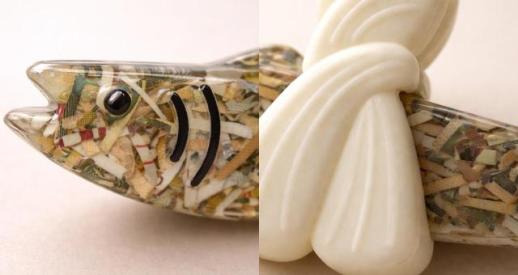 Korea Mint’s ‘Money Pollock’ Magnet Draws Buzz for Upcycled Banknote Dust A currency-themed merchandise item released by the Korea Minting and Security Printing Corp. is drawing attention online. Posts on online communities and social media have highlighted a “money magnet” sold through the mint’s online store, with particular focus on the “money pollock magnet.” Pollock has long been regarded as a symbol of protection, with its clear eyes said to watch over the home and its open mouth associated with welcoming good fortune. A tradition of wrapping pollock with silk thread is also described as a folk practice wishing for physical and mental well-being. The product is made as a magnet that can be attached to refrigerators or other metal surfaces. The mint operates an upcycling brand that uses currency byproducts generated during banknote production, including defective notes, offcuts and leftover paper. The product is said to contain about 2 grams of dust from 50,000-won notes. Online commenters wrote, “I bought it as a gift — it’s cute and seems meaningful,” “Recycling real money makes me feel like I’m doing something good,” and “I’ll keep it as a talisman.” Others said they waited a long time to buy it, were disappointed it was already sold out, or said they would wait for a sixth round of sales. The mint’s online store sells not only gold and silver products but also commemorative coins and medals, along with a range of goods using currency designs.* This article has been translated by AI. 2026-05-06 16:52:08
 -
 Chinese Hires at Samsung, SK Hynix Plants Seek Higher Bonuses, Report Says Samsung Electronics and SK Hynix are facing calls from locally hired employees in China to raise performance bonuses, and the issue has drawn a wave of reaction online in South Korea. Newdaily reported on the 6th, citing multiple industry sources, that Chinese employees at Samsung Electronics’ semiconductor plant in Xi’an and SK Hynix’s semiconductor plant in Wuxi are pressing for higher bonuses. An industry source quoted by Newdaily said local hires at overseas units “know how much people at headquarters receive” and are “making a fuss” for more, adding that portals such as China’s Baidu have been carrying news about Samsung Electronics’ and SK Hynix’s results and bonus payouts. On whether bonuses for local hires in China would be raised, Newdaily also quoted an SK Hynix official as saying the company operates its bonus system “to fit the characteristics of each country.” According to Newdaily, SK Hynix is aware of the demands. The Wuxi plant is described as a key base that produces about half of the company’s D-RAM output, and SK Hynix’s workforce in China is reported to total at least 4,000 people. South Korean internet users who saw the report posted largely negative comments, including: “It’s chaos everywhere,” “Things are turning into a mess in no time because of the Yellow Envelope Act,” “People who say subcontractors should get bonuses must think China should get handouts, too,” “They’re making a racket at home and abroad,” “Did they give back pay when the industry was bad? Investors take that risk, so I get it,” and “Looks like they want to jump in globally for a share.”* This article has been translated by AI. 2026-05-06 15:56:40
 -
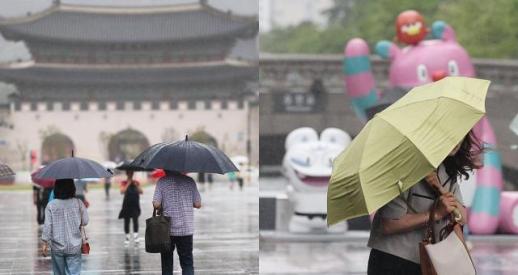 South Korea’s 2026 Monsoon Season: Expected Start and End Dates by Region South Korea’s 2026 monsoon season is expected to begin around the usual time and last about a month. Based on climate normals from 1991 to 2020, the rainy season typically starts on Jeju Island and moves north through the southern and central regions. Using that pattern, the monsoon is forecast to begin around June 19-21 on Jeju, June 23-25 in the south, and June 25-27 in central areas including the Seoul metropolitan region. The end of the season is also expected to follow the typical timeline: around July 20 on Jeju, around July 24-25 in the south, and from around July 26 through late July in central regions. The overall duration is projected at about 30-31 days, broadly in line with the commonly cited average of about 31-32 days. The outlook is based on past weather data, and actual start and end dates could differ by about one to three days depending on factors such as the expansion of the North Pacific high-pressure system, the position of the stationary front and shifts in atmospheric flow. With climate change increasingly affecting rainfall patterns, some experts have also stressed that preparedness should focus less on the length of the season and more on rainfall intensity. Experts say that even if the monsoon period is similar to normal, rainfall may come in a different form, with more “downpour-type” events that dump heavy rain in a short time rather than steady rain over many days. That can increase damage even when total rainfall is similar. Claims circulating on social media that it “rains nonstop for a month” are largely exaggerated, experts say. Breaks in rain and clear days are common during the monsoon, and continuous rainfall is not typical in meteorological terms. Still, repeated bursts of intense local rain can make it feel as if it is raining all the time. Weather statistics also show that atmospheric instability can bring “guerrilla downpours” into early August even after the monsoon ends. In recent years, stronger localized heavy rain has sometimes occurred after the rainy season, underscoring the need for summer disaster preparedness. Experts say people should be ready for summer hazards such as flooding, landslides and river overflows, since damage can rise sharply if rainfall concentrates in a short period even when the monsoon’s overall timing is near normal. The projection is a statistical estimate based on the past 30 years of weather data, and conditions may change as the season develops. The Korea Meteorological Administration’s short- and medium-range forecasts should be checked regularly.* This article has been translated by AI. 2026-05-06 14:35:15
 -
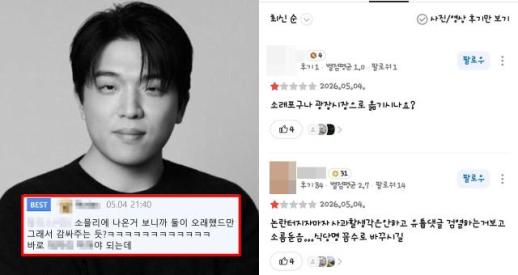 Wine Switch Allegation at Michelin 3-Star Mosu Rekindles Scrutiny of Sommelier Ethics A wine-switching incident at Michelin three-star fine-dining restaurant Mosu, run by chef Ahn Sung-jae, has revived attention on past controversies in South Korea’s fine-dining scene. In recent days, online communities and social media have circulated a post criticizing what it called ongoing ethical lapses among sommeliers, while listing earlier disputes involving restaurants and wine service. The post cited complaints tied to the handling of expensive wines and what it described as weak ethics inside some establishments. It said that at the then two-star Kwon Sook-soo, a sommelier was found guilty in a first trial and fined 7 million won for allegedly taking 106 bottles of the restaurant’s wine, with the case emerging after the person left to open a wine bar. It also claimed that at Vampire Weekend, a sommelier was caught drinking customers’ high-priced corkage wines out of sight, posting about it on social media, and that the business later changed its name. The post also alleged that at the two-star Jungsikdang, a sommelier poured about 100 milliliters from a customer’s corkage wine worth about 900,000 won, saying it was “to taste later.” It added that Mosu, described as previously three-star and now two-star, was exposed for deceiving customers. The writer said it was embarrassing that the level of Seoul fine dining was being revealed repeatedly at a time when global attention is on Korea’s food boom. The writer questioned whether a new direction could begin if Mosu closes after the latest incident, and criticized sommeliers who, the post said, focus on wine books rather than customers and end up causing problems. After the post spread, commenters criticized what they saw as a breakdown of basic trust even at high-end restaurants. Comments included comparisons to delivery workers accused of taking food, jokes that people would call them “corkscrews,” and remarks that hardworking professionals are being tarnished by a few bad actors, leading to insults ranging from neighborhood karaoke bars to “bottle openers.” Meanwhile, Mosu’s Kakao Map page drew a wave of hostile comments. Reviews included remarks such as, “Are you moving to Sogeopogu or Gwangjang Market?” and criticism that the restaurant did not apologize immediately and instead was “moderating” YouTube comments. Other posts said comments were being deleted, criticized “switching,” and questioned how long it had been happening. One commenter said the issue could end quickly if an apology video were posted properly or if a penalty were imposed on the sommelier, adding frustration that the matter was being dragged out. 2026-05-06 09:48:16
 -
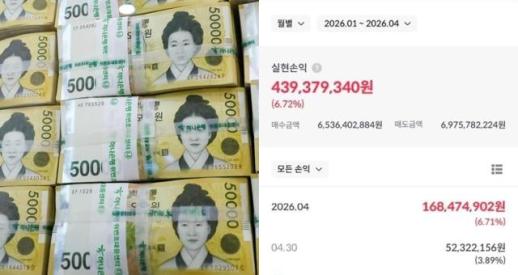 Korean Civil Servant Claims 430 Million Won Profit From Semiconductor Stock Bet A post by a retail investor claiming hundreds of millions of won in profits from a concentrated bet on semiconductor stocks has drawn attention online. A recent post on Blind, an anonymous workplace community, was titled “Latest update on the civil servant who went all-in with 500 million won on Hynix.” The poster, identifying as the person in question, wrote, “Yes, that’s me,” and said he kept investing in semiconductor shares despite being mocked with warnings that “you’ll go broke investing like that.” He said he made about 430 million won from January through April and posted a screenshot as proof. The image shows cumulative realized profit and loss of about 439.37 million won from January to April 2026, for a return of about 6.72%. It also lists total purchases of about 6.5364 billion won and total sales of about 6.97578 billion won, with about 168.47 million won in profit in April alone. The investor cited SK hynix and Samsung Electronics as key holdings, indicating a heavy focus on the semiconductor sector. He also wrote, “Semiconductors will keep trending upward through 2028,” signaling strong conviction about the market outlook. Online commenters responded with remarks such as, “He proved it with results,” “Hynix surged on the first trading day of May, so it probably pumped even more from there,” and “I didn’t think it would turn out like that back then.” Others wrote, “Semiconductors will save Korea,” “foresight,” and “Should I sell Samsung Electronics and move to Hynix?” As more retail investors share posts touting high returns, interest is rising again in “concentrated investment” strategies focused on specific sectors. 2026-05-06 08:45:15
 -
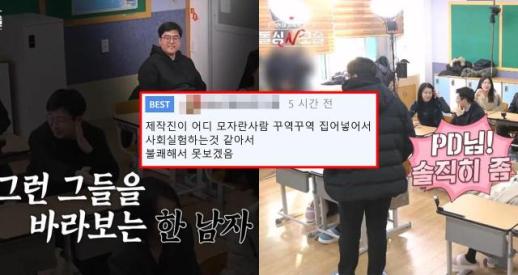 ‘Dolsing N Mosol’ Contestant George Sparks Backlash After Zero Votes, On-Air Outburst A surprise on-air moment involving George, a contestant who received zero votes on MBC every1 and E Channel’s dating show “Dolsing N Mosol,” drew sharp reactions on online communities. On the 6th, posts about “George, who got zero votes in the couple selection,” spread across multiple online forums. In the episode, as other participants discussed their date plans, George stood up saying he was going to the restroom, then suddenly stopped. Turning to the group, he asked, “Why didn’t you choose me?” When Camellia responded, “If you want to ask someone, ask just one person,” he said he wanted to ask everyone. As the cast appeared taken aback, George brushed it off, saying, “Ah, never mind, whatever,” then abruptly called for the producer in charge and held a one-on-one meeting. He told the producer, “There’s a part of me that feels a bit upset. To be honest, I’m already thinking, ‘Should I use an exit strategy and go home?’” He added, “My family is a professional family, and I come from a family where my hands are precious, so I think, ‘Why didn’t the woman I want show up?’ That makes me not want to do this.” He continued, “Of course, I’m arrogant and I’m not 100% objective about myself, but even though I tell myself not to be that way, I’m human and those feelings come up,” adding, “I’m saying my morale dropped a bit. I know you did your best for me.” After the scene aired, commenters called him “a type of contestant never seen before on a dating program.” Some wrote, “I’m going to believe he’s an actor planted by the production team,” and, “It feels like they’re running a social experiment by forcing in someone who’s lacking, and I can’t watch because it’s unpleasant.” Another said the show should be used “as an educational program to teach people with low social intelligence or poor awareness that others don’t like this kind of behavior.” Others added, “He doesn’t even realize he’s the problem, so there’s nothing to do,” “It doesn’t seem like he has even 10% self-awareness,” and, “Being inexperienced in dating is the least of it — he seems to have various personality issues.” 2026-05-06 08:09:04
 -
 Trump says Korean cargo ship attacked in Strait of Hormuz after sailing alone U.S. President Donald Trump said a Korean cargo ship was attacked by Iran in the Strait of Hormuz after operating on its own, apart from a protected group of vessels. According to Yonhap News Agency, Trump said at a White House event on May 5 local time that South Korea gets 43% of its oil through the Strait of Hormuz, adding that a Korean ship was attacked because it was not in a convoy. “They weren’t in the line of ships and they decided to go alone,” he said. “And their ship got smashed yesterday.” Trump also claimed that ships protected by the United States were not attacked. South Korea’s government has said the cause of the explosion and fire on the vessel Namuho has not yet been determined. Trump, however, has described the incident since the previous day as an Iranian attack and has urged South Korea to contribute to easing tensions in the Strait of Hormuz. In a phone interview the same day with an ABC reporter, Trump repeated that it was a Korean ship “sailing alone,” and said multiple shots were fired at it, adding that South Korea should take action in response. The United States on May 4 launched what it called a “Liberation Project” to help commercial ships trapped in the Strait of Hormuz escape. That day, the U.S. military said Iran used missiles and fast boats to attack commercial vessels and that U.S. forces repelled the attacks, heightening fears the ceasefire could collapse. Iran resumed attacks against targets including the United Arab Emirates, the report said. Asked what would constitute an Iranian violation of the ceasefire, Trump said, “We’ll know soon,” adding, “They know what they have to do, and more importantly, what they must not do.” Trump urged Iran to “make a smart choice,” saying, “Because we don’t want to go in and kill people,” and insisted Iran should “wave the white flag of surrender.” He also said Iran had no chance of winning the war, referring to the conflict as a “little skirmish.” * This article has been translated by AI. 2026-05-06 06:27:16
 -
 Online backlash after Democratic Party leader urges schoolgirl to call candidate 'oppa' in Busan race Online communities erupted with criticism after Jung Cheong-rae, leader of the Democratic Party, urged a first-grade elementary school girl to call Ha Jung-woo — a candidate in the Busan Buk-gu Gap parliamentary by-election — “oppa,” a Korean term often used by younger women to address an older brother or an older male. Posts about the incident spread across multiple online forums on May 4, with commenters accusing Jung of crossing a line and calling for him to step down. One poster, identified as A, wrote, “For reference, Jung Cheong-rae (born 1965 — age 61), Ha Jung-woo (born 1977 — age 48),” and added, “Didn’t Jung’s own son cause trouble at school over a sex-related issue? Like father, like son ... no reflection?” Another commenter, B, wrote, “At this point, it makes sense why sex-related incidents keep happening in the Democratic Party,” adding that if Jung acted that way “in front of lots of cameras,” he would likely “habitually sexually harass” staff or aides. Other comments included, “He’s lost it,” “This really crossed the line,” and calls for Jung to resign as party leader. Some posts used crude, derogatory nicknames for the party. The article noted that much of the negative reaction appeared in women-dominated online communities that are generally considered favorable terrain for the Democratic Party, with many users urging Jung to resign. Jung drew the backlash after campaigning on May 3 in the Busan Buk-gu area, including Gupo Market, to rally support for Ha. During the visit, Jung told a girl who appeared to be in the lower grades of elementary school, “Here’s Jung-woo oppa — say ‘oppa.’” Ha, seated in front of the child, pointed to himself and echoed the term, calling himself “oppa.” When the girl looked around, Jung again pressed her to say it. After she responded quietly, Jung clapped and said, “Oh my.” As the video spread online, People Power Party lawmaker Park Jung-hoon wrote on Facebook the same day that telling an elementary school student to call a politician more than 40 years older “oppa” was “clear sexual harassment of a child.” Park added, “That someone like this is the leader of the ruling party is the laughably sad reality of Korean politics.” Park also criticized Ha, saying the candidate was “just as pathetic” for smiling and playing along. People Power Party lawmaker Sung Il-jong also wrote on Facebook that it was “embarrassing” to see “62-year-old leader Jung Cheong-rae and 50-year-old candidate Ha Jung-woo” pressuring a first-grade girl to call them “oppa.” He said the two repeatedly urging the hesitant child was “no different from a form of child abuse.” Sung added that the child likely felt uncomfortable being made to address someone “presumed to be much older than her father,” and asked whether it was acceptable to cause a young child distress “no matter how desperate they are for votes.” The Democratic Party said on May 3 that Jung expressed regret, saying he was sorry to the child and her parents because the child “ended up at the center of controversy” during the market visit. Ha also apologized the previous day, saying that while meeting residents, the child became the focus of the controversy. “I offer my apologies to the child and the parents who may have been hurt,” he said, adding that he would be more careful and meet residents with a “low and humble” attitude.* This article has been translated by AI. 2026-05-05 16:18:16
 -
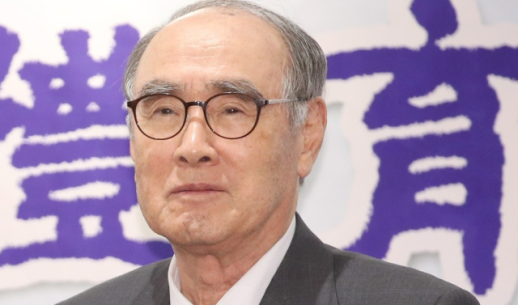 Former South Korean Prime Minister Lee Hong-koo Dies at 92 Former Prime Minister Lee Hong-koo died on May 5. He was 92. Born in 1934, Lee was a professor of political science at Seoul National University and a leading senior figure in South Korea’s political science community. After attending Kyunggi High School and studying at Seoul National University, he continued his academic work at Emory University and Yale University in the United States. He published numerous papers and columns in academic journals and major media outlets, offering theoretical and practical analysis of modern Korean politics. He also served as president of the Korean Political Science Association. Lee entered public service in 1988 under the Roh Tae-woo administration as minister of the National Unification Board. He later served as a special political adviser to the president and as ambassador to the United Kingdom, building experience in diplomacy and inter-Korean affairs. Under the Kim Young-sam administration, he served as senior vice chairman of the National Unification Advisory Council and as deputy prime minister and minister of the Unification Board. In 1994, he was appointed the 28th prime minister, overseeing state affairs. He was credited with involvement in early reform efforts of the civilian government and in coordinating domestic and foreign policy. After leaving the premiership, Lee returned to frontline politics in 1996 as chief representative of the then-ruling New Korea Party. That year, he won a proportional representation seat in the 15th National Assembly. With the launch of the Kim Dae-jung administration, he was appointed the first ambassador to the United States in early 1998 and played a role in strengthening South Korea-U.S. economic and diplomatic cooperation during efforts to overcome the foreign exchange crisis. After retiring from public office, Lee remained active as chairman of the Seoul International Forum, an adviser to the JoongAng Ilbo, chairman of the Yumin Cultural Foundation, an adviser to the Korea Volleyball Association, and a board member of the Asan Foundation, among other roles. Survivors include his wife, Park Han-ok; a son, Lee Hyun-woo, EIG Asia representative; daughters Lee So-young and Lee Min-young, a professor at Dongduk Women’s University; a daughter-in-law, Hwang Ji-young, head of the Hong Kong Korean Women’s Association; and a son-in-law, Lee Kang-ho, a professor at the Korea National University of Arts. A memorial altar has been set up in Room 20 of the funeral hall at Seoul Asan Medical Center. A funeral ceremony will be held at 8 a.m. on May 8, with the coffin to be carried out at 9 a.m. Burial will be at Cheonan Park Cemetery. 2026-05-05 13:57:50
 -
 Korean Court Sentences Teen to Prison for Newborn’s Death After Toilet Birth A teenager who gave birth in a toilet at her home and then left the newborn unattended, leading to the baby’s death, has been sentenced to prison. Yonhap News Agency reported Friday that the Suwon District Court’s Criminal Division 11, presided over by Chief Judge Song Byeong-hun, sentenced the girl, identified only as A, to an indeterminate term of 2 years to 2 years and 6 months for child abuse resulting in death. The court also ordered her to complete 40 hours of a child-abuse treatment program. A was indicted without detention over an incident in 2024, when she was 17. Prosecutors said she gave birth in the master bedroom bathroom at her residence in Gyeonggi Province, and the baby fell into the toilet and died. The court said A did not tell her family she was pregnant and was unable to prepare properly, and that she gave birth suddenly without help from her boyfriend. It said she appeared to have failed to respond appropriately due to shock immediately afterward. “Human life is a precious value that cannot be exchanged for anything, and a newborn’s life is no exception,” the court said. It added that although A was still a minor, she had a mother’s duty to raise and protect the child, but took no minimum steps and abandoned the baby, resulting in death.* This article has been translated by AI. 2026-05-02 20:54:15