
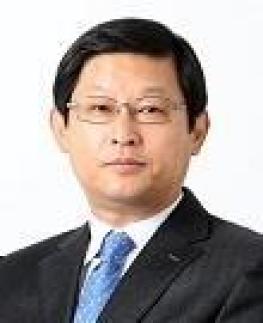
Journalist

Park Won-jae
parkwj1964@gmail.com
-
 OPINION: South Korea faces '3 Highs' as U.S.-Iran War jolts markets, oil and prices SEOUL, March 16-South Korea’s financial markets have swung sharply as the U.S.-Iran war rattles investors, with the won-dollar exchange rate hovering around 1,500 won per dollar. Disruptions to Middle East crude supplies have pushed fuel prices higher, prompting the first oil price-control measures in 30 years. With global logistics strained, exporters and importers face growing uncertainty over when and where shipments of key products and raw materials may be delayed. The Korean economy, which had been showing signs of emerging from a prolonged slump on the back of a semiconductor boom and a strong stock market, is now being shaken by the crisis in the Middle East. The regional turmoil, triggered by U.S. airstrikes on Iran, has highlighted how exposed a small, open economy can be when geopolitics turn volatile. Milestones that had impressed global investors — including the Kospi topping 6,000 and exports reaching $700 billion, the world’s sixth-largest total — now appear less reassuring against the reality of vulnerability to external shocks. South Korea imports all of its crude oil and relies on Middle Eastern producers for more than 70 percent of supply. When the region becomes unstable or prices surge, the country has limited buffers. After each bout of Middle East turmoil since the oil shocks of the 1970s, South Korea has pledged to diversify suppliers, only to ease off once the immediate pressure faded. As industry has become more advanced, sensitivity to oil prices has grown. Semiconductors, petrochemicals, steel and autos — pillars of manufacturing — are closely tied to energy supply, leaving export competitiveness vulnerable to higher oil costs. What initially looked like a threat concentrated in refining and petrochemicals has spread across industries including autos, home appliances and chips, as concerns rise over a possible closure of the Strait of Hormuz. If global consumption weakens and sales of finished goods such as cars and smartphones slow, the broader parts ecosystem would also suffer. Even the semiconductor supercycle that helped lead the recovery and lifted the Kospi could lose momentum. After the Kospi crossed 6,000, South Korea briefly ranked ninth globally by total market capitalization. The latest turmoil has underscored the limits of an emerging market prone to sharp swings and heavily influenced by foreign investors. While nearby markets in China, Japan and Taiwan moved within roughly 2 to 3 percent, the Kospi posted roller-coaster sessions with daily moves of around 10 percent. Even if panic subsides once the war eases, questions may linger about whether the market’s investment mechanisms are functioning as they should. The exchange rate has neared the psychological threshold of 1,500 won per dollar, its highest level since the 2008 global financial crisis. Rising oil prices, a falling Kospi, foreign outflows, energy supply-chain risks and fears of production disruptions in key export industries have combined to weaken the won. As uncertainty over the economic outlook grows, the currency has struggled to maintain stability in foreign-exchange markets. World oil prices have surged amid threats to close the Strait of Hormuz, through which about one-fifth of global crude supply passes. Higher fuel costs are already feeding into everyday prices. Under government pressure as it steps up price monitoring, food companies have lowered or plan to lower prices for items including flour, cooking oil, bread and instant noodles. Still, many consumers say grocery bills already feel far higher than official figures suggest. The war has left South Korea grappling with a “three highs” problem: high oil prices, a high exchange rate and high inflation. If policymakers fail to contain this combination, the risk of stagflation — inflation alongside economic stagnation — could rise. These three pressures reinforce one another. Higher oil prices worsen the current account and place further pressure on the won while also raising household fuel and energy costs. A weaker currency combined with higher crude prices lifts import costs and inflation, while expensive oil can intensify demand for safe assets, adding further downward pressure on the won. The “three highs” can curb consumption, shrink the current account surplus and slow economic growth. The Bank of Korea has forecast 1.9 percent growth this year, but that estimate assumed oil prices at around $62 per barrel. Hyundai Research Institute warned that if oil rises to $100 a barrel, growth could fall by 0.3 percentage points, and if it reaches $150, growth could drop by 0.8 points. The International Energy Agency has announced the release of a record 400 million barrels from strategic reserves, yet oil has remained above $100 as Iran repeatedly declares it could close the Strait of Hormuz. When the Middle East has produced an oil shock in the past, South Korea has often faced severe economic strain. During the second oil shock triggered by Iran’s 1979 revolution, global oil prices jumped from $15 a barrel to $39, while domestic prices rose nearly 30 percent in 1980 alone. In July 2008, oil climbed to $150 amid rising energy demand in emerging markets and heightened geopolitical risks in the Middle East. The surge contributed to a global pullback in consumption and investment, culminating in a financial crisis that also hit South Korea hard. This time, the risk is compounded by simultaneous turmoil in financial markets and potential damage to the real economy. If the conflict drags on, the shock to the global economy could prove far larger than expected, and familiar crisis playbooks may not work. As military clashes between the United States and Iran intensify, some fear an economic tsunami from what could become the first oil shock of the 21st century. For energy-importing countries such as South Korea, even a short-term oil spike can worsen trade terms and reduce the current account surplus, slowing growth. It can sharply raise costs across industry, triggering a chain reaction that weakens production, consumption, investment and employment. If authorities respond too slowly, the country could fall into a stagflation spiral — higher oil prices leading to a weaker current account, a weaker currency, rising import prices and an economic downturn. When growth slows, policymakers typically cut rates or expand fiscal spending. But if inflation rises simultaneously, they may instead need to raise rates or tighten policy. That creates a difficult dilemma between supporting growth and stabilizing prices. The Bank of Korea said on March 12 that Middle East instability could push prices higher but that it would maintain a “cautious neutral stance,” reflecting the difficulty of setting a clear monetary-policy direction. In emergencies such as war or major disasters, the government may need to act pre-emptively and decisively beyond normal market expectations. The immediate priority is to contain the “three highs” early and prevent stagflation from taking hold. Authorities should make efficient use of the 100 trillion won financial market stabilization fund to maintain liquidity while directing support toward vulnerable groups and small business owners hit by rising fuel costs. The crisis also represents the first major economic test for the Lee Jae Myung government since it took office. The administration’s move to prepare an early supplementary budget of up to 20 trillion won is a rapid step to secure policy resources. Lee said, “We must not waste the golden time to ease the shock to the people’s livelihoods,” urging officials to accelerate the execution of the supplementary budget. The supplementary budget should remain focused on its stated purpose as an “oil-price supplementary budget” while carefully monitoring inflation pressures, to avoid criticism of election-driven spending ahead of local elections. The government has cited several areas requiring fiscal support, including freezing public utility fees, cutting fuel taxes, expanding discounts for agricultural, livestock and fisheries products, and providing fuel subsidies for freight trucks. To minimize the fallout from the Middle East crisis and soften the blow to the real economy from higher oil prices, spending should remain selective and targeted. How the budget is drafted and implemented will test the government’s policy capacity and credibility. Even if delayed, South Korea should not postpone diversifying crude oil and natural gas import sources beyond the Middle East to regions such as Africa and South America. Energy diversification must remain a long-term national priority. The Middle East crisis has once again exposed structural weaknesses hidden behind headline economic numbers. It underscores the need for a sober reassessment of South Korea’s economy — including its stock market — and for building greater resilience against external shocks. *The author is an editorial adviser for the Aju Business Daily. About the author: ▷MBA, Aalto University, Finland ▷Former Tokyo correspondent, editorial writer and business editor at The Dong-A Ilbo ▷Former CEO of Donga.com ▷Former president, Korea Online Newspaper Association ▷Professor at Kyungsung University (current) 2026-03-16 07:27:10
 -
 OPINION: Stock market is roaring, and now for the economy South Korea’s stock market is roaring ahead. After the Kospi’s long rally, the Kosdaq has regained momentum, settling above 1,000 for the first time in 25 years. Once dismissed as a speculative sideshow, the junior market is now part of what investors are calling a new era of “Kospi 5,000, Kosdaq 1,000.” Yet the real economy is moving in the opposite direction. Production has weakened, investment has fallen and domestic demand remains sluggish. Last year’s gross domestic product barely grew 1%, even after the government distributed 13 trillion won in consumption coupons. The unrounded figure — 0.97% — was effectively zero. In the fourth quarter, just as semiconductor shares powered the Kospi higher, the economy posted a startling 0.3% contraction. It was one of the weakest performances in South Korea’s modern history. Only a handful of years have recorded worse results: the 1998 foreign exchange crisis (-4.9%), the oil-shock recession of 1980 (-1.5%), and the pandemic slump of 2020 (-0.7%). Growth in the 0% range had occurred only twice before — in 1956 after the Korean War and in 2009 during the global financial crisis — until last year joined the list. The contrast could hardly be sharper. Exports surpassed $700 billion, making South Korea only the sixth country in the world to do so. Stock prices are setting records. Investor sentiment is exuberant. Yet for households and small businesses, the economic mood remains wintry. The gap is largely explained by semiconductors. Information technology manufacturing alone contributed 0.6 percentage points to growth last year. Without the chip boom, growth would have been closer to 0.4%. Few advanced economies display such extreme heat and cold at the same time. The comparison with the United States is equally sobering. The U.S. economy grew 2.9% in 2023 and 2.8% in 2024 and remained near 2% last year. With the United Nations projecting global growth of 2.7% this year and U.S. growth of 2.0%, the reversal in fortunes that began in 2023 may extend into a fourth year. That an economy 16 times larger than South Korea’s is growing faster raises uncomfortable questions about Korea’s dynamism and long-term vitality. America’s resilience, despite weak hiring and slowing consumption, rests on massive corporate investment in advanced industries — artificial intelligence, semiconductors and robotics — led by companies such as Nvidia, Google, Apple, Microsoft and Amazon, and reinforced by deregulation and tax incentives. South Korea cannot rely on tariffs to lure investment. Its only durable option is to make its business environment more attractive than that of its competitors — not only to attract foreign firms, but to keep domestic champions from drifting abroad. Balanced growth matters, but companies that drive production and investment remain the engine of any economy. Looking ahead, the Bank of Korea and major research institutes forecast growth of about 1.8% this year. The government, calling 2026 “the first year of a great leap forward,” has set a higher target of 2.0%. It plans to deploy a 727.9 trillion won budget and 634 trillion won in policy financing, betting that stronger domestic demand and exports can revive momentum. With this year marking the effective start of the Lee Jae Myung government, hopes for a rebound are understandable. But history shows that growth driven mainly by money has limits. Artificial spurts often breed bubbles — and bubbles, inevitably, burst. The deeper problem lies elsewhere: potential growth. In an open, trade-dependent economy, record exports should translate into broader expansion. When they do not, it signals a decline in the economy’s underlying capacity to grow. South Korea’s potential growth was near 5% in the early 2000s. Aging, weak corporate investment and slowing productivity were left largely unaddressed. As a result, potential growth slipped to around 3% in the 2010s, to the mid-2% range in 2016–2020, and is now estimated in the high-1% range. An economy with 1% potential growth is like a teenager whose growth plates are closing. Expecting rapid expansion under those conditions is like hoping to raise exam scores through shortcuts instead of study. It is no surprise that South Korea has not exceeded 3% growth since 2021. Successive administrations bear responsibility. Each focused on near-term indicators while postponing structural reform. “Potential growth fell by about one percentage point with each change of government,” the author notes — a belated and regrettable realization. The Korea Development Institute warns that without reform, potential growth could approach zero in the 2040s. A stagnant economy would mean shrinking tax revenues, heavier welfare burdens and mounting fiscal stress, ultimately leaving households more vulnerable. Even if money floods into stocks and exports remain in the “$700 billion club,” this structural constraint does not disappear. Recognizing it is the first step toward rebuilding a viable growth path. If growth reaches 1.8% this year, it would already be near potential — a respectable outcome under current conditions. Pushing harder through excessive stimulus risks inflation, fiscal strain and rising debt, while creating an illusion of strength. Paradoxically, today’s buoyant markets make this the best moment to pursue reform. The Lee government’s “3-3-5 vision” — becoming a top-three AI power, restoring potential growth to 3%, and entering the G5 — correctly places potential growth at the center of policy. Unlike quarterly GDP figures, it offers little immediate political reward. Its benefits emerge slowly. But without it, escaping the low-growth trap is impossible. Execution will determine success. Regulations that block experimentation must be dismantled. Advanced industries and innovative firms must be nurtured. Labor-market dualism must be reformed to lift productivity. Policy and legislative mismatches must be reduced to create a predictable environment. Even debates over the “Yellow Envelope Act,” set to take effect in March, should be judged by one standard: whether they raise potential growth. In the mid-to-late 1980s, South Korea often grew by more than 10%, generating jobs and near-full employment. That era will not return. But restoring “normal” growth would ease chronic problems — job shortages, declining job quality and weak consumption. Three percent is the dividing line between stagnation and renewal. Lee has likened achieving a Kospi 5,000 to revitalizing neglected valleys during his time as a provincial governor, arguing that “normalizing real estate is easier and more important,” and that reforms succeed when leaders accept criticism without calculating votes. If policy is guided by necessity rather than political advantage, restoring potential growth to 3% is difficult — but achievable. A government that reaches Kospi 5,000 and a government that lifts potential growth to 3% may both claim success. But in durability and impact on livelihoods, the latter would be the far greater achievement. *The author is an editorial adviser to the Aju Business Daily. About the author ▷MBA, Aalto University, Finland ▷Tokyo correspondent, editorial writer and business editor, The Dong-A Ilbo ▷CEO, Donga.com ▷President, Korea Online Newspaper Association ▷Professor, Kyungsung University (current) * This article, published by Aju Business Daily, was translated by AI and edited by AJP. 2026-02-11 07:10:34
 -
 OPINION: Won discount reflects structural weaknesses The trauma of the 1997 financial crisis still casts a long shadow over South Korea. A rising dollar-won exchange rate evokes memories of a time when the rate surged to nearly 2,000 won per dollar and the foundations of the economy shook. Today’s rate—hovering around 1,470 won—is the highest since the 2009 global financial crisis, and its persistent climb has stirred fresh unease. Research by the Hyundai Research Institute shows that South Korea’s equilibrium exchange rate rose from 1,179 won in 2002 to 1,351 won at the end of 2024. Yet the market rate has stayed well above that level, reflecting a structural “won discount.” This is not the result of a crisis in the mold of 1997, when short-term foreign debt flooded the system. South Korea is now a net creditor country. Pension funds, corporations and individuals hold substantial overseas assets, and that outward investment has grown steadily over the years. What is driving the current rise is not foreign creditors pulling money out, but domestic investors actively buying dollar assets in search of higher returns. Still, in a highly open economy built on trade, a rapid depreciation of the won carries real costs—higher import prices, increased production costs for companies, faster inflation, reduced purchasing power and, ultimately, pressure on domestic demand just as signs of a recovery begin to emerge. Consumer prices rose 2.4 percent in November from a year earlier, the fastest pace this year, in part due to the weak won. Travelers changing money abroad now routinely face a roughly 10 percent haircut on top of the official rate. And unlike in the past, when a weaker currency could boost exports, Korea’s reliance on semiconductors and intermediate goods—tightly integrated into global supply chains—limits the traditional trade benefits of a cheaper won. With the won stuck near 1,470, the government has launched an all-out push to engineer a reversal. The National Pension Service has been urged to extend swap lines with the Bank of Korea, expand strategic hedging and adjust its overseas investment ratios. Regulators are scrutinizing securities firms’ foreign stock sales, and companies are being encouraged—directly or indirectly—to convert their dollar earnings into won. Six major government bodies, including the Ministry of Economy and Finance and the central bank, are involved in this unprecedented campaign. The effort straddles a fine line between stabilizing markets and interfering with them, and it risks signaling that authorities lack more effective tools to manage currency volatility. Expecting the National Pension Service to act as a “currency firefighter” is especially fraught. The fund’s mandate rests on profitability and stability; compelling it to intervene for short-term macro policy goals could undermine public trust, especially if losses emerge. Meanwhile, the surge of individual investors into U.S. equities—more than $30.6 billion from January to November, triple last year’s total—has prompted concern from Bank of Korea Governor Lee Chang-yong. But blaming retail investors risks misdiagnosing the origins of the won’s slide. Corporations, for their part, are holding more dollars for perfectly rational reasons: hedging exchange gains, securing liquidity for overseas investment and preparing for the roughly $350 billion in commitments stemming from U.S. tariff negotiations. Faced with such structural incentives, government carrots such as reduced policy finance rates are unlikely to meaningfully shift corporate behavior. The exchange rate has been pushed up by a combination of cyclical and structural forces: a 40-month interest rate inversion with the United States; foreign investors taking profits in Korean equities; rising overseas investments by Korean individuals; and expanding corporate foreign direct investment. Longer-term trends—including Korea’s slowing growth, weakening manufacturing base and rapid demographic decline—have also reduced the appeal of the won in global markets. International investors increasingly see the won as a structurally weak currency that trades below its equilibrium value, reflecting deeper concerns about the country’s economic fundamentals. If U.S. interest rates fall next year and Korea’s exports and stock market strengthen, the won may stabilize. Deputy Prime Minister Koo Yun-cheol has pledged to balance foreign exchange supply and demand in the short term while raising national competitiveness over the long term. But unless Korea addresses its structural weaknesses—rigid labor markets, regulatory burdens, low productivity—any relief is likely to be temporary. Dollar outflows and renewed currency spikes will remain recurring risks. The broader exchange rate debate is ultimately a judgment on Korea’s economic strength. Exports reached a record $640.2 billion from January to November, up 2.9 percent from a year earlier, yet that headline masks vulnerabilities: strip out semiconductors and exports actually fell 1.5 percent. The domestic economy remains fragile after prolonged stagnation, and legacy manufacturing sectors such as petrochemicals and steel are losing ground to intensifying Chinese competition. Concerns that parts of Korea’s industrial base may shift to the United States under new tariff arrangements also weigh on sentiment. As high exchange rates become a near-permanent feature of the economic landscape, Korea’s policy orientation must change. Inflation control—not expansionary fiscal measures—should be the government’s top priority. Stimulus spending must be deployed sparingly, and fiscal tools should be redirected toward strengthening the country’s productive capacity. Restoring confidence in Korea’s economic future is the surest path to a stable exchange rate and a fairly valued won. There was a time when earning dollars was considered an act of patriotism. That belief, it seems, is returning. About the author: Park Won-jae holds a master’s degree in business from Aalto University in Finland and has served as Tokyo correspondent, editorial writer and economic editor at Dong-A Ilbo, CEO of Dong-A.com and chairman of the Korea Online Newspaper Association. He is currently a professor at Kyungsung University. * This article, published by Aju Business Daily, was translated by AI and edited by AJP. 2025-12-12 11:11:41
 -
OPINION: China's rise squeezing Korea's industrial heartlands Park Won-jae SEOUL, October 20 (AJP) - Yeosu, once the beating heart of South Korea’s petrochemical industry, is now a city under strain. The port, long fueled by the hum of factories and refineries, has fallen quiet as China’s self-sufficiency in ethylene production upends the regional industrial order. Roughly three years ago, Beijing achieved full domestic production of ethylene, the cornerstone of plastics and other chemical materials. The effects on Yeosu were swift and severe. Major producers such as LG Chem and Lotte Chemical have idled parts of their facilities. In August, Yeochun NCC — a joint venture between these giants — faced liquidity problems, a troubling sign for an industry that once symbolized Korea’s manufacturing prowess. The fallout has rippled across the city. The Yeosu Industrial Complex employs about 42 percent of the local workforce, but its slowdown has left small businesses gasping for air. Restaurant closures have now outpaced those seen during the pandemic. Storefront vacancies in downtown Yeosu have soared from 12 percent to 35 percent in just one year. A recent report by Boston Consulting Group even recommended closing two or three of the city’s seven ethylene plants — a prospect that has left local entrepreneurs and workers bracing for deeper economic pain. Yeosu’s struggle is emblematic of a larger story: China’s industrial ascent is reshaping Asia’s economic hierarchy. Across industries — steel, displays, shipbuilding, automotive parts — South Korea’s once-secure dominance is eroding. Even in high-tech sectors where Seoul has prided itself on innovation, such as semiconductors and smartphones, China’s rapid advances are unsettling. Fueled by the state-led Made in China 2025 initiative, Beijing’s ambitions have translated into dominance across key emerging technologies. Chinese electric vehicle maker BYD sold more than twice as many cars as Tesla last year, capturing nearly 60 percent of the global EV market. In solar panels, industrial robots, and drones, China holds commanding positions. DJI alone produces 94 percent of the world’s drones. Despite American sanctions, Huawei has secured nearly 10,000 5G patents — more than Qualcomm. South Korea, meanwhile, finds itself squeezed. Its export-dependent economy remains deeply tied to China, even as Chinese competitors eat away at its market share. BOE, a Chinese display manufacturer, now leads a sector once considered a Korean stronghold. In batteries, China’s CATL has surged ahead of South Korea’s top three producers, undermining one of Seoul’s most promising growth engines. The challenge extends to heavy industry. China now produces more than 55 percent of the world’s steel — and increasingly, with technology that rivals or exceeds South Korea’s. This has eroded profits at companies like POSCO and Hyundai Steel. In semiconductors and shipbuilding, too, China’s aggressive expansion is narrowing Korea’s once-comfortable lead. The traditional trade order in East Asia — in which South Korea and Japan exported high-end components for China to assemble and re-export — is rapidly fading. As China’s technological capacity surpasses its neighbors’, Seoul and Tokyo are exploring new avenues of cooperation to adapt to a transformed industrial landscape. China’s experience offers both a warning and a lesson. The Made in China 2025 strategy demonstrates how sustained, state-driven industrial policy can elevate an economy to global leadership. But for South Korea, simply emulating Beijing’s model is not the answer. Korea’s strengths lie in its dynamic private sector, global openness, and capacity for innovation — qualities that thrive best under government policies that foster competition, not control. To stay competitive, Seoul must rethink its economic strategy. The government should focus on building a more resilient industrial ecosystem — investing in infrastructure, digital transformation, and the ease of doing business. Companies, for their part, must leverage autonomy and creativity to innovate beyond the state’s blueprint. As U.S.-China trade tensions continue to reshape global supply chains, South Korea faces a pivotal moment. Its path forward depends not on shielding itself from China’s rise, but on rediscovering what has long been its greatest strength: the ability of its companies to adapt, reinvent, and compete on the global stage. About the author -Professor at Kyungsung University -Master's in Business Administration from Aalto University, Finland -Former Tokyo Correspondent, Editorial Writer, and Economics Editor at Dong-A Ilbo -Former CEO of Dong-A.com -Former President of the Korea Online Newspaper Association * This article, published by Aju Business Daily, was translated by AI and edited by AJP. 2025-10-20 09:11:18