
Journalist

Choi Ye-ji
ruizhi@ajunews.com
-
 Rising Burden of Loss Compensation Amid Uncertain Oil Reserve Release Timing The South Korean government's policy of releasing strategic oil reserves to stabilize prices is set to conclude in a month, but the future direction remains unclear. As international oil prices remain high, concerns are growing over the increasing burden of loss compensation for the refining industry, raising questions about the sustainability of the policy.The government has relied on short-term measures like the oil price cap and reserve releases, leading to heightened market uncertainty due to a lack of an exit strategy.Strong earnings amid growing domestic losses raise concerns over budget limitsIndustry analysts estimate that the combined operating profit of the four major refiners (SK Innovation, S-Oil, GS Caltex, and HD Hyundai Oilbank) for the first quarter of this year could approach 5 trillion won, a significant improvement from the previous year.The surge in oil prices due to the Middle East conflict has driven up the prices of petroleum products like gasoline and diesel. Refineries benefit from selling crude oil acquired at lower prices before the conflict, resulting in improved refining margins.However, the domestic market situation is different. The industry reports losses ranging from 1 trillion to 3 trillion won since the implementation of the price cap. While much of the revenue comes from exports and industrial sales not subject to the cap, the burden of domestic losses is nearing its limits.The government's burden of loss compensation is also increasing. If the current trend continues, the losses in the refining sector could exceed the 4.2 trillion won set aside by the government for compensation over six months.Concerns about additional financial burdens are growing within and outside the government. Nonetheless, officials maintain that they will uphold the principle of compensating legitimate losses.Moon Shin-hak, Deputy Minister of Trade, Industry and Energy, stated in a briefing, "The government has announced that it will fully compensate for legitimate losses, and it is the government's responsibility to secure the funds."However, if international oil prices continue to rise, discussions about securing additional funds will likely become unavoidable. Recently, international oil prices fell below $100 per barrel amid hopes for a reopening of the Strait of Hormuz, but concerns about declining global oil inventories due to the Middle East conflict persist. As the summer peak season approaches, fears of supply disruptions could lead to another spike in prices.Disputes over loss calculations signal uncertainty in oil reserve exit strategyThere are clear differences between the government and the industry regarding loss compensation criteria. The government aims to maintain a cost verification-based settlement approach for transparency in tax expenditures. Deputy Minister Moon stated, "Loss amounts will be calculated based on cost criteria."In contrast, the industry argues that the complexities of crude oil acquisition and refining make it difficult to determine costs for individual products. They advocate for incorporating the Singapore oil product price (MOPS) as a benchmark, indicating potential challenges in the settlement process ahead.Despite the impending end of the strategic oil reserve releases, the government has not disclosed specific plans or follow-up measures. According to the International Energy Agency (IEA) resolution, the government must complete the reserve releases by June 9, but no detailed schedule has been provided.Deputy Minister Moon explained, "The government is taking a cautious approach to the release of strategic oil reserves, as there is still volatility with the ceasefire negotiations showing progress and then uncertainty returning."The government prioritizes price stability over absolute price levels. Moon noted, "Even if a ceasefire occurs, prices may not decrease significantly for some time, as many experts point out. Stability in price fluctuations is more important than falling a few dollars."He added, "If prices move within a certain band and show stability, the market and consumers can adapt. However, we cannot rule out the possibility of increased price volatility even after a ceasefire."* This article has been translated by AI. 2026-05-07 23:45:40
 -
 Report warns South Korea’s industry is highly exposed to energy price swings South Korea’s industrial structure is vulnerable to swings in global energy prices, raising the risk that the country’s shift to cleaner production could be disrupted, a government-funded think tank said. It warned that higher energy costs can go beyond raising production expenses, eroding profitability and curbing investment — and ultimately weakening companies’ capacity to move to low-carbon operations. The Korea Institute for Industrial Economics and Trade said in a report released on the 7th, titled “In the era of energy security: Responding to green-transition risks for South Korean industry under a triple-exposure structure,” that the country faces a “triple exposure” of high dependence on imported energy, an economy centered on manufacturing, and heavy industrial energy use. Analyzing 2024 data from the International Energy Agency and the World Bank, the institute said South Korea’s energy import dependence stood at 84.2%, high among major economies. Manufacturing accounted for 26.6% of gross domestic product, while the industrial sector’s share of energy consumption was 26.4%, underscoring an energy-intensive industrial base. Under those conditions, the institute said, rising international energy prices are likely to feed directly into manufacturing costs and could squeeze spending on facilities and technology upgrades needed for the transition. Energy-intensive industries such as steel and petrochemicals saw profitability deteriorate during the 2022 surge in global energy prices, it said. The institute added that energy security has become a structural factor affecting industrial competitiveness and the pace of the green transition, not merely a cost issue. Major economies are already adjusting policies with energy-security risks in mind. The United States and Japan are strengthening measures that link energy security with industrial competitiveness, the report said. The United States is focusing on supply-chain restructuring and energy infrastructure investment, while Japan is pursuing its “GX (Green Transformation)” strategy alongside expanded investment in renewable energy and next-generation industries. The European Union, it said, kept policies to expand renewable energy during the energy crisis while also using fossil fuels and promoting demand-management measures to cushion the shock. In South Korea, calls are growing for policy steps to ease the burden on industry. The institute said near-term measures could include improving the industrial electricity pricing system to reduce cost volatility. Over the medium to long term, it said, transition finance and carbon contracts for difference, or CCfD, could help secure companies’ capacity to invest. “Green transition is an inevitable trend, but under the current industrial structure, external energy shocks can become a burden on the transition process,” Lee Sang-won, a research fellow at the institute, said. “Rather than a speed-focused approach, we need a transition strategy with the ability to respond to shocks.”* This article has been translated by AI. 2026-05-07 11:08:47
 -
 South Korea to Expand Community Solar, Aiming for 700 'Sunlight Income Villages' This Year The South Korean government is moving to expand resident-led solar power projects, gathering on-the-ground feedback as it pushes to build more than 700 “Sunlight Income Villages” this year through regulatory tweaks and stronger administrative support. The Ministry of Climate, Energy and Environment said it held a policy forum on Thursday morning at the Han River Flood Control Office in Seoul’s Seocho district. Climate Minister Kim Seong-hwan attended along with members of the Sunlight Income Village task force, energy-related agencies, ReSCO companies, experts, industry representatives and financial institutions. Participants discussed hurdles in implementation, hands-on support and post-completion management. Sunlight Income Villages are community-participation projects in which residents join solar generation through cooperatives and return profits to the local community. The government views the program as a model that can expand renewable energy while boosting local economies, and expects wider solar deployment to raise energy self-sufficiency at the community level. Key topics included financing, grid connection, securing sites and permitting procedures. Based on the forum, the ministry said it will review ways to streamline administrative steps that developers have sought to improve, including facility confirmation under the Renewable Portfolio Standard, technical reviews and pre-use inspections. It also said it will use a public-private field support team and ReSCO partners to assist projects from cooperative formation through operations, and will strengthen checks on profit distribution after completion. Kim said the initiative is “the most practical energy transition model” in which residents participate and share benefits, pledging to create more than 700 villages this year and quickly lay the groundwork for nationwide expansion. He also vowed to tighten oversight from planning through operations so projects proceed “more transparently and stably.”* This article has been translated by AI. 2026-05-07 10:04:08
 -
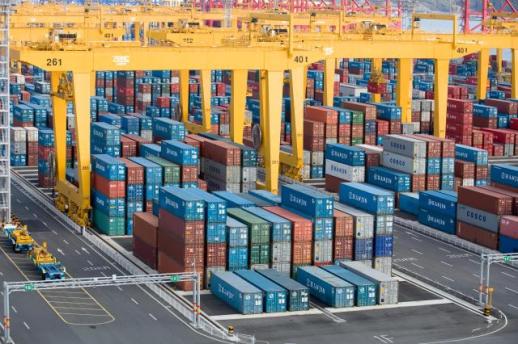 South Korea’s Q1 Exports Hit Record as Semiconductor Shipments Jump 139% South Korea posted its strongest first-quarter exports on record, helped by an artificial intelligence investment boom and a rebound in the semiconductor cycle. But the surge was heavily concentrated in chips — especially memory — raising concerns about the stability of the country’s export structure. The Ministry of Trade, Industry and Energy said Tuesday that first-quarter exports rose 37.8% from a year earlier to $219.9 billion, the highest ever for the period. The ministry cited expanding investment in AI servers and strong semiconductor demand. Semiconductor exports jumped 139% to $78.5 billion, underscoring the long-running risk of overreliance on a narrow set of products. Within semiconductors, growth diverged sharply between memory and system chips. With rising demand for high-bandwidth memory, exports of DRAM and NAND surged 249.1% and 377.5%, respectively. But system semiconductors, including foundry output, grew 13.5%. Across the broader export basket, the chip dominance was even clearer. Exports increased in 13 of the top 20 items, but semiconductors accounted for 35.7% of total exports. Exports excluding semiconductors rose 11.6%, less than half the overall growth rate. Other key industries slowed or slipped. Auto exports totaled $17.2 billion in the first quarter, down 0.3% from a year earlier. Truck exports rose, but shipments of passenger cars and vans fell. Passenger-car exports declined 2.2% to $16.3 billion, while van exports plunged 31.7%. In batteries, overall secondary-battery exports increased on strong lithium-ion battery shipments, but exports of cathode materials fell 5.5%. Steel and textiles were also weak. Steel exports were tallied as down 18.1% from the previous standard after some items were reclassified as other steel and metal products during an MTI revision. Textile exports slipped 0.6% due to weakness in fabrics and raw materials, though finished textile products held up on demand for K-fashion. Markets are increasingly wary that heavy dependence on a memory-led semiconductor supercycle could amplify volatility. The article cited uncertainty over U.S.-driven tariffs and expanding oil and supply-chain risks tied to a prolonged Middle East war as factors that could turn a concentrated export structure into a liability. Domestic risks are also in focus, including a threatened general strike by Samsung Electronics’ union. If production disruptions hit semiconductor output, the broader economy could face a significant shock. The Korea Development Institute has estimated that a 10% drop in exports due to semiconductor production disruptions would cut gross domestic product by 0.78%. The government said it is watching the risks closely. A ministry official said semiconductors are taking on the characteristics of a core industry and are closely linked to IT devices and supply chains, adding that the direction of the Middle East war is the biggest variable and that a negative scenario could hurt overall exports. * This article has been translated by AI. 2026-05-06 17:05:07
 -
 Shipbuilding Quality Manager Lee Yoo-beom Wins Gold Tower Order of Industrial Service Lee Yoo-beom, quality management director at Jiseung ENG, a partner company of HD Hyundai Heavy Industries, received the Gold Tower Order of Industrial Service, the top honor in the government’s Labor Day awards, for nearly five decades of work in shipbuilding focused on quality innovation and passing on skills. The Ministry of Employment and Labor said it held the 2026 Labor Day Government Awards Ceremony on Tuesday at Luna Miele in Seoul’s Yeouido district, presenting medals, commendations and citations to 210 people recognized for contributions to industrial sites and the labor community. The annual awards honor workers and union officials for dedicated service in the field. The ministry said this year’s program was the first since the official name “Workers’ Day” was restored to “Labor Day.” A total of 210 awards were presented: one Gold Tower Order of Industrial Service; 17 orders including the Silver, Bronze, Iron and Stone towers; 17 Industrial Service Medals; 53 presidential commendations; 57 prime minister’s commendations; and 66 ministerial commendations. The Gold Tower award went to Lee. The ministry said he joined Hyundai Heavy Industries in 1978 and was credited with helping build production systems in the marine engine sector and improving quality and safety to raise productivity. It also cited his continued work at partner companies after mandatory retirement, including training and developing talent. Silver Tower awards went to Kang Seok-yoon, standing vice chairman of the Federation of Korean Trade Unions, and Choi Mi-ra, chair of the Soonchunhyang Medical Center Labor Union. The ministry said Kang was recognized for participating in efforts to revise labor union laws and develop field-focused policies. Choi was cited for advancing workers’ rights and workplace-centered welfare, including reaching wage and collective bargaining agreements without strikes for 25 years, creating a sleep leave system for three-shift workers, and expanding paid sick leave. Also receiving the Silver Tower, Lee Tong-muk, a principal engineer at Kia Autoland Hwaseong, was recognized for more than 30 years of technical innovation and on-site improvements in press die processes that helped improve quality and productivity. The ministry said this year’s awards also sought out “hidden contributors” who had been less represented in past honors, including labor providers and freelancers, and women and workers with disabilities. Yeom Jeong-yeol, head of the Broadcasting Writers Branch of the National Union of Mediaworkers, received the Iron Tower Order of Industrial Service for efforts to improve working conditions for broadcast writers and institutionalize collective bargaining. Lee Jun-hwan, secretary general of the social cooperative Sarang-gwa-Saram, received the Stone Tower Order of Industrial Service; the ministry cited his 21 years of work in vocational rehabilitation and welfare for people with physical disabilities, despite having a physical disability himself. Labor Minister Kim Young-hoon said the ministry would “change first and take the lead” to build a South Korea where labor is respected, workers are treated properly, and everyone who works hard can shine. * This article has been translated by AI. 2026-05-06 15:06:59
 -
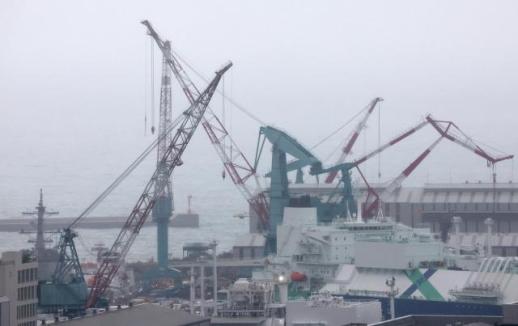 South Korea Labor Ministry Raids HD Hyundai Heavy Industries Over Ulsan Submarine Fire Labor authorities have launched a forced investigation into a recent fire aboard a submarine at a shipbuilding site in Ulsan. The Ministry of Employment and Labor said Tuesday it was conducting searches and seizures at HD Hyundai Heavy Industries' Ulsan headquarters and other locations over a Navy submarine fire at the company's Ulsan shipyard that killed a worker in her 60s. About 60 people, including labor inspectors and police, were deployed. Authorities are securing computers and related materials and focusing on whether fire-prevention measures and evacuation steps were properly carried out. The fire broke out at about 1:58 p.m. on April 9 on the Hong Beom-do, a 214-class (1,800-ton) Navy submarine undergoing maintenance at the Ulsan shipyard in Ulsan's Dong District. Most workers evacuated, but A, a woman in her 60s employed by a subcontractor, was trapped inside. After the fire was put out, firefighters searched the vessel and found her at about 4:38 p.m. near an interior passageway. Rescue efforts were hampered by the extremely tight space and repeated explosions after water used in firefighting came into contact with electrical equipment. Authorities dried the submarine and dismantled high-capacity batteries before recovering her body about 33 hours after the fire began. The Labor Ministry's Ulsan office said it will use the seized materials to determine whether required safety measures were followed and who is responsible. It will also review possible violations of the Occupational Safety and Health Act and the Serious Accidents Punishment Act. A ministry official said authorities will actively use measures such as searches, seizures and custodial investigations at workplaces where serious accidents occur or where similar incidents recur due to failures to follow basic safety rules.* This article has been translated by AI. 2026-05-06 10:10:15
 -
 Half of Dual-Income Couples With Preschoolers Face Severe Time Poverty, Study Finds More than half of dual-income households with preschool-age children in South Korea lack enough personal time, a new analysis found, as child care and housework squeeze both leisure and sleep. The Korea Labor Institute said Monday it analyzed the 27th time-use survey from the Korea Labor and Income Panel Study, focusing on married-couple households with spouses ages 20 to 64. Compared with couples without children, households with children spent 49 more minutes a day on mandatory time — paid and unpaid work and commuting — and had 41 fewer minutes of discretionary time. The institute attributed the shift mainly to increased unpaid labor. The institute divided a 24-hour day into essential time (sleep and personal care), mandatory time and discretionary time, then measured time poverty based on discretionary time, leisure and sleep. Time pressure was greatest when children were youngest. In households with preschoolers, the discretionary-time poverty rate was 35.3%, the leisure-and-social-relationships time poverty rate was 23.9%, and the sleep-shortage rate was 26.6% — the highest across all child-age groups. Whether both spouses worked was also a key factor. Among all married-couple households, the discretionary-time poverty rate was 25.2% for dual-income couples, more than double the 11.6% for single-earner households. Leisure and sleep shortages were also more pronounced among dual-income couples, reflecting the combined burden of paid work, commuting and unpaid work. The strain intensified sharply for dual-income households with preschoolers. Their discretionary-time poverty rate reached 51.1%, while the leisure-and-social-relationships time poverty rate was 36.6% and the sleep-shortage rate was 30.5%. Jeong Hyeon-sang, a senior research fellow at the institute, said the combination of a period of concentrated care needs and dual-income work “rapidly compresses the time people can choose to use.” Gender gaps were clear. In dual-income households, women carried a heavier unpaid-work burden than men, further limiting women’s discretionary and leisure time. Among dual-income women with preschoolers, the discretionary-time poverty rate was 64.7% and the leisure-and-social-relationships time poverty rate was 50.5%. Patterns of time shortage also differed by gender. Men were more likely to face sleep loss alone, while women more often experienced overlapping shortages in both discretionary and leisure time — a combination the institute warned could restrict recovery and social ties. Experts said policy responses are needed because time poverty is concentrated in specific life stages and household types. Jeong said dual-income households with preschoolers should be treated as a core support target, calling for expanded access to care services and stronger institutional measures such as more flexible working hours. He added that reforms to encourage men’s participation in caregiving should also be pursued to ease structural imbalances in time burdens. * This article has been translated by AI. 2026-05-04 14:24:16
 -
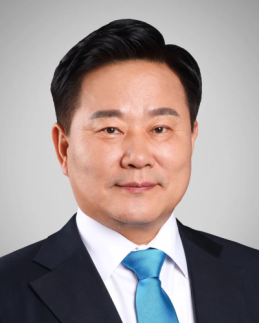 Kim Seong-jin Named New Chairman of Korea Power Exchange Kim Seong-jin, former head of the Gwangju Future Car Mobility Promotion Agency, officially took office on the 4th as the next leader of the Korea Power Exchange, which oversees South Korea’s power supply and demand. The Korea Power Exchange said Kim was appointed chairman with a three-year term. An inauguration ceremony is scheduled for the 6th at the agency’s headquarters in Naju, South Jeolla Province. Born in 1963 in Goheung, South Jeolla Province, Kim graduated from Gwangju Daedong High School and earned a degree in economics from Konkuk University. He later received a doctorate in East Asian studies and the Chinese economy from the University of Leeds in the United Kingdom. Kim entered public service in 1989 after passing the 33rd class of the state civil service exam. He has held a range of posts in industry and energy, including spokesperson at the Ministry of Trade, Industry and Energy, full-time vice chairman of the Korea Display Industry Association, and head of the Gwangju Future Car Mobility Promotion Agency. The appointment ends more than a year of acting leadership at the Korea Power Exchange following the voluntary resignation of former chairman Jeong Dong-hee in March last year. The Korea Power Exchange is a key institution that balances real-time electricity supply and demand on the national grid. Because supply and demand must match at all times for stable operations, it forecasts daily demand, sets generation plans and adjusts plant output and the transmission network in real time as conditions change. In the past, grid operations were relatively stable, centered on large power plants run by generation companies under Korea Electric Power Corp. But as the share of renewable generation has expanded rapidly, volatility has increased and grid management has become more difficult. Against that backdrop, Kim’s role is expected to grow. Industry officials say they expect him to play an important part in stabilizing the power market and responding to energy policy challenges.* This article has been translated by AI. 2026-05-04 10:34:09
 -
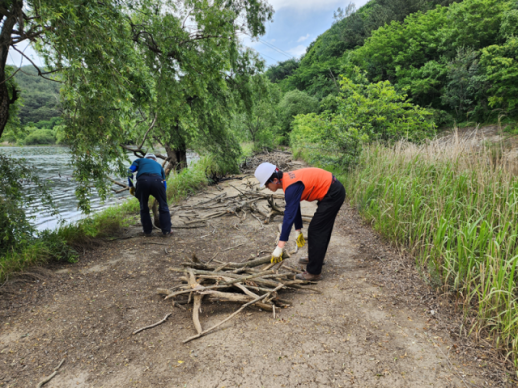 K-water to Step Up Pollution Checks Upstream of Dams, Weirs Ahead of Flood Season Ahead of the summer flood season and the peak period for algal blooms, Korea Water Resources Corp. said it will strengthen management of pollution sources in watersheds upstream of dams and weirs nationwide. The agency said it aims to block pollutants from flowing into waterways through advance inspections and follow-up measures. K-water said Monday it will conduct on-site checks, tailored to local conditions and risk levels, focusing on locations with a high likelihood of pollutant inflow. These include livestock farms, stockpiles of compost and manure, construction sites, illegally dumped waste along rivers and areas where muddy runoff is likely. The agency said the need for preventive management has grown as rainfall increasingly concentrates in specific periods and regions, raising the risk that pollution sources upstream will be washed into rivers. It cited repeated cases in which heavy downpours carried pollutants into waterways in a short time, underscoring the importance of field inspections. K-water said it will roll out step-by-step inspections and follow-up actions through November for watersheds upstream of 34 dams and 16 weirs. The plan includes advance checks, inspections before the flood season, and inspections during and after the flood season, followed by corrective measures. It said it will also conduct joint inspections with related agencies, including regional environment offices and local governments. For shortcomings found during inspections, K-water said it will provide on-site guidance and request corrective action so improvements can be made before the flood season. Follow-up steps will be tailored to each site, including installing covers over compost piles, reinforcing measures to reduce soil runoff from construction sites, and collecting trash and waste wood along riverbanks. During the flood season, the agency said it will recheck whether measures have been carried out and will continue managing weak points through the period after the flood season. It also said it will inspect key water-environment response equipment in advance to maintain readiness, including algae-blocking barriers, surface aerators and algae-removal facilities. K-water said it will systematically manage inspection results and continue pollution-reduction efforts through constant watershed monitoring and local cooperation, in addition to regular inspections. Park Dong-hak, head of K-water's Environment Division, said preventing algal blooms requires managing pollution sources upstream in advance rather than removing blooms after they occur. He said the agency will strengthen field-based inspections and follow-up measures to ensure the public can feel safe about water-environment management.* This article has been translated by AI. 2026-05-04 09:16:32
 -
 South Korea to Use AI to Improve Harmful Algae Bloom Forecasts To better respond to recurring summer algae blooms, the South Korean government is introducing an artificial intelligence-based forecasting system. The National Institute of Environmental Research, under the Ministry of Climate, Energy and Environment, said it will begin operating a new algae-bloom forecasting service starting on the 4th. The service combines AI with existing methods to improve forecast accuracy. Until now, major drinking-water sources such as the Mulgeum-Maeri area of the Nakdong River and Daecheong Lake on the Geum River have received algae forecasts based on 3D numerical models, but those models have had limits in reflecting rapidly changing conditions. The institute said climate change has brought rising water temperatures and shifting rainfall patterns, increasing variability in when blooms occur and how severe they become. That has made early forecasting and preemptive response more important, it said. Beginning this year, the institute added AI-based forecasting to its numerical models to improve precision and deliver information more quickly. Monitoring will also expand through the algae alert system. Four additional drinking-water sites — Uiam Lake in the Han River system, Yeongcheon Lake in the Nakdong River system, Yongdam Lake in the Geum River system, and Okjeong Lake in the Yeongsan-Seomjin River system — will be added, bringing the total to 13. The institute plans to expand the number of alert sites to 28 by 2030. Forecast results will be posted regularly on the Mulmoa Platform twice a week from May through October and shared with relevant agencies for use in advance response planning. The institute said it will continue refining the AI model and aims to apply it by 2030 to all nationwide drinking-water sites covered by the algae alert system. Kim Kyung-hyun, head of the institute’s Water Environment Research Department, said combining advanced AI with numerical models will be a key tool to strengthen response to algae blooms. He said the institute will bolster scientific forecasting capabilities to help ensure a clean water environment the public can use with confidence.* This article has been translated by AI. 2026-05-04 06:05:02