
Journalist

Yoo Na-hyun
shooting@ajupress.com
-
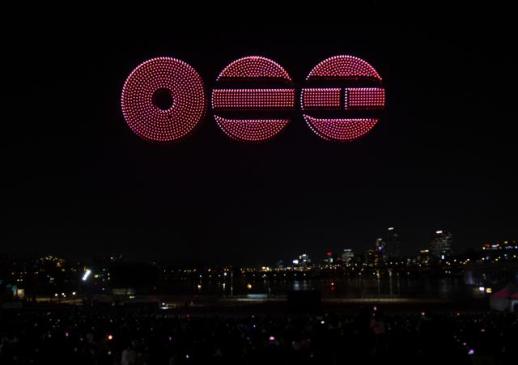 BTS Live: Seoul rehearses for comeback show with own digital and drone spectacle SEOUL, March 21 (AJP) -The city did not wait for the real show. On the eve of BTS’s comeback show Friday, Seoul became the stage itself — a vast, breathing amphitheater where sky, stone and river moved in sync to a rhythm already familiar to millions. Above Gwanghwamun, the night opened like a screen. Drones gathered in disciplined silence before bursting into motion, sketching constellations that resolved into faces, logos, fragments of memory. Nearly 2,000 points of light hovered and turned, then dissolved again, as if the sky were thinking out loud. Fountains rose in timed arcs, catching light and music — “SWIM” first, then “Body to Body” — the title tracks from the album released just hours earlier. Water became choreography. Light became pulse. The square, long a place of history and assembly, shifted into something fluid, almost weightless. Tourists stopped mid-step. Citizens who had crossed the plaza a thousand times found themselves looking up, phones forgotten in their hands. Then the first screams came — not of panic, but of recognition. Along the Han River, the reaction rippled outward. At Ttukseom Hangang Park, the crowd had already begun its own concert. Light sticks — thousands of them — flickered in synchronized waves, turning the riverbank into a field of moving stars. When the music reached them, people did not hesitate. They danced where they stood: teenagers, office workers, visitors who had arrived curious and found themselves converted. Back at the city’s historic core, Seoul staged a quieter, more improbable conversation. Media facades washed over the old gates — Gwanghwamun, Sungnyemun — their surfaces carrying images that belonged unmistakably to the present. Digital color clung to wood and stone shaped by centuries. The effect was not collision, but layering: heritage holding the projection steady, technology giving it motion. For a moment, the past did not recede. It absorbed. This was the rehearsal before the spectacle — a city testing its voice before the main performance. Not confined to a single venue, but distributed across landmarks, riverbanks and sky, the pre-event unfolded as a networked celebration, where tradition, technology and fandom met without hierarchy. By midnight, Seoul had already crossed the threshold. The concert had yet to begin. But the city — lit, singing, and unmistakably alive — had already started. 2026-03-21 10:30:22
 -
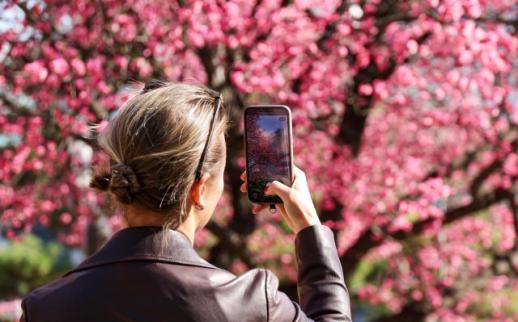 Flowers bloom in Seoul Buddhist temple as vernal equinox nears SEOUL, March 19 (AJP) - Spring flowers bloomed at Bongeunsa Temple in Seoul’s Gangnam District on Thursday, drawing visitors a day ahead of the seasonal marker Chunbun, the vernal equinox. Plum trees with red and white blossoms, and cherry flowers colored the temple grounds, offering a gentle sign of the changing season. Visitors paused to take photos or slowed their steps, enjoying the early spring atmosphere. Chunbun marks the day when daytime and nighttime are of equal length, after which daylight hours gradually become longer than the night. 2026-03-19 17:28:45
 -
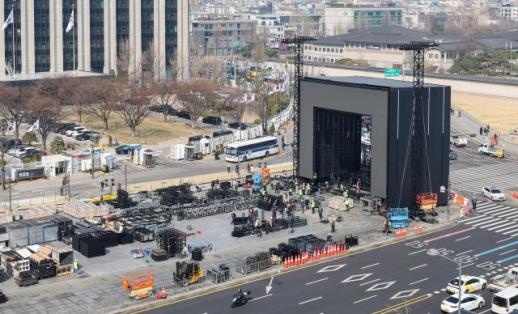
 BTS Live D-3: Stage is shaping up fast SEOUL, March 18 (AJP) - The mega stage for BTS comeback show at Gwanghwamun Square is quickly taking shape, even under rain on Wednesday. Roads around Gwanghwamun will be closed on the day of the performance, and access to nearby subway stations will also be limited. Boarding and alighting will be suspended at City Hall Station on Lines 1 and 2, Gyeongbokgung Station on Line 3, and Gwanghwamun Station on Line 5. Major cultural facilities near Gwanghwamun, including Gyeongbokgung Palace and the National Palace Museum of Korea, will be temporarily closed. Meanwhile, about 20 major landmarks across Seoul are set to be illuminated in purple to mark the performance. 2026-03-18 17:55:21
 -
 BTS Live D-3: Seoul turning purple with fans in BTS color pouring in SEOUL, March 18 (AJP) -Seoul is turning purple as fans adorned in the color pour into the capital with three days to go before the Gwanghwamun performance. Central districts including Gwanghwamun Square and Myeongdong are seeing a steady influx of visitors, many gathering near the concert venue or exploring nearby streets in anticipation of the event. In Myeongdong, a BTS merchandise shop was packed with fans purchasing albums and official goods, offering an early glimpse of the commercial momentum surrounding the comeback. “March is usually a slow season, but we’re seeing a clear increase in foreign visitors ahead of the concert,” a staff member at the shop said, adding that new albums will be prominently displayed in line with the band’s March 20 release. Around Gwanghwamun, fans were spotted taking photos, scouting the venue and soaking in the atmosphere ahead of what is expected to be one of the largest K-pop events in recent years. The BTS performance will take place at Gwanghwamun Square at 8 p.m. on March 20 and will be livestreamed globally via Netflix. 2026-03-18 17:26:02
 -
 BTS Live D-4: Gwanghwamun transforming into a mega open-air stage SEOUL, March 17 (AJP) -Seoul is turning its historic heart into a carefully controlled arena as nearly 260,000 fans are expected to gather for BTS’s return concert at Gwanghwamun on March 21. At the center of the plan is a transformation of open city streets into a “stadium-style” venue. Thirty-one official entry gates—stretching from the west (W1–W15) to the east (E1–E16)—will funnel crowds into designated zones, preventing dangerous overcrowding in one of the capital’s busiest districts. Security begins early. From 7 a.m., every gate will be equipped with metal detectors to screen bags and block hazardous items. Even those who enter earlier will face additional handheld scanning—an uncommon level of scrutiny for a public concert, reflecting heightened global security concerns. Beyond the square, the city itself bends to the event. Major arteries including Sejong-daero will be shut for up to 33 hours, with nearby roads closing in phases throughout the day. Police will deploy 6,500 personnel across crowd control, traffic management and counterterrorism units. The result is a rare moment when a pop concert reshapes urban space—turning Gwanghwamun from a civic landmark into a tightly managed live venue, built not with walls, but with people, planning and precision. 2026-03-17 16:25:55
 -
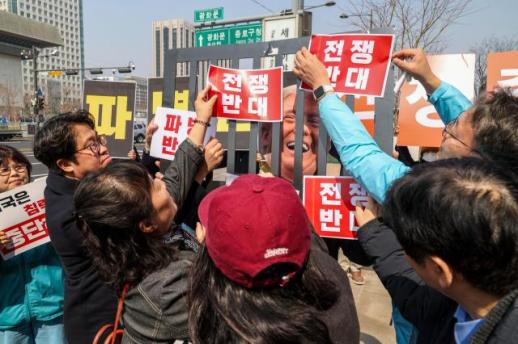 Activists rally in Seoul to oppose warship dispatch to Middle East SEOUL, March 17 (AJP) - Civic activists held a rally at Gwanghwamun in central Seoul on Tuesday to oppose the possible dispatch of warships to the Strait of Hormuz as well as the deployment of South Korean troops to the Middle East. They chanted with banners and stickers reading "no war" and "no deployment," urging an end to the escalating conflict in the Middle East, which began with U.S.-led airstrikes on Iran late last month. 2026-03-17 16:25:19
 -
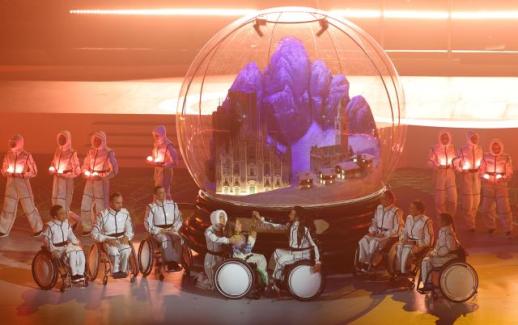 South Korea finishes Winter Paralympics with best-ever medal haul SEOUL, March 16 (AJP) - This year's Winter Paralympics concluded their 10-day competitions in Milan and Cortina d'Ampezzo, Italy, with a closing ceremony held last Sunday. With two gold, four silver, and one bronze medals, South Korea ranked 13th overall in the gold-medal count, the country's best-ever performance in Winter Paralympics history, surpassing its previous record set at the Pyeongchang Games in 2018 when the country secured one gold and two bronze medals. 2026-03-16 17:47:56
 -
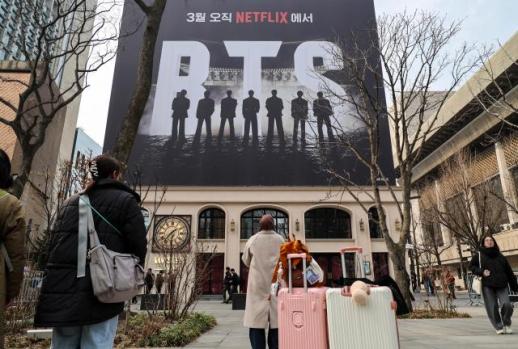 BTS Live D-5: Gwanghwamun begins dressing up as a giant open-air stage SEOUL, March 16 (AJP) -Seoul is redecorating Gwanghwamun Square to transform the historic plaza into a vast open-air stage for global K-pop group BTS, whose comeback performance will be livestreamed worldwide on Saturday. Stage installations are taking shape across the square, while large banners announcing BTS’s return line nearby streets and buildings. Foreign tourists stopped to take photos in front of the displays, adding to the growing buzz ahead of the concert. Phased traffic controls will be introduced around Gwanghwamun Square from 9 p.m. on March 20, the night before the event, until 6 a.m. on March 22 for concert preparations and safety management. The BTS comeback performance is scheduled from 8 p.m. to 9 p.m. on March 21 and will be livestreamed globally via Netflix. 2026-03-16 16:41:15
 -
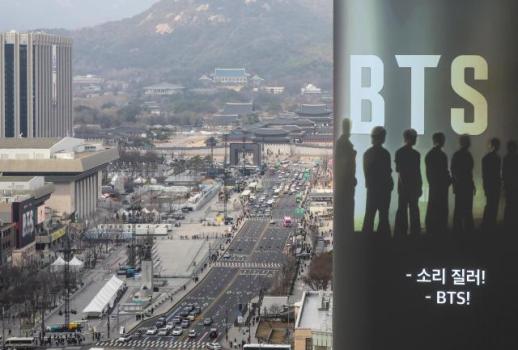
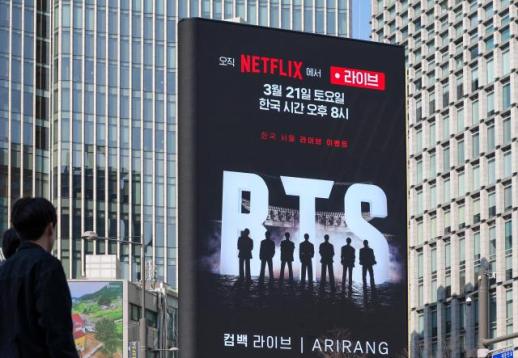 Gwanghwamun redresses to play the host for BTS show SEOUL, March 13 (AJP) -An electronic billboard near Gwanghwamun Square flashes the announcement: BTS is coming back. The towering digital screen lights up the intersection in central Seoul with promotions for “BTS Comeback Live: ARIRANG,” the group’s highly anticipated concert scheduled for March 21 — just eight days away. Around the historic square, the city is already wearing the band’s colors. Towering buildings along the Gwanghwamun boulevard are draped in BTS banners while giant screens cycle through images of the group, turning the capital’s ceremonial avenue into a preview of the global spectacle to come. Streets that usually carry office workers and tourists now play host to growing crowds of fans stopping to photograph the banners and billboards. The transformation is part of the buildup to BTS’s return as a full group after about three years and nine months. The concert, titled “BTS Comeback Live: ARIRANG,” will take place at 8 p.m. on March 21 at Gwanghwamun Square, bringing one of the world’s biggest pop acts back to the heart of Seoul. The concert, titled “BTS Comeback Live: ARIRANG,” will take place at 8 p.m. on March 21 at Gwanghwamun Square, bringing one of the world’s biggest pop acts back to the heart of Seoul. A day before the performance, the group will release its fifth full-length album, “ARIRANG,” worldwide at 1 p.m. on March 20. The album features 14 tracks, including the title song “SWIM,” with leader RM participating in writing the lyrics. Authorities expect the comeback concert to draw one of the largest crowds ever assembled in the historic district. Police estimate that around 230,000 people could gather near Daehanmun Gate of Deoksugung Palace, while as many as 260,000 spectators may line the boulevard toward Sungnyemun Gate, turning the entire area into a vast open-air concert venue. For fans unable to attend in person, the event will be livestreamed globally on Netflix in more than 190 countries, extending the spectacle far beyond Seoul. 2026-03-13 15:55:21
 -
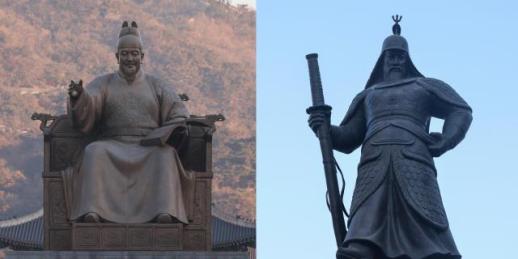 BTS Comeback D-8: Gwanghwamun's oldest residents - a Joseon king and admiral SEOUL, March 12 (AJP) - At the heart of Seoul stands Gwanghwamun Square, often called the symbolic center of South Korea. The broad boulevard stretching from the ancient gates of Gyeongbokgung Palace has witnessed centuries of history — from the royal administration of the Joseon Dynasty to modern civic gatherings. Next Saturday, the historic square will host another moment in that long timeline: a comeback performance by global K-pop group BTS. In this space where history and modern culture intersect, two towering figures already stand watch — Admiral Yi Sun-sin, the naval commander who defended Joseon during the 16th century, and King Sejong, the monarch who created the Korean alphabet. Their statues face south along the grand avenue, anchoring a square where the legends of the past and icons of the present converge. Standing at the center of Gwanghwamun Square is the imposing statue of Admiral Yi Sun-sin, one of Korea’s most revered military heroes. The 17-meter monument was erected in 1968 and remains one of Seoul’s most recognizable landmarks. The bronze statue itself rises 6.5 meters above a 10.5-meter pedestal, depicting the admiral in armor overlooking the capital he once helped defend. Around the statue are symbolic reminders of his naval victories — a model of the famed turtle ship, one of the world’s earliest iron-clad warships, and two large drums representing signals used during naval battles. Rather than focusing on a precise likeness, the monument emphasizes Yi’s role as a national symbol — the steadfast commander who protected the nation during the Japanese invasions of the 1590s. About 250 meters north of Yi’s monument sits another defining symbol of Korean history: the statue of King Sejong the Great, the fourth ruler of the Joseon Dynasty. The seated statue measures 6.2 meters in height and 4.3 meters in width. Unlike the commanding posture of the admiral, Sejong appears calm and contemplative. One hand holds a book while the other gestures gently forward, reflecting his reputation as a ruler devoted to the welfare of his people. Models of King Sejong’s inventions — the honcheonsi, cheugugi and angbuilgu — are displayed at Gwanghwamun Square in Seoul. AJP Han Jun-gu Displayed before the statue are scientific instruments from the 15th century that flourished under Sejong’s reign — the honcheonsui armillary sphere, the cheugugi rain gauge, and the angbuilgu sundial. Along the flowing water channel surrounding the plaza, a timeline carved in stone traces the history of the Joseon Dynasty. The stories of the two figures continue beneath the plaza. Underground exhibition halls known as “Story of Sejong” and “Story of Admiral Yi Sun-sin” allow visitors to explore the lives and achievements of the two historical icons. The Sejong exhibition introduces the king’s philosophy of governance, his scientific innovations and his most enduring legacy — the creation of Hangul, the Korean alphabet. Displays include replicas of astronomical charts, traditional musical instruments used in the royal court and interactive exhibits explaining Sejong’s technological achievements. The Yi Sun-sin gallery focuses on the admiral’s leadership during the Imjin War. Artifacts and multimedia displays recreate the naval battles of the seven-year conflict, including models of Joseon warships and immersive visual installations illustrating the admiral’s strategies. Above ground, Gwanghwamun Square remains a living civic space where history continues to unfold. The statues of Yi Sun-sin and King Sejong overlook the plaza while their stories live on below — a reminder of the country’s past layered into the fabric of modern Seoul. Soon another chapter will be added.On March 21, the square will transform into a stage for BTS, the global music phenomenon whose influence now carries Korean culture across the world. In one place stand the legendary king who gave Korea its alphabet, the admiral who defended the nation’s shores, and a modern group whose music has carried Korean culture to global audiences. At Gwanghwamun, centuries of Korean history — and the future of its culture — meet on the same stage. 2026-03-13 14:33:20