

Journalist

Eun-mi. Won
silverbeauty@ajunews.com
-
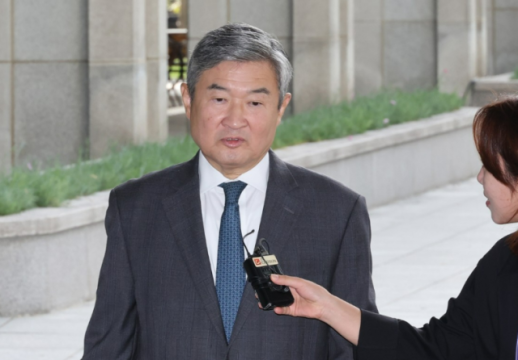 Court Sentences Former National Intelligence Service Chief Cho Tae-yong to 18 Months in Prison Cho Tae-yong, the former chief of South Korea's National Intelligence Service (NIS), was sentenced to 18 months in prison for failing to fulfill his reporting obligations to the National Assembly during the declaration of martial law on December 3, 2024, and for submitting false responses to conceal his involvement. However, the court found him not guilty of the key charges of negligence and political involvement. The Seoul Central District Court's Criminal Division 32, presided over by Judge Ryu Kyung-jin, delivered the verdict on May 21. Cho was convicted on charges including negligence, violations of the National Intelligence Service Act, violations of the National Assembly Testimony and Evidence Act, evidence destruction, preparation and use of false documents, and perjury. The sentence is significantly lower than the seven years sought by the special prosecutor's team led by Cho Eun-seok. The court acquitted Cho of the negligence charge, stating that while he received documents related to martial law from former President Yoon Suk Yeol on the day of the declaration, it could not be definitively concluded that he clearly understood the instructions regarding the arrest of politicians from former NIS Deputy Director Hong Jang-won. The court noted, "It cannot be ruled out that the defendant may have perceived the information received from Hong as mere rumors arising during the martial law process. Therefore, it cannot be concluded that the obligation to report to the National Assembly under the NIS Act arose." The court also ruled that there was insufficient evidence to support the claim that Cho selectively provided CCTV footage of Hong's movements to the ruling party, thus finding him not guilty of political involvement. Additionally, allegations that Cho participated in the deletion of electronic information from secure phones used by Yoon and Hong after the martial law declaration were also dismissed, as the court acknowledged the possibility of security measures being in place at that time. However, the court did find Cho guilty of making false statements regarding his receipt of martial law documents during the Constitutional Court impeachment trial and the National Assembly's investigation. The court stated, "As the NIS chief, the defendant should have sincerely addressed public concerns and taken responsibility for any wrongdoing. Nevertheless, he prepared false responses to minimize and conceal his responsibility and even committed perjury in the Constitutional Court." The court emphasized that such actions deceive the public and significantly undermine trust in the National Intelligence Service, warranting a serious penalty. Following the verdict, the special prosecutor's team announced plans to appeal the acquittal, expressing disappointment over the rejection of Hong's testimony. * This article has been translated by AI. 2026-05-21 21:43:33
 -
 Junsungbae Jeon Sentenced to 5 Years for Corruption Tied to Yoon Suk Yeol and Unification Church Junsungbae Jeon, known as the "Ganjin Beopsa," was sentenced to five years in prison for accepting bribes from the Unification Church and other groups by leveraging his connection with Kim Geon-hee. The court ruled that Jeon relayed requests to former President Yoon Suk Yeol through Kim, indicating a collusion between religion and politics. However, his acknowledgment of the bribes during the special investigation and his submission of key evidence were considered mitigating factors. On May 21, the 13th Criminal Division of the Seoul High Court (Judges Kim Mu-shin, Lee Woo-hee, and Yoo Dong-kyun) sentenced Jeon to five years in prison for charges of intermediary bribery and violations of political funding laws. The court also ordered the confiscation of a Graff necklace and the return of approximately 1.8 billion won. This sentence is one year less than the six-year term imposed in the first trial. The court upheld most of the intermediary bribery charges against Jeon, stating, "The defendant used his personal relationship with Kim Geon-hee to exert influence over members of the National Assembly and high-ranking government officials after Yoon Suk Yeol was elected, pursuing his own interests in the process." The court further noted, "Jeon acted as an intermediary by relaying requests from the Unification Church to former President Yoon through Kim Geon-hee, resulting in a collusion between Yoon and the Unification Church that undermined the constitutional principle of separation of church and state." In the appeal, Jeon was found guilty of accepting bribes worth approximately 83 million won, including two Chanel bags and a Graff diamond necklace from former Unification Church leader Yoon Young-ho between April and July 2022. The court specifically identified the Chanel bag worth 8.02 million won delivered in April 2022 as "not merely a gift but a reward for implicit requests." The judges explained, "At that time, Kim Geon-hee was in a position that could be perceived as having influence over presidential duties, making it reasonable to view the gifts from the Unification Church as expectations of assistance regarding presidential responsibilities." Jeon was also found guilty of receiving 30 million won from Yoon Young-ho in exchange for requesting a position as an advisor to the Unification Group. Additionally, he was convicted of accepting 160 million won from ConLab Company under the pretext of facilitating business initiatives and 45 million won for suppressing a tax investigation related to Hee-rim Architecture. However, the court considered Jeon's partial confession during the trial and his voluntary submission of key evidence to the special prosecutor's team as factors in determining his sentence. The judges stated, "The defendant provided crucial testimony that clarified the crimes during Kim Geon-hee's trial, which qualifies as a mitigating factor under the special prosecutor law." While the first trial denied any mitigating circumstances due to Jeon's denial of charges during the investigation, the appeals court overturned this, stating, "The fact that he made statements during the investigation that differed from those in court is not explicitly stated as a reason to exclude mitigating circumstances." Conversely, Jeon was acquitted of charges related to receiving 100 million won for assisting Park Chang-wook's candidacy for the Gyeongbuk Provincial Council during the 2022 local elections, consistent with the first trial's ruling. The court acknowledged that Jeon was active in the Yoon Suk Yeol campaign's network but concluded that it was difficult to classify him as a "political person" under political funding laws after the presidential election.* This article has been translated by AI. 2026-05-21 18:16:59
 -
 Special Prosecutors to Summon Yoon Suk Yeol for Investigation on Abuse of Power and Rebellion Charges The second special prosecutor team, led by Kwon Chang-young, will summon former President Yoon Suk Yeol for questioning twice next month. This investigation will focus on allegations of abuse of power related to justifying martial law and charges of rebellion under military law. The special prosecutor's office announced on May 21 that it has requested Yoon to appear at 10 a.m. on June 6 for questioning regarding his alleged abuse of power in conveying messages justifying martial law to the National Security Office and the Ministry of Foreign Affairs. Additionally, the investigation into Yoon's alleged rebellion charges is scheduled for June 13 at 10 a.m. The special prosecutors suspect that Yoon directed the National Security Office and the Ministry of Foreign Affairs to send messages justifying martial law to allied nations, including the United States, immediately after the declaration of martial law. The messages reportedly included statements such as, "This action is to protect liberal democracy," and claimed that the National Assembly attempted to disrupt the constitutional order by paralyzing the executive branch through impeachment and budget cuts. The special prosecutor's office plans to investigate the circumstances surrounding the drafting and transmission of these messages. Furthermore, the special prosecutor's team is continuing its investigation into Yoon's alleged rebellion under military law. They believe that Yoon conspired with former Defense Minister Kim Yong-hyun, former Army Chief of Staff Park An-soo, and former Army Special Warfare Command Chief Kwak Jong-geun to send armed soldiers to the National Assembly and the National Election Commission to incite a riot. While rebellion charges typically apply to military personnel, non-military individuals who conspire with them can also be prosecuted. Yoon's legal team argues that the rebellion leader charge overlaps with existing insurrection leader charges, claiming that additional indictments would constitute double jeopardy.* This article has been translated by AI. 2026-05-21 16:17:04
 -
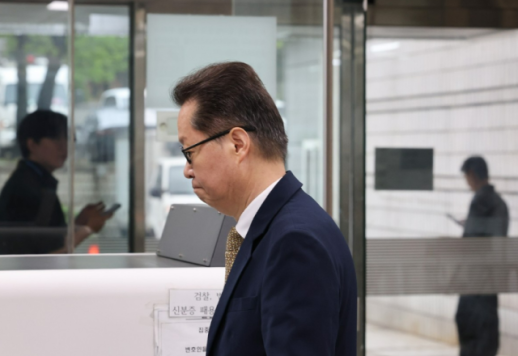 First Arrest Warrant Issued by Special Prosecutors for Former KTV Head Lee Eun-woo Lee Eun-woo, the former head of the Korea Policy Broadcasting System (KTV), faces a critical moment as he is accused of insurrection propaganda related to the December 3 martial law. This marks the first attempt by the second comprehensive special investigation team, led by Special Prosecutor Kwon Chang-young, to secure an arrest warrant, focusing on a charge that lacks legal precedent. The Seoul Central District Court, presided over by Chief Judge Lee Jong-rok, began the warrant hearing at 10 a.m. on May 21 to assess the necessity of Lee's arrest. Lee arrived at the court at 9:16 a.m. dressed in a black suit, heading straight to the courtroom without responding to questions from reporters. Special Prosecutors Kwon Young-bin and Kim Jung-min attended the hearing. Kwon stated to reporters outside the court, "The citizens who rushed to the National Assembly were the key figures in stopping the insurrection on December 3. The act of continuing to propagate insurrection against such citizens must be severely punished." He added, "We have confirmed the charges by supplementing aspects that were not investigated in the first insurrection special investigation, and given the seriousness of the matter, we filed for the warrant. It was particularly necessary to verify the fairness and objectivity of the media among government agencies." Lee is accused of repeatedly broadcasting news that justified the martial law and related proclamations from December 3 to 13, 2024, while selectively blocking or deleting news that criticized or attempted to halt the martial law, thereby propagating insurrection. The comprehensive special investigation team claims that Lee continued to support and protect insurrection forces, including former President Yoon Suk Yeol, even after the martial law was lifted, leading to the warrant request on May 18. This is the first arrest warrant request in the 82 days since the special investigation team was established. The key issue in this case is whether the charge of insurrection propaganda can be substantiated. There is no precedent for this charge being recognized as a valid reason for arrest, making the court's decision highly anticipated. Kwon emphasized, "There is currently no precedent for insurrection propaganda charges, and this is the first attempt by the comprehensive special investigation team. We will explain to the court that insurrection propaganda is a significantly serious criminal act." The special investigation team argues that the essence of the case lies not merely in the direction of reporting but in the fact that a state-run broadcaster justified an unconstitutional martial law and continued to support it. In contrast, Lee's defense team asserts that KTV's role is to promote policies and denies the allegations, questioning whether the broadcasts can be interpreted as promoting insurrection and legitimizing it. Lee's defense reportedly submitted a 100-page opinion document in preparation for the hearing, stating, "KTV's identity is that of a policy promotion broadcaster," and questioning the interpretation of its broadcasts as promoting insurrection. The relationship with previous trials is also a major point of contention. Previously, the insurrection special investigation team (led by Special Prosecutor Jo Eun-seok) charged Lee with abuse of authority for ordering the deletion of KTV subtitles containing statements from politicians criticizing the constitutionality and legality of the martial law shortly after it was declared. Lee was indicted without detention in December of last year, and the case is currently awaiting a first-instance verdict on June 26, following a sentencing hearing on May 15. At that time, the insurrection special investigation team decided not to prosecute on the charge of insurrection propaganda, citing the timing of the offense and the potential chilling effect on press freedom. However, the comprehensive special investigation team decided to reopen the investigation after reviewing the case records and confirming evidence that Lee supported insurrection forces even after the martial law was lifted. This has led to concerns in the legal community about potential "double prosecution," as some argue that the same actions are being investigated again while a trial is ongoing. The special investigation team strongly refuted this claim. Kwon stated, "The term double prosecution is something said by those who do not understand the law. Given the protected legal interests, the nature of the acts, and the social facts, this is a separate case and does not constitute double prosecution." The court is expected to consider the degree of evidence supporting the charges, the similarity to existing cases, and the extent to which journalistic actions can be subject to criminal penalties during the warrant hearing. This hearing is anticipated to be a turning point for the comprehensive special investigation. If the warrant is issued, the investigation can accelerate into the involvement of state agencies and public media before and after the martial law. Conversely, if denied, it could raise questions about the validity of applying a charge of insurrection propaganda without precedent and significantly hinder the investigation's momentum. A decision on Lee's arrest could be made as early as that evening.* This article has been translated by AI. 2026-05-21 13:13:38
 -
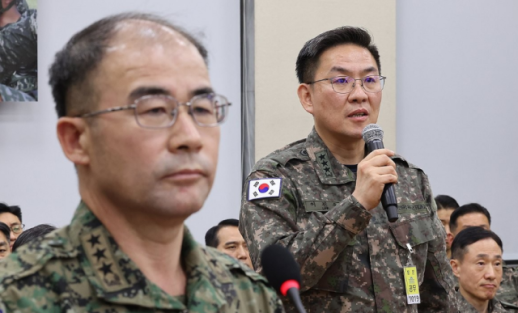 Special Prosecutors Target Military Leadership in Second Martial Law Investigation The second comprehensive special investigation team, led by Special Prosecutor Kwon Chang-young, is intensifying its probe into allegations surrounding the second martial law, targeting both the Joint Chiefs of Staff leadership and field commanders. Notably, the special prosecutors are applying charges of 'rebellion' under military law to field commanders, indicating a focus on the mobilization of armed forces rather than merely executing unlawful orders.As of the morning of May 19, the special prosecutors are questioning former Army Capital Defense Command Chief Lee Jin-woo as a suspect under military law for rebellion. On May 14, they also investigated former Army Special Warfare Command Chief Kwak Jong-geun on similar charges.Lee is accused of instructing his armed subordinates to block the National Assembly during the declaration of emergency martial law and allowing troops to enter the National Assembly premises. The special prosecutors are expected to press Lee on the directives from former President Yoon Suk Yeol and the circumstances surrounding the troop deployment.The investigation has already implicated Yoon, former Defense Minister Kim Yong-hyun, former National Intelligence Service Director Noh Sang-won, and former Commander Kwak on charges of rebellion. Yoon has been summoned to appear for questioning on May 23, while Kim is set to appear on May 26. Focus on Charges of 'Rebellion' Instead of 'Important Duties in Insurrection'Legal experts are noting the significance of the special prosecutors applying charges of rebellion to Lee and Kwak instead of 'important duties in insurrection.'The rebellion charge punishes collective violent acts using military organization and armed forces. The key issue is whether actual forces were mobilized to operate the military command structure, beyond merely transmitting or executing unlawful orders.This suggests that the special prosecutors are investigating the Defense Command and Special Forces not merely as executing organizations but as 'actual perpetrators of armed force mobilization.'This aligns with the interpretation that the special prosecutors view the case as a 'three-tier command structure' involving the final directive line of Yoon and Kim, the Joint Chiefs of Staff leadership, and the executing units of the Defense Command and Special Forces. The special prosecutors are also accelerating their investigation into the Joint Chiefs of Staff leadership.They have notified former Joint Chiefs of Staff Chairman Kim Myung-soo to appear for questioning on charges of important duties in insurrection on May 27. Kim is reported to have expressed his intention to attend.Kim is suspected of being involved in the formation of the martial law command while monitoring the military's entry into the National Assembly from the Joint Chiefs of Staff command control center during the declaration of emergency martial law on December 3, 2024.The special prosecutors suspect that Kim issued fragmentary orders to the Special Forces and Defense Command to prioritize martial law operations. Fragmentary orders are military operational commands that quickly convey changes in operational situations or missions.The special prosecutors are examining whether Kim's orders went beyond mere situation management to actively support the emergency martial law operations.Previously, the special prosecutors classified the Joint Chiefs of Staff-related allegations as a 'first recognized case.' In addition to Kim, they have also charged former Deputy Chief Jeong Jin-pal, former Military Support Headquarters Chief Kang Dong-gil, former Operations Headquarters Chief Lee Seung-o, former Operations Department Chief Ahn Chan-myung, and former Defense Readiness Inspection Chief Lee Jae-sik with important duties in insurrection. The special prosecutors conducted a search and seizure operation at the Joint Chiefs of Staff on April 24. Military Requests for Troops After National Assembly's Martial Law RepealA key aspect of this investigation is whether discussions about additional troop deployments occurred after the National Assembly passed a resolution to repeal martial law.The special prosecutors have reportedly secured statements from current and former Joint Chiefs of Staff officials indicating that there were requests for additional troop deployments after the National Assembly's resolution to repeal martial law.Based on this, the special prosecutors are looking into whether Yoon and military leaders considered re-deploying troops or implementing additional martial law measures after the repeal.The special prosecutors are broadening their investigation to include not only troop movements and entry into the National Assembly immediately after the martial law declaration but also the actions of military leadership following the resolution to repeal martial law. Remaining Challenge: Evidence and C4I Operational RecordsHowever, as the special prosecutors reach the midpoint of their extended investigation and enter the critical phase of questioning key suspects, securing decisive evidence to substantiate the 'three-tier command structure' is seen as a major challenge ahead.So far, statements from military officials indicating that there were requests for additional troop deployments have been obtained, but legal experts emphasize the need to secure internal military records that objectively prove the structure of directives, transmission, and execution.In particular, operational records from the military command and control system, known as C4I (Command, Control, Communications, Computers, and Information), are considered a key piece of evidence.According to reports from Aju Economy, some military units during the martial law period did not operate C4I equipment normally. In standard military operations, troop movements, command orders, and location information are recorded within the C4I system. If the special prosecutors can obtain the operational logs, communication records, and terminal access records from the day of the martial law declaration, it could serve as crucial evidence to clarify the command line from Yoon to the Joint Chiefs of Staff, Defense Command, and Special Forces.Conversely, if it is confirmed that some troops operated outside the command control network, the existence of separate command lines or abnormal operational systems within the military could also become a focus of investigation.* This article has been translated by AI. 2026-05-19 13:34:02
 -
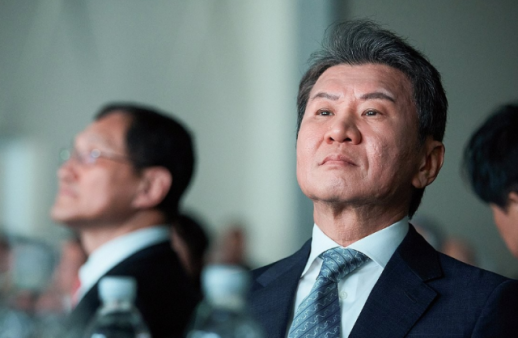 HDC Chairman Chung Mong-kyu Fined 150 Million Won for Omitting 20 Affiliated Companies Chung Mong-kyu, chairman of HDC Group, has been fined 150 million won for allegedly omitting 20 affiliated companies from documents submitted to the Fair Trade Commission (FTC). According to legal sources, the Seoul Central District Court's Criminal Division 11, presided over by Judge Kim Jae-hak, issued a summary order on May 15 for the violation of the Fair Trade Act. A summary order is a procedure that imposes fines or penalties for relatively minor offenses without a formal trial, based solely on written proceedings. The individual can request a formal trial within seven days of receiving the order. Chung has not yet received the summary order. Chung is accused of omitting a total of 20 companies from HDC Group's affiliated company status while submitting documents for designation as a business group with cross-shareholding restrictions from 2021 to last year. According to the FTC, the omitted companies include 12 firms controlled by SJG Holdings, led by Chung's uncle Park Se-jong, and 8 firms controlled by Intrans Shipping, owned by his sister Jeong Yu-kyung and her husband Kim Jong-yeop. The number of omitted companies per year was 17 in 2021, 19 in 2022, 19 in 2023, and 18 in 2024. The FTC determined that false submissions occurred for as long as 19 years, from 2006, when Chung was designated as the head of HDC, until last year. However, due to the five-year statute of limitations, only actions taken after 2021 were subject to penalties. The FTC reported that Chung, who has served as the CEO of HDC, a holding company, for an extended period, was in a position to be fully aware of the scope of affiliated companies and had ongoing interactions with the family-owned firms, indicating intent to conceal. Consequently, the FTC filed a complaint with the prosecution in March. Following an investigation, prosecutors issued a summary indictment against Chung on April 6, imposing the 150 million won fine. HDC Group previously stated, "Chairman Chung does not hold any shares in these companies and had no improper intent or motive to conceal them."* This article has been translated by AI. 2026-05-18 21:38:42
 -
 Special Prosecutors Investigate Former NIS Officials for Insurrection Charges The Special Prosecutors' Office, led by Kwon Chang-young, is investigating former National Intelligence Service (NIS) Director Cho Tae-yong and former Deputy Director Hong Jang-won, along with four other former NIS officials, on charges related to insurrection. The investigation focuses on allegations that former President Yoon Suk-yeol attempted to justify the declaration of emergency martial law through diplomatic and security channels shortly after it was imposed on December 3. During a regular briefing on May 18 at the Special Prosecutors' Office in Gwacheon, Special Prosecutor Kim Ji-mi stated, "We have designated Cho, Hong, and four other former NIS officials as suspects in connection with their involvement in insurrection-related duties and are currently investigating them." Previously, the Special Prosecutors' Office executed a search warrant on the NIS's computer servers and questioned over 40 individuals. They have confirmed that Cho met with former President Yoon after the declaration of martial law and subsequently held meetings with NIS officials and department heads. The Special Prosecutors' Office issued a summons for Cho to appear on May 19, but he has refused to comply. A summons for Hong has been scheduled for May 22. Additionally, the investigation is looking into whether the NIS was involved in communicating messages that supported the martial law to U.S. intelligence agencies. However, during the briefing, the Special Prosecutors' Office refrained from providing specific details regarding the charges or the nature of the communications. The Special Prosecutors' Office has also charged Shin Won-sik, former head of the National Security Office, and Kim Tae-hyo, former Deputy Director, with insurrection-related duties. Kim has been questioned as a suspect both on May 15 and again on this day. The investigation appears to be examining the possibility that former President Yoon sought to justify the martial law through channels including the Foreign Ministry, National Security Office, and NIS. Investigations into former Prosecutor General Shim Woo-jung are ongoing. The Special Prosecutors' Office has executed a search warrant on the Gwangju Center, where the internal server of the Supreme Prosecutors' Office, known as "Epros," is located, and has begun forensic analysis of the first batch of seized materials. In addition, the Special Prosecutors' Office is investigating allegations related to the Yangpyeong Expressway route change, the relocation of the presidential residence, the Deutsche Motors stock manipulation case, and issues related to the Unification Church's gambling investigations. Last week, they questioned nine suspects and 42 witnesses. Meanwhile, the Special Prosecutors' Office plans to submit a report to the President and the National Assembly this week regarding an extension of the investigation period, which is set to expire on May 24 after 90 days. Under the Special Prosecutors' Act, the investigation period can be extended twice for 30 days each.* This article has been translated by AI. 2026-05-18 17:44:11
 -
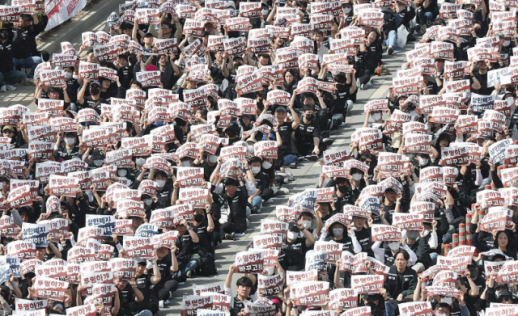 Court Limits Samsung Electronics Union's General Strike, Mandates Wafer Management A court has imposed restrictions on the general strike planned by the Samsung Electronics Union. The Suwon District Court ruled that, considering the nature of semiconductor processes, wafer management and safety-related tasks must be maintained at normal levels even during strike actions. This decision comes as the union has announced a general strike starting on May 21, and it is expected to impact ongoing labor negotiations. On May 18, the court's Civil Division 31, led by Chief Judge Shin Woo-jung, partially granted an injunction filed by Samsung Electronics against the Samsung Electronics branch of the Samsung Group Corporate Labor Union and the National Samsung Electronics Labor Union, prohibiting illegal strike actions. The court stated that the union is obligated to maintain staffing levels, operating hours, and operational scale equivalent to normal weekdays or weekends during the strike period. It also recognized the disaster prevention and drainage facilities claimed by Samsung as safety protection facilities under labor law, noting that failure to maintain these facilities could pose significant risks of explosion or toxic gas leaks. The court classified wafer management tasks as essential security operations that cannot be halted during a strike. These security operations include managing internal piping, handling cleaning agents for mask cleaning equipment, monitoring wafer discharge and congestion, overseeing process defects, and managing AI center systems. The court explained that due to the continuous operation of the semiconductor process and the characteristics of wafers, any delay in subsequent processes could lead to significant risks of wafer degradation. It warned that even temporary shutdowns could result in substantial losses, including yield declines and reactivation costs. The court pointed out that even if wafer-related tasks are based on active production activities, a halt in these tasks could lead to the degradation or spoilage of raw materials and products, which the labor law aims to prevent. In response to the union's demand to halt the input of new wafers, the court noted that this implied a stance of "If we strike, reduce our workload, and then there will be no issues," which directly infringes on the employer's freedom to operate and business rights. Considering Samsung's significant role in the global semiconductor supply chain, the court stated that damage to facilities or degradation of raw materials and products could lead to production delays in related industries such as automotive, home appliances, and information technology. This could result in significant harm or imminent risks that cannot be remedied through monetary compensation. The court also prohibited the Samsung Electronics branch of the corporate union and its head, Choi Seung-ho, from occupying or locking down facilities or obstructing worker access. However, it did not accept a separate injunction request against the National Samsung Electronics Labor Union and its acting chair, Woo Ha-kyung. Samsung's requests to prohibit member intimidation, calls to participate in the strike, and to prevent interference with employees were denied. The court ordered indirect coercion in case of violations of its decision. If the union violates the obligations to maintain safety protection facilities and security operations or the prohibition against occupation, it will be required to pay 100 million won per day for violations, while Choi and Woo will each owe 10 million won. This ruling is seen as imposing some restrictions on the union's general strike methods. However, as the strike itself is not limited for members outside of key process personnel, the potential for production disruptions remains. Meanwhile, Samsung Electronics and the union are engaged in last-minute negotiations under the mediation of the Central Labor Relations Commission on the same day. The union has announced its intention to begin the general strike on May 21.* This article has been translated by AI. 2026-05-18 14:09:56
 -
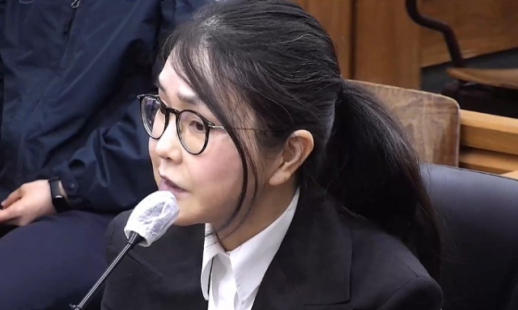 Kim Geon-hee Faces 7 Years and 6 Months in Prison for Corruption Charges The special prosecutor's team, led by Min Jung-ki, has requested a prison sentence of 7 years and 6 months for Kim Geon-hee, who is accused of receiving expensive gifts in exchange for favors related to personnel and business dealings. The special prosecutor characterized Kim's actions as a form of corruption exploiting her status as the spouse of the president, emphasizing the need for severe punishment. During a hearing on May 15 at the Seoul Central District Court, the special prosecutor's team requested the court impose a sentence of 7 years and 6 months along with a fine of 56.36 million won. They also sought the confiscation of luxury items, including a painting by Lee U-hwan, a gold turtle, a Van Cleef & Arpels necklace, and a Dior bag, which were reportedly received by Kim. The special prosecutor stated, "The spouse of the president is expected to maintain the highest standards of integrity and restraint. Kim has repeatedly exploited her influence as the president's spouse to engage in private transactions for personal gain." They further asserted that she effectively reduced the state's public authority and influence to mere commodities, committing acts of corruption rarely seen in constitutional history, yet she continues to deny the allegations, claiming they were merely gifts from acquaintances. They stressed that "severe punishment is unavoidable." Kim, dressed in a black suit, appeared in court with a stern expression, keeping her head down throughout the proceedings. When asked by the special prosecutor about her wearing jewelry received from Lee Bong-kwan, the chairman of Seohui Construction, she largely declined to answer. Kim stated, "I have been taking psychiatric medication for a long time, and there are many parts I do not remember due to my health issues. I will exercise my right to refuse to testify, as I might provide incorrect information." She has been indicted for allegedly receiving luxury items worth approximately 100 million won, including a Van Cleef & Arpels necklace and a Tiffany & Co. brooch, from Lee Bong-kwan between March and May 2022 in exchange for personnel favors for her son-in-law, Park Seong-geun, who was the former chief of staff to the prime minister. The special prosecutor also reported that Kim received a gold turtle worth 2.65 million won from Lee Bae-yong, the former chair of the National Education Commission, in April 2022 in exchange for a request for an appointment. In September of the same year, she allegedly received a Vacheron Constantin wristwatch valued at 39.9 million won from robot dog entrepreneur Seo Seong-bin in return for business support. Additionally, between June and September 2022, she is accused of receiving gifts worth 5.4 million won, including a Dior bag, from Pastor Choi Jae-young in connection with public service duties, and in February 2023, she allegedly received a painting by Lee U-hwan valued at 140 million won in exchange for a request for nomination from former chief prosecutor Kim Sang-min. In contrast, Kim's defense team maintains that most of the gifts were simple presents without any expectation of return or were merely for purchasing on her behalf. They argued that the Van Cleef & Arpels necklace was a congratulatory gift for her election and inauguration, the gold turtle was a token of gratitude, and the wristwatch was simply a purchase on her behalf. They also claimed that there was no evidence that Kim received the painting by Lee U-hwan. Previously, the special prosecutor sought prison sentences of 1 year for Lee Bong-kwan, 1 year for Lee Bae-yong, 1 year and 6 months for Seo Seong-bin, and 4 months for Pastor Choi Jae-young, who were also indicted in the case. The court is scheduled to hold a sentencing hearing for Kim on June 26.* This article has been translated by AI. 2026-05-16 00:10:43
 -
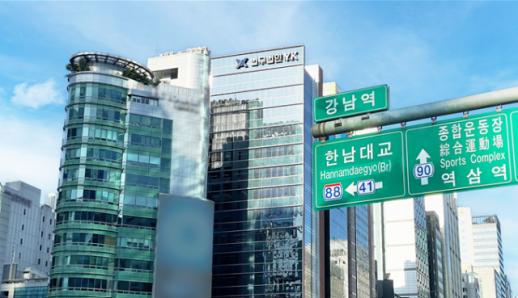 YK Law Firm Offers Experienced Attorneys Annual Salary of 150 Million Won YK Law Firm has announced a base salary of over 150 million won (approximately $130,000) per year for experienced attorneys during its hiring process. Amid increasing competition for talent in the law firm sector, YK is emphasizing a compensation system that prioritizes skills and performance over seniority and tenure. According to legal industry sources on May 15, YK recently posted job openings for experienced attorneys in its criminal law and litigation groups. The job listing includes a base salary of at least 150 million won, an annual performance bonus, and priority participation in high-stakes cases. The firm also indicated that salary negotiations could vary based on location and individual capabilities. While the starting salary for new attorneys at large law firms in South Korea typically ranges from 150 million to 180 million won, it is considered unusual for a mid-sized firm to offer such a high base salary for experienced hires. Industry analysts suggest that the competition for securing top talent, particularly in criminal and corporate litigation, is driving up compensation across the board. This hiring initiative aligns with YK's strategy to expand its corporate legal services in response to growing demand from small and medium-sized enterprises. The firm is reportedly accelerating its recruitment of experienced attorneys with practical expertise. Notably, the job announcement includes a statement rejecting the outdated notion that seniority should take precedence over achievement, emphasizing a performance-driven organizational culture. The firm aims to base its compensation structure on the ability to handle cases and deliver results. YK also plans to improve the working conditions for its current attorneys. Reports indicate that the firm is considering a phased salary increase for existing lawyers to align with the new hiring standards. The legal community is observing an intensifying competition for talent between large and mid-sized law firms. Particularly in the fields of criminal and corporate litigation, there is a fierce competition to attract former judges, prosecutors, and graduates from police academies, which is contributing to rising salary levels. In fact, YK has indicated that it will prioritize candidates with outstanding performance in judicial training or law school, as well as those with strong client management skills. Attorneys with backgrounds as judges, prosecutors, or those who have demonstrated success at other law firms will also have the opportunity for separate salary negotiations. A YK representative stated, "We aim to establish a system where the achievements of professionals lead to fair compensation."* This article has been translated by AI. 2026-05-15 22:34:37