
Journalist

Jin-young Park
sunlight@ajunews.com
-
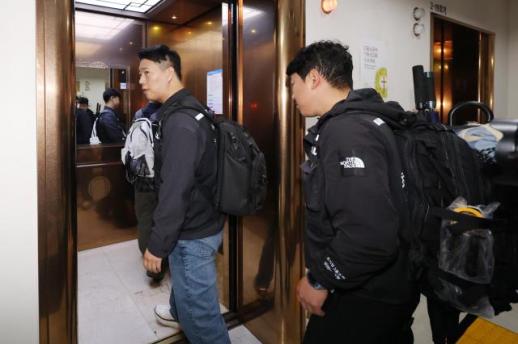 Samsung Electronics union heads toward strike after govt-mediation talks collapse SEOUL, May 13 (AJP) -Samsung Electronics and its largest labor union failed to bridge differences over bonuses in a final round of government-mediated wage negotiations, raising the likelihood of a monthlong strike that could ripple through the global semiconductor supply chain starting next week. The breakdown came after 17 hours of overnight talks at the National Labor Relations Commission in Sejong, where labor and management sought to reach a 2026 wage agreement but ultimately ended negotiations without a deal. Choi Seung-ho, head of the Samsung Electronics branch of the National Samsung Electronics Union, declared the post-mediation process “finally deadlocked” early Wednesday. “We asked for a mediation proposal because the gap between labor and management could not be narrowed, but after nearly 12 hours of waiting, the proposal turned out to be a step backward,” Choi told reporters after the talks collapsed around 3 a.m. The core dispute centered on whether to institutionalize and expand Samsung’s bonus system. The union is demanding the removal of bonus caps and the establishment of a transparent, formalized compensation structure tied to company performance. It has proposed allocating 15 percent of Samsung Electronics’ estimated annual operating profit of 270 trillion won ($194 billion) into bonus funding. Under the union’s proposal, average bonuses for employees in the Device Solutions (DS) memory division could reach roughly 600 million won per worker, while even loss-making nonmemory operations such as foundry and System LSI units could receive payouts exceeding 300 million won. Choi criticized the mediation proposal for effectively preserving the current excess profit incentive (OPI) framework, including its 50 percent bonus ceiling. “The proposal maintained the existing OPI system rather than introducing transparency,” he said. “The 50 percent bonus cap also remained intact.” Management has reportedly proposed broader compensation for struggling nonmemory divisions on the condition that losses improve, but the union rejected what it described as temporary and externally linked standards. Choi also objected to a proposal tying DS division bonuses to whether payouts exceeded those at SK hynix. “It is not desirable to connect our company’s performance to external factors,” he said, adding that the union could not accept a one-off measure lacking institutional guarantees. The union said it no longer intends to participate in further post-mediation proceedings, though Choi said labor would still consider listening if management presented a “proper proposal.” Samsung management and the union had already failed to reach an agreement during earlier mediation sessions held in February and March. The two sides resumed negotiations through a special post-mediation procedure starting Monday. The National Labor Relations Commission said it proposed “various alternatives” based on both sides’ positions but concluded that differences remained too wide after the union requested termination of the mediation process. The commission added that additional mediation could still be arranged if both parties later agreed to resume talks. With negotiations now broken off, the possibility of a full-scale strike planned for May 21 has intensified. The union, which claims around 73,000 members, said about 41,000 workers had already indicated their intention to join a strike, and Choi claimed participation could exceed 50,000 under the company’s current proposal. He stressed the union intended to proceed legally. “There is no point in waiting any longer,” Choi said. “We have no intention of engaging in illegal labor action. We will carry out lawful industrial action.” The union also said it would now focus on responding to Samsung’s court request for an injunction against what the company described as illegal labor activities. The market has been closing watching the government-mediated talks in fear of the repercussions on the chip-led exports and stock rally. Some forecasts estimate losses could exceed 40 trillion won if production disruptions spread across key semiconductor lines, while observers also warn of customer defections and long-term supply chain damage. The American Chamber of Commerce in Korea recently warned that disruptions at Samsung could destabilize global memory chip supply and increase price volatility. Concerns have also spread to suppliers and subcontractors. Samsung’s sustainability report lists roughly 1,700 partner firms across first- through third-tier supply chains, raising fears that prolonged production disruptions could trigger broader employment instability among smaller manufacturers. The government could still interfere through an emergency arbitration powers as a last resort. Under South Korea’s labor law, the labor minister may order emergency arbitration when industrial action is deemed likely to seriously damage the national economy or threaten public welfare. Such a move would ban strikes for 30 days while compulsory mediation and arbitration proceed. The measure has been invoked only four times in modern South Korean history, including during strikes at Hyundai Motor Company in 1993 and pilot walkouts at Asiana Airlines and Korean Air in 2005. A commission official, however, said emergency arbitration was “not a matter currently under our review.” 2026-05-13 07:56:39
 -
 LG Electronics Expands OLED Reach Beyond TVs to Racing Simulators LG Electronics is expanding its organic light-emitting diode (OLED) monitor business beyond home TVs to include professional monitors for broadcasting, film, and racing simulators.On May 11, LG Electronics announced it will supply OLED monitors for Hyundai Motor's 'Hyundai N Racing Simulator.' The professional model will feature a 65-inch LG OLED Pro 2nd Generation, while the racer model will use a 65-inch LG OLED TV (2025 model). Notably, the LG OLED Pro monitor has primarily been used in high-definition broadcasting and film production, marking its entry into the racing simulator market.LG Electronics is intensifying its focus on the business-to-business (B2B) market, moving beyond business-to-consumer (B2C) transactions. Last year, the company launched the 'LG OLED Pro 2nd Generation' professional monitor, its first update in three years since the initial model was released in 2022. This 4K OLED panel can transmit high-quality, high-capacity content without compression.The monitor features optimized calibration for consistent brightness and color representation, earning praise in broadcasting and film production. It also offers ongoing color calibration services to ensure creators' intended colors are accurately displayed. Its ease of installation and mobility are additional advantages.LG Electronics is broadening its OLED offerings beyond its traditional strengths in mobile and TV markets to include high-value sectors such as gaming monitors and automotive displays. A notable example is the 'LG UltraGear Evo' gaming monitor, introduced earlier this year, which enhances AI capabilities. This monitor incorporates on-device AI technology, allowing users to enjoy all content at 5K clarity, addressing the demands of global gamers.Meanwhile, LG Electronics has maintained its position as the global leader in the OLED TV market for 13 consecutive years. According to market research firm Omdia, LG Electronics captured nearly half of the global OLED TV market share in terms of shipments last year, with a 49.7% share. Competitors Samsung Electronics and Sony recorded shares of 30.7% and 8.7%, respectively.* This article has been translated by AI. 2026-05-12 04:46:14
 -
 Apple Faces Ongoing Controversy Over False Advertising Claims Apple has strongly refuted allegations of false advertising regarding its artificial intelligence (AI) system, Apple Intelligence, as a domestic civic group has officially urged the Fair Trade Commission (FTC) to disclose investigation materials.On May 11, the Seoul YMCA's Civic Mediation Office criticized Apple’s official statement released on May 8, interpreting it as a denial of violations of the Fair Labeling and Advertising Act. They stated, "It is absurd for Apple to discuss negotiations while ignoring the FTC's request for documentation for over a year."The YMCA added, "Before discussing negotiations with the FTC, Apple should prioritize communication with consumers."On the same day, the Seoul YMCA sent a letter of inquiry to the FTC to hear updates on the situation. They specifically questioned why the FTC has not taken action despite Apple failing to submit requested documents for over a year, what discussions are currently ongoing with Apple, and what future investigation plans are in light of a recent compensation agreement reached in the U.S.The YMCA stated, "We plan to transparently disclose the FTC's responses and will continue to monitor and act strongly to prevent Apple from misusing the FTC's consent decree system to gain immunity with insufficient content."Previously, the Seoul YMCA pointed out that the FTC has not reached a clear conclusion on Apple’s alleged violations of the Fair Labeling and Advertising Act, which were reported in March of last year.In response, Apple issued a statement on May 8, strongly opposing the YMCA's claims and asserting, "We will continue to engage in discussions with the Fair Trade Commission regarding this matter."Meanwhile, Apple recently reached a settlement of $250 million (approximately 360 billion won) to resolve a class-action lawsuit in the U.S. According to Reuters, Apple faced a lawsuit from American consumers in 2024 for allegedly misleadingly advertising its Apple Intelligence and next-generation Siri features to sell iPhones.* This article has been translated by AI. 2026-05-12 03:41:07
 -
 Hyundai to Integrate LG OLED Monitors into Racing Simulator LG Electronics is expanding the use of its OLED monitors to include racing simulators that provide a realistic driving experience in virtual environments.On May 11, LG Electronics announced that it is supplying OLED monitors for the Hyundai N Racing Simulator, which showcases the high-performance driving experience of Hyundai's N brand.The Hyundai N Racing Simulator is available in two models: Pro and Racer. The Pro model features a 65-inch LG OLED Pro Monitor, while the Racer model is equipped with a 65-inch LG OLED TV.The LG OLED Pro Monitor, which utilizes a 4K OLED panel, is designed for professionals and offers a stable interface for transmitting high-quality, high-capacity content without compression. It boasts self-color calibration and optimized correction features that ensure uniform brightness and color representation, enhancing the vividness of the display.Last September, LG Electronics launched the second generation of its LG OLED Pro monitor aimed at video content professionals. With a design similar to that of a television, it facilitates easy installation and mobility, making it suitable for both content previews within production companies and real-time monitoring on set.LG Electronics explained that the integration of its monitors into the Hyundai N Racing Simulator further broadens their application areas.Looking ahead, LG Electronics plans to leverage its extensive OLED technology and signage capabilities to expand business opportunities across various fields, from video production sites to different types of simulators.* This article has been translated by AI. 2026-05-11 08:39:22
 -
 Samsung Electronics' Major Union Enters Post-Adjustment Process Following Government Request Samsung Electronics' largest union, the Major Union, has entered a post-adjustment process at the request of the government. This decision comes as the union and management prepare to return to the negotiating table ahead of a planned general strike on May 21.The Major Union of Samsung Electronics announced on the afternoon of May 8 that this decision was made following a meeting with Kim Do-hyung, head of the Gyeonggi Provincial Labor Office, and representatives from management.The union stated, "The Ministry of Labor deeply recognizes the seriousness of this matter and has promised full support for negotiations at the government level, strongly encouraging the post-adjustment process. We have taken the government's proactive stance and repeated requests seriously and have decided to participate in the post-adjustment process after internal review."The negotiations will be conducted under the authority of the Major Union, which has been delegated the rights to negotiate and conclude agreements.The post-adjustment process is set to take place intensively on May 11 and 12, with participation from Chairperson Choi Seung-ho and union members Lee Song-yi and Kim Jae-won.Choi Seung-ho, Chairperson of the Major Union, stated, "If we do not achieve a satisfactory outcome for our members, we will not hesitate to proceed with the general strike. We will ensure that preparations for the strike are thorough and without disruption." 2026-05-08 17:00:20
 -
 Dyson Expands Product Lineup, Aiming for Recovery in 2026 During the COVID-19 pandemic, Dyson experienced significant growth due to increased demand for home appliances. This year, the company is expanding its product lineup significantly, aiming for a rebound. By diversifying its offerings from robot vacuums to travel hair dryers and portable fans, Dyson seeks to enhance its public appeal beyond its premium image and accelerate its recovery.According to industry sources, Dyson Korea will officially launch its first portable fan, the Dyson Hushjet Mini Cool, in South Korea on May 13, with online sales starting that day.The Dyson Hushjet Mini Cool incorporates 17 years of airflow technology, generating winds of up to 25 meters per second for a powerful and refreshing experience. Weighing just 212 grams and featuring a slim 38mm design, it is highly portable. The fan also boasts a battery life of up to six hours, making it convenient for outdoor activities or travel.This year, Dyson is accelerating the release of new products across its home appliance and beauty categories. The strategy aims to broaden consumer engagement through various product categories, moving beyond its high-end brand image.One of the standout products is the Spot and Scrub AI robot vacuum, launched in January. This marks the first new product release in two years. Although Dyson introduced its first robot vacuum in 2016, slow market growth led to the discontinuation of sales in some countries. The introduction of its first hybrid (vacuum and wet cleaning) robot vacuum has garnered significant industry attention.The new model features extensive AI capabilities, utilizing an HD camera and AI technology to identify wet liquids and dry debris, repeating cleaning up to 15 times for stain removal. It also recognizes obstacles using 24 sensors and dual laser LiDAR technology.As a latecomer to the market, Dyson has enhanced its price competitiveness. The suggested retail price in South Korea is 1.79 million won, lower than the main products of Chinese competitor Roborock, which are priced at 1.89 million won. Dyson is aggressively penetrating the market with various promotional discounts during the initial launch phase, indicating a shift from its traditional high-price premium strategy to a balanced approach between price and technology for market share acquisition.Additionally, Dyson is targeting diverse consumer needs by launching portable products. A notable example is the recently released Supersonic Travel hair dryer, which is 32% smaller and 25% lighter than previous models. Its universal voltage design allows for use anywhere in the world, catering to travelers and business professionals. Furthermore, the company has enlisted popular actor Park Bo-gum as its Asia-Pacific ambassador and is actively promoting the Supersonic Travel through a marketing campaign.James Dyson, the founder and chief engineer, stated, "We didn't just make a smaller hair dryer; we completely redesigned it for travel environments. The Supersonic Travel offers excellent styling capabilities while protecting hair from excessive heat. It is designed with performance, portability, and hair health in mind."This strategy is seen as a response to recent performance challenges. Dyson Korea experienced rapid growth during the pandemic due to increased demand for premium appliances, but has faced two consecutive years of declining performance.According to Dyson Korea's 2025 audit report, the company's revenue last year was 527.6 billion won, a 3.9% decrease from the previous year’s 549.2 billion won. Operating profit also fell from 16.9 billion won to 16 billion won, a 5.3% decline.Since establishing its South Korean branch in 2017, Dyson Korea has recorded its first revenue drop since its inception in 2024, with both revenue and operating profit declining for two consecutive years. This downturn is attributed to intensified competition in the premium appliance market and a slowdown in consumer spending.The rise of Chinese brands, such as Roborock and Dreame, has also been a contributing factor, as they rapidly expand their market share in the robot vacuum segment.However, there is optimism for Dyson's recovery this year. The company is broadening its product range from traditional vacuum cleaners and beauty products to include robot vacuums and small appliances. Additionally, by enhancing its innovative premium image with AI features, Dyson is implementing a strategy focused on technological differentiation.Industry insiders believe that with various new product launches planned for both the first and second halves of the year, Dyson's performance improvement is anticipated. 2026-05-08 16:14:41
 -
 Samsung Electronics Faces Challenges in Home Appliances and Mobile Business Samsung Electronics' Device Experience (DX) division is seeking ways to overcome poor performance in its non-semiconductor businesses. While focusing on strengthening its mobile sector, the company is also beginning to streamline underperforming areas like home appliances.On May 7, industry sources reported that Samsung has decided to halt sales of TVs, monitors, washing machines, vacuum cleaners, and refrigerators in China. The company officially notified employees at a meeting the previous afternoon and has informed local distribution channels and partners of this decision. Alongside the sales halt, adjustments to local staffing and organizational restructuring are expected.Changes are also occurring within the domestic TV business. Lee Won-jin, the head of global marketing, has been appointed as the new head of the Video Display (VD) division. Lee is known for successfully launching platform businesses like Samsung TV Plus, an ad-supported streaming service. The strategy aims to diversify revenue beyond hardware to focus on software-based platforms. A Samsung representative stated, "The focus is on enhancing platform capabilities rather than drastic organizational changes," adding that the shift towards a service-oriented business model will accelerate.The mobile sector is also facing difficulties. Samsung's combined operating profit for its Mobile Experience (MX) and Network (NW) divisions in the first quarter of this year was 2.8 trillion won, a 34.88% drop from 4.3 trillion won in the same period last year. The primary cause of this decline is the surge in memory semiconductor prices, which are expected to continue rising, making profitability management crucial.Despite these challenges, Samsung plans to enhance its mobile competitiveness by continuing to innovate its Galaxy S series and foldable products, as well as strengthening AI features. The company is preparing to launch smart glasses in the second half of the year and aims to increase the premium product share by enhancing features in wireless earbuds and Galaxy Watches.While halting appliance sales in China, Samsung will continue its mobile operations there. The company plans to release locally tailored smartphones, such as the Galaxy W series, and promote Galaxy AI features. However, it remains uncertain whether this will help regain market share against local competitors like Huawei and Xiaomi.The struggling Network division is undergoing personnel changes and increasing technology investments. In 2024, about 700 employees from the Network division were reassigned to other divisions to improve organizational efficiency. Concurrently, the company is focusing on securing next-generation technologies for the AI era. Since establishing the Next-Generation Communication Research Center under Samsung Research in 2019, it has been researching 6G technologies. Recently, it achieved transmission speeds nearly twice as fast as 5G in the 7 GHz frequency band, a key candidate for 6G.An industry insider noted, "The DX division is looking to improve performance by expanding its B2B revenue model beyond traditional B2C. With increasing low-cost competition from Chinese firms, relying solely on hardware sales shows clear growth limitations, necessitating a shift towards platforms, services, and AI."* This article has been translated by AI. 2026-05-07 23:02:10
 -
 Samsung Electronics CEOs Urge Staff to Avoid Loss of Competitiveness Ahead of Union Strike Samsung Electronics Vice Chairman Jun Young-hyun and President Roh Tae-moon, the company’s co-CEOs, issued a formal message to employees as the labor union prepares for a general strike. Samsung Electronics said the two CEOs posted the statement on the company intranet on the 7th, outlining the status of wage talks. They said the company has negotiated with the union since last December and has presented alternatives after considering employee interests, the company’s future competitiveness and business conditions, while seeking to broaden mutual understanding through dialogue. They said they regretted that the sides have not yet reached a final agreement and acknowledged that prolonged negotiations have likely left many employees concerned and frustrated. The CEOs also urged staff to help prevent damage to the company’s future competitiveness. “In a severe global business environment, all management, including myself, will approach this with a responsible attitude so we do not lose future competitiveness,” they wrote, asking employees to do their best in their respective roles. They added that the company would continue discussions with an open attitude and work toward an outcome employees can support. Samsung and the union have negotiated since last December over 2026 wages, but talks were suspended after failing to narrow differences over performance-bonus standards. The union plans to begin an 18-day general strike starting on the 21st. With the strike about 14 days away, concerns have grown that the dispute could spill into a broader economic issue. If a strike occurs, Samsung’s losses are estimated at about 30 trillion won. Samsung Electronics board chairman Shin Je-yoon wrote on the company intranet on the 5th that a strike would hurt the company’s business competitiveness, erode customer trust and cause losses for shareholders and investors, with serious negative effects on the national economy. He said it could reduce exports by tens of billions of dollars and cut tax revenue by tens of trillions of won, while triggering a weaker currency and lowering GDP. * This article has been translated by AI. 2026-05-07 14:53:39
 -
 LS Eco Energy Moves to Commercialize 400kV Extra-High-Voltage Cables, Targets U.S. Market LS Eco Energy is moving to commercialize high-end 400-kilovolt (kV) extra-high-voltage power cables as it steps up its push into the global power market, including the United States. The company said Wednesday that its Vietnam manufacturing unit, LS-VINA, will begin international certification and PQ testing for 400kV-class extra-high-voltage cables. It plans to complete a year of performance verification and long-term operating reliability evaluation, then start mass production in the second half of next year. PQ is a key process that evaluates long-term stability of an entire system on the assumption it will be used on an actual transmission grid. It is widely seen as a requirement for winning major global transmission projects. LS-VINA currently produces cables up to 230kV. The 400kV class has been a flagship extra-high-voltage product line produced by LS Cable & System. Once the project is completed, LS Eco Energy will secure an extra-high-voltage portfolio comparable to the LS Cable & System headquarters level, the company said. The 400kV class is used for national backbone transmission networks, large industrial complexes, AI data centers, and grid connections for offshore wind and solar power. It enables long-distance, high-capacity transmission and is a high value-added product category that requires strict quality and stability standards. Global demand for extra-high-voltage cables has been rising quickly as data center power needs grow and as the United States and Europe replace aging grids and expand transmission investment, the company said. Industry forecasts estimate annual U.S. electricity demand will rise from about 4,100 terawatt-hours (TWh) in 2024 to more than 5,000 TWh by 2030, driven by expanding AI data centers. LS Eco Energy recently secured U.S. certification for 230kV-class cables, laying the groundwork for market entry. If it also secures PQ for the 400kV class, it expects to be able to participate in bids for major global transmission projects, strengthening its competitiveness. A company official said, "Entering the 400kV class will be an opportunity to accelerate expansion into advanced markets and speed a shift to a profitability-focused business structure."* This article has been translated by AI. 2026-05-07 09:22:16
 -
 Samsung Says Galaxy Watch Can Predict Vasovagal Syncope, a First Samsung Electronics said May 7 that a joint clinical study with Chung-Ang University Gwangmyeong Hospital showed Galaxy Watch biometric-signal analysis can predict vasovagal syncope (VVS) early with high accuracy. The findings were published in the latest issue of a digital health journal issued by the European Society of Cardiology, Samsung said. The company called it the world’s first study to show the potential to predict fainting using a smartwatch. Vasovagal syncope is a temporary loss of consciousness caused by a sudden drop in blood pressure, often triggered by excessive tension or stress. It can lead to secondary injuries such as fractures or brain hemorrhage from unexpected falls, the company said. A research team led by Cho Jun-hwan of the hospital’s cardiology department conducted a head-up tilt test on 132 patients suspected of having vasovagal syncope while they wore a Galaxy Watch6. Using the watch’s photoplethysmography (PPG) sensor, the team collected real-time heart rate variability (HRV) data and analyzed it with an artificial intelligence algorithm. Samsung said the analysis predicted signs of vasovagal syncope about five minutes before an episode with 84.6% accuracy. “This study shows the possibility of shifting health care from after-the-fact management to prevention through wearable technology,” said Choi Jong-min, an executive director on Samsung’s MX business digital health team. He said Samsung will work to provide preventive health care solutions on the Galaxy Watch based on the results. Samsung said it is strengthening Galaxy Watch health care features, offering advanced health insights spanning sleep, exercise, antioxidants and cardiovascular health. The company said the Galaxy Watch8, released last year, added an antioxidant index feature that measures carotenoid levels in the body in five seconds to assess fruit and vegetable intake and support healthier eating habits. It also analyzes sleep patterns to suggest an optimal bedtime and measures “vascular stress” during sleep, Samsung said.* This article has been translated by AI. 2026-05-07 08:30:17