
Journalist

박세진
swatchsjp@ajunews.com
-
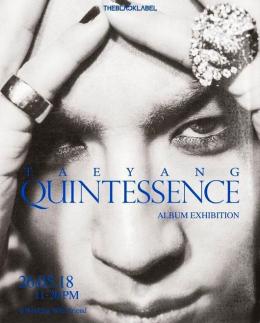 BIGBANG member Taeyang releases first full-length album in nine years SEOUL, May 08 (AJP) - K-pop legend BIGBANG Taeyang is set to release his fourth full-length album alongside a dedicated exhibition on May 18, the 37-year-old's agency said Friday. The record, titled Quintessence, arrives as the performer's first studio album in approximately nine years. The BIGBANG member's exhibition will be held at the Working With Friend gallery in the Yongsan District near central Seoul. The exhibition is designed to offer an immersive, multi-sensory interpretation of the album's core themes and artistic direction. The event is scheduled to run from May 18 to May 31, with the album's digital release scheduled for 6:00 p.m. (0900 GMT) on the opening day. 2026-05-08 17:08:22
 -
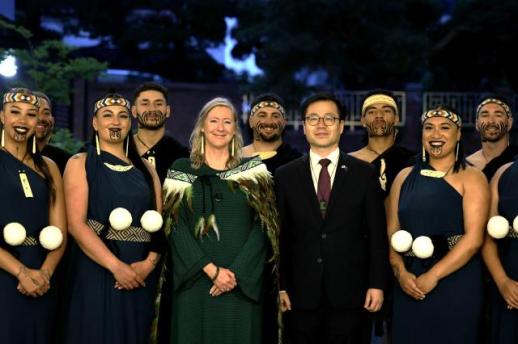 New Zealand ambassador hosts Māori culture night in Seoul SEOUL, May 08 (AJP) - New Zealand Ambassador Dawn Bennet hosted an evening of traditional Māori performance at her Seoul residence on Thursday, emphasizing the deep-seated societal parallels between New Zealand and South Korea. The event brought together influential guests to witness indigenous cultural displays, signaling a continued commitment to soft-power diplomacy between the two nations. The two nations share a history that predates their modern economic ties, beginning with the Korean War when New Zealand deployed more than 6,000 personnel to the peninsula, according to the New Zealand Ministry for Culture and Heritage. Today, that relationship is defined by a comprehensive free trade agreement and a shared vision for the Indo-Pacific region. The guest list for New Zealand Culture Night 2026 included approximately 100 South Korean lawmakers, diplomats, scholars, and business leaders. The evening featured a performance by the Hiwa Crew, a group previously recognized for their appearance at the National Museum of South Korea during the Mana Moana exhibition. The performance focused on kapa haka, a Māori performing art that combines vocal music, rhythmic movement, and storytelling. Bennet explained that the art form is essential for passing on indigenous history and language to future generations. "Kapa haka is a treasured Māori performing art that brings together song, chant, movement, expression, and storytelling," Bennet said. "It is a way of passing on history, values, language, and identity, from one generation to the next." During her address, the ambassador identified direct parallels between Māori and South Korean social foundations, specifically the emphasis on lineage and respect for elders. She noted that both cultures value the concept of individuals being shaped by their broader communities. "There is much that connects Māori and Korean cultures," Bennet said. "For example, ancestry, which we call whakapapa, respect for elders, hospitality, and the concept of individuals being shaped by the communities they come from." The event also welcomed members of Te Rūnanga o Te Āti Awa, a Māori tribal authority that arrived in Seoul on the day of the event. The group participated in the haka, a traditional dance of focus and strength, alongside waiata, which are melodic songs of joy and warmth. "Through kapa haka, Māori communities affirm their connection to the land of Aotearoa, New Zealand; to their ancestors; and to one another," Bennet said. 2026-05-08 16:20:05
 -
 Coupang credit card transaction volume surpasses levels recorded before data leak SEOUL, May 07 (AJP) - April credit card transaction volume for South Korean e-commerce leader Coupang surged back to record levels, signaling that the platform's market dominance remains intact. The rebound follows a massive personal information breach revealed late last year, according to mobile index data released by artificial intelligence firm IGAWorks on Thursday. IGAWorks' data showed that monthly credit and debit card payments for Coupang reached 4.6 trillion won ($3.1 billion) in April. This represents a 3.8 percent increase compared to October 2025, the month before the company officially announced the data leak. March payments followed a similar trajectory, rising 4.1 percent above October levels and 3.2 percent above November levels. The figures indicate that consumer spending stabilized quickly after an initial dip following the privacy scandal. The platform's influence is particularly strong among South Korea's most affluent shoppers. Roughly 90 percent of all high-spending e-commerce users are active on the platform. Industry analysts attribute this resilience to the convenience of the platform's overnight "Rocket Delivery" service and its "Wow membership program," similar to Amazon's "Prime" membership program. The high level of dependency on these daily services has made it difficult for South Korean online shoppers to migrate to rival platforms. Meanwhile, Coupang founder Kim Beom-seok said during an earnings call on Wednesday that sales growth hit a low point in January but improved significantly throughout the spring. He noted that the speed of recovery accelerated through February and March. By late April, we had recovered about 80 percent of the Wow members who had canceled their subscriptions after the privacy incident," Kim Beom-seok said. He added that the vast majority of existing customers and members did not leave the platform following the breach. Performance across the broader domestic market was mixed during this period. While Gmarket saw a 12 percent rise in credit card transactions in April, 11st experienced a 9.6 percent decline. Global competitors AliExpress and Temu also saw transaction volumes fall by 7.2 percent and 2.4 percent, respectively. The recovery in transaction volume contrasts with the company's recent financial performance. Coupang's parent company, Coupang Inc., reported a first-quarter operating loss of 354.5 billion won, or 244 million dollars, marking its first deficit in seven quarters. Higher operational costs fueled the deficit as selling and administrative expenses jumped 17 percent to 3.72 trillion won. The company also saw its active user base decline by 700,000 during the first quarter to a total of 23.9 million people. This shift has had a direct impact on the company's workforce. According to data from the National Pension Service of South Korea, direct employment at Coupang and its logistics subsidiaries fell by approximately 3,600 people in March alone. The total headcount for the company's direct employees stood at 87,135 at the end of March. 2026-05-07 10:16:10
 -
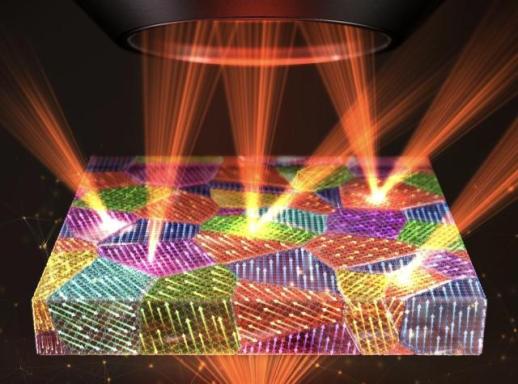 New imaging technique uses LED light to map material structures in 3D SEOUL, May 07 (AJP) - A joint research team has developed a new imaging technology that uses standard light-emitting diodes to look inside materials and map their complex internal structures in three dimensions. The method, called incoherent Dielectric Tensor Tomography, allows scientists to see how molecules are arranged without using high-powered lasers or destroying the sample, the Korea Advanced Institute of Science and Technology said Thursday. The project was a collaborative effort involving teams led by Professor Park Yong-keun at the Korea Advanced Institute of Science and Technology (KAIST), Professor Hong Seung-mo at Asan Medical Center, and Professor Jeon Seok-woo at Korea University. By precisely controlling the polarization and angle of the light-emitting diode (LED) light, the researchers performed 48 independent measurements to reconstruct a 3x3 matrix known as a dielectric tensor. This mathematical model describes how a material reacts to light from all directions, revealing its unique optical fingerprint. While previous versions of this technology relied on laser systems, they were often hindered by visual noise and were sensitive to tiny vibrations in the room. By switching to LED light, the team eliminated this noise and made the system stable enough for use in standard laboratories or industrial settings. In comparative tests, the incoherent Dielectric Tensor Tomography (iDTT) system visualized microscopic molecular arrangements that were previously obscured by noise in laser-based systems. The research team demonstrated the practical utility of the technique across several fields. They successfully visualized the 3D alignment of molecules within liquid crystal particles and performed observations of fibrosis in colon tissue without using chemical dyes. The system also automatically distinguished between different crystalline substances, such as quartz and calcium chloride, based solely on how they reacted to light. The iDTT technology is expected to have applications in materials science, semiconductors, pharmaceuticals, and biomedicine. In the pharmaceutical sector, it could serve as a tool for identifying drug polymorphs, which are different crystalline forms of the same molecule that can alter how a drug works in the body. In medicine, it provides a non-destructive way to analyze the environment around tumors by measuring the 3D orientation of collagen fibers. "This research presents the possibility of replacing material anisotropy measurements, which previously relied on large-scale facilities or destructive analysis, with small optical microscopes," Professor Park said, adding: "As LED-based measurement has become stable, it will become a new standard for non-destructive precision analysis in various industrial fields." (Reference Information) Journal/Source: Nature Photonics Title: Incoherent dielectric tensor tomography for quantitative three-dimensional measurement of biaxial anisotropy Link/DOI: https://bit.ly/48MKvF3 2026-05-07 09:22:25
 -
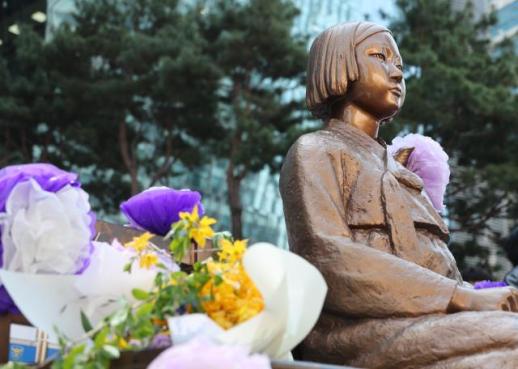 Police 'liberate ' iconic Statue of Peace for first time in six years SEOUL, May 06 (AJP) - The barricades surrounding the Statue of Peace were dismantled by police on Wednesday after six years of isolation and confinement. The bronze monument, which symbolizes victims of Japanese wartime sexual slavery, is now publicly accessible and free from the immediate threat of vandalism. The Statue of Peace depicts a teenage girl sitting on a chair, staring toward the former site of the Japanese embassy in central Seoul. Since its first installation in 2011, approximately 200 similar statues have been placed worldwide in cities such as Washington DC, Sydney, Toronto, and Shanghai. The barriers had been in place since June 2020 to shield the site from aggressive pro-Japan activists and historical revisionists. During a celebratory event on Wednesday, supporters described the removal as the liberation of the statue. The action coincided with the 1,751st weekly demonstration held near the former Japanese Embassy in central Seoul. Activists from the Justice Memory Solidarity prepared for the opening by cleaning the statue with wet wipes and placing a purple floral wreath on its head. Han Kyung-hee, the chairperson of the Justice Memory Solidarity, told the crowd that the statue has finally returned to the arms of the citizens after five years and 11 months. She said that while the public had been unable to sit in the empty chair beside the girl for years, they never stopped fighting for its protection. The barricades were originally requested by the activist group itself as a desperate measure to prevent the statue from being defaced by far-right protesters. Tensions at the site had escalated in 2019 as groups began demanding the removal of the monument while shouting historical denials. The legal path for the removal opened after Kim Byeong-heon, the leader of a prominent revisionist group, was arrested in March. He faces charges of defaming the deceased victims by publicly denying the forced nature of their ordeal. Investigations by South Korean prosecutors revealed that Kim's activities were supported by approximately 76 million won ($5,222) in funding from Japanese donors. The prosecution stated that this money was used as the primary engine for his long-term campaign to erase the history of the victims. According to historical records from the National Institute of Korean History, the Imperial Japanese Army systematically forced an estimated 200,000 women into sexual slavery during the Pacific War. These victims, many of whom were young South Korean girls, were transported to frontline brothels across the Pacific front where they were subjected to repeated forced sexual violence. The Statue of Peace incorporates specific details to reflect this history, including short, uneven hair that represents the girl being forcibly torn from her family. Her bare feet and lifted heels symbolize the restless spirits of victims who were unable to find peace or a sense of home after the war ended. The monument is officially registered as the first public artwork of the Jongno District and is managed by the local government. Police officials confirmed they will continue to deploy personnel to the area to ensure the safety of the site following the removal of the physical barriers. 2026-05-06 14:35:56
 -
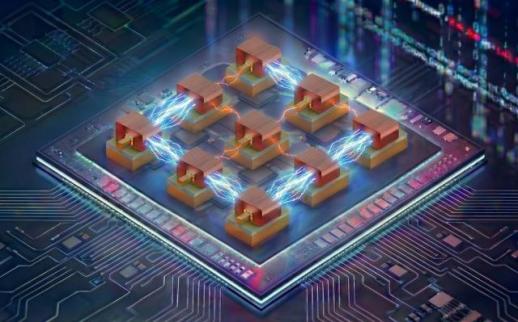 KAIST researchers develop silicon-based hardware for complex optimization problems SEOUL, May 06 (AJP) - Researchers at the Korea Advanced Institute of Science and Technology have developed a silicon-based hardware platform designed to solve complex combinatorial optimization problems, the institute said Wednesday. A joint research team led by the Korea Advanced Institute of Science and Technology (KAIST) Professors Choi Yang-kyu and Kim Sang-hyun from the School of Electrical Engineering succeeded in implementing an oscillatory Ising machine using standard silicon semiconductor processes. The system uses multiple vibrating elements, or oscillators, that interact with each other to naturally reach an energy-stable state representing the optimal solution. Combinatorial optimization involves finding the most efficient answer among a vast number of possibilities. These problems are central to logistics, financial portfolio management, and semiconductor circuit design, but they often overwhelm traditional computing architectures as the scale of data increases. The researchers addressed technical hurdles in previous Ising machines, such as frequency deviations between oscillators and limited connectivity. They introduced a new approach where both the oscillators and the couplers, which control interaction strength, are implemented using single silicon transistors. By using the floating body characteristics of transistors, the team created oscillators that can have their frequencies precisely adjusted via gate voltage. This method reduces synchronization errors and allows for multi-bit coupling, which enables the system to reflect the specific weights and importance of various conditions in a complex problem. The hardware was successfully tested on the Max-Cut problem, a representative optimization task used to maximize connections when dividing a network into two groups. Because the technology uses standard complementary metal-oxide-semiconductor (CMOS) processes, it can be mass-produced using existing South Korean semiconductor production lines without additional equipment investment. "This research is Ising machine hardware that has secured both scalability and precision by implementing both oscillators and couplers with silicon devices," Professor Choi Yang-kyu said. "It is expected to be applied to various industrial fields requiring large-scale combinatorial optimization, such as semiconductor design automation, communication network optimization, and resource distribution." The study, co-authored by doctoral student Yoon Seong-yun and Dr. Kim Joon-pyo, was published in the journal Science Advances on March 27, 2026. (Reference Information) Journal/Source: Science Advances Title: Scalable Ising machine composed entirely of Si transistors Link/DOI: 10.1126/sciadv.adz2384 2026-05-06 09:18:30
 -
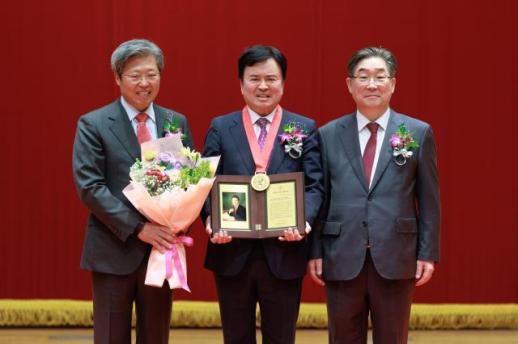 Aju News Corporation Chairman Kwak Young-kil receives Korea University Alumni Award SEOUL, May 05 (AJP) - Aju News Corporation Chairman Kwak Young-kil received the Proud Korea University Alumni Award on Tuesday, using the platform to advocate for a transition to spirit-centered artificial intelligence to ensure human control over technology. The award recognizes the contributions Kwak has made to South Korean media and his philosophical approach to the intersection of humanities and technology. His speech at the ceremony defined a new vision for artificial intelligence governance, emphasizing that spiritual values must guide technological advancement. Korea University President Kim Dong-won presented the award during a ceremony marking the 121st anniversary of the institution at the Inchon Memorial Hall in Seoul. Samyang International Chairman Huh Kwang-soo and Ace Bed Chief Executive Officer Ahn Sung-ho were also honored with the alumni award for their contributions to society and the university. University officials cited the career-long dedication of Kwak to reporting truth and his pioneering spirit. They noted his affection for his alma mater and his commitment to nurturing future scholars as key reasons for his selection. Kwak, who graduated from the Department of English Language and Literature in 1974, said the most important lesson he learned was a humanities mindset rather than just language. He described his academic background as a door to spirituality that transcends linguistic boundaries. The chairman emphasized that the core driving force of the current era must be spirituality. He noted that while he focused on human-centered artificial intelligence a decade ago, the rapid evolution of technology now necessitates a shift toward spirit-centered systems. If spirituality cannot govern artificial intelligence, humans will inevitably be dominated by technology, Kwak told the audience. He added that the essence of this spirituality aligns with the university's core values of liberty, justice, and truth. As a media executive, Kwak highlighted his efforts to promote South Korean industries, including the defense sector, through multilingual news systems. He expressed a desire for Korea University to serve as a lamp for humanity in the age of artificial intelligence. During the ceremony, KNet Investment Partners Chief Executive Officer Kim Dae-young and Eugene Investment and Securities Chief Executive Officer Yoo Chang-su also received the Social Service and Development Contribution Award. 2026-05-05 17:46:37
 -
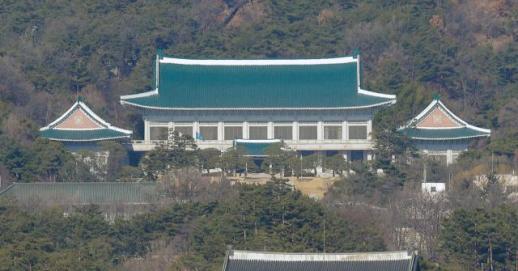 South Korea reviews Hormuz mission after Trump demands military support SEOUL, May 05 (AJP) - The South Korean presidential office Blue House announced Tuesday it is reviewing military participation in a United States-led maritime operation following an explosion on a South Korean cargo ship. The move indicates a shift in Seoul's policy as it evaluates international maritime security against its own domestic legal requirements and peninsula defense needs. The HMM NAMU, a vessel operated by the flagship carrier HMM, suffered an explosion and fire at 8:40 p.m. (1140 GMT) on Monday near the United Arab Emirates. All 24 crew members, including six South Korean nationals, are confirmed safe, but the ship remains inoperable and requires towing to a nearby port for a forensic inspection. The Blue House said that the government is considering the military proposal while accounting for the defense posture of the Korean Peninsula and domestic legal procedures. Officials emphasized that the safety of international shipping lanes and the freedom of navigation are core principles that must be protected under international law. Seoul is currently "noting" the recent public comments made by Donald Trump, who claimed on Truth Social that Iran was responsible for the blast and urged South Korea to join a mission called Project Freedom. The presidential office confirmed that it is maintaining close communication with Washington regarding the stable use of major sea lanes in the region. The government is also coordinating with relevant nations to conduct a thorough investigation into the cause of the explosion and fire. Officials stated that the safety of South Korean citizens and vessels remains the primary focus while the technical origins of the incident are determined. The Blue House stated it will implement corresponding follow-up measures as soon as the results of the investigation are confirmed. 2026-05-05 17:30:03
 -
 South Korea's annual labor hours drop to 1,739 by 2030: data SEOUL, May 05 (AJP) - South Korea is projected to reduce its annual labor hours to 1,739 by 2030, a shift that signals the nation's gradual departure from a culture of long-duration work toward global standards, data released by the Ministry of Employment and Labor showed Tuesday. The trajectory, identified in a report by the Korean Association of Industrial Relations, meets the objective of the lbor ministry to align with the average of the Organisation for Economic Co-operation and Development. It marks a significant move for a country that has historically maintained one of the most grueling work schedules in the developed world. Progress has already been substantial, according to recent data. Annual work hours dropped from 1,996 in 2017 to 1,859 in 2024, representing a reduction of 137 hours over a seven-year period. This decline stems primarily from legal reforms, including the implementation of the 52-hour maximum work week and the wider adoption of the five-day system. These measures successfully targeted long-duration labor by reducing the number of employees working far beyond the standard 40-hour limit. Despite the improvement, the report warns that the current pace may be difficult to maintain. South Korea still ranks sixth for the longest working hours among 37 OECD member states, trailing only nations such as Mexico, Colombia, and Costa Rica. A primary obstacle remains the structural rigidity of the South Korean labor market. Over 53 percent of the workforce is concentrated in a strict 40-hour weekly schedule, a lack of diversity that researchers say prevents further natural reductions. In contrast, only 12.5 percent of French workers and 30.9 percent of German workers follow such a uniform pattern. Within the European Union, only Luxembourg and Portugal show a similar concentration of 40-hour work weeks, at 55.4 percent and 57.3 percent, respectively. Cultural norms regarding leisure further complicate the transition. While nearly 50 percent of the workforce in major European nations takes leave during the summer, only 3 percent of South Korean workers do the same. The disparity is often attributed to office environments where employees feel pressured to avoid taking consecutive days off. To address this, the report suggests the government must expand the range of available work arrangements and foster a culture where workers can fully utilize their annual leave. Researchers also emphasized the need to protect industrial output during this shift. The report argued that a simple cap on hours is insufficient and that the government must ensure shorter hours are paired with increased efficiency to prevent a drop in national productivity. The Ministry of Employment and Labor established a dedicated task force for reducing actual working hours in September last year. It followed this with a joint declaration and a specific policy roadmap in December. 2026-05-05 15:05:17
 -
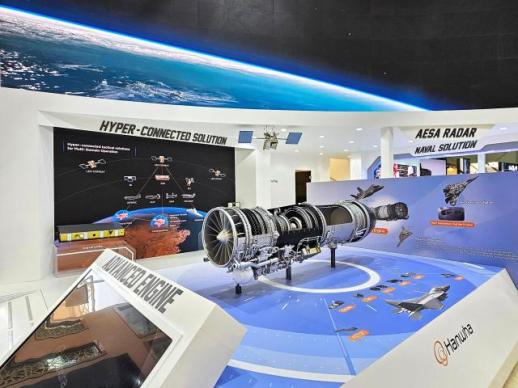 Hanwha Aerospace increases Korea Aerospace Industries stake to pursue management role SEOUL, May 05 (AJP) - South Korea's defense powerhouse Hanwha Aerospace has increased its stake in Korea Aerospace Industries to 5.09 percent and changed its investment status to management participation, signaling a drive to consolidate South Korea's defense and space sectors. The company plans to invest a total of 500 billion won to reach an 8.03 percent stake by the end of the year. This shift positions Hanwha to influence the decision-making processes of South Korea's sole indigenous aircraft manufacturer as it seeks to build a vertically integrated aerospace powerhouse. Hanwha Aerospace disclosed on the fourth of the month that it acquired an additional 100,000 shares, representing 0.1 percent of the company. The purchase brought the combined holdings of Hanwha Aerospace and its affiliates past the five percent threshold. The firm officially reclassified its holding from a simple investment to management participation in a recent regulatory filing. While specific methods of involvement are still under review, the company stated it would participate in decision-making through legal procedures to meet management objectives. Hanwha Aerospace noted it would consider the interests of shareholders and stakeholders during this process. The company currently maintains domestic competitiveness in aircraft engines, avionics, radar, and space launch vehicles. The expansion is interpreted as the final piece of Hanwha Group's defense strategy to create a South Korean version of SpaceX. By combining its engine expertise with the airframe and satellite capabilities of Korea Aerospace Industries (KAI), the group aims to secure an end-to-end aerospace value chain. Market analysts suggest the increased stake and change in investment purpose serve as a foundation for an eventual takeover of the aircraft manufacturer. KAI remains the only domestic firm capable of developing and producing complete aircraft and advanced aerial combat systems. 2026-05-05 14:52:54