
Journalist

박세진
swatchsjp@ajunews.com
-
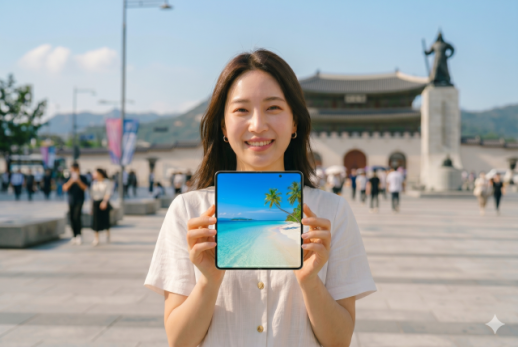 South Korean researchers develop wrinkle-free technology for foldable displays SEOUL, April 20 (AJP) - A research team at the Korea Advanced Institute of Science and Technology has developed a core technology that fundamentally eliminates the wrinkle problem in foldable smartphone displays by redesigning the adhesive areas between the screen and its support plate, the prominent science institute said Monday. According to the Korea Advanced Institute of Science and Technology (KAIST), the new technique ensures that folding stress is distributed across the device rather than concentrating on a single point, allowing for a smooth surface even after tens of thousands of uses. This breakthrough is expected to serve as a turning point for the foldable market as the industry looks to expand the technology to tablets and laptops. The persistent crease on foldable screens has long been a major drawback, causing visual distortion and reduced durability. While global smartphone manufacturers have invested heavily in research and development to address this issue, they have yet to completely remove the visible line where the device folds. Industry experts have often identified this physical flaw as the primary barrier to the wider adoption of foldable devices. Professor Lee Phil-seung and his team at the KAIST Department of Mechanical Engineering began their research to address common frustrations experienced by mobile users. After disassembling dozens of used foldable phones and conducting numerous experiments, the team discovered that the key lay in how the display is bonded to the internal support structure. By redesigning the adhesive zones, the researchers ensured that the mechanical strain of folding is spread out rather than pinching the screen at a specific point. To verify the performance of the prototype, the researchers used straight LED lights to test for surface irregularities. Unlike commercial products, where the reflected light appears bent or distorted at the fold, the KAIST prototype maintained a perfectly straight reflection. The team confirmed that no visual distortion occurred even under testing conditions sensitive enough to detect surface curves smaller than 0.1mm. The technology is designed to be durable enough to withstand tens of thousands of folding cycles with minimal deformation. Because the structural changes are straightforward, the researchers believe the method can be easily integrated into existing manufacturing processes for various devices beyond smartphones, including tablets and notebooks. "We have solved a difficult challenge that global companies could not resolve using a relatively simple and clear method," Professor Lee said. "We expect this technology to spread across the next generation of displays, including laptops and tablets, further strengthening the technical competitiveness of South Korea." KAIST has registered a patent for the technology in South Korea and has filed additional patent applications in the United States, China, and the European Union. According to the university, the simplicity of the design makes it highly viable for mass production. 2026-04-20 11:18:32
 -
 Kookmin University professor develops framework to make image generation AI safer SEOUL, April 17 (AJP) - Professor Kim Min-gyu at Kookmin University (KMU) has developed a unified framework to ensure the safety of artificial intelligence models that generate images and videos. The research, which addresses issues like copyright protection and harmful content, has been selected for an oral presentation at the International Conference on Learning Representations (ICLR) 2026. Kookmin University (KMU) said Friday. Professor Kim Min-gyu worked as the lead author on the study alongside Professor Kim Young-heon and Professor Park Mi-jeong from the University of British Columbia (UBC). The project received support from the Institute for Information and Communications Technology Planning and Evaluation (IITP) and the Canadian Institute for Advanced Research (CIFAR). The research introduces a system called Safety-Guided Flow (SGF) to improve how AI models handle sensitive data and requests. This framework unifies existing safety techniques, proving that previous methods were specific cases of a broader mathematical concept known as maximum mean discrepancy potential. The team also identified what they call a critical time window in the AI generation process. Using control barrier function theory, they demonstrated that safety controls must be applied most strictly during the initial stages of image creation before being gradually phased out. Tests of the SGF system showed improved performance in defending against harmful content and preventing the AI from accidentally memorizing its training data. These improvements are seen as a foundation for making generative AI safer for commercial and public use in South Korea and abroad. "This research provides a new analytical framework that allows us to understand scattered safety research from a single, unified perspective," Professor Kim Min-gyu said. "In the future, it can be used as a core technology to ensure safety as diffusion and flow matching models are put into practical use in high-risk areas such as autonomous driving, medicine, and content creation." 2026-04-17 19:10:58
 -
 Sookmyung Women's University and Korea University Guro Hospital partner for medical research SEOUL, April 17 (AJP) - Sookmyung Women's University Research & Business Development Foundation and the Research Institute of Women's Health signed an agreement with Korea University Guro Hospital to collaborate on the research and treatment of incurable diseases. The partnership aims to build a cooperative ecosystem involving universities, research institutes, and hospitals to accelerate the development of new drugs and medical technologies. Sookmyung Women's University said Tuesday. Representatives from the institutions met at the Sookmyung Women's University (SMU) AI Center in Yongsan-gu, Seoul, on April 14, 2026. The ceremony was attended by Research & Business Development Foundation (RBDF) Director Shin Jee-young, Research Institute of Women's Health (RIWH) Director Yang Young, and Korea University Guro Hospital (KUGH) Research Vice President Cho Gum-jun. Under the new agreement, RIWH will serve as a primary research body to conduct basic and translational studies using clinical data provided by KUGH. Since its launch in 2005, RIWH has specialized in deep research into incurable conditions affecting women through science-based health studies. The SMU RBDF plans to support the initiative by identifying promising technology companies and facilitating the transfer of intellectual property. This cooperation is designed to bridge the gap between academic research and the commercial healthcare market in South Korea. Both organizations also intend to focus on training specialized medical personnel to contribute to the improvement of public health. "The collaboration with Korea University Guro Hospital, which has advanced medical systems and rich clinical infrastructure, will be an important foundation for the university's research results to lead to actual medical sites," Shin Jee-young said. 2026-04-17 18:57:53
 -
 Viet Nam courts South Korean chip giants as Hanoi ratifies landmark incentive package SEOUL, April 17 (AJP) - Hanoi is formalizing a massive state-led effort to corner the semiconductor supply chain, offering South Korean conglomerates a sweeping array of tax holidays and land-use exemptions. The newly passed Law on Digital Technology Industry marks a strategic pivot for Viet Nam, moving beyond its traditional role as a low-cost assembly hub toward becoming a core strategic node for high-end silicon fabrication. This legislative overhaul disrupts the regional status quo by targeting the specific operational hurdles that have previously deterred high-stakes capital investment in Southeast Asia. The policy framework centers on a corporate income tax holiday that lasts for four years, followed by a 50 percent tax reduction for the subsequent nine years. To encourage deep-tech integration, Hanoi is allowing a 200 percent tax deduction for research and development expenditures, a move designed to lure R&D centers away from traditional hubs in East Asia. According to the South Korean Chamber of Commerce in Viet Nam, these concessions are currently the primary focus for Seoul-based executives evaluating long-term infrastructure plays in the region. Logistical velocity is a critical component of the new law, acknowledging the hyper-sensitive turnaround times inherent in semiconductor assembly and packaging. Hanoi has established a "green lane" for customs clearance to accommodate the "Pali Pali" culture of South Korean business, which prioritizes rapid execution. Furthermore, the Vietnamese government has eliminated import duties on project-related machinery and equipment, while granting complete exemptions from land lease fees for the entire lifecycle of a project. This allows firms like Samsung and SK Hynix to channel their capital expenditures directly into core technology rather than real estate overhead. The strategy seeks to build a self-sustaining ecosystem by extending these same incentives to Tier-1 and Tier-2 suppliers. Under the new mandate, any ancillary manufacturing firm integrated into the semiconductor supply chain receives state subsidies for infrastructure and equipment commensurate with those given to the lead developer. This synchronization ensures that when a major anchor tenant moves into a province like Bac Ninh or Bac Giang, its entire constellation of South Korean satellite suppliers can transition under a unified regulatory framework. To address the regional shortage of high-skilled labor, the law introduces radical shifts in immigration and personal taxation. South Korean experts and high-tech personnel are now eligible for immediate work permit exemptions and five-year extended visas that include full family sponsorship. Hanoi is also offering a five-year personal income tax exemption for high-caliber digital technology personnel, alongside state-funded stipends intended to maintain a standard of living comparable to Gyeonggi Province. This legislative push arrives as global firms increasingly adopt "China Plus One" strategies to mitigate geopolitical risks—a term originally popularized by Japanese business circles in the mid-2000s to describe diversifying manufacturing away from China (Source: Nikkei Asia). Amkor Technology has already inaugurated a 1.6 billion dollar facility in Bac Ninh, while Samsung continues to scale its chip substrate production in Thai Nguyen. Hana Micron has also committed billions of dollars toward expanded operations in Bac Giang. 2026-04-17 18:45:47
 -
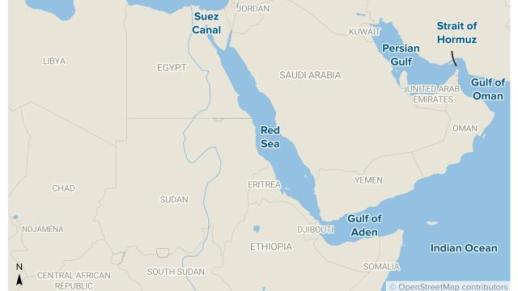 OPINION: Seoul navigates strategic reckoning as West Asia conflict rewrites energy calculus SEOUL, April 17 (AJP) -The West Asia conflict is forcing South Korea to confront a fundamental shift: energy security is no longer about efficiency, but resilience. For decades, Seoul optimized its energy system for cost and scale — routing roughly 70 percent of its crude imports through the Strait of Hormuz, refining heavier Middle Eastern oil into high-value fuels, and exporting them across global markets. It was a model built on efficiency. That model is now under strain. With the Hormuz corridor constrained and maritime risks spilling into the Red Sea, shipping costs are no longer just a function of distance. They now reflect geopolitical risk. Routes once considered optimal are vulnerable, while alternatives once dismissed as uneconomical are being reassessed through a different lens: safety. The recent transit of a South Korea-linked crude carrier through the Red Sea — the first confirmed Hormuz bypass shipment — captures this shift. It is not simply a logistical workaround, but a signal that Seoul is recalibrating priorities under pressure. Yet the challenge runs deeper than import diversification. South Korea is not just a major crude importer. It is also a critical exporter in the global energy system — a dual role that amplifies the stakes of disruption. Petrochemicals and refined oil products ranked as the country’s third- and fourth-largest export items last year, generating a combined $88.5 billion and accounting for 14 percent of total shipments. The country’s four major refiners — SK Energy, GS Caltex, S-Oil and HD Hyundai Oilbank — exported 86 million barrels of jet fuel in 2025, representing roughly 4 percent of global supply, the largest share worldwide. Despite being the world’s largest crude producer, the United States remains structurally dependent on Korean refining output. Korean shipments accounted for 71 percent of U.S. jet fuel imports last year — equivalent to about 7 percent of total supply. In western regions such as Washington and California, dependence rises to as high as 85 percent of imports. This reflects a structural imbalance. The U.S., buoyed by the shale revolution, produces predominantly light crude, which yields lower refining margins and is less suited for certain high-value fuels. South Korea, by contrast, has built its system around heavier Middle Eastern crude, particularly from Saudi Arabia, enabling it to produce premium products at scale. Washington has urged Seoul to pivot toward U.S. crude, framing it as both a commercial and strategic adjustment. But such a shift is not straightforward. It would require reconfiguring refining systems and could erode Korea’s competitiveness in high-value exports — a sector that has become a pillar of its trade balance. And here lies the contradiction. South Korea’s energy model is built on global integration — importing crude, refining it, and exporting higher-value products. But geopolitical fragmentation is beginning to challenge that model. Supply chains are no longer neutral. They are increasingly shaped by strategic alignments and conflict zones. The immediate risks are already visible. Some 26 South Korea-linked vessels remain stranded or delayed near the Persian Gulf. Shipping through Hormuz has dropped sharply, while insurance costs and security risks are rising. These pressures are feeding directly into domestic fuel prices and industrial margins. The government has responded with short-term stabilizers — emergency crude purchases and fiscal support — but these are stopgaps. The more consequential shift is strategic. Seoul is moving beyond simple diversification toward a broader rethinking of its energy architecture. This includes exploring new sourcing corridors and strengthening ties with alternative partners such as India, whose refining capacity and geographic position offer a potential buffer against Middle Eastern volatility. President Lee Jae Myung’s state visit to New Delhi, accompanied by a large business delegation, reflects this recalibration. Even if tensions ease, the old equilibrium is unlikely to return. U.S.-Iran negotiations may reopen parts of the Hormuz corridor, but under tighter controls and new conditions. The waterway may function again, but it will no longer be a frictionless artery of global trade. For South Korea, that changes the equation. Energy security can no longer be measured solely in cost per barrel. It must now account for route stability, geopolitical exposure and systemic resilience. In that sense, higher shipping costs are not an anomaly — they are the new premium for security. The shift from efficiency to safety will not be painless. It implies higher costs, more complex logistics and potential trade-offs in competitiveness. But the alternative — continued dependence on a single, volatile chokepoint — carries far greater risk. The West Asia conflict is not just disrupting supply. It is rewriting the logic of energy strategy. For Seoul, the task now is to adapt — not incrementally, but structurally — to a world where the cheapest route is no longer the safest one. *The author is the assistant editor of AJP 2026-04-17 15:29:05
 -
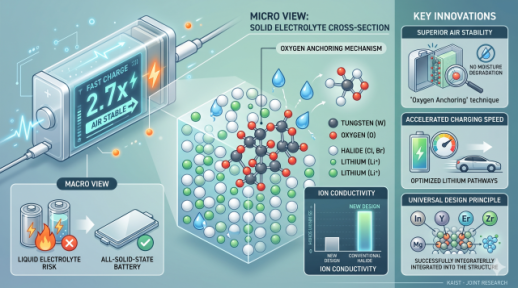 South Korean researchers develop air-stable solid electrolyte for faster battery charging SEOUL, April 16 (AJP) - A joint research team led by the Korea Advanced Institute of Science and Technology has developed a new design technology for solid-state battery electrolytes that maintains structural stability in air while significantly increasing charging speeds. This advancement addresses the chronic vulnerability of halide-based solid electrolytes to moisture, which has long been a barrier to the mass production of safer energy storage systems. The technology could be applied to various sectors, including electric vehicles, robotics, and urban air mobility. The prominent institute said Thursday. Unlike conventional lithium-ion batteries that use flammable liquid electrolytes, all-solid-state batteries utilize solid materials to virtually eliminate the risk of fire and explosion. Halide-based solid electrolytes are considered a leading candidate for these batteries due to their high performance, but they typically degrade rapidly when exposed to humidity in the air. This degradation necessitates expensive moisture-free manufacturing environments and raises safety concerns if the battery is exposed to the elements. To overcome this limitation, the research team introduced a structural technique called oxygen anchoring. This method involves using tungsten to securely bond oxygen within the electrolyte's internal structure, creating a more durable framework. The strong electrostatic attraction of the hexavalent tungsten ensures the oxygen remains fixed, which effectively inhibits the chemical breakdown that occurs when halide materials contact water. The researchers from the Korea Advanced Institute of Science and Technology (KAIST), collaborated with teams from Dongguk University, Yonsei University, and Chungbuk National University to find that this oxygen-anchored electrolyte remained stable in open-air environments. The structural modification also created wider and smoother paths for lithium ions to travel, resulting in higher efficiency. By lowering the energy barrier for ion movement, the material allows for much faster transfer of electricity. Laboratory tests confirmed that the new material achieved an ionic conductivity approximately 2.7 times higher than existing zirconium-based halide electrolytes. This improvement suggests that batteries using this material could be charged at much higher speeds without sacrificing safety or performance. The research demonstrated that this design strategy is a universal principle that can be applied to various other halide electrolytes, including those based on indium, yttrium, and erbium. "This research presents a new material design principle that optimizes multiple performances through a structural design strategy that simultaneously improves air stability and ionic conductivity," Professor Seo Dong-hwa said. "It will serve as a key indicator for future all-solid-state battery research and process development." Dr. Kim Jae-seung, Park Hee-ju, and Kim Hae-yong served as co-first authors of the study. The findings were published in the international academic journal Advanced Energy Materials on March 6, 2026. (Reference Information) Journal/Source: Advanced Energy Materials Title: Universal Oxychlorination Strategy in Halide Solid Electrolytes for All-Solid-State Batteries Link/DOI: https://doi.org/10.1002/aenm.202506744 2026-04-16 10:20:42
 -
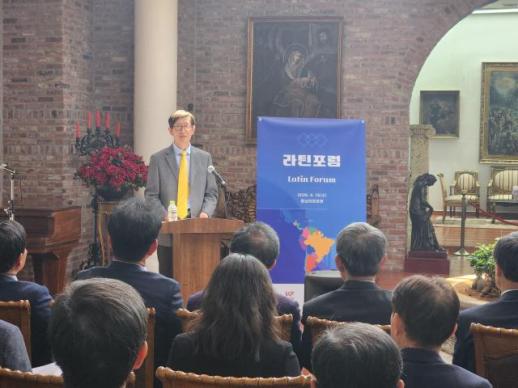 Latin Forum maps US' ambitions to become self-sustaining 'technate' as regional order shifts SEOUL, April 15 (AJP) - The January storming of Venezuela by United States naval forces and the subsequent apprehension of Nicolas Maduro was not merely a regime-toppling maneuver to secure the world's largest crude reserves. It marked the definitive end of Washington's reliance on global oil markets and the birth of an energy-independent, self-sustaining continental fortress. Speaking at this year's Latin Forum on Wednesday, Hankuk University of Foreign Studies Professor Emeritus Kim Won-ho, from the Graduate School of International and Area Studies, framed the attack not as traditional American foreign policy, but as the installation of a radical new governance model. After addressing an audience of diplomats and scholars through a keynote speech, he told AJP his belief that "President Trump is laying a foundation to turn the United States into a self-sufficient 'Technate'." To understand the gravity of this pivot requires an examination of the 1930s and 1940s. Technocracy proposes that modern industrial society is too complex to be managed by elected politicians or the unpredictable fluctuations of price-based economics. Instead, the movement advocated for a system governed by engineers and technical experts who distribute resources based strictly on energy calculations. The ultimate objective was the creation of a "Technate," a singular, geographically self-sufficient bloc spanning North America where political borders dissolve into a streamlined resource engine. The execution of this blueprint is driven by the bitter lessons of Trump's first term. Kim noted in his keynote that during the first term, the president was often "thwarted by the professional bureaucratic class," which he characterized as the "deep state." This internal resistance from career officials effectively stalled the administration's most ambitious structural changes. Returning to power, Trump has shifted to a systemized inner circle. Kim explained that by "wielding Schedule F to purge the career diplomats and civil servants," the administration is removing the "institutional brakes" that once held it back. This process is designed to create what Kim described as a "frictionless domestic machine" capable of executing grand strategy without internal dissent. The historical DNA of this vision entered the administration through Elon Musk. Kim detailed the lineage of Musk’s maternal grandfather, Joshua-Norman Haldeman, who was a "prominent leader in the Canadian branch of the technocracy movement in the 1940s." While the billionaire spectacularly departed the administration in mid-2025 following a bitter public feud with Trump, his ideological blueprint remains deeply embedded in Washington's trajectory. Kim argued that the former advisor viewed the consolidation of North American resources as a "necessary terrestrial prerequisite" for expanding this administrative model beyond Earth, citing the mogul's stated vision that "he will establish technocracy on Mars." Economic siege targets Havana as Rubio anchors regional policy While the administration demonstrated a willingness to use military force to secure Venezuelan energy assets, Kim argued that Washington's approach to Cuba relies on a "strictly non-kinetic set of levers." This localized strategy is driven largely by Marco Rubio. The secretary of state, as Kim pointed out, has used his personal history as a descendant of Cuban immigrants to the U.S. to oversee a "campaign of intense economic and political pressure" specifically tailored to the communist regime of the island. Kim explained the logic behind this strategic divergence: "Because Cuba lacks the massive crude reserves that made Venezuela a technical priority, the strategy shifts from military seizure to systematic strangulation". By cutting off financial lifelines and isolating the government, the administration intends to "collapse the regime from within." According to Kim, this calculated approach ensures that Havana can eventually be "integrated into the new continental bloc" without diverting the military resources required to manage the newly secured energy supply chain in the south. The influence of the secretary ensures this regional framework is designed to outlast current diplomatic cycles. Speaking to AJP on the sidelines of the event, the scholar emphasized the long-term trajectory of this policy: "It is not certain whether the Republicans would secure the next presidency or not, but if the Republicans do, then Trump's steps to change the U.S. into a self-sustaining technate are likely to be carried on by his predecessor." The forum, which drew a gallery of some 100 diplomats and scholars to the region northwest of Seoul, was jointly hosted by the Korean Council on Latin America and the Caribbean and the Korea Foundation. 2026-04-15 17:46:24
 -
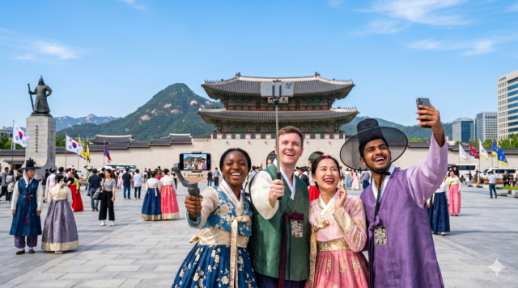 South Korea recruits foreign influencers as Seoul seeks to move beyond K-pop SEOUL, April 15 (AJP) - A group of 120 international content creators is set to fan out across the South Korean provinces this year, part of an aggressive push by the Ministry of Culture, Sports and Tourism to diversify the national brand, the ministry said Wednesday. Starting April 17 in the traditional stronghold of Jeonju, the project marks a calculated attempt to steer global attention away from the neon-lit aesthetics of K-pop and toward the historical substance of the rural interior. This strategic pivot reflects a maturing of the Korean Wave. While music and television dramas remain dominant, the government is betting that sustainable soft power requires a shift toward physical immersion in the country's traditional landscapes and regional traditions. By enlisting foreign residents as digital ambassadors, the ministry is decentralizing its cultural narrative, allowing a more organic view of life outside the capital to reach global social media feeds. The itinerary for the "2026 Senses of K-Culture" program covers six three-day expeditions through November. Participants will visit a shrine in Jeonju before moving to the Hantan River in Pocheon and the mountain retreat of Beopjusa Temple in Boeun for a period of Buddhist temple stays. The autumn schedule includes the fire festivals of Andong and Yeongju, coastal fishing in Dangjin, and the heavily fortified landscape of the demilitarized zone in Goseong and Sokcho. "Through this project, I hope people around the world will discover the diverse local cultures and hidden charms of Korea beyond 'K-pop' and 'K-dramas,'" a ministry policy official said. "The vivid experiences of foreign content creators residing in Korea and collaborations with overseas media will serve as an opportunity to effectively convey the specialness of 'K-culture.'" 2026-04-15 09:22:16
 -
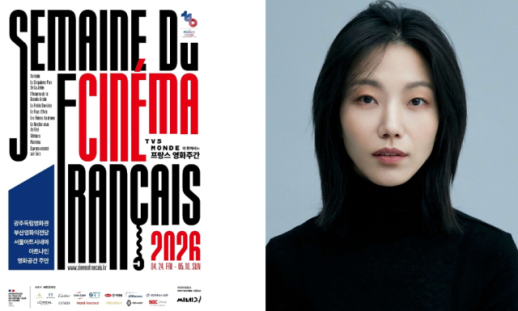 French Cinema Week expands to nationwide scale as diplomatic milestone nears SEOUL, April 15 (AJP) - The French Embassy in Seoul launches its most ambitious cinema showcase to date on April 24, deploying 10 unreleased films across five major South Korean cities to commemorate the 140th anniversary of diplomatic relations between the two nations, the embassy said Tuesday. By expanding the festival footprint to Seoul, Busan, Gwangju, and Incheon, Paris is leveraging its cultural exports to deepen a strategic partnership that has evolved from a nineteenth-century treaty into a modern alliance of technology and art. This iteration of French Cinema Week serves as more than a seasonal festival; it is a calculated disruption of the traditional distribution model that often leaves independent European cinema sidelined in the South Korean commercial market. By securing venues such as the Busan Cinema Center and Seoul Art Cinema, the French government ensures that critically acclaimed works from Cannes, Berlin, and Locarno reach the South Korean public before they enter the standard theatrical window. The scale of the 2026 program reflects a heightened period of bilateral cooperation as Seoul and Paris navigate a complex geopolitical landscape through shared soft power initiatives. Central to this year's mission is the appointment of Kim Shin-rok as the official ambassador for the event. The actress, who gained international recognition through the series Hellbound, embodies the current synergy between the two film industries. Her upcoming appearance in Colony, directed by Yeon Sang-ho, is scheduled for a midnight screening at the 79th Cannes Film Festival, effectively positioning her as a bridge between the gritty realism of contemporary South Korean storytelling and the prestigious platforms of the French Riviera. The curated selection of 10 films provides a diverse cross-section of French society and aesthetic experimentation. The lineup includes Emma Benestan's Animal and Alexis Langlois's Queens of Drama, both carrying restricted ratings that signal a commitment to provocative, adult-oriented narratives. Other titles, such as Stéphane Demoustier's The Great Arch and Hafsia Herzi's The Little Sister, represent the latest wave of French directorial talent emerging in 2024 and 2025. Beyond the screenings, the festival will facilitate direct intellectual exchange through Guest Visit sessions featuring film professionals. These interactions are intended to provide South Korean audiences with specific context regarding the social and political undercurrents of the films, which include Tamara Stepanyan's In the Land of Arto and Hubert Charuel's Meteors. The festival is scheduled to run through May 10. Organizers have partnered with a broad coalition of corporate sponsors, including Renault Korea, Korean Air, and LVMH, to support the logistical demands of a four-city tour. Since its inception in 2021, the event has grown from a niche screening series into a cornerstone of the French cultural calendar in South Korea. Diplomatic relations between the two countries were first established via the Treaty of Friendship, Commerce and Navigation signed in June 1886. According to the National Museum of Korean Contemporary History, this treaty ended South Korea's isolationist policy toward France and laid the groundwork for modern diplomatic exchange. French Cinema Week 2026 is one of several events planned to mark this 140-year history. 2026-04-15 09:11:42
 -
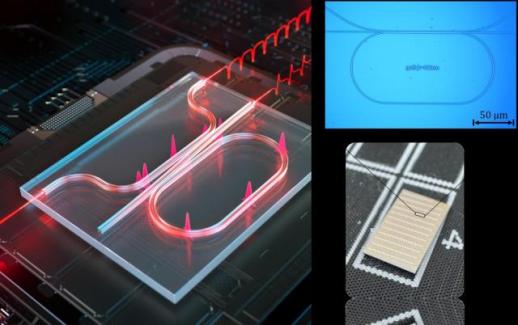 South Korean engineers find better way to use light for AI SEOUL, April 15 (AJP) - Researchers in South Korea have created a new component that makes it easier to control light on a microchip, which could significantly boost the performance of artificial intelligence and quantum computers. The team, representing both the Korea Advanced Institute of Science and Technology and Hanyang University, designed a device that uses light interference to manage signals with much higher accuracy than current methods. The Korea Advanced Institute of Science and Technology said Wednesday. This technology focuses on Photonic Integrated Circuits (PIC), which use light to carry data at high speeds with low energy use. These circuits are essential for running the massive data centers that power AI, but they require very precise control over light waves. Standard devices usually rely on a single channel to move light, which makes it hard to change the shape or timing of the signal. The researchers introduced a dual-path system that allows light waves to interact with each other in a controlled way, effectively letting them program the light. Much of the work for the project was done by Kim Tae-won, an undergraduate student working through a specialized research program at KAIST. He worked alongside Professor Kim Sang-sik and Professor Yoon Jae-woong to prove the concept. "I was able to take the resonator principles I learned in my introductory photonics class and turn them into an actual device design and a published paper," Kim Tae-won said. The team found that this new layout allows for much better frequency conversion, which means they can change the color and properties of light more efficiently. This is expected to help AI accelerators and secure communication systems work faster while using less power. Professor Kim Sang-sik said, "this research goes beyond suggesting a new device by providing a detailed analysis of optical properties that were previously overlooked." He added that the team showed physical limits can be overcome through precise engineering. The findings were published in the journal Laser and Photonics Reviews on March 6, 2026. (Reference Information) Journal/Source: Laser and Photonics Reviews Title: Dual-bus resonator for multi-port spectral engineering Link/DOI: 10.1002/lpor.202502935 2026-04-15 09:01:54