
Journalist

Fahrettin Altun
swatchsjp@ajunews.com
-
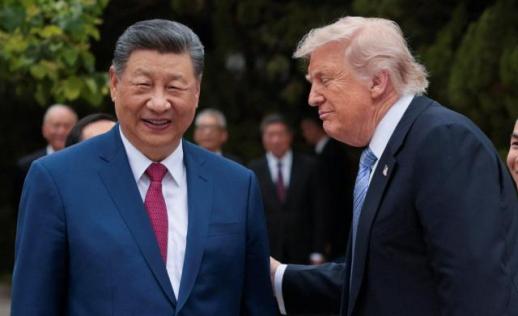 ASIA INSIGHT: Will US-China summit help ease tensions in Iran? When will the joint statement on Iran’s nuclear freeze and freedom of navigation in the Strait of Hormuz truly take effect? The real significance of the May 2026 summit in Beijing between the leaders of the United States and China extended far beyond the management of bilateral relations. Behind the carefully staged diplomacy lay a much larger calculation: the urgent need to stabilize the Middle East, preserve the global flow of energy, and prevent financial markets from sliding into another era of geopolitical panic. Among the many issues discussed during the summit, none drew greater attention within diplomatic circles than Iran’s nuclear ambitions and the future stability of the Strait of Hormuz. The official language released after the meeting was measured and restrained. Yet beneath the diplomatic phrasing stood a clear and unmistakable message: both Washington and Beijing now understand that the world can no longer afford an uncontrolled explosion in the Persian Gulf. At present, the global economy rests uneasily atop three major geopolitical fault lines. The first is the prolonged war in Ukraine. The second is the escalating struggle between the United States and China over artificial intelligence, semiconductors, and technological supremacy. The third — and perhaps the most immediately dangerous for the global energy system — is the confrontation surrounding Iran’s nuclear program and the security of the Strait of Hormuz. The Strait of Hormuz is not merely a narrow waterway between nations. It is one of the great strategic arteries of modern civilization. Roughly one-third of the world’s seaborne oil trade passes through that corridor. Crude oil and liquefied natural gas from Saudi Arabia, the United Arab Emirates, Kuwait, Qatar, Iraq, and Iran move through the strait toward Asia and Europe. Any military confrontation, blockade, or disruption there would almost certainly send global oil prices, shipping rates, and insurance premiums soaring within days. For years, the United States and Iran have engaged in a prolonged and dangerous struggle over Tehran’s nuclear activities. Washington has consistently maintained that it cannot permit Iran to approach the threshold of nuclear-weapons capability. Tehran, meanwhile, insists that its nuclear development program is a sovereign right intended for peaceful purposes. The dispute has centered largely on uranium-enrichment levels and the operational scope of Iran’s nuclear facilities. Western governments suspect that Iran has, at various moments, moved dangerously close to weapons-grade capability. Iran, for its part, argues that American sanctions and pressure campaigns have only deepened regional instability. Complicating matters further is the position of Israel. Israel regards a nuclear-armed Iran not simply as a strategic challenge, but as an existential threat. Within Israeli political and security circles, arguments in favor of preemptive military action have repeatedly surfaced over the years. Indeed, much of the region’s military tension has revolved around the intersection of Iran’s nuclear infrastructure and Israeli security concerns. Yet the diplomatic atmosphere emerging after the Beijing summit appears subtly different from previous periods of confrontation. Both the United States and China now recognize that a full-scale Middle Eastern conflict would impose enormous costs at a moment when neither side can easily absorb them. Washington already faces mounting fiscal burdens, domestic political pressures linked to the presidential election cycle, and the continuing demands of support for Ukraine. China, meanwhile, confronts slowing growth, weakening exports, real-estate instability, and an urgent need for reliable energy supplies. As a result, both powers appear increasingly focused not on achieving a perfect resolution to the Iranian nuclear question, but on preventing a catastrophic escalation. In practical terms, that means the emergence of a more limited and realistic framework: partial nuclear restraint, expanded international monitoring, and guarantees for stable navigation through the Strait of Hormuz. Within this evolving landscape, China’s role has become especially important. Relations between China and Iran have grown steadily closer over the past decade. China has become one of Iran’s largest oil customers and, in many respects, one of the principal economic lifelines sustaining the Iranian state. The two countries have signed long-term economic cooperation agreements spanning energy, infrastructure, railways, ports, telecommunications, and industrial development. Under Beijing’s Belt and Road strategy, Iran occupies a critical geopolitical position linking Central Asia, the Middle East, and Europe. Historically, Persia itself stood at the crossroads of major trade routes connecting East and West. That strategic geography has once again become central to twenty-first-century geopolitics. For China, Iran is not simply another oil-producing nation. It is a strategic buffer against excessive dependence on American-dominated maritime systems and a crucial pillar of long-term energy security. Even under international sanctions, China has continued importing Iranian oil through various channels. Discounted Iranian crude has quietly helped support Chinese industrial stability during periods of global energy volatility. Iran, meanwhile, depends heavily upon China. With access to much of the Western financial system restricted by sanctions, Tehran increasingly relies on Chinese trade, investment, infrastructure projects, and consumer goods. Chinese economic engagement has become an essential stabilizing force within Iran’s economy. Yet Beijing cannot afford to align itself unconditionally with Tehran. China’s own economy remains deeply interconnected with American and European markets. A prolonged Middle Eastern crisis — especially one that disrupts shipping lanes or drives energy prices sharply higher — would inflict serious damage on China itself. This is precisely where the deeper significance of the Beijing summit emerges. The United States wants China to exercise a moderating influence over Iran. China, in turn, wants Washington to avoid pushing the region toward uncontrolled escalation. In other words, even amid intensifying strategic rivalry, Washington and Beijing now share a limited but meaningful common interest in preventing the Persian Gulf from descending into chaos. The central question, therefore, is not whether a joint understanding exists in principle, but when such an understanding might acquire practical force. Diplomatic observers increasingly expect a gradual, phased approach. The first stage would likely involve informal understandings aimed at preventing military confrontation and guaranteeing safe passage through the Strait of Hormuz. From there, negotiations could move toward stronger International Atomic Energy Agency inspections, limitations on uranium enrichment, and selective easing of sanctions in exchange for verifiable restraint. Yet formidable obstacles remain. Hard-line factions within Israel, divisions inside Iran’s Revolutionary Guard structure, domestic American politics, and the broader network of proxy conflicts across the Middle East all retain the capacity to destabilize negotiations at any moment. Even a relatively limited military incident could trigger a dramatic surge in global energy prices. And yet, despite those dangers, the world appears increasingly inclined toward risk management rather than total victory. That reflects a cold realism shared by all major actors. The United States, China, Iran, and even Israel understand the immense cost of a large-scale regional war. A major conflict in the Gulf would almost certainly unleash another wave of inflation, supply-chain disruption, shipping instability, and financial turbulence across the world economy. For South Korea, the stakes are especially high. South Korea remains heavily dependent on imported energy. Any serious disruption in Middle Eastern oil or liquefied natural-gas supplies would immediately place pressure on manufacturing, logistics, electricity costs, inflation, and industrial competitiveness. Conversely, stability in the Strait of Hormuz could provide critical relief for the Korean economy by easing pressure on oil prices, exchange rates, and trade balances. Ultimately, the Beijing summit was not merely another diplomatic event between two great powers. It represented a recognition that even amid fierce competition over artificial intelligence, semiconductors, and technological supremacy, the global energy system cannot be allowed to collapse into disorder. At first glance, oil tankers crossing the deserts and waters of the Middle East may appear unrelated to the polished diplomatic language spoken inside Beijing’s state halls. In reality, they are deeply connected. For all the transformations of the twenty-first century, civilization still moves on energy — and the pulse of that energy still flows through the Strait of Hormuz. 2026-05-15 15:46:23
 -
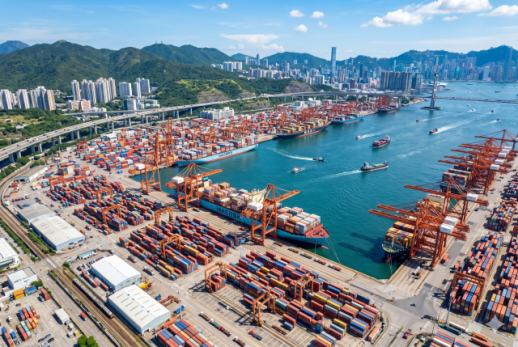 ASIA INSIGHT: While Hormuz burns, Hong Kong ships AI revolution As conflict turns the Middle East into a maritime graveyard, the Pearl River Delta is quietly monopolizing the world's most valuable supply chain. At the Kwai Tsing Container Terminals, the air carries the scent of ozone and hydraulic fluid. There are no bulk carriers of iron ore or massive tankers of crude lining the piers today. Instead, the focus is on a single, climate-controlled container being winched onto a freighter bound for the Port of Long Beach. Inside are high-density server racks and neural processing units manufactured less than thirty miles away in Shenzhen. This is the new architecture of Hong Kong’s economy—a pivot from the generalist trade of the past to the high-stakes hardware of the future. The geopolitical landscape of 2026 is defined by a brutal contraction. As the conflict involving Iran escalates, the Strait of Hormuz has essentially closed to commercial traffic, causing global energy prices to breach 120 dollars per barrel. While this has paralyzed industrial hubs in Europe and threatened the energy security of Northeast Asia, it has paradoxically accelerated a shift in Hong Kong’s economic utility. The city is no longer merely a financial outpost; it has become the primary physical gateway for the artificial intelligence supercycle, leveraging its proximity to Shenzhen to monopolize the global supply chain for advanced computing components. The numbers reveal a stark divergence from the global trend. According to the latest quarterly report from the Census and Statistics Department of Hong Kong, the territory’s gross domestic product expanded by 5.9 percent in the first quarter of 2026. This represents the fastest growth rate in five years. The engine of this expansion is a 24 percent real-term increase in the export of goods, a figure recently verified by the World Trade Organization’s regional monitor. This surge relies entirely on the relentless global demand for the semiconductors, precision components, and specialized circuitry produced in Shenzhen, the undisputed Silicon Valley of China. The structural importance of this regional axis becomes clear when compared to neighboring maritime giants. The Port of Shanghai remains the world’s largest by volume, handling roughly 47 million twenty-foot equivalent units annually, but its operations are heavily weighted toward bulk manufacturing and heavy industrial output. Similarly, the Port of Busan in South Korea has seen its growth stagnate at less than two percent this year, grappling with severe won-dollar currency pressure and a sharp decline in traditional automotive exports. Hong Kong has opted to cede the battle for sheer tonnage to focus on value density. Electronic components now account for 70 percent of Hong Kong’s total export value, according to data from the Hong Kong Trade Development Council. This specialization provides a unique insulation against the current Middle Eastern crisis. While the closure of Hormuz has forced global shipping to reroute and caused maritime insurance premiums to spike, the astronomical margins of AI hardware absorb these logistical costs far more effectively than the low-margin commodities handled by other Asian ports. A single container of high-end graphics processing units carries a market value thousands of times greater than a container of steel or textiles. By acting as the premier outlet for Shenzhen’s technology sector, Hong Kong effectively decouples its growth from the traditional vulnerabilities currently hobbling global trade. The persistent narrative of Hong Kong’s irrelevance fundamentally misunderstands the mechanics of modern commerce. The city offers the legal, operational, and financial infrastructure required to move sensitive, high-value technology across borders during a period of intense global scrutiny, acting as a sophisticated translation layer that turns Chinese engineering into liquid capital. As long as the global arms race for computing power continues, the path to the future will lead directly through the Kwai Tsing terminals. The world order may be fracturing, but the desperate demand for the next intelligence age ensures that Victoria Harbour remains the most valuable stretch of water in Asia. 2026-05-15 14:44:00
 -
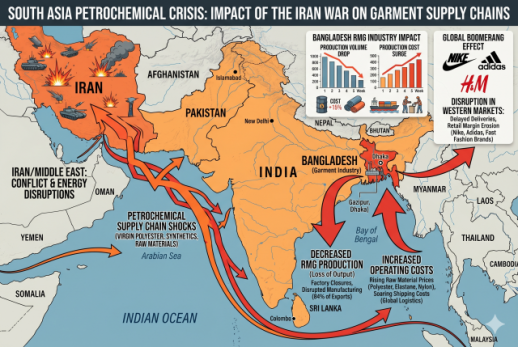 ASIA INSIGHT: Crisis in South Asia, world's petroleum wardrobe The conflict in the Middle East is unraveling the global garment industry, proving that fast fashion is as much a byproduct of crude oil as it is of cotton. In the industrial sprawl of Gazipur, just north of Dhaka, the looms of the world’s second-largest apparel engine are beginning to stutter. For decades, the floor managers of these vast, vertically integrated factories have calculated their margins down to the fraction of a cent. They optimized for labor, they maximized volume, and they built an empire that churns out billions of garments a year for Western retail racks. But today, the crisis halting production does not originate on the factory floor or in the cotton fields of the subcontinent. It originates thousands of miles away, in the contested waters and oil fields of the Middle East. When geopolitical friction flares in the Persian Gulf, the immediate panic in Western capitals predictably centers on crude oil and gasoline prices at the pump. This is a remarkably narrow lens. Viewed from the industrial hubs of Asia, a far more structural friction is playing out in the cargo holds and ledgers of the global apparel industry. We have conditioned ourselves to view clothing as a soft, agricultural product, spun from nature and stitched by human hands. We forget that the modern wardrobe is fundamentally a petroleum byproduct, and current geopolitical shockwaves are exposing the terminal fragility of that reliance. Ready-made garments constitute nearly 85 percent of Bangladesh's total export earnings, forming the absolute bedrock of the nation's economy. Yet the synthetic fibers required by the original equipment manufacturers that supply global athletic and fast-fashion brands—the polyesters, nylons, and elastanes that dominate modern activewear—are derived directly from petrochemicals. Polyester alone accounts for nearly 59 percent of global fiber production. As regional instability threatens the supply of essential feedstocks, the cost of these synthetic materials is surging, turning a distant standoff into a direct assault on South Asia's industrial lifeblood. A logistical nightmare compounds the squeeze on Dhaka. With crucial maritime corridors fraught with war risk, global shipping lines have rerouted vessels around the Cape of Good Hope. This geographic detour adds 20 to 25 days to transit times and has pushed freight rates for a standard container heading from Asia to Europe upward of $4,500. Factory owners are now caught in a vice. They are paying a severe premium to import the synthetic feedstock required for production, and they are bleeding capital to export the finished goods to ports in the European Union and the United States. It is tempting for Western consumers to view this as a localized economic misfortune for a developing nation. That is a naive misreading of a deeply integrated supply chain. The peril facing Bangladesh is already beginning to boomerang back to the corporate headquarters of the world’s largest fashion conglomerates. Companies that rely heavily on South Asian manufacturing have built their business models on the assumption of cheap, uninterrupted production. With an estimated 70 percent of sneaker materials alone relying on oil-based inputs, the illusion of insulated Western retail margins is collapsing under the weight of soaring energy costs, inflated shipping premiums, and delayed deliveries. This margin collapse may inadvertently trigger the very structural shift the industry has long resisted. For years, Western brands have treated sustainable practices and recycled materials as a marketing luxury rather than a supply chain necessity. But as virgin polyester becomes prohibitively expensive and logistically perilous to source, necessity is forcing a pivot. The energy shock is accelerating investments in circular manufacturing and recycled synthetics—not out of a sudden onset of corporate altruism, but as a ruthless survival mechanism to decouple their product lines from the volatility of crude oil. The era of hyper-efficient, borderless fast fashion was an anomaly subsidized by global stability and cheap petroleum. As the fault lines of the Middle East fracture the logistics and raw materials required to dress the West, the illusion of cheap clothes is unraveling. We are finally discovering the true cost of outsourcing our production to a system that shatters the moment a shipping lane closes. 2026-05-14 17:01:49
 -
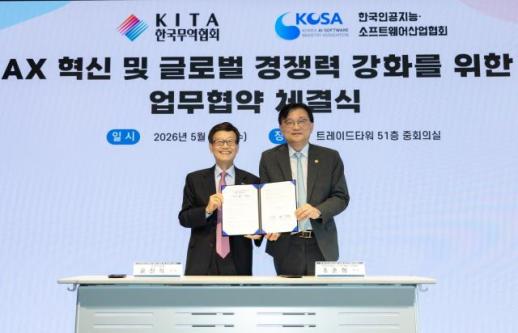 KITA and KOSA partner to accelerate artificial intelligence adoption in trade sector SEOUL, May 13 (AJP) - The Korea International Trade Association and the Korea Artificial Intelligence and Software Industry Association signed an agreement on May 13 to accelerate artificial intelligence transformation and enhance the global competitiveness of South Korean exporters. The two organizations established the partnership at the Trade Tower in Seoul to help businesses navigate changing international trade conditions, the Korea International Trade Association said Wednesday. A recent survey conducted by the Korea International Trade Association (KITA) highlighted a significant gap between the perceived importance of artificial intelligence and its actual implementation. Among 444 exporting firms surveyed between March 30 and April 10, 2026, only 17.9 percent of manufacturing companies reported using the technology in their operations. Under the new memorandum of understanding, the associations will launch a joint consultative body to facilitate business matching between member companies and foster specialized digital talent. The Korea Artificial Intelligence and Software Industry Association (KOSA) will work with KITA to organize networking events that connect export firms with software providers to identify practical technical solutions. The groups also plan to hold joint seminars and one-on-one technical consultations to share successful cases of digital transformation. These programs are designed to provide customized support for individual exporters looking to optimize supply chains and manage regulatory risks through digital integration. "From discovering overseas buyers to optimizing supply chains and predicting regulatory risks, the use of artificial intelligence in the export field is a task that can no longer be delayed," said KITA Chairman Yoon Jin-sik. KOSA Chairman Cho Jun-hee added that the joint consultative body will provide practical support to help software companies expand into the global market alongside the trade industry. 2026-05-13 14:52:35
 -
 Kookmin University alumni selected for Cannes immersive competition SEOUL, May 13 (AJP) - Two South Korean Kuukmin University alumni directors have been named to the official Immersive Competition at the 79th Cannes Film Festival for their experimental installation, the university said Wednesday. The project, titled VOOOOOO---PEEEEEE---, was created by Woopark Studio's directors Woo Hyun-ju and Park Ji-yoon. The Immersive Competition is a specialized category at Cannes that focuses on virtual reality (VR), extended reality (XR), and interactive storytelling. The selection of the South Korean directors places their work among a group of international projects recognized for exploring new ways to combine technology with narrative. The work originally debuted at a solo exhibition in November 2025. It utilizes a VR cinema setup paired with a pneumatic wearable interface, which allows the viewer to physically feel the sensation of volume and pressure as it expands within the virtual environment. According to the creators, the installation is designed to investigate the sensory gap between digital volume and the actual human body. "The conversations, advice, and support we received along the way were a great source of strength in bringing this work to this stage," Woo and Park said in a joint statement. "We would like to thank everyone who watched over us and cared for this project." Woo and Park are graduates of the Department of Entertainment Design at Kookmin University. During their time as students, their research focused on expanded cinema and interactive media. The department currently provides a curriculum that covers a range of visual arts, including documentary, animation, and immersive media. The two directors will travel to France to present their work and participate in international industry meetings during the festival. The Immersive Competition is scheduled to run from May 12 to May 22, 2026, at the Carlton Hotel in Cannes. 2026-05-13 14:05:04
 -
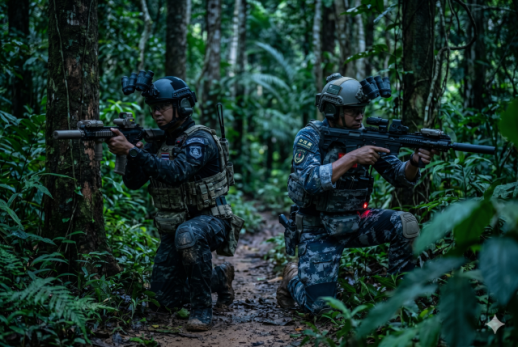 ASIA INSIGHT: Bangkok's survival in socialist ring In the sweltering heat of the Indochinese Peninsula, Bangkok is performing a masterclass in geopolitical hedging that the West—and its neighbors—ignore at their peril. The thick, humid silence of the Kanchanaburi jungle is about to be broken by a sound that remains unfamiliar to many in the West. It is not the roar of an American-made turbine or the familiar cadence of English-language commands that have echoed through these valleys since the early years of the Reagan administration. Instead, as the final weeks of May 2026 approach, the canopy will vibrate with the hum of Chinese-manufactured tactical drones and the rhythmic marching of the People’s Liberation Army. These are the opening movements of Assault 2026, a joint special forces exercise that, despite its relatively small scale, represents a tectonic shift in the strategic landscape of Southeast Asia. To the casual observer, this looks like a kingdom in the midst of a messy divorce from Washington. To the structural skeptic, it is something far more ancient and calculated. Thailand is a capitalist island navigating a socialist sea. To its east and north lie Laos and Vietnam, Marxist-Leninist states that have spent a century balancing ideological purity with the harsh realities of global trade. To the west, Myanmar remains trapped in the grip of a military junta that has long flirted with isolationist socialist doctrines and now relies on authoritarian gravity to survive a brutal civil war. Even Cambodia, though nominally a monarchy, functions as a one-party state deeply tethered to Chinese patronage. For Bangkok, the pursuit of a partnership with Beijing is not a rejection of democratic ideals—it is a survival strategy forced by the sheer, unyielding geography of its neighborhood. The structural reality is that Thailand cannot afford the luxury of picking a side in a world that increasingly demands binary loyalties. This is a nation that currently ranks as the 24th strongest military power in the world and the 10th most powerful in Asia. It is a formidable regional anchor with a professionalized officer corps and an arsenal that reflects its dual identity. By hosting the United States-led Cobra Gold exercises in the spring and the Chinese-led Assault drills in the summer, Bangkok is performing a masterclass in what scholars call "Bamboo Diplomacy." Like the bamboo, Thailand aims to bend with the prevailing winds of power without ever being uprooted by them. The evolution of these military marriages tells the story of this friction. Cobra Gold, which began in 1982, remains the crown jewel of American presence in mainland Asia. It is a massive, multi-national spectacle involving over 30 nations and nearly 8,000 troops, designed to project a vision of a free and open Indo-Pacific through humanitarian aid and high-end interoperability. But while Cobra Gold is about the optics of an alliance, the drills with Beijing are about the mechanics of intimacy. Falcon Strike, the air force drills that initiated in 2015, allowed Thai pilots to train alongside Chinese fighter jets, providing the Royal Thai Air Force with a rare glimpse into the combat doctrine of a rising superpower. More significant, however, is the Assault series. Started in 2005 as a modest special forces exchange, it has metamorphosed into a sophisticated laboratory for modern warfare. Assault 2026, running from mid-May through the end of the month, represents a critical iteration of this partnership. It has moved far beyond the infantry-focused mobility drills of the past. Today, the focus is on non-kinetic effects—electronic warfare, the deployment of unmanned systems in dense jungle environments, and coordinated counter-terrorism operations that mirror Beijing’s own domestic security priorities. The pivot toward Chinese equipment, including the acquisition of S26T Yuan-class submarines and VT-4 main battle tanks, was a predictable reaction to Washington’s habit of using arms sales as a moral lever. When the U.S. froze assistance following the 2014 coup and later blocked the sale of F-35 fighter jets, Bangkok did not suddenly become pro-China. It simply became practical. In a neighborhood where the neighbors are permanent and the distant protector is temperamental, Thailand chose to diversify its insurance policy. The kingdom realized that the American security umbrella is often held by a hand that trembles with every election cycle, while the Chinese presence is as constant as the Mekong River. This dual-track diplomacy is often dismissed as a lack of conviction, yet the socialist ring argument provides the necessary context that Western analysts often miss. Thailand’s borders are a tapestry of one-party regimes and authoritarian strongmen. China is the primary architect of the infrastructure that now defines the Indochinese Peninsula. From the high-speed rail lines snaking through Laos to the deep-water ports in Cambodia, the regional economy is increasingly synchronized with Beijing’s rhythm. For Bangkok to ignore Chinese military overtures would be to invite isolation within its own backyard. The kingdom is not drifting toward China out of ideological affinity; it is doing so because the alternative is a lonely existence on a very crowded peninsula. There is, of course, a significant risk to this strategy. In an era where military technology is increasingly defined by data links and integrated battle networks, it is becoming nearly impossible to be a dual-use ally. The Pentagon is understandably wary of sharing sensitive electronic intelligence with a military that hosts Chinese electronic warfare units just months later. There is a growing fear in Washington that Thailand is becoming a potential security leak—a Major Non-NATO Ally that may accidentally share the keys to the kingdom with its neighbors. The United States is beginning to treat its oldest Asian ally as a potential security leak, a fear that only accelerates Bangkok’s pivot toward Chinese hardware that does not come with lectures on democratic backsliding. The kingdom is effectively attempting to defy the laws of geopolitical gravity. By embedding itself within the security apparatus of both superpowers, it hopes to become too integrated to be abandoned by either. But as the technological divide between the East and West becomes an unbridgeable chasm, the middle ground is disappearing. Thailand may soon find that the bamboo which bends too far in both directions eventually loses its ability to stand at all. As the Assault 2026 drills conclude this May, the world will likely see more images of Thai and Chinese soldiers sharing rations and tactical data. These images will cause a predictable stir in the halls of Congress, where analysts will fret over the loss of a traditional ally. But to see this as a loss is to misunderstand the nature of Thai sovereignty. The kingdom is not drifting; it is balancing. It is maintaining a close friendship with the iconic capitalist power across the Pacific while building a necessary partnership with the socialist giant next door. In a world of friend-shoring and integrated battle networks, you cannot easily plug a Chinese data link into an American command structure. Thailand’s attempt to remain everyone’s partner may eventually leave it as the ally that no one fully trusts—a lonely position for a nation that has spent centuries avoiding exactly that. The true measure of Thailand’s success will not be found in which drill is larger, but in which side trusts them less. For a nation surrounded by the ghosts of socialist revolutions and the pressures of modern empire, being slightly untrusted by everyone is often the only way to ensure they are beholden to no one. The jungle does not care about the free world or socialist fraternity—it only cares about what survives the rainy season. 2026-05-13 11:04:26
 -
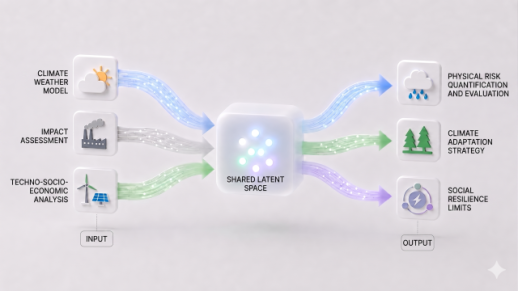 KAIST researchers develop AI framework for climate crisis prediction SEOUL, May 13 (AJP) - Researchers at the Korea Advanced Institute of Science and Technology (KAIST) developed an artificial intelligence framework designed to analyze the integrated impacts of climate change on global economies and energy systems, KAIST said Wednesday. The international research team, led by Professor Jeon Hae-won and Professor Oh Hye-yeon, introduced a foundation model that processes earth observation data, economic scenarios, and policy indicators within a shared virtual space. This system allows for the simultaneous analysis of physical climate phenomena and their resulting socio-economic effects. Existing climate research often separates physical weather predictions from economic impact assessments, which leads to delays in policy decision-making due to fragmented data systems. The new AI framework utilizes a mixture of experts structure, where specialized AI modules collaborate to improve the accuracy and reliability of long-term forecasts. The team also released a prototype tool called the Machine Learning-Integrated Assessment Model (ML-IAM) v1.0. This high-speed emulator can process thousands of different policy scenarios within minutes, whereas traditional integrated assessment models often require several hours to analyze a single scenario. Testing showed that the AI emulator achieved 97 percent accuracy when compared to 15 different international integrated assessment models. The researchers stated that the tool can simulate the immediate effects of policy changes, such as increasing carbon taxes or expanding renewable energy infrastructure. "The climate-AI model is expected to bridge the gap between climate scientists and policymakers," Professor Jeon Hae-won said Wednesday. "The high-speed AI emulator will become a core technology for providing practical climate solutions by enabling near real-time policy analysis." The research was conducted in collaboration with institutions including Peking University, Imperial College London, and the International Institute for Applied Systems Analysis. The findings were published in the journal Nature Climate Change on April 28, 2026, while the technical details of the emulator were presented as a preprint in Geoscientific Model Development on January 9, 2026. "AI technology must contribute to solving the climate crisis that threatens human survival beyond being a mere commercial tool," Professor Oh Hye-yeon said Wednesday. "This international joint research demonstrates that AI can serve as a global public good to address social challenges." (Reference Information) Journal/Source: Nature Climate Change Title: Artificial Intelligence to Support Cross-Disciplinary Climate Change Research Link/DOI: https://bit.ly/4fi4MpR Journal/Source: Geoscientific Model Development Title: ML-IAM v1.0: Emulating Integrated Assessment Models With Machine Learning Link/DOI: https://bit.ly/4u8Yc9W 2026-05-13 10:33:39
 -
 S. Korea extradites mastermind who targeted BTS' Jungkook in $25.4 mln fraud SEOUL, May 13 (AJP) - South Korean authorities on Wednesday repatriated a 40-year-old Chinese national accused of leading a sophisticated hacking ring that attempted to steal 8.4 billion won from BTS star Jeon Jung-kook. The suspect, identified only as A, was escorted from Bangkok to Incheon International Airport following a coordinated effort between the Ministry of Justice and the National Police Agency. The extradition marks a major development in an investigation into a syndicate that allegedly siphoned 38 billion won ($25.4 million) from 16 high-profile victims. The group specialized in hunting for wealthy individuals who were physically unable to check their financial alerts, such as celebrities serving in the military or individuals in correctional facilities. The 28-year-old BTS member became a primary target while he was away for his mandatory military service. The hackers allegedly used his stolen personal data to open fraudulent phone accounts, which they used to bypass security and attempt to seize his shares in HYBE, the agency behind BTS. A massive loss was only avoided because his management agency spotted the unauthorized activity in time. Once the agency realized someone was trying to move the 8.4 billion won in stocks, they worked with financial institutions to freeze the transactions immediately. Other victims included corporate chairmen and legal professionals who lost significant amounts of cash and cryptocurrency. Investigators said the gang started with a list of 258 potential targets before narrowing it down to a final list based on who had the most assets and the least ability to fight back quickly. South Korean officials spent months working with Thai prosecutors and Interpol to secure the suspect's return. This follows the earlier extradition of a 36-year-old accomplice in August, as part of a wider crackdown on transnational cybercrime. The Ministry of Justice said it intends to pursue international fraud rings until all members are brought to justice. The accomplice is currently standing trial in South Korea after being indicted in September following his initial extradition. 2026-05-13 09:23:49
 -
 GMTCK president emphasizes passion and leadership at Kookmin University lecture SEOUL, May 12 (AJP) - Brian McMurray, president of GM Technical Center Korea, delivered a special lecture at Kookmin University on the importance of passion-driven career strategies and leadership in a rapidly changing industrial landscape, the university said Thursday. Speaking to students at the university's academic conference hall on May 7, McMurray addressed the theme of how to grow a career and make a difference. He shared personal insights from his journey as an engineer and executive across seven countries, encouraging students to design their careers based on individual values. McMurray highlighted that following one's passion provides the resilience necessary to overcome professional challenges. He noted that as companies increase investment in artificial intelligence, young professionals face both new risks and opportunities. He urged students to maintain a mindset of continuous learning and inquiry to remain competitive in an increasingly automated job market. The president also discussed the necessity of organizational cultures that embrace failure as a prerequisite for innovation. McMurray cited the "No Watermelons" campaign at GMTCK, an initiative designed to encourage employees to share problems openly rather than hiding them under a green exterior of feigned success. He further cautioned against the potential for misunderstandings in text-based communication, advocating for direct dialogue and empathy. "Leadership is about inspiring trust and providing inspiration rather than relying on titles or backgrounds," McMurray said. He explained that technical competence must be paired with an attitude that respects and fosters the growth of others. The session concluded with a question-and-answer segment covering career concerns and the global industrial environment. McMurray advised students to challenge themselves without fear of making mistakes and to strive toward making a positive impact on the world. The event marked the 665th installment of the Kookmin University Thursday Lecture series, a regular credit course that has hosted approximately 670 prominent figures from politics, science, and the arts over the past 30 years. Previous speakers include former South Korean President Roh Moo-hyun and film director Park Chan-wook. 2026-05-12 15:28:04
 -
 KAIST researchers develop self-adjusting light sensor to improve autonomous driving safety SEOUL, May 12 (AJP) - Researchers at the Korea Advanced Institute of Science and Technology developed a sensor capable of adjusting its own response to light to overcome the limitations of current autonomous driving vision systems, the prominent institute said Tuesday. Standard image sensors primarily detect light brightness, which can make it difficult for autonomous vehicles to distinguish between objects with similar reflectivity, such as water and asphalt at night. The new "self-reconfigurable" sensor array instead utilizes polarization, which is the direction in which light vibrates, to identify the surface structure and orientation of objects. Korea Advanced Institute of Science and Technology (KAIST) Professor Seo Jun-ki and his team in the Department of Chemical and Biomolecular Engineering used a combination of tellurium and rhenium disulfide to create a specialized structure. This arrangement allows the sensor to change its operational state based on incoming light waves without requiring external electrical signals. The team employed a precise manufacturing process called epitaxial atomic layer deposition to stack these materials at the atomic level. This method ensures the crystal structures align correctly, providing higher stability and more reliable performance compared to existing 2D material layering techniques. This technology is designed for in-sensor computing, where the device processes visual data directly rather than sending it to a separate processor. In laboratory tests, the system achieved over 95 percent accuracy in recognizing moving objects while maintaining high energy efficiency. "This research presents a new foundation for artificial intelligence vision technology that can secure richer visual information by using polarization," Professor Seo said. He noted that the technology is expected to play a significant role in developing low-power AI systems for autonomous driving and medical diagnostics. Researchers Wenxuan Zhu and Kim Chang-hwan participated as lead authors of the study. The findings were published in the journal Nature Sensors on April 14, 2026. (Reference Information) Journal/Source: Nature Sensors Title: Self-reconfigurable polarization perception in dual-anisotropy heterostructures for high-dimensional in-sensor computing Link/DOI: https://bit.ly/4dkdYHE 2026-05-12 15:07:00