
Journalist

Kim Dae-sik
swatchsjp@ajunews.com
-
 Uzbekistan and Türkiye expand strategic partnership through trade and transport links SEOUL, January 30 (AJP) - The diplomatic relationship between Uzbekistan and Türkiye has evolved into a substantive, comprehensive strategic partnership, moving beyond formal definitions to include deep economic and regional cooperation. Recent high-level meetings in January 2026 confirmed that both nations have established a permanent institutional framework to manage their bilateral ties. The primary vehicle for this cooperation is the High-Level Strategic Cooperation Council, led by the presidents of both countries. A fourth meeting of the council is set for later in 2026. This structure is supported by direct dialogue between President Shavkat Mirziyoyev and President Recep Tayyip Erdoğan, who maintain regular contact to coordinate government and business activities. Regional security and international policy also feature prominently in the relationship. During a 4+4 format meeting in January 2026, officials from both sides discussed the situations in Afghanistan, Gaza, Ukraine, and Syria. The two countries also work together within the Organization of Turkic States (OTS) to align their approaches to digital development, transport, and the economy across the Turkic world. Economic engagement has become a major driver of the relationship. Bilateral trade exceeded 3 billion USD in 2025, with a medium-term goal of 5 billion USD and a long-term target of 10 billion USD. Turkish investment in Uzbekistan reached 2.2 billion USD in 2024 and grew to 2.9 billion USD during the first ten months of 2025. By the end of last year, more than 2,100 companies with Turkish capital were operating in Uzbekistan. On January 21, 2026, the Joint Strategic Planning Group met for the fourth time to review the Action Plan from the Joint Economic Commission (JEC). This commission oversees practical trade initiatives and industrial cooperation. For Uzbekistan, these ties bring in Turkish technical expertise and capital, while Turkish businesses gain access to a growing market of 38 million people. Transport links also expanded significantly in 2025, particularly in the aviation sector. There are now 97 weekly flights connecting eight different destinations, including Tashkent, Samarkand, Ankara, Istanbul, and Izmir. This increase in flight frequency is designed to improve business mobility, tourism, and the potential for air cargo growth. Energy and education remain key areas of focus. Turkish companies are currently helping to modernize Uzbekistan's energy grid and develop renewable energy projects. Additionally, branches of several Turkish universities have opened in Uzbekistan to facilitate student and faculty exchanges. Tourism has also grown, with Türkiye now among the top five sources of visitors to Uzbekistan. Alisher Kadirov, a department head at the Institute of Strategic and Regional Studies under the President of Uzbekistan, noted that future efforts will likely focus on industrial projects aimed at third-country exports and the expansion of multimodal logistics. 2026-01-30 17:33:18
 -
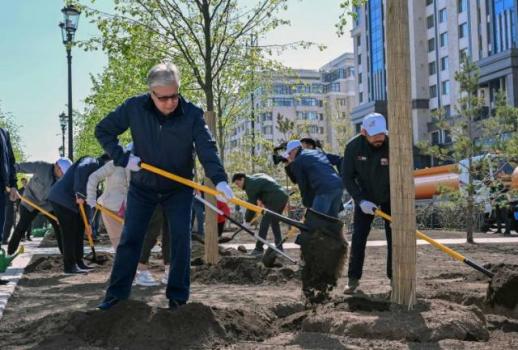 Kazakhstan launches nationwide environmental movement to promote ecological culture SEOUL, January 30 (AJP) - The government of Kazakhstan has implemented a large-scale national environmental campaign titled Taza Kazakhstan, or Clean Kazakhstan, following an initiative by President Kassym-Jomart Tokayev. The movement aims to improve the environmental state of the country while fostering a culture of nature conservation and civic responsibility among its population. The campaign serves as a central pillar of the country's social policy, focusing on both immediate physical cleanup and long-term behavioral change. It operates as part of a broader strategic framework, the Taza Kazakhstan Concept for the Development of Environmental Culture for 2024 to 2029, which was approved by the government in October 2024 to define state priorities in sustainable development. During 2025, the campaign resulted in 1,250 environmental events held across the nation. Participants planted more than 18 million trees and cleaned over 1 million hectares of land. According to official data, the initiative successfully collected more than 800,000 tons of waste with the participation of approximately 6.5 million people. A significant portion of the program focuses on the removal of illegal dumping sites. Authorities used satellite monitoring and 1,300 mobile groups to identify 3,833 illegal landfills, approximately 80 percent of which have been cleared. To facilitate public involvement, the government launched a Telegram chatbot that has processed more than 24,000 requests regarding waste removal and urban improvement. The initiative also includes infrastructure development for waste management. Eight new solid waste landfills have been commissioned, and 22 projects for waste sorting and recycling are currently underway. these projects represent a total value of 89.4 billion tenge, or approximately 180 million USD, with an additional 40 projects currently in the development phase. Educational programs have been integrated to support these environmental goals. Under the Adal Azamat program, which translates to Honest and Responsible Citizen, environmental education now reaches 87.2 percent of schoolchildren. Furthermore, 35 universities in Kazakhstan are training environmental specialists, supported by 2,358 state grants allocated for the 2025 to 2026 academic year. The campaign aligns with the goals set in the 2024 Presidential State-of-the-Nation Address. Moving forward, the Kazakh government identified waste management, energy efficiency, and resource-saving technologies as potential areas for bilateral cooperation between Kazakhstan and the Republic of Korea. 2026-01-30 14:56:07
 -
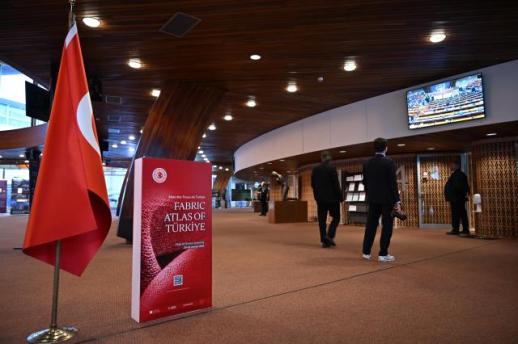 Turkish textile heritage exhibition opens at the Council of Europe SEOUL, January 29 (AJP) - The exhibition titled Fabrics Atlas of Türkiye, The Memory of Fabric officially opened yesterday at the Council of Europe in Strasbourg, France. Hosted by the Turkish Delegation to the Parliamentary Assembly of the Council of Europe (PACE), the event is scheduled to run through January 30 to coincide with the assembly’s winter session. The exhibition is designed to introduce the international community to the long-standing weaving traditions of Türkiye. It features a collection of textiles created using natural fibers and local raw materials, emphasizing production methods that prioritize environmental sustainability. In addition to finished fabrics, the display includes traditional weaving tools and miniature looms. Organized as part of the broader Fabrics Atlas of Türkiye project, the initiative operates under the auspices of First Lady Emine Erdoğan. During the opening, a message from the First Lady was shared, noting that the exhibition serves as a bridge to share the artistic and historical depth of Anatolian weaving heritage. She noted that such projects are essential for the preservation of shared cultural values and the promotion of dialogue between different societies. The event highlights traditional weaving as a sustainable, zero-waste practice that avoids industrial chemical processes. The items on display represent regional techniques from across the country, serving as a record of cultural identity and historical craftsmanship. Bjorn Berge, Deputy Secretary General of the Council of Europe, attended the opening and remarked on the significance of the traditional patterns and cultural diversity represented in the collection. Fatih Dönmez, Head of the Turkish Delegation to the Parliamentary Assembly of the Black Sea Economic Cooperation (PABSEC), stated that the exhibition reflects the country’s commitment to protecting cultural heritage while maintaining environmental responsibility. Zeynep Yıldız, a member of the Turkish Delegation to the Council of Europe and a member of parliament for Ankara, described the exhibition as a synthesis of centuries of cultural interaction that aligns with the founding principles of the Council of Europe. The opening ceremony was attended by members of parliament and international guests, marking the first time these diverse regional weavings have been brought together for an international showcase of this scale. The exhibition remains open to visitors at the Council of Europe building through the end of the week. 2026-01-29 11:21:21
 -
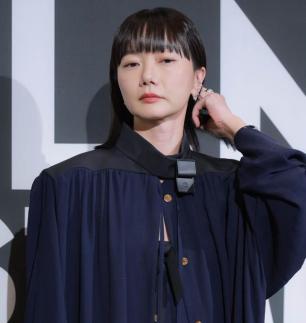 S. Korean actress Bae Doona appointed to Berlin International Film Festival competition jury SEOUL, January 29 (AJP) - South Korean actress Bae Doona has been appointed as a member of the international jury for the 76th Berlin International Film Festival. The festival organizers announced on Wednesday that Bae will join a panel of six other cinema professionals to determine the winners of the Golden and Silver Bears in the main competition category. The jury is led by German director Wim Wenders, who was previously named jury president. Bae will serve alongside a diverse group of international filmmakers, including Nepali director Min Bahadur Bham, Indian documentarian Shivendra Singh Dungarpur, American filmmaker Reinaldo Marcus Green, Japanese director HIKARI, and Polish producer Ewa Puszczynska. Together, they will evaluate 22 films selected for this year's competition. The appointment solidifies Bae's standing as a prominent figure in global cinema. Since her early roles in Bong Joon-ho's "Barking Dogs Never Bite" in 2000 and Park Chan-wook's "Sympathy for Mr. Vengeance" in 2002, she has maintained a prolific career in both South Korean and international productions. Her recent work includes the 2022 film "Broker," directed by Hirokazu Kore-eda, which also competed at major international festivals. Bae is expected to expand her international presence further with the upcoming sci-fi comedy "Alpha Gang," directed by David and Nathan Zellner, which is scheduled for a 2026 release. According to the Berlin International Film Festival's official website, the jury will be responsible for awarding the Golden Bear for Best Film to the winning producers. They also select recipients for several Silver Bears, including the Grand Jury Prize, Jury Prize, Best Director, Best Leading Performance, Best Supporting Performance, Best Screenplay, and Outstanding Artistic Contribution. The 76th edition of the Berlin International Film Festival is scheduled to take place from February 12 to February 22. 2026-01-29 09:58:13
 -
 KAIST researchers develop high-efficiency red micro-LED for realistic virtual reality displays SEOUL, January 29 (AJP) - Researchers have overcome a major technical hurdle in micro-LED technology by developing a high-efficiency red micro-LED that enables ultra-high-resolution imagery for virtual and augmented reality devices. The new technology significantly improves power efficiency and achieves a pixel density of 1,700 pixels per inch, bringing wearable displays closer to mimicking real-world visual clarity. The Korea Advanced Institute of Science and Technology (KAIST) announced on January 28 that a research team led by Professor Kim Sang-hyun from the School of Electrical Engineering developed the display. The project was a collaborative effort with Professor Keum Dae-myeong of Inha University and industry partners QSI and Raontech. The resulting display offers a resolution three to four times higher than current smartphone screens, reaching a level described as near-realistic for virtual reality (VR) and augmented reality (AR) applications. Micro-LEDs are next-generation displays where individual sub-millimeter LEDs emit their own light, offering superior brightness and lifespan compared to Organic Light Emitting Diodes (OLEDs). However, the technology has faced two primary challenges: the rapid loss of efficiency in red pixels as they shrink in size, and the difficulty of transferring millions of tiny LEDs onto a circuit board without defects. To address the efficiency issue, the team utilized a quantum well structure using aluminum indium phosphide and gallium indium phosphide (AlInP/GaInP). This structure acts as an energy barrier that prevents electrons from leaking out, trapping them in the light-emitting space. This allows the red pixels to remain bright and efficient even at extremely small scales. For the manufacturing process, the researchers moved away from the traditional pick-and-place method, which involves moving LEDs individually and often results in alignment errors. Instead, they employed monolithic 3-D integration, a technique where the LED layers are stacked directly onto the driving circuit. This method reduces alignment errors to the nanometer level and allows for a more stable production of ultra-high-resolution screens. The team also established low-temperature processing techniques to ensure the underlying silicon circuits were not damaged by heat during the LED integration. The successful demonstration of a functional display using these high-resolution red micro-LEDs is considered a significant milestone. The technology is expected to be used in AR and VR smart glasses, automotive head-up displays, and various wearable devices where high pixel density is required to eliminate the visible graininess of digital images. "This research has solved the long-standing problems of red pixel efficiency and driving circuit integration in the micro-LED field," Professor Kim Sang-hyun said. "We will continue to develop this into a next-generation display technology that is ready for commercialization." The study, led by Dr. Park Ju-hyeok from the KAIST Institute for Information Technology Convergence, was supported by the National Research Foundation of Korea. 2026-01-29 08:44:40
 -
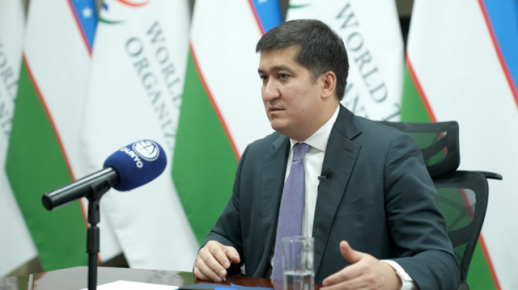 Uzbekistan to retain trade protection rights during World Trade Organization accession SEOUL, January 28 (AJP) - Azizbek Urunov, the Special Representative of the President of Uzbekistan on World Trade Organization (WTO) issues, announced on January 26 that the country will maintain the right to protect specific economic sectors as it enters the final stages of its accession process. This measure is intended to support national industries facing temporary difficulties or pressure from imports while aligning with international trade rules. The move follows nearly a decade of systemic economic reforms initiated by President Shavkat Mirziyoyev in 2017. While Uzbekistan originally applied for WTO membership in 1994, negotiations only entered an active phase in 2020 after the country liberalized its currency policy, revised foreign trade regulations, and eliminated exclusive rights held by state enterprises to meet global standards. As a developing nation, Uzbekistan is utilizing WTO provisions that allow member states to implement trade remedies, including anti-dumping, countervailing, and safeguard measures. These tools are designed to prevent unfair competition, such as foreign companies selling products at artificially low prices to dominate the domestic market. Under these rules, developing countries can apply protective measures for up to eight years, and in certain circumstances, up to ten years. World Bank estimates suggest that WTO membership could increase the gross domestic product of Uzbekistan by approximately 17 percent over the next five to seven years. The country's economy has grown significantly over the last decade, with the gross domestic product rising from 50 billion dollars to approximately 147 billion dollars by the end of 2025. Accession is also expected to provide Uzbekistan with legal mechanisms to challenge discriminatory trade barriers in Geneva. Urunov noted that the country currently faces obstacles where partners may accept raw materials but restrict the import of processed goods with high added value. Membership would allow these disputes to be settled through the universal principles of the WTO. "As a developing country, Uzbekistan, in accordance with WTO agreements, retains the right to protect certain sectors of the economy in the event of specific difficulties," Urunov said. "WTO membership sends an international signal that the country’s economy operates under transparent, predictable and investor-friendly rules." Uzbekistan is currently preparing national specialists to manage these trade protection mechanisms and is drafting new laws to regulate their application. The government aims to complete the final stage of negotiations to support its "Uzbekistan - 2030" development strategy. 2026-01-28 18:00:04
 -
 KAIST and Korea University develop new AI knowledge transfer technique for different models SEOUL, January 27 (AJP) - Researchers from the Korea Advanced Institute of Science and Technology (KAIST) and Korea University announced on January 27 that they have developed a new technology called TransMiter, which allows for the efficient transfer of learned knowledge between different artificial intelligence models. This innovation addresses the significant inefficiency of having to retrain high-performance AI models from scratch whenever a new version is released. Currently, Vision-Language Models (VLM) like ChatGPT are rapidly advancing, allowing AI to understand both text and images. These models are pre-trained on massive datasets and can adapt to specific tasks using small amounts of additional data. However, if a user switches to a newer or different model, this adaptation process must be repeated, consuming vast amounts of computational power, time, and money. Existing techniques often fail if the model architecture changes even slightly, or they require running multiple models simultaneously, which increases memory costs. The research team, led by Professor Kim Hyun-woo, developed TransMiter as a transferable adaptation technique that works regardless of a model's structure or size. The core of the technology is moving the adaptation experience gained by one AI directly to another. Instead of modifying the complex internal architecture of the AI, the system looks at the output and transfers the learned know-how to a new model. By aligning the answers two different AI models provide for the same question, the researchers proved that the expertise of one model can be utilized by another immediately. This method eliminates the need for expensive backpropagation—the standard, repetitive process used to train AI parameters—and instead uses a simple linear alignment. This allows for nearly zero loss in inference speed and significantly lower training costs. The significance of this study lies in being the first to prove that adaptation knowledge can be precisely transplanted across different types of AI. The researchers believe this could lead to a new era of knowledge patches for large language models, where specific expert knowledge can be added or updated in real time without full retraining. Professor Kim Hyun-woo explained that this research could drastically reduce the cost of post-training required every time a new large-scale model is introduced. He noted that the technology enables a model patch system that easily integrates professional knowledge into existing systems. The study included co-authors Song Tae-hun, a master's student at KAIST, Lee Sang-hyuk, a postdoctoral researcher at KAIST, and Park Ji-hwan, a doctoral student at Korea University. The findings were presented on January 25 at the Association for the Advancement of Artificial Intelligence (AAAI) 2026, a top-tier international conference in the field of AI, where it was selected for oral presentation with a highly competitive 4.6 percent acceptance rate. (Paper information) Journal: Association for the Advancement of Artificial Intelligence (AAAI) 2026 Title: Transferable Model-agnostic Vision-Language Model Adaptation for Efficient Weak-to-Strong Generalization DOI: https://doi.org/10.48550/arXiv.2508.08604 2026-01-27 15:03:05
 -
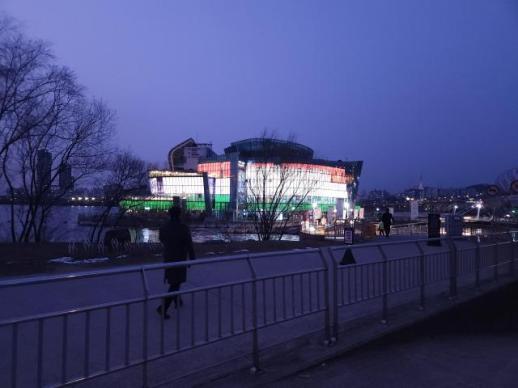 Indian envoy pledges to deepen strategic partnership with S. Korea at Republic Day celebration SEOUL, January 27 (AJP) - The Indian Embassy in South Korea held a reception on January 26 to celebrate India's 77th Republic Day, marking a period of rapid expansion in economic and defense ties between the two nations. The event, held at Sevit Island on the Han River, drew approximately 400 guests, including diplomats, government officials, business leaders, and academics. The gathering commemorated the anniversary of the adoption of India's constitution in 1950, a milestone that Indian Ambassador Gourangalal Das described as a "pledge to democracy" that continues to shape the country's trajectory. In his keynote address, Ambassador Das detailed India's recent structural reforms and technological progress, arguing that the nation's shift toward high-tech manufacturing offers significant opportunities for South Korean partners. "The enterprises transformed seamlessly from digital to the AI, from three nanometer chips designed in Bangalore to the world's heaviest rocket ever launched," Das said. He noted that the "special strategic partnership" between the two countries has intensified over the past year, supported by two summit-level meetings and frequent interactions between foreign ministers. The ambassador highlighted the recent success of major South Korean corporations in India as evidence of this momentum. He specifically mentioned the successful Indian market activities of LG Electronics, Daewoo Securities' expansion, and Mirae Asset's milestone as the only wholly-owned foreign asset management firm among India's top ten. "Hyundai Motor's newly planned investments and Posco's new ambitions in India—they all made headlines in both countries," Das said. He also noted that the Indian government is providing specific incentives for South Korean companies to collaborate in the semiconductor and shipbuilding sectors. The event also underscored the strengthening of security ties. Lim Sang-woo, the Ambassador for Public Diplomacy at the South Korean Ministry of Foreign Affairs, delivered a congratulatory speech reflecting on the growing trust between the two countries. Ambassador Lim, who recently returned to Seoul after a three-year posting in India, said the defense partnership has evolved beyond traditional sales into deep technological collaboration. "The agreement on a second batch of K9 Vajra self-propelled howitzers speaks to the depth of our defense collaboration," Lim said. He added that the South Korean Defense Ministry is "ready to deliver world-class systems" to India on schedule. Both speakers pointed to the first-ever bilateral joint naval exercises, held last October, as a critical foundation for stability in the Indo-Pacific region. Engagement between the two capitals is set to increase in 2026. Ambassador Lim confirmed that President Lee Jae Myung is planning a visit to India later this year to advance the partnership into its second decade. Ambassador Das noted that the human element of the relationship remains a priority, citing the recent opening of the Korea Education Center in India as a "living embodiment" of the cultural ties between the two societies. 2026-01-27 14:21:29
 -
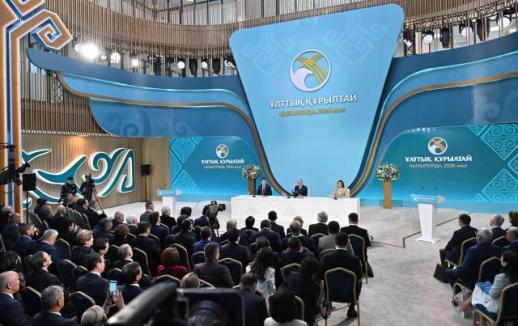 Kazakhstan president proposes vice presidency and unicameral parliament in major reform push SEOUL, January 26 (AJP) - President Kassym-Jomart Tokayev announced a major overhaul of the national government on January 20, proposing the creation of a vice presidency and a transition to a single-chamber legislature. Speaking at the National Kurultai in Kyzylorda, the president outlined a series of constitutional amendments intended to modernize the state system. The proposal includes the establishment of a Vice President who would represent South Korea's neighbor on the international stage and handle coordination with the parliament. President Kassym-Jomart Tokayev stated that while the reform introduces new leadership roles, the country will remain a presidential republic. The plan calls for the current two-house system to be replaced by a unicameral parliament known as the Kurultai. Under this model, the legislature would consist of 145 deputies elected for five-year terms through a proportional representation system. The reform would also grant the parliament the authority to approve judges for the Supreme Court and members of the Central Election Commission. Regarding political stability, the president proposed strict rules for succession. If a president leaves office early, a national election must be held within two months to ensure the next head of state is chosen through a public vote. On foreign policy, President Kassym-Jomart Tokayev advocated for a pragmatic approach focused on national interests. He noted that diplomacy should serve as a tool for compromise rather than confrontation. He also announced the creation of the Khalyk Kenesi, or People's Council, an advisory body that will have the right to suggest new laws. Economic priorities mentioned in the address included the expansion of artificial intelligence and the development of high-capacity data centers. The president also discussed Kazakhstan's goal of becoming a primary transport hub for the Middle Corridor, which links trade routes between the East and the West. According to a report from the Astana Times on January 24, 2026, a Constitutional Commission has already been formed to draft these amendments for a planned national referendum. 2026-01-26 16:54:34
 -
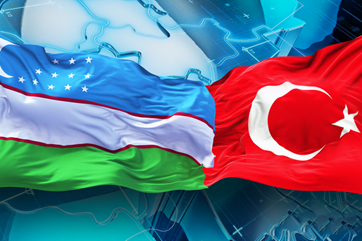 Uzbekistan president to visit Türkiye for strategic council meeting and earthquake housing ceremony SEOUL, January 26 (AJP) - Uzbek President Shavkat Mirziyoyev will travel to Türkiye on January 29 for an official visit centered on deepening bilateral strategic ties and inaugurating housing projects for earthquake survivors, the Embassy of Uzbekistan in the Republic of Korea said Monday. The visit includes the fourth meeting of the Supreme Council for Strategic Cooperation, an institutional platform designed to coordinate high-level policy between the two nations. During his stay, President Shavkat Mirziyoyev is scheduled to participate in an online ceremony to open residential complexes in the Arsuz district of Hatay Province. These facilities were constructed by Uzbekistan to support communities displaced by the powerful earthquakes that struck southeastern Türkiye in February 2023. The Arsuz and Gaziantep regions were among the most severely impacted areas, suffering widespread destruction of social and industrial infrastructure. The residential project in Arsuz was funded by the Uzbek government and provided to Turkish citizens free of charge. This follows immediate relief efforts in 2023, during which specialized units from the Ministry of Emergency Situations of Uzbekistan and medical brigades were deployed to assist in search-and-rescue operations. Political and economic relations between the two countries have expanded since the establishment of a strategic partnership in 2017. The Supreme Council for Strategic Cooperation, established in 2018 and co-chaired by the presidents of both nations, serves as the primary mechanism for bilateral dialogue. Previous sessions were held in Ankara in 2020 and 2024, and in Tashkent in 2022. Economic data indicates steady growth in trade, which reached approximately 3 billion USD by the end of 2025. This growth has been supported by a Preferential Trade Agreement signed in 2023. Beyond trade, the two nations maintain significant connectivity, with nearly 100 flights operating between them each week. The partnership also extends to cultural and multilateral cooperation through the Organization of Turkic States. Recent cultural initiatives include the installation of a monument to Alisher Navoi in Ankara and academic conferences honoring historical figures such as Abu Rayhan Beruni. The upcoming summit in Ankara is expected to focus on further integrating trade, energy, and transport corridors, including the development of regional connectivity between Central Asia and international markets through Türkiye. 2026-01-26 15:54:53