
Journalist

Mashrab Mamirov
swatchsjp@ajunews.com
-
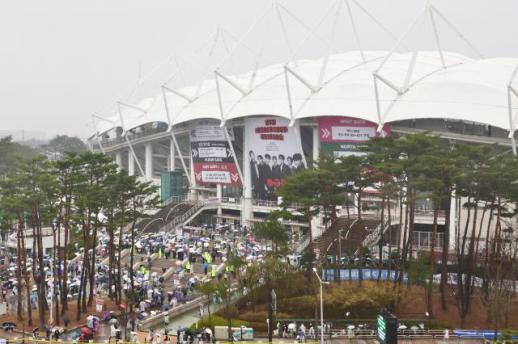 South Korea benchmarks BTS tourism success as Goyang visitor numbers surge SEOUL, April 29 (AJP) - Foreign arrivals in a satellite city northwest of the capital increased 35 times during a three-day BTS concert series that took place on April 9, 11, and 12, providing South Korean authorities with a statistical mandate to overhaul regional tourism strategies, a report released by the culture ministry showed Tuesday. The massive influx of travelers into Goyang, traditionally overlooked in favor of Seoul's central districts, suggests that high-profile cultural events can serve as a primary engine for provincial economic growth if integrated with local infrastructure. This sudden wave of visitors has provided a blueprint for the government’s transition toward a scalable model for provincial revitalization. By analyzing high-density data on spending and movement, the ministry said that it aims to anchor transient global fandom into long-term growth for cities struggling with stagnant local economies. According to the Ministry of Culture, Sports, and Tourism report, foreign visitor arrivals in Goyang City's Daehwa area increased by 3,377 percent compared to the same period last year. This surge in foot traffic translated into a 3,699 percent jump in credit card spending by international visitors within the immediate neighborhood. The data indicates that these travelers are staying longer and spending more than the average visitor to South Korea. Fans attending BTS' Goyang shows remained in the country for an average of 7.4 days, compared to the 6.1-day average recorded for general tourists in the first quarter of 2026. Individual spending also trended higher, with concertgoers averaging 2.91 million won ($1,969) in expenses, outstripping the 2.45 million won spent by typical visitors. In total, foreign credit card spending in the area injected 337.8 million won into the local economy over the three-day period. Central to this economic ripple effect was "The City," an integrated program that linked BTS' stadium event to pop-up stores and exhibitions in Seoul's tourist hubs, including Myeong-dong and the Dongdaemun Design Plaza. This strategy effectively widened the tourist footprint, drawing visitors to the National Museum of Modern and Contemporary Art and other regional sites. The government now intends to apply these findings to other metropolitan areas to counter the concentration of tourism in the capital. Minister Choe Hwi-yeong has authorized a two-week "Welcome Week" in Busan this June to coincide with upcoming performances, featuring specialized exhibition spaces and travel routes focused on music video filming locations. Later this year, the ministry plans to utilize this data-driven approach to support four upcoming K-pop concerts and two new cultural exhibition spaces across the country. Kang Jeong-won, the ministry's tourism policy chief, stated, "The important thing is to move beyond the 'performance' itself as a single tourism product and connect 'K-culture' with regional tourism contents so that visits to the metropolitan area can lead to the regions". 2026-04-29 15:35:28
 -
 Researchers develop synthetic polymer matrix to improve stem cell survival SEOUL, April 29 (AJP) - South Korean researchers have developed a three-dimensional culture platform that improves the survival rate and therapeutic efficacy of stem cells, the Korea Advanced Institute of Science and Technology (KAIST) said Wednesday. Jon Sang-yong, a professor at KAIST's Department of Biological Sciences, led a research team to create a synthetic polymer material named "poly-Z." This material coats culture plates to encourage human adipose-derived stem cells to self-assemble into spherical structures called spheroids. Standard two-dimensional culture methods often cause these cells to age and lose functionality over time. The poly-Z platform alters the physical and chemical properties of the culture surface, promoting the adsorption of albumin proteins and preventing cells from attaching to the bottom. Stem cells grown in this environment produced more extracellular matrix, which mimics conditions found inside the human body. In animal trials involving mice with acute colitis and liver injury, the spheroids demonstrated higher survival rates and better inflammation control than cells grown using conventional methods. The new environment activates integrin and FAK signaling pathways, enabling the cells to better sense and respond to their surroundings. Seo Chang-jin, a researcher at KAIST's InnoCORE AI-Innovative Drug Discovery Research Center, served as the lead author for the research published in the journal Advanced Science on March 31, 2026. "This research demonstrates that a precise 3D culture environment based on synthetic polymers can simultaneously improve the functionality and therapeutic efficacy of stem cells," Jon said. "We expect this technology to be widely utilized in developing next-generation stem cell treatments for various intractable inflammatory diseases." (Reference Information) Journal/Source: Advanced Science Title: Polymer Matrix-Based 3D Culture Significantly Enhances the Differentiation and Immunomodulatory Functions of Human Adipose-Derived Stem Cells Link/DOI: https://doi.org/10.1002/advs.202518704 2026-04-29 10:45:44
 -
 K-pop girl band Le Sserafim releases world tour schedule as group targets European debut SEOUL, April 28 (AJP) - K-pop girl band Le Sserafim will perform 32 shows across 23 cities starting this July, including the first solo European concerts for the K-pop group, the five-member group's agency Source Music said Tuesday. The tour begins in the western port city of Incheon on July 11 and travels through Japan and the United States before reaching five cities in Europe this October. The expansion into Europe follows a year of commercial growth where the group was ranked among the top 10 highest-grossing K-pop tours. By booking shows in London, Paris, and Berlin, members Kim Chae-won, Sakura, Huh Yun-jin, Kazuha, and Hong Eun-chae are moving into new markets to build a larger international audience. The tour is named after the group’s second studio album, "PUREFLOW" pt.1, which is set for release on May 22. The band's agency said the name is an anagram for "POWERFUL." The group released a lead single titled "CELEBRATION" on April 24 to begin the new album cycle. The North American leg includes nine cities, such as Los Angeles, Chicago, and Newark. These dates follow a 2025 tour where the group became the first K-pop girl group to appear on the NBC program "America's Got Talent." That tour included 31 shows and a performance at the Tokyo Dome. Industry data from last year showed the group earned more from ticket sales than any other K-pop girl group during the 12 months ending in September 2025. The new schedule maintains dates in traditional markets like Taipei and Singapore while adding the European leg. Full details on venues and ticket sales are being posted to the group’s official fan platform. The tour is scheduled to conclude in November with a series of performances across Southeast Asia. 2026-04-28 17:51:46
 -
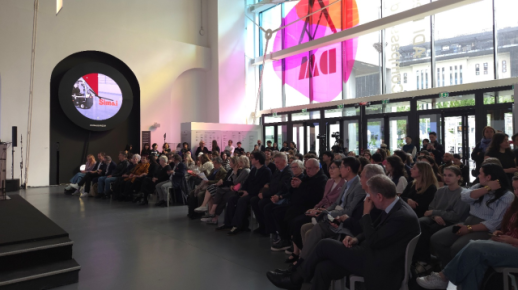 Kookmin University holds inaugural DBEW international design awards in Milan SEOUL, April 28 (AJP) - Kookmin University and the Association for Industrial Design hosted the first Design Beyond East & West Award ceremony at the ADI Design Museum on April 21, coinciding with the opening of Milan Design Week, the prominent South Korean university said Tuesday. The international competition received over 800 entries from 44 countries, focusing on creative design education and outcomes for the future society in the age of artificial intelligence. Unlike traditional design competitions, the Design Beyond East & West (DBEW) Award recognizes both students and their educators for collaborative achievements in fields such as architecture, space design, product design, and visual communication. The event served as an open forum for students, educators, and experts to discuss the future of the industry. The ceremony was attended by prominent figures, including Jury Chair Paola Antonelli, Stefano Giovannoni, and John Thackara. Lorenzo Imbesi, President of Cumulus, and Emilia Gatto, the Italian Ambassador to South Korea, delivered congratulatory remarks emphasizing international solidarity. The Gold Prize was awarded to Baoyi Huang and Professor David Buck from the University of Sheffield for their project, "Ecological Samsara – Soundscape Transformation of Parkwood Springs." Silver prizes were awarded to teams from HTW Berlin University of Applied Sciences, Avantika University, and L'École de design Nantes Atlantique. Andrea Cancellato, Director of the Association for Industrial Design (ADI) Design Museum, noted that the awards grew from a memorandum of understanding signed with Kookmin University last year. "This award is the only model in the world that honors both the educator and the student simultaneously," Cancellato said, adding: "It is an important milestone for the museum in strengthening ties with Asia." Paola Antonelli, who chaired the jury, highlighted that the devotion of teachers is often undervalued and that the DBEW Award brings the necessary attention to the noble value of the educators. Fellow juror John Thackara added that after decades in education, he believes that value lies in the dialogue during the process rather than just the finished result. During a concurrent forum titled "Future-Oriented Redefinition of Design Education," participants discussed the necessity of critical thinking in the AI era. Students at the forum called for curricula that better integrate research with industrial execution and provide a deeper understanding of business mechanisms. The award program is rooted in the work of the Oriental Culture & Design Center (OCDC) at Kookmin University, established by Director Choi Kyung-ran. The center has spent 20 years researching the essential values of design in Asia, providing the foundation for the current international competition. "The DBEW Award is a stage that demonstrates the potential of a global education cluster where universities share technology and philosophy to solve common human problems beyond borders," said Chung Seung-ryul, President of Kookmin University. "It will serve as a practical compass and a new role model for design education in the AI era." The organizers have begun preparations for next year's competition, with schedules for future submissions and forums to be announced on the official DBEW website. 2026-04-28 16:48:20
 -
 Uzbekistan's tax revenues jump 54 percent as regional business activity accelerates SEOUL, April 28 (AJP) - Uzbekistan tax revenues surged 54 percent in the first quarter of 2026 compared to the same period last year, driven by a sharp uptick in provincial commercial activity and property-related receipts. This jump in tax revenues indicates that Uzbekistan's fiscal reforms are effectively capturing a much larger share of domestic wealth, transforming a previously informal economy into a transparent and sustainable national budget. Figures released by the Center for Economic Research and Reforms (CERR) on Tuesday indicate that the fiscal expansion was most pronounced in the Navoi, Syrdarya, Tashkent, and Khorezm regions, where average growth rates hit 33 percent. This jump in collections suggests that the national push to formalize the private sector and broaden the tax base is gaining traction outside the traditional economic center of the capital. The shift reflects a widening of the country's economic geography, as industrial hubs and agricultural regions now contribute a more significant share to the national bottom line. Land tax revenues grew by 33.8 percent and personal income tax receipts rose by 15.2 percent, while customs revenues saw a nationwide increase of 19.5 percent. The Navoi region proved to be a major outlier in trade activity, recording a 77.6 percent spike in customs receipts, followed by the Namangan region at 64.2 percent. Export performance mirrored the domestic gains, with total merchandise exports climbing 30 percent during the quarter. Navoi again led the country with a 71.4 percent increase in export volume, while the Tashkent region recorded 52.4 percent growth. Other regions, including Samarkand, Namangan, and Bukhara, maintained steady export trajectories with growth ranging between 27 percent and 31 percent. These figures indicate that regional manufacturing and processing capabilities are increasingly linking provincial economies directly to international markets. Lending activity provided the liquidity necessary to sustain this growth, as commercial banks increased loan disbursements by 9.1 percent. The Samarkand region saw the most aggressive expansion in credit, with loan volumes soaring 69.5 percent, while lending in the Bukhara, Khorezm, Fergana, and Tashkent regions grew by an average of more than 43 percent. This capital injection coincided with the registration of 22,443 new business entities in March. While the city of Tashkent remains the primary site for new firms with 4,759 registrations, the Khorezm and Samarkand regions combined for nearly 4,000 new enterprises. Market institutionalization also showed gains, as trading volume on the Uzbek Republican Commodity Exchange rose 20.8 percent. The Syrdarya region recorded the highest growth in exchange activity at 68.4 percent, while the Navoi and Namangan regions averaged 33 percent increases. Property tax revenues grew by 10.7 percent nationwide during the review period. Customs revenues in the Republic of Karakalpakstan and the Samarkand region increased by an average of 32 percent. 2026-04-28 16:09:51
 -
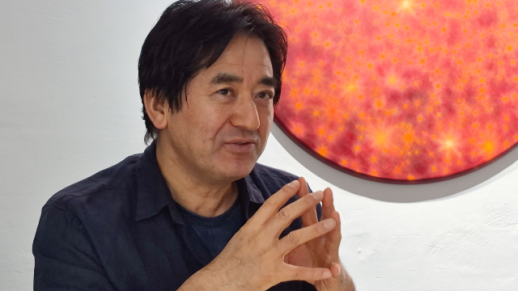 Civilization designer urges transition to meaning as AI automates traditional productivity SEOUL, April 28 (AJP) -Captain Kang Sang-bo, a South Korean civilization designer and author of The Master Key, argues that the rapid integration of artificial intelligence into production and social structures requires a radical reassessment of human value. Speaking in a recent interview, Kang stated that the core transition of the AI era is not a matter of increasing technical skill but moving from "methods" to "meaning." He maintained that this shift is essential for constructing a new form of civilization that prioritizes human purpose over mechanical efficiency. The urgency of this transition stems from the potential for human displacement within purely technical systems. Kang pointed out that when AI can perform nearly all tasks, individuals who fail to set their own direction risk becoming mere functional components of an automated structure. This shift matters because it moves the focus of human progress from the logistics of "how" to the existential "why," requiring a fundamental redesign of social, financial, and educational institutions in South Korea and beyond. Kang has spent years researching the "Meaning Civilization," a concept that attempts to bridge philosophical inquiry with self-growth and the content industry. In his view, the technical civilizations of the past focused on what to build, whereas the AI era forces a shift toward whether something should be built at all. He suggested that technology must operate in a way that brings humans closer to their own essence, moving from a technology-centered loop to a "human-technology-human" cycle. Within this framework, the captain identified four specific domains that define human uniqueness: meaning, vivid dreams, responsibility, and LOVE. He posited that AI and robotics ultimately exist to help humans focus more deeply on these four values, which he believes will become the primary criteria for future judgment. Regarding the definition of success, Kang proposed a formula he calls "BTS x LOVE." In this context, BTS represents Body, Talent, and Spirit, while LOVE signifies human connection and empathy. He argued that because speed and efficiency are being rapidly commoditized by technology, success in the future will depend on creating deeper connections and generating meaning within those bonds rather than simply performing tasks faster. This transition is particularly relevant for the "1030 Young Stars," a demographic of individuals in their teens to thirties whom Kang describes as civilization designers. He noted that this generation cannot expect to gain an advantage by competing with AI on efficiency, which was the logic used by previous generations focused on capital and growth. Instead, he emphasized that their core role must be to create new directions for society. The transition also requires institutional shifts, specifically in the realms of "meaning finance" and "meaning education." Kang suggested that as economic systems begin to function with less direct human labor, finance must move away from a production-centric model and toward investing in human values. He criticized South Korea's current education system for remaining stuck in a "pre-AI" mode of knowledge acquisition. He argued that schools should delegate information gathering to AI and allow students to focus on exploring their own direction, transforming the role of teachers from providers of answers to those who ask the right questions. Kang warned that in a society obsessed with results and capital, the concept of meaning is at risk of being marginalized. He observed that if the public prioritizes only the final outcome, individuals may lose the capacity to judge the purpose behind their actions. He maintained that the 1030 Young Stars currently stand at a crossroads, deciding whether to be the architects of a new civilization or remain passive consumers within an automated system. The interview with Captain Kang Sang-bo was conducted as part of a series examining the long-term social effects of automation in South Korea. 2026-04-28 10:33:02
 -
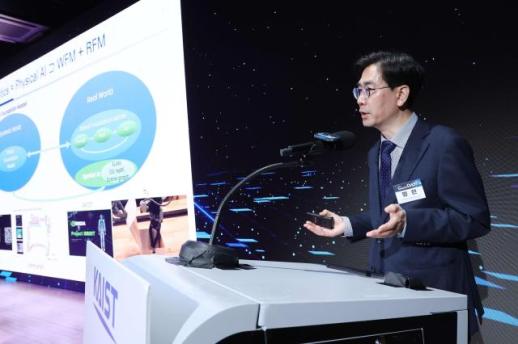 KAIST honors Professor Myung Hyun with Research Grand Prize for spatial AI robotics SEOUL, April 28 (AJP) - The Korea Advanced Institute of Science and Technology held its annual Research Day on Tuesday at its main campus in Daejeon to recognize faculty achievements and share new technical data. The event, which began in 2016, serves as the university's primary forum for highlighting academic breakthroughs and fostering a collaborative research environment, the prominent research institute said April 28. Professor Myung Hyun from the School of Electrical Engineering received the Research Grand Prize, the university's highest research honor. Myung was selected for his work on spatial artificial intelligence (AI) and autonomous robot navigation. Since joining KAIST in 2008, Myung has applied his navigation research to wheeled robots, drones, and walking platforms. His technology has won multiple international competitions and is currently being commercialized through a startup venture. "By focusing on spatial AI and autonomous movement for 17 years, I have been able to contribute to the domestic independence of mobile robot technology," Myung said. He noted that he was grateful for the chance to train the next generation of researchers. To support a more focused research environment, the university expanded its award pool this year. The number of Research Award recipients increased from two to four, and the Special Research Award was expanded to include two winners. Several other faculty members were recognized for their academic contributions. Professor Han Jae-hung, Professor Cho Byung-kwan, Professor Joseph Schiering, and Professor Lee Hyun-joo received the Research Award, while Professor Kim Sun-chang and Professor Jo Woo-young were selected for the Special Research Award. The university also presented the Innovation Award to Professor Kim Jae-kyung and the Convergence Research Award to the team of Professor Cho Him-chan and Professor Lee Jeong-yong. Other honors included the International Joint Research Award for Professor Song Ji-joon and the QAIST Creative Challenge Research Award for Professor Kim Bong-jin. The event showcased 10 representative research achievements from 2025 and 14 future technologies identified for their socioeconomic potential. These projects are aligned with national strategic technology goals in South Korea. President Lee Kwang-hyung said Research Day is an opportunity to share innovative ideas and celebrate the work of faculty. Lee stated the institution plans to continue its efforts to lead global science and technology through its research. 2026-04-28 09:51:53
 -
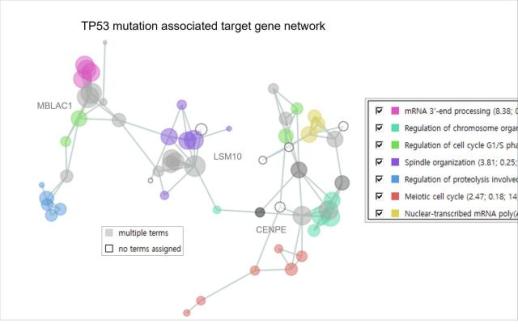 Sookmyung Women's University team develops gene data modeling tool SEOUL, April 27 (AJP) - A research team led by Professor Sukjoon Yoon at Sookmyung Women's University in South Korea has created an ontology-based framework to quantitatively interpret gene-based biological data, the prominent university said Monday. Biological data has historically been difficult for artificial intelligence to interpret because it lacks the clear contextual relationships found in standard text. To address this, the team used biological ontologies—systems that structure concepts for computer processing—to help AI analyze genetic information more effectively. The researchers developed an algorithm called NetCrafter that measures how much functional or disease-related context-specific genes share. It converts these relationships into numerical networks, allowing for a more precise analysis of complex interactions within multi-omics data. The team is currently working with CBiS Inc., a startup founded at the university, to build AI models that can automate the study of drug targets, biomarkers, and biological mechanisms. The NetCrafter technology is already available globally through the Q-omics platform, and the university is currently pursuing a patent for the system. "This research will contribute to the realization of biological intelligence that understands data more deeply, moving beyond large language models," Professor Yoon said. Professor Hohsuk Noh at Sookmyung Women's University's Department of Statistics and Eunah Chung, a researcher at the Research Institute of Women's Health, contributed to the study, alongside Dr. Jaemoon Shin from the Life Science Data Center in Japan. The findings appeared in the journal Briefings in Bioinformatics. (Reference Information) Journal/Source: Briefings in Bioinformatics (IF 7.7, JCR top 2.78 percent) Title: NetCrafter: ontology-derived gene network modeling and functional interpretation Link/DOI: https://doi.org/10.1093/bib/bbaf631.024 2026-04-27 17:44:30
 -
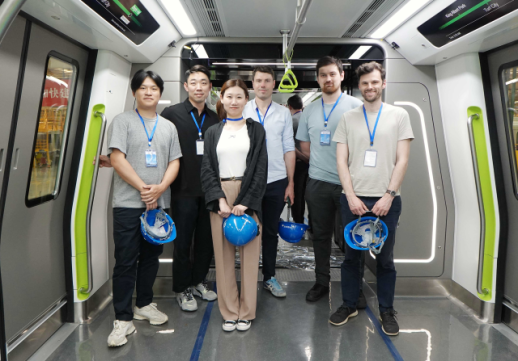 Kookmin University partners with PriestmanGoode for urban mobility design project SEOUL, April 27 (AJP) - The Department of Automotive and Transportation Design at Kookmin University (KMU) is launching a joint industry-academic project with PriestmanGoode (PG), a British design consultancy, to develop mobility solutions for urban environments. The initiative aims to address traffic congestion and urban sprawl in South Korea's capital through design-led research, Kookmin University said Monday. The year-long project focuses on the Seoul 2050 Grand Plan, examining how user-centered mobility ecosystems can alleviate the logistical pressures of a growing megacity. Students and researchers will analyze shifts in transportation environments to propose new infrastructure and devices centered on public transit and shared mobility services. While the primary research focuses on the specific urban layout of Seoul, the university plans to develop these findings into flexible models that can be adapted for other global cities such as London, Shanghai, and New York. The partnership is designed to provide students with practical experience in tackling global urban challenges while enhancing the international competitiveness of the department. Upon completion of the project, high-performing students will be eligible for design internships at the PG headquarters in London. This exchange is intended to provide South Korean students with international professional experience and expand the university's global network for industrial collaboration. "We are very pleased to start this collaborative project with Kookmin University," said Lee Harding, Associate Director at PG. "We look forward to working with students on future-oriented mobility design projects that respond to the major challenges faced by expanding cities. We are paying close attention to how students research Seoul's urban spaces and implement that into user-experience-centered designs." Professor Roe Jae-seung of the KMU Department of Automotive and Transportation Design noted that the collaboration will provide a platform for students to propose practical solutions based on a deep understanding of metropolitan traffic environments. "This project will serve as an opportunity to propose new mobility designs based on a practical understanding of the transportation environment in Seoul and other large cities," Professor Roe said. "Through collaboration with a global company, we expect to enhance students' practical capabilities and contribute to strengthening the international competitiveness of the department." 2026-04-27 17:35:52
 -
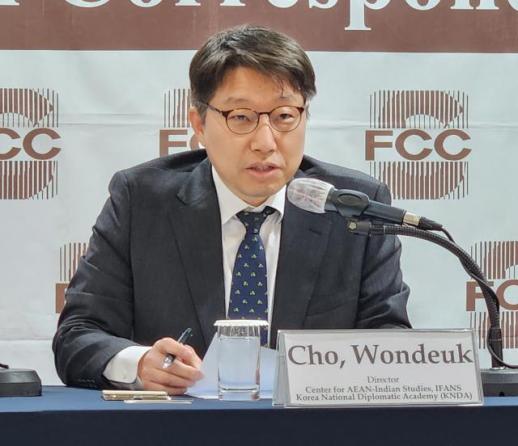 ASEAN specialist defines Presidnt Lee's South Asian tour as move for strategic survival SEOUL, April 27 (AJP) - South Korea has locked in energy and industrial partnerships in India and Viet Nam this month to guard against a global "era of un-order." The agreements signed during the mid-April visits aim to double trade with India to 50 billion dollars and reach 150 billion dollars with Viet Nam by 2030 to counter intensifying supply chain volatility. Cho Won-deuk, director of the Center for ASEAN-Indian Studies at the Korea National Diplomatic Academy, told reporters during a briefing at the Seoul Foreign Correspondents Club on Monday that the tour was a "choice of survival" as major power competition spills over into energy and minerals. The director noted that the Lee Jae Myung administration is pursuing "pragmatic diplomacy centered on national interest" to protect domestic industry from "trade fragmentation" and "energy insecurity." In New Delhi, the focus centered on institutionalizing a roadmap to secure a dominant position in the regional industrial landscape. South Korea and India are committed to a total overhaul of the Comprehensive Economic Partnership Agreement to modernize a framework that has remained largely stagnant for fifteen years. The scholar noted that moves into shipbuilding and defense are "no longer the choice of economy, but the choice of survival." As part of this effort, HD Hyundai signed agreements with Cochin Shipyard to support India's goal of becoming a top-five global shipbuilder by 2047. The mission in Hanoi focused on securing access to energy and raw materials, where Lee Jae Myung declared that the "future of Viet Nam is the future of Korea." The visit resulted in two memorandums of understanding for the construction of new nuclear power plants, which the director characterized as a "big opportunity for Korean companies" seeking to expand in Southeast Asia. South Korea also established a partnership to exploit the rare earth reserves of Viet Nam, which rank sixth in the world with approximately 3.5 million tons. The scholar described the mineral collaboration as "very meaningful" for securing an "alternative supply" of materials required for semiconductors and batteries. South Korea remains heavily dependent on external sources for energy and minerals, according to data from the Korea International Trade Association. The director concluded that in an environment where no country can survive in isolation, it is the "most rational choice for middle powers to bind themselves together." 2026-04-27 17:30:14