
Journalist

Park Sae-jin
swatchsjp@ajunews.com
-
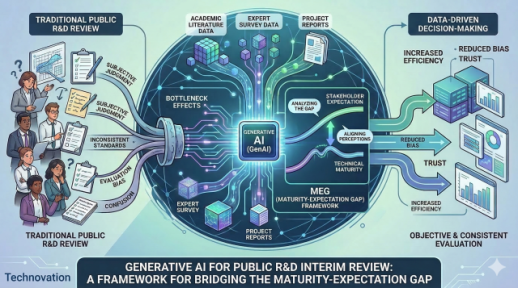 Kookmin University professor develops AI framework for public R&D evaluation SEOUL, March 18 (AJP) - A research team led by Professor Kim Do-hyung of the KMU International Business School (KIBS) at Kookmin University (KMU) has developed a generative artificial intelligence framework to enhance decision-making in public research and development (R&D) evaluations, the university said Tuesday. The study introduces a systematic approach to bridging the gap between technical capabilities and stakeholder expectations. The research paper, titled "Bridging the maturity-expectation gap: Generative AI in strategic decision-making for public R&D interim review," was published in the international journal Technovation. It addresses the limitations of current public R&D interim reviews, which often depend on the subjective judgment of experts. These traditional methods frequently face criticism for lacking consistency and being prone to evaluation bias. To resolve these issues, the team proposed the Maturity-Expectation Gap (MEG) framework. This model analyzes the difference between the actual maturity of generative AI technology and the performance levels expected by stakeholders. By combining survey data from experts with machine learning-based literature analysis, the researchers quantified how perceptions of AI vary across different groups. The findings revealed that significant discrepancies between expectations and technical maturity can reduce trust and the willingness to adopt AI tools. The study also categorized evaluation areas where generative AI could be easily integrated, as well as those that require additional preparation. This provides a clear roadmap for public sectors to build data-driven decision-making systems. "Generative AI has the potential to increase efficiency and consistency in the public R&D evaluation process," said Professor Kim Do-hyung. "However, if the gap between expectations and actual technical maturity is not managed, it can lead to distrust and resistance during implementation. The MEG framework proposed in this study can be used to diagnose these gaps and establish phased introduction strategies." The project was a collaboration between lead author Professor Kim Do-hyung, co-author Professor Kang Song-hee of the Tech University of Korea, and corresponding author Professor Hong Ah-reum of Kyung Hee University. The researchers expect the framework to contribute to more consistent and objective R&D management in the future. (Reference Information) Journal/Source: Technovation Title: Bridging the maturity-expectation gap: Generative AI in strategic decision-making for public R&D interim review Link/DOI: https://doi.org/10.1016/j.technovation.2024.103110 2026-03-18 08:43:19
 -
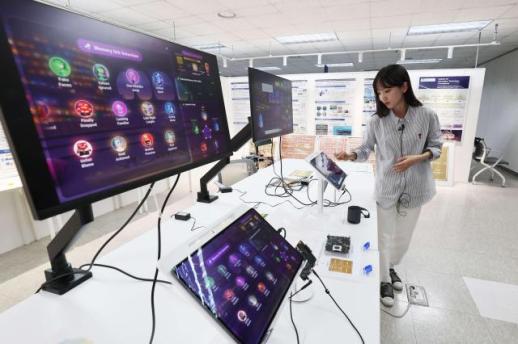 KAIST researchers develop world first personalized AI semiconductor SoulMate SEOUL, March 17 (AJP) - Researchers in South Korea have developed a specialized artificial intelligence chip capable of learning a user’s specific speaking style, preferences, and emotions in real time. The Korea Advanced Institute of Science and Technology (KAIST) announced on March 17 that a team led by Professor Yoo Hoi-jun at the Graduate School of AI Semiconductors has created SoulMate, an ultra-personalized Large Language Model (LLM) accelerator. While popular AI services like ChatGPT can answer general questions, they often lack awareness of a specific user’s daily habits or past conversation contexts. SoulMate overcomes these limitations by functioning as a digital companion that evolves through direct interaction. The system utilizes on-device AI technology, meaning all data is processed locally on the hardware rather than being sent to external cloud servers. To achieve this, the research team integrated Retrieval-Augmented Generation (RAG) to recall past conversations and Low-Rank Adaptation (LoRA) to reflect user feedback instantly. These technologies allow the chip to respond and learn simultaneously in just 0.2 seconds. This speed ensures that the interaction feels natural and fluid for the user, as delays longer than 400 milliseconds typically disrupt the flow of human-like conversation. The semiconductor is designed for extreme energy efficiency, consuming only 9.8 milliwatts of power. This is approximately 1/500th of the power typically consumed by a standard smartphone processor. This low power requirement enables mobile devices to run complex AI learning and inference tasks for 24 hours a day without significantly draining the battery. Privacy is a central feature of the new design. Because all personal data remains on the device, the risk of sensitive information leaking from a server is eliminated. The researchers expect this technology to be integrated into future smartphones, wearables, and personal AI devices to provide secure, tailored services. "This research establishes the technical foundation for AI to become a true companion by mimicking the way humans build friendships," said Professor Yoo Hoi-jun. "Future AI will move beyond being a mere tool to become a "best friend" that understands the user best while perfectly protecting their privacy." The study, featuring lead author and doctoral researcher Hong Seong-yeon, was recognized as a Highlight Paper at the International Solid-State Circuits Conference (ISSCC) held in San Francisco last month. The research team successfully demonstrated the chip at the conference, showing the AI’s speaking style changing in real time based on user reactions. SoulMate is expected to be commercialized around 2027 through the faculty-led startup OnNeuro AI. (Reference Information) Journal/Source: IEEE Xplore / 2024 IEEE International Solid-State Circuits Conference (ISSCC) Title: SoulMate: A 9.8mW Mobile Intelligence System-on-Chip with Mixed-Rank Architecture for On-Device LLM Personalization Link/DOI: https://ieeexplore.ieee.org/document/11409048 2026-03-17 13:57:22
 -
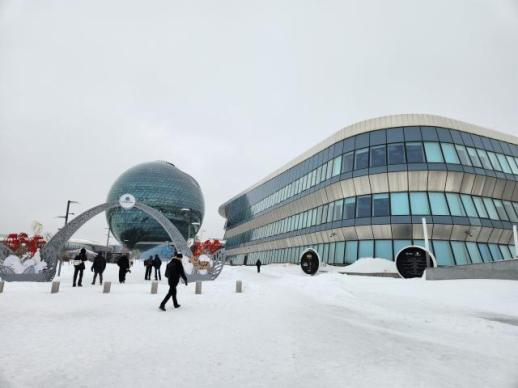 Kazakhstan's innovation cluster targets Seoul developers to build Central Eurasian technology corridor ASTANA, March 17 (AJP) - Kazakhstan's international innovation cluster, Astana Hub, is actively inviting South Korean developers and startups to help construct a high-technology corridor across Central Eurasia. Operating out of the capital, the state-backed facility offers an absolute zero-tax regime to foreign entities willing to relocate. Director of the Office of International Relations and Investments Daniyar Zhumagulov extended a direct invitation to Seoul's technology sector during a March 13 interview at the center. "South Korean startups should know they can soft land here with their ideas, opening their branches here, and in turn, we can propose to our startups to try to investigate the South Korean market with their solutions," he stated. The facility currently hosts more than 2,000 participating companies and supports a workforce exceeding 30,000 employees. Approximately a quarter of these enterprises were founded by foreign nationals, drawing talents from Azerbaijan, Mongolia, and Eastern Europe. The ecosystem has already proven capable of scaling global enterprises, recently producing its first unicorn startup. In the venture capital industry, a unicorn designates a privately held startup valued at over 1 billion dollars, a rare milestone achieved by the artificial intelligence video generation platform Higgsfield AI late last year. History and operation of the hub Astana Hub was officially launched in November 2018 as a cornerstone of the Digital Kazakhstan state program. According to both the director's presentation and a recent report by The Korea Herald, the center was established using the futuristic pavilions left over from the 2017 international energy exposition, transforming a former event space into a permanent technological nexus. While created by the government and benefiting from state financial backing, it operates with the business-first mindset of a private enterprise. Zhumagulov explained this unique structure by noting their approach is deliberately distinct from traditional bureaucracies. "You see, we are a quasi-state organization because we were created with the support of the government first, but we work with the business and IT community, and we are very flexible," the director said. By eliminating corporate, individual, and value-added taxes until 2029, the facility has attracted significant foreign participation. "We are serving as a bridge every time between big companies and small startups," he added. Shifting away from an extractive economy Historically reliant on its vast mineral and hydrocarbon wealth, the nation is executing a deliberate shift toward a digital economy. This macroeconomic realignment requires legacy sectors to modernize rather than shut down entirely. A national mandate currently forces subsoil operators to allocate 1 percent of their annual revenue to research and development. The hub acts as a central operator connecting these massive mining conglomerates with domestic startups to integrate automation and predictive models. For example, developers are building digital twins, which are highly detailed virtual replicas of physical mines or oil rigs. These digital models allow engineers to run safety and efficiency simulations before deploying expensive equipment in the real world. Backing this nationwide transition is the comprehensive Law on Artificial Intelligence, enacted in January 2026, establishing a strict risk-based classification system for machine learning deployments. Geopolitical alignment with Seoul This legislative framework aligns closely with the technological trajectory currently being charted in South Korea. The administration of President Lee Jae Myung has prioritized the integration of machine learning across all demographics. His government champions an initiative designed to make artificial intelligence accessible to both the youth and the elderly. Both nations recognize that advanced computing infrastructure requires centralized backing rather than relying entirely on private venture capital. Graphics processing units, commonly known as GPUs, are specialized computer chips required to process the massive datasets necessary for training artificial intelligence. Because they are incredibly complex and expensive to manufacture, they have become a major financial bottleneck for independent developers. "I think that in terms of AI, governments must take the lead because, as you have seen, GPU capacity could not be built only with private money," Zhumagulov noted. To bypass this hurdle, the Kazakhstani state deployed a two-exaflop supercomputer cluster near the capital, distributing its processing power evenly across governmental services, scientific research, and the startup community. Cultivating a global workforce Comparing their operational style to neighboring technology parks, the director emphasized their tactical efficiency. "We are the Marine Corps of the IT and AI sector," he said. "We are very agile. Let us do this like professionals." Cultivating a specialized workforce remains the central pillar of the institution's long-term strategy to sustain this operational speed. The administration operates educational facilities, including the TUMO school, which provides tuition-free programming instruction specifically for children aged 12 to 18. For adults, the Tomorrow School model offers peer-to-peer coding education, requiring only a two-year physical relocation commitment to the capital. Zhumagulov explicitly invited international participation in these educational and incubation programs, noting, "We have created it for all the people in the world." The institution aims to utilize these diverse talent pipelines to reach 5 billion dollars in annual technology exports by 2030. 2026-03-17 13:44:46
 -
 PHOTOS: Living heritage and neon dreams - The parallel shopping worlds of Astana ASTANA, March 15 (AJP) -A thirty-minute taxi ride from the hotel leads to the Artyom Market in the older district of Astana. It is a personal routine to visit the traditional markets of any new city to see how people actually live without the filter of tourist attractions. The ground floor of this multi-story building is a dense world of its own, smelling of fresh dough, raw honey, and cold-stored meat. It feels like a space that has aged alongside the city, retaining a certain grit that the newer districts lack. Outside, the temperature hovered at minus 15 degrees with snow falling steadily outside the Soviet-era style building on March 12. Yet inside the market stalls, the sight of vibrant watermelons and peaches offered a startling contrast to the white winter. These colors were especially bright as grandmothers and mothers hurried between vendors to prepare for the evening meals of the Ramadan season. In this part of the world, the holy month is observed with a relaxed cultural grace where life in the markets continues with a steady, quiet energy. The dairy section stood out as a highlight, featuring heaps of fresh butter and artisanal cheeses that are rarely seen in such abundance elsewhere. Sellers often leaned across their counters with a quick smile or a nod, offering a sense of warmth that made the foreign setting feel unexpectedly familiar. Even without the ability to speak the local language, the simple exchange of goods felt like a genuine connection to the heart of the community. It is the kind of place where the history of the city is told through the hands of the people who have lived there for decades. Crossing the river to the left bank on March 15 reveals the other face of the capital at the Mega Silk Way mall. This massive glass complex is currently the largest in the country and feels more like a modern indoor city than a traditional shopping center. On a Sunday evening, the hallways were packed with thousands of residents, shifting the demographic from the grandmothers of Artyom to young families and couples. The air here is filled with the sounds of children playing and the hum of a society moving at a much faster pace. At the Galmart supermarket inside the mall, the transition to a more global lifestyle becomes even more apparent. While the prices are roughly 10 to 15 percent higher than the old town markets, the convenience of ready-made meals like plov and manti draws in a steady crowd. The bright lighting and sleek displays of imported chocolates and deli meats reflect the aspirations of a growing middle class. It is a space where the ritual of shopping has evolved from a necessity into a form of modern entertainment. 2026-03-16 02:51:54
 -
 Astana braves the frost for a new Kazakhstan ASTANA, March 15 (AJP) - A leaden sky hung low over Astana on Sunday morning, stubbornly refusing to deliver the slight thaw promised by the local forecast. Instead, the mercury hovered at a biting -4°C, and the city’s wide avenues were flanked by mounds of snow stained with soot and dust, while footpaths were glazed in a treacherous layer of ice. Despite the chill, the capital’s residents appeared early. Clad in heavy winter coats, citizens moved with a hurried, quick-stepping gait, determined to reach the polling stations without lingering in the biting wind. The brisk movements reflected a city eager to participate in a defining moment for the nation. Kazakhstan, the giant of Central Asia with a population of approximately 20.4 million, stands as the region’s largest economy. By the end of 2026, its nominal GDP is projected to exceed $320 billion, firmly placing it among the world’s top 50 economies. While the nation has historically relied on "old industries" like oil, gas, and minerals, it is now undergoing a massive structural shift.Under a national goal to double its GDP by 2029, Kazakhstan is aggressively pivoting toward "new industries," including high-value manufacturing, artificial intelligence (AI), and digital finance. This national ambition has transitioned into concrete action this year. On January 18, Kazakhstan enacted a pioneering "AI Law," one of the first of its kind globally. President Kassym-Jomart Tokayev has declared 2026 as the "Year of Digitization and AI," concentrating state resources on technological innovation. Yet, these digital milestones are not merely technical adjustments; they represent the vanguard of a broader new industrial pivot intended to redefine the nation's competitive edge. The Kazakh leadership recognizes that a high-tech economy cannot thrive on an analog political foundation. Consequently, this referendum is targeted at a comprehensive overhaul of Kazakhstan's politics and society, acting as the critical "software synchronization" required to ensure the nation’s institutional architecture is as agile and transparent as the digital systems it is now deploying. Inside the grand, glass-fronted Al-Farabi Palace of Schoolchildren, the atmosphere shifted instantly from the harsh exterior to a scene of quiet, focused civic purpose. Citizens filtered into Polling Station No. 50 to cast a ballot that represents the most significant tectonic shift in the nation’s governance in decades. The referendum is designed to transition the country from a "super-presidential" system toward a more balanced "Presidential-Parliamentary" model, introducing a unicameral parliament known as the Kurultai and restoring the office of the Vice Presidency. Among the early arrivals was Roza, 61, whose bright, observant eyes offered a sharp contrast to the somber weather outside. She didn't see the freezing morning as a deterrent, but rather as a threshold. "Naturally, I believe that today, this new project is necessary for us," she said. "Because times are changing, people are changing, the era itself is changing. Therefore, it is necessary. I think it is only for the better, for the good". Roza’s hopes were grounded in a sense of urgency. "I don't have much time, I'm 61 years old," she remarked, noting that she paid particular attention to the changes that affect her personally—namely medicine, education, and the new direct access to the Constitutional Court. Despite the ticking clock, she remained optimistic: "I think everything will be very good in the near future". She confirmed she was fully informed before casting her vote. The mood took on a more rhythmic, festive energy in the residential suburb of Koshy. Inside Secondary School No. 3, the cold was a distant memory as the percussive strumming of traditional bands echoed through the hallways. The sound of the dombra turned what could have been a dry bureaucratic exercise into something closer to a cultural homecoming. Near the entrance, residents had set up unassuming, improvised stalls to greet the morning crowds. Golden jars of honey and royal jelly sat alongside piles of local confectioneries, turning the polling station into a modest community hub where neighbors paused to chat before heading to the booths. Kaisar Seifullin, the 39-year-old chairman of the precinct referendum commission at the school, watched the flow of families with an approving eye. "Most people are coming with a positive reaction, as you can see for yourself," Seifullin said. "Many Kazakh parents want to show and illustrate to their children how the polling station works". One of those parents was Almas Jexenbekov, 38, who arrived navigating the icy schoolyard patches with his pre-school son. For Jexenbekov, who works in mass media, the referendum is a necessary "upgrade" to the country’s fundamental software. "As for me, the new Constitution is like the upgrade of the Supreme Law of Kazakhstan that will affect the other laws because it is the priority," he explained. He noted that his professional background meant he was well-informed, having translated the discussions surrounding the changes. This sense of high-tech civic duty was echoed by Maksat Muratbekuly Mukhamedjanov, a 35-year-old education professional. To him, the day marked Kazakhstan’s transition from the raw, survival-focused independence of its early years to the maturity of a settled nation. "The first Constitution emphasized independence and our formation as a state. The new one is a big step into the future—not just as the Republic of Kazakhstan, but as a nation," Mukhamedjanov said. He was particularly struck by the inclusion of "digital rights" in the text, calling the legal evolution essential "immunity" for a nation in the age of digitalization. He praised the transformation of the parliament into a unicameral body, arguing that it "emphasizes public democracy" and aligns with models in developed nations. Like his fellow voters, he reported being "100 percent informed" through digital platforms and television. 2026-03-15 17:17:34
 -
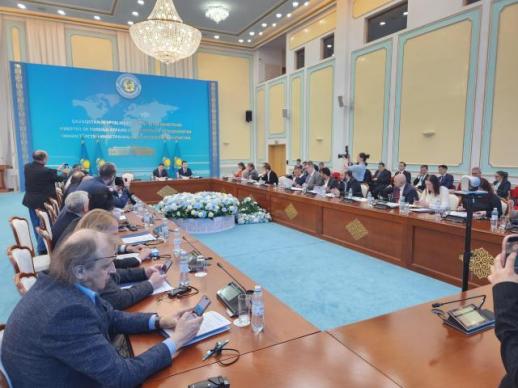 Kazakhstan prepares for national constitutional referendum ASTANA, March 14 (AJP) - Kazakhstan stands on the threshold of a truly historic stage in its development as citizens prepare to vote in a national referendum on a new draft of the Constitution. Deputy Foreign Minister Arman Issetov stated that the new draft serves as a foundation for the long-term stability of the state and a timely response to global challenges. The reform process involved a Constitutional Commission of 130 members that reviewed more than 12,000 proposals submitted by citizens through state digital platforms. Issetov emphasized that the amendments affected 84 percent of the text, creating a document that is new in terms of its substance and meaning. The strategic goal of the reform is to strengthen statehood and independence and to improve the well-being of citizens. Under the concept of a listening state, the new Constitution establishes that the state exists for the individual, not the individual for the state. New legal protections, including the Miranda rule and the guaranteed right to privacy and personal data protection, have been elevated to the constitutional level. Issetov noted that the section devoted to the protection of human rights and freedoms has become the most extensive, comprising almost one-third of the Constitution. Economic growth remains a pillar of the national strategy, with the GDP reaching 306 billion US dollars last year. This performance allowed the country to enter the list of the 50 largest economies in the world this year. To accelerate growth capabilities, the development of science, education, culture and innovation is defined as a constitutional principle of state activity for the first time. This ambition is reinforced by the transition toward comprehensive digitalization and the development of artificial intelligence, supported by specialized legislation enacted in January. Issetov stated that these measures will create a stable and predictable legal and investment environment in which citizens are protected. The international community has deployed 359 international observers and 206 foreign journalists to monitor the proceedings. Beyond the domestic borders, 71 election commissions have been established at Kazakhstan's diplomatic missions in 54 countries to facilitate the participation of citizens abroad. The deputy foreign minister expressed high confidence that the new Basic Law will become the principal document of a Just, Strong, Safe and Clean Kazakhstan. 2026-03-15 03:51:50
 -
 South Korea moves to build its own AI backbone SEOUL, March 11 (AJP) - South Korea is moving to build its own AI backbone — an "AI Highway" of massive data centers, specialized semiconductors and autonomous software — as it seeks to avoid falling behind the United States and China in the global artificial intelligence race. Government officials and industry executives outlined the strategy at a briefing at the Seoul Foreign Correspondents' Club on Wednesday, describing an effort to link large-scale computing infrastructure with next-generation chip development and industrial AI systems. The initiative, led by the administration of President Lee Jae Myung, combines state investment in computing capacity with private-sector advances in semiconductor design and AI applications. The government has allocated 10.1 trillion won ($6.8 billion) in the 2026 budget to strengthen the country's AI infrastructure. A core goal is securing 50,000 high-performance computing units — specialized processors needed to run advanced AI models. Ha Jung-woo, presidential secretary for AI and future strategy, framed the push as a matter of national survival. "Advanced technology like AI is both economic power and the force that determines national security," Ha said. While the United States and China dominate global AI infrastructure, Seoul is attempting to build what officials describe as a "Silicon Shield" — a network of large domestic data centers powered by carbon-free energy. One flagship hub is planned in Haenam, a coastal county selected for its potential to host large-scale solar and nuclear power facilities needed to run energy-intensive AI computing. The government is also moving to integrate AI more rapidly into military operations. Ha said the defense system — traditionally structured and procedural — is being redesigned for faster adoption of AI technologies. A new deputy minister-level position has been created within the Ministry of National Defense to oversee AI strategy, while the Defense Acquisition Program Administration is preparing to incorporate AI tools into procurement and operational planning. "South Korea aims to become one of the world's top four defense powers, and AI will be at the center of that," Ha said. Shift toward specialized silicon At the hardware level, the AI boom is pushing the industry toward specialized chips designed specifically for AI workloads. Graphics processing units, or GPUs, remain the dominant technology for training large AI models, but their heavy electricity demand has become a growing constraint for data centers. South Korean startup FuriosaAI is targeting this bottleneck with its second-generation neural processing unit, RNGD — pronounced "Renegade" — which has recently entered mass production. Unlike GPUs, NPUs are designed specifically for AI inference, the stage where trained models process new data and generate responses. Kang Jee-hoon, chief research officer at FuriosaAI, said the industry is entering what he described as a "power crisis," where computing capacity is increasingly limited by electricity availability. "The challenge for the industry is to enable more work to be processed with the same power consumption," Kang said. The RNGD chip uses a proprietary Tensor Contraction Processor architecture that manages on-chip memory more efficiently than conventional chip layouts. According to the company, its PCIe server card operates at around 180 watts while delivering roughly 2.8 times higher throughput than comparable hardware within a standard 15-kilowatt server rack. "Our goal is to generate more tokens with the same power," Kang said. "Just as computing once shifted from CPUs to GPUs, we want developers to easily adopt our Renegade and next-generation products." At the software level, the next frontier is "agentic AI" — systems that can independently plan and execute tasks rather than simply respond to user prompts. LG AI Research is advancing this trend through its EXAONE model. Stanly Jung-kyu Choi, vice president and head of the institute's agentic AI research group, described the system as an "expert AI" designed for specialized industrial applications. In manufacturing, the system is already being used to optimize naphtha scheduling — the complex logistical planning required for petrochemical feedstocks. In life sciences, the EXAONE Discovery platform has reduced the time required to identify new material compounds from about 22 months to a single day by autonomously analyzing research papers and molecular structures. Because of the high autonomy involved, LG has established a dedicated AI ethics unit to monitor potential risks associated with the technology. "We are moving beyond general-purpose models to expert systems that maximize productivity in specialized industries," Choi said. The institute is also developing K-EXAONE, a national flagship model tailored to the Korean language and local context, which is expected to be deployed across public services by late 2026. As artificial intelligence evolves into a system of specialized hardware and increasingly autonomous software, South Korea is attempting to build a fully integrated ecosystem. Officials say the success of that strategy will depend on coordination between government policy, semiconductor innovation and advanced research — an effort aimed at securing the country's place in the rapidly shifting global AI supply chain. 2026-03-11 17:37:02
 -
 Seoul establishes committee to honor resistance against martial law decree SEOUL, March 10 (AJP) - The government finalized plans on Tuesday to establish a presidential committee dedicated to honoring the citizens who defended the constitutional order during the emergency martial law of December 3, 2024. During a cabinet meeting on March 10, 2026, the administration approved the Regulations on the Establishment and Operation of the Light Committee. This new body will oversee the issuance of Light Certificates to individuals recognized for their contributions to preserving democracy during the six-hour crisis. The ministry will also evaluate the potential designation of a national commemorative day to mark the civilian-led movement. Applications for the certificates will be accepted through online portals, registered mail, and in-person submissions. Interior Minister Yun Ho-jung stated that the initiative aims to provide formal state recognition to those who resisted the unconstitutional decree. "With the establishment of the Light Committee, we can now officially honor and treat with respect the citizens who resisted the December 3 martial law," the department director said. He further noted that through the committee, the government will achieve national unity and expand the values of K-democracy. The historical context for the committee's formation dates back to a late-night television broadcast on December 3, 2024, when the former president declared martial law. He alleged that anti-state forces were paralyzing the government and cited a need to protect the nation from communist influence. Martial Law Command Proclamation No. 1 immediately followed, banning political gatherings and imposing military censorship over all press outlets. This move triggered a rapid mobilization of special forces to the National Assembly in an attempt to block legislative functions. Thousands of ordinary citizens responded by converging on the legislative grounds in Yeouido to form a human blockade against military transport vehicles. Protesters outside the gates faced off against armed troops, using non-violent resistance and physical presence to prevent the military from seizing control of the chamber. Inside the hall, 190 lawmakers bypassed security cordons to cast a unanimous vote demanding the immediate lifting of the emergency decree. By 4:30 a.m. on December 4, the former leader was forced to rescind the order, effectively ending the shortest period of martial law in the history of Seoul. The failure of the decree led to a series of legal and political collapses for the previous administration. An impeachment vote followed on December 14, 2024, which was later upheld by the Constitutional Court. This vacancy led to the June 2025 snap election won by Lee Jae Myung. On February 19, 2026, the judiciary sentenced the former head of state to life in prison for his role in the insurrection. The newly formed committee now seeks to institutionalize the memory of the civilian resistance as a cornerstone of the current democratic framework. 2026-03-10 13:57:13
 -
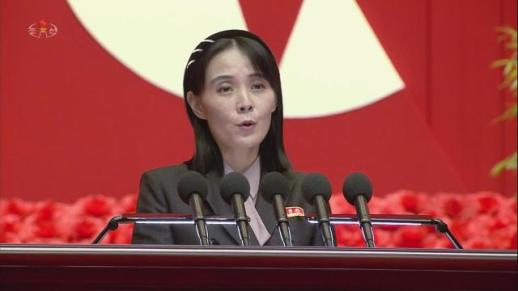 North Korea threatens 'super-offensive' response to US-South Korea military maneuvers SEOUL, March 10 (AJP) - Pyongyang’s second most powerful official, Kim Yo-jong, issued a stern warning on March 10, characterizing the ongoing joint military exercises between the United States and South Korea as a "provocative and aggressive war rehearsal." The statement, released via the state-run Korean Central News Agency, asserted that the maneuvers currently underway on the Korean peninsula are "intensively revealing once again their inveterate repugnancy toward the DPRK and habitual hostile policy toward it." The department director stated that the drill is "not a 'military game'" and warned that the "muscle-flexing of the hostile forces near the areas of our state's sovereignty and security may cause unimaginably terrible consequences." The joint military exercise, known as Freedom Shield, officially commenced on March 9 and is scheduled to run through March 19. According to military authorities in Seoul and Washington, the drill involves approximately 18,000 personnel, a figure consistent with previous years. This year’s iteration focuses on realistic threats derived from recent global conflicts, incorporating elements of information warfare and artificial intelligence technology. A primary objective is to evaluate and verify the conditions necessary for the transfer of wartime operational control to Seoul. While the personnel count remains stable, the scale of field training exercises has seen a marked reduction under the administration of President Lee Jae Myung. The current schedule includes 22 outdoor maneuvers, representing less than half of the 51 sessions conducted during the March 2025 exercises. Government officials in Seoul have indicated that this adjustment toward dispersing field training throughout the year is intended to create a stable diplomatic environment. This tactical shift coincides with reports that the U.S. President is scheduled to visit Beijing from March 31 to April 2. Despite the reduction in visible field maneuvers, the rhetoric from Pyongyang has shifted toward a more permanent stance of hostility. Kim Yo-jong dismissed the defensive nature of the drills, stating that the "clear confrontational nature of the high-intensity large-scale war drill staged by the most hostile entities in collusion at the doorstep of the DPRK never changes." She further emphasized that her state would "perfectly counter the strategic threats to the security of the state and the region through the bolstering of destructive power." This follows a broader doctrinal change where the supreme leader recently declared there is "no reason to speak with Washington." The supreme leader has also used recent public addresses to condemn the government of Lee Jae Myung for what he described as "double-sidedness." Kim Jong-un asserted that "it is undoubtedly a law and iron principle that the most powerful offensive capability constitutes the most reliable deterrent." He signaled that his state would no longer engage in what he deemed futile diplomatic overtures with Washington. This ideological pivot frames Seoul as a primary enemy state, a designation that the recent press statement reinforces. The latest communication warns that any violation of sovereignty will be met with an "extraordinarily overwhelming and preemptive super-offensive." The Freedom Shield exercises are proceeding as planned across the land, sea, and air domains of South Korea. 2026-03-10 10:32:42
 -
 Joint research team develops mRNA platform effective for aging and obesity SEOUL, March 10 (AJP) - A joint research team from the Korea Advanced Institute of Science and Technology (KAIST) and the Catholic University of Korea has developed a new mRNA platform designed to maintain high therapeutic efficacy in elderly and obese populations. The technology improves the production of therapeutic proteins by optimizing specific regulatory sequences within mRNA molecules, addressing a major limitation where current treatments lose effectiveness due to age or metabolic conditions. While mRNA vaccines gained global recognition during the COVID-19 pandemic, their performance can vary significantly depending on the biological environment of the recipient. In older individuals or those with obesity, high levels of oxidative stress often hinder the process by which cells translate genetic instructions into functional proteins. This reduced efficiency has remained a hurdle for the broad application of next-generation RNA therapeutics. To overcome this, the researchers focused on the 5' untranslated region (5' UTR) of the mRNA. This segment does not encode the protein itself but acts as a control center that dictates the volume and speed of protein synthesis. By analyzing vast amounts of biological big data, including tissue transcriptomes and individual cell expression patterns, the team identified specific 5' UTR sequences that remain resilient under cellular stress. The research utilized multiple advanced analytical techniques, such as RNA sequencing and ribosome profiling, to minimize bias across different species and cell types. The team discovered that their newly designed sequences are regulated by specific protein factors, including LARP1 and LARP4. These factors allow the mRNA to continue producing proteins effectively even when standard cellular pathways are compromised by aging or obesity. Preclinical trials using animal models confirmed that the optimized mRNA platform significantly improved both protein expression and immune responses. Unlike conventional mRNA sequences that showed decreased performance in aging and obesity models, the newly engineered sequences maintained high levels of activity. "This research establishes a design methodology that allows mRNA to produce proteins more effectively by leveraging large-scale biological datasets," said Professor Lee Young-suk of the KAIST Department of Bio and Brain Engineering. "It provides a foundation for ensuring that mRNA vaccines and treatments remain reliable for patient groups where drug efficacy is typically lower, such as the elderly or those with obesity." The study, led by Professor Lee Young-suk and Professor Nam Jae-hwan of the Catholic University of Korea, featured Yoon Su-bin and Cho Hyeong-gon as joint first authors. The findings were published online in the international journal Molecular Therapy on January 2. (Paper information) Journal: Molecular Therapy (impact factor: 12.0) Title: Designing 5' UTR sequences improves the capacity of mRNA therapeutics in preclinical models of aging and obesity DOI: https://doi.org/10.1016/j.ymthe.2025.12.060 2026-03-10 09:44:37