


Latest by
-
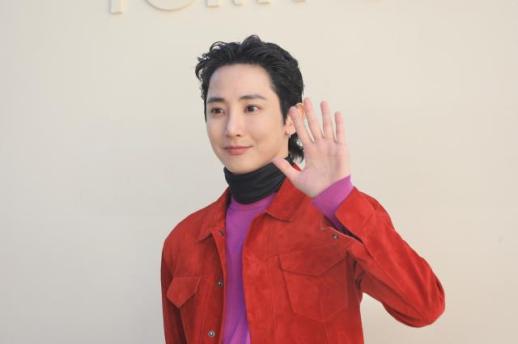 Lee Soo-hyuk at the Tom Ford Beauty Taormina Orange photo call SEOUL, June 24 (AJP) - Actor Lee Soo-hyuk poses at the Tom Ford Beauty Taormina Orange launch photo call. 2026-06-24 20:09:16
 -
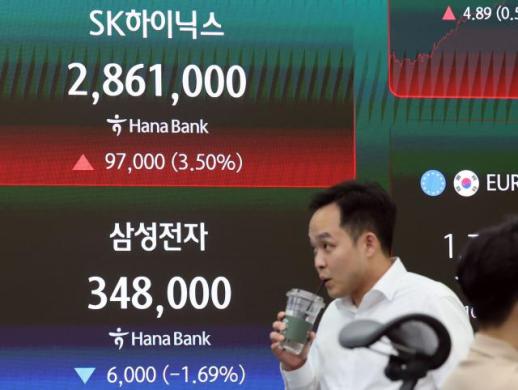 SK Hynix Plans Nasdaq ADR Listing, Aiming for Trading to Begin on July 10 SK Hynix is moving forward with plans to list its American Depositary Receipts (ADR) on the Nasdaq, targeting a launch date of July 10. On June 24, SK Hynix announced that it would disclose details regarding the ADR listing following a board resolution and plans to submit a securities registration statement to the Korea Exchange. The company also intends to file a registration statement with the U.S. Securities and Exchange Commission (SEC) in line with the local market opening. The ADR is set to debut on the Nasdaq on July 10. According to the provisional schedule outlined in the securities registration statement, the registration will take effect on July 6, initiating the formal public offering process alongside the submission of the investment prospectus. SK Hynix plans to begin the demand forecast for institutional investors on July 6, which will inform the final offering price set for July 10 (July 9 U.S. time). The company aims to finalize underwriting agreements on the same day. During this period, it will conduct a roadshow targeting global institutional investors across the U.S., Europe, and Asia. Once all preparations are complete, the ADR will officially list on the Nasdaq and commence trading on July 10 (U.S. time). The expected date for payment of the offering proceeds is July 14. However, the SEC's review process for the listing is still ongoing. The disclosed schedule is provisional and may change based on the approval timelines of regulatory bodies in both Korea and the U.S. SK Hynix noted that the effectiveness of the securities registration statement in Korea and the U.S. will indicate the completion of the SEC review. The confirmed ADR listing date will be the next business day after the issuance conditions are finalized. To facilitate this listing, SK Hynix plans to issue new shares amounting to a maximum of 17.79 million, representing approximately 2.5% of its total outstanding shares. Based on the previous day's closing price, this issuance could be valued at around 45.45 trillion won. However, the company clarified that the exact number of shares to be issued will depend on market conditions and the results of the demand forecast, and is not yet finalized. Additionally, SK Hynix intends to use the funds raised from this listing for construction and facility investments related to its first-phase semiconductor cluster in Yongin, as well as for the Cheongju P&T7 advanced packaging fab and machinery.* This article has been translated by AI. 2026-06-24 19:40:00
 -
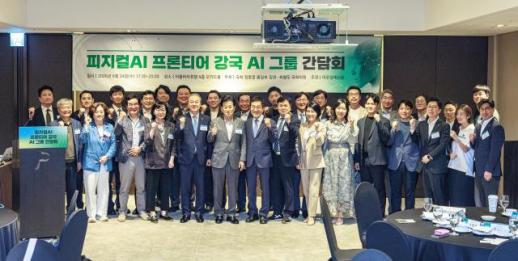 South Korea Aims to Become a Leader in Physical AI Experts from the South Korean government, academia, major conglomerates, and startups gathered to discuss the future of the artificial intelligence (AI) industry and collaboration strategies. The 'Physical AI Frontier' meeting, hosted by Minister of Unification Jeong Dong-young and Rep. Choi Hyung-do, took place on June 24 at The Plaza Hotel in Seoul. The event aimed to outline South Korea's future strategies regarding AI industry policies and legislative directions in the era of physical AI. Attendees included political figures and representatives from companies such as SK Telecom, LG, Doosan Robotics, and NC AI. In his opening remarks, Minister Jeong stated, "Over the past year, physical AI has become a key topic in global technological competition. The government and the National Assembly must support the efforts of large corporations and startups to establish South Korea as the world's leading hub for physical AI." He further noted that at the 2024 forum, the need for securing graphics processing units (GPUs) and focusing on physical AI, as well as the passage of a fundamental AI law, were discussed. "Since then, the speed of policy implementation has increased with GPU budget allocations and exemptions from preliminary feasibility studies. I hope the companies and startups gathered here can grow into global Korean tech giants, with Jeonju, Gimje, and Saemangeum as their base," he emphasized. Rep. Choi Hyung-do remarked, "Physical AI is a bipartisan national project, and I will work in the National Assembly to help achieve our goal of becoming one of the top three AI nations through physical AI." Kwak Young-gil, chairman of Aju News Corporation, stated, "AI must integrate both intelligence and physical capabilities. In the era of physical AI, South Korea can gain a competitive edge by combining semiconductors and energy resources. Saemangeum is an ideal location for building AI data centers and physical AI infrastructure due to its land availability, permitting conditions, and renewable energy potential." He also urged the government to facilitate research and development funding and infrastructure to allow companies to commercialize freely. Shin Hyung-sik, the chair of the transition committee for the Jeonbuk Special Self-Governing Province, expressed, "Physical AI could become a new cash cow for Jeonbuk and South Korea. Just as semiconductors elevated Korea to developed nation status, physical AI will position Korea as a leading advanced country. We will do our utmost to ensure Jeonbuk leads in future industries." Following this, Yang Oh-bong, president of Jeonbuk National University, delivered a special lecture on 'The Era of Physical AI and South Korea's Future Strategy.' Jeonbuk National University established a 'Physical AI Demonstration Lab' in January, serving as a starting point and hub for manufacturing innovation in physical AI. The lab aims to enhance capabilities in smart processes and autonomous driving, where AI directly controls and demonstrates in industrial settings. The university is advancing plans for living labs, proof of concept (PoC) facilities, heterogeneous robot collaboration software, and testbed construction. Ultimately, the goal is to establish a foundation for AI dark factories that enable automation and intelligence in manufacturing. President Yang stated, "If generative AI is like an AI with a voice, then physical AI encompasses the brain and limbs. As a manufacturing powerhouse, South Korea must focus on manufacturing AI and AI dark factories." He added, "The physical AI market is expected to grow to tens of trillions of dollars, making swift decision-making and talent acquisition crucial. The key to success will be how well we cultivate and secure talent that understands robotics, AI, and manufacturing together." Yang also mentioned that Jeonbuk National University has completed the development of PoC facilities and software within four months and has implemented heterogeneous robot collaboration and process operation systems. "We aim to establish AI dark factory demonstration infrastructure based on seven zones and 30 units in the future," he said. He concluded, "Jeonbuk National University has already secured a significant portion of the necessary space, allowing us to start projects simultaneously this year. We hope companies will leverage the infrastructure of Jeonbuk National University and Jeonbuk to engage in physical AI demonstrations and commercialization." 2026-06-24 19:12:00
 -
 SK hynix takes fight with Samsung to Wall Street via $33 billion ADR issue *Updated with additional information SEOUL, June 24 (AJP) -SK hynix is launching a roughly $33 billion public offering tied to a Nasdaq listing of American Depositary Receipts (ADRs), a move that could globalize its shareholder base and intensify its competition with home rival Samsung Electronics beyond memory chips and into the battle for global capital. In a regulatory filing after the Seoul market closed Wednesday, the company said its board approved a plan to list ADRs on the Nasdaq Global Select Market, with subscription and payment scheduled for July 10 and July 14, respectively. The offering is estimated at 45.45 trillion won ($32.8 billion), based on a maximum issuance of 17.79 million new common shares and Tuesday's closing price of 2.555 million won per share. The conversion ratio is set at one ADR for every 0.1 common share. The final offering price and aggregate deal size will be determined through a global bookbuilding process with institutional investors. SK hynix shares rose 4 percent in after-hours trading after closing Wednesday at 2.58 million won. Samsung Electronics also climbed 9.19 percent after ending the regular session 9.84 percent higher at 349,500 won. The chipmaker said all proceeds raised in the U.S. capital market will be allocated to facilities and infrastructure expansion. The move comes as the longtime No. 2 player in DRAM has overtaken Samsung Electronics in market value at home earlier this week, propelled by its dominance in high-bandwidth memory (HBM) chips that power nearly all AI accelerators produced by Nvidia and other major chip designers. The stock-friendly announcement follows Samsung Electronics' unveiling of a $65 billion buyback program on Wednesday to bolster shareholder returns and support employee compensation that helped to reclaim its No. 1 rank on the KOSPI the chipmaker surrendered for two earlier days to SK hynix. An ADR listing could fundamentally broaden SK hynix's investor base. Currently, many overseas investors gain exposure to the company through Korea-focused funds such as the iShares MSCI South Korea ETF, which face concentration limits on individual holdings. A Nasdaq presence would allow SK hynix to be purchased directly by a far broader universe of investors, including semiconductor exchange-traded funds, AI-focused portfolios and global growth funds that currently have limited access to Korean equities. Analysts have also raised the possibility of eventual inclusion in the Philadelphia Semiconductor Index, one of the world's most closely watched semiconductor benchmarks. If HBM established SK hynix's AI credentials, an ADR listing could globalize its shareholder base. The company would no longer compete merely as a Korean stock, but increasingly alongside global semiconductor leaders for international capital. Launched in 1993, the Philadelphia Semiconductor Index tracks the 30 largest U.S.-listed semiconductor companies. Once anchored by industrial giants such as Intel and Texas Instruments, the AI era has reshaped its composition. Today, heavyweight constituents include Nvidia, Advanced Micro Devices, Broadcom, Taiwan Semiconductor Manufacturing Co. and ASML. SK hynix said the fresh capital will finance construction of the first fabrication plant at the Yongin Semiconductor Cluster, as well as building, equipment and related expenses for the P&T7 advanced packaging fab in Cheongju. Part of the proceeds will also be used to procure extreme ultraviolet lithography equipment and related manufacturing infrastructure, key to next-generation semiconductor production. The joint bookrunners for the international offering are BofA Securities, Citigroup Global Markets, Goldman Sachs and J.P. Morgan Securities. Citibank will serve as the depositary bank, while the Korea Securities Depository will act as custodian for the underlying local shares. The move formalizes a series of regulatory clarification filings that have been tracked since late 2025 regarding the chipmaker's potential U.S. listing. Company officials said the disclosed dates and financial figures remain tentative and could change depending on the outcome of the upcoming global bookbuilding process. The new fundraising scheme arrives as HBM race intensifies on home turf. Samsung Electronics earlier this week announced it has shipped roughly $1 billion worth of sixth-generation HBM4 chips over the past four months since mass production began in February. SK hynix has also said it has shipped out HBM4 to its clients. SK hynix currently commands roughly 50 to 55 percent of the HBM market, while Samsung Electronics holds around 35 to 40 percent. 2026-06-24 18:51:06
 -
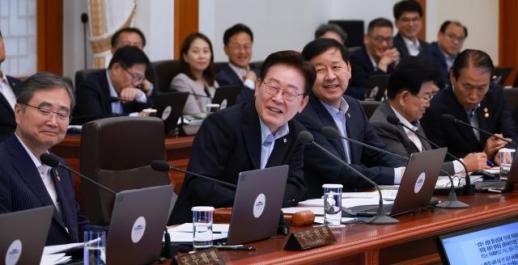 Speculation Grows Over Cabinet Reshuffle Ahead of Lee Administration's Second Term As the Lee administration prepares for its second-term cabinet formation, speculation is rife regarding personnel changes within the economic ministries. The appointment of Han Seong-sook as a candidate, coinciding with Prime Minister Kim Min-seok's bid for party leadership, has set the stage for potential shifts in key economic positions, including the Deputy Prime Minister for Economy. According to sources in the government and political circles on June 24, the presidential office is reviewing personnel adjustments to boost governance momentum in the second year of its term following local elections. This reshuffle is seen as a significant step in establishing a "second-term governance system" through the reallocation of ministerial roles. The economic ministries are directly impacted by this personnel flow. With major issues such as managing economic recovery, fiscal operations, industrial transitions, agricultural reforms, and labor matters at stake, there is discussion of a "partial reassignment" that balances policy continuity with renewal, rather than a complete overhaul. Deputy Prime Minister and Minister of Economy and Finance Koo Yun-cheol has led the economic team, addressing key issues like economic response, budget and tax management, and inflation control. While recent improvements in macroeconomic indicators, such as a rebound in growth rates and a strong stock market, are seen as achievements, challenges remain, including high interest rates, high exchange rates, inflation pressures, and rising national bond yields. There are simultaneous discussions about Koo's retention and potential reassignment. Given the numerous pressing issues, including the direction of economic policy for the second half of the year, tax reforms for the upcoming year, and management of the national bond market, some analysts predict a preference for continuity. However, there are also speculations that a change in the Deputy Prime Minister position could occur as part of a broader restructuring of the economic team. In relation to the next economic team, the future of Minister of Trade, Industry and Energy Kim Jeong-kwan is also a variable. Once considered a candidate for Deputy Prime Minister, recent sentiment has shifted towards retaining him. With numerous challenges facing the ministry, including energy supply responses due to conflicts in the Middle East, managing export recovery, U.S. trade pressures, and restructuring supply chains in advanced industries, maintaining the current leadership appears likely. The appointment of the Chief of the Office for Government Policy Coordination is also intertwined with personnel changes in the economic ministries. This position is responsible for monitoring the implementation of national tasks across ministries and coordinating policies. Candidates such as Lim Gi-geun, Vice Minister of the Ministry of Strategy and Finance, and Lee Hyung-il, First Vice Minister of the Ministry of Economy and Finance, have been mentioned. Recently, there has been a trend favoring candidates with experience in budget and national task management. There is also interest in whether Minister of Agriculture, Food and Rural Affairs Song Mi-ryung, appointed during the previous administration, will be retained. While her retention is being discussed, there is speculation about the possibility of a political figure entering the cabinet. Potential candidates include Democratic Party lawmakers Oh Gi-koo and Yoon Jun-byeong. Oh, who chairs the National Assembly's Agriculture, Food, Rural Affairs, Oceans and Fisheries Committee, is recognized for his knowledge of agricultural issues and legislative processes, while Yoon is noted for his proactive stance on structural reform topics such as agricultural cooperative law reform and land surveys. The Ministry of Climate, Energy and Environment and the Ministry of Employment and Labor are also among the departments that could see changes. Initially, there were rumors about Minister Kim Sung-hwan returning to his party, but recent sentiment leans towards his retention. Given that the ministry is directly responsible for implementing the president's climate and energy transition plans, adjustments at the deputy minister level are considered more likely than a ministerial change. The Ministry of Labor has not yet shown clear signs of a potential change. This is due to the politically sensitive nature of issues such as retirement age extension, working hours, and labor relations. A political insider noted, "The second-term cabinet is likely to reshape the governance framework for national tasks. Given the importance of policy continuity in the economic ministries, it is expected that there will be discussions about partial ministerial changes or retention rather than a complete overhaul."* This article has been translated by AI. 2026-06-24 18:20:00
 -
 New Guidelines for Extracorporeal Shock Wave Therapy Coverage Announced The Financial Supervisory Service (FSS) has established guidelines for dispute resolution regarding coverage for extracorporeal shock wave therapy. Starting next month, this treatment will be recognized as necessary only if it meets specific criteria: it must be applied to one of seven designated areas and limited to 12 sessions per year. On June 24, the FSS announced the new dispute resolution standards for extracorporeal shock wave therapy, which will be implemented in its dispute resolution practices beginning next month. This therapy is widely used alongside manual therapy for treating musculoskeletal disorders and is considered a non-covered medical service. This initiative aims to prevent a potential 'balloon effect' where patients shift from manual therapy to extracorporeal shock wave therapy as management benefits for manual therapy are introduced. Concerns have been raised that if medical institutions recommend extracorporeal shock wave therapy instead of manual therapy, it could lead to over-treatment and excessive claims on actual expense insurance. The areas eligible for treatment include the shoulder joint, elbow joint, hip joint, knee, ankle joint, foot, and spine. The treatment limit is set at 12 sessions per year, with a maximum of six sessions per area and one session per week. The same area will have a total limit of six sessions, regardless of whether it is treated on both sides or the specific condition. If multiple areas are treated simultaneously on the same day, only the cost for one area will be reimbursed. This measure is intended to prevent patients from circumventing the session limits through simultaneous treatments. However, in special cases where patients suffer from multiple complex conditions due to severe illness, the necessity for treatment may be reviewed even if it exceeds the established criteria. Conversely, patients who repeatedly receive treatment at long-term care hospitals or traditional medicine clinics solely based on their severe illness status may be excluded from additional reviews. The FSS plans to apply these guidelines specifically to disputes related to extracorporeal shock wave therapy.* This article has been translated by AI. 2026-06-24 18:20:00
 -
 Rising Egg Prices Strain Food Industry Cost Management Egg prices are soaring, putting increased cost pressure on the food industry. Although the government has announced measures to expand the supply of imported eggs and provide discounts, the recovery in supply has been slow, compounded by rising prices of key raw materials, creating a tense atmosphere across the industry. According to the Korea Institute of Animal Products Quality Evaluation, the average consumer price for a dozen special eggs from June 1 to June 23 reached 5,232 won. This marks the first time the average monthly price has exceeded 5,000 won since records began. This figure represents a 38.2% increase compared to the same period last year (3,786 won) and a 16.9% rise from the previous month (4,476 won). The surge in egg prices is largely due to the ongoing effects of last winter's highly pathogenic avian influenza (AI). The culling of laying hens has reduced supply, and concerns over productivity declines due to heat waves and policies aimed at improving farming conditions have further exacerbated supply instability. While the government is supplying 21 million fresh eggs from the U.S. and Thailand and conducting discount promotions, the tangible impact on the market remains minimal. The issue is that eggs are a key ingredient widely used across the food industry. They are essential in products such as cakes, bread, and cookies, as well as in sandwiches, sauces, and various processed foods, meaning price fluctuations can significantly affect the entire sector. Particularly, the bakery industry is also grappling with rising costs for key raw materials like cocoa, butter, and flour due to high exchange rates. With egg prices climbing, profit margins are under even greater pressure. Industry representatives state that they currently have no plans to adjust product prices, but they express concerns about accumulating cost pressures. In an environment of persistent inflation, consumer resistance to price increases has grown, making it difficult to immediately pass on rising costs to product prices. An official from a processed food company noted, "Eggs are a fundamental ingredient in most baked goods, so price fluctuations directly impact us. Right now, we are absorbing costs internally, but if the burden of raw material prices continues for an extended period, we may need to consider our options." Another industry representative added, "Not only eggs but also the prices of key raw materials like butter, cocoa, and flour remain high overall, significantly increasing the burden of cost management for companies." There are concerns that if the trend of rising egg prices continues, it could lead to increased prices for processed foods, including baked goods. According to data released by the National Statistical Office, the consumer price index rose 3.1% year-on-year in May, marking a return to the 3% range for the first time in 26 months. Eggs led this increase with a 10.2% rise, driving up food prices. An industry representative cautioned, "There are limits to how much we can absorb the accumulated cost increases internally. If 'eggflation' does not stabilize, we could see widespread price increases starting with bakeries and restaurant franchises."* This article has been translated by AI. 2026-06-24 18:16:00
 -
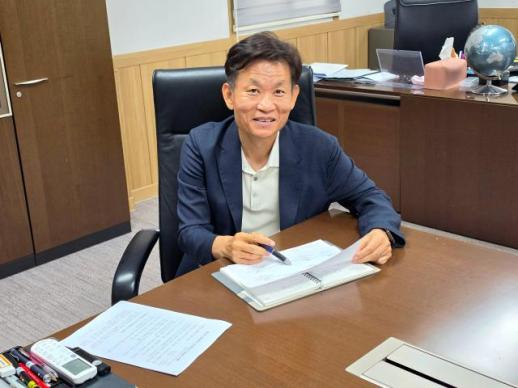 Solar City Designer: Honam's Renewable Energy is Key to Semiconductor Power Solutions Hwang Jun-ho, the master planner of Solar City, a self-sufficient energy city in South Korea, described attracting semiconductor factories to the Honam region as a "strategic choice to elevate the nation's semiconductor competitiveness." He noted that the semiconductor industry, which has been concentrated in the Seoul metropolitan area, is facing limitations in power and water supply, making Honam, with its ample renewable energy and water resources, a potential breakthrough region. In an interview with Aju Economy on June 24, Hwang emphasized the need for semiconductor factories in Honam, citing the example of Taiwan's TSMC. He explained that TSMC expanded its production bases beyond the Hsinchu Industrial Park to Taichung, Tainan, and Kaohsiung not only to mitigate disaster risks like earthquakes but also to address saturation issues related to power and water supply in specific areas. "Korea's semiconductor industry is also focused on securing advanced process technologies, but the existing power and water shortages in the metropolitan area have already reached a critical point," he said. When asked if sufficient power is available for the semiconductor industry in Honam, Hwang's response was resolute. He stated, "It is not just a possibility; it must happen. There is an urgent need for advanced industries that consume large amounts of power to decentralize and locate in regions where power is produced." He pointed out that the limitations of long-distance transmission due to constraints on the East Coast and saturation of power supply in the metropolitan area indicate that the traditional reliance on long-distance transmission is no longer viable. South West Coastal City Development is the implementing agency for the Solar City project in Haenam, Jeollanam-do. Solar City aims to establish a RE100 industrial complex based on renewable energy such as solar power, along with models for attracting AI data centers and advanced industries. Hwang explained, "Solar City is developing plans to supply clean power generated at power plants directly to nearby semiconductor factories or AI data centers without wasting it on transmission lines." He believes that combining large-scale energy storage systems (BESS) with AI-based energy management systems can also reduce fluctuations in power generation. He highlighted Honam's strengths, including reclaimed tidal flats, lake surfaces, and excellent solar radiation. However, he noted that securing applications for the generated renewable energy remains a challenge. As issues related to grid capacity and output control grow, a structure where produced electricity is used locally is essential. Hwang described this as a "local energy self-sufficient city model where power produced in the region is directly used by local industries." He also addressed policy challenges, stating that while the need for RE100 industrial complexes and renewable energy self-sufficient cities has increased, the pace of policy implementation has not kept up with on-the-ground demand. He expressed concern that the process of utilizing national-managed reclaimed land is not smooth due to inter-departmental coordination issues, and that uniform requirements for agricultural solar power could raise construction costs, leading to higher electricity supply prices. Hwang concluded, "Renewable energy policy should shift from focusing solely on increasing generation capacity to integrating grid, storage, and demand. It is more important to consider how to use the generated electricity effectively rather than just how much electricity is produced."* This article has been translated by AI. 2026-06-24 18:12:00
 -
 Messi and Ronaldo: The Twilight of the GOAT Rivalry Who will claim the throne after Pele and Maradona? In the 1970 World Cup, Brazil defeated Italy 4-1, securing their third title and permanently owning the Jules Rimet Trophy. The star of that tournament was soccer legend Pele, who scored 12 goals in 14 World Cup matches. Had he not suffered serious injuries in 1962 and 1966, he likely would have scored even more. After the 1970 World Cup, Pele, then 30, retired from international play and did not appear in future tournaments. Fast forward to the 1986 World Cup in Mexico, where 26-year-old Argentine genius Diego Maradona delivered an extraordinary performance, leading his country to its second FIFA World Cup title. He redeemed himself after being sent off in the 1982 tournament. Maradona also led Argentina to the finals in 1990 but finished as a runner-up, and in 1994, he faced disgrace again due to a doping scandal. When asked to choose the greatest soccer player of all time, fans often think of Pele and Maradona. These two players, who dominated world soccer two decades apart, are still remembered as the GOATs (Greatest Of All Time). Messi sets World Cup scoring record; Ronaldo scores in six consecutive tournaments Turning to the 21st century, who is the current soccer GOAT? Stars like Kylian Mbappe, Harry Kane, and Erling Haaland are making waves in European leagues. However, the names that still resonate with soccer fans worldwide are Lionel Messi and Cristiano Ronaldo. Since the 2010s, they have dominated European soccer, sharing multiple Ballon d'Or awards and breaking numerous records. Coincidentally, both players have moved away from Europe, with Messi now in the United States and Ronaldo in Saudi Arabia. Messi, who lifted the World Cup trophy in Qatar in 2022, is often viewed as having the edge over Ronaldo, who has yet to win a World Cup. Nevertheless, both legends are still making history in the ongoing North American World Cup. Messi scored a hat trick against Algeria and netted two goals against Austria, single-handedly contributing to Argentina's five goals. He also broke the all-time World Cup scoring record with 18 goals. Meanwhile, Ronaldo scored twice against Uzbekistan, becoming the first player to score in six consecutive World Cups. The rivalry between Messi and Ronaldo transcends mere statistics. From the late 2000s to the early 2020s, world soccer was essentially defined by their competition. Whenever FC Barcelona faced Real Madrid in La Liga, millions around the globe tuned in, not just to see which team would win, but to witness who would shine brighter: Messi or Ronaldo. Messi is an artist on the field, gliding past defenders with ease. His explosive dribbling and creative passing have left opponents powerless. He has dominated matches with his skill. In contrast, Ronaldo is the epitome of a complete athlete. With exceptional jumping ability, speed, and proficiency in shooting with both feet, he has honed his skills through rigorous training. While Messi symbolizes genius, Ronaldo embodies hard work. This ongoing debate among fans stems from differing opinions: some value Messi's creativity and match control, while others praise Ronaldo's consistency, competitive spirit, and goal-scoring prowess. Messi solidifies his status as a 'king' with World Cup victory However, the debate seems to be reaching a conclusion. Messi has completed his career puzzle with the 2022 World Cup victory, solidifying his status as a successor to Pele and Maradona. By lifting the trophy, he has quelled much of the controversy surrounding his legacy. In the current North American World Cup, he is also setting the all-time scoring record, further cementing his place in history. Notably, Messi's age is impressive. At 39, he is dominating the World Cup stage while many players transition to coaching or commentary. Through strict diet management, personal training, and core workouts, he maintains his performance, shining even brighter than younger players. That said, Ronaldo's achievements should not be underestimated. At 41, he has set an unprecedented record by scoring in six consecutive World Cups, pushing the limits of human capability. Ronaldo has consistently responded to doubters with results, proving his resilience by scoring two goals in his second match after criticism for a quiet first game. Perhaps the rivalry between the two has transcended mere wins and losses. Pele and Maradona played in different eras, allowing fans to compare them only in imagination. However, Messi and Ronaldo have competed on the same stage for nearly two decades, a rivalry unlikely to be replicated in soccer history. Ronaldo's potential for a comeback captivates fans What’s even more remarkable is that this competition is still ongoing. If Argentina and Portugal meet in the finals or on the path to the finals in the North American World Cup, we may witness the last 'battle of the gods' in soccer history. Both players are participating in their sixth World Cup, and it is likely to be their last. Perhaps this is why more fans are choosing to enjoy the final stage of both players rather than debating who is greater. Personally, I lean slightly towards Messi for the GOAT title. His World Cup victory and all-time scoring record are enough to place him alongside, if not above, Pele and Maradona. However, this does not diminish Ronaldo's greatness. Messi has showcased the beauty of soccer, while Ronaldo has demonstrated the limits of human will and effort. The genius and the hard worker, the artist and the warrior, both legends have elevated each other’s greatness. The GOAT debate will continue. However, one thing is clear: we are witnessing the final moments of two of the greatest players in soccer history. For fans, this alone is a tremendous blessing. Who is the best is left to individual judgment, but in the face of the passion and dedication of Messi and Ronaldo, everyone should applaud. It is only after they are gone that we will realize how special this era truly is. 2026-06-24 18:08:00
 -
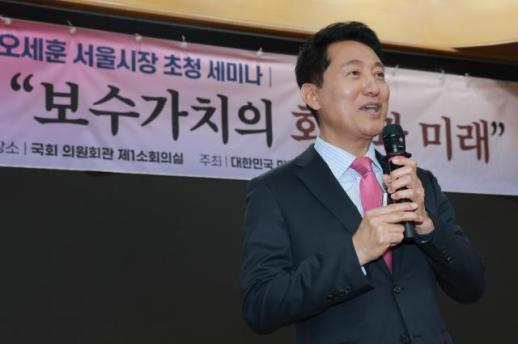 Oh Se-hoon Emphasizes Political Philosophy at Future Innovation Forum Following his speech at the Future Innovation Forum seminar, the question-and-answer session with Mayor Oh Se-hoon was equally significant. It provided insights into his views on the essence of politics, the future of conservatism, and the direction the People Power Party should take moving forward. Oh emphasized the importance of "restrained politics." He reaffirmed his stance that "investigating the truth is more important than demands for a re-election" in light of various controversies and allegations raised during the election process. He stated, "Regardless of the election results, I have maintained the same principles from the beginning," adding that he has tried to convey messages appropriate for his position as mayor. His assessment of the Lee Jae-myung administration was similarly critical. While he expressed concerns about the current government's expansionary fiscal policies and various policy directions, he drew a line against the opposition's emotional responses. Oh remarked, "There is no need to respond with extreme expressions," emphasizing that "ultimately, it is important to earn the people's choice in politics." He summarized his political philosophy by stating, "While a person who fights well may seem appealing during ordinary times, in crucial moments, a person who wins elections is a true asset." This underscores the importance of gaining public trust and the ability to win elections over political rhetoric or aggressive statements. This aligns with his repeated emphasis on being a "competent conservative" throughout the seminar. Oh's stance on real estate issues was also clear. He reiterated the need for increased supply through reconstruction and redevelopment as a solution to housing policy, advocating for the so-called "supply-first" approach. He explained that most housing supply in Seoul comes from redevelopment projects and called for the easing of government regulations and the normalization of policies for registered rental businesses. When asked about his defeat in the Busan mayoral election, he expressed some regret, revealing that he had communicated with Mayor Park Hyung-jun before the election, saying, "I wonder how it would have been if we had worked together." However, he chose to refrain from criticizing his opponent or publicly discussing the reasons for the loss. Oh also took a cautious approach regarding party reform. Amid ongoing debates within the People Power Party about innovation and renewal, he stated, "If we rush too much, it could lead to adverse effects." He emphasized that changes within the party should be centered around the National Assembly, with senior lawmakers playing a significant role. One of the most notable aspects of the Q&A session was Oh's attitude toward the opposing camp. He mentioned, "Even if our lines differ, I try not to hate people," repeatedly highlighting the values of unity and harmony. He believes that politics should ultimately be a process of resolving conflicts and bringing the people together. At the end of his speech, he presented a formula for conservative reconstruction: "sincerity, inclusiveness, and competence." Oh emphasized that these three elements are the starting point for regaining the trust of the people. Oh Se-hoon's political philosophy, as revealed through the June 3 local elections, leaned towards prioritizing policies and achievements over clear ideological confrontations, promoting unity over conflict, and focusing on results rather than loud political rhetoric. His statement about conveying the values of conservatism "with sincerity" reflects this sentiment. The message he aimed to deliver to citizens through this election was not merely about achieving victory but rather about how conservatism can regain trust and what it should look like moving forward.* This article has been translated by AI. 2026-06-24 18:08:00