

Journalist

Park Sae-jin
swatchsjp@ajupress.com
-
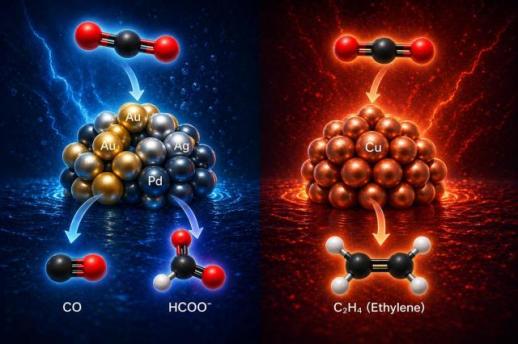 South Korean researchers discover limits of carbon conversion catalyst models SEOUL, May 22 (AJP) - Researchers from Korea Advanced Institute of Science and Technology and Korea University have identified limitations in theoretical models used to design catalysts that convert carbon dioxide into high-value chemicals. The joint research team found that current evaluation methods do not fully explain how complex compounds are formed, the prominent institute based in the central city of Daejeon said Thursday. The scientists tested the accepted theory that matching the electronic properties of a catalyst to those of copper would allow it to produce multi-carbon compounds such as ethylene and ethanol. Copper is currently the only metal known to efficiently drive this specific carbon conversion process. To test the theory, the team created a three-metal alloy using gold, silver and palladium that mimicked the key electronic indicators of copper. Despite sharing these electronic traits with copper, the new alloy failed to produce complex multi-carbon compounds and generated only simpler substances like carbon monoxide. This result demonstrates that the electronic properties of a catalyst alone do not determine its performance in complex chemical reactions. The researchers concluded that the physical arrangement of atoms on the surface of the catalyst plays an equally critical role. Converting captured carbon dioxide into usable fuels and plastic feedstocks using electricity is a central technology for achieving carbon neutrality. While existing metrics are sufficient for predicting simple chemical reactions, this study indicates that finding highly efficient alternatives to copper will require a more comprehensive design approach. The findings were published in the May 2026 issue of Nature Catalysis. "This research shows that existing catalyst theories alone cannot sufficiently explain complex multi-step carbon conversion reactions," Professor Oh Ji-hoon said. "In the future, a new catalyst design strategy that considers both electron properties and local atomic arrangement is needed." (Reference Information) Journal/Source: Nature Catalysis Title: Peaks and pitfalls of electrocatalytic CO2 reduction descriptor models Link/DOI: https://bit.ly/3Px7o90 2026-05-22 14:00:59
 -
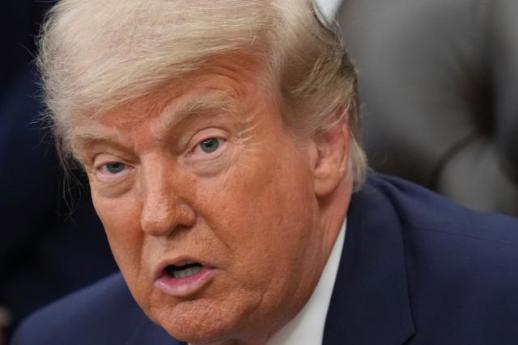 ASIA DEEP INSIGHT: Enriched uranium, shadow of Hormuz and Search for "Noah Accord" A 5,000-Year-Old Persian Civilization and a 250-Year-Old American Superpower Stand at the Edge of History The Middle East in May 2026 speaks outwardly of cease-fires and endgame negotiations. Yet beneath the language of diplomacy, the region still stands atop an enormous powder keg. President Donald Trump repeatedly declares that “the war will end very soon.” But beneath the negotiating table, the most dangerous fault lines are becoming sharper, not weaker. At the center of the confrontation lies a single issue: Iran’s stockpile of highly enriched uranium. At the White House on May 21, Trump stated bluntly, “We will take it.” He reaffirmed Washington’s position that the United States must secure and ultimately destroy Iran’s estimated 440 kilograms of uranium enriched to 60 percent purity. This is no mere technical dispute over nuclear verification procedures. It is the symbolic heart of the war itself — and, politically, the visible victory Trump believes he must bring home. For Trump, this conflict has been framed as a war to halt Iran at the threshold of nuclear weapons capability. The image of American authorities physically removing Iran’s highly enriched uranium and destroying it would represent a historic spectacle of strategic triumph. In Trump’s eyes, it would surpass the 2015 Iran nuclear agreement reached under President Barack Obama and become the defining diplomatic achievement of his presidency. Yet that very demand has become Iran’s absolute red line. Iran’s leadership has reportedly hardened its position against any overseas transfer of enriched uranium. From Washington’s perspective, the issue concerns nuclear nonproliferation and regional security. From Tehran’s perspective, it concerns national dignity, regime survival, and civilizational pride. Inside Iran, moreover, a dangerous new psychology has begun to emerge after the war. “North Korea possessed nuclear weapons and was not attacked. Iran did not possess them — and was.” That perception is rapidly hardening attitudes inside the Revolutionary Guard and among Iran’s hard-line factions. Increasingly, the argument is not necessarily that Iran must immediately build a bomb, but that it must preserve the capacity to do so. Thus, the gap between Washington’s demand for total removal and Tehran’s insistence on domestic retention or dilution remains immense. Trump, meanwhile, is eager to conclude the conflict quickly. The reasons are not merely diplomatic. They are deeply economic and political. The American economy continues to struggle under the weight of inflation and elevated interest rates. Prolonged instability in the Middle East threatens oil prices, shipping costs, and ultimately gasoline prices for American consumers. That is why Trump repeatedly emphasizes that “gas prices will fall when the war ends.” Ahead of November’s midterm elections, inflation represents a potentially lethal political vulnerability. American voters often react more immediately to fuel prices and household costs than to geopolitical abstractions. Trump understands this instinctively. Yet the war has already evolved beyond a simple bilateral confrontation between the United States and Iran. The Strait of Hormuz now stands at the center of the crisis. Iran has begun openly signaling the possibility of imposing transit fees or other restrictions in Hormuz — the narrow maritime artery through which roughly one-fifth of the world’s oil and LNG supplies pass each day. Should Tehran move from rhetoric to action, the consequences for the global economy could be immediate and severe. Secretary of State Marco Rubio responded with an unusually direct warning, declaring that any attempt by Iran to impose transit charges would render diplomatic agreement “impossible.” Washington is already considering bringing the matter before the United Nations Security Council. But Hormuz is not merely a shipping dispute. It is a question of world order itself. For thousands of years, the Persian Empire stood astride the trade and civilizational routes linking Mesopotamia, Central Asia, India, and the Mediterranean. Iran’s leadership remains deeply conscious of that geopolitical inheritance. The United States, by contrast, views freedom of navigation as a foundational principle of the postwar international system. Thus both sides confront the same waters while carrying entirely different historical memories. More troubling still is the growing strain upon America’s military resources. According to reports in The Washington Post, the United States has expended more than 200 THAAD interceptor missiles during the conflict — nearly half its stockpile. American naval forces in the eastern Mediterranean have also launched large numbers of SM-3 and SM-6 interceptors. The problem is increasingly clear: Production cannot keep pace with consumption. America’s missile defense architecture was originally designed primarily for deterrence in the Indo-Pacific, especially against China and North Korea. Yet the Middle East war is rapidly consuming those strategic reserves. Naturally, this has unsettled both South Korea and Japan. Discussions regarding the possible redeployment or depletion of THAAD systems have already begun to raise concerns across Northeast Asia. Ironically, Trump’s “America First” doctrine is now confronting its own contradiction. The United States is expending enormous strategic assets to defend Israel, while growing voices inside America question why U.S. military stockpiles should be depleted in Middle Eastern conflicts. Even American think tanks have begun warning that the Middle East is undermining Washington’s Indo-Pacific strategy. This helps explain Trump’s oscillation between escalation and conciliation. His rhetoric swings almost daily between threats and diplomacy because the strategic contradictions are becoming increasingly difficult to manage. Another major variable is Russia. President Vladimir Putin has revived the idea of transferring Iran’s enriched uranium to Russia — echoing arrangements proposed during the 2015 nuclear negotiations. On the surface, it appears to be a mediation effort. In reality, it is also a geopolitical maneuver. Putin understands that involvement in resolving the Iran crisis could provide Moscow with leverage in broader negotiations with Washington, particularly over Ukraine and sanctions policy. Trump’s dismissive response — effectively telling Putin to focus on Ukraine instead — reflected precisely that suspicion. The Middle East today is therefore no longer a regional war alone. It is a condensed battlefield of 21st-century geopolitics, where the interests of the United States, Iran, Israel, Russia, Europe, and China intersect simultaneously. Negotiations continue outwardly. Yet the negotiations remain extraordinarily fragile. Trump needs a victory. Iran cannot afford the image of surrender. Israel seeks the complete dismantling of Iran’s nuclear potential. Russia hopes to expand its diplomatic influence through mediation. And the global economy trembles at every shift in the winds of Hormuz. The war may pause temporarily. But the geopolitics of the Middle East are far from over. And here the world confronts a deeper truth. This conflict is not merely a dispute over uranium enrichment. It is a collision between two historical consciousnesses — and between two civilizations. On one side stands the United States, a 250-year-old superpower that shaped the modern global order through military strength, financial dominance, technological innovation, and the architecture of globalization itself. On the other stands Iran, heir to a Persian civilization stretching back more than 5,000 years. Modern Iran is not simply another Middle Eastern state. Behind it stand the memories of Cyrus the Great, Darius, and the Achaemenid Empire — a civilization that once connected Mesopotamia, Central Asia, India, and the Mediterranean into one vast imperial network. The West often views Iran merely as a “problem state.” But within the Iranian historical imagination, they are not a minor power. They see themselves as descendants of an ancient civilization. That difference in historical consciousness shapes everything. Washington approaches the nuclear issue as a matter of international security and nonproliferation. Tehran approaches it as a matter of national survival and civilizational dignity. For that very reason, brute force alone cannot resolve this crisis. What is needed instead is a new civilizational imagination. Perhaps what the Middle East now requires is something resembling a “Noah Accord.” The region has already witnessed one historic breakthrough in the form of the Abraham Accords between Israel and several Arab states. Those agreements drew symbolic power from the shared Abrahamic heritage of Judaism, Christianity, and Islam. But perhaps the next step requires an even broader vision. Before Abraham came Noah — the ancestral figure of humanity itself in the traditions of Judaism, Christianity, and Islam alike. Noah represents survival, reconciliation, and the rebirth of civilization after catastrophe. The Middle East today needs more than another technical nuclear agreement. It needs a renewed framework for coexistence. Neither America nor Iran can fully destroy the other’s historical identity. The United States may pressure the Iranian regime, but it cannot erase Persian civilization. Iran, meanwhile, cannot overturn the American-led international order through direct confrontation. Eventually, both sides will have to compromise. And that compromise must become more than a transactional bargain. It must allow both civilizations to preserve dignity while stepping back from catastrophe. East Asia has long carried philosophical traditions emphasizing coexistence rather than annihilation. Confucianism, Buddhism, and Taoism all contain variations of the idea that absolute victory achieved through destruction rarely endures. Korea, in particular, understands this deeply. For centuries, Korea survived between great powers — China, Japan, Russia, and later the United States. Korean historical consciousness therefore places enormous value not only on balances of power, but on balances of relationship. That perspective may hold an important lesson for Washington and Tehran alike. The United States must leave space for Iran’s dignity. Iran, in turn, must move beyond a posture of total rejection toward the international system. Creative compromise remains possible. Highly enriched uranium could be placed under multinational management involving neutral states, Russia, or the International Atomic Energy Agency rather than becoming a direct symbol of Iranian surrender to Washington. Ultimately, the central question is not who wins. It is whether humanity can step back from the edge of another prolonged civilizational conflict. Because the global economy is already approaching dangerous limits. Hormuz is one of the central arteries of the world economy. If it is destabilized, oil prices, shipping, insurance, financial markets, and supply chains will all experience shockwaves. For South Korea, the implications are especially serious. South Korea depends heavily upon imported energy from the Middle East. The industrial foundations of companies such as Samsung and SKhynix, as well as the manufacturing systems of Hyundai Motor, ultimately rely upon stable flows of oil and LNG. A prolonged Hormuz crisis could simultaneously weaken the Korean won, intensify inflationary pressures, and destabilize maritime logistics. The security implications may be even greater. America’s depletion of missile defense inventories during the war has already exposed the limitations of U.S. strategic capacity. Washington cannot indefinitely sustain simultaneous pressures in the Middle East, Ukraine, the Taiwan Strait, and the Korean Peninsula without difficult trade-offs. For Seoul, this reality demands increasingly sophisticated strategic thinking. The U.S.–Korea alliance remains indispensable. But South Korea must also preserve diplomatic flexibility with the Middle East, China, and even Russia where necessary. Energy security, supply-chain resilience, semiconductors, AI infrastructure, and strategic autonomy are no longer merely economic concerns. They are becoming matters of national survival. The world speaks constantly of the AI revolution. Yet humanity finds itself once again confronting its oldest questions. How can civilizations coexist? How far should great powers exercise force? Can humanity move beyond cycles of war? A 5,000-year-old Persian civilization and a 250-year-old American superpower now stand before those questions together. And the world waits for their answer. 2026-05-22 09:36:24
 -
 US embassy in Seoul hosts artist Park Ju-eon for Freedom 250 campaign SEOUL, May 20 (AJP) - SEOUL — The United States Embassy in Seoul hosted South Korean contemporary artist Park Ju-eon for a special exhibition and talk on Wednesday afternoon, using cultural diplomacy to mark the upcoming 250th anniversary of the country's founding. The event took place at the US Charge d'Affaires' residence near central Seoul. The gathering served as the second installment of Freedom of Expression: Freedom 250 U.S.-Korea Creative Dialogues. The yearlong campaign highlights the enduring cultural partnership between the two nations through continuous artistic exchange, with collaborative events scheduled to run throughout the year. James R. Heller, the U.S. Charge d'Affaires ad interim, framed the event as a critical opportunity to engage with art and ideas concerning freedom of expression. He noted that the program contributes to a broader vision by highlighting the enduring connections between the U.S. and South Korea. "His presence here shows the vitality of our two countries' strong cultural ties," Heller told the audience. "Art and cultural exchange are essential pillars of our lives. Cultural diplomacy enriches our societies and builds trust and opens dialogue, and it makes other types of cooperation possible." During his presentation, Park detailed his creative journey, tracing his artistic roots back to a year spent traveling across the U.S. as a 12-year-old. While he did not know he would become a painter at the time, a later visit to the Art Institute of Chicago deeply altered his trajectory. The distinctive modernist architecture and bold abstract paintings he saw there stirred his senses, cementing a goal to return to the city to learn how to paint. As a graduate of the School of the Art Institute of Chicago, Park explained how the American educational environment shaped his approach to abstract painting by providing individual freedom alongside advanced structural systems. His time at the institution pushed him to ask why he was creating the work, rather than simply deciding what to paint. "This experimental spirit where no set answers exist made me incredibly persistent," Park said. "I worked every single day to find freedom of expression while strictly controlling myself through self-imposed rules. For me, experimentation was not just a simple attempt, but the greatest force sustaining my artistic practice." The exhibition in Seoul showcased several of his large-scale works, which serve as a visual archive of his time in the U.S. and his continuous drive to break away from traditional representational imagery. Park shared practical examples of his unconventional techniques, which he developed as a student to overcome the fear of failure and experiment with pure abstraction. Driven by a need for affordable materials he could paint heavily on, he turned to unexpected sources. "I headed to the Home Depot, a large American hardware store, and started buying the cheapest material I could find there: doors measuring 32 inches by 72 inches, to use instead of canvases," Park said. "With an empty mind, I moved my brushes intuitively along the trajectory of my body, and as a result, lines resembling human forms began to build up on the surface." The Seongbuk-dong exhibition featured a variety of his technical experiments, including massive pieces tracking the physical rhythm of his artistic process and complex monotype grids. Park described his drawing process as essential database research for experimenting with the transparent layering of colors and repetitive marks. He explained that his monotype process, which involves applying paint to a plate and pressing it directly onto a surface, was designed to extract the purest form of color. "By almost entirely erasing intentional brushstrokes or the artist's artificial control from the surface, it is a process I thought of to extract the inherent character and materiality of the color in its purest form," he noted. This experimentation culminated in large-scale works like "Chicago 2125," a massive piece displayed in the residence's piano room that reflects the city's grid-like architecture, and "Chromatic Deposition Lemon," a recent work created out of frustration with the small size of standard acrylic plates. "Just as I was feeling frustrated by the scale of the small acrylic plates or gel plates I had been using, I saw a rough rubber mat blocking a street drain," Park recalled. "Curiosity struck me: 'What if I press acrylic paint using that large, rough rubber mat?' I put it to use in my work right away." The artist credited his ongoing drive to push boundaries to the foundational years he spent in the U.S. "The coexistence of rules and freedom taught to me by the country of America, along with the continuous experimental spirit, has kept me going without stopping for a single day," Park said. 2026-05-20 19:05:25
 -
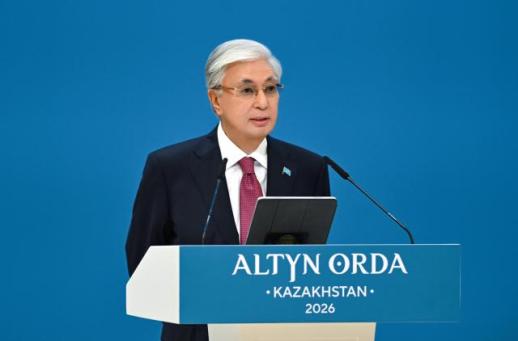 Kazakhstan ties Golden Horde legacy to tech ambitions SEOUL, May 20 (AJP) - The Kazakhstan Embassy in Seoul released a statement on Wednesday detailing an international symposium in Astana that frames the heritage of the Golden Horde as a pillar for the country's modern technological transformation. President Kassym-Jomart Tokayev stated that the medieval empire's advanced administrative and trade systems serve as historical precursors to the nation's current digital infrastructure goals. The UNESCO-backed event highlights how Kazakhstan is leveraging its historical identity to build international academic and economic partnerships. By branding its modernization initiatives under the concept of digital nomads, the Central Asian nation seeks to position its heritage as an inspiration for future development rather than a relic of the past. According to the embassy statement, the Golden Horde historically controlled key Eurasian trade routes and transformed the steppe into a secure transit corridor between the East and the West. Tokayev noted that this historic interaction between nomadic and urban societies laid the foundation for the empire's long-term prosperity and adaptability. Kazakhstan is currently connecting this legacy to state investments in artificial intelligence, data storage, and international transport networks. As part of this digital push, the country plans to host an international artificial intelligence olympiad under the auspices of UNESCO, drawing participants from 100 countries. To institutionalize research into this period, the government established the Institute for the Study of the Ulus of Jochi, marking the first specialized academic institution dedicated to the subject. Tokayev also proposed the creation of an international center for the promotion of steppe civilization to help bridge societies during periods of global geopolitical fragmentation. The symposium also highlighted the international recognition of the manuscript titled Genealogy of the Khans, which contains historical records from the Golden Horde era. The state continues to utilize the traditional steppe concept of Mangilik El, or the Eternal Nation, as a guiding framework for its modern national renewal and state-building initiatives. 2026-05-20 13:36:43
 -
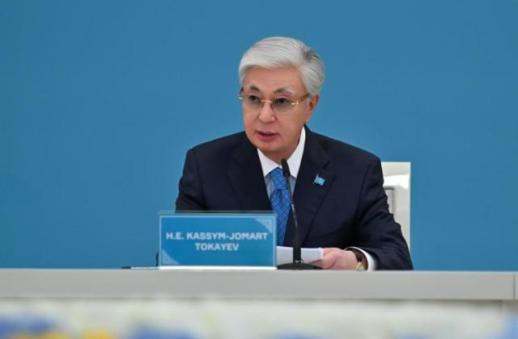 Kazakhstan's President Tokayev urges digital alliance among Turkic states SEOUL, May 19 (AJP) - President of Kazakhstan Kassym-Jomart Tokayev urged member nations of the Organization of Turkic States to build a unified artificial intelligence and digital framework to secure sustainable advancement amid an unstable global environment, the Embassy of Kazakhstan in the Republic of Korea said Tuesday. Speaking at an informal summit in the city of Turkistan on May 15, Tokayev positioned technological cooperation as a vital tool for economic resilience. The initiative highlights a growing trend among regional blocs to establish independent digital infrastructure and tech sovereignty. Leaders at the summit focused on pooling technological resources to accelerate economic integration, as the organization transitions from a cultural and historical alliance into a practical high-tech and trade partnership. During his address, Tokayev introduced several practical proposals to deepen integration across the bloc, including the mutual recognition of digital signatures and electronic documents. He also proposed the creation of a joint information technology hub called Turkic AI, which would be located at the newly established Alem.ai International Center for Artificial Intelligence in Astana. To support the regional ecosystem, Kazakhstan plans to offer specialized educational grants to citizens of other Turkic states at a planned artificial intelligence university. The country has recently accelerated its domestic tech agenda by enacting a national Digital Code, passing a law on artificial intelligence, and launching two supercomputers. The Kazakh president also stressed that technological advancement must be balanced with the preservation of cultural heritage. He called for the development of a convention to protect Turkic civilization alongside a multilingual digital platform dedicated to the history and culture of the member nations. Tokayev explicitly rejected characterizations of the regional grouping as a geopolitical or military bloc, emphasizing its strictly cooperative focus. "Recently, opinions have been voiced portraying our organization as a military alliance," Tokayev said. "It is obvious that those spreading such speculation pursue malicious goals and seek to sow discord. It is a unique platform aimed at strengthening trade, economic, technological, digital, cultural, and humanitarian cooperation among brotherly nations." 2026-05-19 17:00:00
 -
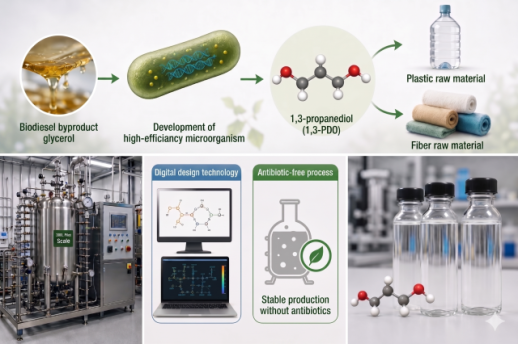 KAIST and Hanwha Solutions develop bio-platform to replace naphtha with waste glycerol SEOUL, May 19 (AJP) - Researchers from Korea Advanced Institute of Science and Technology (KAIST) in South Korea and Hanwha Solutions have developed a bio-platform capable of mass-producing sustainable raw materials for plastics and textiles using waste resources. The newly secured technology aims to replace petroleum-derived naphtha, KAIST said Tuesday. The technology uses waste glycerol, a byproduct of biodiesel production, as a primary raw material. The joint research team engineered a microorganism to efficiently produce 1,3-propanediol (1,3-PDO), a core material used in plastics and cosmetics, while optimizing the overall fermentation process. The researchers maintained high productivity in a 300-liter pilot plant, demonstrating that laboratory-scale results can be replicated in large industrial settings. The team also implemented an antibiotic-free process and utilized computer simulations to design the metabolic pathway of the microorganism, lowering production costs and mitigating environmental regulatory risks. The development comes amid rising prices and supply instability for naphtha, an essential component in the petrochemical industry. It is the result of a decade-long collaboration between the university and the chemical company aimed at securing supply chain stability. The findings were published on May 12, 2026, in the journal Nature Chemical Engineering and will be featured as the cover article. "This research is significant in that it confirmed the possibility of replacing existing petrochemical processes by utilizing bio-based raw materials," Kim Jung-dae, head of Hanwha Solutions Future Technology Research Center, said. "We expect it to serve as an important foundation for sustainable chemical material production and industrial application in the future." "This research is a case showing that microorganism-based chemical production can be sufficiently expanded beyond the laboratory to an actual industrial scale," Lee Sang-yup, distinguished professor of chemical and biomolecular engineering at KAIST, said. "It will contribute to producing various chemical materials in a more environmentally friendly manner in the future." (Reference Information) Journal/Source: Nature Chemical Engineering Title: High-titer, antibiotic-free, pilot-scale production of 1,3-propanediol by engineered Corynebacterium Link/DOI: https://bit.ly/4nI5kYu 2026-05-19 16:40:53
 -
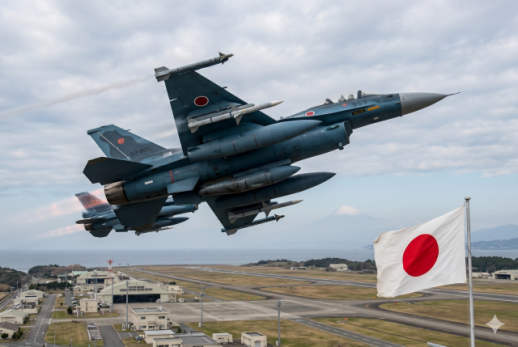 ASIA DEEP INSIGHT: Pacific forgets ghosts as Japan embraces arms trade By welcoming Japanese military exports, Manila helps Tokyo dismantle an eighty-year pacifist legacy in the name of regional deterrence. When Philippine President Ferdinand Marcos Jr. recently addressed the press to welcome Japan’s decision to loosen its post-war ban on lethal weapon exports, his phrasing was carefully calibrated for the current geopolitical moment. Japan and the Philippines, he noted, have faced "the same difficulties." He was referring, of course, to the encroaching shadow of Chinese maritime militias in the South China Sea. It is a unifying, urgent threat. But to accept his premise requires an extraordinary act of historical amnesia, effectively erasing the memory of a time when the greatest existential threat to Manila was the Imperial Japanese Army. Marcos is not acting irrationally. The daily, suffocating squeeze from Chinese coast guard vessels around contested shoals requires immediate, hard assets. Radar systems, patrol vessels, and coastal defense missiles are the currency of survival in the South China Sea today. Marcos is desperate for a patron capable of providing that maritime deterrence, and he is entirely willing to grant Tokyo moral amnesty to secure it. Washington is cheering from the sidelines, eager to outsource the heavy lifting of Pacific security to capable deputies. But look past the diplomatic handshakes and the shared anxieties over Beijing, and a profound institutional shift comes into focus. Japan is not merely adjusting its export controls to help a beleaguered neighbor. It is executing a structural dismantling of the pacifist identity that anchored East Asian geopolitics for eight decades, transforming itself from a restrained economic heavyweight into an active merchant of lethal force. The true driver of this pivot is less about democratic solidarity and more about industrial survival. For years, Japan’s defense contractors have been quietly starving. Constrained by a constitution that strictly limited the domestic military to self-defense, conglomerates like Mitsubishi Heavy Industries and Kawasaki Heavy Industries were trapped in a catastrophic business model. Building bespoke, high-tech weaponry for a single, non-combatant buyer is financially ruinous. A shrinking, aging population translates to a dwindling tax base and flat procurement budgets. Major corporations were threatening to abandon the defense sector entirely. By opening the export spigot to overseas buyers, the Japanese cabinet is executing a massive corporate bailout. Exporting lethal hardware lowers per-unit costs, scales production, and artificially sustains a manufacturing base that Tokyo believes it desperately needs. Yet, in doing so, Japan has crossed a psychological Rubicon. It has linked the financial health of its defense-industrial complex to the proliferation of global friction. Once a nation’s shipyards and aerospace factories require foreign conflicts to balance their ledgers, the state’s diplomatic posture inevitably hardens. Viewed from across the water in Seoul, this awakening provokes a quiet, historical unease. South Korea has spent the last decade building its own formidable defense export machine, moving tanks and self-propelled artillery across the globe to secure diplomatic leverage and economic growth. Now, Japan steps into the same arena, wielding immense technological supremacy, deep pockets, and an aggressive new mandate. When Japan begins mass-producing lethal weaponry for foreign battlefields, it signals to the rest of the peninsula—and to Beijing—that the era of restrained diplomacy is functionally dead. East Asia is actively replacing the fragile promise of economic integration with a cold, unforgiving race for hard military deterrence. The domestic blowback within Japan reveals a profound national cognitive dissonance. When the cabinet pushed the export revision through, it bypassed parliamentary pre-approval, sparking protests outside the Diet building. Polling consistently indicates that nearly 60 percent of the Japanese public opposes the export of lethal weapons. The citizenry recognizes what the state refuses to admit outright: becoming merchants of death strips Japan of the unique moral authority it wielded as a nation that knew the apocalyptic horrors of war and consciously chose a different path. This is what modern militarism looks like. It does not announce itself with imperial ambitions or territorial conquests. It creeps in through the quiet normalization of the military-industrial complex. The current, palpable panic regarding China provides the perfect, unassailable excuse for Tokyo to shed its historical guilt and dismantle the structural brakes that kept its defense contractors in check. The administration in Tokyo insists it is merely building a network of allied partners to prevent the outbreak of conflict, relying on the familiar, sterile belief that flooding a theater with more weapons will somehow manufacture peace. But deterrence is a fragile psychology. Manila is cheering for the very machine that once brought the Pacific to ruin, simply because this time, the weapons are pointed in the other direction. Tokyo has traded the quiet dignity of its pacifist shield for the raw, lucrative leverage of the sword, leaving a heavily armed region to wonder who will eventually bleed from its edge. 2026-05-19 14:04:54
 -
 Uzbekistan and Azerbaijan expand bilateral trade and transport networks SEOUL, May 18 (AJP) - Bilateral trade and transport volumes between Uzbekistan and Azerbaijan are surging following the introduction of a free trade regime between the two nations, the Embassy of Uzbekistan in Seoul said Monday. Total trade turnover reached 80.1 million dollars in the first quarter of 2026, marking a 42.5 percent increase from the same period last year. The economic expansion is driven by established intergovernmental platforms, including a joint commission that held its 14th meeting in Baku in June 2025. These institutional ties, alongside a regional business council established in 2020 and upcoming regional forums, have facilitated a diversification of goods and strengthened logistics chains connecting the two economies. Full-year trade turnover for 2025 totaled 307.3 million dollars, representing a 14.6 percent rise from the previous year. Exports from Uzbekistan to Azerbaijan grew by 7.8 percent to 227.3 million dollars, while imports from Azerbaijan surged 39.3 percent to 80 million dollars. Uzbekistan expanded its exports across 230 product categories last year, observing strong growth in tobacco products, copper wire, grapes, nuts, household appliances, and petroleum products. The country also introduced 116 new export categories valued at 7.8 million dollars, while importing industrial resources like sugar, aluminum, and metal pipes from Azerbaijan. This trade growth relies on expanding logistics infrastructure across rail, road, and air networks. Total cargo transportation volume between the two countries reached 154,300 tons in 2025, an increase of 28.3 percent, with transit cargo operations growing 1.4 times over the same period. The logistical expansion has accelerated into the current year, with first-quarter cargo volumes in 2026 rising by 88 percent to reach 58,700 tons. The two nations currently maintain transport connectivity through 14 regular weekly flights operating on the route between Tashkent and Baku. 2026-05-18 14:21:07
 -
 Kookmin University undergraduate's AI paper accepted at ICML 2026 SEOUL, May 18 (AJP) - An undergraduate student in South Korea has authored a research paper on artificial intelligence that has been accepted for presentation at the 43rd International Conference on Machine Learning, Kookmin University said Monday. Kim Min-woo, a senior in the university's software program, is the first author of the paper titled "Memory as Dynamics: Learning Reliability-Guided Predictive Models for Online Video Perception." The research introduces a framework for online video perception that interprets memory as a dynamic system rather than a static storage unit. By applying a reliability-guided predictive model, the system processes temporal information within video sequences to improve accuracy and efficiency. The model dynamically estimates the reliability of each video frame and incorporates this assessment into its memory updates and predictions. This process allows the system to maintain stable recognition performance even when the video feed contains noise or visual obstructions. The method demonstrated improved performance across various online video benchmarks when compared to existing techniques. The framework has potential applications in fields that rely on real-time visual recognition, including autonomous driving, robotics and intelligent video understanding. Kim's research was supported by the National Research Foundation of South Korea (NRF) and the Institute of Information and Communications Technology Planning and Evaluation (IITP). "I wanted to untangle the relationship between memory and prediction from a new perspective," Kim said. "It is very meaningful that the research I conducted during my undergraduate studies has been recognized for its achievements at a world-class academic conference. I want to continue practical AI research that can contribute to solving real-world problems." 2026-05-18 14:08:56
 -
 ASIA DEEP INSIGHT: Could soccer match mend divide between two Koreas? As Pyongyang rewrites its constitution to erase the prospect of reunification, a women's soccer tournament in Suwon serves as the final point of contact between two hostile states. At 2:20 p.m. on Sunday, 27 players and 12 staff members wearing matching tracksuits disembarked an Air China flight at Incheon International Airport. They collected their luggage, cleared customs, and boarded buses bound for the Gyeonggi provincial capital. The arrival of a visiting club for the Asian Football Confederation Women’s Champions League semifinals would typically disappear into the routine logistical hum of the South Korean transit system. But the Naegohyang Women’s F.C. had just traveled from Pyongyang via Beijing, traversing a geopolitical boundary that has never been more heavily militarized. When they step onto the pitch against Suwon F.C. Women on Wednesday, it will mark the first time a North Korean sports delegation has entered the South in eight years. The fixture is entirely devoid of diplomatic optimism. We are observing an isolated autocracy that has systematically eradicated every other form of contact with Seoul—severing telecommunications, rewriting its fundamental laws, and detonating physical monuments to peace. Pyongyang has dispatched a soccer team across a border it no longer recognizes as a temporary division, treating it instead as a permanent frontier. The playing field in Suwon south of Seoul is the final operational coordinate where the two Koreas interact. To comprehend the structural friction of this week’s tournament, the rapid dismantling of the inter-Korean apparatus must be examined first. The current communications blackout was initiated on April 7, 2023. At nine in the morning on a Friday, Pyongyang ceased answering the daily administrative calls on the inter-Korean joint liaison office and the military communication lines. These networks were designed to coordinate logistics and prevent accidental naval skirmishes in the volatile West Sea. The receivers in Freedom House have remained dead ever since. That silence preceded a profound doctrinal shift. By early 2024, Kim Jong-un discarded the state doctrine of peaceful reunification that had governed North Korean policy for decades, formally declaring South Korea a principal enemy. The rhetoric materialized into immediate physical action. Pyongyang demolished the Arch of Reunification—a towering stone monument erected by his father in the capital—and began laying thousands of fresh landmines along the Demilitarized Zone. The regime shifted its posture from managing a divided peninsula to fortifying a hardened national border. In March 2026, the Supreme People’s Assembly codified this rupture into the highest law of the land. The legislature scrubbed the concepts of ethnic unity and reconciliation from the North Korean constitution. They formally defined their territorial boundaries, legally designating the Republic of Korea as a foreign adversary rather than a separated brother. The regime even petitioned the International Civil Aviation Organization to terminate the inter-Korean air traffic control network, an administrative link that had previously survived severe military standoffs and nuclear tests. This structural severance makes the presence of the Naegohyang squad at the Suwon Sports Complex jarringly anachronistic. In previous decades, sports diplomacy functioned as the vanguard of a broader geopolitical thaw. When a unified Korean team won gold at the World Table Tennis Championships in Chiba in 1991, or when athletes marched together behind a pale blue Unification Flag at the Sydney Olympics in 2000, both capitals nominally subscribed to the prospect of eventual unity. Even the hastily assembled women's ice hockey team at the Pyeongchang Winter Olympics eight years ago provided the diplomatic cover required for a series of historic summits between Pyongyang, Seoul, and Washington. Today, there is no broader thaw on the horizon. The diplomatic utility of the Suwon match is negligible. President Lee Jae Myung’s repeated offers to restore basic dialogue and resume humanitarian aid have been met with total indifference. North Korea has no intention of utilizing 90 minutes of soccer to restart nuclear negotiations or arrange a border summit. For Mr. Kim, international sports offer a highly specific utility. Fielding a competitive women’s team allows Pyongyang to project normalcy, discipline, and national prestige on the global stage without compromising its hardened borders or exposing its citizens to the corrosive influence of South Korean economic realities. For South Korea, playing the host presents a complex administrative and political burden. It forces a democratic society—currently managing intense regional security anxieties, currency fluctuations against the dollar, and the ongoing pressure to maintain semiconductor sovereignty in a fractured global market—to accommodate representatives of a regime that openly targets its infrastructure. The host nation must adhere to the polite fictions of international sporting protocol, offering training facilities, logistics, and heavy security details to a state that refuses to pick up a telephone to de-escalate live military tensions. The stadium in Suwon will be filled with security personnel, government observers, and global media, all monitoring a fixture governed by strict, mutually agreed-upon laws. The athletes themselves are deployed simply to win a soccer match. They are tasked with navigating an environment where every technical foul, substitution, and post-match handshake will be analyzed for political signaling. The Naegohyang players spent days training in isolation near their embassy in Beijing before securing passage to Seoul, highlighting the convoluted logistics required to move civilians across a sealed perimeter. They operate within a performative contradiction, executing a tactical game plan while their respective defense ministries prepare for worst-case scenarios along the 38th parallel. When the referee blows the whistle to initiate the semifinal, it will trigger a brief, localized suspension of the geopolitical reality that defines the Korean Peninsula. For an hour and a half on a manicured patch of grass, the two hostile states will subject themselves to the exact same set of rules—only to walk off the pitch, board their respective buses, and return to a reality where the concept of a shared existence has been entirely erased. 2026-05-18 13:19:38