
Journalist

LEE Keon-hee
topkeontop12@ajunews.com
-
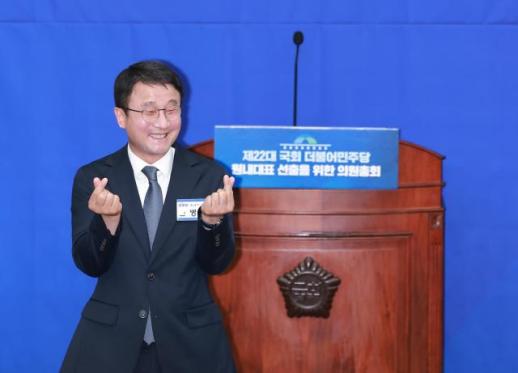 Han Byung-do reelected as DP floor leader SEOUL, May 6 (AJP) - Three-term lawmaker Han Byung-do was reelected floor leader of the ruling Democratic Party (DP) on Wednesday, becoming the first in the party to win a second consecutive term in the post. Han, who was the sole candidate in the race, won by a majority in a vote that combined ballots from both lawmakers and party members. The exact vote tally was not disclosed under the party's internal election rules. Despite some debate within the party over how to proceed when there is only one candidate, the party decided to hold the vote. DP leader Chung Cheong-rae described Han as "a leader with a gentle personality, flexibility in leadership, and strong attention to detail." Ahead of the vote, Han pledged to support the current administration's agenda with decisive leadership and to work closely with fellow lawmakers on legislative priorities, pushing them through parliament by year's end. Assuming the post in January after then-floor leader Kim Byeong-gi abruptly stepped down amid various allegations, Han has been credited with stabilizing the party over the past four months before resigning on April 21 to run again. 2026-05-06 17:29:01
 -
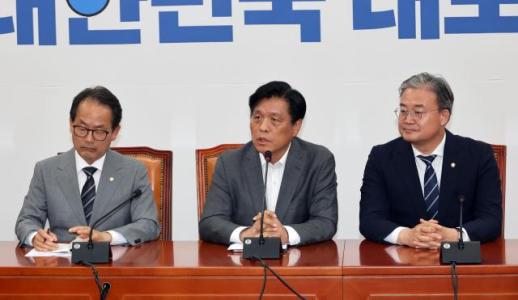 Democratic Party Picks Kim Eui-kyeom, Park Jie-won for June 3 By-Elections; One District Still Open The Democratic Party of Korea said May 6 it has nominated Kim Eui-kyeom and Park Jie-won for the June 3 National Assembly by-elections in Gunsan-Gimje-Buan A and B in North Jeolla Province. The party also confirmed Lim Moon-young, vice chair of the National AI Strategy Committee, for Gwangju Gwangsan-eul; former Vice Oceans Minister Kim Seong-beom for Seogwipo on Jeju Island; and Park Hyeong-ryong, head of the party’s Dalseong County chapter, for Dalseong County in Daegu. With those picks, all constituencies for the by-elections have candidates except Gongju-Buyeo-Cheongyang in South Chungcheong Province. Senior spokesperson Kang Jun-hyeon announced the slate at the National Assembly after a meeting of the party’s strategic nominations committee, saying the party would “do its best until the end” so the nominees can win voters’ support. Kang described Kim as a Gunsan native who served as the first head of the Saemangeum Development Administration under the Lee Jae-myung government and as a candidate who best understands the Saemangeum project, a key local issue. He introduced Park, a lawyer, as “a son of North Jeolla” and “a son-in-law of Gimje,” saying Park has applied his expertise to regional development. Kang said Lim was born and raised in Gwangju and has overseen AI policy under the Lee Jae-myung government. He said Kim Seong-beom was born in Seogwipo, attended school there through high school, and is a top expert in maritime and fisheries affairs after 30 years at the Oceans Ministry. He added that Park Hyeong-ryong has “quietly dedicated himself” in Daegu, which he called a particularly difficult political terrain, and said the party is confident Park can win support there. For Gongju-Buyeo-Cheongyang, the party said it needs more time after Park Jeong-hyeon, former Buyeo County governor, was unable to run. The National Election Commission issued an authoritative interpretation on May 4 saying Park could not be a candidate amid a dispute over the deadline for resigning from public office. Cho Seung-rae said the party is considering both Won Seong-su, former president of Kongju National University, and a young legal professional for the seat. 2026-05-06 16:30:04
 -
Democratic Party Reelects Han Byung-do as Floor Leader, a First for the Party Democratic Party lawmaker Han Byung-do, who ran unopposed, was elected floor leader on May 6. He is the first floor leader in the party to win a second consecutive term. The party held a lawmakers’ meeting at the National Assembly and conducted a confidence vote on Han. He won a majority under the party’s rules, which combine 80% of lawmakers’ votes and 20% of votes from dues-paying party members. The exact vote totals were not released under election regulations. Party leader Jung Cheong-rae called it a “clean election” without negative campaigning and described Han as “a leader with a gentle temperament, flexible leadership and strong attention to detail.” Election committee chair So Byeong-hoon said the party debated how to handle an uncontested race but decided to hold a vote because party members participate in the process. Ahead of the vote, Han said “this is the golden time,” pledging to “maximize the governing momentum of the Lee Jae-myung government” with bold leadership and to be a floor leader who shares lawmakers’ legislative work and concerns. In his acceptance speech, he said he would finish all legislation tied to the government’s policy agenda by the end of the year. Han began his duties immediately. With a National Assembly plenary vote on a constitutional amendment bill scheduled for May 7, he is expected to take a leading role. With National Assembly Speaker Woo Won-shik holding a surprise meeting ahead of the lawmakers’ session with Jang Dong-hyuk of the People Power Party, there is also talk that Han and PPP floor leader Song Eon-seok could coordinate positions before the plenary session. Han is also expected to negotiate the content and timing of a controversial special counsel bill on alleged fabricated prosecutions. President Lee Jae-myung said on May 4 that the bill requires public input and deliberation. With disagreements emerging within the party over timing, Han said immediately after his election that it would be handled after the local elections. Another major task is whether to allow prosecutors to retain supplementary investigative powers, a key flashpoint in prosecutorial reform. The party previously passed bills to create a Major Crimes Investigation Agency and a Prosecution Service, but delayed further action after internal conflict over supplementary investigative authority. Lee has said prosecutors need such powers in exceptional cases, while hard-liners in the party argue they should not be allowed at all. Han also holds authority over the makeup of standing committees for the second half of the term. He has warned that if committees chaired by People Power Party lawmakers fail to function and obstruct state affairs, the Democratic Party could consider taking all chair posts. Han was elected in a January by-election and led the parliamentary caucus for 101 days before resigning on April 21 to run again. He has been credited with stabilizing the caucus after former floor leader Kim Byung-ki resigned abruptly amid various allegations. * This article has been translated by AI. 2026-05-06 15:39:14
-
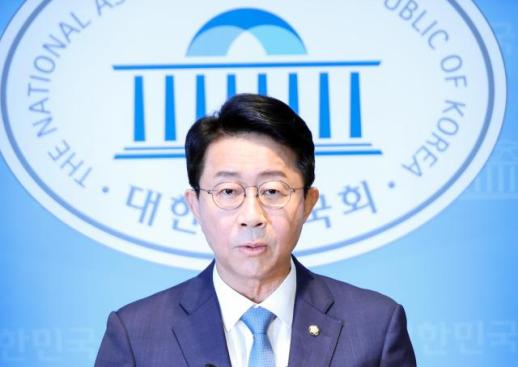 Rep. Cho Jung-sik Enters Democratic Party Race for National Assembly Speaker Democratic Party lawmaker Cho Jung-sik on May 4 announced his bid to become speaker in the second half of the National Assembly term. Cho has highlighted his recent work as a special adviser for political affairs in President Lee Jae-myung’s government, aiming to consolidate support among pro-Lee lawmakers and distinguish himself from rival lawmakers Kim Tae-nyeon and Park Jie-won. Some analysts say Cho could gain an edge in the party’s internal contest, often treated as the decisive race. However, a newly proposed special counsel bill on alleged “fabricated indictments” could become a variable. ■ Strengths(강점) Political circles say Cho’s ability to communicate smoothly with the government is a key strength. In his candidacy statement, he said, “As a National Assembly speaker from the ruling party with blue blood, I will help ensure the success of the people’s sovereignty government and lay a bridgehead for victory in the 23rd general election and the recapture of power.” After Cho resigned as special adviser on May 3, President Lee wrote on Facebook, “You worked hard. I sincerely thank you for always being with us.” Some interpreted the message as support for Cho’s speaker bid. Cho is now the Democratic Party’s only six-term lawmaker after Choo Mi-ae, a Gyeonggi governor candidate, resigned her seat to run. That gives Cho seniority over five-term rivals Kim and Park. Given past practice in which the most senior lawmaker often became speaker, some say Cho has a strong claim. Born in 1963, Cho is also younger than Park, who was born in 1942, a 21-year gap. Supporters say that could matter for a physically demanding post that can include marathon sessions such as filibusters. ■ Weaknesses(약점) Cho’s lower name recognition compared with Park is cited as a weakness. Park has ranked first in multiple opinion polls. This election will also be the first Democratic Party speaker race in which votes by dues-paying party members count for 20%. The rule was introduced after some hard-line supporters protested when Choo, seen as having the party leader’s backing in the 22nd first-half speaker race, lost to Speaker Woo Won-shik. If the party-member vote tracks opinion polls, it could work against Cho. ■ Opportunities(기회) Cho, known as a policy specialist in Seoul politics and a former chair of the party’s policy committee, can stress efficiency in core speaker duties such as coordinating floor schedules and putting bills on the agenda. He also served as party secretary-general during the first leadership under Lee, when Lee led the party, and played a role in nominations for the 22nd general election. Observers say that could help him secure support from many pro-Lee first-term lawmakers. Cho has framed the race as his third attempt — after the second half of the 21st Assembly and the first half of the 22nd — and as his final bid before ending his Yeouido political career. Some say that could build sentiment among colleagues to give him a chance this time. Often described as a moderate, Cho has also raised expectations for bipartisan cooperation. He has said he would be “a livelihood-focused speaker who respects cooperation between the ruling and opposition parties while making firm decisions on people’s lives.” ■ Threats(위협) The special counsel bill on alleged “fabricated indictments,” which has drawn controversy, could also affect Cho’s prospects. Shin Yul, a professor of political science and diplomacy at Myongji University, told Aju Business in a phone interview that “if the president’s approval rating falls due to the special counsel bill, it could affect Cho.” Cho has said of the controversy, “It must be properly clarified through a special counsel.” The Democratic Party proposed the bill after wrapping up work on April 30 by a special committee for a parliamentary investigation into the allegations. Disagreements emerged within the party over a provision that would have the special counsel maintain prosecutions in cases transferred to it. There has also been uncertainty over timing. President Lee said on May 4 he would leave the decision to the party, while party leader Jung Cheong-rae said May 5 he would consult with the presidential office. As the People Power Party attacks the measure as a “special counsel to erase the president’s crimes,” observers say it cannot be ruled out that President Lee’s approval rating could swing. 2026-05-06 11:57:18
 -
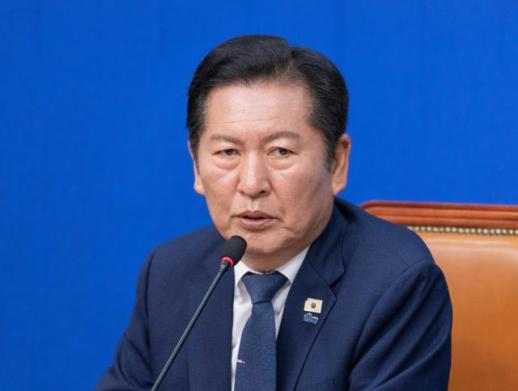 Jung Cheong-rae Says KOSPI 7,300 Reflects Lee Government’s Market, Housing Stability Jung Cheong-rae, leader of the Democratic Party, said Tuesday that the KOSPI’s first-ever move above 7,300 was an “astonishing figure,” attributing the rise to restored confidence in South Korea’s capital markets. Speaking at a party leadership meeting at the National Assembly, Jung said the price-to-book ratio, or PBR, was 0.8 under the Yoon Suk Yeol government but has now climbed above 2.0. He said the market’s rise could be read as a sign that state affairs are stable and “Korea risk” has faded, adding that trust in President Lee Jae-myung’s governance is driving the rally. Jung also pointed to Lee’s repeated Facebook posts expressing a strong commitment to stabilizing home prices, arguing that expectations of a steadier real estate market are lifting stocks. He criticized the People Power Party for what he called ideological attacks on the Lee government, saying it should “change its mind quickly” and join what he described as a period of rising national fortunes. On constitutional revision, Jung urged the party to cooperate with passage of a proposal ahead of a planned vote at the National Assembly plenary session on May 7. The People Power Party has labeled the effort a rushed revision aimed at elections. Jung said constitutional change should ultimately be decided by voters in a national referendum. With the party opposing the measure as an official position, the Democratic Party and National Assembly Speaker Woo Won-shik have called for a free vote. Jung also attacked the People Power Party’s nominations for the June 3 local elections and parliamentary by-elections, calling them “Yoon-again” nominations. He said the party nominated Choo Kyung-ho and Lee Jin-sook, and claimed it would nominate Chung Jin-suk, whom he described as the last chief of staff to Yoon Suk Yeol. “If so, then nominate Yoon Suk Yeol from prison, too,” Jung said. He added, “On Dec. 3, they staged an insurrection with guns and swords. On June 3, are they going to stage an insurrection through nominations?”* This article has been translated by AI. 2026-05-06 10:40:40
 -
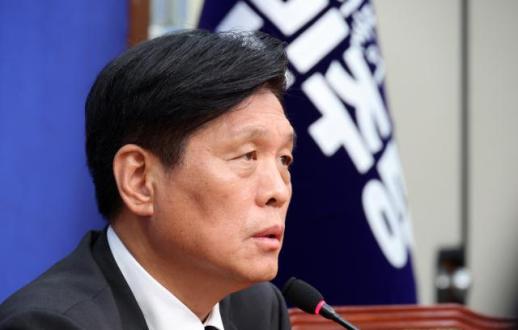 Democratic Party rules out national-level candidate unity talks ahead of June 3 local elections Cho Seung-rae, secretary-general of the Democratic Party of Korea, said May 4 that there would be no party-led candidate unification at the national level for the June 3 local elections, while leaving open the possibility of local coordination in Ulsan based on public sentiment. At a news briefing held 30 days before the vote, Cho said there had been “various things being said” about unification. He added that there would be no central party-to-party negotiations, saying such talks could distort voters’ will. Cho said, however, that “in special regions like Ulsan,” decisions would be made independently. He said there had been substantial calls in Ulsan for unification covering the mayoral race, five district chief races and seats on the metropolitan council. In the Ulsan mayoral contest, Democratic Party candidate Kim Sang-wook, Progressive Party candidate Kim Jong-hoon and Rebuilding Korea Party candidate Hwang Myeong-pil have agreed on the need for unification. On the broader outlook for the election, Cho said it would be inappropriate to label the vote a failure simply because opinion polls show a gap and the party does not win by a wide margin. He said the goal is to win “even one more seat,” including in basic council races, rather than focusing on numerical targets. Cho also addressed recent controversy over remarks by party leader Jeong Cheong-rae, including his use of the term “oppa.” Cho said the party must not let down its guard and that while it would be best to avoid any mistakes, it is more important to acknowledge errors, apologize and show sincerity.* This article has been translated by AI. 2026-05-04 16:33:06
 -
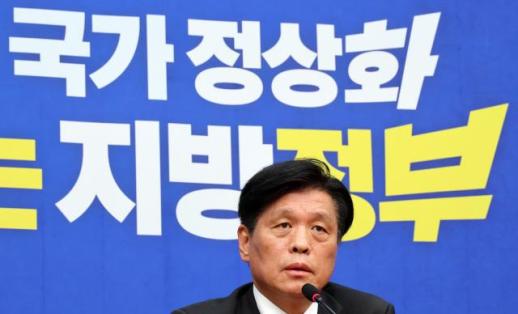 South Korea’s ruling party says timing of special counsel bill needs review amid internal debate Cho Seung-rae, secretary-general of the Democratic Party of Korea, said the party needs further discussion on when to move a bill to appoint a special counsel to investigate alleged “fabricated indictments,” taking a cautious line ahead of the June 3 local elections. His remarks on May 4 marked the party’s first official position after President Lee Jae-myung said he would leave the timing and procedure to the party. At a news briefing at the National Assembly, Cho said the party had introduced the special counsel bill based on findings confirmed through a National Assembly special committee’s fact-finding probe into the alleged fabricated indictments. Earlier that morning, Cho had told MBC Radio’s “Kim Jong-bae’s Focus” that passage before the local elections was possible. He later said he also stressed on the program that the party should weigh the bill itself and its potential impact on the election. Separately, the presidential office’s senior secretary for political affairs, Hong Ik-pyo, delivered Lee’s position, saying “a national consensus has formed” on the special counsel issue. Hong said Lee called it a must to uncover the truth and restore judicial justice through a special counsel, but asked the ruling Democratic Party to decide the specific timing and procedures after gathering public opinion and deliberating. The Democratic Party last month wrapped up the special committee’s activities on April 30 and immediately introduced the “fabricated indictment special counsel bill.” The bill would allow a special counsel to investigate the Ssangbangwool North Korea remittance case and the Daejang-dong and Wirye new town development corruption cases. The bill also includes a provision for the special counsel to handle the maintenance of prosecutions in cases transferred to it, prompting controversy over whether it effectively grants the special counsel authority to drop indictments. 2026-05-04 15:06:26
 -
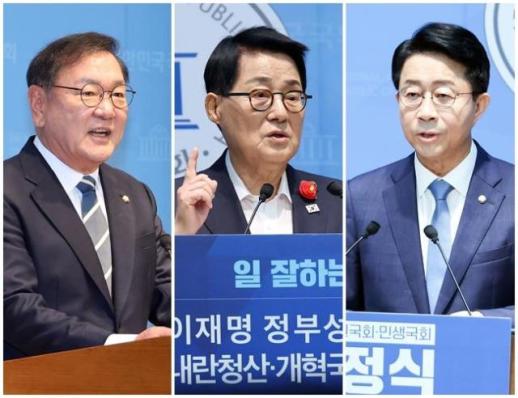 Democratic Party race for National Assembly speaker heats up with three candidates The race to choose the National Assembly speaker for the second half of the year began in earnest on May 4 as the Democratic Party opened candidate registration. Five-term lawmakers Kim Tae-nyeon and Park Jie-won and six-term lawmaker Cho Jung-sik each declared their candidacies, setting up a three-way contest. With the Democratic Party holding a majority of seats, its internal primary is widely seen as the decisive contest. Kim pitched an “effective, working Assembly,” Park called for “ending insurrection forces and completing reforms,” and Cho emphasized a “livelihood-focused Assembly.” Kim told a news conference at the Assembly that he proposed the 2020 “Working National Assembly Act” and the 2026 “Effective Working National Assembly Act.” “To complete the era of popular sovereignty through institutions and protect Korea’s future amid a wave of major transformation, we need an Assembly that works well. I, Kim Tae-nyeon, am the right person,” he said. He said the framework is ready to be implemented, arguing that plenary sessions would open automatically, bills would be handled within deadlines, and committee chairs who do not work could be replaced. Kim also pledged to complete legislation for the “popular sovereignty government’s” policy agenda, make constitutional revision a reality, create a strategic council for the people’s economy, elevate parliamentary diplomacy to a national strategy, and turn the Assembly into a venue for social dialogue. Park, the party’s oldest lawmaker, said “insurrection forces” were still blocking the president’s governance and reforms toward what he called a “real Republic of Korea.” He accused the main opposition party of rejecting even minimal constitutional changes, including adding the March 15 uprising, the Bu-Ma Democratic Protests and the May 18 Gwangju Uprising to the Constitution’s preamble and tightening requirements for martial law, while “handpicking and nominating insurrection forces.” “We must make the Lee Jae-myung government a success and open wide the door to the Seventh Republic and recreate the administration — only then can we finally end the insurrection,” Park said. “This is the last wish I want to fulfill as Park Jie-won, who has been able to live again thanks to the people and party members. Give a chance to Park Jie-won, who will support you better,” he added. Park’s pledges included proactive steps on prosecution and judicial reform to “complete the revolution of light,” building a “K-Assembly that works,” strengthening lawmaker diplomacy and special envoys, and creating a tentative “National Assembly Future Special Committee” to prepare for AI, future energy, robots, the population and regional extinction crisis, and low birthrates and aging. Cho, the party’s most senior lawmaker by terms and who stepped down the previous day as the president’s special adviser for political affairs, said the Lee Jae-myung government was showing the public “the effectiveness of politics” through fast results. “Now it’s time to show the public the effectiveness of the National Assembly as well,” he said. “What matters most for a speaker from the ruling party is coordination with the government and stability. As a proven six-term lawmaker, I, Cho Jung-sik, am the right person,” he said, calling the bid his third run for speaker and his final political challenge in Yeouido. Cho’s key pledges included building a “livelihood-focused Assembly” and a “popular sovereignty Assembly,” completing constitutional revision, strengthening the Assembly’s role and standing, and expanding parliamentary diplomacy. Two four-term lawmakers, Nam In-soon and Min Hong-cheol, also entered the race for the deputy speaker post allocated to the Democratic Party. Nam urged support for “a female deputy speaker who communicates and listens,” saying she would raise the Assembly’s sensitivity to human rights. Min said he believed a deputy speaker from Yeongnam — often described as difficult terrain for the party — could become “the signal flare for victory.” The Democratic Party plans to pick its nominees for speaker and deputy speaker on May 13 and later put them to a plenary vote. The party will combine an online vote of dues-paying members (20%) held over two days starting May 11 with an in-person vote by lawmakers on the day of selection (80%). Election in the plenary session requires approval by a majority of all lawmakers. With the Democratic Party holding a majority, passage is expected to be smooth. The Assembly speaker ranks second in the state protocol order and has authority to open plenary sessions and bring bills to the floor. The new speaker’s approach is expected to shape the legislative calendar and handling of contentious bills in the second half of the year.* This article has been translated by AI. 2026-05-04 13:15:18
 -
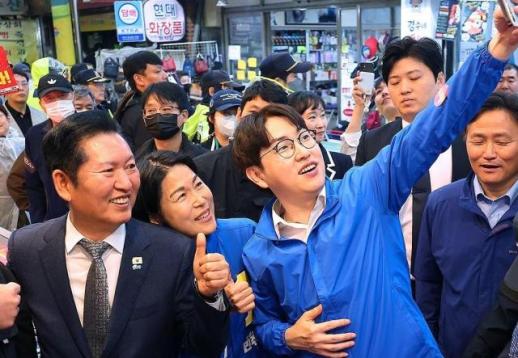 Democratic Party’s Jeong Cheong-rae, candidate Ha Jung-woo apologize after child harassment backlash Jeong Cheong-rae, leader of the Democratic Party, and Ha Jung-woo, the party’s candidate in Busan’s Buk-gu Gap district, apologized after drawing criticism for urging a first-grade girl to call Ha “oppa,” a Korean term often used by younger females for an older male. The Democratic Party said May 3 that Jeong issued a statement saying he was “sorry to the child and the child’s parents, who may have been hurt as the child became the center of controversy” during a visit to Gupo Market. Ha also said that day that “the child became the center of controversy” while he was meeting residents, adding, “I offer my apologies to the child and the parents who may have been hurt. I will be more careful and meet residents with a low and humble attitude.” Jeong and Ha visited Gupo Market in Busan on the morning of May 3. Jeong asked the girl, “What grade are you in? This is Jung-woo oppa. Say ‘oppa.’” Ha echoed him by saying, “Oppa.” The People Power Party criticized the exchange as “child sexual harassment” and “child abuse.” Rep. Seong Il-jong wrote on Facebook, “Ha, at age 50, do you really want to hear an 8-year-old girl call you ‘oppa’ that badly?” adding, “As a father with a daughter, I can’t stay silent.” Ha was born in 1977. Seong also criticized Jeong, saying, “No matter how desperate you are for votes, can you really put a child through this?” He added that while Ha might lack experience as a political newcomer, it was “truly devastating” that Jeong, a four-term lawmaker and party leader, took part. Rep. Park Jeong-hoon, described as a close friend of independent candidate Han Dong-hoon, who has declared his run in Buk-gu Gap, said, “Telling an elementary school student to call a politician more than 40 years older ‘oppa’ is clear ‘child sexual harassment.’” Park added that while such behavior by the Democratic Party was “nothing new,” Ha was “just as pathetic” for laughing and joining in by saying “oppa.” * This article has been translated by AI. 2026-05-04 08:41:44
 -
 Democratic Party Says ARS Outage Claim in Runoff Was Resolved by Candidate Agreement The Democratic Party of Korea on Wednesday dismissed Jeonnam Gov. Kim Young-rok’s call for a reinvestigation into an alleged ARS phone-voting outage in the runoff for the Jeonnam-Gwangju Integrated Special Mayor primary, saying the issue had already been addressed through an agreement among the candidates. Kim lost the race to Min Hyung-bae, a former lawmaker. Party Secretary-General Cho Seung-rae told reporters at the National Assembly after a party affairs committee meeting that Kim appeared to have misunderstood the facts. Cho said the party confirmed that 2,308 votes from Jeonnam-area voters were excluded during the first round of outgoing calls, and that a second round of calls was made to those 2,308 voters after agreement by the candidates’ representatives. Cho added that the party apologized to the candidates’ sides for the problem and took immediate steps to remedy the impact. He said he was speaking based on a review of the raw data, and stressed that the party conducted a thorough investigation and confirmed there was no issue. Kim, speaking at a news conference Tuesday at the Gwangju Metropolitan Council, called for a full party reinvestigation of the primary process and broader reforms to prevent a recurrence. He said two weeks after the primary ended, the party headquarters had still not provided a responsible explanation for the concerns he raised. He alleged serious problems with fairness and transparency, citing 2,308 ARS outages in Jeonnam during the runoff, inadequate voting guidance for the electorate, duplicate voting by party members, and a lack of disclosure of information about the overall primary process.* This article has been translated by AI. 2026-04-30 17:22:38