

Journalist

Kang Sang Heon
violet1701@ajunews.com
-
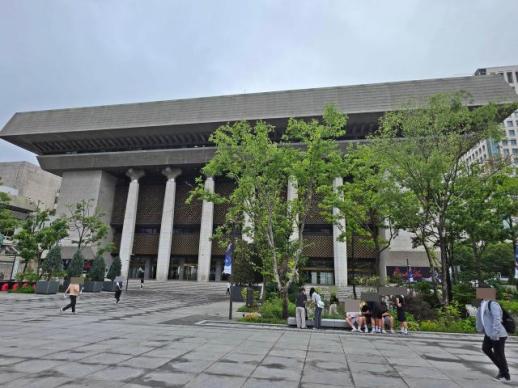 Exploring the Heart of Korean Performing Arts at Sejong Center Gwanghwamun, a historical center of South Korea that has evolved from the Joseon Dynasty through the Japanese occupation to modern times, is home to the Sejong Center for the Performing Arts, often referred to as the "heart of the arts." Despite its proximity, the inner workings of this cultural landmark have remained largely hidden from the public eye. On May 28, visitors embarked on a "Backstage Tour" of this monumental building, revealing the dedication and history behind the scenes that contribute to its vibrant performances. As former announcer Yoo Jeong-ah guided the group, the moment they stepped through the closed doors, the hidden aspects of the stage, usually obscured by dazzling lights and applause, came into full view. This secret space, typically off-limits to the general public, evoked a mix of excitement and nostalgia as attendees adjusted to their surroundings. This program, organized by the Seoul Tourism Foundation in collaboration with the Sejong Center, offered a unique opportunity to explore both the birthplace of performing arts and the historical significance of the venue. It was not merely a tour of a landmark but a genuine journey into the city's cultural depths. ◆ From Ashes to a Cultural Hub: The Grandeur of 1978 The Sejong Center now stands where the Seoul Citizens' Hall, a prominent performance venue completed in 1961, once existed. After a devastating fire in December 1972, Seoul lacked a proper venue, forcing the Berlin Philharmonic Orchestra to perform at Ewha Womans University the following year. The conductor, Claudio Abbado, expressed dissatisfaction with the facilities, vowing never to return, highlighting the urgent need for a comprehensive performance hall. Construction began in 1974, and the Sejong Center officially opened in April 1978. Built with an impressive capacity of over 3,800 seats, it was designed with an awareness of the North Korean Mansudae Art Theater amid the division of the Korean Peninsula. After renovations in 2004, the seating was adjusted to 3,022. Herbert von Karajan, the renowned conductor who led the Berlin Philharmonic in 1984, praised it as a "wonderful hall." The architect, the late Um Deok-mun, envisioned the Sejong Center as "Seoul's living room," integrating traditional Korean architectural elements like the main house and annex with modern design. For instance, the Grand Theater serves as the main house, while the Chamber Hall and M Theater represent the annex. President Park Chung-hee requested a tiled roof design, but Um insisted on preserving tradition through the curves of the corridors and eaves without tiles, ultimately completing the building as it stands today. The most significant legacy of this space is the grand pipe organ that fills the left wall of the Grand Theater. Custom-built by Karl Schuke in Germany, its installation and tuning took 13 months, involving 4,000 personnel, including 1,400 German technicians. The organ features 8,098 pipes, six keyboards, stands 11 meters tall, 7 meters wide, and weighs 45 tons, valued at approximately 6 billion won today. Its design reflects the shape of a geomungo and the curves of traditional tiled roofs, incorporating sounds reminiscent of Buddhist bells, solidifying its status as a symbol of the venue. ◆ The Aesthetics of One Inch Behind the Stage and the Boundary-Breaking S Theater While the sound reflectors are usually lowered, a vast auxiliary space lies hidden behind the stage. Moving to the "Stage Right," the backstage area was bustling with activity as staff prepared for a rehearsal of the musical "Beethoven," resembling a massive organism in motion. The 17-meter rotating stage takes 27 seconds to turn 90 degrees and 55 seconds for a 180-degree rotation. A lifting platform allows the lead actor to rise and descend from the floor, while 43 suspension rods hang from the ceiling, leading to 11 dressing rooms below, hinting at the countless hours of effort that go into creating a spectacular performance. Exiting the Grand Theater leads to the S Theater, a flexible black box theater with around 300 seats that opened in 2018. This space boldly removes the boundaries between the audience and the stage, providing an immersive experience. When all the seats are pushed back, it transforms into a flat stage. A guide shared a humorous anecdote about an audience member who dozed off on a cushioned seat, only to wake up startled by an actor standing right in front of them, showcasing the freedom of this space. ◆ The Memorial Garden 'Garden of Gratitude' and the Future of Arts Tourism The journey through the arts naturally led to Gwanghwamun Square, where the newly opened "Garden of Gratitude" serves as a memorial space honoring the countries that participated in the Korean War. Similar to the Vietnam Veterans Memorial in Washington, D.C., or the National Memorial Arboretum in the UK, this open public space is designed to connect with the daily lives of citizens. It symbolizes South Korea's commitment to remembering its painful history and honoring the sacrifices of allied nations in the heart of Gwanghwamun. In the garden, 23 sculptures stand silently, symbolizing the height of 6.25 meters, representing the date of the Korean War's outbreak on June 25. The number 23 signifies the noble dedication of the allied forces (the Korean military and 22 participating nations) who shed blood to protect this land. Notably, some sculptures are made from stones donated by the participating countries, enhancing the space's significance. Each evening, a laser show titled "Light of Gratitude 23" illuminates the sky from the 23 sculptures, creating a breathtaking display that connects the sacrifices of the past to the peaceful nightscape of today. The tour then led underground to the immersive media exhibition space "Freedom Hall," which poignantly reflects the painful memories of war and the remarkable growth of South Korea from the ashes through media art, leaving a profound impact on visitors. Ki Gi-yeon, head of the Seoul Tourism Foundation, noted, "With the addition of the Garden of Gratitude and the underground media art, a new combination of attractions has been created in Gwanghwamun Square, traditionally guarded by the statues of Admiral Yi Sun-sin and King Sejong the Great." He emphasized that just as South Koreans feel a sense of pride when they encounter the national flag abroad, foreign tourists will also experience a deep emotional connection when they discover their flags in this land of freedom preserved by their ancestors. A representative from the Sejong Center mentioned that over 60 foreign tourists have already visited after seeing reports in international media. The cost of 30,000 won and the 70-minute experience are deemed worthwhile as they immerse visitors in the 600-year history of Gwanghwamun, the philosophy of architect Um Deok-mun, and the heart of the arts. Currently, the tour is exclusively for foreign visitors, but the foundation plans to open it to locals in the future, depending on demand. The day will soon come when locals can also explore this familiar yet unfamiliar world behind the stage that they pass by every day, and it is a journey worth waiting for.* This article has been translated by AI. 2026-06-03 06:03:00
 -
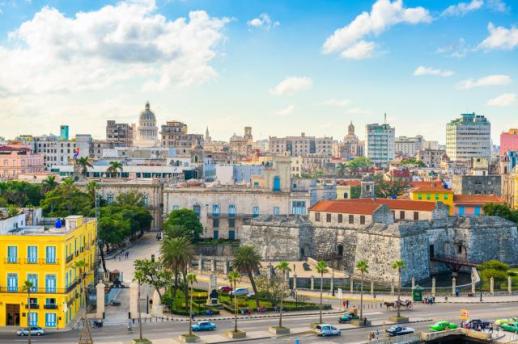 Cuba's Tourism Industry Faces Collapse as Major Hotel Group Withdraws 쿠바, once known as the "Pearl of the Caribbean," has rapidly descended into a graveyard of capital. The lively salsa music that once filled the streets has fallen silent as 62 luxury hotels and resorts have closed their doors. The Canadian hotel group Blue Diamond Resorts, which supported Cuba's tourism industry, has decided to withdraw completely. The reasons for this withdrawal are multifaceted. U.S. sanctions, a shortage of aviation fuel, power outages, and a reduction in key flight routes have all converged. The company cited "ongoing operational constraints" as a significant factor. This situation illustrates how vulnerable a nation's core industry can be to external shocks. Statistics paint a stark picture. From January to April this year, only 328,608 foreign tourists visited Cuba, a 55.8% drop compared to the same period last year. In April alone, the number was just 30,551. Tourists from Canada, which accounted for 40% of visitors, decreased by 63.8%. With the departure of these major players, the entire ecosystem encompassing hotels, airlines, travel, and local businesses has suffocated. It is uncomfortable to dismiss this as a foreign disaster. Tourism is the most vulnerable industry to external conditions. We experienced the horrific pain of an ecosystem shutdown during the COVID-19 pandemic. Each time geopolitical tensions arise, such as the THAAD conflict or strained Japan-South Korea relations, the tourism sector is hit hardest. While it is encouraging to hear foreign languages again in areas like Myeongdong, Hongdae, and Seongsu-dong, we must assess how precariously this recovery stands. The government is pushing to achieve its goal of attracting 30 million tourists by accelerating efforts. The direction is correct, but impressive numbers do not equate to industry strength. Simply increasing visitor statistics does not create a resilient structure. It is crucial to consider not just how many tourists arrive, but also where they come from, how much they spend, and the economic benefits they bring to local communities. The Korean Peninsula also faces persistent geopolitical risks. If security crises or diplomatic tensions arise, leading foreign airlines to cut routes and major investors to withdraw funds, any recovery could be abruptly halted. Given the high dependency on global chain hotels and foreign platforms, it is time to evaluate whether the domestic ecosystem can withstand the withdrawal of external capital. While tourism may appear to be a glamorous consumer industry, it is, in reality, a complex ecosystem tightly interwoven with lodging, transportation, and local commerce. A disruption in one area can quickly ripple through the entire sector. What we need to cultivate now is a solid foundational strength. We must diversify the demand for inbound tourism concentrated in specific countries and strengthen domestic tourism as a robust defense. Local tourism should not be a one-time event but rather a structure that promotes sustained stays and spending. Universal infrastructure that allows those with mobility challenges to travel comfortably, a safety response system that activates during crises, and the resilience of small businesses are all essential. Cuba's reality serves as a mirror that could reflect our own situation at any moment. Tourism may grow when the winds are favorable, but true strength is tested in times of crisis. Before celebrating the figure of 30 million, we must first solidify the roots of an industry that can withstand fierce external pressures. Substance and structural improvement should take precedence over flashy promotional slogans.* This article has been translated by AI. 2026-06-02 11:03:00
 -
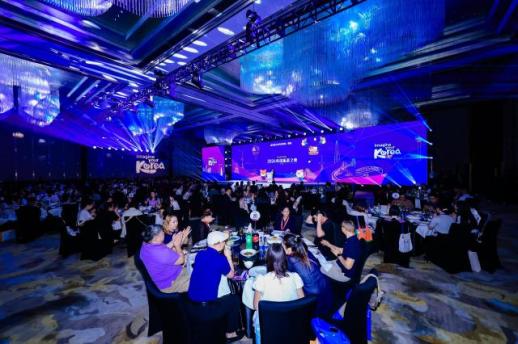 Efforts to Boost Regional Tourism in South Korea Target Foreign Visitors The South Korean tourism industry is actively working to redirect foreign visitors from the metropolitan area to regional destinations. Moving beyond the previous approach of encouraging simple visits to tourist attractions, the industry is focusing on creating direct flight demand from high-income target groups, discovering local content, and improving on-site infrastructure. This strategy aims to enhance the quality and diversity of K-tourism beyond mere quantitative recovery. ◆ Targeting High-Income Chinese Tourists with Direct Flights The first step in revitalizing regional tourism is undoubtedly improving accessibility and expanding the affluent customer base. Recently, the tourism industry has identified the Yangtze River Delta region as a key target to disperse Chinese tourists, who are predominantly concentrated in the metropolitan area. A primary focus is Hangzhou, a city recognized as a 'new first-tier city' in China, known for its economic strength, population, and growth potential. Home to major IT companies like Alibaba, Hangzhou has a resident population of 12.62 million and an annual disposable income per capita of approximately 16 million won. Taking advantage of over 7,000 airline seats operating weekly between Korea and Hangzhou, marketing efforts for direct flights to regional destinations have intensified. At the recent '2026 K-Tourism Roadshow' B2B consultation held locally, over 100 participants, including 39 domestic organizations and local Chinese platforms, discussed developing regional tourism content connecting Hangzhou and Busan. The organization plans to attract visitors to the regions by reflecting the preferences of the Chinese MZ generation, who favor individual travel, through platform marketing linked with diverse industries. ◆ Attracting Tourists with Local Culinary Experiences Having opened the door for regional influx through direct flight routes, the key to retaining these visitors lies in unique local content. Regions facing extinction due to climate change and aging populations are making efforts to secure sustainability by leveraging their unique ingredients. A prime example is the 'Delicious Coexistence on Bi-yang' food festival, which attracted 1,600 tourists over two days at the end of last month. Seven renowned chefs, including Kim Do-yoon and Oh Se-deuk, visited Bi-yang Island to develop new dishes using seasonal ingredients, generating significant interest. Importantly, this initiative is not a one-time festival. New recipes, such as seaweed bibimbap and sea snail bread, are being shared with seven local restaurants on Bi-yang Island for ongoing sales. By combining the region's rustic assets with popular culinary trends, a new demand for tourism is being created, establishing a virtuous cycle that boosts local residents' incomes. ◆ Infrastructure Improvements Key to Eliminating Overcharging As global mega-events approach, local governments are prioritizing proactive assessments of their tourism readiness. They recognize that even with excellent content and direct flight routes, long-term growth is impossible if the reliability of the infrastructure to support these offerings deteriorates. In preparation for the BTS World Tour concert in Busan on June 12-13, the city is launching a comprehensive inspection of the accommodation industry in collaboration with relevant agencies. The plan aims to eradicate persistent issues such as overcharging and unilateral reservation cancellations that have plagued large events. A monitoring campaign called 'Pleasant Interventions' will also be implemented, allowing citizens to report hygiene issues or unfair pricing via QR codes until the end of October. This reflects a sense of urgency to successfully host events that attract global attention, thereby proving the competitiveness of regional tourism. A tourism industry representative stated, "Revitalizing regional tourism cannot be solved simply by increasing overseas promotions. It requires a fair market environment where foreign tourists can confidently spend, supported by content that highlights the unique charm of the regions, to truly usher in a new era of K-tourism in the provinces."* This article has been translated by AI. 2026-06-01 09:45:00
 -
 K-Tourism's Future Rides on Fair Accommodation Practices As the large K-pop concert in Busan approaches in June, the issue of accommodation overcharging has resurfaced. The practice of unilaterally canceling confirmed reservations and demanding extra fees goes beyond mere pricing disputes; it undermines the very order of transactions. This behavior leaves foreign tourists with a negative impression, shaking the foundation of trust that is vital for K-tourism. In response, the city of Busan and local communities have stepped in, urgently providing over 1,300 alternative accommodations by utilizing university dormitories and religious facilities. It is a bittersweet scene where local governments, desperate to attract tourists, take on the role of firefighters to prevent some businesses from exploiting the situation for short-term profits. In this context, the establishment of the 'Task Force to Eradicate Regional Overcharging' by the government on the 28th holds significant importance. Led by the Ministry of Economy and Finance and the Ministry of Culture, Sports and Tourism, the task force includes the Fair Trade Commission, the National Tax Service, the National Police Agency, and the city of Busan. Notably, this response goes beyond mere recommendations for restraint. The government plans to eliminate the cap on rewards for reporting price collusion and unfair practices among accommodations, offering up to 10% of fines as rewards. Joint inspections by the National Tax Service and the Fair Trade Commission will be conducted, with corrective orders and business suspensions for any identified violations. Additionally, businesses found guilty of overcharging will face a threefold increase in penalties for hotel grading evaluations. The true significance of this task force lies in the government's clear intention to regulate accommodation prices and reservation practices within a formal framework for the first time. In February, the government had already announced measures to eradicate overcharging, introducing the 'Safe Price System' that requires accommodations to report and disclose seasonal pricing in advance. Amendments to relevant laws, including the Tourism Promotion Act, are underway to allow for business suspensions if accommodations charge more than reported or fail to display prices. Proposals are also being considered to penalize unilateral reservation cancellations. Historically, the domestic accommodation market has been left unchecked during specific periods such as concerts, festivals, and holidays under the guise of 'market pricing.' However, the government's current approach is different. Rather than simply preventing price increases, it aims to establish a minimum level of predictability and order in transactions. This means ensuring that tourists can check into their reserved rooms and pay the displayed prices. Of course, there are structural issues. While demand for K-pop concerts and international events is rapidly increasing, the supply and management of accommodations have not kept pace. This is why prices skyrocket whenever demand concentrates in specific areas. However, overbooking and overcharging cannot be justified. Supply shortages are a policy issue, while undermining transaction order is a separate concern. As we talk about a future with 20 million foreign tourists, tourism competitiveness cannot be built solely on flashy content. The level of Korean tourism ultimately depends on how tourists are treated outside world-class venues, whether they can access their reserved rooms, and if the displayed prices are honored. K-pop has already reached the pinnacle of global success. Now, the focus must shift to enhancing the fundamental capacity of Korean tourism to welcome these fans. If local communities continue to scramble for alternative accommodations every time a concert is held, the growth of K-tourism will inevitably face limitations. What is needed now is not another campaign but a predictable accommodation order. It is hoped that this task force will serve as a starting point for rebuilding trust in the accommodation market beyond mere one-time crackdowns. 2026-05-28 16:24:00
 -
 Airbnb Expands Beyond Lodging with New Super App Features Airbnb is expanding its business model from a simple lodging reservation platform to a comprehensive travel service provider. The company plans to introduce convenience services such as car rentals and grocery delivery, leveraging artificial intelligence (AI) to actively target global traveler demand. Recently, there has been a noticeable trend among global online travel agencies (OTAs), including Airbnb, to evolve into 'super apps.' This shift aims to diversify revenue models and enhance customer retention, reflecting a broader industry trend. By combining vast data with AI, Airbnb seeks to seamlessly integrate travelers' entire journey into its ecosystem. ◆ Comprehensive Travel Support from Transportation to Accommodation Starting this summer, Airbnb will gradually roll out new services that connect all aspects of travel, from transportation to accommodation and local experiences. Key new services include grocery delivery, airport pickups, luggage storage, and car rental connections. In major U.S. cities, Airbnb has partnered with Instacart to allow guests to order groceries before arriving at their accommodations. Additionally, the company will offer airport pickup services through Welcome Pickups and luggage storage options in collaboration with Bounce in key cities worldwide. By late summer, users will also be able to search for and book nearby rental cars through the app. ◆ Addition of Boutique Hotels and Local Experiences Airbnb will also revamp its accommodation lineup and experience offerings. The platform will add boutique and independent hotels in 20 major cities worldwide, selected based on location and design criteria, excluding large hotel chains. The local experience category will feature over 3,000 programs that allow travelers to explore global landmarks like the Tower of London and Tokyo Skytree with local experts, as well as 2,500 culinary experiences. Notably, ahead of the 'FIFA World Cup 2026' in North America, special experiences will be available for watching matches or training with legendary soccer players in host cities. ◆ Enhanced Platform Usability with AI Technology AI technology will be integrated across the platform to improve search and booking convenience. The AI will analyze over a billion accumulated reviews, summarizing key information such as location, amenities, and family-friendliness. In the second half of the year, a feature will be introduced that allows users to compare accommodations saved in their wish lists at a glance. Additionally, new features will include a 'shared itinerary' for planning trips with companions and a 'connections and travel map' to check recommendations from friends. The AI-based customer support assistant currently supports multilingual chat and will expand to voice support later this year. Brian Chesky, CEO of Airbnb, stated, "We aim to provide more meaningful travel experiences through unique accommodations, differentiated local experiences, and convenient additional services that go beyond simple lodging."* This article has been translated by AI. 2026-05-23 10:22:43
 -
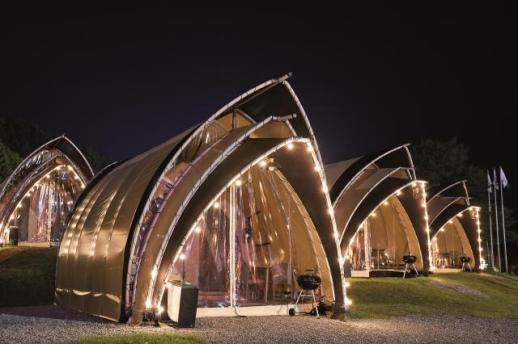 Glamorous Camping and Artisan Bread Festival Await in Chuncheon 초여름 문턱에 선 5월, 숲속에서 들려오는 청아한 새소리와 따스한 햇살 아래 퍼지는 고소한 빵 냄새가 여행객 마음을 간질인다. 번거로운 텐트 설치나 캠핑 장비 없이 자연 속에서 오롯이 누리는 글램핑의 여유, 그리고 전국의 내로라하는 유명 베이커리를 한자리에서 만나는 '숲속 빵시장'은 일상에 지친 현대인에게 건네는 달콤한 위로다. 이번 주말, 낭만과 미식이 가득한 강원 춘천으로 훌쩍 떠나보자. 거동이 불편하신 어르신부터 10대 아이까지 3대가 함께 편안하고 완벽한 봄날의 피크닉을 만끽할 수 있다. ◆No Need to Pack Equipment... Just Enjoy Luxury Glamping It takes about 1 hour and 30 minutes to reach Elysian Gangchon Camping Park from Seoul. This all-season resort features a golf course, ski area, and condominiums, and has adapted to diverse travel preferences by offering both auto camping and glamping zones. Among these, the glamping area is particularly popular with families. A blend of the words “glamorous” and “camping,” glamping offers a luxurious camping experience without the hassle of setting up tents or packing camping gear. The glamping zone at Elysian Gangchon has been recently renovated in a Nordic style, creating an exotic atmosphere with curved tents set against a forest backdrop. Notably, the accommodations provide hotel-level amenities, including beds, sofas, tables, and all necessary cooking utensils. Most importantly, the area is designed to be barrier-free, allowing easy access for wheelchairs and strollers. This makes it comfortable for families with elderly members or teenagers. As the sun sets, guests can enjoy barbecues, thanks to individual grills provided in each unit, allowing for a private and pleasant dining experience. As darkness falls and the night lights illuminate the area, the tranquil atmosphere of glamping sets in. During the upcoming summer vacation season, guests can enjoy outdoor performances at the beer garden or cool off in the outdoor swimming pool. Facilities such as parasols, lounges, pergolas, and snack bars are available, and items like swimsuits, towels, mats, life jackets, and tubes can be rented, making it easy for visitors to enjoy the scenic views of Geombong Mountain. ◆A Bread Pilgrimage Destination with 20,000 Visitors... A Sensory Delight at the Forest Bread Market If glamping alone isn’t enough, visitors can indulge their taste buds at the Forest Bread Market, the largest bread festival in the country. Scheduled for May 24 from 10 a.m. to 4 p.m. at the Elysian Gangchon Lawn Plaza, this event has gained popularity as a must-visit destination for bread lovers across the nation. The festival was first planned in October 2024 to create opportunities for bakeries and cafes, as well as small businesses in flea markets, while contributing to the local economy. Following the recent trend of “bread pilgrimages” centered around popular items like Jeju Udo peanut bread and Daejeon Seongsimdang, this festival aims to fill the gap in the so-called “national bread pilgrimage map” where Gangwon Province was previously missing. The result has been a resounding success, attracting over 20,000 visitors to a single event and selling out products from participating bakeries early. With each passing year, the festival has grown in reputation, establishing itself as a leading dessert festival in South Korea. This year’s theme is “A Day of Sensory Enjoyment Where the Scent of the Forest Meets the Aroma of Bread,” and the festival has significantly expanded in size. Over 100 popular bakeries and dessert brands from Chuncheon, Gangwon Province, and across the country will participate. The organizers have meticulously prepared a variety of cultural content to satisfy visitors’ senses and encourage longer stays. The event will feature emotional photo zones and comfortable relaxation areas to attract both the MZ generation and families, along with a handmade flea market, live busking performances, prize events, book giveaways for children, and simple baking experiences. Additionally, a collaboration with the camping gear rental platform “Camter” will enhance the event, appealing to camping enthusiasts as well. ◆A Model Festival Promoting Local Small Businesses The most significant achievement and distinguishing feature of this year’s Forest Bread Market is its active commitment to supporting local businesses beyond just attracting visitors. Elysian Gangchon has collaborated with the bakery platform “Bread Pilgrimage” to create a special “bread pilgrimage map” for the Chuncheon area. This initiative aims to promote hidden excellent bakeries in the region and inject new vitality into the local economy through dessert tourism. Elysian Gangchon plans to continue developing the Forest Bread Market as a regular market event involving local residents. To achieve this, they intend to work closely with key institutions in Chuncheon and Gangwon Province to establish a successful local festival model that fosters both regional development and support for small businesses. An Elysian Gangchon representative stated, “The combination of luxurious glamping in nature and the opportunity to taste famous breads from across the country will create a perfect synergy. We hope visitors can enjoy the best outing of the spring, combining comfortable relaxation and delightful cuisine in Chuncheon, easily accessible via the Gyeongchun Line from the metropolitan area.” * This article has been translated by AI. 2026-05-22 06:12:21
 -
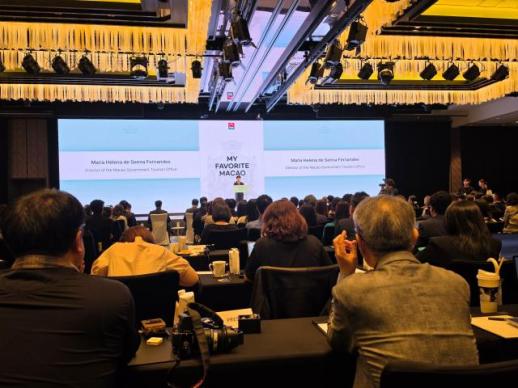 Macau Aims to Attract South Korean Tourists as a Multi-Destination Hub "This year, we aim to attract 41 million tourists, leveraging diverse infrastructure and integrated content to draw South Korean travelers to Macau," said Maria Helena de Senna Fernandes, Chair of the Macau Tourism Board. Macau is accelerating its efforts to attract South Korean tourists as it transforms into a multi-destination hub connecting Hong Kong and Guangdong Province. On May 21, the Macau Tourism Board held the 2026 Macau Tourism Seminar and Travel Mart at the Four Seasons Hotel in Seoul, where it unveiled its key tourism strategies for the year. ◆ Macau Expands Engagement with South Korean Travelers The event was attended by over 250 representatives from Macau, including Maria Helena de Senna Fernandes, the Chinese Ambassador to South Korea Dai Bing, and officials from the Hengqin Economic Development Bureau, Macau International Airport, and major integrated resorts, as well as members of the South Korean travel industry. In her welcoming remarks, Fernandes noted, "South Korea is Macau's top overseas tourism market, with 184,900 South Koreans visiting in the first quarter of this year, a 7.4% increase compared to the same period last year. We aim to increase our engagement with South Korean travelers as we target a total of 41 million tourists and over 3 million foreign visitors this year." Dai Bing also addressed the audience, stating, "Since the return of Macau to the motherland, it has successfully implemented 'one country, two systems' and has established itself as a key city in the Guangdong-Hong Kong-Macau Greater Bay Area. The Chinese Embassy in South Korea will closely cooperate with the Macau SAR government to actively support exchanges in culture, tourism, and MICE (Meetings, Incentives, Conventions, and Exhibitions) among various fields." ◆ Free Bus Service from Hong Kong to Macau: A Multi-Destination Travel Experience This year's core tourism strategy for Macau focuses on enhancing accessibility and diversifying the global market. The emphasis is on developing multi-destination tourism products linked to Hengqin, Guangdong, and Hong Kong. As part of the "Fly You to Macau" campaign, free direct buses to Macau will be provided to foreign tourists using Hong Kong International Airport until the end of the year. Additionally, with the implementation of China's 240-hour visa-free transit policy, travelers from 55 countries can explore Macau, Hengqin, Guangdong, and Hong Kong without a separate Chinese visa for up to 10 days. ◆ Culinary Experiences, Performances, and Convenient Payments: Enhancing Stay Tourism Macau is also expanding its offerings to transform from a simple visit to a stay-oriented destination. The "Tourism Plus" strategy combines MICE, culture, sports, and culinary experiences, with various experiential events planned throughout the year. The goal is to extend tourists' stay by featuring large-scale performance content. To enhance payment convenience for South Korean travelers, Macau has improved its payment options. In addition to KakaoPay, this year it will collaborate with Naver Pay to create a travel environment free from currency exchange burdens. The Macau Tourism Board plans to continue strengthening business cooperation with the domestic industry to cater to diverse demands, from family travel to the MICE sector.* This article has been translated by AI. 2026-05-21 15:25:19
 -
 K-Tourism Surges Amid Challenges, April Visitors Reach Record High The South Korean government's goal of attracting 30 million inbound tourists is gaining momentum. Despite challenges such as high oil prices and geopolitical tensions in the Middle East, the number of foreign visitors to South Korea reached 203,000 in April, a 19% increase from 171,000 in the same month last year. Spending also rose, with foreign credit card expenditures reaching a record 1.9 trillion won in April, indicating that the growth in visitor numbers is translating into increased domestic consumption. ◆ K-Tourism Breaks Through Challenges: Cumulative 6.77 Million Visitors from January to April The Ministry of Culture, Sports and Tourism announced on May 21 that the cumulative number of foreign tourists visiting South Korea from January to April totaled 6.77 million, marking a 21% increase from 5.58 million during the same period last year. This follows a historic milestone in March when monthly arrivals exceeded 200,000 for the first time, achieving this level for two consecutive months. Despite global challenges such as rising oil prices and increased fuel surcharges, travel plans booked before the Middle East crisis continued without significant disruption, allowing for strong April entry numbers. The ministry attributes this success to the global spread of K-Culture, positioning South Korea as a prominent global tourism destination beyond Asia. ◆ Chinese and Japanese Tourists Lead, North American Visitors Join In Analyzing the market, growth was observed across various regions, including China, Japan, and North America, without heavy reliance on any single country. Chinese tourists accounted for 570,000 visitors (up 29.6%), making them the largest group, followed by Japanese tourists at 300,000 (up 17.9%), driving overall growth in the inbound tourism market. Additionally, steady inflows from Taiwan (190,000) and Hong Kong (70,000) contributed to the Chinese market, while North American (236,000) and European (182,000) visitors also added to the diversification of the market. ◆ Regional Airport Arrivals Jump 38%: Foreign Spending Hits Record 1.9 Trillion Won The upward trend in inbound tourism is directly linked to qualitative growth. The distribution effect of foreign tourists across regions was evident, with 360,000 foreign visitors arriving through regional airports in April, a 38% increase from 260,000 in the same month last year. However, arrivals via regional ports decreased by 5.3% to 184,000 compared to the previous year. Notably, tourists significantly increased their spending. In April alone, foreign tourists' credit card expenditures (including online purchases) in South Korea were estimated at approximately 1.9 trillion won, the highest since records began in January 2018. The cumulative spending from January to April also reached about 6.997 trillion won, a 22.6% increase from the same period last year. ◆ Government's Comprehensive Efforts Targeting Tourism Promotion Act: Boosting Regional Tourism The government has been conducting a comprehensive effort since the 11th National Tourism Strategy Meeting. The Ministry of Culture, Sports and Tourism is making various efforts to improve regional tourism conditions, including expanding international routes at regional airports and supporting transfer services between Incheon and regional airports. Kang Jeong-won, head of the ministry's tourism policy division, stated, "The appeal of K-Culture and government support for tourism have created a synergistic effect, allowing us to surpass 200,000 inbound tourists for two consecutive months despite challenging conditions like international oil prices. We will strive for consistent growth not only in numbers but also in regional visits and spending."* This article has been translated by AI. 2026-05-21 10:29:08
 -
 Cultural Sensitivity Lacking in Recent Controversies from Starbucks to Dramas While the public is sensitive to historical issues, the business sector often remains indifferent. A recent series of incidents in the cultural and retail industries highlighted a significant lack of historical sensitivity. The backlash from exploiting painful modern history and tradition for profit has been severe. The most egregious misstep occurred in the retail sector. On May 18, marking the 46th anniversary of the Gwangju Democracy Movement, Starbucks Korea named a tumbler discount event "Tank Day" and included the phrase "Bang!" in promotional materials. This trivialized the tanks used by the military to suppress civilians and the absurd explanations given by police during the 1987 torture and death of Park Jong-cheol. The controversy quickly escalated. Shinsegae Group promptly canceled the event and dismissed the president in an attempt to mitigate the fallout, but public sentiment remained cold, leading to a boycott of Starbucks. On May 20, President Lee Jae-myung weighed in, recalling a previous controversy involving Musinsa's sock advertisement, stating, "Money may be the root of all evil, but one should not act in such a manner while wearing a human mask." This marked a direct warning from the highest authority against crossing ethical lines in pursuit of profit. The entertainment industry has not fared any better. The MBC drama "21st Century Daegunbuin," which had a budget of 30 billion won, faced intense backlash for its poor historical accuracy. It hid behind the guise of a fictional constitutional monarchy while misrepresenting the emperor's status and introducing dubious Chinese tea-drinking customs, providing fodder for Northeast Asian territorial disputes. It echoed the painful mistakes of the 2021 SBS drama "Joseon Exorcist," which was canceled after two episodes due to similar controversies, and tvN's "Mr. Queen," which faced legal penalties for dismissing the Annals of the Joseon Dynasty as mere "trash." Despite the gravity of the situation, the responses from the writers and directors responsible for historical accuracy have been slow, leaving only the lead actors to face public outrage and offer tearful apologies. The government's late response, suggesting the return of funding after the controversy erupted, has drawn criticism for being a typical example of bureaucratic ineptitude. Given that we vividly remember the struggles for independence and democracy, it is natural for us to be sensitive to historical issues. If we fill the void left by a lack of proper historical understanding with shallow commercialism and irresponsible creativity, we cannot avoid public disdain. A few insincere apologies cannot cover the deep and damaging wounds that have been inflicted on the public's historical consciousness. 2026-05-21 09:47:10
 -
 Lotte World Offers Unique Experiences with 'Star Wars' and Baby Penguins Lotte World is focusing on attracting visitors by offering a variety of attractions, from global intellectual property experiences to the birth of endangered species, in celebration of Family Month. Lotte World Tower's Seoul Sky will host the 'STAR WARS: ABOVE THE GALAXY' exhibition in collaboration with Walt Disney Company Korea, running until June 28, ahead of the film release of 'The Mandalorian and Grogu' on May 27. This themed space is designed to take visitors on a journey into the Star Wars universe right in the heart of Seoul. The entrance on the basement level features photo zones themed around the upcoming film, while a special store on the first basement level offers a variety of themed merchandise, including figures. During the May holiday period, Lotte World hosted a parade featuring the official Star Wars fan club and a marching band, which received positive feedback. Lotte World reported that foreign visitor numbers increased by approximately 41% compared to the same period last year, attributing this rise to the successful use of global IP in their space planning. At Lotte World Aquarium, visitors can witness the wonders of new life. The aquarium will debut a baby Humboldt penguin, hatched in February, on May 22 in honor of Biodiversity Day. Humboldt penguins, native to the coasts of South America, are classified as an endangered species. The aquarium operates a breeding system that scientifically regulates temperature and water conditions based on an analysis of their natural habitat in Peru, resulting in a steady birth rate since 2018. The newly hatched penguin has completed swimming adaptation and socialization training under the care of veterinarians and aquarists. Educational sessions on penguin ecology are held twice daily (at noon and 4 p.m.) in the polar zone on the first basement level. Additionally, the aquarium will host a special exhibition in collaboration with the popular game IP 'Cookie Run' until June 7.* This article has been translated by AI. 2026-05-21 08:15:00