

Journalist

WOO JOOSEONG
wjs89@ajunews.com
-
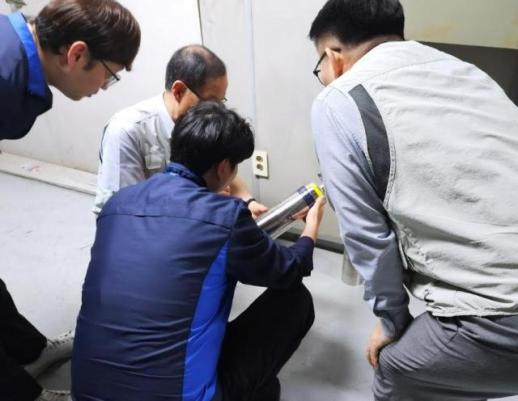 Buhyung Group Conducts Safety Inspections at 17 Sites Nationwide Buhyung Group has initiated comprehensive safety inspections across its operations to prepare for natural disasters during the summer and to prevent serious accidents. The company announced on May 19 that from May 14 to May 21, it will assess compliance with safety and health obligations at 17 sites nationwide. This initiative aims to proactively prevent safety incidents related to summer heat and heavy rainfall. The inspections will cover Buhyung Group's buildings and leisure facilities across the country. The inspections will focus on the effectiveness of safety and health management systems at each site and the implementation of practical accident prevention measures. Key inspection items include: safety and health goal setting, processes for gathering feedback from on-site workers, emergency response systems in case of accidents, risk assessments and improvements based on identified issues, and the status of fire safety equipment installation and management. Compliance with fire prevention safety regulations and the status of guidance inspections by external organizations will also be reviewed. Following its achievement of zero serious industrial accidents last year, Buhyung Group has set a management policy for this year emphasizing compliance with laws and regulations to establish a culture of safety. The company operates a dedicated safety management department and conducts regular safety training for all employees to maintain its accident prevention system. Buhyung stated, "We are taking measures to eliminate risks associated with climate change during the summer and prevent serious accidents," adding, "We prioritize safety and will maintain an environment where both visitors and workers can feel secure." Additionally, Buhyung Group has been continuously enhancing its safety and health management system since obtaining the 'KOSHA 18001' certification from the Korea Occupational Safety and Health Agency in 2019, and is now operating under the revised 'KOSHA-MS' standard. A Buhyung Group official stated, "We plan to continue regular safety training and ongoing safety education for our employees this year."* This article has been translated by AI. 2026-05-19 12:52:36
 -
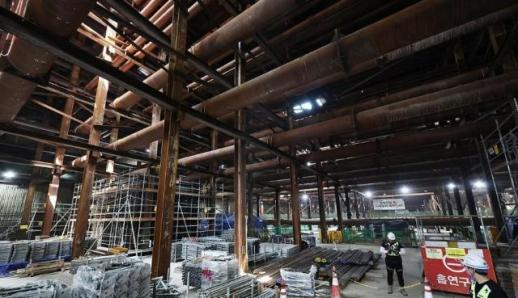 Korea Railroad Corporation Denies Seoul's Claims of Missing Rebar in GTX-A Project The Korea Railroad Corporation (KRC) has firmly denied media reports claiming that the city of Seoul notified them three times about missing rebar in the GTX-A project at the Samsung Station section. In an official statement on May 18, KRC stated, "While it is true that Seoul submits monthly construction management reports, the issue of missing rebar in the Samsung Station section was not included in the 'Summary of Key Contents' of the report, and it was reported as 'not applicable' under the 'Construction Failure Cases' section. This made it impossible for KRC to be aware of the facts in advance." KRC further clarified that details regarding the missing rebar could only be partially identified in the extensive report, specifically in the individual work logs of construction managers. They emphasized that the inclusion of certain phrases in the vast amount of data submitted under relevant laws cannot be considered formal reporting. Regarding the timeline of their awareness, KRC criticized the delay in reporting from the city. They noted, "On April 24, the city sent an email to KRC's personnel requesting attendance at a consultation meeting regarding column reinforcement, which seemed to substitute for the report on the missing rebar. After KRC strongly requested a factual report from the city and the Ministry of Land, Infrastructure and Transport, the city officials attempted to delay the report. It was only after repeated requests that KRC became aware of the specific details on April 29." KRC expressed regret that despite ongoing coordination through regular meetings and site inspections among the Ministry of Land, KRC, and the city regarding the non-stop operation of the GTX-A at Samsung Station, the city had not reported or discussed any significant defects affecting the opening until April 29. Finally, KRC stated that they plan to thoroughly verify the safety of the reinforcement plans established by the city and the existing structures. A KRC public relations official remarked, "Regarding the city's claim that they submitted related reports to KRC through inquiries in the National Assembly, we have confirmed the actual contents of the extensive construction management reports with the relevant departments. Given the seriousness of the matter, an audit of KRC is expected to take place soon."* This article has been translated by AI. 2026-05-18 20:45:00
 -
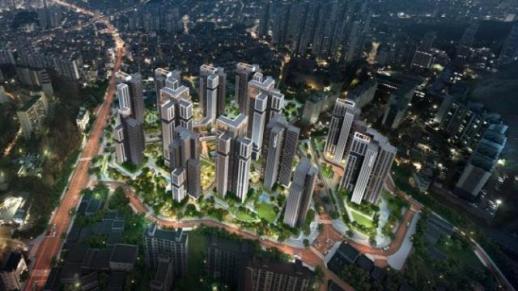 Doosan Construction Secures $733 Million Busan Mangmi 5 Redevelopment Project Doosan Construction has secured the construction rights for the Mangmi 5 District redevelopment project, a major urban renewal initiative in Busan's Suyeong-gu. With this contract, Doosan has surpassed 2 trillion won in new orders for the year. The company announced on May 18 that it was selected as the final contractor after receiving overwhelming support from members at the general assembly of the Mangmi 5 District redevelopment association held on May 16. Doosan had set a record-high order target of 6 trillion won for this year, and this significant project in Busan is expected to accelerate its progress toward that goal. The redevelopment project involves the construction of 13 residential buildings, ranging from five underground floors to 32 above-ground floors, totaling 1,800 housing units and commercial facilities. The total construction cost is approximately 733.4 billion won. Mangmi-dong, where the project will be located, is recognized as a prime residential area in Busan, boasting excellent living infrastructure. It is conveniently situated near Mangmi Station on Busan Subway Line 3 and has strong connectivity to major transportation networks, including the Gwangandaegyo Bridge and the Wondong Interchange, facilitating easy access to nearby districts such as Yeonje-gu and Haeundae-gu. A Doosan Construction representative stated, "We will complete the Mangmi 5 District as a landmark project that reflects the high residential preference in Suyeong-gu, and we will repay the support of our members. In the future, we will maintain a rigorous selection process for new orders while focusing on high-quality projects with proven business viability to sustain our solid growth." Meanwhile, Doosan Construction's quarterly report released on May 14 indicated that the company recorded a consolidated revenue of 359.4 billion won in the first quarter of this year, a 15.3% decrease compared to the same period last year. However, operating profit surged by 263.0% to 29.9 billion won, and net profit increased by 430.7% to 22 billion won. Notably, the operating profit margin improved significantly from 1.9% in the first quarter of last year to 8.3% this year, reflecting a substantial enhancement in profitability.* This article has been translated by AI. 2026-05-18 18:36:25
 -
 Daebang Construction Wins $682 Million Contract for Gwacheon Public Housing Project Daebang Construction has secured a contract for the "Gwacheon Public Housing District Development Project, Section 1."According to the construction industry on May 18, Daebang Construction submitted a bid of 68.26 billion won (approximately $682 million), which is 91.10% of the estimated price, and was selected as the top bidder in a recent comprehensive bidding process. A total of 10 construction companies participated in the bidding.The project involves land development over an area of approximately 963,217 square meters (about 239 acres) in Gwacheon, Gyeonggi Province, covering the neighborhoods of Gwacheon-dong, Juam-dong, and Makgye-dong. The total contract amount is about 68.26 billion won, and the construction period is set for 63 months from the start date.Daebang Construction stated, "This contract reflects our technical expertise and construction capabilities being recognized once again in the public sector. We will focus on creating a foundation for the residents of Gwacheon to enjoy a safe and pleasant living environment."Meanwhile, Daebang Construction continues to expand its housing business under its premium residential brand, 'Dietre.' Following last year's sales of projects like 'Buksuwon Imok District Dietre The Richet II,' the company plans to continue launching projects in key locations, starting with 'Okjeong Central Station Dietre' in Yangju this year.A representative from Daebang Construction remarked, "Winning this large civil engineering contract from the Korea Land and Housing Corporation (LH) has solidified our position in the public works sector. We plan to actively leverage our construction technology and competitiveness in future projects commissioned by LH and other government and public institutions to continuously expand our capabilities in the public sector."* This article has been translated by AI. 2026-05-18 18:03:00
 -
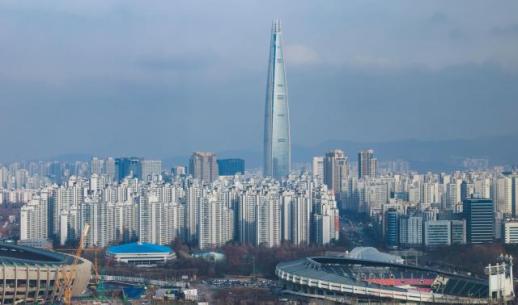 Rising Jeonse Prices in Seoul's Northeast Region Amid Regulatory Challenges The jeonse market in Seoul's northeast region is becoming increasingly inaccessible. With loan regulations and the designation of land transaction permission zones closing off gap investment opportunities, the reintroduction of heavy capital gains taxes has further restricted landlords from converting to monthly rentals. This has exacerbated the shortage of jeonse listings in the area.According to the real estate big data platform 'Asil,' the total number of jeonse listings for apartments in Seoul increased by 4.2% compared to ten days ago. However, the northeast region is experiencing a rapid contraction in its jeonse market. Dobong District saw the largest decline in listings, plummeting by 15.8% during the same period, while Seongbuk District followed with an 8.4% decrease. In contrast, areas under pressure from high jeonse loan regulations, such as Seocho and Mapo districts, saw increases of 14.1% and 14.2%, respectively, highlighting a significant mismatch in inventory.As the supply-demand imbalance intensifies, price statistics and market sentiment are reaching critical levels. The Korea Real Estate Agency reported a 0.28% increase in the weekly jeonse price index for Seoul as of the second week of May, up from 0.23% the previous week. Notably, Seongbuk District recorded the highest increase at 0.54%, with Gangbuk and Dongdaemun districts also showing strong performance at 0.33% each.KB Real Estate's jeonse outlook index for Seoul stood at 132.4, significantly above the baseline of 100, while the jeonse supply-demand index soared to 113.7, indicating the most severe 'jeonse drought' since 2021. Actual transactions are also setting new records, with the 'Dream Forest I-Park' in Jangwi New Town recently signing a jeonse contract for an 84 square meter unit at 890 million won, marking an increase of over 150 million won since the beginning of the year.With gap investment demand blocked by loan regulations and land transaction permissions, the deposit gap between new and renewal contracts for Seoul apartments widened to 55 million won from January to April. Existing tenants are utilizing their rights to renew contracts, further reducing the number of available listings.Additionally, the reintroduction of heavy capital gains taxes has left landlords with multiple properties unable to sell, leading them to shift existing jeonse listings to monthly or semi-monthly rentals to pass the tax burden onto tenants, further depleting pure jeonse inventory.Recent concentrated demand from relocation due to redevelopment projects is also putting additional pressure on the northeast jeonse market. The Mia 3 District in Gangbuk, with 1,037 units, has seen relocation demand since the second half of last year, drawing residents from nearby Seongbuk and Gangbuk districts. The Jangwi 14 District within Jangwi New Town, comprising over 2,500 units, has recently entered the appraisal and relocation planning stages.On the ground, the sense of a jeonse crisis is becoming more palpable. A representative from a real estate agency in Jangwi-dong, Seongbuk District, stated, "In Seongbuk, jeonse prices are now determined by what the market will bear. Large complex jeonse listings attract immediate interest as soon as they are posted online." They added, "The remaining relocation inventory from Imun and Hwikyung New Towns, combined with demand from Sanggye New Town, is likely to further exacerbate the shortage of jeonse listings and drive prices higher across the northeast region."* This article has been translated by AI. 2026-05-18 17:48:31
 -
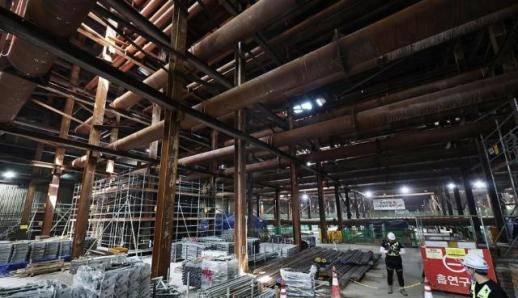 Concerns Grow Over Delays in GTX-A Line Due to Steel Rebar Shortage at Samsung Station The fallout from a significant steel rebar shortage at the Samsung Station transfer center, a key hub for the GTX-A line, is intensifying. To prevent self-verification by the construction company and the project owner, the government plans to engage an external professional organization to reassess the reinforcement methods from scratch. This comes amid escalating blame between the Ministry of Land, Infrastructure and Transport, the Seoul Metropolitan Government, and Hyundai Engineering & Construction over a five-month delay in reporting the construction error, raising concerns about the planned full opening of the GTX-A line (non-stop passage through Samsung Station) later this year.According to the construction and railway industries on May 18, the Ministry of Land is considering appointing external organizations, including professional societies, to verify the reinforcement methods for the Samsung Station transfer center's columns, aiming to eliminate any potential influence from the project owner and construction company and ensure the objectivity of structural safety verification.A ministry official stated, "We plan to review not only the steel plate reinforcement method proposed by Hyundai Engineering & Construction but also alternative methods."Currently, Hyundai Engineering & Construction is proposing a method that involves attaching and welding steel plates to the outer walls of the columns as the most viable reinforcement approach. They argue this method is efficient, allowing for early structural stability while minimizing construction time.Hyundai Engineering & Construction explained, "We proactively identified the steel rebar shortage in the columns of the underground fifth floor during our quality screening process last November and immediately notified the Seoul Metropolitan Government. Since then, we have been collaborating with the city to develop a reinforcement method and have been waiting for the city’s decision regarding the implementation of this method."On the same day, the Ministry of Land deployed a special inspection team consisting of 12 external experts from organizations such as the Korea Safety Management Agency and the Korea Railroad Research Institute to the site. Under the Construction Technology Promotion Act, they plan to conduct a thorough investigation of all aspects of construction, safety, and quality management for the underground complex development project on Yeongdong-daero over the next month. If any illegal activities are confirmed, measures such as penalties against Hyundai Engineering & Construction are being considered.There are interpretations within and outside the government that the Ministry of Land views this incident not merely as a construction error but as a failure in project management, given that it delayed official reporting for about five months after identifying the steel rebar shortage last November. The ministry has initiated an audit concerning the circumstances surrounding this delay, targeting the Seoul Metropolitan Government and the Korea Railroad Corporation.In response, the Seoul Metropolitan Government has denied allegations of concealment, asserting that there were no procedural issues. They stated in a briefing that they submitted construction management reports, which included the relevant issues, to the Korea Railroad Corporation three times between November of last year and January of this year, following the procedures outlined in the construction management agreement.The Seoul government also noted, "The structural engineer's review confirmed that there are currently no issues with the load capacity," adding that they shared the final reinforcement plan with the Ministry of Land at the end of April after confirming safety and construction feasibility.As the government has decided not to accept Hyundai Engineering & Construction's reinforcement method outright and will instead reassess alternative methods through a professional society, the company's internal schedule for a '10-week steel plate reinforcement project' is likely to be significantly altered.The additional time required for appointing external professional societies and the verification service overlaps with the Ministry of Land's special inspection period, increasing the likelihood of delays in the start of the reinforcement work itself. If subsequent facility verification tests and operational trials are also delayed, the Ministry's target for non-stop passage through Samsung Station later this year may be pushed back to after the end of the year.A construction industry insider remarked, "This is not simply a 10-week reinforcement project; the government is calling for a complete reassessment of the method itself, which could impact the scheduled official opening of Samsung Station set for the end of 2028."* This article has been translated by AI. 2026-05-18 17:39:00
 -
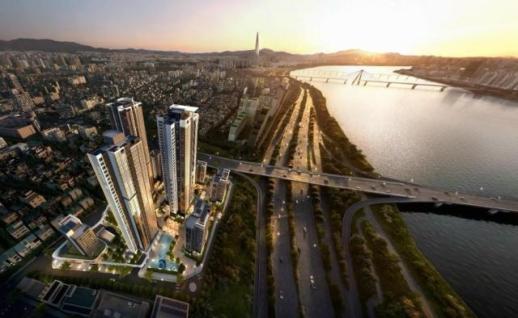 Daewoo Engineering Wins Public Redevelopment Project in Gangdong Daewoo Engineering has secured a public redevelopment project in the Han River area of Cheonho-dong, Gangdong District, marking the first application of its high-end brand 'Summit' in a public redevelopment initiative.On May 16, Daewoo Engineering was selected as the final contractor for the public redevelopment project in the A1-1 zone of Cheonho, Gangdong District, the company announced on May 18.The project will involve the construction of eight apartment buildings, ranging from five underground floors to 40 above ground, totaling 747 units along with community facilities. The total construction cost is estimated at 372 billion won.Daewoo Engineering emphasized the project's views of the Han River and distinctive exterior design. The complex will be named 'Summit Triver,' reflecting the three main buildings and the river view. This is the first time Daewoo Engineering has proposed its high-end brand 'Summit' for a public redevelopment project.In terms of design, the company has partnered with the global architectural firm UNStudio, known for its design of the Mercedes-Benz Museum in Germany. The project aims to differentiate itself from nearby complexes by using curtain wall materials that reflect changes in light.A sky lounge, offering 360-degree views at a height of 120 meters, will provide vistas of the Han River and the city. Some units will feature specialized layouts, including penthouses with river views. Additionally, a themed garden spanning approximately 6,346 square meters will be developed as part of the landscaping.A Daewoo Engineering representative stated, "The A1-1 zone in Cheonho is symbolically significant due to its location along the Han River. We aim to create a new landmark complex in Gangdong District through differentiated design and view specialization."Lee Eun-sang, a researcher at NH Investment & Securities, noted, "Daewoo Engineering is expected to complete several construction sites that have previously incurred high material and labor costs this year, increasing the proportion of high-margin self-developed projects. Consequently, the total gross profit from the housing sector is projected to reach 916.3 billion won in 2026, with a profit margin of 16%."* This article has been translated by AI. 2026-05-18 17:25:52
 -
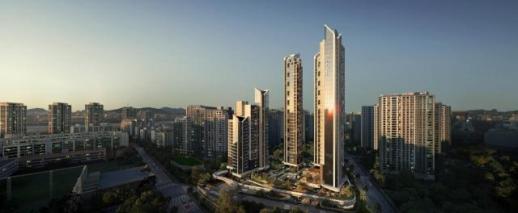 SK Ecoplant to Implement 'DE'FINE' in Shinbanpo 20 Reconstruction Project SK Ecoplant has secured the reconstruction project for the Shinbanpo 20 apartment complex, one of the prominent redevelopment sites in Gangnam, Seoul.On May 18, SK Ecoplant announced that it has been selected as the construction company for the Shinbanpo 20 reconstruction project. The project will involve the development of four buildings with a total of 190 residential units, spanning four underground levels and 35 above-ground floors, at the site located in Jamwon-dong, Seocho-gu. The total contract amount is approximately 204.8 billion won.The site is situated within the Banpo and Jamwon living area and is just a two-minute walk from Banpo Station on Subway Line 7. It offers easy access to the Olympic Highway and the Gyeongbu Expressway, facilitating convenient vehicle movement throughout Seoul and the surrounding metropolitan area. Jamwon Station on Line 3 is also a seven-minute walk away.Nearby educational institutions include Banwon Elementary School, Wonchon Elementary School, Gyeongwon Middle School, Wonchon Middle School, and Cheongdam High School, providing excellent educational opportunities. Additionally, major shopping and convenience facilities such as Shinsegae Department Store Gangnam, Newcore Outlet, Banpo Shopping Town, and the underground shopping mall at Seoul Express Bus Terminal are in close proximity, enhancing the convenience of daily life.With this contract, SK Ecoplant aims to solidify the position of its high-end premium brand 'DE'FINE' in the Gangnam redevelopment market.Lee Gi-yeol, head of SK Ecoplant's Solution Sales Division, stated, "Based on our extensive experience and superior construction capabilities accumulated in urban redevelopment projects, we will provide the highest residential value to the residents. We plan to use this Shinbanpo 20 contract as a stepping stone to continuously enhance our competitiveness in redevelopment projects through our premium brand DE'FINE."An SK Ecoplant official noted, "This contract marks the second application of the 'DE'FINE' brand in the Jamwon-dong area, which is significant for expanding our brand presence in the high-end market of Gangnam. We will finalize the project name after discussions and general meetings with the association before construction begins, including integrated reviews and project approvals."* This article has been translated by AI. 2026-05-18 17:01:53
 -
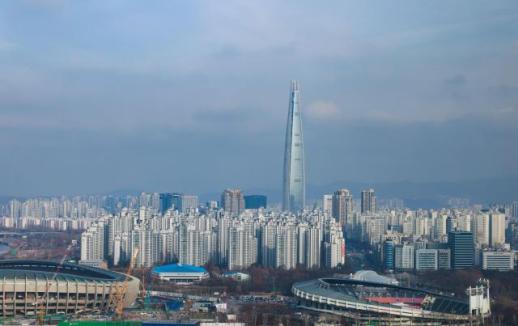 Seoul's Retail Landscape Transformed by Reconstruction Projects Reconstruction and redevelopment projects are reshaping not only residential areas but also the consumption landscape in cities. The influx of residents into large complexes and improvements in infrastructure are attracting more people to surrounding commercial areas, while the demand for new housing is expanding everyday consumer spending, highlighting new growth factors for offline retail.On May 17, an analysis of statistics from Seoul's commercial area analysis service revealed a significant increase in the 'floating population' around major urban redevelopment sites in the past five years. The floating population refers to individuals who reside or spend time around streets and buildings, serving as a key indicator for commercial area analysis.The most notable increase was observed in Dunchon-dong, Gangdong-gu. The floating population in Dunchon-dong rose from approximately 5.44 million in the fourth quarter of 2020 to about 7.92 million in the fourth quarter of 2025, marking a 45.5% increase. During the same period, estimated sales in the area grew from around 85.2 billion won to approximately 101 billion won, an increase of 18.6%.Dunchon-dong is set to see the completion of the Olympic Park Foreon, a large-scale complex with 12,032 units, starting in late 2024. The influx of residents, along with increased demand for moving and living services, new commercial facility users, and consumer spending from the surrounding residential areas, has contributed to the growth of the local market. However, the sales growth rate remains lower than the increase in the floating population, indicating that it may take more time for commercial facilities to establish themselves and for consumer spending to solidify.In Imun-dong, Dongdaemun-gu, the floating population increased from about 4.90 million to 6.84 million, a rise of 39.4%. Estimated sales in the area grew from approximately 112.1 billion won to about 142.1 billion won, a 26.8% increase. Imun-dong is experiencing a transformation as new residents from the Raemian La Grande, a redevelopment project in the Imun 1 redevelopment promotion zone, began moving in January 2025, adding a new consumer base to the existing mixed-use commercial area.Conversely, in Jamwon-dong and Gil-dong, sales growth outpaced population increases. In Jamwon-dong, Seocho-gu, the floating population grew by only 9.9%, from 6.48 million to 7.13 million, while estimated sales surged from about 245.3 billion won to approximately 329.4 billion won, a 34.3% increase. This growth is attributed to the influx of residents from the Maple Xi, a redevelopment project in the Shinbanpo 4 district, combined with increased demand for high-end housing along the Han River.Gil-dong in Gangdong-gu saw a floating population increase of just 8.0%, but estimated sales rose from about 318.5 billion won to approximately 425.6 billion won, a 33.6% increase. Gil-dong is interpreted as an area absorbing demand from the large-scale developments in Dunchon-dong and new housing in the Gangdong area rather than being a direct focus of major redevelopment projects.Overall, the impact of redevelopment projects on commercial areas has not been uniform. In areas like Dunchon-dong and Imun-dong, large-scale developments have initially attracted more residents, while in Jamwon-dong and Gil-dong, sales have responded more rapidly despite smaller population increases.Industry experts suggest that redevelopment projects are not merely about increasing housing supply but are fundamentally changing the structure of commercial areas. In the past, concerns about vacancies and commercial stagnation were prevalent during the early stages of reconstruction. However, recent trends show that after large-scale developments, consumer populations are recovering, leading to a restructuring of commercial areas focused on franchises, essential services, healthcare, educational institutions, and large retail facilities.Nonetheless, there are concerns that rapid development without buffer zones could lead to stagnation in existing, aging commercial areas. The redevelopment project in the Hannam 3 district in Yongsan is a prime example. This large-scale redevelopment site began demolition in February 2025 and is expected to create a complex with 5,988 units. As demolition and relocation progress, local merchants report that commercial facilities and shops within the area are already closing at a rapid pace.While the commercial area around Itaewon Station, which has recently attracted a lot of foot traffic, has been relatively less affected, the existing commercial zones deeper within the district are experiencing significant gaps. Even if new commercial areas are established post-redevelopment, it remains uncertain whether existing merchants can cope with rising rents and the changing consumer landscape to re-enter the market.A commercial leasing representative in Jangwi-dong, Seongbuk-gu, noted, "During construction, there is often a temporary downturn, and after residents move in, the structure of the floating population frequently changes. There are also many cases where the commercial structure and shops themselves undergo significant changes. Especially in the case of large complexes with around 10,000 units, a new consumption zone akin to a new town is formed, leading to disparities in commercial growth depending on local characteristics."* This article has been translated by AI. 2026-05-17 14:42:00
 -
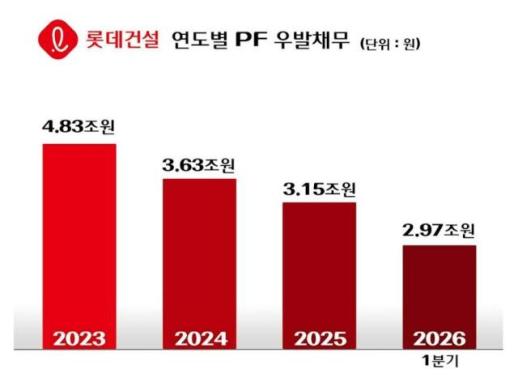 Lotte Engineering Reports 13-Fold Surge in Q1 Operating Profit Lotte Engineering has demonstrated a significant turnaround this year, focusing on improving its financial structure and profitability. The company’s selective bidding strategy and enhanced cost management have yielded notable results. According to data from the Financial Supervisory Service on May 16, Lotte Engineering reported consolidated sales of 1.6012 trillion won, an operating profit of 50.4 billion won, and a net profit of 17.1 billion won for the first quarter. Notably, the operating profit surged approximately 13 times compared to the same period last year, which recorded only 3.8 billion won. The net profit also increased 4.5 times from the previous year’s 3.8 billion won, indicating a clear turnaround. The primary factor behind this strong performance is the company-wide improvement in cost rates. The cost rate for the first quarter was 91.7%, down 3.7 percentage points from 95.4% in the same period last year. The reduction in revenue from high-cost projects, coupled with a rigorous monitoring system that improved profitability at various sites, has been credited with stabilizing the cost rate. The debt ratio for the first quarter fell to 168.2%, down 18.5 percentage points from 186.7% at the end of last year, continuing its improvement below the 200% threshold. Concerns regarding project financing (PF) contingent liabilities have also largely been resolved. The scale of PF contingent liabilities, which stood at 3.15 trillion won at the end of last year, decreased to 2.97 trillion won in the first quarter, a reduction of approximately 180 billion won, bringing it below the 3 trillion won mark. This level is considered stable, as it is below Lotte Engineering's equity of 3.5249 trillion won. The company plans to reduce contingent liabilities to the low 2 trillion won range by the end of the year through the transition to main PF. With a strengthened financial position, Lotte Engineering is also enhancing its business competitiveness. In the urban redevelopment sector, led by its premium brands 'Lotte Castle' and 'Leal,' the company has secured contracts for significant projects this year, including the reconstruction of the Garak Geukdong Apartments in Songpa District (484 billion won), the redevelopment of the Kumho District 21 in Seongdong District (624.2 billion won), and the reconstruction of the Yongho District 3 in Changwon (396.7 billion won), totaling 1.5049 trillion won in contracts. The company plans to further develop its capabilities as a comprehensive developer by utilizing real estate owned by group affiliates. The diversification of liquidity acquisition methods has also received positive feedback. Recently, Lotte Engineering became the first in the industry to develop asset-backed securities (ABS) using construction receivables from nearly completed projects, issuing AAA-rated bonds to raise 300 billion won. By issuing bonds with a rating higher than its own credit rating (A0), the company significantly reduced financing costs and enhanced market confidence. A Lotte Engineering official stated, “Our efforts to strengthen management have resulted in tangible improvements in financial indicators,” adding, “We will solidify our long-term growth momentum based on stable urban redevelopment competitiveness and group-linked developer capabilities.” According to Lotte Engineering, the proposed expansion of the 'group-linked developer business' is an extension of the management policy announced during a town hall meeting by CEO Oh Il-geun in March, reflecting his strong commitment as a development expert. The company is reportedly beginning long-term reviews of some sites owned by affiliates in Seoul. A Lotte Engineering representative noted, “The group-linked developer business utilizing affiliate sites has not yet determined specific projects, but it has set a long-term growth direction. Given the nature of large-scale mixed-use developments, there are many prerequisites such as consultations with permitting agencies, and we plan to solidify a visible blueprint within the next 2 to 3 years.”* This article has been translated by AI. 2026-05-16 12:46:06