

Journalist

Kim Dae-jong
-
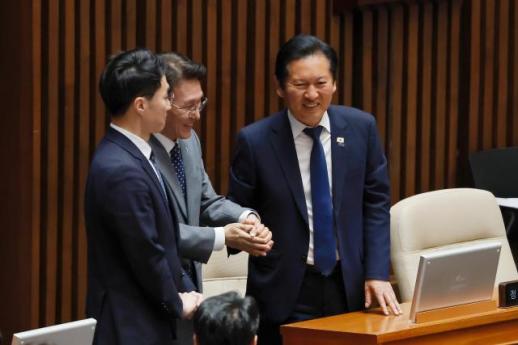 Conflict Erupts in Democratic Party Over Leadership Issues and Election Results The Democratic Party achieved a majority victory in the June 3 local elections and by-elections, emphasizing issues like the impeachment of the president. However, the party lost control of the capital city, Seoul, and suffered defeats in four by-elections, leading to claims of a "half-hearted victory." This has intensified factional conflicts as the party prepares for its upcoming leadership contest. According to political sources on June 7, some party members are criticizing the leadership of Jung Cheong-rae, while others argue that the impact of the special prosecutor law pushed by pro-Lee Jae-myung factions and the president's strong real estate regulations played significant roles in the election outcomes. Kim Yong, a former deputy head of the Democratic Research Institute and a close aide to President Lee, expressed his dismay on Facebook on June 6, stating, "I was left speechless watching the local election results unfold. Jung's perception that this election was a nationwide victory for the Democratic Party, while the loss in Seoul is painful, reflects a disconnect from public sentiment." He added, "Now is not the time to celebrate a victory with a tally of 12 to 4. The heavy responsibility for strategic failures and absence must be shouldered by the party leadership, including the party leader." On the same day, Prime Minister Kim Min-seok addressed the KBC '2026 New Honam Forum' in Gwangju, stating, "Some view the election results as a victory, while others see them as insufficient. We must transform the tension following the election into an opportunity for innovation by firmly grasping two clear paths forward." However, some lawmakers believe it is unfair to place the blame for the loss in Seoul solely on Jung. They argue that the public's anger over real estate issues and the backlash from the special prosecutor law, which granted authority to dismiss charges, cannot be overlooked. During the election period, President Lee demonstrated a strong commitment to real estate regulations and pushed for a national investigation into alleged election manipulation led by pro-Lee factions. Following the introduction of the special prosecutor law related to incidents involving President Lee, the opposition party, People Power Party, formed a coalition to resist what they termed the "disregard for the public's judgment." Additionally, there have been criticisms that the government and ruling party politicized the controversy surrounding the May 18 Tank Day. People Power Party leader Jang Dong-hyuk countered during the campaign by promoting the idea of "freedom for a cup of coffee." In response, Senior Spokesperson Kang Jun-hyun held a press conference, stating, "There may be differing opinions, and we will establish an evaluation committee that includes internal and external experts to conduct a thorough analysis." Meanwhile, some analysts interpret the current factional competition within the Democratic Party as intensifying ahead of the August party convention. Jung is reportedly seeking re-election, while Prime Minister Kim is expected to resign from his position to pursue party leadership. Former party leader Song Young-gil, who recently re-entered the National Assembly through the by-elections, is also mentioned as a potential candidate for party leader. 2026-06-07 11:36:00
 -
 Chungbuk's Future Rests on Becoming an AI Startup Hub "Governor, you have stated your intention to make Chungbuk a startup special zone. In ten years, should Chungbuk be remembered as a region producing semiconductors and biopharmaceuticals, or as the area that birthed the most AI entrepreneurs in South Korea?" Chungbuk has always been at the center of South Korea. Located in the heart of the country, it serves as a transportation hub connecting the capital region with Yeongnam and Honam. With the growth of Osong's biopharmaceuticals, Ochang's semiconductors, and Chungju's advanced industries, it has played a crucial role in the nation's manufacturing sector. However, Chungbuk faces another challenge. While industries grow, young people are leaving, and although factories are increasing, the region's future remains uncertain. Newly elected Governor Shin Yong-han has directly addressed this issue. He emphasized integration, harmony, livelihood, and jobs, presenting 'Startup Special Zone Chungbuk' as the core vision of his administration. This declaration marks a shift from creating industrial complexes to fostering a startup ecosystem. Chungbuk now stands at a crossroads: will it remain an industrial center, or leap forward as the hub of entrepreneurial innovation in the AI era? The startup special zone is Chungbuk's survival strategy. The biggest crisis facing local governments in South Korea is population decline. However, this decline is merely a symptom; the root cause lies in the lack of job opportunities, which stems from the absence of new businesses. The essence of regional extinction ultimately lies in the lack of entrepreneurship. Shin Yong-han's emphasis on the startup special zone during his campaign reflects this understanding. In a post-election interview, he stated that he would create an environment where Chungbuk's talent no longer migrates to the capital region but instead starts businesses and grows locally. He also promised to establish a 200 billion won investment fund and a system for failed entrepreneurs to make a comeback. This aspect should not be viewed merely as an economic pledge. Historically, local governments have competed to attract businesses, measuring success by the number of industrial complexes and factories established. However, in the AI era, the rules of competition are changing entirely. It is no longer factories that hold the competitive edge, but people; not buildings, but ideas; and not budgets, but ecosystems. Silicon Valley became the global center of innovation not because of massive factories, but due to the presence of Stanford University, entrepreneurs, investors, and a culture that embraces failure. Similarly, Shenzhen, once a manufacturing city, has now become a symbol of entrepreneurship and innovation. Ultimately, a region's future competitiveness will likely be determined by how many businesses it fosters rather than how many it attracts. In this context, Shin Yong-han's vision for a startup special zone represents both a strategic and survival plan for Chungbuk. It signifies a shift from a factory-centered economy to one focused on entrepreneurship. Can AI startups thrive in a land known for semiconductors and biopharmaceuticals? Chungbuk's greatest strength lies in its existing foundations for future industries. Osong is home to biopharmaceuticals, Ochang to semiconductors, and Chungju and Jincheon are developing battery industries. Cheongju Airport is evolving into a central airport for the region, and the Gangho Axis is positioning Chungbuk as a new national growth axis. The challenge is that these assets have yet to be connected into a cohesive ecosystem. Industries grow independently, universities operate separately, research institutes function in isolation, and entrepreneurship remains in a different realm. In the AI era, this fragmentation becomes a significant weakness. Today, most innovative companies that drive the world emerge at the intersections of different industries. New value is created when AI meets biopharmaceuticals, semiconductors connect with software, and manufacturing converges with data. Chungbuk possesses that potential. If biopharmaceutical companies in Osong connect with semiconductor firms in Ochang, if local university research leads to startups, and if investment capital links with regional startups, Chungbuk can evolve from a mere industrial base to an innovation hub. In the AI era, competitiveness will no longer stem from production capacity but from connectivity. Who can connect more talents? Who can link more technologies? Who can unite more ideas? These factors will determine the future. Chungbuk is home to 19 universities, graduating numerous young people each year. However, many leave for the capital region. The issue of talent outflow that Shin Yong-han emphasizes is ultimately related to this context. The future of Chungbuk is likely to be determined not by the number of semiconductor factories but by the number of young people who remain in the region. The success of the startup special zone also hinges on this. Many people perceive Chungbuk's competition as being with Daejeon or Sejong, given Daejeon's status as a research and development hub and Sejong's role as the administrative capital. However, competition in the AI era does not operate in that manner. Chungbuk's competitors are not specific regions but cities with innovative ecosystems. Chungbuk's true competitors are cities like Austin in the U.S., Tel Aviv in Israel, and Shenzhen in China. The commonality among these cities is that entrepreneurship is at the heart of their local economies. Shin Yong-han, who has experience as a CEO and venture investment expert, stated during his campaign announcement that "we need a serving manager, not a ruling administrator." This statement is not mere political rhetoric. It signifies a shift from an administration-centered governance model to an economy-centered one. In the past, local governments focused on budget allocation. Moving forward, their role must be to nurture entrepreneurs, connect investors, and build innovative ecosystems. In the AI era, local governments must also become platforms. A platform where entrepreneurs gather, investors converge, and universities and businesses connect. If Chungbuk succeeds in becoming a startup special zone, it will not only transform itself but could also redefine the model for regional development across South Korea. This marks a transition from an era of creating industrial complexes to one focused on establishing startup ecosystems. The success of Shin Yong-han's administration ultimately depends on this. What matters more than how much budget has been secured is how many young people remain in Chungbuk. More significant than the number of companies attracted is how many new businesses are born. More critical than the number of buildings constructed is how many new entrepreneurs emerge. Shin stated, "I want to be evaluated based on results as a governor." Thus, in four years, Chungbuk residents will have clear questions to ask: How many AI startups has Chungbuk created? How many young people has Chungbuk retained? How many future jobs has Chungbuk generated? If these questions can be answered, Chungbuk could become South Korea's first true startup special zone. SWOT Analysis: Strengths: Chungbuk is one of the few regions with a biopharmaceutical cluster in Osong, a semiconductor industrial complex in Ochang, and a foundation for battery industries. It also has transportation infrastructure, including Cheongju Airport and the Gangho Axis. Additionally, Governor Shin Yong-han's clear vision for a startup special zone is a significant strength. Weaknesses: The scale of the startup ecosystem is smaller compared to the capital region, and the venture investment market is limited. There is a continuous outflow of talented individuals to the capital region, and concerns about a lack of experience in regional administration persist. Opportunities: The AI revolution presents new opportunities for Chungbuk. By combining semiconductors, biopharmaceuticals, and battery industries with AI, a new startup ecosystem can be established. The development of the Gangho Axis and policies for balanced regional development can also serve as growth drivers. Threats: The concentration of resources in the capital region remains strong. Competition with Daejeon and Sejong is fierce. If the startup special zone remains merely a support initiative and fails to build an ecosystem, it will struggle to achieve results. ABC asks Governor Shin Yong-han. 2026-06-07 11:36:00
 -
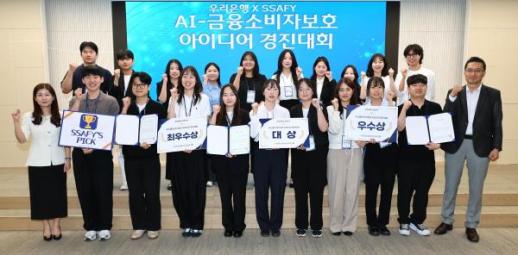 Woori Bank Hosts AI-Driven Financial Consumer Protection Idea Contest Woori Bank is collaborating with young talent to develop financial consumer protection solutions using artificial intelligence (AI).On June 5, Woori Bank held the 'AI-Financial Consumer Protection Idea Contest' in partnership with students from the Samsung Software-AI Academy (SSAFY).The contest aimed to generate practical ideas that utilize AI technology to address issues in financial consumer protection. Participants proposed various solutions focused on improving financial accessibility for vulnerable groups and preventing new forms of financial fraud amid the rapid digitalization of finance.A total of 116 teams entered the preliminary round, with seven teams advancing to the finals. The finalists presented AI applications in four areas: protecting the rights of vulnerable groups, preventing mis-selling, avoiding complaints, and preventing financial fraud.The grand prize was awarded to the 'Woori Guard' team for their proposal of an AI-based pre-designated protection system for individuals with dementia. This solution was highly regarded for its potential to safeguard consumer rights even in situations of cognitive decline.The excellence award went to the 'Garados' team, which suggested an AI safety net that protects financial transactions for Woori WON mobile subscribers, covering everything from calls and texts to transfers. The 'Haejuri Fan Club' team received the merit award for their proposal of a customized financial support service called 'Woori On Fit AI,' which suggests necessary financial tasks and helps prevent unfavorable choices.Following the finals, additional programs were held for participants, including a visit to the bank's museum and a special lecture on consumer protection.A Woori Bank official stated, "We have confirmed that the ideas from young people can significantly contribute to protecting the rights of financial consumers through AI technology. We will support the implementation of these proposals to create a more convenient financial environment."* This article has been translated by AI. 2026-06-07 11:24:00
 -
 U.S. Military Shoots Down Two Iranian Drones in Hormuz Strait The U.S. military has shot down two Iranian suicide drones in the Hormuz Strait. The U.S. Central Command announced on June 6 that it intercepted the drones, which were threatening international maritime traffic in the region. The command stated, "We are maintaining a defensive posture in response to Iran's aggressive actions." Earlier that day, Central Command reported the downing of four Iranian suicide drones launched toward the Hormuz Strait. Hours later, Iran reportedly fired seven ballistic missiles at U.S. bases in Kuwait and Bahrain, leading to further localized clashes between the two sides.* This article has been translated by AI. 2026-06-07 11:15:00
 -
 New Regulations Enhance Traceability for Imported Frozen Mackerel and Pollack Traceability regulations for imported seafood, including frozen mackerel and pollack, are set to be strengthened. The Ministry of Oceans and Fisheries announced that it will enhance oversight of the distribution process from the moment seafood is imported until it reaches consumers' tables, allowing for quick identification of distribution routes in case of issues.Starting June 29, the ministry will implement revised guidelines for the traceability of imported seafood. This revision extends the designated period for 22 existing items until April 30, 2029.To ensure transparency in the distribution of imported seafood, the ministry has been enforcing a traceability management system. Under this system, importers and distributors of designated seafood must report transaction details at each distribution stage, from customs clearance to final sale.The recent revision adds five new items to the list, including frozen mackerel, frozen pollack, frozen squid, and both frozen and chilled squid. The designated period for the previously managed items, such as eel and frozen yellow croaker, has also been extended to April 30, 2029. As a result, the total number of items under traceability management has increased from 22 to 27.Companies involved in the import and distribution of these items are required to report to the National Fisheries Products Quality Management Service within five days of receiving the seafood, either electronically or in writing. This reporting obligation applies to both importers and distributors. Online reporting is available through the service's traceability system website.Park Seung-jun, Director of Aquaculture and Fisheries Policy at the Ministry of Oceans and Fisheries, stated, "This revision strengthens the foundation for thoroughly tracking and managing the entire distribution process of frequently consumed imported seafood."* This article has been translated by AI. 2026-06-07 11:12:00
 -
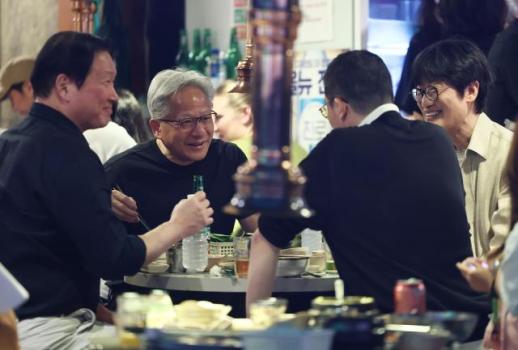 Jensen Huang's Leadership Reflected in a Simple Meal In the first weekend of June 2026, a humble pork belly restaurant in Seoul unexpectedly drew global attention. The reason? Jensen Huang, CEO of NVIDIA and a leader in the AI revolution, was seated among the bustling after-work crowd. Dressed in a black leather jacket, he was grilling pork belly and sharing drinks with officials from LG Electronics, Naver, and SK Hynix, all while smiling brightly. At first glance, he appeared to be just another office worker enjoying dinner with old friends, but he is, in fact, one of the most scrutinized figures in the global capital markets.Interestingly, this scene was no coincidence. Huang has long demonstrated a unique management style. He has been spotted enjoying pepper buns at night markets in Taiwan, visiting hawker centers in Singapore, and dining at modest ramen shops in Japan. In Hong Kong, he frequents local favorites, and in Korea, he opts for pork belly. What drives a billionaire CEO to seek out street food and casual dining? Is it merely a matter of taste, or is there a deeper strategy and philosophy at play?His appearance at the Seoul pork belly restaurant was far from the typical image of a global corporate leader. Smoke from grilling meat wafted through the air as busy waitstaff rushed to serve plates. Huang flipped the meat with a smile, and those at the table engaged in lively conversation. He resembled a neighborhood big brother rather than the head of the world’s leading AI company. Yet, it was this very naturalness that resonated with people. While discussions about AI and semiconductors may be complex, the act of sharing a meal of pork belly is universally relatable.Global Dining PatternsA closer look at Huang's dining choices reveals a consistent pattern.First, he seeks out supply chain hubs. Taiwan, where he enjoys pepper buns, is the center of the world's largest foundry industry, while Korea, where he dines on pork belly, is a leading producer of high-bandwidth memory (HBM). Singapore serves as a hub for the data center industry, and Japan is critical for advanced materials and equipment. In other words, Huang's dining venues are not merely tourist spots but the heart of the AI industry's supply chain.Second, he opts for casual dining over fine dining. While many global CEOs might prefer high-end hotel banquets or private dinners, Huang takes the opposite approach. He enters spaces filled with the aroma of home-cooked meals. Pork belly, noodles, and ramen are universally understood languages. While advanced AI technology may be complex, food is simple. People may not remember the structure of a data center, but they will recall grilling pork belly.Third, he always engages in fan service. At the Computex event in Taiwan, he is surrounded by admirers like a rock star. Young developers and students line up for his autograph and wait long to take a photo with him. Such scenes are rare for a corporate CEO. However, today, Huang has become a symbol of the AI revolution.Dining as Supply Chain DiplomacyMany view dining as simply a meal. However, in the international business world, meals often hold more significance than meetings. Historically, important diplomatic breakthroughs have frequently occurred over dinner rather than in conference rooms.The corporate world is no different. Huang's dining experiences can be seen as a form of supply chain diplomacy. He bridges gaps with people through food, setting aside complex technical jargon and contracts to engage in human-to-human interactions. It is in these moments that the future direction of industries is discussed.People see pork belly, but what is truly in motion is a supply chain worth trillions. They see pepper buns, but behind them, the future of the AI industry is being shaped. While dining may appear as a friendly cultural activity, it encapsulates cold industrial strategies and global management philosophies.Why People Adore Jensen HuangWhy do people today idolize Jensen Huang? It is not solely because he is a successful businessman. Many wealthy individuals and famous CEOs exist, yet not all become public stars.People appreciate Huang because he comes across as relatable. He does not present himself as a special figure. He wears a black leather jacket, eats street food, and takes photos with ordinary people. Despite being the CEO of a leading global company, he maintains an approachable demeanor.Another key reason is his ability to articulate a vision for the future. He does not stop at explaining GPUs; he illustrates the world that AI will create. He sells dreams rather than just technology, sharing visions instead of mere numbers. People are moved by stories rather than technology and are inspired by hope rather than data. Huang understands this better than anyone.Lessons for Korean LeadersHere lies a point for leaders in our society to reflect upon. Today, many politicians, business leaders, and public officials are becoming increasingly distant from the public. While explanations have increased, empathy has diminished; authority remains, but approachability has faded. Citizens no longer respect titles alone, nor do they trust power alone. They seek authenticity and communication skills.Of course, leaders cannot gain popularity simply by forcing themselves to dine with the public. The key lies in attitude. It is essential to strive to connect with people, to align with the perspectives of citizens and customers, and to choose communication over authority.This is especially important for leaders in their 40s, 50s, and 60s. As people age, they tend to rely on past successes and depend on titles and authority. However, the AI era is not one of authority but of connection. It is not a time for commands but for empathy. Leadership that fails to win the hearts of citizens, customers, employees, and citizens will not endure.A New Textbook for Leadership in the AI EraAI is transforming the world. Paradoxically, the value of humanity becomes even more crucial in the AI era. Technology may advance, but people still find inspiration in other people. Algorithms can calculate but cannot empathize. Artificial intelligence can provide information but cannot build trust.Thus, leaders in the AI era must possess both technological and human qualities. They should be able to discuss the world’s best technologies while sharing laughs over pork belly, negotiate multi-billion-dollar deals while taking selfies with students, and plan for the future without forgetting the people of the present.Today, South Korea stands at a significant crossroads. AI is not merely a technological revolution; it is a civilizational shift that alters the order of industry, economy, politics, education, culture, and daily life. The leadership required in this era is neither the authoritative leadership of the past industrial age nor the popularity-driven leadership that merely chases public acclaim. It demands insight that can breathe with the people while looking toward the future, strategic thinking that can align with the direction of the nation and businesses while connecting with individuals, and a sense of balance that understands advanced technology without losing sight of humanity.Huang's pork belly and pepper buns may not just be about food. They could be a metaphor for the new leadership required in the AI era. The image of a CEO of a leading global company laughing and taking photos with street people, enjoying food at night markets, and engaging casually with supply chain partners illustrates that, no matter how advanced technology becomes, the true power that moves the world lies with people.AI can mimic human intelligence but cannot replace human trust. Ultimately, it is not technology itself that determines the future but the people who use that technology and the leadership that guides them.South Korea now faces the same question. What kind of leader do we want in the AI era? What kind of entrepreneur do we respect? What kind of society do we wish to create? Will it be a leadership that reigns over people with authority and distance, or a leadership that enters the community, breathes with the people, and designs the future together?The outcome of the AI revolution will not be determined solely by the performance of semiconductors or the scale of data centers. The ultimate measure of national competitiveness will be how much leadership understands people, connects with them, and nurtures their potential.The reason a piece of pork belly and a pepper bun became global topics is precisely that. As the AI era deepens, the value of humanity grows. For South Korea to remain a respected nation in the world, it must evolve into a country of leadership that embodies dignity and trust beyond being a technological powerhouse. This may be the most unexpected yet profound message left by Jensen Huang's dining experiences.* This article has been translated by AI. 2026-06-07 11:12:00
 -
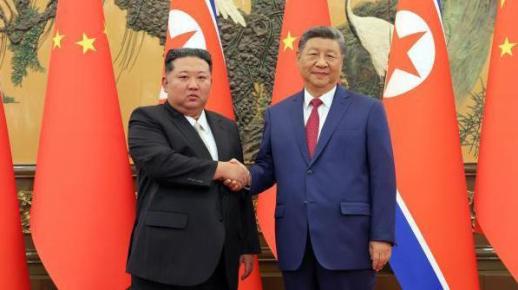 Kim Yo-jong Emphasizes North Korea's Nuclear Status Ahead of Xi Jinping's Visit Kim Yo-jong, Deputy Director of North Korea's Workers' Party, strongly rejected claims from the recent U.S.-China summit that both countries agreed on the goal of denuclearizing North Korea, calling it "a mere game of spreading conventional false information" and emphasizing North Korea's status as a nuclear power. Her remarks are interpreted as an effort to clarify that denuclearization will not be on the agenda for the upcoming North Korea-China summit with Chinese President Xi Jinping. According to the Workers' Party's official newspaper, Rodong Sinmun, Kim made her statements on June 6 in response to comments from a U.S. Trade Representative (USTR) representative who stated that the U.S. remains committed to the goal of denuclearizing the Korean Peninsula. Kim described these remarks as "completely fabricated and absurd misinformation," adding that the U.S. officials' obsession with denuclearization is a strong wish that is not based in reality. Kim asserted, "We possess the most accurate information regarding the existence of such facts." She also referenced the recent approval by the U.S. State Department for the sale of Joint Direct Attack Munitions (JDAM) and related equipment to South Korea, stating, "This is precisely why we are committed to strengthening our self-defense capabilities to ensure national security against the continuous military buildup of hostile forces, and why we must continue to do so in the future." Kim added, "We will never allow the balance of power to be disrupted to safeguard our sovereignty and ensure regional stability and peace," emphasizing that the leader's declared policy of continuously strengthening self-defensive nuclear deterrence must be implemented as an irreversible final conclusion. She stated, "Our status as a nuclear power is an absolute line that cannot be crossed, regardless of who acknowledges it. Nuclear weapons are the most powerful argument in debates with those who value strength. We will not tolerate any threats or compromises regarding our sovereignty and security." Lim Eul-chul, a professor at Kyungnam University's Institute for Far Eastern Studies, analyzed that North Korea is sending a message that its friendly relations with China can only develop under the premise that China recognizes it as a "nuclear power," suggesting that the recognition of nuclear status will be a key point of interest in the upcoming North Korea-China summit.* This article has been translated by AI. 2026-06-07 11:09:00
 -
 Shooting at Ohio Festival Leaves at Least 12 Injured A shooting near a local festival in Toledo, Ohio, has left at least 12 people injured. According to the Associated Press and other reports, the incident occurred around 5:30 p.m. near the Old West End Festival. Toledo Police Deputy Chief Joe Heffernan stated that two of the injured individuals are in critical condition. He noted that there appeared to be at least two shooters involved, suggesting they were likely firing at each other. Authorities are investigating the circumstances surrounding the shooting and are actively pursuing suspects. Witness Kevin Berry told the AP that he heard multiple gunshots while listening to a performance with friends in the festival's arboretum, prompting attendees to drop to the ground. Berry reported that officers stationed at the festival responded immediately, and when he looked up, he saw someone throwing a gun to the ground. He later recounted seeing at least five people with gunshot wounds, stating, "The injured were scattered throughout the arboretum area." The Old West End Festival is a two-day event held in Toledo's historic district, featuring live music, food vendors, house tours, and shopping activities.* This article has been translated by AI. 2026-06-07 11:06:00
 -
 SK Telecom to Hold Lottery for 10,000 Gold Numbers Until June 21 A total of 10,000 easily memorable and business-friendly mobile gold numbers will be available to the public. On June 7, SK Telecom announced that it will conduct its first lottery event of the year for popular 'gold numbers' until June 21. The lottery will include numbers with repeating digits such as 1111 and 0002, numbers with specific meanings like 1004 and 1472, and numbers where the area code matches the last four digits (ABCD-ABCD), totaling nine different types. Individuals can apply for a maximum of three numbers. The gold number lottery is open to existing SK Telecom subscribers, new customers, and those switching from other carriers or mobile virtual network operators (MVNOs). Applications can be submitted at official SK Telecom certified stores and the official online shop, T Direct Shop. Winners will be announced on June 25, and they must complete the registration process between June 29 and July 17 to use their selected numbers. The annual lottery for gold numbers reflects a history of regulatory improvements aimed at preventing the privatization of public resources. In the early days of smartphone adoption, gold numbers were often acquired through personal connections at telecom stores or traded informally online for prices ranging from hundreds of thousands to millions of won. Critics have raised concerns about individuals monopolizing phone numbers for private gain, prompting the government to ban the sale of preferred numbers through a revision of the Telecommunications Business Act implemented in July 2016. Following this legal change, the telecom industry was mandated to hold public lotteries for preferred numbers at least twice a year, with violations subject to fines of up to 30 million won. An industry official stated, "The gold number lottery system represents a significant innovation in the past informal distribution structure, providing equal opportunities for everyone and realizing the public nature of telecom resources."* This article has been translated by AI. 2026-06-07 11:03:00
 -
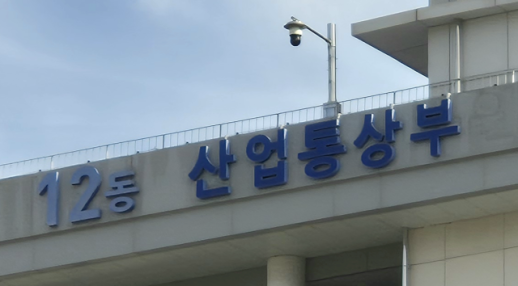 South Korea and Mongolia Resume CEPA Negotiations to Expand Critical Mineral Supply Chains The South Korean government will begin the fifth round of official negotiations with Mongolia for a Comprehensive Economic Partnership Agreement (CEPA) on June 8, lasting four days. The discussions will cover 15 areas, including investment and economic cooperation.According to the Ministry of Trade, Industry and Energy, the negotiations will be led by Kwon Hye-jin, head of the Trade Negotiation Bureau, and Batkhuyag Idersh, Deputy Minister of Economic Development of Mongolia, with around 40 representatives from both countries participating.The Korea-Mongolia CEPA negotiations began in December 2023 and included four rounds of talks until November 2024, but were temporarily halted due to circumstances on the Mongolian side. However, discussions to resume negotiations gained momentum earlier this year, marking a return to the negotiating table after approximately 1 year and 7 months of inactivity.South Korea and Mongolia are considered highly complementary in terms of industrial and trade structures. By combining South Korea's manufacturing and technological capabilities with Mongolia's abundant resources of critical minerals such as lithium, copper, and rare earth elements, both countries expect to enhance trade and investment and strengthen economic cooperation, including supply chains.The upcoming negotiations aim to address significant issues across key areas such as tariff concessions, services, investment, origin, and economic cooperation, with the goal of accelerating progress in the talks.Kwon Hye-jin stated, "In an increasingly uncertain global trade environment, the CEPA with Mongolia will serve as an important opportunity for our companies to enter emerging markets and secure supply chain stability. Through these negotiations, we aim to make progress on key issues and lay the groundwork for a swift conclusion of the agreement."* This article has been translated by AI. 2026-06-07 11:03:00