
Journalist

AJP
-
 Seoul assesses impact and uncertainty after US tariff ruling SEOUL, February 23 (AJP) - South Korea will continue discussions with the U.S. on tariff-related issues "in an amicable manner," Trade, Industry and Energy Minister Kim Jeong-gwan said on Monday. The trade chief said the government will ensure that the terms of a tariff deal finalized late last year are not undermined, after U.S. President Donald Trump threatened a new temporary global tariff of 15 percent following the U.S. Supreme Court's nullification of reciprocal tariffs. Kim's remarks came during an emergency meeting at the Korea Chamber of Commerce and Industry in Seoul, attended by relevant government ministries and agencies, as well as business groups. The meeting was convened after the U.S. Supreme Court struck down the use of the International Emergency Economic Powers Act (IEEPA) for tariffs, prompting Trump to announce follow-up measures including global tariffs under Section 122 of the Trade Act and a Section 301 investigation. Participants assessed the potential impact on South Korea's industries and exports and discussed possible response measures. Kim added that the government will work with relevant agencies and industry groups to keep companies informed amid global trade uncertainty. "We will unwaveringly pursue policies to strengthen the competitiveness of companies and diversify export channels in response to potential changes in trade conditions," he said. 2026-02-23 10:24:43
 -
 Korea Creative Content Agency Opens Applications for 2026 Korea Indie Game Dev Camp The Ministry of Culture, Sports and Tourism and the Korea Creative Content Agency said they will accept applications for the 2026 “Korea Indie Game Dev Camp” from Feb. 23 to March 23. The program will be run on a 6 billion won scale this year, with two tracks: companies and individuals. Projects selected in the final stage will receive development incentive grants of up to 140 million won per project for companies and up to 85 million won per project for individuals. In the first-stage planning track, the organizers plan to support 130 projects: 70 in the company track and 60 in the individual track. The initiative uses a step-by-step competition format: Stage 1 for strong planning, Stage 2 for an early build, Stage 3 for a prototype, and Stage 4 for an enhanced “vertical slice” focusing on core gameplay. Seven companies will participate as partners: Neowiz, Discord, Smilegate, Com2uS Holdings, Krafton, Toss (Viva Republica) and Pearl Abyss. The partners plan to provide stage-by-stage advice, invitations to company events and networking opportunities, support for participation in major exhibitions in and outside South Korea, and investment reviews. The organizers said the public-private effort is intended to help indie developers overcome technical and management constraints and move toward commercialization and global expansion. A “2026 Game Content Production Support” briefing will be held Feb. 24 starting at 2 p.m. in the conference room on the 16th floor of the CKL Corporate Support Center in Gwanghwamun. Details on how to apply and required documents are available in the notice posted on the agency’s website. * This article has been translated by AI. 2026-02-23 09:48:21
 -
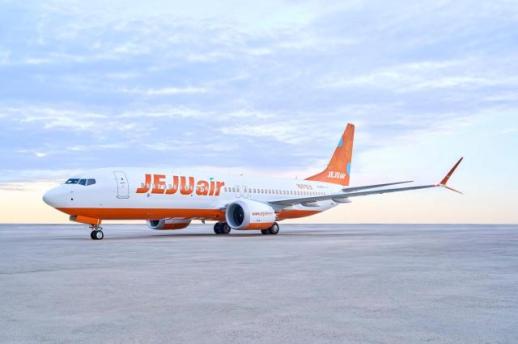 Jeju Air to Launch Incheon-Yichang and Daegu-Guilin Flights Twice Weekly Jeju Air said Sunday it will begin twice-weekly service in April on the Incheon-Yichang route and the Daegu-Guilin route. The Incheon-Yichang route will operate twice a week, on Tuesdays and Saturdays, from April 4 to May 30. The Daegu-Guilin route will run as a twice-weekly charter service, on Thursdays and Sundays, from April 30 to May 28. Yichang, a city associated with the historical novel "Romance of the Three Kingdoms," is known for major temples and the Three Gorges Dam, and is a popular gateway for Yangtze River Three Gorges cruises. Guilin, a major tourist destination in southern China, is known for its scenery, including the Li River, as well as attractions such as Guanyan, where visitors explore caves by monorail, and the Longji rice terraces. Jeju Air also said it will resume service during the summer schedule period starting next month on the Incheon-Shijiazhuang route (twice weekly, Mondays and Fridays), the Busan-Shijiazhuang route (twice weekly, Tuesdays and Saturdays) and the Jeju-Beijing Capital route (three times weekly, Mondays, Wednesdays and Fridays). It will double Incheon-Weihai service to 14 flights a week from seven. The airline plans to start Busan-Zhangjiajie flights twice weekly, on Tuesdays and Saturdays, from next month 3, and to resume Incheon-Guilin service four times weekly, on Wednesdays, Thursdays, Saturdays and Sundays, from March 11. Incheon-Yanji service was increased last month to six flights a week, on Mondays, Wednesdays, Thursdays, Fridays, Saturdays and Sundays, as the carrier continues to expand its China network. Jeju Air’s China-route passenger numbers have continued to rise, from about 305,000 in 2023 to about 493,000 in 2024 and about 573,000 last year. A Jeju Air official said travel demand is expected to keep growing as travel becomes more convenient, including through visa-waiver policies by the South Korean and Chinese governments. The official said the airline will work to expand China routes to improve travel options for passengers in both countries. * This article has been translated by AI. 2026-02-23 09:46:10
 -
 Soprano Jung Chan-hee Says She Won’t Perform at Jeon Han-gil Concert Soprano Jung Chan-hee said she will not appear at a concert hosted by Jeon Han-gil, a hard-line conservative YouTuber who previously worked as a Korean history instructor. Jung wrote on social media on the 22nd, “I had decided not to appear in this performance and hadn’t said anything separately, but I’m posting this because so many people have contacted me. I will not appear in this performance.” She said she had verbally been asked to perform at a March 1 music concert and agreed, but learned about the poster only after an acquaintance sent it to her two days earlier. “I contacted them and decided not to appear,” she added. Jung said she initially thought no explanation was needed because she had already decided not to participate, but chose to clarify after hearing from many supporters. Earlier, Tae Jin-ah’s agency, Jina Entertainment, also issued a statement the same day saying he would not perform. The agency said it had only received an inquiry describing it as a general event, not a political one. It said an event official visited days earlier and asked whether Tae could appear at an event at 2 p.m. March 2 at KINTEX, and the agency replied that his schedule was available. The agency said it asked whether it was related to politics given the upcoming local elections, but was told it was “just a general event at KINTEX.” The agency added, “Tae Jin-ah has never accepted countless invitations from the political world, and he has absolutely no intention of appearing at political events in the future.” * This article has been translated by AI. 2026-02-23 09:42:15
 -
 Brazilian president receives warm welcome from Lee on first state visit in 21 years SEOUL, February 23 (AJP) -Brazilian President Luiz Inacio Lula da Silva was welcomed with a warm embrace by President Lee Jae Myung on Monday, marking his return to South Korea for a state visit — his first in 21 years and the first by a foreign leader since the presidential office returned to Cheong Wa Dae. Lee greeted Lula in the main garden of the presidential compound with open arms as the Brazilian leader stepped out of his vehicle, before the two shared a brief embrace and proceeded to an official welcome ceremony featuring traditional honor guards and a children’s welcoming group. The visit includes bilateral talks, a memorandum of understanding signing ceremony, a joint press announcement, and a state dinner at the Yeongbingwan guest house, with discussions set to focus on deepening cooperation in high-value and emerging industries. The summit agenda covers trade, investment, climate change, energy, defense, science and technology, agriculture and cultural exchanges. Instead of focusing solely on traditional commerce, the talks will prioritize what Brazilian Ambassador to South Korea Marcia Donner Abreu recently described as "productive integration" during an interview with AJP on Feb. 19. The approach is designed to move bilateral ties beyond simple buying and selling, focusing instead on joint value creation through linked supply chains and investments. he two countries plan to collaborate on local downstream processing and refining, moving beyond trade beyond raw materials. The governments also aim to build joint production lines for the C-390 transport aircraft and deepen partnerships in high-growth industries such as biopharmaceuticals, digital technologies and K-beauty. The talks are supported by a personal rapport between the two leaders, who both experienced poverty and sustained work-related injuries as young factory workers. Lee and Lula previously bonded over their shared backgrounds during the Group of Seven summit in Canada last June and the G20 meeting in South Africa in November. Lula will conclude his state visit to South Korea on Feb. 24. 2026-02-23 09:37:20
 -
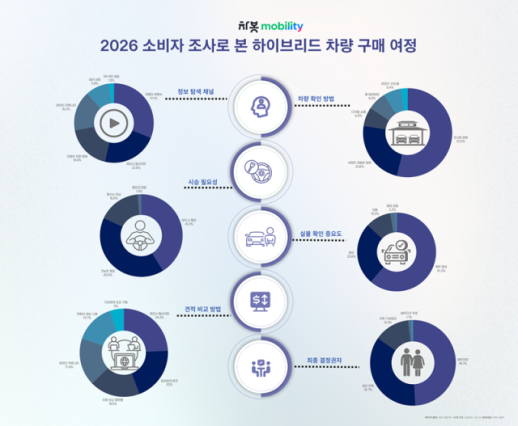 Survey: New-Car Shoppers Rely on YouTube, Then Verify in Showrooms Before Buying New-car buying is increasingly following a “hybrid” path: shoppers research digitally, then confirm key details offline before deciding. Chabot Mobility said on the 23rd that it analyzed each stage of the car-buying journey for 450 people planning to purchase a new vehicle this year. More than half of respondents, 58.1%, said they got new-car information from YouTube auto reviews. Manufacturer websites followed at 42.2%, then automotive news outlets at 34.3% and online communities and cafes at 30.3%. Traditional channels lagged, with dealer consultations at 18.4% and visits to offline showrooms at 14%. The results suggest shoppers are narrowing candidates through digital channels first, then using consultations to make a final choice. By gender, men reported higher use of YouTube (59.9%) and online communities (32.6%). Women more often cited recommendations from acquaintances (30%), social media (22%) and dealer consultations (22%). By age, YouTube use was most active among people in their 30s to 50s, at about 57% to 62%. For comparing vehicles and checking quotes, the most common method was visiting manufacturer websites directly (48.7%). But asking dealers directly (40.1%) and using integrated comparison platforms (37.2%) were close behind. Next were online community information (35.0%), YouTube comparison videos (29.6%) and automotive media (23.1%). On the importance of seeing a vehicle in person, 61.4% said it is “absolutely necessary,” and 25.6% said they would “check if possible,” meaning 87% viewed an in-person look as a core step. Only 2.2% said online information is enough, and 0.4% said it is not important at all. The share calling it “absolutely necessary” rose with age: 68.6% among people in their 50s and 71.0% among those 60 and older. Offline channels dominated how shoppers check vehicles. Visits to traditional dealership showrooms ranked first at 79.4%, while visits to premium showrooms and brand experience centers were also high at 34.7%. On test drives, 41.2% said they are “absolutely necessary,” and 40.8% said they would “like to if possible,” for a combined 82% treating a test drive as essential or near-essential. Among respondents with monthly income of 10 million won or more, the “absolutely necessary” share was 48.7%, above the overall average. For final purchase decisions, 49.1% said they decide jointly with a spouse, the largest share. Another 35.7% said they decide alone, and 13.4% said they decide jointly with other family members. A Chabot Mobility official said the survey clearly shows a hybrid buying journey in which consumers gather information through digital channels and then make a final decision after offline verification such as test drives.* This article has been translated by AI. 2026-02-23 09:33:18
 -
 South Korea to Give 3,000 Young K-Art Creators 9 Million Won a Year To strengthen the foundations of “K-culture,” South Korea will expand investment in foundational arts. The Ministry of Culture, Sports and Tourism said on the 23rd it will accept applications from March 3 through March 31 for a pilot program, “K-Art Youth Creator Support,” aimed at young artists in foundational arts. The program will provide annual creation grants of 9 million won to 3,000 creators in foundational arts (age 39 or younger; born on or after Jan. 1, 1986). It will select 1,500 recipients from the Seoul metropolitan area and 1,500 from outside the capital region. The ministry said the grants are intended to help young creators whose low and unstable income makes it difficult to focus on their work. Unless there are special circumstances, those selected this year are expected to receive support again the following year. Eligible fields include literature, visual arts, performing arts (theater, musical theater, dance, classical and traditional arts), multidisciplinary arts, and convergence and hybrid arts. Popular arts such as pop music and film are excluded. Applicants can find details in notices posted on the Arts Council Korea website and the websites of 17 provincial and metropolitan cultural foundations. Applications must be submitted through the Arts Council’s National Culture and Arts Support System. Performers may also apply if they have creation credits and submit a creation plan. Regional cultural foundations will first review applicants’ track records and the suitability of their plans. The Korea Culture and Tourism Institute will then allocate slots by region and field and select the final 3,000 recipients. Results will be posted on the websites of the 17 regional cultural foundations. Recipients must carry out their projects based on their submitted plans and file an interim report and a final report that includes the completed work. Grants will be paid in two installments — 4 million won in the first half of the year and 5 million won in the second half. Failure to submit an interim or final report will limit further payments. The pilot program will run from 2026 to 2027. The Korea Culture and Tourism Institute will lead an evidence-based performance evaluation (a joint study under the National Research Council for Economics, Humanities and Social Sciences) to objectively assess the program’s effects. The evaluation will examine changes in time spent on creative work, increases in creative activity, shifts in income and spending, and how the grants affect young artists’ employment and income. * This article has been translated by AI. 2026-02-23 09:30:25
 -
 Netflix Confirms Production of Film 'Byeoljit' Starring Kim Min-ha and Noh Sang-hyun Netflix has confirmed production of the film 'Byeoljit,' starring Kim Min-ha and Noh Sang-hyun. Netflix announced the production and casting on the 23rd. 'Byeoljit' is a romantic comedy about a couple in a 10-year relationship who love each other intensely and also resent each other intensely, leading them to do all kinds of things in the name of love. Suhyeon (Kim) and Hyuntae (Noh) meet on an arts college campus and fall for each other at first sight. Even after a decade together, they remain a couple whose relationship swings between devotion and anger, and the film aims to portray their romance in a light, relatable way. Kim and Noh, who previously appeared together in the series 'Pachinko,' reunite in 'Byeoljit' as long-term partners who can read each other at a glance. Kim, known for roles in 'Typhoon Company,' 'A Week Before I Die' and 'Pachinko,' plays Suhyeon, a capable curator who strives for perfection at work but falls apart when faced with love and jealousy. Noh, who built his filmography with 'Love in the Big City,' 'Pachinko' and 'Genie, Make a Wish,' plays Hyuntae, an installation artist who holds firmly to his own beliefs and stubbornness. The film will be directed by Seo Jeong-min, a new director who graduated from the Korea National University of Arts. It is produced by Bom Baram Pictures, the company behind Namgung Sun's youth romance 'The History of Confession' and Kim Do-young's 'Kim Ji-young, Born 1982.' * This article has been translated by AI. 2026-02-23 09:27:16
 -
 Kim Jong-un unanimously re-elected to lead North Korea's Workers' Party SEOUL, February 23 (AJP) - North Korean leader Kim Jong-un was unanimously re-elected general secretary of the ruling Workers' Party, state media reported on Monday. According to the state-run Korean Central News Agency, the unanimous decision was made the previous day during the fourth day of the party's ongoing ninth congress, which began last Thursday. Lauding Kim, KCNA said the country's "revolutionary armed forces," under his leadership, are able to respond proactively to "any threat of invasion" and are prepared for "any form of war." Held once every five years, the rare gathering typically runs several days, bringing together party members and other representatives from across the country to vote for the party's top post. Participants also review the past five years and set the direction for domestic and foreign policy over the next five years. 2026-02-23 09:20:18
 -
 Arko Art Center Unveils 2026 Lineup of Five Exhibitions Focused on Discovery and Experiment The Arts Council Korea, known as Arko, announced Arko Art Center’s 2026 exhibition program on the 23rd. The museum will present five exhibitions built around experimentation and diversity. While linking the lineup to Arko support programs, Arko Art Center said it will further develop its identity of “discovery and experimentation,” shaped over more than 50 years. The first show is the homecoming exhibition for the Korean Pavilion at the 19th Venice Biennale International Architecture Exhibition, “Dukkobah Dukkobah: The Time of the House” (2.6~4.5). Marking the pavilion’s 30th anniversary, it examines the building and reconsiders the meaning of a pavilion through the lens of a “house.” The second exhibition, “Uncalibrated Time” (working title, 5.21~7.19), is a two-person show tied to Arko’s Visual Arts Creative Subject Support program. It aims to dismantle hierarchies of time and the senses and to consider attitudes of coexistence. Participants include O Min, selected for multiyear support, and Camille Norment, known for multimedia experimentation on the international stage. Arko said Norment will be introduced at an Asian art museum for the first time through this exhibition. The thematic exhibition “Art School” (working title, 8.7~9.27) looks at the role of Insa Art Space (2000~2025), which has served an educational function in discovering and nurturing emerging artists. Framed as “art as education,” it reflects on education systems and institutions and highlights the activities and practices of art-world participants beyond exhibitions. A “Collection Special Exhibition” (working title, 10.16~11.29) will use Arko Art Center’s holdings to examine the museum’s exhibition history within the context of Korean art history, aiming to provide a meaningful opportunity for research into the history of contemporary Korean art. The final show, “Arko Art Center × Regional Arts Leap Support Collaborative Exhibition” (working title, 12.18~27.2.14), will be linked to Arko’s regional support program. It will back the production of new works by promising regional artists and serve as a platform to broaden the results of discovering and supporting local artists. * This article has been translated by AI. 2026-02-23 09:18:42