
Journalist

AJP
-
 Robot royal guard patrol around Seoul palace through pilot operation SEOUL, February 20 (AJP) - South Korea is expanding the use of artificial intelligence in heritage protection, as a patrol robot began a pilot operation at Changdeokgung Palace in central Seoul on Friday. The robot, named “Sunra-bot,” conducted a demonstration patrol near Yeonghwajeong Pavilion inside the UNESCO-listed palace complex. The name “Sunra” comes from the Joseon Dynasty-era sunragun, royal patrol guards who monitored the palace and surrounding areas of the capital. Equipped with sensors capable of detecting fire hazards and abnormal sounds in real time, the AI-powered robot moves autonomously around the palace grounds. In case of an emergency, it transmits alerts to the Changdeokgung management office and an integrated control center. Officials say the system is designed to supplement human patrols, particularly in low-traffic areas and during nighttime hours when continuous monitoring is more challenging. Sunra-bot operates two patrols during the day and seven at night, each lasting about 40 minutes. The Korea Heritage Service introduced one unit under a lottery-funded pilot program, marking a step toward integrating smart technologies into the management of national cultural assets. Authorities plan to assess the robot’s performance over a month before deciding whether to deploy additional units. As South Korea explores digital transformation across public sectors, cultural heritage sites are increasingly incorporating AI-based surveillance and safety systems aimed at preventing fire damage and improving rapid response capabilities. 2026-02-20 15:00:30
 -
 National Museum of Korea Draws 86,464 Visitors Over Lunar New Year Holiday The National Museum of Korea is increasingly becoming a popular holiday destination. The museum said on the 20th that 86,464 people visited during the Lunar New Year holiday period from Feb. 16 to 18, with the museum closed on the 17th. Holiday attendance has climbed sharply: 32,193 in 2024, 50,512 in 2025 and more than 80,000 this year, up 71.2% from last year. The museum credited strong interest in its special exhibitions, “Our Yi Sun-sin” and “From Impressionism to Early Modernism,” as well as a display of all 22 volumes of the “Daedongyeojido” map unfolded along the “Path of History” on the first floor of the permanent galleries. Director Yu Hong-jun said, “Despite the cold weather, I want to express my gratitude to visitors who came to the museum during the Lunar New Year holiday.” He added, “We will continue to raise the quality of our exhibitions and steadily improve the viewing environment so visitors can encounter our cultural heritage from new perspectives.”* This article has been translated by AI. 2026-02-20 15:00:17
 -
 Another case of foot-and-mouth disease detected in Goyang SEOUL, February 20 (AJP) - Another case of foot-and-mouth disease has been reported in Goyang, Gyeonggi province, health authorities said on Friday. It was detected at a farm raising 133 cattle, prompting quarantine officials to expand containment measures to nearby areas including Gimpo, Paju and Yangju, as well as Seoul. All cattle on the farm are set to be culled, and a 24-hour standstill order has been issued for workers and vehicles at livestock-related facilities, remaining in effect until early Saturday. Quarantine officials will also carry out clinical inspections and provide emergency vaccinations at some 1,092 farms raising cloven-hoofed animals in the affected areas. The latest case comes about three weeks after the first case this year was detected in Ganghwa, Incheon in late January. 2026-02-20 14:56:28
 -
 Kazakhstan to hold national referendum on new constitution in March SEOUL, February 20 (AJP) - Kazakhstan's President Kassym-Jomart Tokayev signed a decree on February 11 to hold a national referendum on March 15 to decide on the adoption of a new constitution for the Republic of Kazakhstan. If approved by voters, the document will trigger a comprehensive political transition beginning July 1, including the end of the current parliament’s mandate and a fundamental shift in the country’s governance model. The proposed reform marks a transition from targeted amendments to a total constitutional overhaul. The Embassy of Kazakhstan in South Korea noted that the changes reflect a move away from the current super-presidential system toward a presidential republic with a more authoritative parliament. A central feature of the draft constitution is the establishment of a unicameral parliament, to be called the Kurultai. This body would consist of 145 deputies elected through a proportional electoral system for five-year terms. The Kurultai would be granted expanded powers, including the right to issue a vote of no confidence in the government and enhanced oversight of individual ministers. By a two-thirds supermajority, the parliament could also request that the president dismiss a minister for failing to implement laws. The draft introduces several new political roles and bodies to balance the executive branch. A vice president position will be established, with the appointee requiring consent from the Kurultai. Additionally, the People’s Council of Kazakhstan will be created as the highest nationwide consultative body to represent the interests of the public. A clear succession order is also defined, moving from the vice president to the chair of the Kurultai, and then to the prime minister. Legal safeguards and procedural rights are expanded in the 96-article document. The draft includes the constitutional recognition of the legal profession and reinforces the prohibition of retroactive laws. It also enshrines fair-trial safeguards, such as the presumption of innocence and the right to a lawyer from the moment of detention. Furthermore, the draft provides explicit protections for personal data and the confidentiality of communications in a digital environment. The text was finalized by a 130-member Constitutional Commission following a six-month review process. During a nationwide public discussion, approximately 10,000 proposals were submitted by citizens and experts through electronic government portals. The commission reported that the review affected 77 articles, or approximately 84 percent of the existing constitution, leading to the decision to draft an entirely new text. In the social sphere, the document reinforces the secular nature of the state while defining marriage as a voluntary and equal union between a man and a woman. It also identifies education, science, and innovation as central priorities for national development, signaling a strategic shift toward human capital rather than a reliance on natural resources. If the reforms are endorsed in the March 15 referendum, the new constitution will replace the existing framework. Within one month of the new constitution taking effect, the president must announce elections for the new Kurultai, which are to be held within two months of that announcement. 2026-02-20 14:50:21
 -
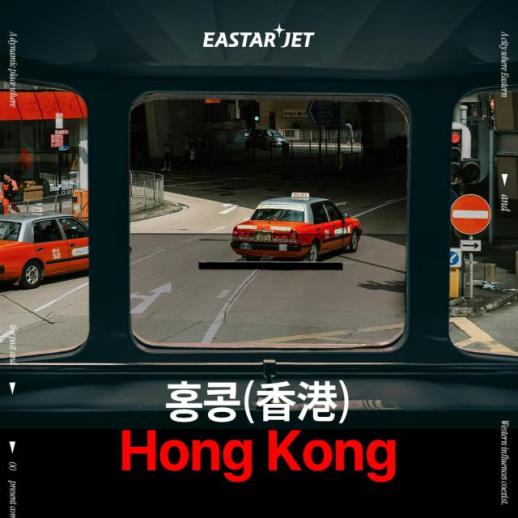 Eastar Jet to Launch Daily Incheon-Hong Kong Flights Starting March 31 Eastar Jet said Thursday it will launch an Incheon-Hong Kong route on March 31, expanding its Greater China network. The route will operate daily. Flights will depart Incheon International Airport at 8:10 p.m. and arrive at Hong Kong International Airport at 10:45 p.m. local time. Return flights will leave at 12:05 a.m. the next day and arrive at Incheon at 5:10 a.m. Eastar Jet said the schedule allows passengers to reach Hong Kong before the subway stops running and to use public transportation after returning to South Korea. To mark the launch, the airline will run a promotional fare sale starting at 10 a.m. on Feb. 23 through its website and mobile app. The lowest one-way total fare, including airport fees and fuel surcharges, is 76,600 won. The travel period runs from March 31 to Oct. 24. "The Hong Kong route is a key route with steady demand for leisure and business travel, as well as connecting passengers," an Eastar Jet official said. "With a schedule that allows customers to depart after work, it will be an attractive option for office workers planning efficient trips." The Incheon-Hong Kong route will be Eastar Jet's 14th Greater China route, following Taipei and Shanghai. The airline said it plans to keep expanding its Greater China network as demand for its China routes remains strong. Last year, Eastar Jet's passenger numbers on China routes rose more than 128% from a year earlier, and the average load factor per flight increased by more than 28%, it said.* This article has been translated by AI. 2026-02-20 14:39:18
 -
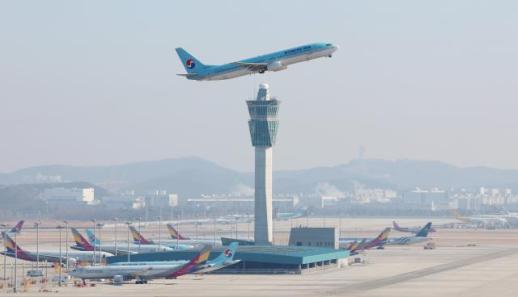 All 11 South Korean Airlines Ban In-Flight Use of Portable Battery Packs All South Korean airlines will ban the use of portable battery packs on board all flights starting this month. According to the aviation industry on the 20th, T’way Air notified passengers that beginning on the 23rd it will prohibit charging portable battery packs on board, as well as using them to charge other electronic devices such as mobile phones. Passengers may still bring portable battery packs into the cabin, but they must take steps to prevent short circuits — such as covering the terminals with insulating tape or storing each pack separately in a plastic bag or individual pouch — and keep them in a visible place. With T’way’s move, all 11 domestic airlines will prohibit in-flight use of portable battery packs. Five Hanjin Group airlines — Korean Air, Asiana Airlines, Jin Air, Air Busan and Air Seoul — have banned their use on board since January. Jeju Air also began the same measure that month. Eastar Jet ran a three-month pilot ban starting in October last year and has formally adopted the policy this year. Air Premia and Aero K also banned in-flight use starting this month. Parata Air has kept the ban in place since it began operations in September last year. Airlines have tightened carry-on rules after a January last year incident in which a portable battery pack caught fire on an Air Busan passenger plane preparing for takeoff at Gimhae International Airport, destroying the aircraft, followed by similar incidents.* This article has been translated by AI. 2026-02-20 14:36:16
 -
 BTS Comeback D-29: BTS on the Charts, RM on the Canvas Editor’s Note — As BTS prepares to return as a full seven-member act with a new album set for March 20 and an open-stage performance at Gwanghwamun on March 21, following a near four-year hiatus for rotational military service, AJP revisits the group’s 13-year trajectory. This series reexamines BTS’s history, music, performance identity and enduring appeal. The fifth installment traces the roots and growth of RM. SEOUL, February 20 (AJP) - BTS’s fifth studio album, ARIRANG, has surged to No. 1 on Spotify’s “Countdown Charts Global,” holding the top position for five consecutive weeks since Jan. 21. Based on global pre-save data, the chart is widely regarded as a barometer of pre-release demand. With 3.45 million pre-saves, ARIRANG has already established itself as one of the most anticipated releases of the year. At the center of that momentum stands BTS’s leader, RM — an artist whose personal evolution has become inseparable from the group’s global ascent. The Intellectual Architect of BTS Born in 1994, RM emerged from Korea’s underground hip-hop scene long before BTS became a stadium-filling name. As a teenager, he was already writing about identity, pressure and belonging — themes that continue to define his work. His original stage name, Rap Monster, reflected raw ambition and technical bravado. In 2017, he shortened it to RM, later interpreting it as “Real Me,” signaling a turn toward introspection and artistic maturity. International audiences quickly noticed his fluent English, famously acquired by repeatedly watching the sitcom Friends. The skill positioned him as BTS’s principal spokesperson in overseas interviews and award ceremonies, earning him the fan nickname “President Namjoon” for his composed, articulate presence. A defining moment came in 2018, when he delivered a speech at the United Nations as part of the “Love Yourself” campaign. The address framed him not only as a pop star, but as a generational voice speaking about vulnerability, self-worth and youth in the modern world. Solo Work: Vulnerability Over Spectacle While BTS’s group releases are built for arenas and global broadcasts, RM’s solo catalog has consistently turned inward. His 2015 mixtape RM emphasized aggressive technique and confidence. Three years later, mono. stripped away that bravado, replacing it with muted tones and emotional solitude. In 2022, Indigo — which he described as “the archive of my twenties” — blended alternative rock, hip-hop and jazz influences through wide-ranging collaborations. His 2024 release Right Place, Wrong Person further explored dislocation and the sense of being intellectually and emotionally out of sync with one’s surroundings. Across these projects, RM has repeatedly returned to questions of identity, alienation and self-definition. Rather than offering easy answers, his music documents an ongoing negotiation between authenticity and visibility in the age of global celebrity. From Lyrics to Canvases That reflective temperament extends beyond music. The San Francisco Museum of Modern Art (SFMOMA) has announced “RM x SFMOMA,” an exhibition scheduled to run from Oct. 3, 2026 to Feb. 7, 2027. Curated by RM, the show will feature about 200 works from his personal collection alongside the museum’s holdings. RM is widely known as a serious collector, reportedly owning more than 2,000 pieces. His interests range from Korean modern masters such as Yun Hyong-keun and Kim Whanki to Western figures including Mark Rothko, Agnes Martin, Henri Matisse, Georgia O’Keeffe and Paul Klee. In a statement announcing the exhibition, RM said: “We live in an age defined by boundaries. I hope this exhibition can be a small but sturdy bridge.” The message echoes the themes of his songwriting — a search for connections between self and society, East and West, the personal and the universal. Beyond Pop Stardom As ARIRANG dominates global pre-save charts, RM’s trajectory signals something larger than commercial success. On streaming platforms, he leads one of the world’s most influential music acts. In museums, he is building conversations across cultures and traditions. Few idols have managed to sustain such parallel careers with comparable seriousness. For fans, RM remains BTS’s intellectual anchor. For global audiences, he represents a new model of cultural figure — one who treats fame not as a destination, but as a platform for dialogue. As the comeback draws near, the charts measure anticipation. RM, meanwhile, continues to measure something deeper: how far popular culture can reach, and how thoughtfully it can still speak. 2026-02-20 14:15:41
 -
 Boeing picked as preferred bidder for South Korea's special-ops helicopters deal SEOUL, February 20 (AJP) - Boeing has been selected as the preferred bidder for a South Korean defense procurement program valued at approximately 3.4 trillion won ($2.3 billion), the Defense Acquisition Program Administration (DAPA) said on Friday. According to DAPA, Boeing was the sole bidder to submit a proposal in November last year, after two previous bidding rounds in June and October failed to produce a contract. Sikorsky, a subsidiary of Lockheed Martin, had been expected to compete with its heavy-transport helicopter, the CH-53K King Stallion, but failed to do so. Boeing proposed the CH-47F/ER, an upgraded version of the CH-47F Chinook, at a cost of $57 million per unit. The program aims to procure approximately 20 heavy-lift helicopters for special operations including air infiltration search-and-rescue missions, with deliveries scheduled between 2026 and 2033. DAPA said it plans to finalize a contract with Boeing by June, pending technical evaluations and tests. 2026-02-20 14:14:29
 -
 Woori Bank teams with Samsung Electronics and LG Uplus to market to teens and 20-somethings Woori Bank said on the 20th it signed a joint marketing agreement with Samsung Electronics and LG Uplus to attract customers in their teens and 20s. Attendees included Woori Bank CEO Jeong Jin-wan, Samsung Electronics Korea Vice President Lim Seong-taek and LG Uplus Vice President Lee Jae-won, along with other officials from the three companies. The partnership brings together leaders in finance, mobile devices and telecommunications to offer financial services tailored to the lifestyle of younger customers. Under the agreement, the companies plan joint marketing and promotions aimed at the 10-20 age group, promote the “Samsung Wallet Money” service, and offer special handset sales to Woori Bank customers. The effort will focus on practical benefits for customers accustomed to mobile and simple payments. “This collaboration combines financial services with mobile and telecom services to provide a differentiated experience for younger customers,” Jeong said. He added the bank plans to keep expanding touchpoints with younger customers through strategic partnerships across industries. * This article has been translated by AI. 2026-02-20 14:06:28
 -
 Korean household debt hits new height as hot assets fuel leveraged investment SEOUL, Feb 20 (AJP) - Red-hot asset markets in South Korea pushed household debt to a fresh record by the end of 2025, as investors increasingly relied on borrowing for property and stock investment, data showed Friday. According to the Bank of Korea, total household credit outstanding stood at 1,978.8 trillion won ($1.37 trillion) at the end of the fourth quarter of 2025, up 14 trillion won from the previous quarter. It marked the highest level since data collection began in the fourth quarter of 2002. For the full year, household debt expanded by 56.1 trillion won, or 2.9 percent, the largest year-on-year increase since 2021. Loans from commercial banks rose by 6 trillion won in the fourth quarter, sharply easing from a 10.1 trillion won gain in the third quarter, as banks tightened lending to meet year-end regulatory caps. By contrast, lending by non-bank depository institutions increased by 4.1 trillion won, more than double the 2 trillion won rise recorded in the previous quarter. Within this sector, mortgage loans jumped by 6.5 trillion won, reflecting an influx of borrowers turned away by major commercial banks. “Other loans,” including personal credit lines and non-mortgage borrowing, added 3.8 trillion won. These loans, often linked to equity market trading, pushed the balance of credit used for leveraged investment to around 27 trillion won toward the end of the year. Borrowing from “other financial corporations”—including credit card companies, financial holding firms and moneylenders—rose by 1.1 trillion won to 526.1 trillion won. Within this category, non-mortgage loans increased by 5.1 trillion won to 260.4 trillion won, offsetting a decline in housing-related lending. “This appears to be a temporary migration as commercial banks managed loan caps toward the end of the year,” said Lee Hye-young, head of the BOK’s Monetary and Financial Statistics Team. She played down concerns over a long-term deterioration in debt quality, noting that a similar pattern was observed in the fourth quarter of 2024, when non-bank lending surged by 6.6 trillion won after a decline in the previous quarter. In October last year, the government introduced a series of stricter measures, capping mortgage limits from as high as 600 million won to as low as 200 million won depending on property values. Despite the move, critics argue that the impact on overall loan growth was limited, pointing out that the quarterly increase in personal credit loans fell by only 900 billion won from the third quarter. Lee rejected claims that the regulations had failed. “While growth in insurance company loans and card loans partly offset the decline in mortgages, the purposes of these loans vary, including stock investment,” she said. She added that changes in lending patterns should not be interpreted as evidence of regulatory weakness. The central bank projects that South Korea’s household debt-to-GDP ratio will decline slightly from 2024 levels. “We will have a clearer picture after checking nominal GDP statistics in March and flow-of-funds data in April,” Lee said, adding that current indicators suggest the ratio will fall below the 89.6 percent recorded in 2024. However, she cautioned that uncertainty remains high, given fluctuations in mortgage lending and credit-based investment. “It is still too early to draw firm conclusions,” she said, citing volatility in housing finance and leveraged trading demand. 2026-02-20 14:02:37