
Journalist

AJP
-
 Hedge funds pile into Asia as memory boom powers Korean rally SEOUL, February 17 (AJP) -Global funds are ramping up bets on Asian equities, led by tech-heavy South Korea and Japan, as a historic shortage in memory chips fuels one of the strongest regional rallies in decades. According to a client note from Goldman Sachs, hedge funds bought a record amount of Asian stocks in the week to Friday, targeting both developed and emerging markets. Inflows were concentrated in Korea, Taiwan and China, while India saw modest selling. Exposure to Asian equities reached its highest level since at least 2016. The surge came despite renewed global volatility driven by concerns over massive investment in artificial intelligence and its impact on corporate earnings. While major world indices fell sharply on Friday, Asian markets remained resilient. Japan’s Nikkei and Taiwan’s benchmark index each gained about 5 percent last week, while South Korea’s KOSPI jumped more than 8 percent. The S&P 500 was down 0.19% so far this year, while the Nasdaq has fallen 2.77%, according to data from the Financial Supervisory Service (FSS). The KOSPI has emerged as one of the world’s strongest-performing equity markets in 2026. The benchmark is up 30.68 percent year to date, far outpacing the Nikkei 225's 13.12 percent, Taiwan’s 16.03 percent, and the MSCI Emerging Markets Index's 11.83 percent. The KOSPI has more than doubled since the end of 2024, driven largely by surging semiconductor stocks. Samsung Electronics and SK hynix have rallied about 51 percent and 35 percent, respectively, this year as they are expected to continue with red-hot earning streak fueled by AI boon. Compared with the beginning of 2025, SK hynix's stock is 5 times more expensive and Samsung Electronics' more than tripled. Once-in-Four-Decades Memory Shortage A key driver behind Korea’s rally is what semiconductor research firm SemiAnalysis describes as a “once-in-four-decades” memory shortage. In a recent report, SemiAnalysis said memory prices are doubling again and that the current supercycle is larger and longer than previous booms, driven by structural supply constraints and explosive AI-related demand. Unlike past cycles, today’s memory industry is no longer able to expand supply rapidly. Physical limits have slowed DRAM scaling, making further cost reductions increasingly difficult and expensive. At the same time, building new fabs requires multi-billion-dollar investments and multi-year timelines. As a result, bit output per wafer is no longer rising fast enough to offset demand growth. Supply growth is being constrained not only by capital discipline, but by physics and process complexity, the report said. As each new generation of accelerators requires substantially more DRAM and high-bandwidth memory, creating a persistent supply-demand mismatch that is expected to last through at least 2027, it predicted. Samsung Electronics and SK hynix together control much of the global supplies of DRAM and high-bandwidth memory powering AI accelerators and hyperscale data centers. SK hynix leads the market for high-bandwidth memory used in AI accelerators, while Samsung remains a key supplier of advanced DRAM nodes. Overall, overseas investors have sold a net 13.5 trillion won worth of KOSPI shares so far this year and 10.0 trillion won in February alone, according to FSS data. Still, multinational investment banks are bullish on further gains. Goldman Sachs raised the KOSPI target to 6,400, or 20 percent upside. 2026-02-17 13:10:55
 -
 KakaoPay Data: Most Middle and High Schoolers Got 100,000 Won in New Year’s Money Middle and high school students’ “standard” New Year’s cash gift is rising. The most common amount given to teens last year increased from 50,000 won to 100,000 won, according to KakaoPay data. With grocery prices also climbing, many consumers say holiday spending feels burdensome ahead of the Lunar New Year. KakaoPay said Monday that its analysis, released through the finance brand journal PayAttention, found 100,000 won was the most frequently received amount among middle and high school students, at 42%. Through 2024, 50,000 won had been the top amount at 39%, but last year 100,000 won surpassed 50,000 won (37%), signaling a shift toward larger gifts. Holiday allowances for parents also averaged more than 200,000 won. In the same analysis, users in their 20s to 40s sent an average of 227,000 won to their parents’ generation. By age group, the averages were 190,000 won for people in their 20s, 220,000 won for those in their 30s and 230,000 won for those in their 40s, edging up with age. The analysis was based on “remittance envelopes” sent via KakaoPay around the Lunar New Year holiday. KakaoPay also released results from a survey conducted alongside the data review. Respondents most often cited “New Year’s money and other holiday expenses” as the biggest burden during the Lunar New Year. KakaoPay said the findings show that, despite the holiday’s focus on family, many people feel real financial pressure. Separately, KakaoPay is running a Lunar New Year-themed promotional event, “Surviving Seollal,” based on the data. Users who join quiz content based on holiday situations can earn points, and those who complete service experiences and collect stamps can receive additional points through a drawing. The event runs through Tuesday in the KakaoPay app and on KakaoPay Home within KakaoTalk. A KakaoPay official said the company aimed to address “realistic concerns felt during the holiday” with entertaining content and benefits, adding that it plans to expand user engagement with more content linking finance and everyday life.* This article has been translated by AI. 2026-02-17 12:03:00
 -
 Winter Holiday Road-Trip Checklist: Tires, Battery and Emergency Towing Tips With cold snaps and heavy snow continuing this winter, drivers face greater need to check key vehicle components. With large day-to-night temperature swings, road conditions can change quickly, making thorough preparation important before long-distance travel. Reborncar, a non-face-to-face, directly operated certified used-car platform, released a “safe drive checklist” on Tuesday with Lunar New Year holiday vehicle-care guidance and driving tips. ◆From tires to brakes: What to check first For safer holiday travel, Reborncar said drivers should first inspect tires and braking systems. In winter, black ice can form in shaded curves and near tunnel entrances and exits. On black ice, drivers should avoid sudden acceleration and hard braking and keep a longer following distance. To improve traction on icy roads, the company said winter tires that stay flexible at low temperatures can help. It also advised keeping tire pressure at the manufacturer’s recommended level and checking tread wear regularly. As a simple guide, it suggested inserting a 100-won coin upside down into the tread; if more than half of Adm. Yi Sun-sin’s hat is visible, drivers should consider replacing the tire. Because calcium chloride used on winter roads can contribute to corrosion, Reborncar recommended regular car washes and checking brake pads and discs in advance. It also urged drivers to check battery condition, as heater and heated-seat use increases power consumption in winter. Reborncar advised topping off windshield washer fluid because slush can reduce visibility, and replacing wiper blades if they make noise. It also said drivers should confirm that lights, including headlights, are working properly. ◆If trouble hits on the highway: Emergency response tips On return trips that often involve long hours and congestion, Reborncar said it is important to know what to do in emergencies. If a vehicle breaks down or a crash forces a stop on an expressway, the risk of secondary accidents rises. The company recommended using the Korea Expressway Corp.’s “expressway emergency towing service,” which provides free towing to a nearby safe area such as a rest stop or drowsy-driving shelter. If a vehicle catches fire while driving, it said to pull over, shut off the engine, move to a safe distance and call 119. If the fire is inside the engine compartment, it warned drivers not to open the hood because oxygen can increase the risk of an explosion. It advised leaving the key inside, not locking the doors and evacuating quickly. Keeping a fire extinguisher in the vehicle can help with initial response, it added. Reborncar also said drivers should check their auto insurance coverage before departure in case they need to switch drivers during a long trip. By adding a short-term driver expansion rider through an insurer’s app or call center, family members or acquaintances can be covered, it said. To reduce fatigue, it recommended taking a break at least every two hours, stretching and ventilating the vehicle. ◆Used-car checks: Diagnostics and direct operations For consumers considering buying a used car around the holiday, Reborncar said vehicle condition should be reviewed more carefully to prepare for long-distance driving. The company said it operates RTC (Reborncar Trust Center), which it described as the country’s largest reconditioning center, and that it has received certification from global quality certification body TÜV SÜD for six consecutive years. It said it conducts detailed diagnostics using its patented RQI (Reborncar Quality Inspection) standards to secure safety before delivery and to reduce potential risks during long trips. Reborncar said it also runs a structured delivery process, rechecking key safety-related parts such as tires and engine oil through its “安心 출고 서비스” just before handover. It also offers an “extended warranty service” that guarantees repair or replacement of major parts for 180 days with no mileage limit. “During holiday periods, long-distance driving becomes more common, so basic inspections and knowing emergency response steps in advance can be a big help,” a Reborncar official said. “Based on our direct-operation system, we will create an environment where customers buying used cars can travel with greater peace of mind.” 2026-02-17 10:03:29
 -
 Aron to Offer Free Mobile EV Charging at Honam Expressway Rest Stops for Lunar New Year Travel EV charging solutions company Aron said Tuesday it will provide a free mobile EV charging service at expressway rest stops during the Lunar New Year holiday, in partnership with hy Mobility. The program, promoted by the Ministry of Climate, Energy and Environment and the Korea Automobile Environmental Association, places mobile EV charging vehicles at major highway rest stops nationwide to ease charging inconvenience during peak long-distance travel. Aron will oversee operations in the Gwangju-Jeolla region, deploying 10 mobile charging vehicles to five rest stops: Gimje (Saemangeum-bound), Gimje (Jeonju-bound), Gochang Dolmen (Mokpo-bound), Gunsan (Mokpo-bound) and Hampyeong Cheonji (Seoul-bound). The service uses charging vehicles equipped with large-capacity battery packs to charge EVs on site. Aron will offer free charging at designated locations at each rest stop from the 13th through the 18th, a total of six days. EV drivers can receive 20 kWh of charging at no cost. Service hours are 9 a.m. to 6 p.m. CEO Nam Jae-hyeon said mobile charging facilities can respond flexibly to temporary spikes in demand during holidays. He said Aron will operate the service to help ensure drivers can travel safely without inconvenience from charging issues on Lunar New Year return and outbound trips. * This article has been translated by AI. 2026-02-17 10:03:00
 -
 Kbank up for retail subscription Fri ahead of March 5 IPO, 30% discounted vs online peer SEOUL, February 17 (AJP) -Kbank, South Korea’s first online-only lender, will open retail subscriptions from Friday to Monday ahead of its March 5 debut on the main board, seeking to capitalize on a strong rally in the KOSPI with a relatively conservative valuation as the first Korean IPO for 2026. The lender has set its offering price at 8,300 won ($5.75), the bottom of its indicative range of 8,300 to 9,500 won, following institutional bookbuilding earlier this month. Kbank will begin trading on March 5 in its third attempt to go public, after withdrawing previous listings in 2022 and 2024 over valuation concerns. Institutional demand forecasting was conducted from Feb. 4 to 10, drawing participation from 2,007 investors and posting a competition ratio of 198.5 to 1. Total orders reached about 58 trillion won. Despite the strong headline demand, many institutions reportedly bid at or below the lower end of the range. Based on the final price, the total offering size stands at about 498 billion won, with post-listing market capitalization estimated at roughly 3.37 trillion won. At the offer price, Kbank is valued at around 1.38 times price-to-book (PBR), positioning it at a discount to both its online peer and major traditional lenders. Rival KakaoBank closed last trading session on Friday at 27,400 won, trading at a PBR of 1.94. Meanwhile, banking sector heavyweight KB Financial Group ended at 167,900 won with a PBR of 1.02. The valuation gap suggests potential room for rerating if Kbank narrows the spread with KakaoBank by demonstrating sustained earnings growth and improved business diversification. “Kbank’s pricing is not excessive in a rising banking sector,” said a Seoul-based IPO analyst. “But the market is still demanding a risk premium.” Overhang and Lock-up Concerns A key investor downside is the scale of potential selling pressure after listing. About 35.34 percent of outstanding shares, worth roughly 1.1 trillion won at the offer price, will be freely tradable on debut. Nearly half of the offering consists of shares sold by existing investors, reflecting strong exit demand. In addition, only 12.4 percent of participating institutions agreed to lock-up periods, raising the likelihood of near-term supply pressure. Kbank’s earnings structure is another focal point for investors. As of end-2025, about 30 percent of its fee income was generated through partnerships linked to Upbit, South Korea’s largest digital asset platform. The partnership agreement is set to expire in October 2026, making renewal negotiations a major earnings variable. Founded in 2016, Kbank had 15.53 million customers as of end-2025. It posted net profit of 128.1 billion won in 2024 and 103.4 billion won in the first three quarters of 2025. Management expects the IPO to strengthen capital buffers and expand lending capacity. Once listed, about 725 billion won from past capital injections will be newly recognized in equity calculations, translating into close to 1 trillion won in effective capital expansion. This is expected to support more than 10 trillion won in additional loan capacity. Growth priorities include loans to self-employed workers and small and medium-sized enterprises, expansion of Banking-as-a-Service (BaaS) partnerships, and development of digital asset-related services, including stablecoin-linked payment and remittance infrastructure. “We appreciate investors who share our long-term vision,” said Chief Executive Officer Choi Woo-hyung. “After listing, we will continue to grow alongside customers and shareholders while delivering differentiated value.” Retail subscriptions will be conducted on Feb. 20 and 23 for up to 30 percent of the total offering, or about 18 million shares. Investors can participate through lead managers NH Investment & Securities and Samsung Securities, as well as co-underwriter Shinhan Securities. 2026-02-17 09:48:57
 -
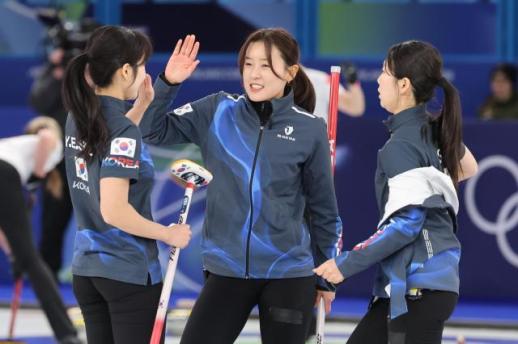 South Korea Women’s Curling Rallies Past China by 1, Moves Into Tie for Second South Korea’s women’s curling team pulled off a late comeback to beat China by one point in Olympic round-robin play, moving into a tie for second place. Gyeonggi Province Office, led by skip Kim Eun-ji with third Kim Min-ji, second Kim Su-ji, lead Seol Ye-eun and fifth Seol Ye-ji, defeated China 10-9 in its sixth round-robin game at the Cortina Curling Olympic Stadium in Cortina d’Ampezzo, Italy, on Tuesday (Korea time). After blanking the first two ends to keep last-stone advantage, South Korea scored three in the third. China answered with two in the fourth, but South Korea broke it open with four in the fifth to lead 7-2. China closed the gap with three in the fifth and a steal of one in the sixth. In the eighth, Kim Su-ji knocked three Chinese stones out of the house, and Kim Min-ji followed with a double takeout to escape trouble. South Korea took one in the eighth, but gave up three in the ninth to fall behind by one entering the 10th. In the final end, Kim Min-ji cleared Chinese stones late, and Kim Eun-ji’s last shot settled in the center of the house for two points and the win. South Korea is scheduled to play world No. 1 Switzerland at 10:05 p.m. Tuesday in its seventh round-robin game. In women’s curling, 10 teams play a round-robin, with the top four advancing to the semifinals. South Korea is tied for second with Switzerland and the United States, behind Sweden at 6-0.* This article has been translated by AI. 2026-02-17 09:15:00
 -
 Naver Pay, Kakao Pay waive fees for small merchants ahead of Lunar New Year Naver Pay and Kakao Pay are offering fee relief for micro and small merchants ahead of the Lunar New Year holiday, aiming to ease costs for small businesses and expand inclusive finance. Naver Pay said Tuesday it is covering 100% of payment fees for eligible micro and small in-store merchants through Feb. 22. The support is applied automatically with no separate application. Fees are refunded for transactions paid with points or money via QR payments or Samsung Pay. The company has previously supported smaller merchants by fully covering in-store payment fees during the COVID-19 period and waiving online payment fees for new merchants. Through its “Fast Settlement” service, it pays out as early as the day after shipping begins, or about three days after payment, to reduce cash-flow pressure. Cumulative early settlements have reached 60 trillion won. It also offers tools such as the merchant platform “N Pay Biz” and the offline terminal “N Pay Connect” to improve operations. Working with financial firms and guarantee institutions, Naver Pay also provides guaranteed loans for small businesses, including merchants using Smart Store or Smart Place or those that have installed N Pay Connect. It said preferential guarantee coverage ratios and interest support help lower financing burdens. Kakao Pay earlier waived 100% of payment fees for micro merchants, both online and offline, for one week from Feb. 9 to 15. It was the company’s fourth holiday-season fee support program for micro merchants. Beyond fee waivers, Kakao Pay said it is supporting offline stores’ digital transition by working with VAN and POS operators to build table QR ordering systems. It also provides store management and CRM solutions to help merchants retain repeat customers. A fintech industry official said, “We hope the fee support ahead of the Lunar New Year holiday will provide practical help to micro and small business owners,” adding, “We will continue to expand win-win financial services.”* This article has been translated by AI. 2026-02-17 09:04:18
 -
 T’way Air Offers 10% Off GetYourGuide Tours and Activities for Passengers T’way Air said Tuesday it is offering discounts to all passengers through Feb. 28 on GetYourGuide, a major platform for tours and activities in Europe. Passengers who book GetYourGuide products through a link on T’way Air’s event page will automatically receive a 10% discount on tours and activities. The page features winter experiences such as husky sledding across snowy mountain areas in Europe and snowmobile rides through snow-covered forests. The promotion also includes discounted admission tickets for attractions worldwide, including in major European cities served by T’way Air such as Paris, Rome, Barcelona and Frankfurt. A T’way Air official said the airline prepared “various benefits” for travelers planning trips with the carrier in the new year and pledged to continue promotions aimed at improving customer convenience while prioritizing safe operations.* This article has been translated by AI. 2026-02-17 09:03:00
 -
 Korea adds bronze, advances relay and curling amid gold drought in Milan SEOUL, February 17 (AJP) -South Korea picked up another bronze medal in short track speed skating, advanced to the men’s relay final and extended its winning streak in women’s curling as Olympic action aired Tuesday morning in Korean time at the Milan-Cortina Winter Olympics. Kim Gil-li won bronze in the women’s 1,000 meters at Milano Ice Skating Arena, earning South Korea’s sixth medal of the Games and her first career Olympic podium. The 21-year-old finished behind Dutch star Xandra Velzeboer and Canada’s Courtney Sarault after a dramatic nine-lap race. Kim stayed near the back early as Sarault set the pace, with Italy’s Arianna Fontana close behind. She surged into third place with four laps remaining and briefly took the lead with two laps left after a bold inside pass. Velzeboer and Sarault, however, regained control in the final stretch, pushing Kim to third. It marked South Korea’s third short track medal in Milan, following Rim Jong-un’s bronze in the men’s 1,000m and Hwang Dae-heon’s silver in the men’s 1,500m. South Korea has now collected 56 Olympic short track medals, the most by any country. Two-time Olympic champion Choi Min-jeong missed the final after placing fourth in her semifinal and finished third in Final B. Men’s relay books final berth South Korea advanced to the final of the men’s 5,000m relay for the first time in 20 years. The quartet of Lee June-seo, Rim, Lee Jeong-min, and Shin Dong-min won Heat 2 of the semifinals ahead of the Netherlands. Canada and Italy advanced from Heat 1, with the final scheduled for Friday. After staying near the back early in the 45-lap race, South Korea surged late. Lee Jeong-min’s decisive inside pass with six laps remaining set up the winning move, and Rim anchored the team by holding off Dutch star Jens van 't Wout. “We executed more than 90 percent of our race plan,” Lee June-seo said. “Everyone played their role.” Women’s curling beats China, improves semifinal hopes South Korea’s women’s curling team also boosted its medal prospects with a dramatic win over China. Led by skip Kim Eun-ji, with third Kim Min-ji, second Kim Su-ji, lead Seol Ye-eun, and fifth Seol Ye-ji, “Team 5G” edged China 10-9 in their sixth round-robin match Tuesday morning (Korean time) at the Cortina Curling Olympic Stadium. The victory extended South Korea’s winning streak to two matches and lifted the team to a 4-2 record, tied for second place with Switzerland and the United States. South Korea had revived its campaign two days earlier by beating longtime rival Japan 7-5 and followed up with another close win over China. Ten teams are competing in a round-robin format, with the top four advancing to the knockout stage. “Team 5G,” which went undefeated at the 2025 Harbin Asian Winter Games, is aiming for its first Olympic medal since “Team Kim” won silver at the 2018 PyeongChang Games. South Korea face Switzerland at 10:05 p.m. Tuesday (Korea time). Despite steady medal production, South Korea remains without a short track gold in Italy. With five medal events completed and four remaining, the country has earned one silver and two bronze medals in short track. No Korean skater remains in the men’s 500m after Rim and Hwang were eliminated. South Korea will next compete in the men’s 5,000m relay final, the women’s 3,000m relay final, and the women’s 1,500m, where Kim Gil-li and Choi Min-jeong are still in contention. South Korea has won at least two short track gold medals at every Olympics since 1992, when the sport became a medal event. That streak is now in jeopardy. At most Winter Games, short track has driven South Korea’s medal count. This year, however, half of the country’s six medals have come from snowboarding, including its lone gold so far by Choi Gaon in the women’s halfpipe. 2026-02-17 08:11:10
 -
 Elana Meyers Taylor Wins Olympic Women’s Monobob Gold at Milan-Cortina Elana Meyers Taylor, a 41-year-old mother raising two children with disabilities, won her first Olympic gold medal in her fifth Games appearance. Taylor posted 59.51 seconds in the fourth and final run of the women’s monobob on Feb. 17 (Korea time) at the Cortina Sliding Center in Cortina d’Ampezzo, Italy. Her four-run total of 3:57.93 edged Germany’s Laura Nolte (3:57.97) by 0.04 seconds for the title at the 2026 Milan-Cortina Winter Olympics. Born in October 1984, Taylor won three silver medals and two bronze medals from the 2010 Vancouver Winter Olympics through the 2022 Beijing Winter Olympics. This time, she finally stood atop the Olympic podium. Taylor has continued competing after giving birth to Nico, who is deaf, in 2020, and Noah, who has Down syndrome, in 2022. Ahead of the Games, she said, “There is light at the end of the tunnel,” adding, “I want to give hope to many parents raising children with disabilities.”* This article has been translated by AI. 2026-02-17 06:51:00