
Journalist

AJP
-
 BTS Comeback D-36: From $15 dorms to mid-range stays, Itaewon has all for fans SEOUL, February 12 (AJP) — Five-star hotels offering bird’s-eye views of Gwanghwamun are already fully booked for the March 21–22 weekend, when BTS is set to stage its long-awaited comeback concerts. No-vacancy signs now stretch to mid-tier and budget hotels in Myeongdong and Jongno, while prices continue to climb. On major booking platforms, some three-star properties within walking distance of Gwanghwamun are charging nearly triple their usual rates. For fans traveling from outside the capital — and from abroad — AJP advises looking a few subway stops beyond central Seoul, toward Itaewon, where a wider range of affordable and mid-priced accommodations remains available. “Booking inquiries have increased significantly in recent weeks, but we are not planning to raise our room rates,” said the owner of A One Hotel Itaewon, located about a three-minute walk from Itaewon Station. Owner Heo Seong-jin said the hotel recently completed renovations but chose to keep prices stable. About 70 percent of his guests are international travelers, reflecting the area’s long-standing global profile. “Even if guests don’t speak Korean, we can communicate comfortably in English,” Heo said. “The stay may last only a few days, but the trust we build is meant to last much longer.” With thousands of BTS fans expected, the hotel has reinforced hygiene and service standards ahead of the peak period. Pricing approaches differ even within the same neighborhood. Near Exit 1 of Itaewon Station, Hamilton Hotel Seoul remains one of the district’s best-known landmarks. Opened in the 1970s, it has long benefited from direct access to Subway Line 6. A staff member said international guests account for the majority of visitors and that room rates were adjusted modestly for the concert period. “Usually we have around 60 rooms available, but only about 15 remain for those dates,” he said. “Looking at the booking pace, we can really feel the BTS effect.” While larger properties have moved prices in line with demand, many small and mid-sized operators have opted for stability over short-term gains, preserving long-term customer relationships. The result is a patchwork market in which pricing reflects each operator’s strategy as much as supply and demand. From $15 Beds to Mid-Range Comfort One of Itaewon’s main advantages is its unusually wide price spectrum. At Seoul Cube Itaewon, a six-bed mixed dormitory for March 21–23 is currently listed at about $15 per night (around $16 including taxes and fees), with free Wi-Fi and cancellation. Mid-range dormitory options are also available. G Guesthouse Itaewon, near Exit 4 of Itaewon Station, is offering a women-only four-bed dormitory for about 89,000 won ($67) per night, including breakfast. Availability, however, is tightening rapidly. At Sounds Inn Itaewon, near Noksapyeong Station, only one room remained for March 19 as of this week. “Foreign guests began booking from mid-March,” a manager said. “We’re offering rooms at around 60,000 won per night.” The operator is also preparing to open a new branch near Gwanghwamun in early March to accommodate rising demand. For fans traveling in pairs or small groups, many two- to four-person rooms in Itaewon offer further cost savings through shared stays. Location Still Matters Beyond price, accessibility remains a decisive factor. Connected by Subway Line 6, Itaewon provides relatively direct access to central Seoul. Gwanghwamun can be reached in about 20 minutes, including transfers — a manageable commute even late at night. For international visitors unfamiliar with Seoul’s transport system, this balance between distance and convenience helps reduce post-concert fatigue and logistical stress. Extending the Stay Itaewon also allows fans to extend their experience beyond the concert itself. Its proximity to Namsan, home to N Seoul Tower, offers panoramic views of the city. Nearby Han River parks provide popular settings for late-night walks and informal gatherings. Meanwhile, Gyeongnidan-gil and surrounding streets, where many cafes and restaurants stay open late, allow visitors to continue exploring after the show. From Itaewon Station, riverside districts such as Banpo and Ichon can be reached in about 10 to 15 minutes by public transit or taxi. AJP Tip: With availability tightening and prices still rising, fans planning to attend the March concerts are advised to: • Book early, especially for budget and mid-range options • Consider shared rooms to reduce per-person costs • Prioritize access to Subway Line 6 for smoother travel • Check cancellation policies as demand fluctuates 2026-02-13 13:18:36
 -
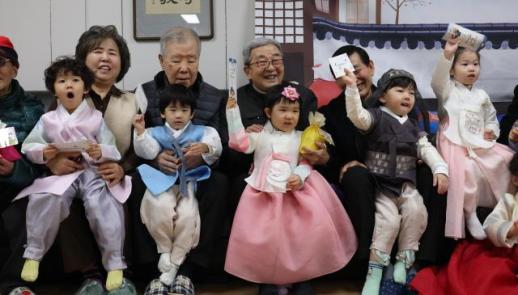 Koreans begin early home-bound rush ahead of Lunar New Year holiday SEOUL, February 13 (AJP) -South Koreans began heading home in large numbers on Friday, getting an early start on travel ahead of the Lunar New Year holiday, which this year forms a five-day break including the weekend. Train stations, bus terminals and airports across the country grew steadily busier from the morning, as travelers carrying gift boxes, luggage and large suitcases made their way to hometowns for the nation’s most important traditional holiday. At Seoul Station, crowds filled KTX platforms as passengers queued for high-speed trains bound for major cities such as Daejeon, Gwangju, Daegu and Busan. Many long-distance tickets for Friday morning departures were already sold out. In Suwon Station, commuters and families lined up early with bundles of gifts and oversized carriers, while Daejeon Complex Terminal saw a growing flow of travelers gathering with packages and travel bags, creating a festive atmosphere. At Incheon’s intercity bus terminal, passengers waited for departures while drinking coffee or having quick meals, their faces showing anticipation. Gwangju Songjeong KTX Station also saw heavy traffic, with most morning trains from Seoul sold out. On one platform, a woman in her 60s rushed forward to embrace her granddaughter as train doors opened, drawing smiles from nearby travelers. Similar scenes unfolded nationwide. In Cheongju, families hurried through terminals holding children’s hands, while in Ulsan and Daegu, parents waited to welcome returning sons and daughters. Busan Station was crowded with homebound travelers, return visitors and soldiers on holiday leave. The Lunar New Year, or Seollal, is traditionally a time for families to reunite, honor ancestors and share meals. Many Koreans travel long distances to their ancestral homes to perform ancestral rites, exchange greetings and spend time with relatives. The annual homecoming, known as gwiseong, remains one of the largest seasonal migrations in the country, even as younger generations increasingly combine family visits with leisure travel. “I was worried about getting a ticket, but leaving a day early helped,” said Kim Seung-hee, 42, who was traveling to Gwangju. “I’m excited to eat homemade food with my family.” Markets were also busy, as shoppers prepared for holiday rituals and family gatherings. At traditional markets in Daejeon, customers bought fish, fruit and ceremonial food ingredients, while bargaining over rising prices. Major airports saw heavy traffic as travelers mixed homecoming trips with vacations. At Incheon International Airport, long lines formed at check-in counters, while Gimhae and Jeju airports were crowded with both family visitors and tourists. Jeju Island was expected to receive about 43,000 visitors on Friday, according to the local tourism association. Some ferry services in the West Sea faced temporary delays due to morning fog, though most routes in southern coastal areas operated normally. Highway traffic remained manageable in the morning, similar to a typical Friday. Korea Expressway Corp. estimated total vehicle volume at about 5.54 million nationwide for the day. Traffic toward provincial areas was expected to peak between 5 p.m. and 6 p.m., easing after 10 p.m., while congestion toward Seoul was forecast to clear later in the evening. “With the relatively short holiday, more people are leaving earlier than usual,” an expressway official said. “We expect congestion to build sooner in the afternoon.” As the holiday approaches, transportation hubs are expected to grow even busier over the weekend, marking the full start of the annual Lunar New Year homecoming tradition. 2026-02-13 13:11:13
 -
 OPINION: Data as power and Korea's strategic dilemma Oil shaped global power in the 20th century. Data replaces that role in the 21st. Artificial intelligence does not run on ideology. It runs on information — vast, structured, constantly updated streams of digital activity that have become the basic input of modern economies. Algorithmic sophistication matters. But the scale, reliability, and governance of data often matter more. Yet major powers continue to differ on a fundamental question: Is data primarily a strategic resource to be mobilized? Or a civil right to be protected? China and the United States have answered differently. For South Korea — positioned between them technologically and geopolitically — prolonged ambiguity carries risks. Two Models, Two Logics Beijing has articulated its position clearly. Data is treated as a factor of production, alongside land, labor, capital, and technology. In 2024, China became the first major economy to allow certain corporate data holdings to be classified as intangible assets on balance sheets. State-supervised data exchanges have emerged. In some cases, data has even been used as loan collateral. Part of this reflects fiscal pressures, especially among debt-burdened local governments. But it also signals a broader policy direction: data is viewed as national infrastructure, subject to cataloguing, valuation, and centralized governance. The United States has followed a different path. American firms pioneered the world’s most advanced data-driven business models — in advertising, e-commerce, cloud computing, search, and social media. These platforms derive much of their value from behavioral and transactional information. Yet under existing accounting standards, data remains largely absent from corporate balance sheets. It shapes revenue and market capitalization, but is rarely recognized as a formal asset. The result is a striking paradox: the world’s most data-intensive economy largely avoids codifying data’s economic status. These differences influence corporate behavior. Chinese technology firms operate within a state-guided framework that aligns data use with national objectives. American firms rely more heavily on private innovation, moderated by competition law and privacy regulation. One emphasizes coordination. The other prioritizes markets. South Korea fits comfortably into neither model. It lacks the global scale of U.S. platforms and the centralized authority of China’s system. Yet it possesses important strengths: advanced digital infrastructure, high connectivity, technologically sophisticated consumers, and a globally significant semiconductor industry. Its AI sector is expanding. Its data ecosystem is maturing. But growth without policy clarity creates vulnerabilities. South Korea’s starting point should be a pragmatic one: data functions both as an economic resource and as a personal right. Overemphasizing either dimension risks unintended consequences. Excessive commercialization weakens privacy. Overly restrictive protection can limit innovation. Sustainable governance requires institutional balance, not rhetorical compromise. First, clarify legal status. Data is not merely a byproduct of digital activity. It is an industrial input. At the same time, it is closely linked to individual autonomy and dignity. Legal frameworks should reflect this dual character through clear ownership principles, enforceable privacy rules, and transparent standards for consent and secondary use. Second, modernize accounting practices. When data materially contributes to enterprise value, investors deserve greater transparency. This does not require adopting China’s valuation model. But standardized disclosure, governance reporting, and risk assessment would reduce informational gaps. Capital markets function more effectively when major intangible assets are visible. Third, adopt a strategic public data policy. Government agencies hold vast datasets in healthcare, transportation, education, environment, and industry. With appropriate anonymization and security safeguards, responsible data sharing could strengthen domestic AI development. Data utilization and privacy protection need not be mutually exclusive if governance mechanisms are robust. Fourth, balance sovereignty with cooperation. Data flows are global; regulations are national. South Korea cannot isolate itself digitally, nor can it relinquish regulatory authority. Aligning selectively with European privacy standards and American innovation practices may offer a practical middle ground. Fifth, integrate data governance into AI policy. AI systems depend on data quality, diversity, and accountability. Competitiveness requires access. Credibility requires ethics. Effective AI governance must address both. Choosing Balance Over Alignment China has demonstrated strategic coordination. The United States has demonstrated entrepreneurial dynamism. South Korea’s comparative advantage lies in disciplined balance. The familiar phrase that data is the “new oil” may sound overstated, but it contains insight. Oil, too, was once poorly measured and weakly regulated. Only after legal and market frameworks matured did it become a stable foundation of national power. Data appears to be approaching a similar stage. Korea’s technology champions remain in a formative phase. Opportunities are significant. But uncertainty is costly. Clear legal definitions, credible disclosure standards, strategic public data management, balanced international engagement, and ethical oversight are not policy luxuries. They are structural requirements for long-term competitiveness. Technology itself is neutral. Governance is not. The contrast between Washington and Beijing does not demand that South Korea choose sides. It requires that it define its own model. Is data a commodity to be mobilized or a right to be protected? In practice, it is both. Institutionalizing that duality — rather than oscillating between extremes — will determine whether South Korea merely adapts to the data age or helps shape it. History rarely rewards hesitation at moments of structural transition. Countries that define their assets early tend to define their futures more successfully. *The author is an AJP columnist. 2026-02-13 12:55:09
 -
 Korean shares hold ground amid thin Asian trade ahead of long holiday SEOUL, February 13 (AJP) — South Korean shares held firm Thursday despite broad losses and subdued trading across Asia ahead of the Lunar New Year holiday, supported by renewed optimism over the semiconductor sector. Wall Street tech stocks fell overnight on concerns that artificial intelligence could disrupt the traditional software industry, dampening regional sentiment. However, strong earnings from Japan’s chipmaker Kioxia lifted investor confidence in South Korea, fueling hopes of a recovery in the global memory market. Kioxia, a major producer of NAND flash memory, reported third-quarter sales of 543 billion yen and issued fourth-quarter revenue guidance of 890 billion yen, both exceeding market expectations. The company also said its average selling price rose more than 10 percent from the previous quarter, signaling improving profitability. The upbeat outlook boosted local semiconductor shares. Samsung Electronics climbed above 180,000 won for the first time, pushing the KOSPI to a new intraday high above the 5,500 level before trimming gains on profit-taking. The stock was up 1.82 percent at 181,850 won ($126) in morning trade. As of 11:00 a.m., the benchmark KOSPI stood at 5,540.66, up 0.33 percent, after drifting lower earlier in the session. The KOSDAQ fell 1.55 percent to 1,108.57, pressured by new rules tightening delisting requirements for penny stocks. The won edged lower against the U.S. dollar, snapping a four-day winning streak. The exchange rate stood at 1,443.20 per dollar at 10:00 a.m., up 0.70 won from the previous session. Investor flows were mixed. Individual investors bought a net 490 billion won worth of shares, while foreigners and institutions sold a net 188.5 billion won and 316.2 billion won, respectively. Broader sentiment remained cautious despite gains in Samsung Electronics. Chipmaker SK hynix slipped 0.39 percent to 884,500 won, while battery maker LG Energy Solution fell 3.17 percent to 397,000 won. Financial and biotech shares showed mixed performance. Samsung Life Insurance rose 0.73 percent, while Samsung Biologics declined 0.81 percent. Automaker shares moved lower, with Hyundai Motor down 1.38 percent and affiliate Kia falling 1.56 percent to 499,000 won and 163,700 won, respectively. Defense-related shares softened, as Hanwha Aerospace slid 2.48 percent to 1,103,000 won. Shipbuilders showed mixed performance. HD Hyundai Heavy Industries gained 1.11 percent to 545,000 won, while Hanwha Ocean dropped 1.97 percent to 129,200 won. Elsewhere in the region, Japan’s Nikkei 225 fell 0.97 percent to 57,080.44, Hong Kong’s Hang Seng Index slipped 1.45 percent to 26,640.16, and China’s Shanghai Composite edged down 0.44 percent to 4,115.92 in morning trading. Business will be usual at the Tokyo exchange next week while Seoul opens Thursday, Hong Kong Friday, and Shanghai on Feb. 24. 2026-02-13 11:24:43
 -
 OPINION: The collapse of a narrative - Bithumb's "ghost coin" episode Winter has returned to crypto. But this is not merely a period of falling prices. It is also a period of thinning confidence. In recent feature, The Economist observed that the latest “crypto winter” feels colder than previous downturns not because the numbers are worse, but because the story has weakened. Bitcoin, once framed as a symbol of decentralization and defiance, now stands in an ambiguous position. Its outsider image has faded, yet it has not fully earned the confidence of central banks or conservative institutional investors. The aura has dimmed, but stability has not taken its place. Markets can withstand volatility. They find it harder to navigate disillusionment. The current downturn highlights several structural features that are not unique to digital assets, but are particularly visible in this market. One is leverage. During rallies, borrowed capital amplifies returns. During corrections, it accelerates losses. Margin trading and derivatives exposure expanded rapidly in the recent boom and have since unwound in predictable fashion. Forced liquidations occur not because sentiment suddenly shifts, but because positions reach mechanical limits. This pattern has appeared repeatedly throughout financial history. Another feature is the double-edged nature of institutional participation. The launch of spot exchange-traded funds was widely seen as a step toward legitimacy. Global asset managers’ involvement was interpreted as validation. Yet liquidity does not imply commitment. Capital that enters quickly can also exit quickly. ETFs facilitate access, but they do not guarantee stability. A third, more subtle factor is the weakening of collective enthusiasm. Assets such as Bitcoin derive much of their value from shared expectations rather than cash flows. When confidence softens, valuation becomes more exposed. The loss of momentum may appear intangible, but in narrative-driven markets it can have material consequences. If these were only global trends, they would already warrant attention. Developments in South Korea, however, have added a more concrete dimension. The so-called “ghost coin” incident at Bithumb, one of the country’s largest cryptocurrency exchanges, reportedly involved internal records showing assets that did not exist. Whether caused by operational error or systems failure, the episode raised questions about internal controls and governance. Blockchain technology emphasizes distributed verification. Centralized exchanges, by contrast, rely on internal accounting systems and corporate oversight. Between decentralization in principle and centralized custody in practice lies a reliance on trust. When that trust weakens, confidence in the broader ecosystem can be affected. In traditional finance, similar discrepancies would trigger immediate scrutiny of risk management, reconciliation procedures, and capital adequacy. Over time, banks and securities firms developed standards — external audits, asset segregation, and regulatory reporting — often in response to past crises. These mechanisms are not obstacles to innovation, but foundations of credibility. The Bithumb episode reflects a broader transition. Crypto markets are no longer confined to early adopters. They now intersect with household savings, institutional portfolios, and regulatory frameworks. With greater scale comes greater responsibility. Internationally, the contrast is notable. Central banks continue to accumulate gold as a hedge against uncertainty. Digital assets, once promoted as “digital gold,” remain peripheral to reserve management. Institutional investors typically treat crypto as a supplementary allocation rather than a core holding. Regulatory recognition, including ETF approvals, signals growing acceptance, but not full integration. None of this diminishes the technological potential of blockchain. Tokenization, cross-border settlement, and programmable finance continue to develop. Stablecoins are gradually finding roles in payment systems. Yet technical innovation alone cannot substitute for institutional reliability. Bull markets tend to obscure vulnerabilities. Bear markets make them visible. If crypto is to evolve into a more durable asset class, certain conditions will become increasingly important: clearer reporting of leverage, stronger segregation of client assets, adequate capital buffers, regular audits, and consistent regulatory standards across jurisdictions. Such measures need not constrain innovation. In many cases, they enable it. The current downturn may eventually give way to recovery. Financial cycles are recurrent, and investor interest rarely disappears permanently. But without institutional strengthening, future rallies risk repeating familiar patterns. The lesson of this period is not that crypto lacks value, nor that traditional finance is immune to failure. It is that markets — digital or otherwise — respond to incentives, governance, and transparency in similar ways. Excess leverage increases fragility. Weak oversight invites disruption. Overreliance on narrative creates vulnerability when conditions change. In that sense, the “ghost coin” incident serves as more than an operational anomaly. It illustrates how confidence depends on verification. Assets must exist not only on screens, but in substance. Crypto now faces a choice familiar to many emerging industries: remain driven primarily by momentum and symbolism, or continue the slower process of building institutional trust. Winter can test markets. It can also refine them. If this period encourages greater emphasis on transparency, governance, and resilience, the next recovery — when it comes — may rest on firmer ground than those before it. *The author is a columnist for AJP. 2026-02-13 11:23:11
 -
 Hyundai's Palisade, Kia's EV9 win Canadian vehicle of the year awards SEOUL, February 13 (AJP) - Two South Korean vehicles have receive top awards at this year's Canadian International AutoShow in Toronto, which wraps up its weeklong run this weekend. According to Hyundai Motor Group, the Palisade was named the Canadian Utility Vehicle of the Year, while affiliate Kia's EV9 won the Canadian Electric Utility Vehicle of the Year award, presented by the Automobile Journalists Association of Canada (AJAC). "Our expert jurors scored the Palisade highly for its interior styling, its overall quality, and for the high consumer appeal this SUV brings to the Canadian marketplace," said Evan Williams, president of AJAC. "Earning this recognition for a fourth time in since 2022 underscores the importance of applying customer and journalistic feedback we've gained over the years, while continuing the strong momentum and leadership of our SUV portfolio in Canada," said Steve Flamand, president and CEO of Hyundai' operations in Canada. The annual awards "recognize excellence across four categories: Canadian Car of the Year, Canadian Utility Vehicle of the Year, Canadian Electric Car of the Year, and Canadian Electric Utility Vehicle of the Year." This year's AJAC winners were voted by a jury of 53 auto experts and journalists. 2026-02-13 11:21:46
 -
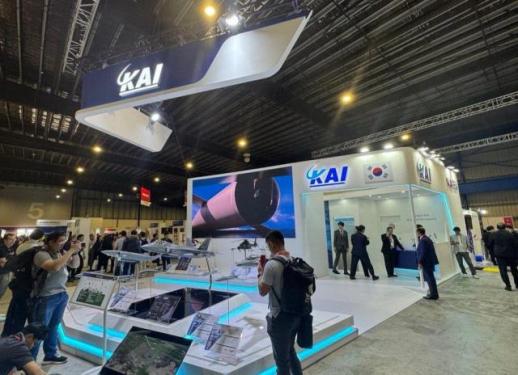 KAI explores space industry cooperation with Saudi Arabia at WDS 2026 Korea Aerospace Industries, known as KAI, said Feb. 13 it discussed potential cooperation on space projects with Saudi Arabia’s Ministry of Investment at the World Defense Show WDS 2026 in Riyadh. KAI CEO Cha Jae-byeong met Feb. 10 (local time) with Saudi Investment Minister Khalid Al-Falih to discuss cooperation in future industries that could align with the Saudi government’s Vision 2030 project, including space, satellite communications and aviation. KAI said it has been steadily strengthening cooperation with Saudi Arabia in space and aviation, and expects the latest talks to broaden collaboration. In October 2023 in Riyadh, KAI signed an MOU with the Saudi Space Agency to build a cooperative relationship in the space sector. It has pursued technology development and operations to expand the space market, joint commercialization, and investment in new startups. KAI said it also met with the Saudi Space Agency during the exhibition to reaffirm their strategic partnership. “Saudi Arabia can be a strategic partner for K-Space’s overseas expansion beyond K-defense, including the KF-21,” Cha said. “We will prepare the best proposal to expand cooperation in space and aviation linked to Saudi Vision 2030.” KAI said it built the country’s first private space center in 2020 and is preparing to commercialize mass production and exports of satellites, a key part of the New Space era, based on platforms such as next-generation mid-sized satellites, 6G communications satellites and nanosatellites. The company has participated in government-led satellite development projects over the past 40-plus years, including multipurpose satellites, geostationary composite satellites, next-generation mid-sized satellites, nanosatellites and the 425 satellite program, helping drive commercialization of the private space industry. KAI said the next-generation mid-sized satellites No. 2 and No. 4, for which it served as lead developer, are scheduled for launch this year. 2026-02-13 11:18:00
 -
 Winter Olympics '26: Asia shines on snow and ice with teen snowboarder's gold SEOUL, February 13 (AJP) -Asian athletes continued to command attention on the eighth day of competition at the Winter Olympics in Milan and Cortina d’Ampezzo, highlighted by South Korean snowboarder Choi Ga-on’s landmark gold medal and podium finishes by skaters from China and Japan. Choi delivered the defining moment of the day in the women’s snowboard halfpipe final. After qualifying in sixth place, she rose to the occasion with a decisive final run, scoring 90.25 points to claim gold. American favorite Chloe Kim, who had topped qualification, settled for silver with 88.00, while Japan’s Ono Mitsuki surged from 11th in qualifying to take bronze with 85.00. The halfpipe final emerged as the day’s standout Asian showcase. In short track speed skating, China’s Sun Long claimed silver in the men’s 1,000 meters, while South Korea’s Rim Jong-un secured bronze in 1 minute 24.611. Gold went to the Netherlands’ Jens van ’t Wout, who clocked 1 minute 24.537. Rim’s podium finish added to Korea’s tally, reinforcing its depth in short track competition. In curling, South Korea’s women’s team — Gim Eun-ji, Kim Min-ji, Kim Su-ji, Seol Ye-eun and Seol Ye-ji — fell 4-8 to the United States in round-robin play before rebounding with a 7-2 victory over host nation Italy. As of Day 8, Japan stands 10th overall in the medal table with two gold, two silver and six bronze medals. South Korea ranks 11th with one gold, one silver and two bronze, while China sits 16th with two silver and two bronze. Choi’s triumph in Livigno, which stole the Olympic spotlight, also marked a turning point in South Korea’s winter sports history. Long dominant in skating disciplines, the country is now expanding its presence in snow events, signaling a broader and more balanced Olympic profile. 2026-02-13 11:10:44
 -
 Renault Korea's new hybrid SUV receives 5,000 pre-orders in about a month SEOUL, February 13 (AJP) - Renault Korea said on Friday that orders for its new crossover sport utility vehicle have exceeded 5,000 units since pre-orders began last month. According to the France-based automaker, the midsize hybrid Filante, which combines features of a sedan and an SUV, boasts 250 horsepower and artificial intelligence (AI)-based connectivity services. It comes with a price tag of about 43.32 million Korean won (about US$30,000) after tax incentives for eco-friendly vehicles. Deliveries are set to begin next month. The automaker is also preparing promotional events during the Lunar New Year holiday, offering gifts such as mini bags, umbrellas and maintenance coupons to 2,026 customers who visit showrooms for purchase consultations or test drives. 2026-02-13 10:39:41
 -
 T’way Air Sets Up Special Transport Control Center for Lunar New Year Travel Rush T’way Air said Thursday it will operate a “special transport control center” to handle higher demand and heavier airport congestion during the Lunar New Year holiday travel period. The airline said it will strengthen its response system, assign essential staff by department and move to a 24-hour emergency duty schedule to improve passenger convenience and ensure safe operations. T’way Air also highlighted its “easy boarding pass” feature, which lets passengers view their boarding pass immediately from the app’s main screen after completing online check-in. The feature allows boarding-pass access using saved information even for nonmembers or when offline. The airline said it also provides a “boarding guidance” function that offers real-time, day-of-departure information at the airport, including congestion levels, gate details and remaining time to the flight, to help passengers manage routes and waiting times more efficiently. A T’way Air official said, “In preparation for the increase in airport passengers during the Lunar New Year holiday period, we are continuously upgrading our digital services so customers flying with T’way Air can start their trips more conveniently and efficiently.”* This article has been translated by AI. 2026-02-13 10:27:00