
Journalist

AJP
-
 KBO Hits Leader Son Ah Seop Signs One-Year Deal With Hanwha Eagles KBO League career hits leader Son Ah Seop has signed a one-year contract with the Hanwha Eagles. Hanwha announced Thursday that it agreed to a one-year deal worth 100 million won in salary. Son said, "I’m grateful to the club for choosing me again," adding, "I’m joining camp a little late, but I’ve kept myself in good shape." He added, "I’ll do my best in my role so Hanwha can soar again in the 2026 season." Son is set to join the Futures spring camp in Kochi, Japan, on Friday. 2026-02-05 16:51:26
 -
 Snow-themed festival underway in Taebaek SEOUL, February 05 (AJP) - A snow-themed festival is currently underway in Taebaek in the mountainous region of Gangwon Province. The annual festival, now in its 33rd year, kicked off on Jan. 31 and will run through this weekend. Against the stunning backdrop of snow-blanketed Mt. Taebaeksan, visitors can marvel at large-scale snow sculptures and engage in a variety of interactive winter programs. It would the perfect destination for anyone not quite ready to say goodbye to winter or for those who want to enjoy the winter chill while it's still here to stay. 2026-02-05 16:42:26
 -
 SKC says glass substrate customer demands are sharpening; expects ESS copper foil demand SKC said it is focusing on its glass substrate business, a key semiconductor material, as it seeks to return to profitability within the year. Park Dong Ju, head of SKC’s finance division, said on a conference call on Wednesday that the company will run its businesses with a focus on profitability to restore earnings and strengthen financial stability. SKC also plans to increase sales volumes of battery and semiconductor materials. For glass substrates, which SKC is positioning as a future growth driver, the company said it will improve product quality and yields to support reliability testing. SKC said glass substrates could be a “game changer” for the semiconductor ecosystem and that it expects to maintain clear differentiation and a technology gap over latecomers. On progress, SKC said its plant in Georgia was completed at the end of 2024 and that it focused on securing key technologies in 2025, with most now in place. It said it has completed prototype samples and submitted them to customers. SKC said customer requirements for reliability testing are becoming more specific and sophisticated because the product has no close precedent. It said commercialization is running somewhat later than earlier market expectations, but it will deploy a large number of semiconductor engineers to recheck its execution structure and speed up commercialization. In battery materials such as copper foil, SKC said a one-time cost of 316.6 billion won was reflected in the fourth quarter of last year, widening its pretax loss. To offset that, it guided that copper foil sales volume this year will rise 50% from a year earlier. SKC said demand from North America-centered energy storage systems is expected to increase, and it will prioritize operational efficiency based on a full-scale ramp-up of its Malaysia plant while serving key global customers. In semiconductor materials, SKC said it posted its best annual performance on demand for high value-added products used in artificial intelligence data centers. An SKC official said the company is targeting about 20% growth in companywide revenue this year from last year, citing higher electric-vehicle copper foil sales to customers in Greater China and an expanded customer base as applications for small batteries diversify. 2026-02-05 16:30:00
 -
 Frigid weather to linger despite spring's arrival SEOUL, February 5 (AJP) - A cold wave advisory was issued for Seoul and surrounding metropolitan areas on Thursday. The advisory, issued by the Korea Meteorological Administration, takes effect at 9 p.m., as freezing temperatures are expected overnight. After a brief spell of balmy weather just a day after Ipchun, the official start of spring by the lunar calendar, Seoul is expected to see morning lows plunge to -12 degrees Celsius on Friday, with the fresh cold snap lingering through the weekend. Such an advisory is issued when morning temperatures are expected to drop by more than 10 degrees Celsius from the previous day, or at least 3 degrees below the seasonal average, or when the morning low is forecast to remain at or below -12 degrees for two or more consecutive days. The Seoul Metropolitan Government is working with some 25 local districts and agencies to prepare for emergency situations, while operating emergency shelters and other facilities as well as maintaining around-the-clock monitoring. 2026-02-05 16:22:17
 -
 Korea Employers Federation calls AI key to economic recovery SEOUL, February 05 (AJP) - A leading South Korean business group on Thursday called artificial intelligence a critical tool for reviving the economy and urged companies to accelerate innovation alongside labor-market reforms. The Korea Employers Federation (KEF) is hosting the two-day Korea CEO Forum in central Seoul from Feb. 5–6, bringing together executives from major companies to discuss how AI is reshaping industries and workplaces. In opening remarks, KEF Chairman Sohn Kyung-shik said South Korea must sharply improve productivity and competitiveness to overcome economic challenges, describing AI as “the most effective breakthrough.” “The gap in AI readiness is becoming a gap in corporate and national competitiveness,” Sohn said, adding that advances in AI are generating new industries and innovation while driving broad social and economic change. He warned that managing labor-market disruption will be a major task as AI adoption accelerates, calling for solutions that promote corporate innovation, nurture talent and improve workers’ quality of life at the same time. On labor relations, Sohn urged greater cooperation between management and labor based on legal principles and dialogue, saying stable industrial relations are essential for innovation and job security. He also called on the government and National Assembly to quickly clarify implementation measures related to a revised labor union law set to take effect in March, citing concerns among companies about potential confusion. Sohn urged caution over extending the statutory retirement age, saying it could discourage youth hiring and deepen labor-market disparities. Instead, he called for broader discussions on flexible options such as post-retirement reemployment and reform of seniority-based wage systems. He also argued that rigid working-hour rules should be made more flexible to reflect differences across industries and job types. The forum includes sessions on AI-driven industrial transformation. KAIST professor Kim Dae-sik is delivering a keynote on how generative AI and artificial general intelligence could reshape industrial structures and capital-labor relations. Hyun Dong-jin, head of Hyundai Motor Group’s Robotics Lab, is presenting cases of AI and robotics-based business applications, while Kakao Pay CEO Shin Won-geun is discussing stablecoins and changes in digital finance. * This article, published by Aju Business Daily, was translated by AI and edited by AJP. 2026-02-05 16:02:48
 -
 Airbus: Asia-Pacific Aviation Services Market to Reach $138.7B by 2044 Airbus said Thursday that demand for aviation services in the Asia-Pacific region, including China and India, is expected to grow to US$138.7 billion by 2044, expanding at a 5.2% compound annual growth rate, according to its latest Global Services Forecast report. The company cited rising air traffic and a growing aircraft fleet as key drivers of medium- to long-term growth. Over the next 20 years, the region will need 19,560 new passenger aircraft, Airbus said, representing 46% of global demand over the period. Asia-Pacific passenger demand is projected to rise 4.4% a year, well above the global average of 3.6%, keeping the region the world’s fastest-growing aviation market. The report identified five main areas expected to lead growth: component maintenance, airframe maintenance, modifications and upgrades, digital and connectivity, and education and training. Component maintenance is forecast to surge to $100 billion in 2044 from $37.1 billion in 2025, driven by fleet expansion and aircraft aging. Airbus said supply-chain instability and a shortage of skilled workers remain structural constraints. Airframe maintenance is expected to grow to $14 billion from $6 billion over the same period. Airbus said new base-maintenance hangars are being built in key markets including India, Indonesia, Malaysia and the Philippines, alongside large-scale investment in MRO infrastructure. Modifications and upgrades are projected to expand to $6.2 billion from $3.8 billion. Airbus said demand is rising for cabin modernization as more complex retrofit work increases for older aircraft, with airlines adding premium cabin products and in-flight connectivity to meet changing passenger expectations. Digital and connectivity services are expected to grow to $11.2 billion from $2.9 billion. Airbus said airlines and MRO providers are accelerating adoption of artificial intelligence and data analytics to improve efficiency, support predictive maintenance, optimize operations and ease labor shortages through automation. Education and training are forecast to rise to $7.7 billion from $3.2 billion, with a rapid shift in the region toward competency-based training and assessment. Airbus said the region will need more than 1.06 million new aviation professionals by 2044, including 282,000 pilots, 302,000 technicians and 473,000 cabin crew members. Airbus also highlighted maintenance operations support and ground operations services as areas that will shape performance for airlines and MRO providers. It projected the maintenance operations support market, including engineering, technical records and inventory management, will reach $46.4 billion by 2044, while the ground operations market, reshaped by automation and digitalization, will grow to $31 billion. Airbus said mature markets will maintain a certain level of demand, but Asia-Pacific — led by South Asia and China — will drive the next phase of global aviation services growth and “reshape the aviation industry’s capacity, capabilities and investment priorities worldwide.”* This article has been translated by AI. 2026-02-05 15:54:00
 -
 Badminton Star Kim Won Ho Wins Korean Sport and Olympic Committee’s Top Sports Award Kim Won Ho (Samsung Life), who won the men’s doubles title at the 2025 Paris World Badminton Championships and claimed 11 World Tour titles in a single season, has been selected for the top prize at the Korean Sport and Olympic Committee’s sports awards. The committee said Thursday it chose Kim for making “remarkable contributions to South Korean sports in 2025” and for helping advance and promote athletics. The top award includes a plaque and a special prize. After review by its Sports Fairness Committee and approval at its 12th board meeting on Monday, the committee selected 93 individuals and five organizations as winners across eight categories: competition, coaching, officiating, recreational sports, school sports, merit, research and sports values. Category grand-prize winners were: Choi Tae Ho (Gangwon Province Cycling Federation) and Ban Hyo Jin (Daegu Physical Education High School) in competition; Lee Se Won, weightlifting coach for Goyang City Hall, and Jung Sung Sook, judo coach at Yongin University, in coaching; Kim Eun Hee (Korea Judo Association) in officiating; Cha Du Yeon (Busan Roller Sports Federation) in recreational sports; Oh Jong Hwan, a teacher at Oncheon Elementary School, in school sports; Lee Chung Hwan, vice president of the Korea Sepaktakraw Association, and Kim Gwang Tae, vice president of the Daejeon Modern Pentathlon Federation, in merit; Kim Seok Gyu, an associate professor in sports science at Dongguk University, in research; and Park Kang Gyu, president of the Seoul Curling Federation, in sports values. Winners receive plaques and prizes. The committee also will present plaques and prizes to other recipients in each category: 21 individuals and three organizations receiving excellence awards, and 60 individuals and two organizations receiving encouragement awards. The Korean Sport and Olympic Committee established the awards in 1955 and has honored people each year for outstanding performance or for creative and dedicated efforts that contribute to the development of South Korean sports. The 72nd awards ceremony is scheduled for 2 p.m. March 13 at Champion House at the Taereung Training Center.* This article has been translated by AI. 2026-02-05 15:45:00
 -
 South Korea to chair multinational initiative on critical minerals through June SEOUL, February 5 (AJP) - South Korea will chair a multinational initiative aimed at strengthening "diversified, resilient and secure critical minerals supply chains" through the first half of this year, the U.S. Department of State said on Wednesday. Announcing the creation of FORGE, short for the Forum on Resource Geostrategic Engagement, Secretary of State Marco Rubio described it as the "successor to the Minerals Security Partnership (MSP)" at a U.S.-led ministerial meeting on critical minerals in Washington, D.C. The inaugural Critical Minerals Ministerial meeting was held with representatives from some 54 countries, along with top U.S. officials including Vice President JD Vance, Treasury Secretary Scott Bessent, Energy Secretary Chris Wright and U.S. Trade Representative Jamieson Greer. The ministerial gathering comes as the U.S. ramps up efforts to reduce its reliance on Chinese critical minerals after China's export restrictions on rare earth materials. "FORGE, which will be chaired by Korea through June, will lead with bold and decisive action to address ongoing challenges in the global critical minerals marketplace," Rubio said. Stressing that critical minerals and rare earths are "essential" for most advanced technologies, he urged "close partnership" among partners and allies. "Recognizing that governments alone cannot solve this problem, we are committed to close partnership with the private sector, including through Pax Silica, which will lead through investments in mining, refining and processing, end use applications, and recycling and reprocessing." "Understanding the benefits of working together and building on the MSP, FORGE partners will collaborate at the policy and project levels to advance initiatives that strengthen diversified, resilient, and secure critical minerals supply chains," he added. 2026-02-05 15:24:47
 -
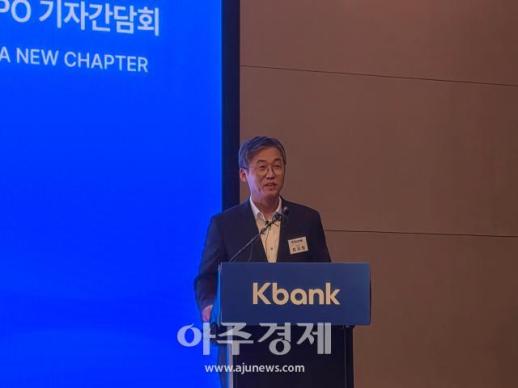 K Bank cuts IPO price range, seeks to reduce reliance on Upbit deposits South Korea’s first internet-only bank, K Bank, is making a third attempt at an initial public offering after delaying twice. The bank said it lowered its proposed offering price and adjusted the amount of shares available on the first day of trading to better match market expectations. It also said it is working to reduce its reliance on deposits tied to crypto exchange Upbit. At a news conference in Seoul on Feb. 5, K Bank CEO Choi Woo-hyung said the bank prepared a “shareholder-friendly” offering structure by cutting the price versus its prior plan and adjusting the tradable float on listing day. K Bank previously pursued listings in 2023 and 2024 but withdrew, citing factors including weak demand during book-building. Under a 2021 capital increase, the bank included a drag-along clause with financial investors that requires an IPO by July this year, making this its last chance to list. K Bank set a proposed price range of 8,300 won to 9,500 won, up to 26% below its previous IPO range of 9,500 won to 12,000 won. It also cut the offering size to 60 million shares from 80 million. Based on that range, its price-to-book ratio would be 1.38 to 1.56, far below KakaoBank’s roughly 7 at the time of its listing. CFO Lee Jun-hyung said KakaoBank shares rose more than 30% over the past three days, lifting K Bank’s implied discount to 30%. He said K Bank’s price range is “heavily discounted” compared with competitors. Choi also addressed concerns about K Bank’s dependence on Upbit-related deposits. He said that of 6 million new customers over the past two years, only 10% joined to use crypto assets. He added that none of Upbit deposits are used to fund loans and are instead invested in highly liquid money market funds or government bonds, meaning an outflow would have “no impact.” After listing, K Bank said it will begin preparing to enter the small- and midsize business lending market and aims to launch a product next year, which it described as the first of its kind in South Korea. It plans to cut household loans, now more than 90% of its portfolio, to 50% and balance the rest with corporate lending. With SME loans viewed as higher risk, Choi said the bank will manage delinquencies by splitting credit, guaranteed and secured loans evenly. K Bank also pledged a post-listing value-up policy. Choi said it will consider shareholder returns such as dividends and share cancellations as it seeks to raise return on equity from about 5% to 15%. 2026-02-05 15:21:00
 -
 IBK Industrial Bank of Korea posts record 2.7189 trillion won net profit in 2025 IBK Industrial Bank of Korea said it posted its best-ever results last year, helped by growth in lending to small and midsize enterprises and higher noninterest income supported by a more stable exchange rate. The bank said Thursday that its consolidated net profit rose 2.4% from a year earlier to 2.7189 trillion won. It said the figure was a record. On a standalone basis, net profit totaled 2.3858 trillion won. The bank attributed the steady earnings to investments in promising innovative companies and improved noninterest income, while cutting funding costs to help protect interest income even as it expanded SME lending. Outstanding SME loans increased 14.7 trillion won from the end of the previous year to 261.9 trillion won, with a market share of 24.4%. Total loans also rose 15 trillion won, pushing the bank’s standalone total assets above 500 trillion won. Key indicators showed the ratio of substandard or lower loans fell 0.06 percentage points from the end of 2024 to 1.28%. The credit cost ratio slipped 0.01 percentage point to 0.47%, which the bank said reflected the impact of additional provisions it had built up preemptively after the COVID-19 pandemic. Return on equity and return on assets were provisionally tallied at 7.71% and 0.56%, respectively. The Bank for International Settlements capital ratio was provisionally estimated at 14.81%. An IBK official said the bank plans to expand funding for “productive” areas by 추진해 첨단·혁신산업, 창업·벤처기업, 지방 소재 중소기업 등 생산적 분야에 대한 자금 지원을 확대할 계획”이라고 말했다. * This article has been translated by AI. 2026-02-05 15:18:00